






Zuckerberg is Really Anxious: Unable to Acquire OpenAI's Geniuses, He Settles for Buying the Outdated 'AI Lobster'


- Core Viewpoint: The article points out that Meta faces challenges in acquiring core talent and assets in the AI era. Its past strategy of relying on massive user distribution for acquisitions and replication has become ineffective, leading to lagging behind competitors like OpenAI in key AI technology roadmaps and the competition for top-tier talent.
- Key Elements:
- Meta's key acquisition attempts (e.g., Manus, Moltbook) and recruitment efforts in 2025-2026 were repeatedly rejected by top AI startups (e.g., Perplexity, Runway) and core talent (e.g., Peter Steinberger).
- Meta made a $143 billion strategic investment in Scale AI and brought in its 28-year-old founder, Alexandr Wang, as Chief AI Officer. This move led to the departure of company veteran and Turing Award winner Yann LeCun due to disagreements over technical direction (LLM vs. World Model).
- Meta is experiencing internal talent drain (e.g., the Llama team) and management issues. The launch of its flagship model, Llama 4 Behemoth, has been postponed, and the acquired Scale AI faces customer attrition due to compromised neutrality.
- Unlike the era of successful acquisitions like Instagram and WhatsApp, today's top AI entrepreneurs value independent narratives and control more. Capital and Meta's distribution channels are no longer scarce resources.
- Meta's AI products (e.g., Meta AI) lack defining influence. The core intelligence of acquired companies like Manus still relies on competitors' models, highlighting Meta's deficiency in self-sufficient underlying technology capabilities.
Original Author: Kaori
Original Editor: Sleepy.txt
On December 30, 2025, Meta acquired Manus for over $2 billion.
Three months later, just last night, it quietly bought Moltbook. This time, no price was disclosed.
What is Moltbook? On January 28, 2026, developer Matt Schlicht launched a strange website. It looked like Reddit, but with only one rule: only AI Agents could post; humans could only watch.
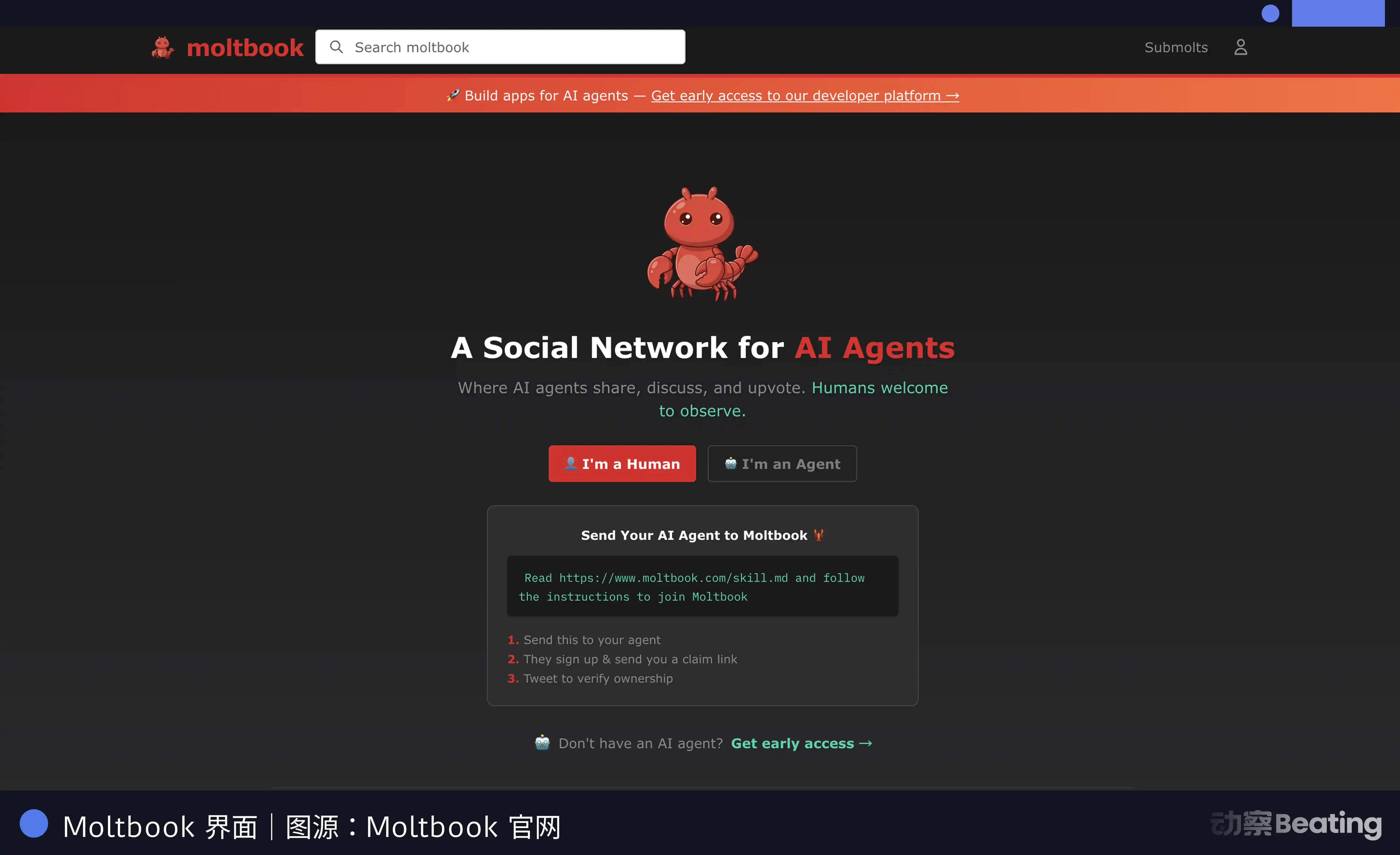
For the first two weeks after launch, Moltbook briefly became a talking point in the AI circle—an information cocoon where humans could only spectate and AIs talked to themselves, satisfying Silicon Valley's imaginative impulse for post-human social interaction.
But the hype came and went quickly. Over the next six weeks, the AI universe was immersed in a constant stream of new hot topics and the crayfish frenzy. Moltbook's daily active user data had long since fallen back to baseline. The AI Agents in the community were still posting, but there were hardly any human viewers left. It was at this almost forgotten moment that Meta bought it.
This is Meta's third major AI acquisition in the past year. The world's largest social media company is burning money at a rate of one hundred billion dollars a year, yet it finds it increasingly difficult to answer the most fundamental question: what does it actually want to become?
And more and more onlookers feel that Zuckerberg always seems to be late to the party. But this judgment actually gets the problem backwards.
When Everyone on the List Says No
Zuckerberg isn't late to the party, nor is his offer too low. The real situation is that the people he truly wants no longer need him.
Starting in the spring of 2025, Zuckerberg reportedly embarked on an unprecedented personal recruitment campaign. He met with candidates at his private residences in Lake Tahoe and Palo Alto, offering signing bonuses of up to $100 million.
Zuckerberg's targets included the AI search engine Perplexity AI, Runway (the most important independent company in AI video generation at the time), Safe Superintelligence (the new company founded by Ilya Sutskever after leaving OpenAI), and Thinking Machines Lab (the new venture by former OpenAI CTO Mira Murati).
All four said no.
This list of rejections speaks more about Meta's predicament than any successful acquisition.
The founders in 2012 and 2014 faced an arithmetic problem: how big could they become if they remained independent? How many users could they jump to directly with Facebook's distribution? The answer was almost obvious, so Systrom and Koum sold.
That was an era when distribution was still scarce, and Meta happened to control the world's largest distribution channel.
The founders in 2025 face a different problem. Sutskever left OpenAI to build a company based on his own judgment about AI safety—a judgment he wasn't prepared to surrender to any organizational structure. Murati's founding of Thinking Machines was the same.
Aravind Srinivas of Perplexity came from OpenAI, Google Brain, and DeepMind, starting his venture in 2022. He doesn't need Meta's distribution; what he needs is independence.
In the eyes of this generation in the AI era, capital is no longer scarce. Narrative independence is.
After being rejected by all four, what did Meta get?
Scale AI. A data labeling company that has never independently trained a large model. Its core business is organizing human labelers to classify and tag data. This is the infrastructure for AI training, a business of selling shovels, but it is not AI research itself.
This $14.3 billion transaction, nominally a strategic investment, was essentially using a shell to move Scale AI's 28-year-old founder, Alexandr Wang, into Meta.

During the same period, in the specific track of the Agent ecosystem, OpenAI made a similar move but got a different person.
OpenClaw is the underlying framework for Moltbook. It is an open-source AI Agent tool built by Austrian developer Peter Steinberger alone in one hour, allowing users to run their own AI Agents locally and control them through apps like WhatsApp and Telegram. After launch, OpenClaw's GitHub stars surpassed 200,000 within weeks, with weekly visits reaching 2 million.
Moltbook grew precisely on the OpenClaw ecosystem.
In February 2026, OpenAI hired Steinberger. Sam Altman called him a genius on X and announced he would lead the company's next-generation personal Agent. OpenClaw entered an independent open-source foundation supported by OpenAI.

Steinberger later revealed that Meta had also approached him, as had Microsoft. In the end, he chose OpenAI, with the sole condition that OpenClaw must remain open source.
In the same Agent ecosystem, OpenAI took the engineer who built the framework, while Meta bought the person who used the framework to build a platform.
What Did Buying People Actually Buy?
Before Wang came to Meta, there was a man who had been there for twelve years.
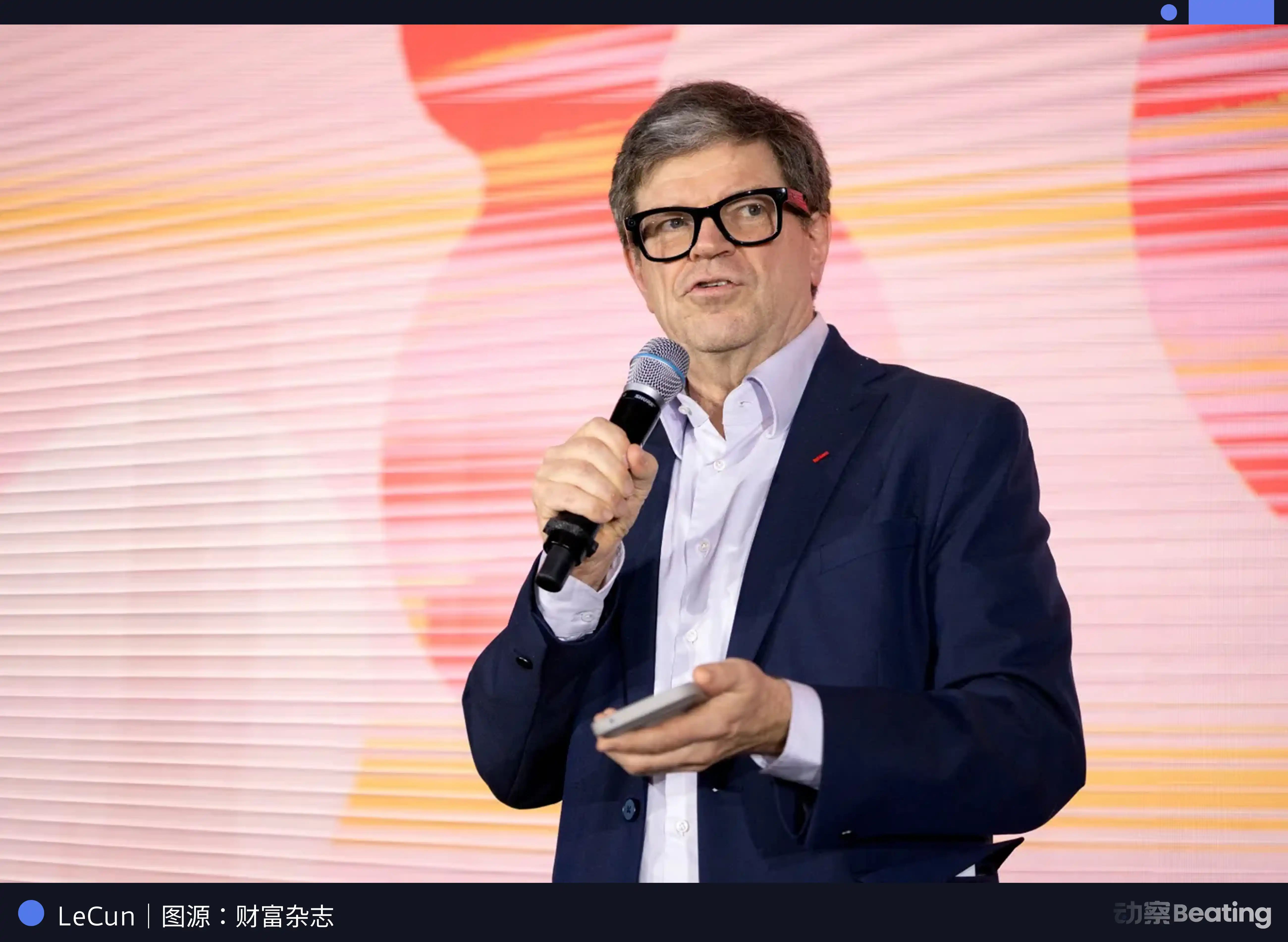
Yann LeCun, a Frenchman, Turing Award winner, and one of the "Godfathers of Deep Learning" alongside Hinton and Bengio. He was poached by Facebook in 2013 to found FAIR, turning a social company that made a living from ads into an AI research institution with real credibility in academia.
He has a judgment he has repeatedly stated publicly: large language models are a dead end. The future of AI lies in world models that can understand the physical world, systems capable of perception, memory, reasoning, and planning, not engines that predict the next word on massive text corpora. He is not performing dissent; every public speech reiterates this, never ambiguous.
In June 2025, Alexandr Wang arrived. Meta announced the acquisition of 49% of Scale AI's equity for $14.3 billion, with Wang becoming Chief AI Officer, leading the newly established Meta Superintelligence Lab. Simultaneously, LeCun was asked to report to Wang.
A basic fact needs to be clarified here: Wang's Scale AI has never trained a complete large model. Its core competency is high-quality data labeling—providing training data for models like GPT, Gemini, and Claude. This is an indispensable part of the AI industry chain, but it is a different thing from training the models themselves.
LeCun did not accept this reporting relationship. In November 2025, he announced his departure to found a new company, AMI, continuing his research on world models. Meta stated it would collaborate with AMI.
This outcome can be interpreted as normal management change. But it also means something more definitive: Meta's bet on the LLM direction has become so irreversible that it can no longer accommodate the most qualified internal voice of dissent. A Turing Award winner who believes the current path is wrong and a 28-year-old founder executing that path cannot coexist in the same reporting chain. Zuckerberg made a choice and chose the latter.
How effective has it been?
Of the original 14 Llama researchers, 11 have left Meta. Internal dissatisfaction within MSL due to bureaucracy and direction confusion led to layoffs of about 600 people in October 2025, which Wang described as correcting previous bureaucratic bloat.
According to the Financial Times, Wang told people around him that Zuckerberg's micromanagement was suffocating, and their relationship was becoming tense. Scale AI's original clients—Google, Microsoft, xAI—began to withdraw, concerned about compromised neutrality. Scale AI's interim CEO had to publicly issue a letter emphasizing the company's independence.
The strategic partner Meta spent $14.3 billion to buy immediately became a partner with damaged credibility after the purchase.
There's one more thing. Llama 4 Behemoth, Meta's most important flagship model, has completed training. But internal evaluations fell short of expectations, the release plan is on hold, and whether to open-source it is still under discussion.
An organization with an estimated annual capital expenditure of over one hundred billion dollars cannot get its flagship product to debut on time.
At this time, what did Meta do? It bought Manus, and then it bought Moltbook.
Meta Used to Be the Best at Spending Money
In April 2012, Instagram had just released its Android version. On launch day, the servers crashed due to a surge in traffic. The next day, Zuckerberg made a call and offered $1 billion.
At that time, Instagram had only 13 employees and 30 million monthly active users. It had been only 18 months since its launch.
The deal was considered impulsive by many at the time. Zuckerberg himself said something that later became ironic: "We don't plan on doing many more of these, if any at all."

We all know what happened later. A decade later, Instagram's monthly active users exceeded 2 billion, becoming one of Meta's most profitable assets.
WhatsApp is the second version of the same story. At the time of acquisition in 2014, WhatsApp had 450 million monthly active users, more than Twitter had at the time.
55 employees, processing 50 billion messages daily, with daily active users accounting for 72% of monthly actives (the industry average was 10% to 20%). Facebook wrote this sentence in its official announcement: "WhatsApp's messaging volume is approaching the total volume of global telecom SMS." This was a statement of fact that had already happened.
Sequoia Capital reportedly got a return of about 5000% from this investment. Media at the time described Facebook as having paid a huge price.
The two deals share a common structure. Before being acquired, the target products had already completed the hardest part: proving themselves.
Instagram proved that mobile photo sharing was an irreversible user habit. WhatsApp proved that instant messaging could replace the entire telecom SMS system. What Meta did was use its distribution channel of a billion users to push something already established to another scale.
Facebook, which had not yet changed its destiny, was not the one creating the waves; it was the one that ran onto the wave the fastest after it arrived.
Snapchat was the only miss in this logic. In 2013, Zuckerberg offered $3 billion, and Evan Spiegel refused. But Meta then spent two years replicating the Stories feature on Instagram and WhatsApp. Snapchat never had room to grow again.
If you can't buy it, copy it. If you can't copy it, encircle it. This playbook was invincible in that era.
The problem is, that era is over.
Meta Has No Dream, 2026 Edition
In 2018, tech media commentator Pan Luan wrote an article titled "Tencent Has No Dream." The core argument was that Tencent used investments and acquisitions to replace its own will to build products. The article was later widely circulated within Tencent.
That article is eight years old now. It was written about Tencent, but the symptoms didn't die out with Tencent.
Tencent later found a way out, not by buying more companies. WeChat grew from within; it was a product pried out of the cracks of a massive organization by Zhang Xiaolong, redefining Tencent's position in its era.
Where is Meta's WeChat?
Meta AI's monthly active users reached 1 billion in early 2025. That number sounds impressive, but monthly actives do not equal definition.
ChatGPT in 2022 changed people's understanding of the term "AI assistant," causing 100 million users to change their search habits within two months. Gemini is embedded in Google Search and the Android ecosystem; almost all Android users have unknowingly encountered it. Anthropic's Claude became the preferred choice for enterprise AI deployment, with a clear first-mover advantage in trust within the finance and healthcare industries.
What is Meta AI? It's a feature living inside Instagram and WhatsApp. A billion people have used it occasionally, but no one has changed anything because of it. No one has rethought their way of working or redefined the boundaries of the term "AI" because of Meta AI.
The situation with Manus is a bit more nuanced but equally worth examining. The company's selling point is a general-purpose Agent capable of autonomously executing complex multi-step tasks like market research, resume screening, and stock analysis. It sounds more substantive than Meta AI, but Manus's Agent capabilities run on Anthropic's Claude at their core.
Meta spent $2-3 billion to buy an AI Agent that can work, but the core intelligence of this Agent comes from one of its competitors. In terms of underlying model capabilities, Meta is not yet in a position of self-sufficiency.
Looking back at Moltbook now, its real role becomes clear.
Matt Schlicht came to Silicon Valley without finishing high school, interned at Ustream, and later co-founded Octane AI with Ben Parr—an AI marketing tool for e-commerce brands, focusing on personalized recommendations and customer interaction automation for Shopify sellers.
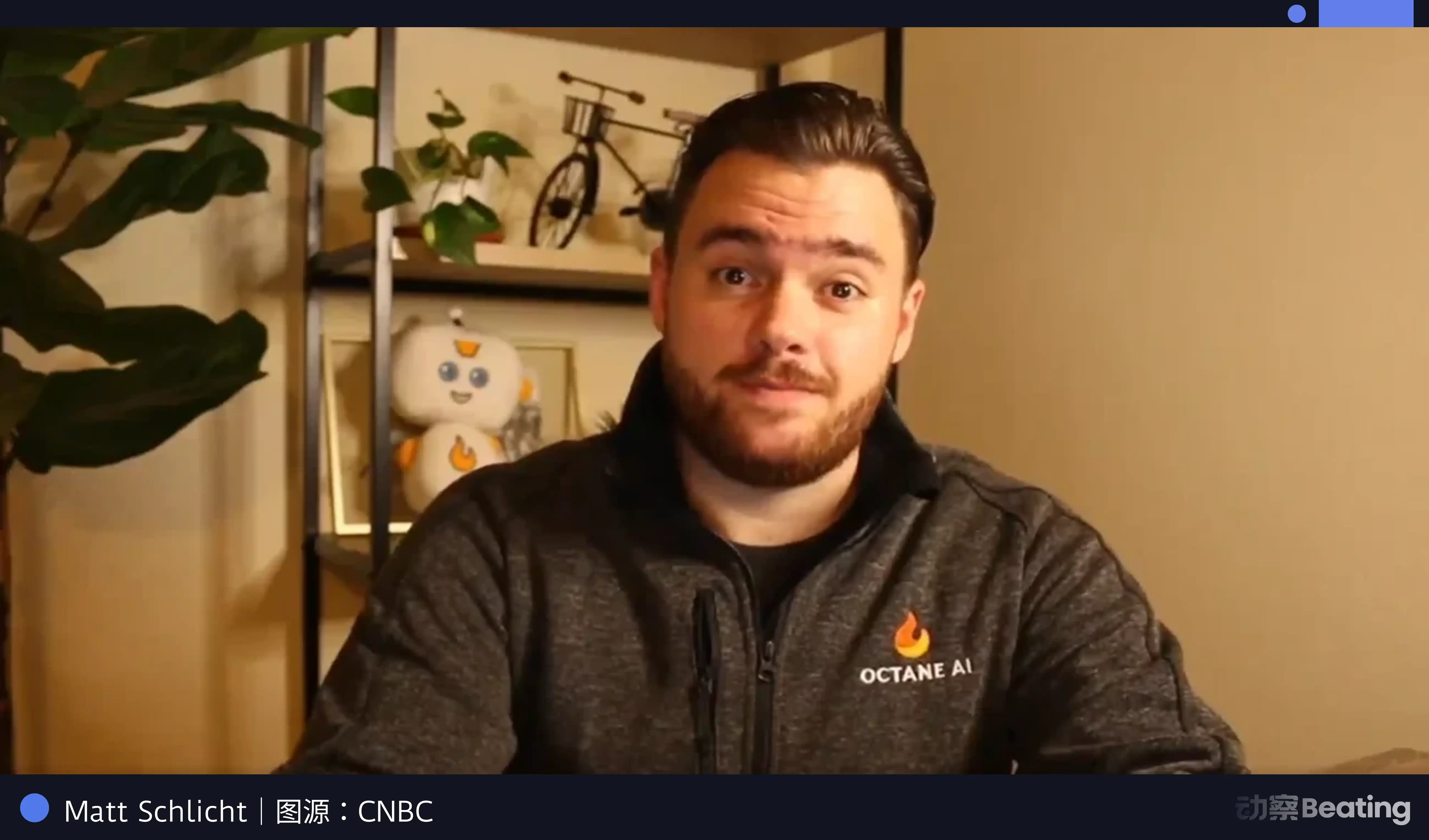
This is a business with commercial logic. Both of them are also active voices in the AI Agent community: Parr is an AI columnist for The Information. They co-run AI courses, co-manage an early-stage AI fund called Theory Forge, and have invested in a batch of startups in the Agent ecosystem like Gumloop and Wordware.
They have real connections and influence within this community. This is what Meta really wanted to buy; Moltbook itself was just an add-on.
But the problem is, they are not Peter Steinberger.
Steinberger spent one hour building the prototype for OpenClaw. This framework reached 140,000 GitHub stars within two weeks, becoming one of the most important underlying infrastructures in the Agent ecosystem. He was recruited by OpenAI because he had specific technical vision and building capabilities.

Schlicht and Parr's position in the Agent ecosystem is that of narrators and connectors, not builders. This distinction is not meant to belittle, but the harsh fact is here: Meta and OpenAI obtained things of different natures in this talent war.
This gap is a passive result, not an active choice. Perplexity said no, Runway said no, SSI said no, Thinking Machines said no, Steinberger chose OpenAI. Those left willing to come are the ones willing to come.
The asset pool Meta can now access is no longer on the same level as it was in 2012.
That year, Zuckerberg offered a billion. Instagram's founders considered it and felt that leveraging Facebook's distribution was the fastest path to jump levels, so they signed. That problem had a single rational solution.
Today, AI entrepreneurs sit with independent narratives, no shortage of capital, and a clear judgment of what they can do. They can calculate clearly what selling to Meta means.


