






Sui DeFi's "Three-Engine" Revolution: How New Capabilities, New Assets, and New Programs Are Building the Future of On-Chain Finance?


- Core Viewpoint: Sui DeFi is constructing a self-reinforcing liquidity engine through three core elements—"New Capabilities, New Assets, New Programs"—aiming to evolve the ecosystem from static liquidity pools into a dynamic system of capital-efficient and sustainable growth.
- Key Elements:
- New Capability - DeepBook Margin: Upgrades the core order book into a programmable financial base layer, natively embedding logic for margin trading, liquidation, etc., providing shared infrastructure for any application. This enhances capital efficiency and supports innovation in complex financial products.
- New Asset - eSui Dollar: As the first synthetic dollar natively integrated with DeepBook Margin, it possesses "programmable asset" characteristics, enabling direct use in advanced DeFi functions like margin trading. It has already garnered support from multiple ecosystem projects and institutional investors.
- New Program - Moonshots: A highly selective accelerator program that annually selects around 10 teams, focusing on nurturing "category-defining" projects that can introduce novel financial primitives and achieve breakthroughs in capital efficiency. It provides comprehensive support in funding, technology, and marketing.
- Synergistic Effect: The three elements form a positive feedback loop: DeepBook Margin provides the infrastructure, eSui Dollar injects high-quality liquidity, and Moonshots catalyzes innovative applications. Together, they drive the ecosystem's endogenous growth and appeal.
- Strategic Goal: To build a "self-sustaining liquidity engine." Through composable infrastructure, diverse assets, and continuous innovation, it aims to attract more users, capital, and developers, propelling Sui DeFi into a new phase focused on sustainability and scalability.
Original | Odaily (@OdailyChina)
Author | Qin Xiaofeng (@QinXiaofeng 888 )
Introduction: The "Evolution" of Sui DeFi
In the world of blockchain, every technological leap is accompanied by a deep restructuring of the ecosystem.
When core members of Meta's stablecoin team dedicated themselves to building a high-performance public chain, they created one of the most dynamic ecosystems in the cryptocurrency space. From the underlying infrastructure to the DeFi ecosystem supporting over $17 billion in on-chain transaction volume, Sui has undergone a perfect evolution.
But behind this growth, a key question persists: As ecosystem activity accelerates, how can liquidity on Sui continue to develop to become more capital-efficient and vibrant? What's next for Sui DeFi?
The answer is beginning to take shape. In early 2026, Sui DeFi entered a new growth phase driven by three core elements: "New Capabilities, New Assets, New Initiatives": DeepBook Margin redefines the underlying architecture, eSui Dollar injects institutional-grade liquidity, and the Moonshots program fuels continuous innovation. Working in synergy, these three transform Sui's liquidity from "static pools" into a true "self-sustaining liquidity engine"—self-reinforcing through shared primitives, composable assets, and ecosystem acceleration.
I. New Capability: DeepBook Margin, Laying Sui's "Financial Foundation"
(1) The Qualitative Leap from "Trading Engine" to "Financial Layer"
Traditionally, DeepBook, as the core order book of the Sui ecosystem, primarily provided efficient and transparent matching services for spot trading. Its success is undeniable—as invisible infrastructure, DeepBook has provided solid support for the entire ecosystem's trading stack, processing over $17 billion in cumulative on-chain volume.
But the launch of DeepBook Margin marks the upgrade of this infrastructure from a mere "trading engine" to a complete "financial layer." This qualitative change is reflected in the fundamental expansion of its core capabilities: DeepBook is no longer just a spot order book; through shared infrastructure, it allows any application to natively embed margin, rewards, and liquidation logic.
The deeper significance of this transformation is that it provides crucial propulsion for the scaled development of the entire Sui ecosystem. As the DeepBook team emphasizes, "Liquidity on Sui transforms from static pools into active systems supporting lending, risk management, and execution." This dynamic liquidity management model not only improves capital utilization efficiency but also lays a solid foundation for innovation in complex financial products.
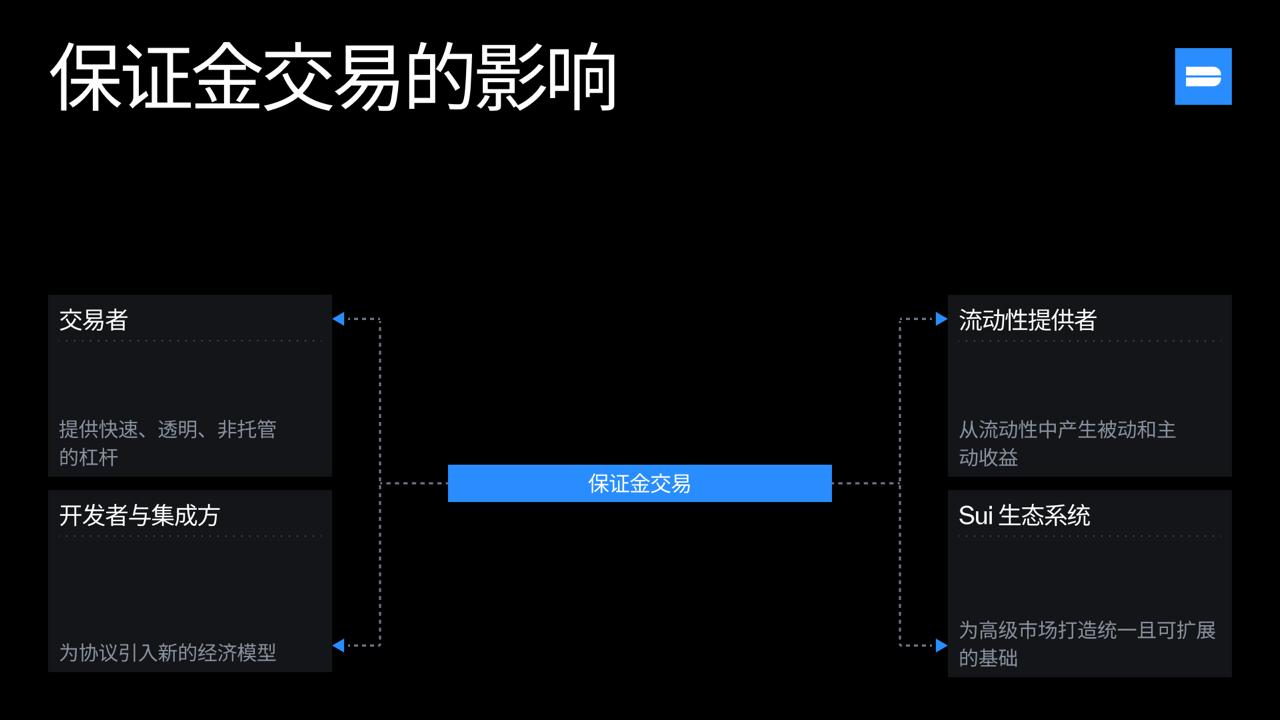
More importantly, DeepBook Margin adopts a "Infrastructure-as-a-Service" design philosophy. Any development team can directly leverage this shared financial infrastructure without having to build complex margin trading, risk control, and liquidation mechanisms from scratch. The advantages of this model are evident: developers can focus more on optimizing product experience and business logic, while users enjoy more unified and in-depth liquidity services.
(2) The Power of Infrastructure: Built for Large-Volume Traders
From a technical architecture perspective, the upgrade of DeepBook Margin directly addresses the core demands of large-volume traders for high-performance financial infrastructure. In traditional DeFi environments, liquidity is often fragmented across isolated protocols, leading not only to inefficient price discovery but also limiting execution depth for large trades.
DeepBook Margin fundamentally solves this issue through a unified liquidity pool design. All margin trades are matched through the same shared execution engine, meaning users benefit from unified liquidity and tighter execution. For large-volume traders seeking optimal execution prices, the deeper order books and narrower spreads resulting from this unified liquidity offer irreplaceable value.
From a performance metrics standpoint, Sui's underlying architectural advantages are fully realized in DeepBook Margin. Thanks to Sui's high-performance environment, the system not only features a real-time liquidation engine but also supports advanced functions like isolated margin pools, ensuring the safety and efficiency of large-scale trades. This performance advantage is particularly important for institutional users—they need not only fully-featured financial tools but also stable infrastructure capable of handling large-volume transactions.
It's worth emphasizing that DeepBook Margin's margin trading mechanism provides advanced traders with greater leverage and operational flexibility. Through isolated margin pools and flexible fee mechanisms, traders can manage risk exposure more precisely while achieving higher capital utilization. The native integration of such advanced features gives Sui a clear competitive edge in attracting professional traders and institutional capital.
(3) Capability as Foundation: The Strategic Significance of a Programmable Financial Base
From a broader strategic perspective, the launch of DeepBook Margin constructs a truly "programmable" financial foundation for Sui. This "capability" itself is a neutral technical infrastructure, but it provides unprecedented possibilities for upper-layer applications and innovation.
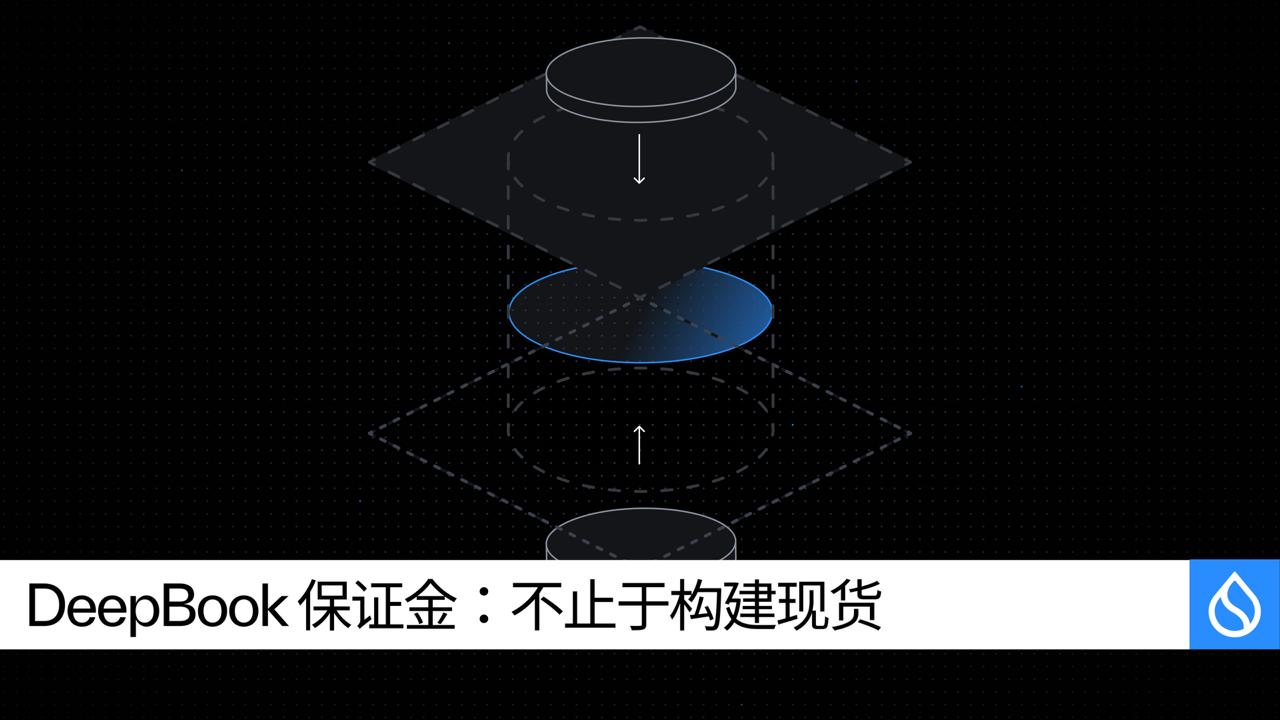
The value of this programmability lies in its composability potential. Any new asset type, once issued on Sui, can immediately gain full leverage trading, lending, and risk management functionalities without needing to rebuild the underlying financial logic. This not only significantly lowers the entry barrier for new projects but also provides richer building blocks for innovative applications.
As demonstrated by the upcoming discussion of the native integration between eSui Dollar and DeepBook Margin, this composability is not a theoretical concept but an architectural advantage already validated in practical applications. When new financial primitives and asset types can seamlessly integrate with existing infrastructure, the speed and quality of innovation across the entire ecosystem are significantly enhanced.
II. New Assets: Led by eSui Dollar, Injecting "High-Octane Fuel" into the Financial Engine
(1) eSui Dollar: More Than a Stablecoin, It's a "Programmable Asset"
In the development of DeFi ecosystems, stablecoins have always played the dual roles of "value anchor" and "liquidity carrier." However, the launch of eSui Dollar (suiUSDe) pushes the concept of stablecoins to a new dimension. This synthetic dollar, issued in collaboration with Ethena Labs, is not just another stablecoin option in the Sui ecosystem; it is the first truly "programmable asset."

The uniqueness of eSui Dollar is first reflected in its native integration with DeepBook Margin. As the first synthetic dollar integrated with DeepBook Margin, eSui Dollar can be directly used for margin trading, leveraged lending, and other complex DeFi workflows—a capability traditional stablecoins lack.
This native integration showcases the foresight of Sui's architectural design. eSui Dollar doesn't require complex cross-protocol calls to achieve leverage functionality; instead, it gains full financial capabilities directly at the protocol layer. This design not only improves execution efficiency but also significantly reduces smart contract risks and gas fee consumption.
More importantly, the launch of eSui Dollar validates the practical value of DeepBook Margin as a programmable financial foundation. When a new asset type can gain full margin trading support on its first day of launch, it signifies that the Sui ecosystem has acquired the core characteristics of mature financial infrastructure.
(2) The "Ecosystem Panorama" of Assets: Full Coverage from Institutions to Retail
The application scenarios for eSui Dollar within the Sui ecosystem demonstrate considerable breadth and depth. From a technical integration perspective, eSui Dollar's margin trading functionality is already live on several ecosystem projects including Abyss, Cetus, and Deeptrade. Meanwhile, other projects can quickly integrate DeepBook Margin trading support, providing participants with more choices and helping to drive the development of Sui DeFi.
This broad ecosystem support not only reflects eSui Dollar's technical compatibility but also indicates the maturity of Sui's internal collaboration mechanisms. Developers don't need separate integration negotiations with each protocol; they can access all of eSui Dollar's functionalities through standardized interfaces. This "integrate once, use everywhere" model greatly improves the ecosystem's collaboration efficiency.
From a user experience perspective, eSui Dollar offers differentiated value creation paths for different types of market participants. For liquidity providers, they can use eSui Dollar via DeepBook Margin to simultaneously earn "passive income (lending revenue)" and "active income (trading fee shares)." This dual-income model significantly enhances capital utilization efficiency.
It's particularly noteworthy that numerous ecosystem projects, including Aftermath, AlphaLend, Bluefin, Ember, Navi, Pyth, Scallop, and Suilend, have announced support for eSui Dollar. This breadth of ecosystem support indicates that eSui Dollar has become an indispensable core asset within Sui DeFi.
More strategically significant is the important endorsement eSui Dollar has received from institutional-level participants. Marius Barnett, Chairman of SUI Group Holdings, explicitly stated: "SUI Group is deeply invested in the Sui ecosystem. We value its underlying systemic thinking framework and the institutional-grade on-chain market infrastructure it creates for long-term value. The launch of eSui Dollar and DeepBook Margin lays a solid foundation for us to build efficient capital trading and liquidity provisioning extensions based on Sui. This is precisely the type of programmable market infrastructure we look forward to participating in, brought to market as on-chain systems mature."
This institutional-level recognition not only proves the technical maturity of eSui Dollar but also lays an important foundation for its application in traditional financial markets. When institutional investors begin to view Sui as reliable financial infrastructure, the capital capacity and application scenarios of the entire ecosystem will see a qualitative improvement.
(3) Outlook for Q1 2026: More "Fuel" is on the Way
The successful launch of eSui Dollar is just the first step in Sui's asset diversification strategy. According to relevant plans, more new assets will launch on Sui in Q1 2026, further enriching the ecosystem's asset categories and application scenarios.
Recently, 21Shares, Canary Capital, and Grayscale have successively launched spot and staking ETFs for Sui, which are already trading on Nasdaq and NYSE Arca, further validating that Sui's new asset initiatives are being fully implemented.
The logical support behind this forward-looking asset expansion strategy is precisely "new capabilities" like DeepBook Margin. With a mature programmable financial foundation, any future new asset—whether stablecoins, synthetic assets, or other innovative tokens—can immediately gain advanced financial functions like leverage trading and lending upon launch, greatly reducing the cold-start difficulty for new assets.
This "plug-and-play" asset launch model will accelerate the flourishing diversity of assets on Sui and create more trading pairs and liquidity depth for the entire ecosystem. When the variety of assets reaches a critical mass, network effects will kick in, attracting more traders, developers, and liquidity providers to join the ecosystem.
More importantly, a diversified asset structure will provide Sui DeFi with stronger risk resistance and richer arbitrage opportunities. When different types of assets operate on the same efficient financial infrastructure, their combinations and interactions will generate innovative potential far exceeding that of any single asset.
III. New Initiative: Moonshots, the Accelerator for Finding the Next "Killer App"
(1) The Positioning of Moonshots: Finding "Category Definers"
In the history of the blockchain industry, what truly drives progress is often not incremental optimization but breakthrough innovations that "redefine the rules of the game." Based on this understanding, Sui launched the DeFi Moonshots program—a highly selective accelerator specifically designed to find and nurture "category definers."
The core philosophy of the Moonshots program can be summarized in one sentence: pursue transformation, not iteration. Unlike traditional incubators or accelerators, Moonshots selects only about 10 teams per year. This extremely low acceptance rate reflects its exceptionally high standards for project quality. The program explicitly states it is not looking for projects that make minor adjustments to existing models but focuses on teams "developing new financial primitives and products that achieve breakthroughs in capital efficiency."
Behind this highly selective strategy lies a deep understanding of DeFi's development patterns. In the current market environment, simple liquidity mining or yield farming can no longer create sustained value. Meaningful innovation must expand the design space of DeFi, introducing mechanisms or interaction patterns that do not currently exist on-chain.
The Moonshots program's evaluation criteria for applicant teams clearly reflect this philosophy:
First is the assessment of product ambition, including whether it can introduce new financial primitives, achieve substantial improvements in capital efficiency through technological innovation, attract previously untapped user groups or asset flows, and design products that foster sustained engagement beyond short-term liquidity accumulation.
Second is the consideration of team execution capability, including proven delivery speed and real adoption records, deep expertise in the financial systems being built, meaningful open-source contributions, evidence of market validation or fundraising credibility, and experience in building or contributing to successful protocols.
This dual screening mechanism ensures that the Moonshots program can not only identify innovative ideas with transformative potential but also find excellent teams capable of turning these ideas into real products.
(2) Synergy: Innovating on the Shoulders of Giants
Another core advantage of the Moonshots program lies in its deep synergistic effect with Sui's ecosystem "new capabilities" and "new assets." Teams selected for Moonshots will become the greatest beneficiaries of infrastructure like DeepBook Margin and eSui Dollar, enabling them to truly innovate on the shoulders of giants.
The practical value of this synergy is evident. In traditional DeFi development, teams often spend significant time and resources building basic financial logic—from simple token swaps to complex liquidation mechanisms, each step requires design and implementation from scratch. This not only prolongs product development cycles but also increases project failure risk.
But for Moonshots projects, the situation is entirely different. They don't need to build complex liquidation or lending logic from zero; they can directly leverage DeepBook Margin as infrastructure and use high-quality assets like eSui Dollar as building materials, allowing them to focus their main efforts on innovating product logic and user experience.
This "infrastructure-first" innovation model significantly lowers the innovation threshold for top-tier teams, accelerating the entire process from idea to product launch. More importantly, it allows innovative teams to concentrate their attention on developing truly differentiated features rather than rebuilding already mature foundational components.
From a longer-term perspective, the success of Moonshots projects will also bring a positive feedback loop to the Sui ecosystem. These supported teams will likely issue their own innovative assets in the future, further enriching Sui's asset categories. And all the trading volume generated by these innovative products will ultimately feed back into DeepBook, bringing it more usage and fee revenue, forming a healthy value creation cycle.
(3) Substantive Support: Comprehensive Empowerment Beyond Funding
The value of the Moonshots program is reflected not only in the strictness of its selection mechanism but also in the substantive support it provides to selected teams. According to official information, selected teams will receive up to $500,000 in cumulative incentive funding, but more importantly, they receive comprehensive resource support including technical collaboration, security assurance, and market promotion.
In terms of technical collaboration, selected teams will engage directly with DeFi engineering experts on architecture, performance, and integration considerations. This practical collaboration model focuses on solving complex implementation challenges during system scaling. For innovative teams pursuing technological breakthroughs, this technical guidance from Sui's core development team is often more valuable than financial support.
In terms of security assurance, the Moonshots program provides audit credits through Sui's ecosystem security partners, enhancing protocol robustness before deployment and scaling. In the DeFi space, security audits are often a critical factor for project success. High-quality security audits not only discover and fix potential vulnerabilities but are also an important prerequisite for gaining user and institutional trust.
In terms of market promotion, Moonshots assists in coordinating launch visibility and milestone promotion, ensuring products reach relevant audiences at key growth moments. In the highly competitive DeFi market, even the best products require effective marketing to gain deserved attention. The market promotion support from the Moonshots program can help innovative products reach the right user groups at the right time.
This comprehensive support system reflects Sui's strategic thinking for the long-term development of the ecosystem. By providing integrated resource support to the most promising innovative teams, Moonshots not only increases the success probability of individual projects but also provides a continuous source of momentum for sustained innovation across the entire ecosystem.
IV. Conclusion: Three Pillars, Building Sui's "Self-Sustaining Liquidity Engine"
When we view DeepBook Margin's "new capabilities," eSui Dollar's "new assets," and Moonshots' "new initiative" as a whole, a clear strategic picture emerges: Sui is building a truly "self-sustaining liquidity engine."
In this meticulously designed system, each part plays an irreplaceable role. DeepBook Margin, as the core "engine," provides programmable foundational power for the entire system. It not only improves liquidity utilization efficiency


