RWA Weekly Report|Asset Users Experience First Significant Pullback; US SEC Discusses "Progressive" Regulatory Path for Tokenized Securities, Proposes Innovative Exemption Mechanism (2.15-2.24)


- Core View: The total on-chain value of the RWA (Real World Assets) market has continued to grow recently, but user numbers have declined for the first time. Meanwhile, US regulators are actively formulating regulatory frameworks for stablecoins and tokenized securities, providing clearer compliance pathways for industry development.
- Key Elements:
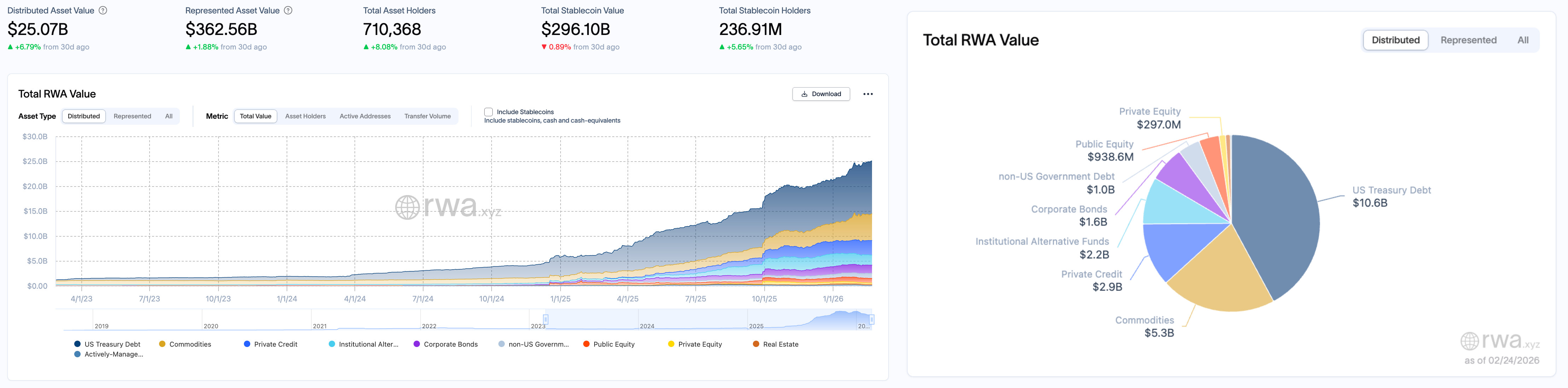
- As of February 24, the total on-chain value of RWA reached $25.07 billion, a two-week growth of 3.85%; however, the total number of asset holders fell by 15.65% to 710,400, marking the first user contraction.
- The US SEC clarified that broker-dealers' proprietary payment stablecoin positions can be calculated for net capital purposes with a 2% haircut, providing more favorable capital treatment rules for institutional use of stablecoins.
- The SEC is considering introducing an "innovation exemption" mechanism for tokenized securities, allowing limited trading on new types of platforms to explore regulatory pathways in a progressive manner.
- Chinese regulatory policy explicitly prohibits RWA domestically and strictly regulates it overseas. RWA based on Hong Kong assets is not under the jurisdiction of mainland regulatory authorities, with strict controls on domestic assets moving offshore.
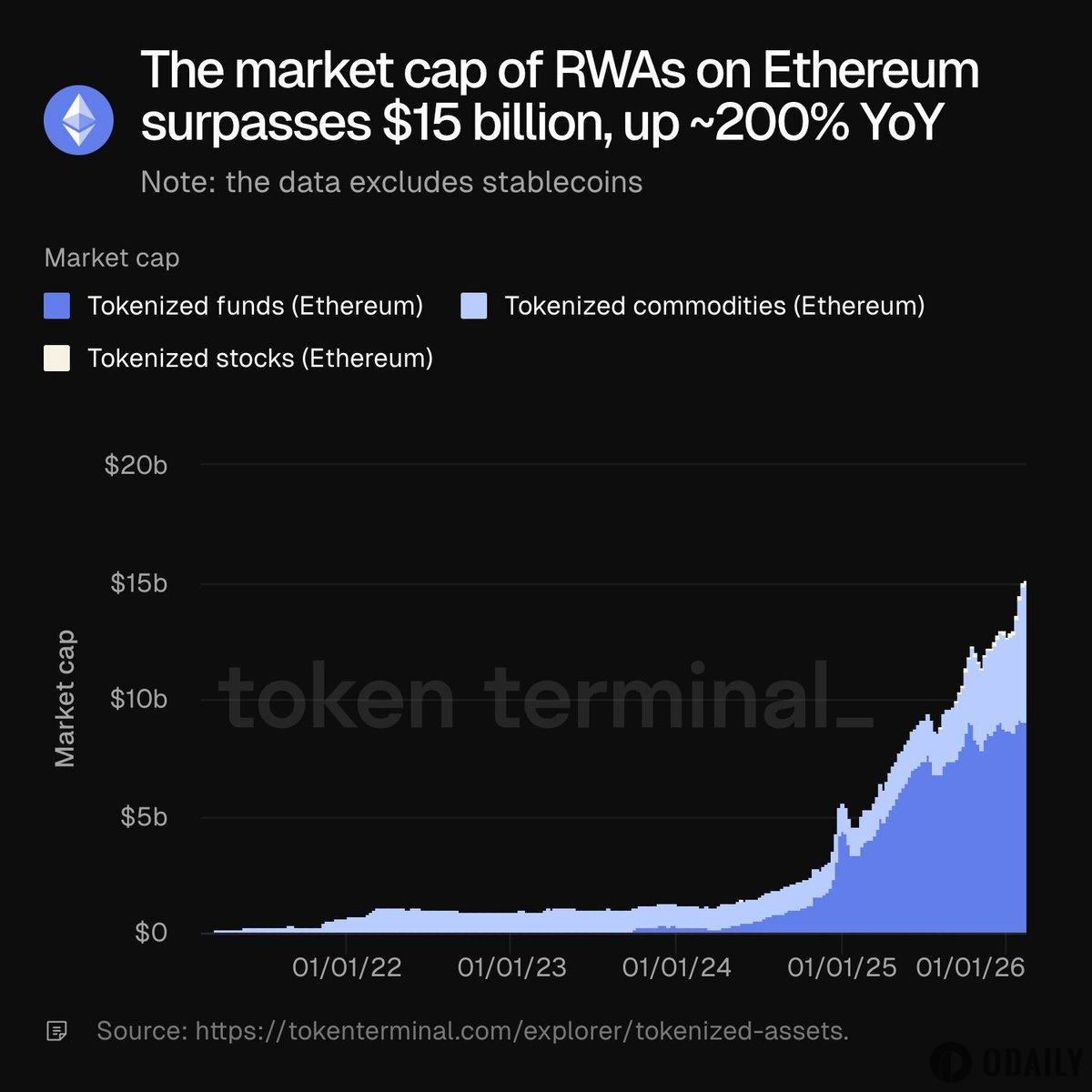
- The total market value of RWA assets on the Ethereum chain has surpassed $15 billion, a year-on-year increase of approximately 200%, indicating rapid development of this sector on mainstream public chains.
- Protocols like Ondo Finance are introducing tokenized stocks (e.g., SPYon, QQQon) into Ethereum DeFi as collateral, driving the application of RWA in decentralized finance.
Original | Odaily (@OdailyChina)
Author | Ethan (@ethanzhang_web3)
RWA Sector Market Performance
According to the rwa.xyz data dashboard, as of February 24, 2026, the total on-chain value of RWA (Distributed Asset Value) increased from $241.4 billion on February 10 to $250.7 billion, a combined increase of approximately $9.3 billion over two weeks, representing a growth of about 3.85%. The on-chain asset scale continues to refresh its periodic highs. The total value of representative assets (Represented Asset Value) rose from $3541.4 billion to $3625.6 billion, an increase of about $8.42 billion, representing a growth of approximately 2.38%.
On the user side, there was a first decline. The total number of asset holders dropped from 842,200 to 710,400, a decrease of approximately 131,800 people, a decline of about 15.65%. Regarding stablecoins, the total market capitalization remained largely stable, slightly decreasing from $2967.9 billion to $2961.0 billion, a reduction of about $690 million, a drop of about 0.23%. However, the number of stablecoin holders increased significantly, growing from 227.89 million people to 236.91 million people, an increase of about 9.02 million people, a growth of nearly 4%, indicating that the user base for on-chain capital is still expanding.
In terms of asset structure, U.S. Treasury bonds grew from the previous $9.9 billion to $10.6 billion, an increase of about $700 million, a growth exceeding 7%, becoming the single largest contributing sector to the total volume during this period. Commodity asset scale remained around $5.3 billion, essentially flat compared to two weeks ago, maintaining a high level. Private credit slightly increased from $2.8 billion to $2.9 billion, continuing its moderate expansion. Institutional alternative funds remained around $2.2 billion with little change, staying in a sideways range. Compared to the above assets, other asset categories experienced smaller fluctuations.
Trend Analysis (Compared to Last Week)
Overall, compared to February 10, during this phase of the RWA market, the scale of on-chain distributed assets continues to expand, with U.S. Treasuries becoming the primary direction for capital allocation. Commodities and private credit maintain high-level stability, with structural increments more concentrated in low-risk or high-liquidity categories. Furthermore, while stablecoin market cap is moving sideways, users have increased significantly, and overall risk appetite remains moderate. Capital has not migrated on a large scale to high-volatility or low-liquidity assets; the structural focus still leans towards directions that balance yield certainty and liquidity.
Market Keywords: Holder Contraction, U.S. Treasury Strengthening, Low-Risk Investment.
Key Event Review
The U.S. Securities and Exchange Commission (SEC) updated the Q&A related to Rule 15c3-1 (Net Capital Rule) on its official website on February 19, clarifying the haircut treatment for broker-dealers when calculating net capital for their proprietary payment stablecoin positions.
The explanation states that if a broker-dealer determines its proprietary holdings of payment stablecoins have a "ready market" under Rule 15c3-1, then when calculating net capital, a 2% haircut can be applied to the larger side (long or short) of the market value of the proprietary position. The SEC staff will not object to this treatment method.
Hester Peirce, Chair of the SEC's Crypto Assets and Cyber Unit, subsequently issued a statement supporting this approach. She emphasized that stablecoins are important infrastructure for blockchain payments and transactions, and reasonable capital treatment helps broker-dealers utilize stablecoins more effectively in custody, settlement, and businesses related to tokenized securities. She believes that compared to the 100% haircut some brokers might adopt out of caution, the 2% haircut better aligns with the reserve backing of payment stablecoins, which is primarily composed of U.S. dollars and high-quality short-term assets.
RWA Based on Hong Kong Assets Not Under the Jurisdiction of Mainland Chinese Regulatory Authorities
Following the joint release of the "Notice on Further Preventing and Disposing of Virtual Currency and Related Risks" (referred to as "Document No. 42") by the People's Bank of China and seven other departments, the regulatory framework for mainland Chinese assets issuing RWA overseas is taking initial shape. The general tone of Document No. 42 is a strict prohibition domestically and strict regulation overseas for RWA.
According to sources familiar with the regulators, Hong Kong is one of the overseas issuance locations for RWA. RWA based on Hong Kong assets are not within the regulatory scope of Document No. 42 and are not under the jurisdiction of mainland regulatory authorities. Currently, there are no RWA based on underlying assets of mainland securities or funds in Hong Kong or other overseas locations. If there were, they would fall under the responsibility of the Institutional Department of the China Securities Regulatory Commission (CSRC). Furthermore, previously "it was uniformly not allowed." Now, "it's not said that none are allowed," but there is strict regulation of mainland assets going overseas for RWA. There is no implication of "encouragement" here; it must not be interpreted as "promoting development."
U.S. Securities and Exchange Commission (SEC) Chair Paul Atkins and Commissioner Hester Peirce stated that the regulator is considering introducing an "innovation exemption" for on-chain securities to promote the adoption of tokenized securities in the U.S. capital market in a gradual manner.
Atkins pointed out at the ETHDenver event that this exemption mechanism would allow certain tokenized securities to be traded on a limited basis on new platforms, while accumulating practical experience for establishing a long-term regulatory framework. Peirce reiterated that tokenized securities essentially still fall within the category of securities and should be advanced cautiously under the existing legal system.
Over the past year, traditional financial institutions including Nasdaq and DTCC, as well as several crypto companies, have explored tokenized stock businesses. If the SEC approves a related path, crypto platforms might be able to offer blockchain-based traditional stock trading, competing with traditional brokerages.
Currently, global demand for tokenized stock trading continues to heat up. Kraken reported that the cumulative trading volume of its xStocks product has reached $25 billion; Robinhood's RWA blockchain project also saw trading volume exceed 4 million transactions in its first week. The SEC stated it will adopt a "step-by-step" approach to balance innovation and investor protection.
U.S. Senator: CLARITY Act Could Pass by April, Coinbase Sees "Path Forward"
U.S. Senator Bernie Moreno stated that the crypto market structure bill, the CLARITY Act, is expected to pass Congress before April. Moreno said in an interview with CNBC that a clear path forward for the bill has now emerged.
Coinbase CEO Brian Armstrong said in the same interview that while there were previously disagreements over stablecoin interest-bearing provisions and regulatory jurisdiction, parties are now seeking a "win-win" solution. Reports indicate that stablecoin yield provisions are one of the main points of contention in advancing the bill.
Moreno also stated that he does not believe the results of the midterm congressional elections will affect the bill's passage process. Previously, relevant White House officials also expressed positive expectations for the bill's advancement early this year.
The U.S. Securities and Exchange Commission website released the discussion content of Chair Paul Atkins at the ETHDenver conference, disclosing that the following matters will be considered in the coming weeks and months:
1. Develop a framework explaining how to view crypto assets subject to investment contracts. How such investment contracts are formed and terminated;
2. Establish an innovation exemption to facilitate limited trading of certain tokenized securities on new platforms, with an eye towards establishing a long-term regulatory framework;
3. Propose a rulemaking aimed at establishing a reasonable path for raising funds through the sale of crypto assets;
4. No-action letters and exemptive orders to provide more clarity, including addressing wallets that do not require registration under the Securities Exchange Act;
5. Rulemaking regarding broker-dealer custody of non-security crypto assets (including payment stablecoins);
6. Develop rules on the modernization of transfer agents to accommodate the role blockchain can play in record-keeping;
7. Provide additional guidance and no-action letters to help the crypto community understand how existing rules apply to unique practical situations.
Total Market Cap of RWA Assets on Ethereum Exceeds $15 Billion
On February 17, Token Terminal data showed that the total market capitalization of RWA assets (including tokenized funds, tokenized commodities, tokenized stocks) on the Ethereum blockchain has exceeded $15 billion, a year-on-year increase of approximately 200%.
OneChain Officially Announces Completion of $67 Million Series A Strategic Financing
OneChain recently officially announced the completion of a $67 million Series A strategic financing round. This round of funding will primarily be used to build a complete RWA (Real-World Assets) on-chain infrastructure for institutional asset issuers, financial institutions, and global investors, providing a one-stop solution for real-world assets covering issuance, management, rights confirmation, and liquidity trading.
This round of financing was jointly invested by Bitgo Capital, East Bank, PACIFIC BANK, and UBpay, with GBEX Holdings serving as the exclusive financial advisor for this financing.
Tokenizing Real-World Value (OneChain) is dedicated to converting real-world value into on-chain assets and is a compliant global RWA asset issuance and management platform.
WLFI: USD1 Suffers Organized Attack, Token Maintains 1:1 Peg
WLFI issued a statement saying that USD1 suffered an organized attack on the morning of the same day. The announcement pointed out that relevant personnel hacked into the accounts of several WLFI co-founders, spread negative information through channels, and simultaneously established a large number of WLFI short positions.
WLFI stated that USD1, backed by 1:1 asset support and its minting and redemption mechanism, currently continues to trade at parity with its pegged assets. The team emphasized that it will continue to advance its established plans and advised users to rely on information from officially verified channels.
Hot Project Updates
Ondo Finance (ONDO)

One-Sentence Introduction:
Ondo Finance is a decentralized finance protocol focused on structured financial products and the tokenization of real-world assets. Its goal is to provide users with fixed-income products, such as tokenized U.S. Treasury bonds or other financial instruments, through blockchain technology. Ondo Finance allows users to invest in low-risk, high-liquidity assets while maintaining the transparency and security of decentralization. Its token, ONDO, is used for protocol governance and incentive mechanisms. The platform also supports cross-chain operations to expand its application scope within the DeFi ecosystem.
Latest Updates:
On February 12, Ondo Finance announced that Ondo Global Markets' tokenized stocks are now live on DeFi lending markets, first launching SPYon and QQQon, integrated with Morpho and Gauntlet. Ondo's tokenized stocks and ETFs can now serve as efficient risk management collateral assets in Ethereum DeFi.
On February 13, Ondo Finance posted on X platform, stating that the DeFi application for Ondo tokenized stocks, supported by Chainlink as the official data oracle, is now live. Institutional-grade priced assets like QQQon and TSLAon have unlocked on-chain stocks as high-quality collateral. Leveraging TradFi liquidity and oracle data, Ondo's tokenized U.S. stocks can now support on-chain lending and structured products. The first projects to go live are Euler Finance vaults, with risk management by Sentora and security provided by Chainlink. This marks the first time tokenized stocks are used as collateral in Ethereum DeFi.
Previously, Bloomberg senior ETF analyst Eric Balchunas stated on X platform that 21Shares is applying to launch an Ondo ETF.
MSX (STONKS)
One-Sentence Introduction:
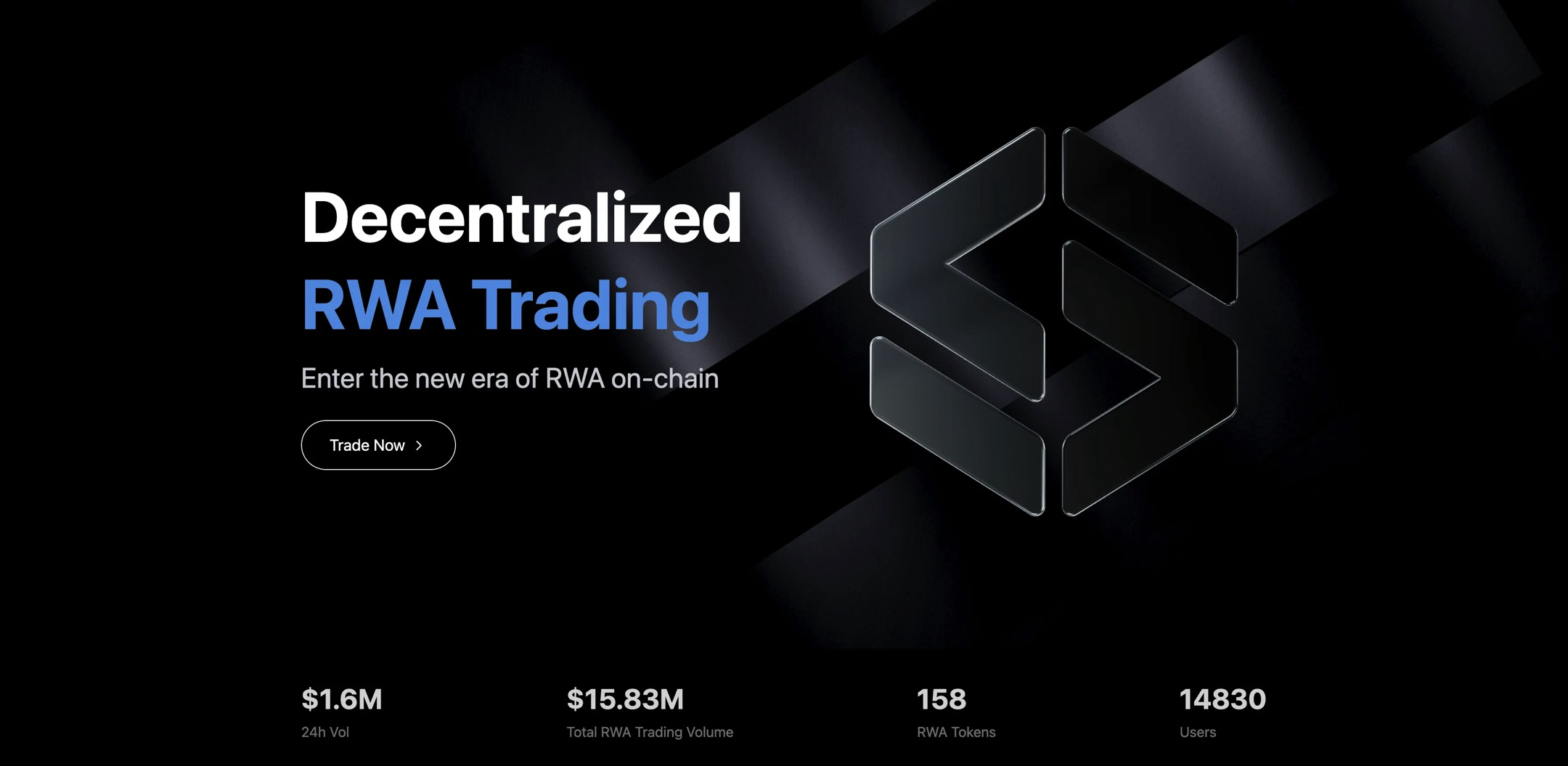
MSX is a community-driven DeFi platform focused on tokenizing and on-chain trading of RWAs such as U.S. stocks. Through cooperation with Fidelity, the platform achieves 1:1 physical custody and token issuance. Users can use stablecoins like USDC, USDT, and USD1 to mint stock tokens like AAPL.M and MSFT.M, and trade them 24/7 on the Base blockchain. All trading, minting, and redemption processes are executed by smart contracts, ensuring transparency, security, and auditability. MyStonks is committed to bridging the TradFi and DeFi boundaries, providing users with a high-liquidity, low-barrier entry point for on-chain U.S. stock investment, building the "Nasdaq of the crypto world."
Previous Updates:
On January 13, MSX issued an announcement that starting immediately, it would change the RWA spot trading fee collection model. After the adjustment, this segment changed from the original "two-way fee" to a "single-side fee." The specific implementation standard is that the buy side maintains a 0.3% fee, while the sell side fee is reduced to 0. This means that when users complete a full trading cycle of "buy + sell," the comprehensive trading cost will be substantially reduced by 50%. This fee policy is now effective across the entire MSX platform, covering all listed RWA spot trading pairs.
On February 11, MSX announced that its official website msx.com completed a comprehensive design upgrade on February 11, 2026. This redesign focused on three directions: "visual reconstruction, interaction optimization, and brand communication," including adopting a dark financial color scheme, introducing neumorphic style and character elements, and reorganizing the layout of market data and functional modules. In terms of interaction, the website increased page whitespace based on a grid system, de-emphasized non-critical information interference, and centralized and streamlined the entry