After a 30x Surge and Then a "Foot-Chop," Do You Still Dare to Get on the RIVER That Arthur Hypes?


- Core Viewpoint: The RIVER project token experienced extreme inverted V-shaped price volatility in January 2026. The underlying reasons point to potential price manipulation, highly concentrated early holdings, and actions that amplified volatility by exploiting the funding rate mechanism in derivative markets.
- Key Elements:
- RIVER's price surged over 2700% from around $2 to $87 within four weeks, then plummeted 87% to $11 in six days, exhibiting extreme market behavior.
- On-chain analytics firm Bubblemaps disclosed that a cluster of over 2,000 addresses is linked to the RIVER creator and is suspected of dumping tokens via the Bitget exchange, with estimated profits of around $10 million.
- Public endorsement by BitMEX founder Arthur Hayes and the project's completion of a $12 million strategic financing round provided narrative and capital momentum for the token's initial rise.
- Analysis suggests the market may have induced extreme negative funding rates to lure trading and leveraged cascading liquidations of leveraged positions to drive sharp price swings, creating a manipulation cycle.
- This incident highlights the extreme price risks inherent in low-circulation, high-volatility tokens when market sentiment, concentration of holdings, and derivative structures resonate.
Original Author: ChandlerZ, Foresight News
In the first month of 2026, the native token RIVER of the chain-abstract stablecoin system River experienced an extreme inverted V-shaped reversal within just four weeks. Starting from around $2 at the end of December 2025, it surged to a historical high above $87, marking a gain of over 2700%, before plummeting rapidly in just six days to a low near $11, a drop of 87%.
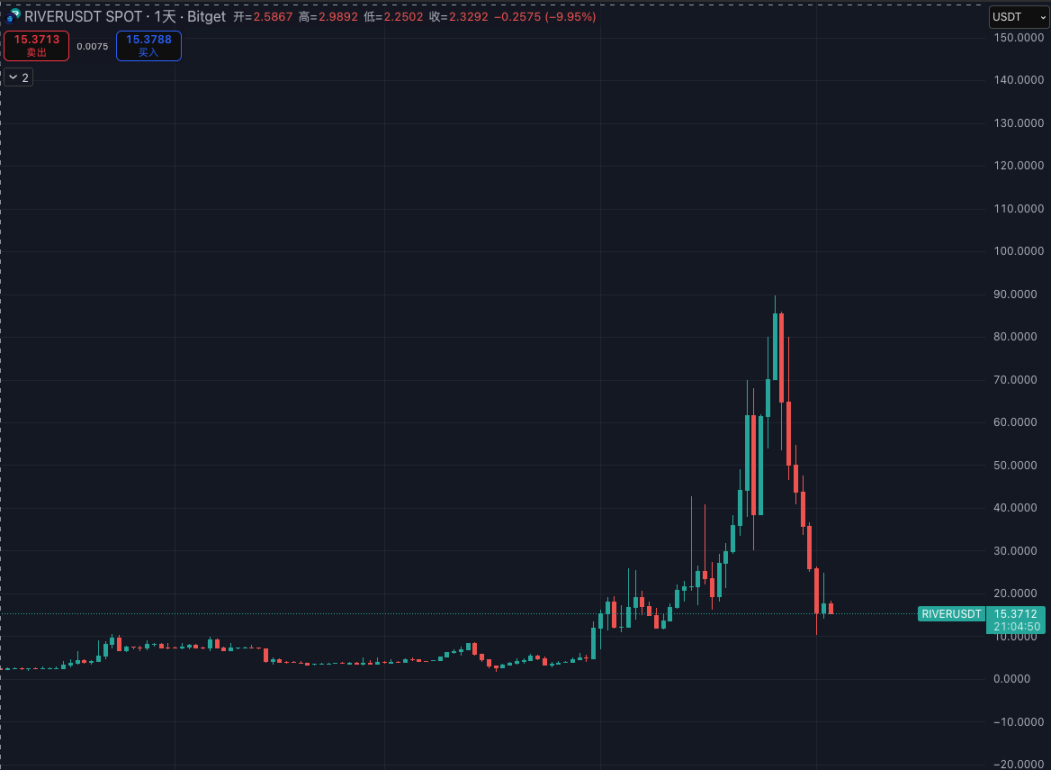
This abnormal market volatility has drawn high attention from industry observers and on-chain data analysis firms. As third-party data agencies like Bubblemaps disclosed key evidence on January 27th, questions surrounding RIVER token price manipulation, highly concentrated early holdings, and profits for associated addresses are intensifying.
New $12 Million Funding Round, Strongly Endorsed by Arthur Hayes
The River project is developed by the RiverdotInc team, with its core positioning being to build a chain-abstract stablecoin system for the multi-chain ecosystem. The system aims to connect assets, liquidity, and yields across different blockchains, enabling seamless cross-chain interactions without relying on traditional bridging or wrapping mechanisms.
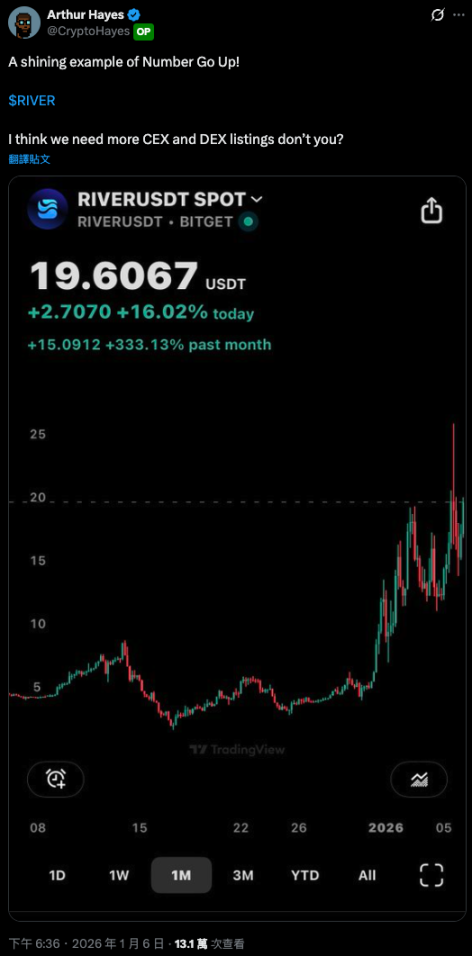
On January 6th, BitMEX founder Arthur Hayes publicly called for CEXs to list the token, predicting it would experience a breakout. Hayes' endorsement provided the first major boost for RIVER. Despite most mainstream crypto assets being in a downtrend at the time, RIVER entered a one-way upward trajectory, with its market cap more than quadrupling in just a few weeks.
On January 23rd, River announced the completion of a $12 million strategic funding round. In addition to previously reported participation from Justin Sun and TRON DAO, this round's investors also included Maelstrom Fund (founded by Arthur Hayes), The Spartan Group, and Nasdaq-listed companies and institutions from the US and Europe.
The official announcement stated that the funds will be used to support River's expansion into EVM and non-EVM ecosystems (including TRON, Sui, and major EVM networks) and to continue building on-chain liquidity infrastructure. The capital will accelerate ecosystem deployment, deepen stablecoin liquidity, and promote the integration of satUSD in trading, lending, staking, and yield scenarios. Furthermore, River will launch yield products Smart Vault and Prime Vault, providing a unified interface for users and institutions to access cross-ecosystem yields through protocol-native and institutional-grade strategies.
Interestingly, just a couple of days after announcing this substantial funding, RIVER's price reached its peak and began its descent.
The Price Manipulation Playbook Driven by Funding Rates
CoinGlass once used RIVER as an example to discuss how funding rates can be used in conjunction with leverage structures to drive price volatility, emphasizing that this pattern has appeared in multiple tokens over the past two years, with RIVER being just one case. It stressed that many traders misunderstand funding rates. Funding rates do not provide directional predictive signals; they provide information about the imbalance between long and short positions, indicating which side of the market is more crowded.
Step 1: Suppress the price while pushing the funding rate into deeply negative territory. First, keep the price low or suppressed, while simultaneously pushing the funding rate into a significantly negative range. The result is increasingly concentrated short positions, and the market begins to form a consensus expectation that negative funding rates imply a rebound is coming.
Step 2: Induce some traders to go long. During the phase of deeply negative funding rates, some traders will open long positions, motivated by the expectation of a rebound and the desire to receive funding rate payments. The thread refers to this expectation as part of the trap.
Step 3: Upward pushes can also occur during the negative funding rate phase. CoinGlass's key argument is that when funding rates are at extreme negative values, the price does not need to enter a trend reversal. The market only needs a controlled upward push to potentially trigger a chain reaction among shorts, including liquidations, stop-losses, and passive covering.
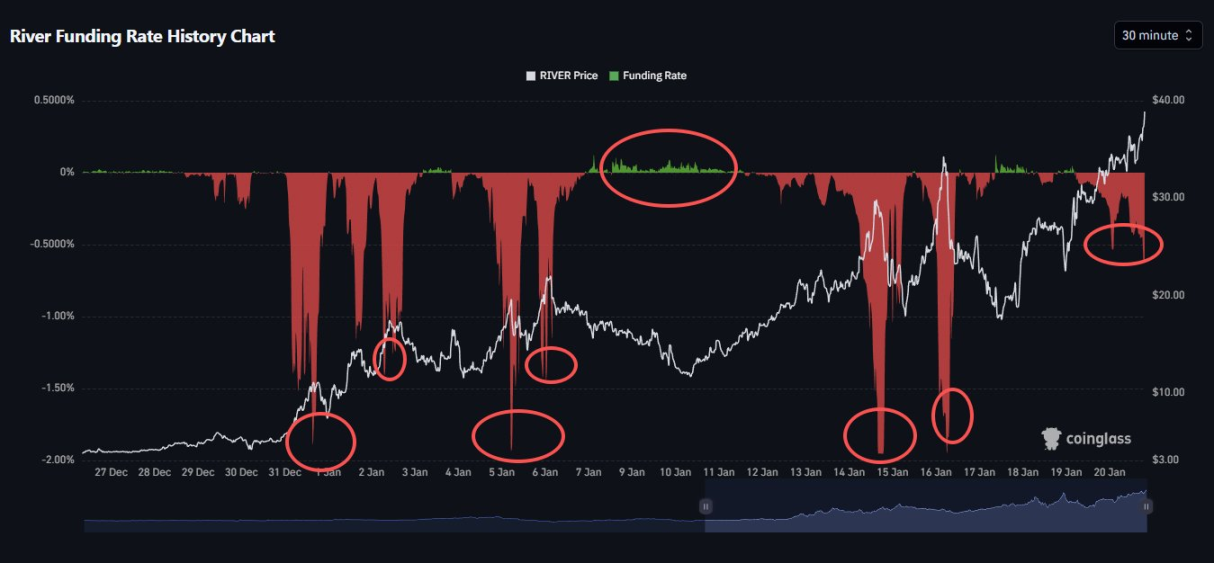
Why does the pump occur while funding rates are still negative? The starting points of many sharp rallies appear during phases when funding rates are still negative. The driving force behind the price push comes from the unwinding of leveraged positions, and passive buying in the market amplifies the gains. After the crowded short positions are washed out, funding rates quickly return to more neutral levels. Some traders interpret the normalization of funding rates as a signal of market health recovery.
CoinGlass warns that this is actually just the "reset" process of the trap, and manipulators can repeatedly cycle through the process of "creating extreme rates, attracting consensus positioning, forcing liquidations, resetting."
Analysis: RIVER Creators Suspected to be Directly Linked to a Massive Address Cluster, Profiting $10 Million from RIVER Sales
According to Bubblemaps monitoring, a massive cluster containing over 2000 wallet addresses is directly related to RIVER.
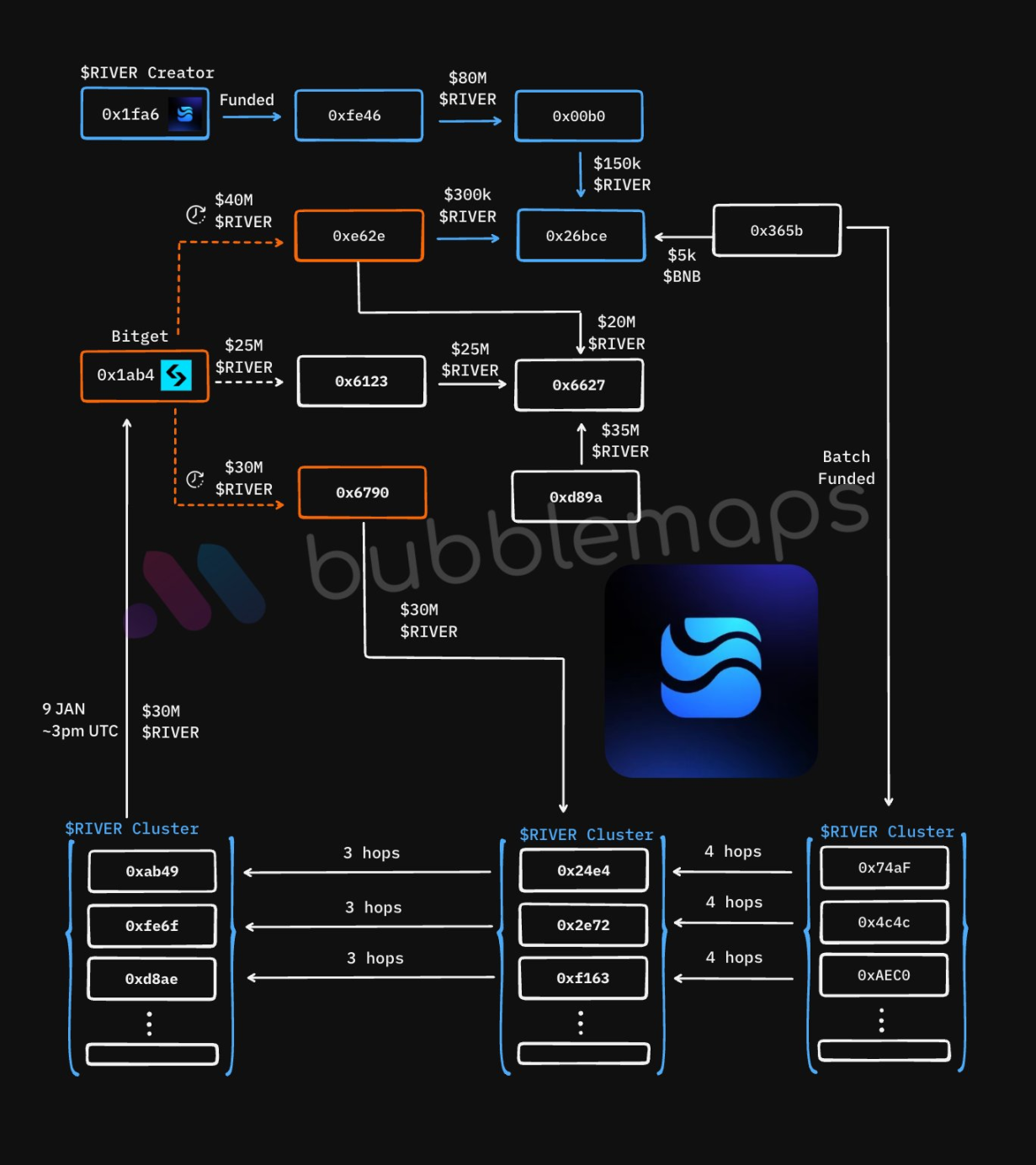
It pointed out that one month after RIVER's launch, 7 addresses withdrew 230 million RIVER tokens from Bitget. These wallets had no prior activity records and received the tokens within a tight time window on December 3rd and 29th.
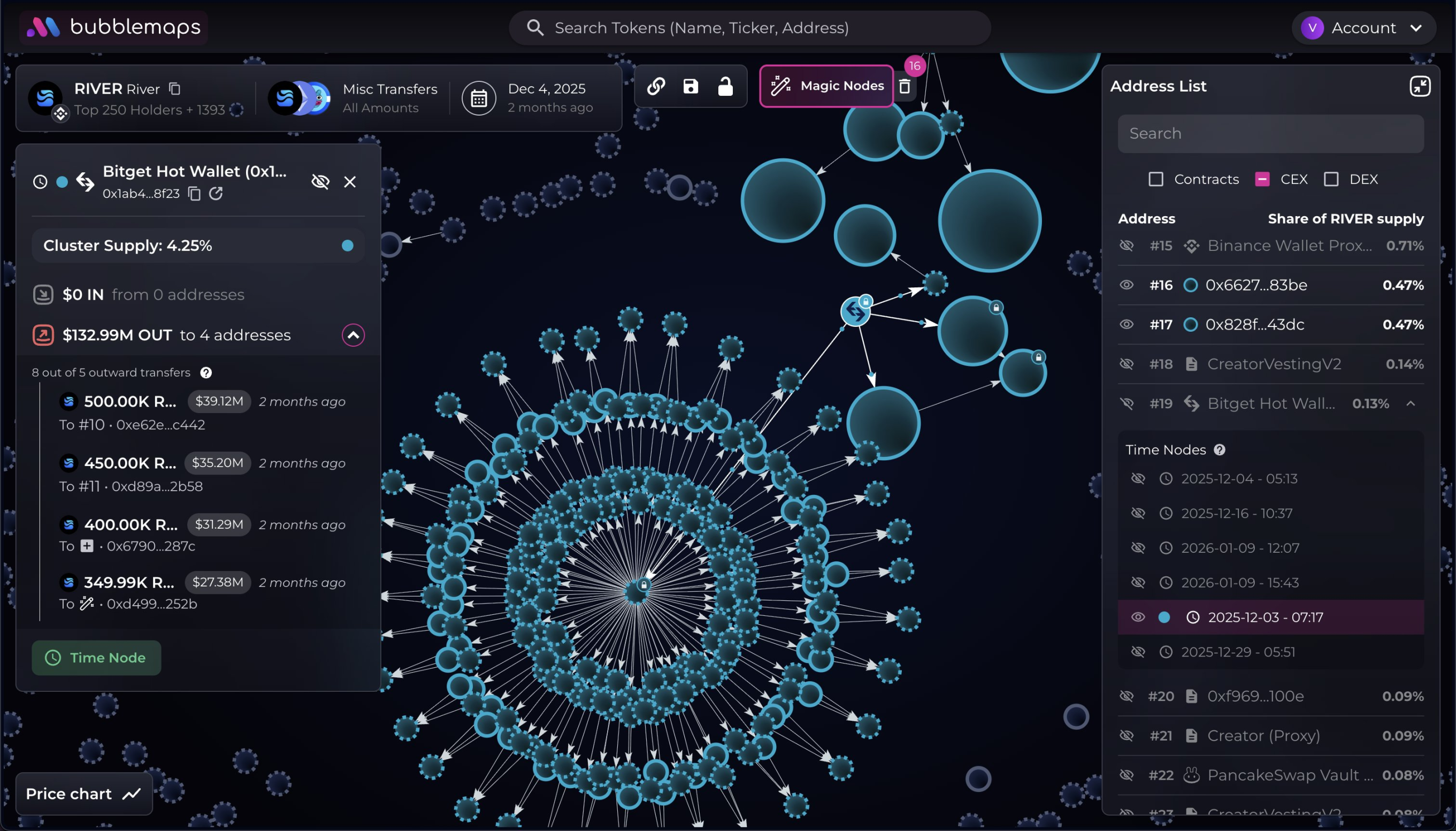
One of these wallets, 0x6790, distributed 400,000 RIVER across hundreds of wallets. All these receiving wallets showed similar patterns: no prior activity, receiving similar amounts of RIVER, sending tokens to Bitget on January 9th (likely for sale), funded by a single source, and routed through four hops.
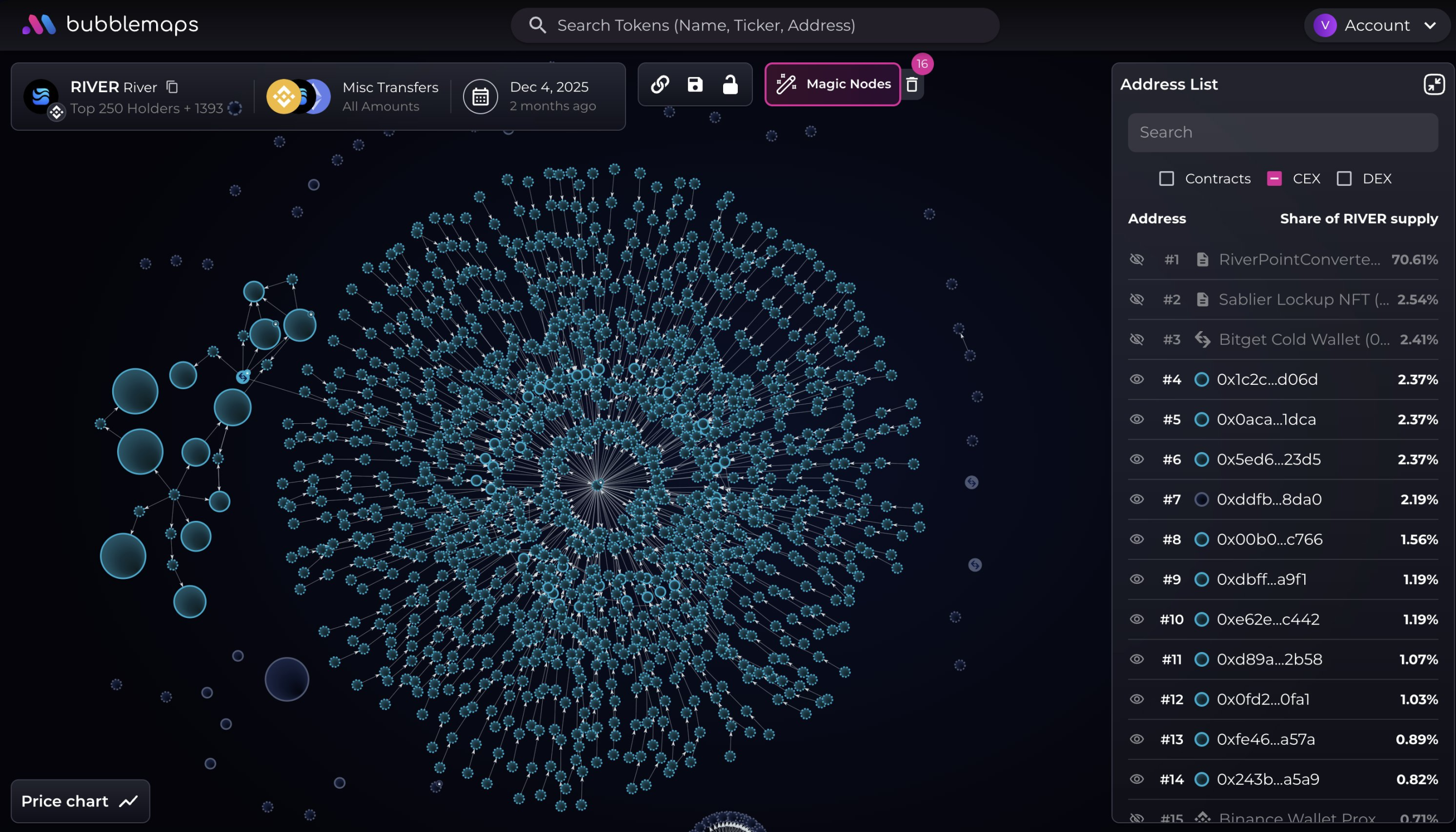
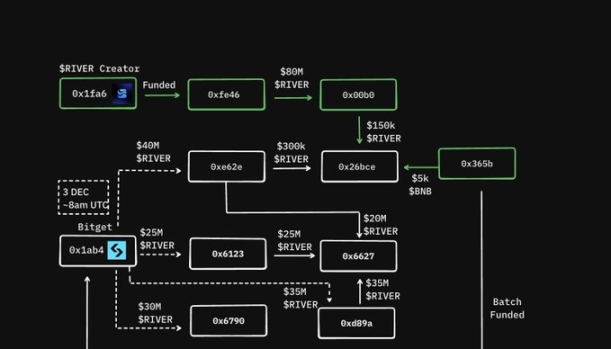
Bubblemaps noted that the wallet funding this cluster is address 0x365b, which is directly connected to the RIVER creator. Furthermore, the wallet 0x6790, which distributed RIVER to the cluster, shows links pointing to the RIVER creator. It estimates the cluster's projected profit at $10 million.
What is certain now is that RIVER underwent a violent repricing from rapid ascent to rapid retreat in an extremely short time. Market focus has shifted from narrative and growth expectations to whether there are anomalies in token distribution and fund flow paths. The address cluster and associated clues presented by Bubblemaps have amplified suspicions of concentrated early holdings, profits for linked addresses, and selling through exchanges. The funding rate and position crowding mechanism mentioned by CoinGlass provides another explanatory framework, suggesting derivative structures may have amplified the price swings.
For the market, the RIVER incident serves as another reminder that tokens with low circulation and high volatility are prone to extreme price movements when sentiment and structural factors align. However, when negative signals emerge regarding token distribution and trading structure, price corrections often come faster and deeper.