A Practical Operations Guide for Hackathon Organizers


- Core Viewpoint: The article emphasizes that professional operational management is key to a hackathon's success. It sustains participant enthusiasm, ensures event quality, enhances brand reputation, and protects the organizing team.
- Key Elements:
- Sustained Promotion Throughout the Process: Utilize all channels (email, social media, community) to maintain event momentum, and send reminders at critical junctures (e.g., before deadlines) to maximize participation.
- Rapid Response Communication: Establish efficient Q&A channels and respond promptly. Use FAQs or announcements to address common issues collectively, maintaining participant experience and project completion rates.
- Providing Ample Resource Support: Prepare clear documentation, tutorials, and templates in advance. Arrange mentor office hours and technical peer support to help participating teams progress their projects smoothly.
- Scientific Management of Submissions and Progress: Understand and accept the common pattern of last-minute project submissions. Use platform tools for real-time tracking and leverage AI-powered preliminary reviews for early assessment to save time.
- Efficient Team and Time Management: Schedule the organizing team reasonably to avoid burnout. Any changes to the timeline must be communicated to participants immediately to maintain the credibility of the schedule.
- Maintaining Community Enthusiasm: Host activities like AMAs and workshops mid-way through the event, and encourage social sharing to sustain participants' long-term engagement and community vitality.

Why (Good) Management Matters
Good operations don't guarantee a 100% successful hackathon, but no operations will definitely lead to failure. If organizers suddenly go silent—no communication, no answering questions, no promotion—participants will gradually lose confidence and motivation. The entire event will lose steam, project submissions will plummet, and all sponsors and partners will take notice.
The execution phase is the true test of your preparations. Unexpected problems will arise, and how you handle them determines the hackathon's effectiveness and reputation. Good operational management also protects your team from being overwhelmed by complex processes. With a clear workflow, you can stay calm when issues occur and conserve enough energy for a final sprint to the finish line.
1. Keep Promotion Active Throughout, Leverage All Your Channels
Marketing shouldn't stop once registration opens. Continuous promotion maintains momentum, attracts that last wave of hesitant participants, and gives sponsors visibility.
Don't neglect any channel: email, social circles, social media, developer communities—use them all. Prepare ready-made posters and copy for sponsors and partners so they can share with one click. A single mention from a well-known sponsor can drive significant traffic.
Furthermore, timing matters for posts.Reminders as the registration deadline approaches can help you catch many developers who "meant to sign up but forgot." Introducing new elements mid-way, like announcing new judges, adding prizes, or hosting a small online/offline event, can also re-energize everyone.
2. Communicate and Respond Quickly, Hacker Experience is Priority #1
Participants will have countless questions. How quickly you reply directly influences whether they give up. A question left unanswered for half a day can demotivate them, leading to an abandoned project—or they might not even start.
Establish dedicated Q&A channels and ensure developers can easily find them. Aim to respond promptly daily, even if a full answer comes later. If the same questions arise frequently, update the FAQ or post an announcement to address them all at once.
Platforms like DoraHacks come with built-in communication features, helping organizers broadcast announcements and keep participants updated in real-time without switching between multiple tools. You can message participants privately, send group messages to specific audiences, and use AI Q&A tools to handle repetitive questions automatically. It saves time and effort.
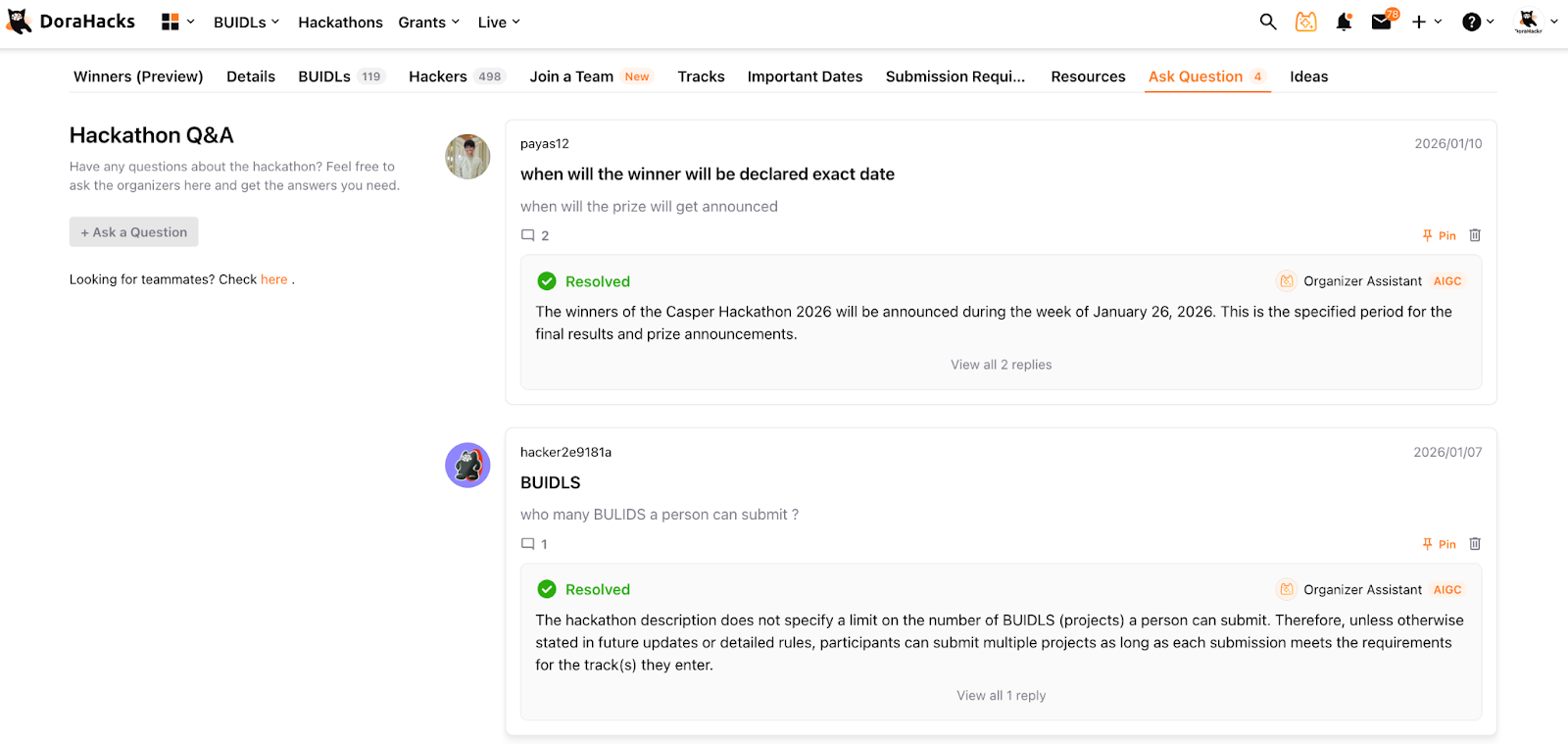
If your hackathon spans time zones, consider scheduling team members for shifts to ensure questions don't go unanswered overnight.
3. Provide Adequate Support Resources, Don't Let Participants Start Empty-Handed
With proper resources, projects won't fall behind. Prepare and share documentation, tutorials, and starter templates. If sponsors provide tools and APIs, ensure their documentation is clear and support channels are well-defined.
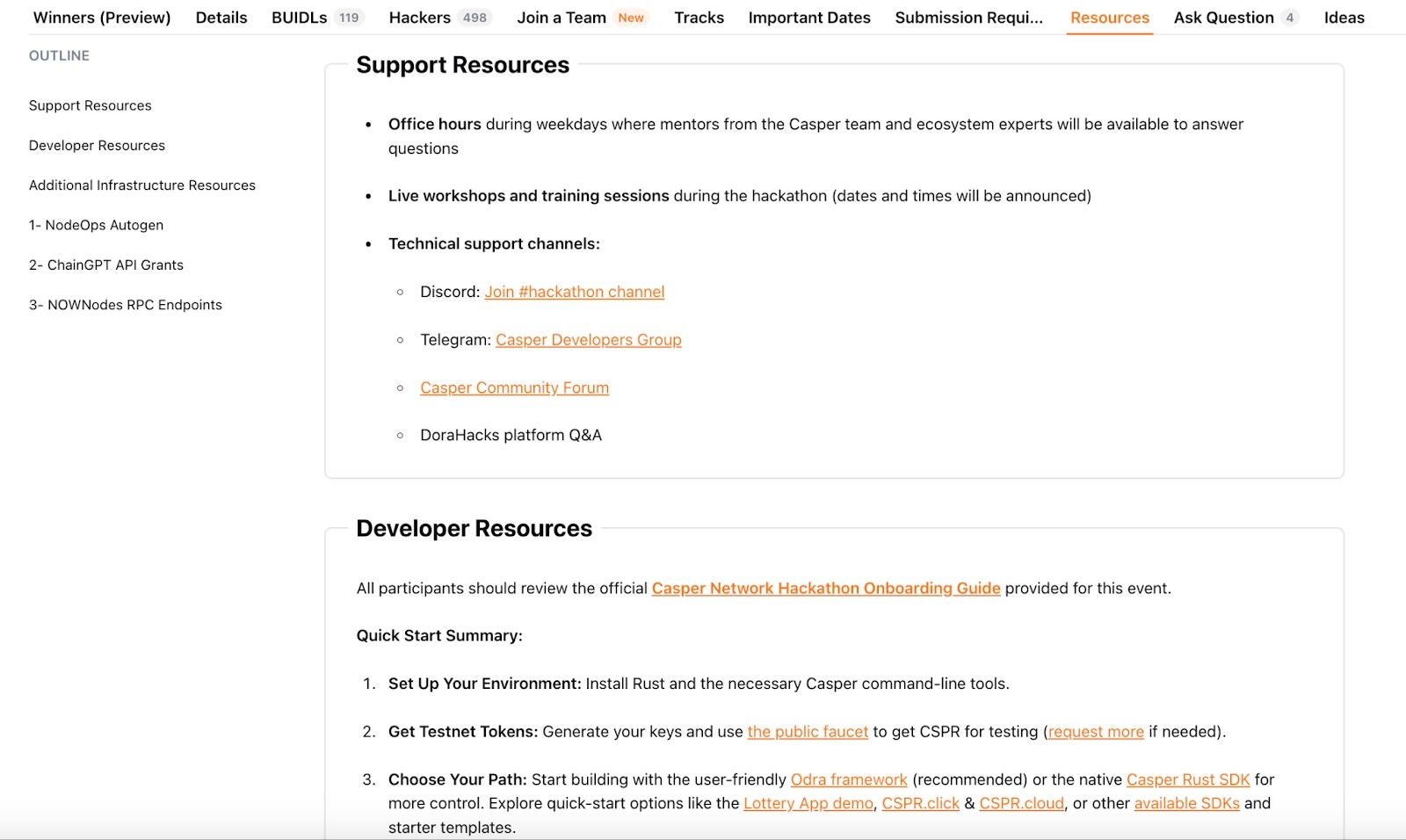
Example of Developer Resources Provided in a Hackathon
Schedule mentor office hours so participants can seek help. Create a technical support channel for peer-to-peer assistance, easing the team's burden and fostering a community atmosphere.
Keep a close eye on common issues and proactively publish solutions before many teams encounter the same pitfalls.
4. Monitor Submission Progress, But Also Keep Your Cool
Don't wait until the last minute to check submissions, but don't panic if there are few projects initially.Many submissions come right at the deadline; the final week is typically the peak period. Developers need time to code, write documentation, create demos, and polish their work. Many are juggling other commitments and, like most people, have a tendency to procrastinate.
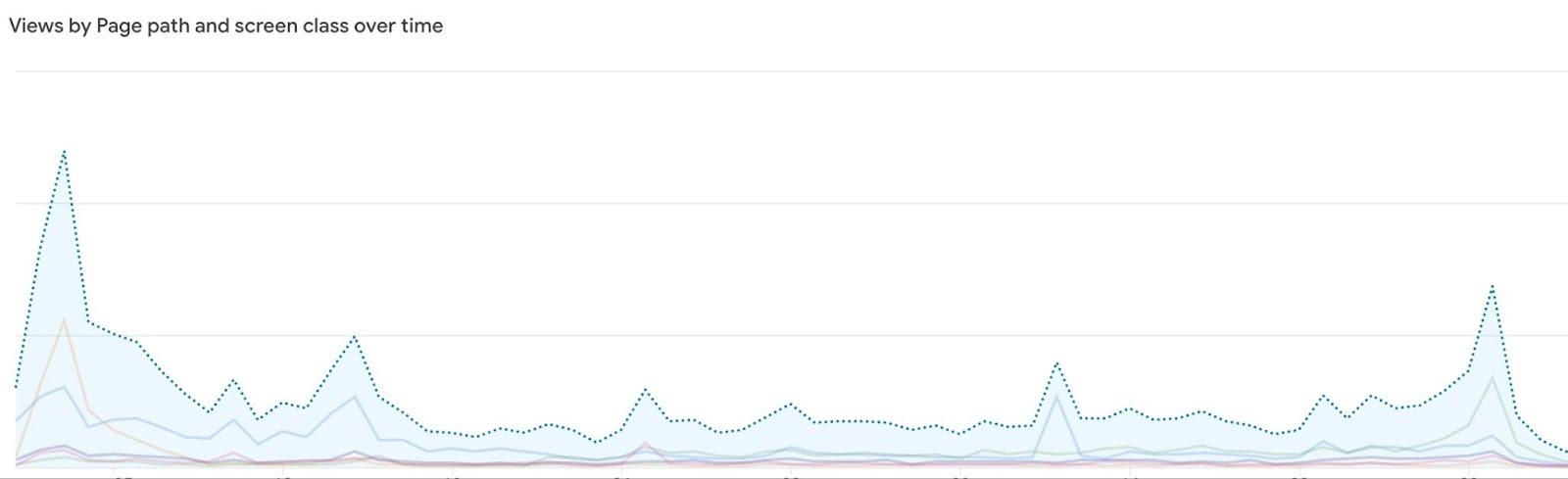
The engagement curve for a hackathon typically looks something like this.
Keep doing what you should: promote, answer questions, provide support. Review early submissions to confirm everyone understands the rules. If you notice widespread issues, clarify them publicly promptly, giving teams ample time to adjust.
DoraHacks' organizer dashboard allows real-time tracking of submission progress, eliminating the need to manually refresh spreadsheets or chase updates. More importantly, its AI judge can instantly evaluate submitted projects (including GitHub repos and descriptions) and provide in-depth feedback, saving you significant screening time.
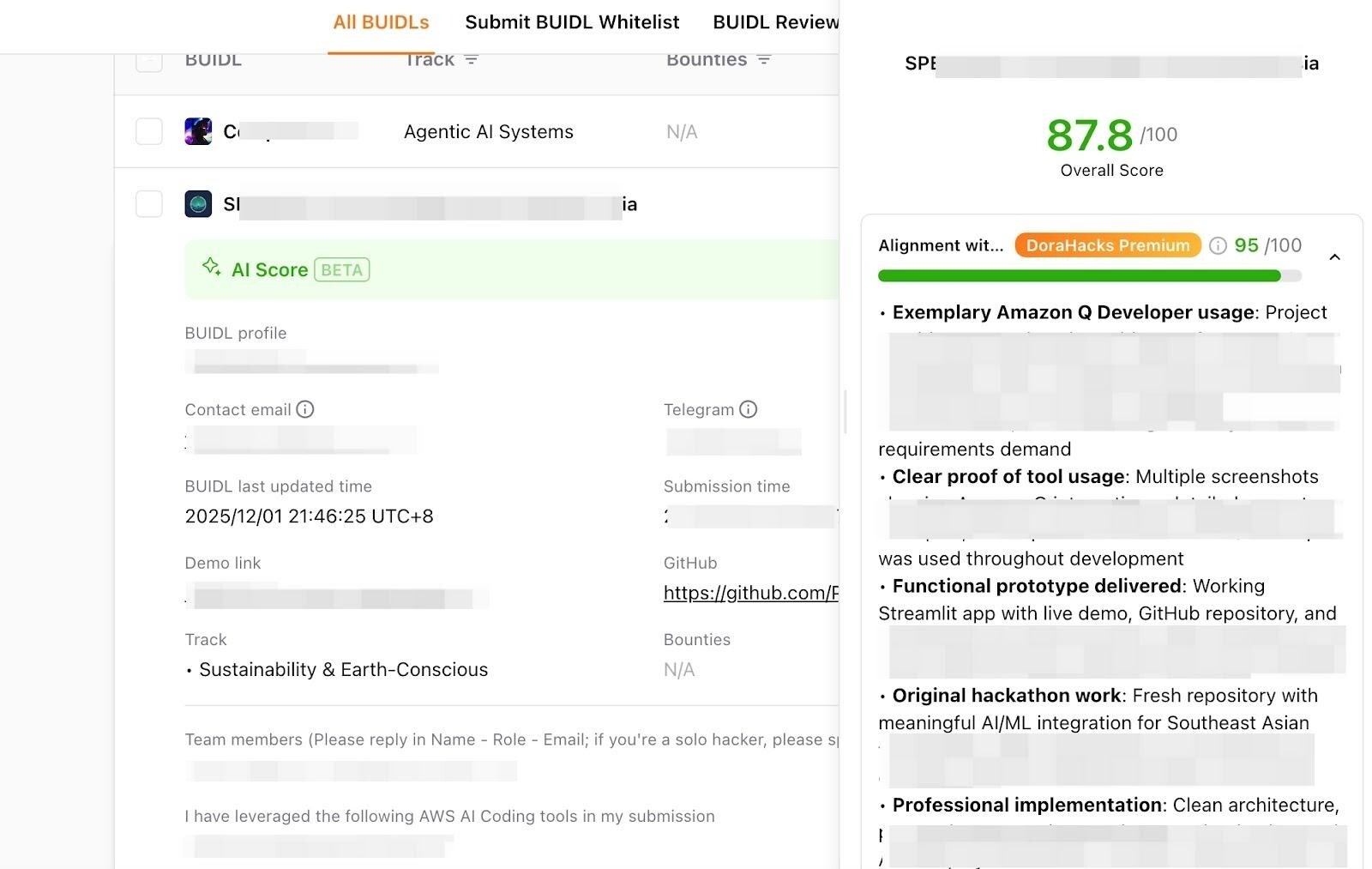
AI judging in a real hackathon on DoraHacks (available for Pro organizers)
5. Manage Your Time Well and Communicate Schedule Changes Promptly
Schedule your team reasonably: ensure coverage during critical periods without causing burnout. Rotate duties, especially for multi-day events, to allow everyone to catch their breath.
If you need to adjust the schedule, communicate it clearly and immediately. Participants plan around your deadlines. Making last-minute changes without notice will cause frustration. Ensure participants are the first to know about any updates.
Keep internal team syncs short and frequent, but avoid turning them into marathon meetings. Save energy for the final sprint—the hours before the deadline will see a message explosion, so you need reserves for the critical moment.
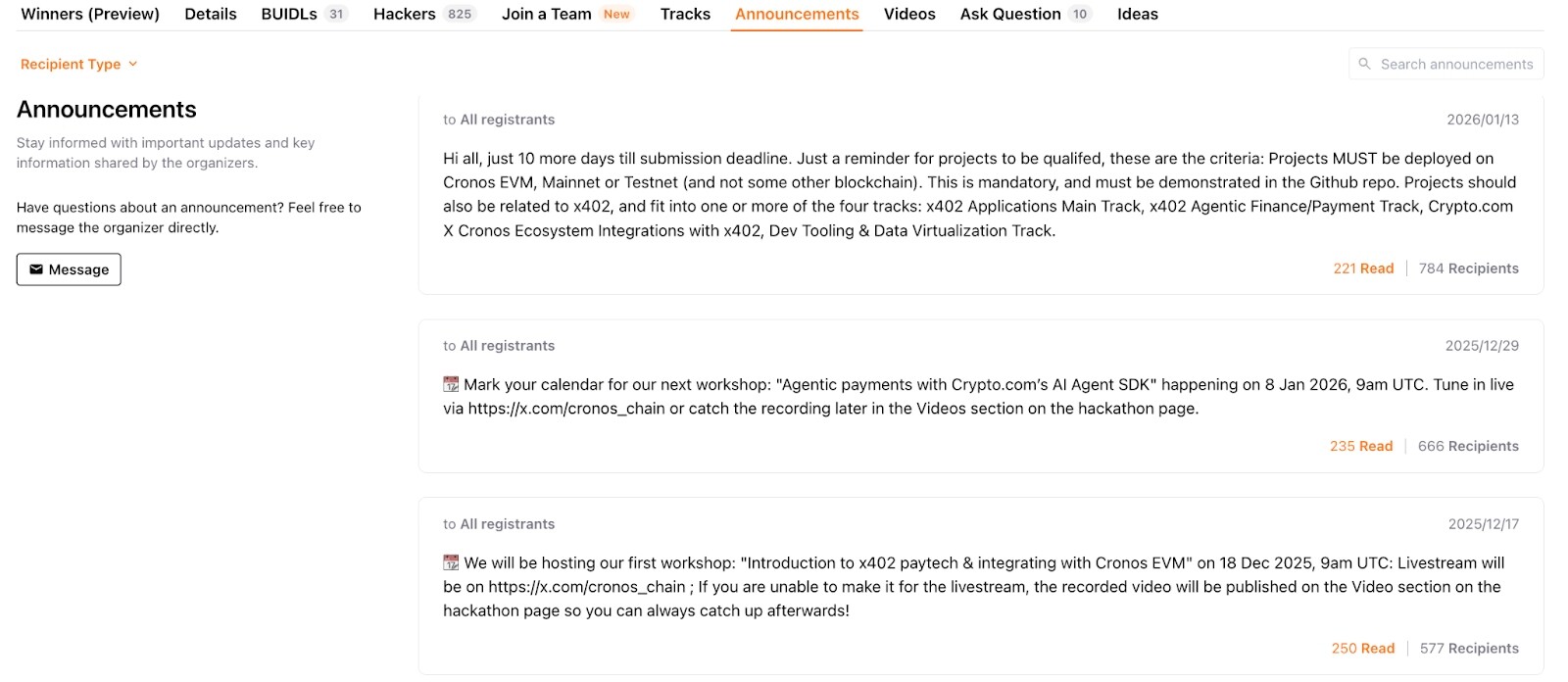
Example of Reminders for participants
Using a platform like DoraHacks centralizes project submissions, participant communication, and event settings, eliminating coordination hassles and letting you focus time on what matters most.
6. Keep the Momentum Going Online and Offline
During a long event, energy can dip in the middle. Periodicallyshare progress, celebrate small milestones, and help everyone maintain a sense of involvement. Host mid-event activities: AMAs, workshops, or casual social gatherings.
Encourage participants to share their progress on social media. If you notice someone might be giving up, send a message of encouragement. But also avoid disturbing those deep in coding. If you spot high-quality projects joining early, connect with them sooner.They could become future core contributors to your community, especially when you're building a new ecosystem or technology.

About DoraHacks
DoraHacks is a global leading hackathon community and open-source developer incentive platform. DoraHacks provides a toolkit for all parties to empower them to organize hackathons and fund early-stage ecosystem startups.
DoraHacks is committed to driving a global hacker movement in Web3, AI, quantum computing, and space tech. To date, over 30,000 startup teams have received a cumulative total of more than $300 million in funding through the DoraHacks community. A large number of open-source communities, enterprises, and tech ecosystems are actively utilizing DoraHacks and its BUIDL AI capabilities to organize hackathons and fund open-source initiatives.
Official Website| Twitter|Discord|Telegram|Binance Live|Youtube