






A Conversation with the Liberman Brothers: How Can Gonka, a Decentralized AI Network, Disrupt the Giant Monopoly in the Age of Artificial Intelligence?


- 核心观点:Gonka旨在以去中心化网络重塑AI算力格局。
- 关键要素:
- 利用比特币矿工算力转向AI推理。
- 三个月内集结超6000块H100 GPU。
- 获Bitfury等机构5000万美元投资。
- 市场影响:可能挑战AI算力中心化,降低使用门槛。
- 时效性标注:长期影响。
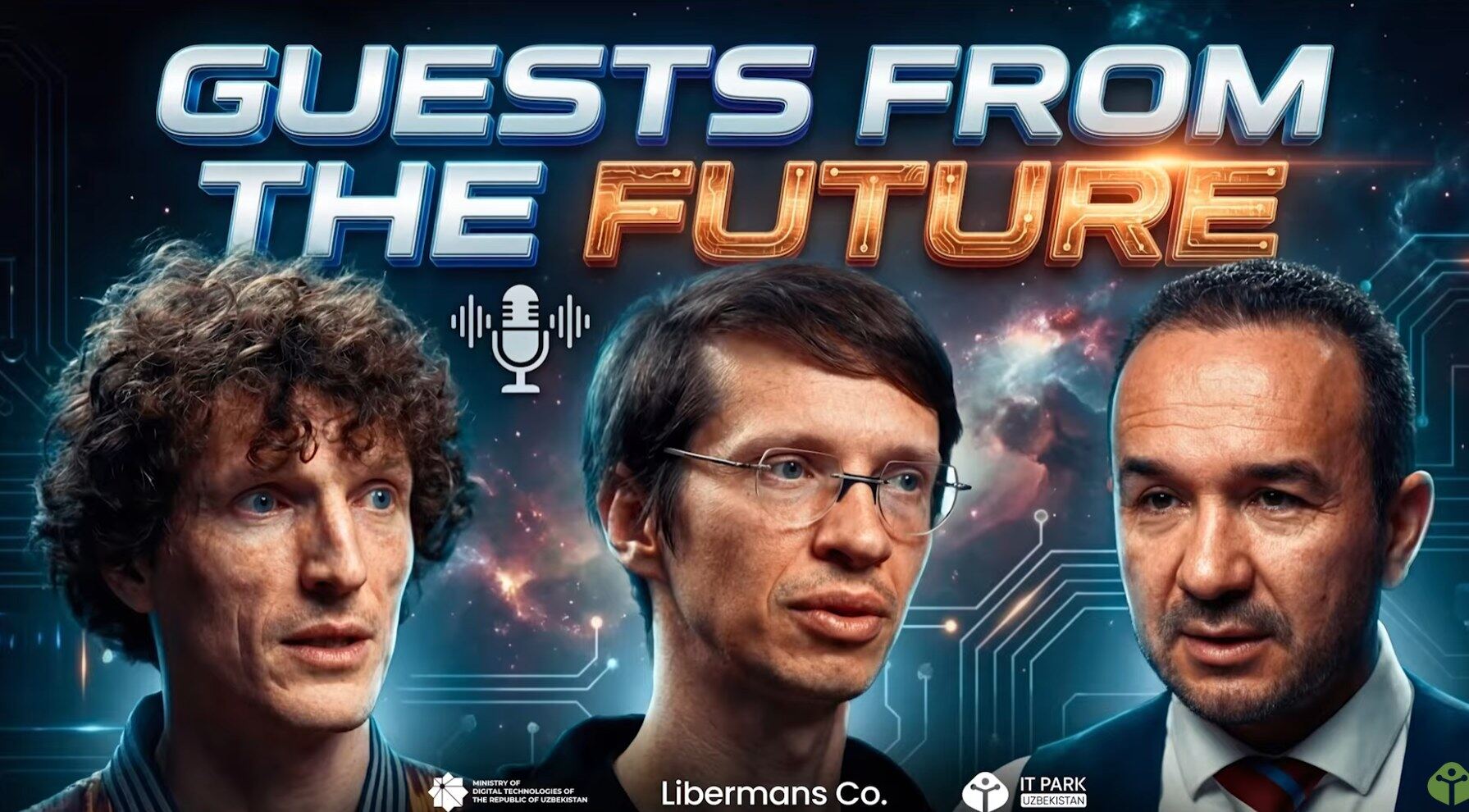
Key Takeaways: Bitcoin enthusiasts who witnessed the rise from $20 to $100,000 are now returning to the battlefield with "Gonka"—a decentralized AI computing network that has attracted over 6,000 H100 GPUs in just three months and secured a $50 million investment from Bitfury. It aims to transform AI computing power from "giant data centers" into "globally shared infrastructure," potentially even rewriting the rules of AI geopolitical competition.
I. From Bitcoin to Gonka: The Overlooked "Diamond of Computing Power"
"Gonka: gonka.ai " means "competition" in Russian. This name contains both technical implications and symbolizes an ideological sense of urgency.
"Bitcoin's computing power actually exceeds the combined cloud data centers of Google, Microsoft, and Amazon," said David Lieberman (Twitter: https://x.com/daliberman ). "But all this computing power is doing meaningless hash calculations—this is a huge diamond in the ocean of computing power: if this computing power were directed to AI inference, it could build the world's largest distributed intelligent infrastructure."
This is where Gonka's origins lie: replacing Bitcoin's "meaningless hashes" with "useful AI inference," allowing miners' GPU computing power to directly serve real AI tasks while preserving decentralized fairness.
II. What is Gonka? A "Computing Power Sprint"
For ordinary users, Gonka's logic is very simple:
- It is a "decentralized OpenAI API": developers can call Gonka's interface just like calling ChatGPT, but the computing power behind it comes from thousands of GPUs around the world, rather than a single company's data center;
- It is a "shared marketplace for computing power": anyone (or organization) can rent GPUs to access the network and receive token rewards based on the computing power they contribute—the daily rental fee for a single GPU is only $50, and the income is directly linked to the computing power.
- It is the "Bitcoin of the AI era": replacing "proof of work" with "proof of computation", and each GNK token is backed by real AI computation, rather than speculative expectations.
"We've transformed traditional mining into a 'computing power sprint,'" Daniel explained. "Miners don't need to calculate hashes 24/7; they only need to run AI inference at full speed for a short period to prove their computing power—and the rest of the time, these GPUs are used to serve developers."
III. 100-fold growth in three months: Gonka's "exponential growth"
In just 100 days since its launch, Gonka's computing power has surged from 60 H100-class GPUs to 6,000 (and currently exceeds 10,000) – equivalent to building a medium-sized AI data center in three months.
"This isn't something we 'made,' it's something the ecosystem 'grew' out of itself," David said. "15 years of development in the blockchain industry have made people understand the value of 'decentralized infrastructure'—and now the anxiety about AI monopolies has caused this demand to explode."
Bitfury's $50 million investment ( https://www.odaily.news/zh-CN/post/5207968 ) further fueled this surge: the pioneer of Bitcoin ASIC chips predicted that Gonka would surpass OpenAI's computing power within 15 months, becoming one of the world's largest AI infrastructures.
IV. Countering the Giants: "We fear the consequences of inaction even more."
When asked if they were worried about a retaliation from OpenAI and Google, the brothers gave a very direct answer:
"We are more afraid of a future where a few people control superintelligence—you have to beg them to let you use AI, and they can turn off your access at any time."
Gonka's "non-targeting" nature is precisely its defensive weapon:
- It's an open-source license, not a company;
- There are no centralized servers; computing power is distributed across thousands of nodes worldwide.
- Even if the founders disappear, the community can continue to maintain the network.
"OpenAI was founded by a group of people who were afraid of Google's monopoly," David said. "What we're doing now is making the 'anti-monopoly' of AI more thorough—not by changing the monopoly of one company, but by enabling everyone to participate."
V. Opportunities for Small Countries: "No need to compete with China and the US, as long as they don't fall behind."
For countries like Uzbekistan, Gonka offers a path to "bypass the chip monopoly":
- Engage in open-source contributions: Encourage local developers to write code for Gonka and quickly build a reputation for AI talent;
- Investing in AI ASIC chips: circumventing Nvidia's restrictions by partnering with emerging ASIC chip manufacturers and deploying computing power with cheap electricity;
- Regional computing alliance: Central Asian countries jointly deploy computing power, forming a scale large enough to influence the market.
"Small countries don't need to compete with the US and China in computing power; they just need to reduce their AI costs to the same level as those of large countries," Daniel said. "Gonka can reduce AI computing costs by 1,000 times—at that point, the accessibility of the technology will close the gap between countries."
The Endgame: AI's "Highway Revolution"
"Centralized AI will build 'skyscrapers,' but what the world needs are 'highways'—to deliver artificial intelligence to every corner."
The Lieberman brothers used the metaphor of "highways" to describe Gonka: skyscrapers (large models) are important, but without highways (distributed computing power), artificial intelligence will never reach ordinary people.
The ultimate goal of this "highway revolution" is a future where "artificial intelligence is no longer monopolized":
- Developers can access GPT-level models for just a few dollars;
- Small countries can build their own AI services without relying on cloud providers from large countries;
- Everyone can share in the benefits of the AI era by contributing computing power.
"Bitcoin proved that decentralized infrastructure can win," David said. "Gonka wants to prove that AI can do the same."
A disclaimer at the end: This article is compiled from a Lieberman Brothers podcast conversation and does not constitute investment advice. Gonka, as an emerging protocol, carries multiple risks, including technological and market-related ones; please approach it rationally.
About Gonka.ai
Gonka is a decentralized network designed to provide efficient AI computing power, maximizing the use of global GPU computing power to accomplish meaningful AI workloads. By eliminating centralized gatekeepers, Gonka provides developers and researchers with permissionless access to computing resources, while rewarding all participants through its native token, GNK.
Gonka was incubated by US AI developer Product Science Inc. Founded by the Libermans siblings, Web 2 industry veterans and former core product directors at Snap Inc., the company successfully raised $18 million in 2023 and an additional $51 million in 2025. Investors include OpenAI investor Coatue Management, Solana investor Slow Ventures, Bitfury, K5, and partners at Insight and Benchmark. Early contributors to the project include leading companies in the Web 2-Web 3 fields such as 6blocks, Hard Yaka, and Gcore.
Official Website | Github | X | Discord | Telegram | White Paper | Economic Model |User Manual





