






Can BeatSwap reshape the music industry through decentralized finance?


- 核心观点:BeatSwap用DeFi重塑音乐产业经济模式。
- 关键要素:
- 音乐版权代币化,为艺术家提供即时流动性。
- 建立DEX,实现音乐资产的公开交易。
- 引入收益农场,让粉丝通过持有代币获利。
- 市场影响:挑战传统中介,创造新资产类别。
- 时效性标注:长期影响。
The music industry has long been a complex arena for artists, characterized by opaque royalty structures, powerful intermediaries, and a disconnect between creators and fans. While streaming platforms have democratized access to music, they haven't fully addressed the economic challenges many artists face. Now, a new wave of innovation driven by blockchain technology is emerging, and BeatSwap is at the forefront, aiming to harmoniously integrate the music world with decentralized finance (DeFi).
BeatSwap has introduced a novel ecosystem where music is not only a cultural asset but also a financial asset. It introduces concepts such as music yield farming and tokenized royalties, creating new revenue streams for artists and providing unique investment opportunities for fans. This article will explore BeatSwap's core mechanisms, analyze its potential to disrupt traditional music business models, and examine how it creates value for all participants in its ecosystem.

The problems of modern music economics
To understand the solutions offered by BeatSwap, we must first understand the problem it addresses. For most artists, especially independent or emerging artists, achieving sustainable income is a significant challenge.
Revenue from mainstream streaming platforms is notoriously low, typically amounting to only a fraction of a cent per stream. This revenue is then split among record labels, distributors, and other copyright holders, leaving artists with only a small portion. Furthermore, royalty payments can be slow, infrequent, and lack transparency, making it difficult for artists to manage their finances.
On the other hand, aside from purchasing merchandise or concert tickets, fans have limited economic means to support their favorite artists. They consume music but cannot directly benefit from its success. There is a clear disconnect between the value created by artists and the value that they and their communities can access. This is precisely the gap that BeatSwap aims to fill.
BeatSwap Introduction: The intersection of music and revenue
BeatSwap is a decentralized platform that transforms music into yield-generating assets. At its core, it allows artists to tokenize their music copyrights, creating digital assets that can be traded, staked, and used within the DeFi ecosystem. This opens up a world of possibilities for creators and their supporters.
The platform is built on several key pillars:
- Music tokenization: Artists can convert their future royalty streams or a portion of their song ownership into fungible or non-fungible tokens (NFTs). This process provides them with instant liquidity, freeing them from the predicament of waiting months or even years for royalty payments.
- Decentralized Exchanges (DEXs): BeatSwap has its own Automated Market Maker (AMM) where music tokens can be traded. This creates a liquid, open market for music assets, allowing fans and investors to buy, sell, and predict the future success of a song or an artist.
- Yield Farms: This is where BeatSwap truly innovates. Music token holders can provide liquidity to the DEX or stake their tokens in various "pools" to earn rewards. These rewards can come from trading fees generated by the platform or from the release of the protocol's native tokens.
Essentially, BeatSwap created a system where simply holding a portion of the music by your favorite artists can generate a passive income stream, much like traditional DeFi users earn yield through their crypto assets.
A deeper understanding of the BeatSwap ecosystem
The BeatSwap model introduces several new concepts that redefine the relationship between artists, fans, and music. The platform's mechanisms are designed to create a self-sufficient economy that benefits all participants.
This process typically begins with the artist. Instead of releasing a new single on a traditional record label, the artist can release it on BeatSwap. They can tokenize a portion of the song's future royalties (e.g., 50%) and sell these tokens on the BeatSwap DEX.
Fans and investors can then purchase these tokens. This provides artists with upfront funding to launch their next project, for marketing, or to cover living expenses. As songs gain popularity and generate streaming revenue, a portion of the revenue is automatically distributed to token holders.
But the model goes beyond that. Below is a comparison of value flow in the traditional model and the BeatSwap model:
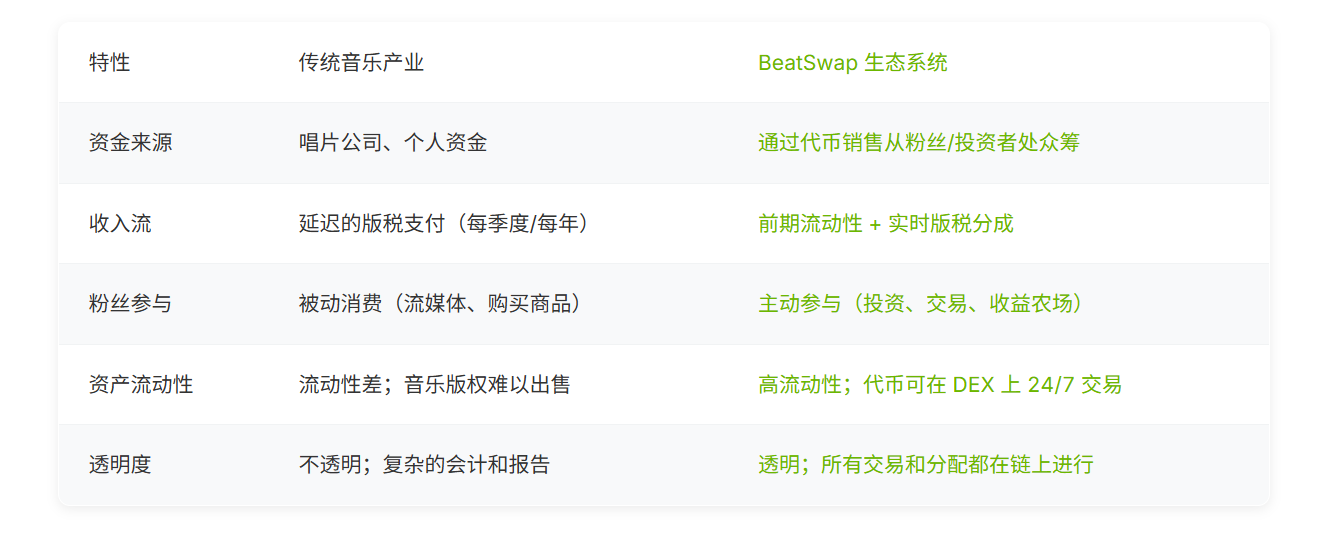
Through this structure, fans are not merely listeners; they become partners in the artist's journey. Their financial success is intertwined with the artist's success, creating a powerful incentive for them to promote the music and help it reach a wider audience.
BEAT Token and Trading Opportunities
The BeatSwap ecosystem is powered by its native utility and governance token, BEAT. This token has multiple uses and is the economic lifeline of the platform. Its primary uses include:
- Governance: BEAT holders can vote on key protocol decisions, such as fee structure, implementation of new features, and which artists to recommend.
- Staking: Users can stake BEAT tokens to earn a share of the platform's revenue, which creates a direct incentive to hold and support the ecosystem.
- Liquidity mining: This token is used to reward users who provide liquidity to BeatSwap DEX, ensuring the depth and stability of the music token market.
For those interested in the financial dynamics of the Web3 music scene, the BEAT token is a key asset to watch. Leading digital asset exchanges like XT.com offer comprehensive tools for participating in this market. You can easily track real-time BEAT prices and analyze their performance. For active traders, the platform provides a liquid marketplace for BEAT/USDT spot trading . Furthermore, XT.com caters to advanced traders with automation solutions, such as setting up a BEAT/USDT spot grid trading bot to profit from price volatility or implementing other complex trading strategies .
Impact on artists and broader industries
The impact of platforms like BeatSwap is profound. If widely adopted, it could trigger a fundamental shift in how the music industry operates.
For artists, the most direct benefit is economic empowerment. Artists gain access to new financing models that don't require them to relinquish creative control or hand over a large portion of their future earnings to record labels. Tokenization provides instant liquidity, converting future potential into present capital. It also fosters deeper, more collaborative relationships with fans.
For fans: BeatSwap transforms passive listeners into active stakeholders. It offers a tangible way to support artists and reap rewards for believing in them early. It gamifies the music discovery experience, turning it into a form of social investment.
For the industry: This platform introduces transparency and efficiency to a system known for its intricacies. On-chain royalty distribution is instant and auditable, eliminating the delays and disputes common in traditional industries. This could force existing players like record labels and distributors to adjust their business models to be more artist-friendly. It also creates a new asset class—tokenized music royalties—which could attract a new wave of investors to the music sector.
Challenges and the Road to the Future
Despite its revolutionary potential, BeatSwap and the broader MusicFi movement face several hurdles. A major challenge is the complexity of law and regulation. Music copyright is a complex network of various licenses (mastering, publishing, machinery, performance rights), and properly tokenizing it requires careful legal navigation to ensure compliance across different jurisdictions.
User adoption is another significant hurdle. The platform must be intuitive enough that non-crypto native artists and fans can use it without a steep learning curve. Popularizing the benefits of music tokenization and DeFi is crucial for mainstream acceptance.
Finally, the volatility of the crypto market could pose a risk. The value of music tokens may be influenced by broader market trends and could become decoupled from the actual performance of songs. BeatSwap needs to design a robust economic model to ensure long-term stability and align the token value with the intrinsic value of the music.
Conclusion: A New Rhythm in the Music Economy
The music industry has reached a point where disruption is necessary. For too long, the economic model has favored intermediaries over creators. BeatSwap paints a compelling picture of a fairer, more transparent, and engaging future. By leveraging the power of decentralized finance, it empowers artists to take control of their careers and transforms fans into stakeholders.
The journey to reshape a multi-billion dollar industry will not be smooth sailing. It requires overcoming significant legal, technological, and educational challenges. However, its potential is undeniable: an ecosystem where the value of music flows directly between creators and those who cherish it. By transforming songs into investable, yield-generating assets, BeatSwap is doing more than just creating a new DeFi application; it's composing a new economic symphony for the digital age and inviting everyone to participate.
Frequently Asked Questions (FAQs)
- In simple terms, what is BeatSwap? BeatSwap is a platform that allows artists to sell a portion of their songs' future revenue as digital tokens. Fans and investors can buy these tokens to support the artists and earn a share of the royalties. They can also trade these tokens or use them to earn additional rewards, similar to yield farms in DeFi.
- As a fan, how can I make money on BeatSwap? There are several ways. First, by holding an artist's music tokens, you can earn a share of the royalties generated by the song from the streaming platform. Second, you can offer your tokens as liquidity to the BeatSwap exchange to earn trading fees. Third, if a song becomes very popular, the value of the music tokens themselves may increase, allowing you to profit by selling them.
- Is BeatSwap trying to replace record labels? Not necessarily. BeatSwap offers an alternative financing and distribution model. It can coexist with record labels and even be used by them to create more transparent deals with artists. Its main goal is to give artists more choice and financial control.
- What is the BEAT token? BEAT is the native token of the BeatSwap platform. It is used for voting on platform decisions (governance), earning a share of the platform's revenue through staking, and rewarding users who help the platform operate by providing liquidity.
- Is there risk in buying music tokens? Yes. As with any investment, there is risk. The songs you invest in may not be popular, meaning royalties could be low. The value of the tokens is also subject to market fluctuations. It's crucial to do your own research and only invest an amount you can afford to lose.
About XT.COM
Founded in 2018, XT.COM is a leading global digital asset trading platform with over 12 million registered users, operating in more than 200 countries and regions, and boasting an ecosystem traffic exceeding 40 million. The XT.COM cryptocurrency trading platform supports over 1300 high-quality cryptocurrencies and over 1300 trading pairs, offering diverse trading services including spot trading , leveraged trading , and contract trading , and is equipped with a secure and reliable RWA (Real World Asset) trading market. We are committed to the philosophy of "Explore Crypto, Trust Trading," dedicated to providing global users with a safe, efficient, and professional one-stop digital asset trading experience.


