






From on-chain symbols to real-world culture, the next competition in Web3.


- 核心观点:Web3竞争转向文化驱动。
- 关键要素:
- 技术优势趋同,用户增长停滞。
- 项目缺乏情感纽带与生活触点。
- Pudgy Penguins通过实体产品破圈。
- 市场影响:推动行业重视文化落地能力。
- 时效性标注:长期影响
From on-chain symbols to real-world culture, the next competition in Web3.
After multiple iterations, the Web3 world has made significant progress in infrastructure, performance, and verifiability. Surprisingly, however, user growth has not kept pace. Cooling investment, stricter regulations, and fragmented user attention have forced the industry to re-examine a long-neglected question: when technological advantages are no longer a scarce resource, what can truly attract and retain a large user base?
Increasing signs indicate that the market is shifting from "technology-driven" to "culture-driven." We see the performance gap between Layer 2 solutions narrowing, wallet experiences becoming increasingly homogenized, and the technical narratives of various protocols gradually becoming intricately intertwined. No matter how fast the chain is or how lightweight the proofs are, technology will struggle to generate genuine social impact if it cannot be integrated into the context of real life. The successful paradigm of the traditional internet has already proven that technology is merely infrastructure; what truly captures users' minds is often cultural symbols, emotional connections, and the reshaping of lifestyles. The industry needs a new way of connecting—an expression that can transcend on-chain and off-chain boundaries and be accepted by mainstream culture. This is not merely a shift in marketing strategies, but a fundamental migration of the entire industry's value creation logic.
Why do most projects fail to overcome the "on-chain walls"?
Over the past few years, countless teams have tried to bring their products into the mainstream, but most have stalled at similar bottlenecks. A large number of projects have users concentrated on Discord, X, and on-chain interactions; once outside these platforms, the brand's presence is almost nonexistent. This closed ecosystem creates a paradox: project teams spend enormous effort maintaining community activity, only to find that these users are difficult to convert into genuine brand advocates, let alone become nodes for external dissemination. When a bear market arrives or trends shift, users will leave without hesitation because they lack an emotional connection to the project, only a speculative one. A deeper problem lies in the narrative breakdown—many projects can generate buzz within their circles, but struggle to make ordinary users perceive their value. Concepts like "decentralized storage," "modular blockchain," and "zero-knowledge proof" are significant for developers, but completely jargon for the average person. The industry is accustomed to defining products with technical parameters, forgetting that what the public needs is "what can this do for me," not "how is this done?"
To enter mainstream culture, symbols must be visible, tangible, and usable, but purely on-chain assets often lack these touchpoints. NFTs lie dormant in wallets, DeFi protocols are hidden behind interfaces, and DAO governance remains confined to forum discussions—these digitally native forms of value struggle to establish a presence in the real world, while traditional brands have already occupied users' physical and psychological space through stores, products, and offline events. These problems are not technical difficulties, but rather a lack of "expression methods" and "user paths." Most Web3 teams lack the genes for cultural production and dissemination; their teams are primarily composed of technical and financial backgrounds, generally lacking experience and understanding of how to create cultural IPs, how to tell relatable stories, and how to design products that people want to wear and display. The industry needs not only functionality, but also a set of cultural capabilities that can cross over into the real world.
When culture becomes a true asset across economic cycles
Multiple success stories demonstrate that for a Web3 project to truly transcend its lifecycle, it often needs three core capabilities: memorable visual and brand identity, products and experiences that can be naturally integrated into daily life, and cultural openness that can attract mainstream media and offline channels.
In an era of information overload, memorability equates to dissemination power. Successful Web3 IPs often possess highly recognizable visual systems, allowing for instant recognition and association. This recognition extends beyond the digital world, seamlessly transitioning to physical products, offline spaces, and mass media. More importantly, the essence of cultural influence lies in the penetration of lifestyles. When an IP's symbols begin appearing on people's clothes, phone cases, and coffee cups, and when its story becomes a topic of social conversation, it has truly entered mainstream culture. The key to breaking through to a wider audience lies in gaining recognition and amplification from traditional cultural systems. This means projects need the ability to engage with mainstream media, attract spontaneous participation from public figures, and access traditional cultural dissemination channels such as offline retail, exhibitions, and events. Technology, as the underlying logic, remains crucial, but what truly penetrates people is often the cultural symbol, not the technical details. The industry has historically measured influence using "on-chain metrics," but future competition will rely more on a comprehensive capability: the triple implementation of narrative, culture, and product.
Pudgy Penguins' Real-World Multi-Front Breakthrough
In the past year, Pudgy Penguins, an IP from the Web3 world, has demonstrated an unusual ability to transcend geographical boundaries, becoming a rare real-world example in the industry. Recently, US Congressman William Timmons changed his social media profile picture to the Pudgy Penguin image, quickly attracting global attention and discussion. This is not simply a matter of celebrity influence, but a breakthrough in cultural identity—a politician's willingness to use a Web3 symbol to represent his public image signifies that this IP has transcended the "cryptocurrency niche" and is beginning to be accepted by mainstream society.

Source: X
Prior to this, Pudgy Penguins had already made breakthroughs in the physical retail sector, with its toy products entering over 2,000 retail stores such as Walmart, generating tens of millions of dollars in sales. These adorable penguin toys are displayed on shelves alongside traditional IPs like Disney and Lego, and many buyers are unaware that the brand originates from Web3; they are simply drawn in by the design and the story. Building on this foundation, Pudgy Penguins collaborated with Bearbrick, a benchmark brand in the trendy toy industry, officially entering the global trendy toy collecting system and gaining aesthetic and brand recognition from traditional trendy culture. On the product front, its mobile game, Pudgy Party, won the "Best Mobile Game of the Year" award, with downloads exceeding millions, the vast majority of whom came from outside the Web3 community, opening a true mass-market entry point for blockchain culture.
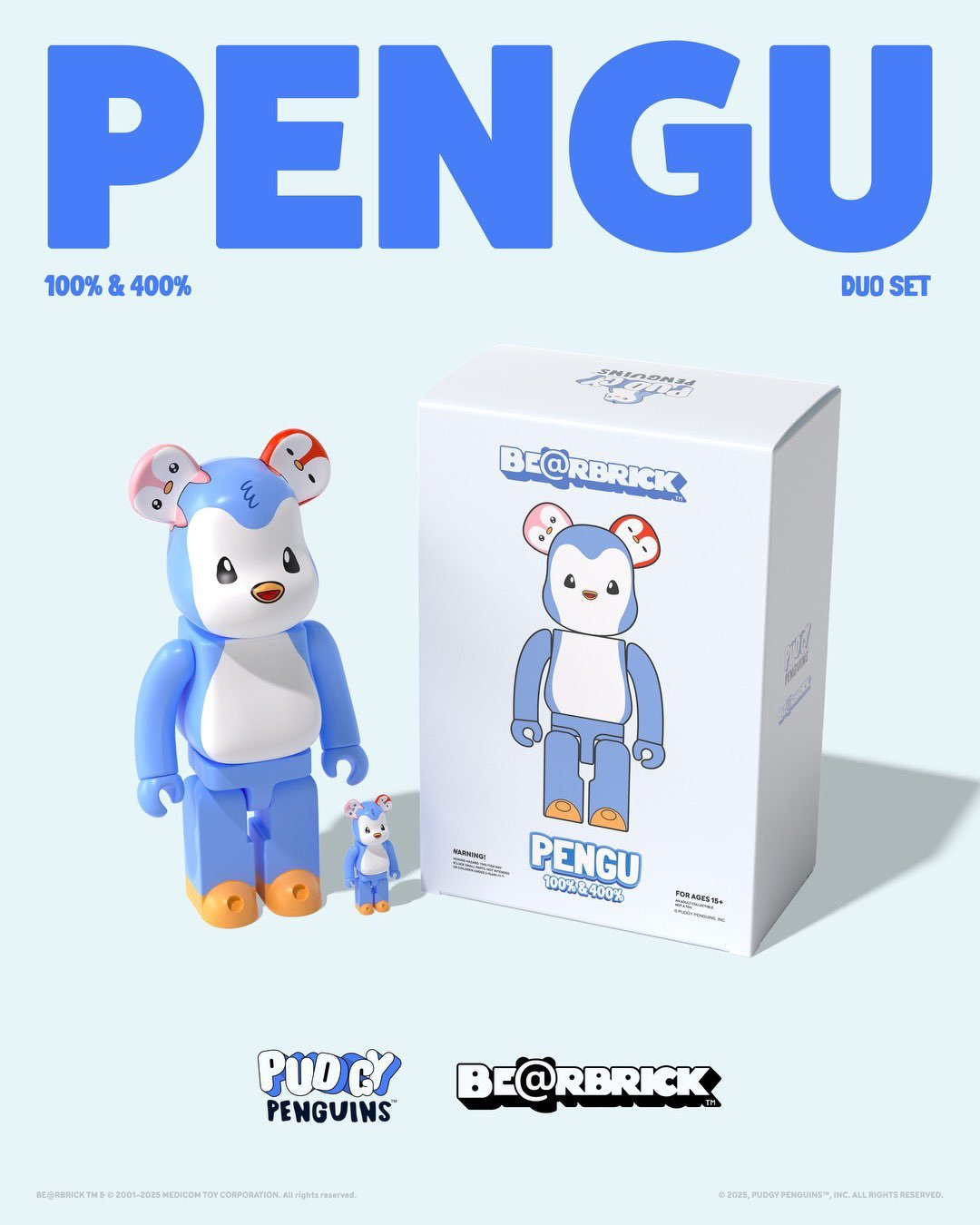
These actions are not isolated bursts, but a complete demonstration of a path: starting on-chain, progressing to cultural penetration, and then to real-world commercialization and mass dissemination. As the community says, "The world will huddle"—Pudgy Penguins has answered a long-standing industry question with concrete actions: How can Web3 IP truly break out of its niche? The answer is a multi-pronged approach, systematically establishing a presence in the real world while maintaining on-chain value. For the first time, systematic evidence has emerged of the industry's long-awaited "on-chain narrative moving into reality."
The next phase of Web3 needs "visible value".
Technology will continue to drive the industry forward, but what truly determines whether something can enter the mainstream is whether its culture resonates with people, whether its products can become part of daily life, and whether its story can captivate the world's attention. After several cycles, the industry has returned to its starting point: to make it more visible and more engaging.
The on-chain world often begins with code, but true impact ultimately resides in the real world. When Web3 projects start considering how to make their symbols appear on the streets, in people's daily conversations, and in the childhood memories of the next generation, this industry has truly found its path to the masses. Technology builds possibilities, but culture determines how far those possibilities can go.


