






加密身份危机:消费者大规模采用的瓶颈


Original author:Natalie Mullins
Original compilation: Mars Finance, MK
Enthusiasm around “consumer cryptocurrencies” is rising again in 2023, thanks in part to the rise of products like friend.tech and the industry’s focus on infrastructure over end-user applications. Now, many predict that 2024 will be a breakthrough year for the encryption application layer, as teams from games to decentralized digital resource network (dePIN) services to social experiences scramble to attract the next wave of users.
However, despite the increasingly compelling application scenarios of cryptocurrencies, their identity issues—particularly the ability to defend against Sybil attacks—are still underestimated and have become a bottleneck to the success of crypto consumer-facing applications.

The root of all problems: Identity
The problem of on-chain identity is not new, and despite years of development and private investment, the problem remains unresolved. During the last cycle, despite exponential growth in deal volume and activity, many founders still ran out of money due to misjudgment, mistaking non-organic users for product-market fit. Without strong defenses against Sybil attacks, the 2024-2025 cycle may repeat itself.
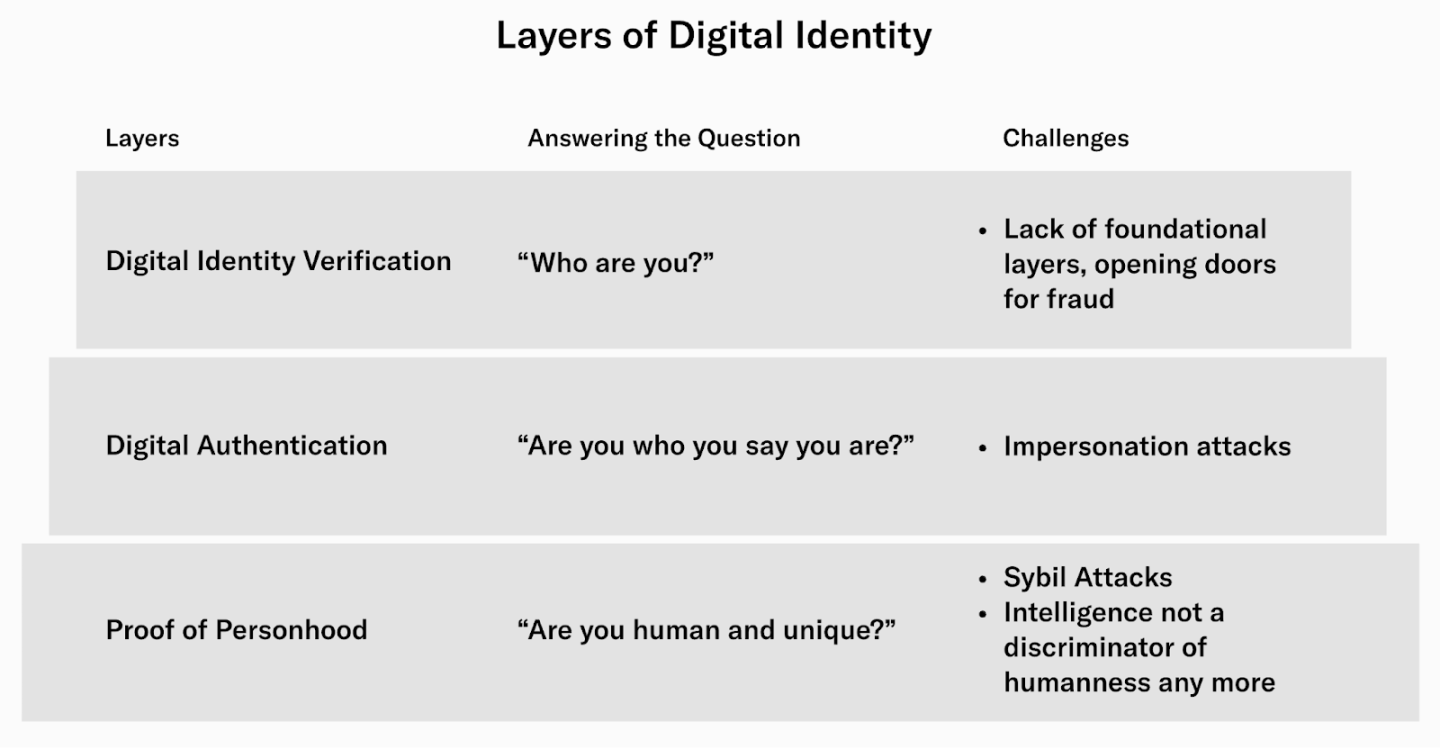
Proof of Personhood (PoP) is a mechanism to confirm a persons humanity and uniqueness, and is regarded as the cornerstone of digital identity. (Source: Worldcoin)
To date, most of the focus has been on reputation, decentralized identity (DID), and privacy—all of which are crucial, but do not fundamentally solve the Proof of Person (PoP) problem. Most PoP solutions on the market are designed to combat AI-powered disinformation and Sybil attacks, but the cryptocurrency space appears to be in need of unique PoP solutions, for similar but different reasons. It is well known that the highly financialized nature of cryptocurrencies has given rise to strong incentives for fraud and confrontation, most notably hacking and witch farms. However, as we move from the ad-subsidized model of Web2 to the user-owned model of Web3, centralized value extraction platforms will give way to more open networks and protocols that continuously distribute rewards and equity to end users. Without a strong identity solution, crypto teams will find themselves locked in an endless battle to protect their products and treasury from hostile actors, severely undermining crypto’s core value proposition of scaling incentivized consistency.

The airdrops of early DeFi projects such as Uniswap and dYdX set an unsustainable industry standard for the industry, rewarding users with thousands or even tens of thousands of dollars just for using the products. Today, many crypto natives expect to receive lucrative airdrops through simple product participation, even if their usage is passive or one-time. As a result, many teams are beginning to adopt stricter eligibility criteria and more strategically reduce the activity of bots and multi-wallet human farmers.
Anyone who has invested any amount of time in Cryptowitch resistance knows that it is a never-ending game of cat and mouse. As crypto teams become more sophisticated in risk mitigation, so are the methods of witch farmers. 2023 is shaping up to be an important year for the industry, with content uploads and searches for “airdrops” on YouTube reaching record highs, and increasingly advanced agricultural tools appearing on the market. Kerman Kohlis article reveals some extreme examples, including products that automate the deployment of wallets and perform various on-chain actions, while providing a means to combat any Sybil-resistant techniques that crypto teams may use.
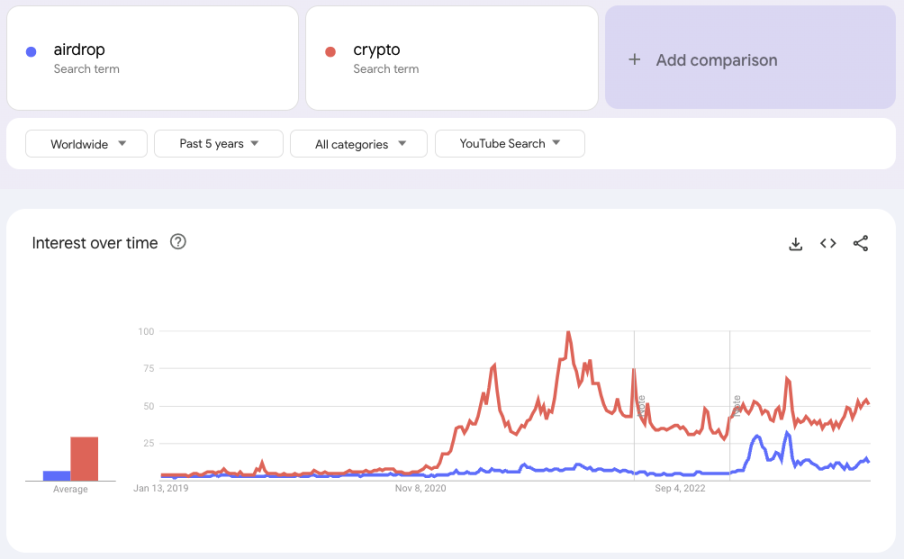
This dynamic is not only damaging to most startups but also has a profound impact on the signal quality of on-chain data. While blockchains are often praised for their openness and transparency, the financial incentives to manipulate key metrics such as active wallets or transaction volume are so great that much of the on-chain user activity data is in Becomes functionally useless. This presents a huge challenge for crypto founders struggling to establish a true picture of basic metrics such as unique human user count, customer acquisition cost (CAC), or lifetime customer value (LTV).
Explore the design space
In the context of human identification, there are two main ways of thinking about identity: uniqueness and humanity.
Uniqueness relates to whether an account interacting with an application is a unique human being, or multiple accounts operated by a single individual. Most founders consider one wallet per unique human user to be the ideal standard, although crypto wallets are not currently in a position to enforce this standard. Some projects may be tempted to adopt established solutions like KYC, but this comes with significant trade-offs.
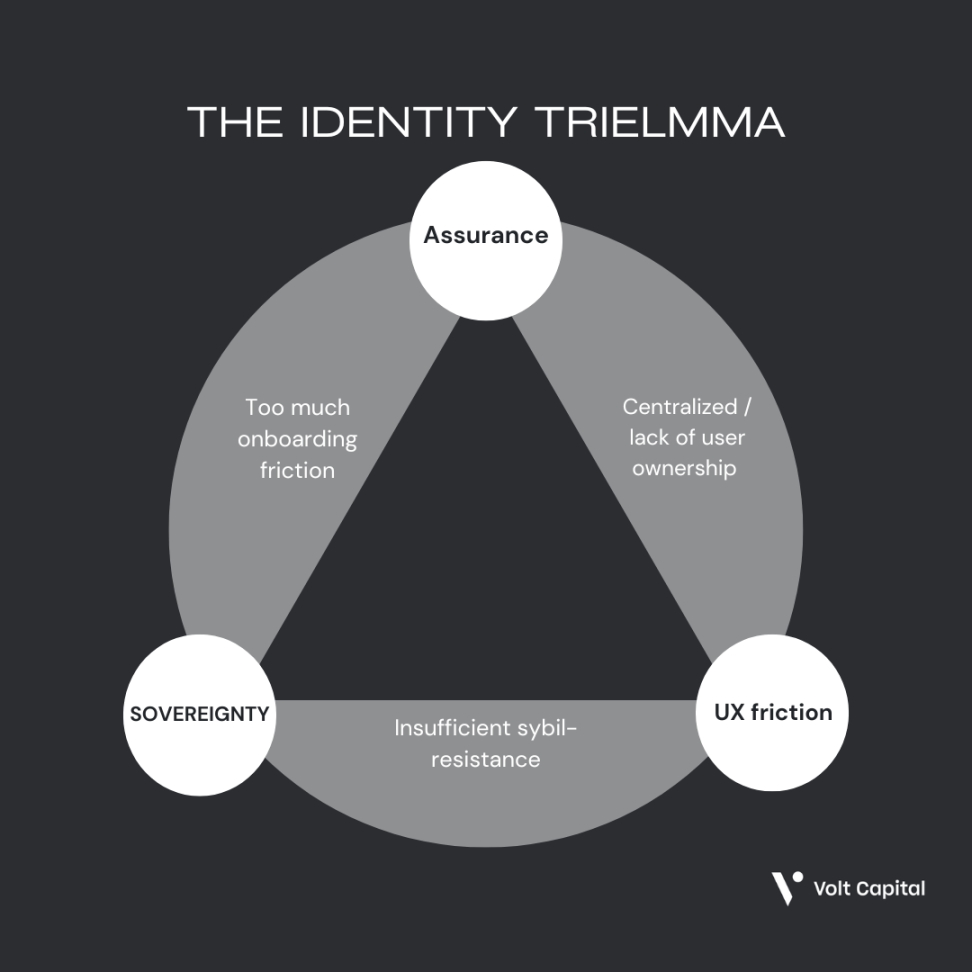
For those unfamiliar with the concept of Identity Assurance Level (IAL), an IAL conveys the degree of confidence that a persons claimed identity is who they are, as defined by the National Institute of Standards and Technology. . Identity solutions generally fall into three categories:
1. Some degree of confidence (Level 1) - Identity is self-declared; no verification is required (e.g. email account).
2. High Confidence (Level 2) - Identity verified by a third party; in-person or remote verification required (e.g. government-issued ID, credential documentation, address verification).
3. Extremely High Confidence (Level 3) - Identity is confirmed by a third party using biometric data; in-person verification is required (such as TSA agent verifying photo ID or fingerprint).

Humanity is related to whether the accounts activity is generated by a bot or a real human. Today, it is easier to identify humanity than uniqueness, mainly because human users typically behave more complexly than bots. Teams that invest in honeypot technology and data-based monitoring and detection infrastructure are often able to mitigate much of the bot-driven activity, although multi-wallet human farmers pose a different challenge.
Discerning humanity may become more challenging and ambiguous in the long term, in part because some accounts may swing between bot-generated activity and human-generated activity. This dynamic will intensify as humans deploy bots (“agents”) to traverse the Internet and conduct transactions on their behalf. Some of the more ambitious (and controversial) identity solutions, such as Worldcoin, are trying to solve this human identity proof problem - it is worth noting that many solutions rely on various forms of KYC or biometric data.
Importantly, ongoing authentication is critical when verifying uniqueness and/or humanity. Solutions that only verify identity at the time of creation are particularly vulnerable to Sybil attacks and fraud, which can range from selling access to self-custody wallets (such as over-the-counter exchanges) to more organized attacks (such as reverse engineering projects) identity and/or reward systems).
The ideal identity solution should provide the highest level of assurance without adding too much user experience friction or compromising sovereignty. However, since such a solution has not yet emerged, crypto founders are forced to choose between the trade-offs that best suit their use cases.
Promising solutions
1. Proofs
A cryptographically signed statement made by a party about his or her own identity or that of another person.

Although not generally applicable to PoP, proof is a fundamental primitive for cryptographic identity. They rightly view identity as a collection of reputational credentials, where different aspects of an identity have relevance or value depending on context (e.g. local vs. national, official vs. informal). An open and composable standard for creating proofs and patterns, like the Ethereum Proof Service, can greatly expand the on-chain identity space and eliminate the need for identity providers to constantly reinvent the wheel with proprietary solutions.
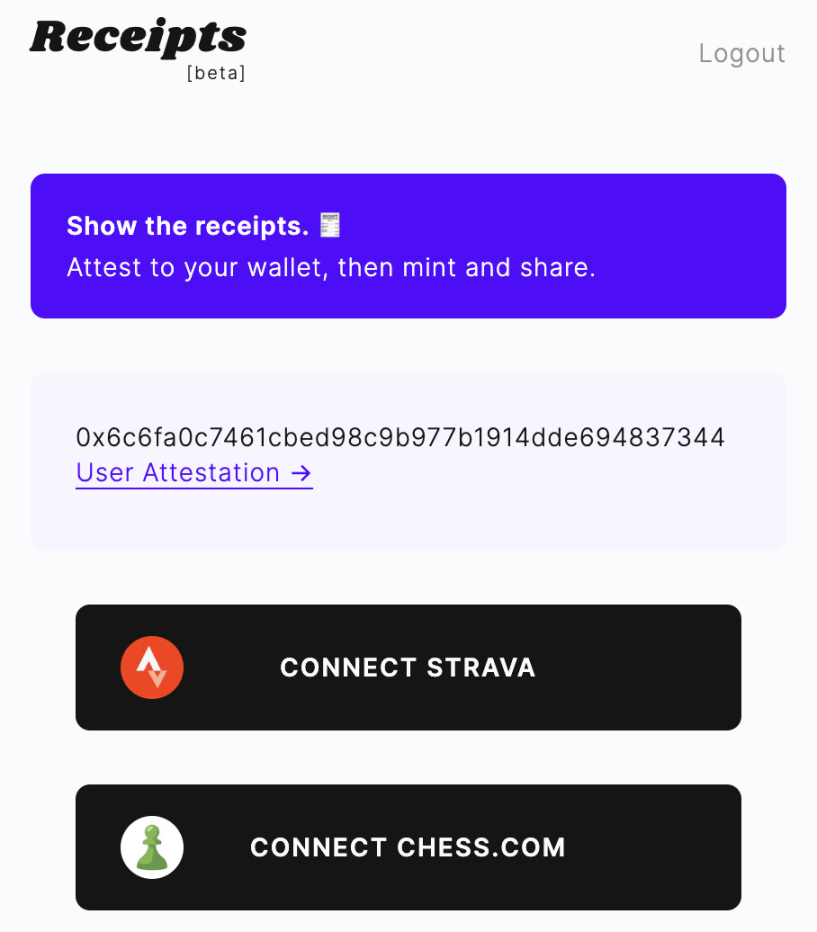
For example, Coinbase’s “verify” product utilizes the Ethereum Attestation Service to issue Coinbase verified on-chain certificates, including KYC certificates. Users opt-in for verification with incentives for exclusive privileged offers. (Source: Coinbase)
2. Progressive Proof of Personhood
Reward users over time based on proven uniqueness.
While no solution is completely foolproof, KYC and biometrics are undoubtedly among the highest assurance identity tools currently available. However, cryptocurrencies bring with them some peculiarities that make these solutions less feasible:
Industry-wide resistance to KYC/emphasis on privacy and sovereign identity.
Biometrics are generally not used or used in consumer applications (other than health and fitness applications).
The need for continuous and dynamic identity assurance.
The main goal of progressive PoP is to design a system that rewards users over time based on specific behaviors that demonstrate their uniqueness/humanity. The challenge on the other side is to avoid wasting incentive resources and ensure that the actions being rewarded actually correspond well to uniqueness.

For example, creator-centric content distribution platform DRiP recently launched its Droplets feature, which rewards users for logging in every day and meaningfully interacting with the product. Each collectible a user receives automatically deducts 1 drop from their total balance. Only users with enough Droplets to receive collections are considered active, which helps the DRiP team build more accurate daily active users (DAU) and engagement metrics.
in conclusion
In many ways, online identity primitives never really transcended low-guaranteed solutions like email accounts. Without the financial incentives of cryptocurrency or the spread of generative AI, these solutions may never need to change. However, while these technologies will bring innovation to the world in the coming years, they also make identity issues more difficult and complex for the foreseeable future. This is precisely why the issue of identity in cryptocurrencies is not just about decentralized identifiers (DIDs) or privacy mixers—the viability of cryptoeconomic incentives itself is at stake.





