


全面揭穿关于比特币的几个常见误解


Original author: Yassine Elmandjra
Original compilation: Yvonne
Original source: SevenUp DAO
Last week’s events showed that despite its increasing institutional acceptance, Bitcoin remains deeply misunderstood:
Jamie Dimon claims Satoshi Nakamoto controls Bitcoin
Vanguard claims Bitcoin is too volatile to invest in
UBS claims Bitcoin has no real-world applications
In this article, I’ll go over the most common misconceptions about Bitcoin.
We are still early.
Opinion: Bitcoin has no backing
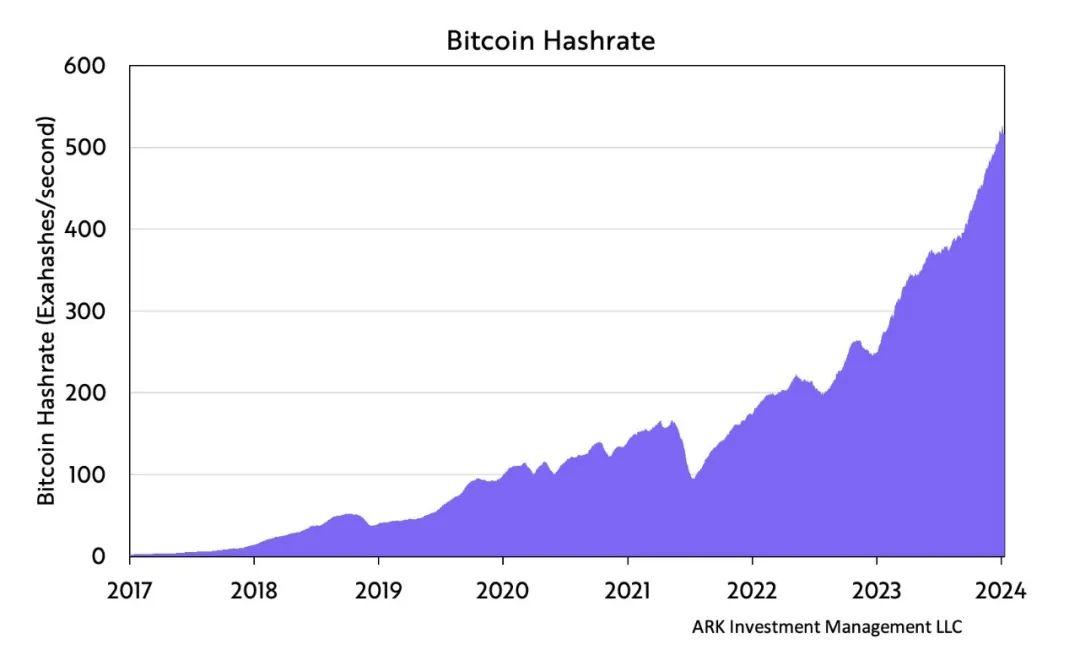
Rebuttal: Bitcoin is backed by the most powerful computing network in the world.
The computing power that “supports” Bitcoin reaches 500 exahashes/second, which is more than the world’s largest computing networks combined. This computing power is not concentrated in one place or controlled by a single entity. It is distributed across a global network, ensuring decentralization and resistance to attacks or failures.
Miner Support > Government Support
Opinion: Bitcoin wastes too much electricity
Rebuttal: The energy consumed by Bitcoin is not a waste. It is purposefully allocated to sustaining a network that will have profound implications for the future of currency.
Bitcoin’s energy consumption is an important design feature that provides the necessary security for a decentralized, independent, global, and automated monetary system. Bitcoin mining requires high computing power and is very expensive, so the system established by Bitcoin makes any attempt to attack the network highly infeasible.
Additionally, a significant portion of Bitcoin’s energy consumption comes from renewable energy sources. The free market principles of Bitcoin mining provide strong incentives for miners to seek cheap electricity, inadvertently leading them to adopt more sustainable energy solutions. Many mining sites are strategically located near abundant renewable energy sources. These miners harness energy that might otherwise go unused, especially in regions where renewable energy production varies widely and does not always align with demand. In this scenario, Bitcoin mining can serve as a stabilizer for the renewable energy grid, providing ongoing energy demand and helping to fund and support the expansion of renewable energy infrastructure.
It’s also worth noting that Bitcoin’s wasteful nature relies heavily on the directness and clarity of its energy consumption, in contrast to the more hidden and diffuse energy costs of other systems, including traditional financial systems. .
The energy consumed by Bitcoin mining should be weighed against the intrinsic value of a currency that is decentralized, global, secure, transparent, and transcends national borders and political systems. In light of this, Bitcoin’s energy consumption is not a waste, but an investment in a global financial network where anyone, anywhere can use Bitcoin without discrimination. It symbolizes a collective commitment to support an open global economic system based on free market principles.
Sorry, skeptics, you can only choose one.

Opinion: Bitcoin is slow to process transactions
Rebuttal: Bitcoin provides strong transaction settlement guarantees.
Bitcoin’s transaction speed reflects its design choices that prioritize security and decentralization.
In a decentralized global monetary system, transaction speed is far less a better measure of performance than transaction immutability. Although block time affects the initial confirmation speed of transactions, it does not guarantee the immutability of transactions. Compared to “higher throughput” financial settlement networks, Bitcoin’s decentralized settlement guarantees are unparalleled. Bitcoin is the “fastest” blockchain when measured by the time it takes to ensure final completion of a transaction.
Additionally, Bitcoin’s “small” block size balances transaction throughput with the ability of individuals to participate in the network without requiring excessive data resources. Its 10-minute block interval is also a deliberate design choice to allow enough time for network synchronization and stable transaction verification.
Opinion: Bitcoin is too unstable
Counterargument: Bitcoin’s volatility highlights the credibility of its monetary policy.
Volatility is a natural consequence of Bitcoin’s monetary policy. Unlike modern central banks, Bitcoin does not prioritize exchange rate stability. On the contrary, based on the currency quantity rule, Bitcoin limits the growth of the money supply, allows the free flow of capital, and gives up a stable exchange rate. Therefore, the price of Bitcoin is a function of demand relative to supply.
Bitcoin’s volatility is no surprise.
However, Bitcoin’s volatility will gradually decrease over time. As Bitcoin adoption increases, the marginal demand for Bitcoin will become a smaller and smaller proportion of its total network value, reducing the magnitude of price fluctuations. For example, all else being equal, $1 billion of new demand for a $10 billion market cap should have a greater impact on the price of Bitcoin than $1 billion of new demand for a $100 billion network value.
Importantly, we believe volatility should not rule out Bitcoin as a store of value, primarily because volatility typically coincides with significant increases in Bitcoin price.
Opinion: Bitcoin is exploited by criminals
Rebuttal: Bitcoin is censorship-resistant.
To criticize Bitcoin for facilitating criminal activity is to criticize one of Bitcoin’s fundamental value propositions: resistance to censorship. As a neutral technology, Bitcoin allows anyone to conduct transactions without identifying criminals. Bitcoin does not rely on a central authority to identify participants by name or IP address, but by encrypting digital keys and addresses, which gives Bitcoin strong censorship resistance. As long as participants pay fees to miners, anyone can conduct transactions anytime and anywhere.
If criminal activity on the Bitcoin network can be censored, then all activity can be censored. On the contrary, Bitcoin enables anyone to exchange value on a global scale without any restrictions. This does not mean that Bitcoin is inherently a tool for crime. Cell phones, cars, and the Internet that facilitate criminal activity are no less prohibitible than Bitcoin.
Even so, only a small percentage of Bitcoin transactions are for illegal purposes. According to Chainalysis, 0.24% of cryptocurrency transactions were considered illegal in 2022, up from an average of less than 0.7% over the past 6 years.
Opinion: Governments could easily shut down Bitcoin
Counterargument: Governments can’t stop Bitcoin. They can only stop themselves from using Bitcoin.
Bitcoin runs on a global computer network, so it would be extremely challenging for any one government or institution to shut it down. The resilience of the Bitcoin network comes from its distributed architecture, with thousands of nodes spread across different jurisdictions maintaining and validating the blockchain. As long as there are at least two nodes running anywhere in the world, Bitcoin can continue to function.
While governments can regulate or restrict the use of Bitcoin within their borders, the global and decentralized nature of Bitcoin makes shutting it down virtually impossible.
Opinion: Satoshi Nakamoto controls Bitcoin
Rebuttal: Bitcoin contains a unique system of checks and balances that ensures that no one person or entity can control it.
Satoshi Nakamoto does not control Bitcoin. At its core, Bitcoin is software supported by a decentralized network of computer nodes. Its software formalizes its rules. Humanity is not the final arbiter of truth and cannot unilaterally decide to change its rules. Conversely, nodes that validate transactions also enforce the rules.
Every node follows the same set of rules and is only allowed into the network if it follows these rules. If a node attempts to break the rules, all other nodes will reject its information. Recommended software changes are meaningless unless various stakeholders choose to accept them. Nodes are spread across the globe and operate independently, and they will not accept any behavior that compromises their integrity. However, nodes are only part of maintaining the integrity of Bitcoin. Bitcoin contains a unique system of checks and balances designed to encourage innovation and maintenance of the protocol while ensuring that any changes are in the interest of stakeholders.
Key to the system of checks and balances is the value of the asset, Bitcoin, which provides stakeholders with financial incentives to resolve disputes and maintain the integrity of the system. No stakeholder enjoys preferential rights or treatment, but each stakeholder benefits from Bitcoins price appreciation, which is the networks primary signaling mechanism. Any changes that threaten the integrity of the system threaten the value of Bitcoin. As a result, stakeholders have little incentive to act maliciously.
This system of checks and balances is also why Bitcoin is able to maintain its predictable monetary policy and limit the supply of Bitcoins to 21 million coins. It is very unlikely to arbitrarily change the rules of Bitcoin.

Opinion: Bitcoin has no intrinsic value
Rebuttal: Bitcoin is a global currency competitor.
While Bitcoin’s value drivers are different from traditional assets, it would be incorrect to assert that it has no intrinsic value. Bitcoin’s properties as a monetary asset underlie its value and demonstrate that its role in the financial world is sustainable and not merely speculative. Bitcoins intrinsic value does not lie in a traditional cash flow-based asset, but in its unique properties that fit the historical and modern needs of the monetary system.
Bitcoin is often called digital gold. It not only has many of the properties of gold, but also improves these properties. Bitcoin is both scarce and durable, while also being divisible, verifiable, portable and transferable. These monetary properties give Bitcoin super utility and are likely to drive demand and make Bitcoin a global digital currency. suitable candidate.
Opinion: No one uses Bitcoin
Rebuttal: Did you see the numbers?
Cumulative transaction volume: $41.6 trillion
Cumulative transaction volume: 954 million
Cumulative miner revenue: $58.8 billion
Addresses with non-zero balance: 51.7 million
Market cost base: $440 million





