


Web3 Financing Annual Review: Infrastructure and services remain the focus, and the proportion of mainstream asset allocation has increased significantly


Original author: Sohrab Khawas
Original compilation: Zen, PANews
The primary market in the cryptocurrency and blockchain space experienced a sharp decline in the third quarter of 2023, receiving only $1.975 billion in investment. Not only is this number the lowest since the fourth quarter of 2020, it also marks a new trough for the industry. After peaking at $12 billion in the first quarter of 2022, investment and financing in the crypto space has been declining for a year and a half.
As the direction and scale of funding changes, we need to conduct a more in-depth study of the current funding situation in the Web3, blockchain and cryptocurrency space. This analysis aims to reveal the complexities and nuances of the Web3 financing field and provide a clear idea for the current distribution of funds.
Review of the investment and financing situation in the primary market of Web3
At the beginning of 2021, the market performance was strong, but in the second half of 2022 and early 2023, this shows that the market is undergoing a process of consolidation and consolidation, which may form a more stable situation. Although the scale of funding fluctuated during this period, the number of projects that completed financing remained stable.
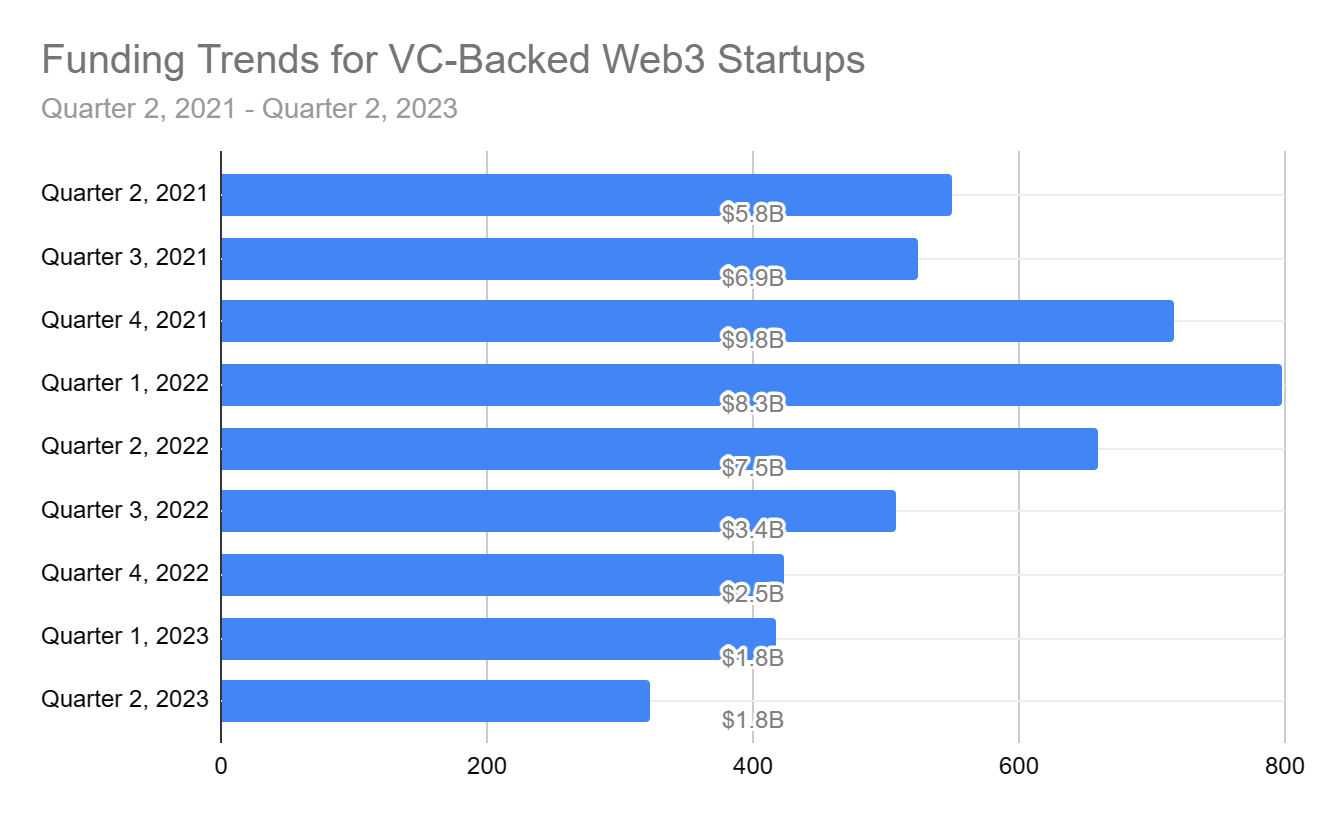
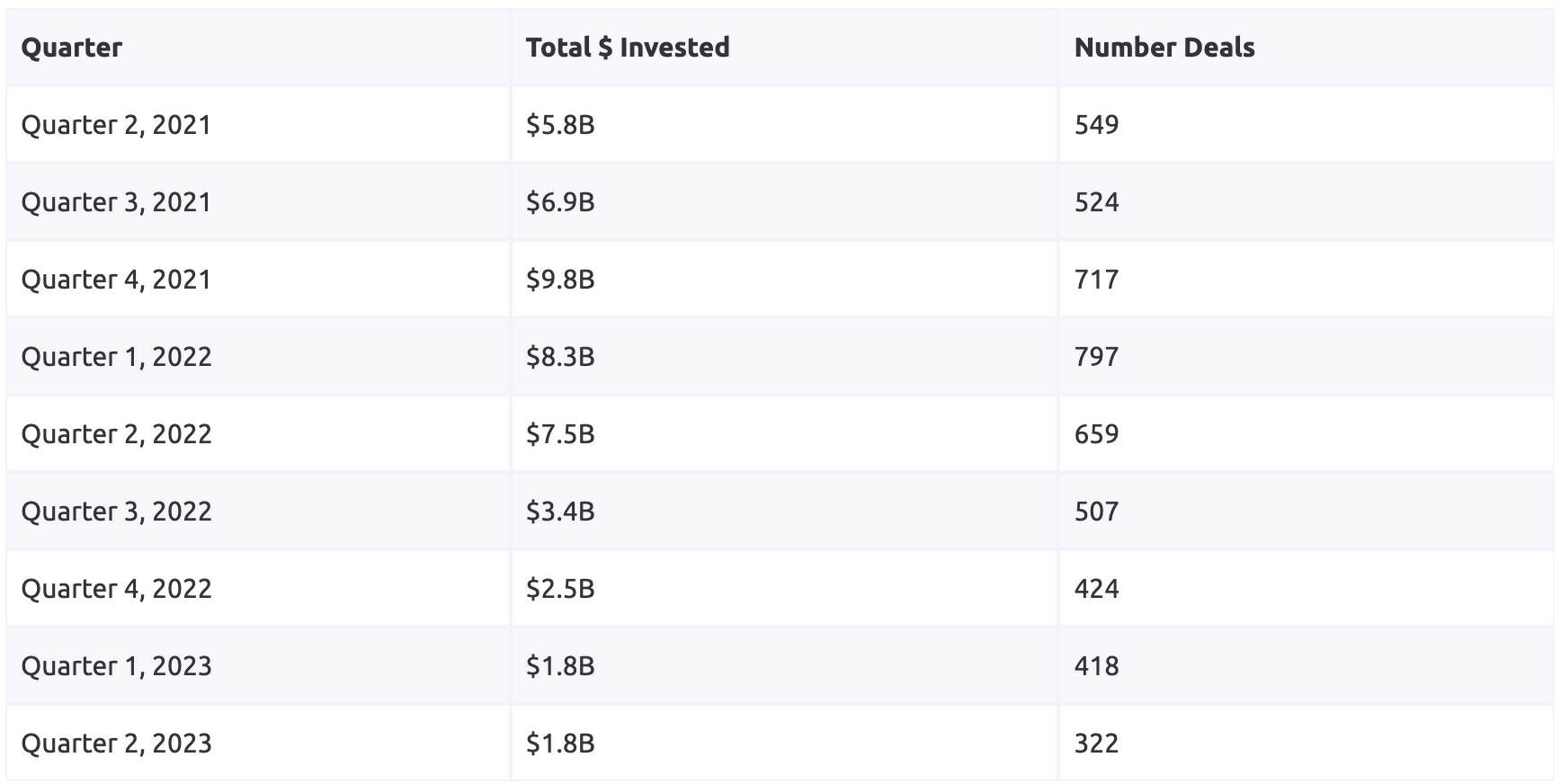
The Web3 industry showed strong growth in 2021, and this positive trend continued until the end of the year: Q2 saw a total investment of US$5.48 billion involving 549 financings; Q3 reached US$6.9 billion involving 524 financings; Q4 saw a more significant growth, reaching US$9.8 billion, with 717 financings completed.
By the beginning of 2022, Q1 financing had declined slightly, reaching $8.3 billion, but the increase in financing indicated that the market was still expanding. In Q2 2022, the amount of financing decreased again to US$7.5 billion, but the number of financing transactions remained relatively stable, which may indicate that the market is consolidating.
However, the decline seen in the second half of 2022 is indeed concerning, with investment in Q3 and Q4 falling to $3.4 billion and $2.5 billion respectively. This downward trend has continued into 2023, indicating the challenging phase faced by the industry.
On a half-year basis, the second half of 2021 showed strong growth, with financing reaching $16.7 billion and the number of transactions being 1,241. This optimism continued into the first half of 2022, with funding reaching $15.8 billion. However, there was a sharp decline in the second half of 2022, falling to $5.9 billion, indicating that a correction in the market may have occurred. This trend has further intensified in the first half of 2023, further suggesting that the market is experiencing a significant contraction.
Crypto Hedge Funds
According to the Fifth Annual Global Crypto Hedge Fund Report, the number of hedge funds investing in cryptoassets has declined, from 37% in 2022 to 29% in 2023. This shift signals the need for people to reassess the risks and potential of cryptoassets in their portfolios.
Cryptoasset Investments for Hedge Funds
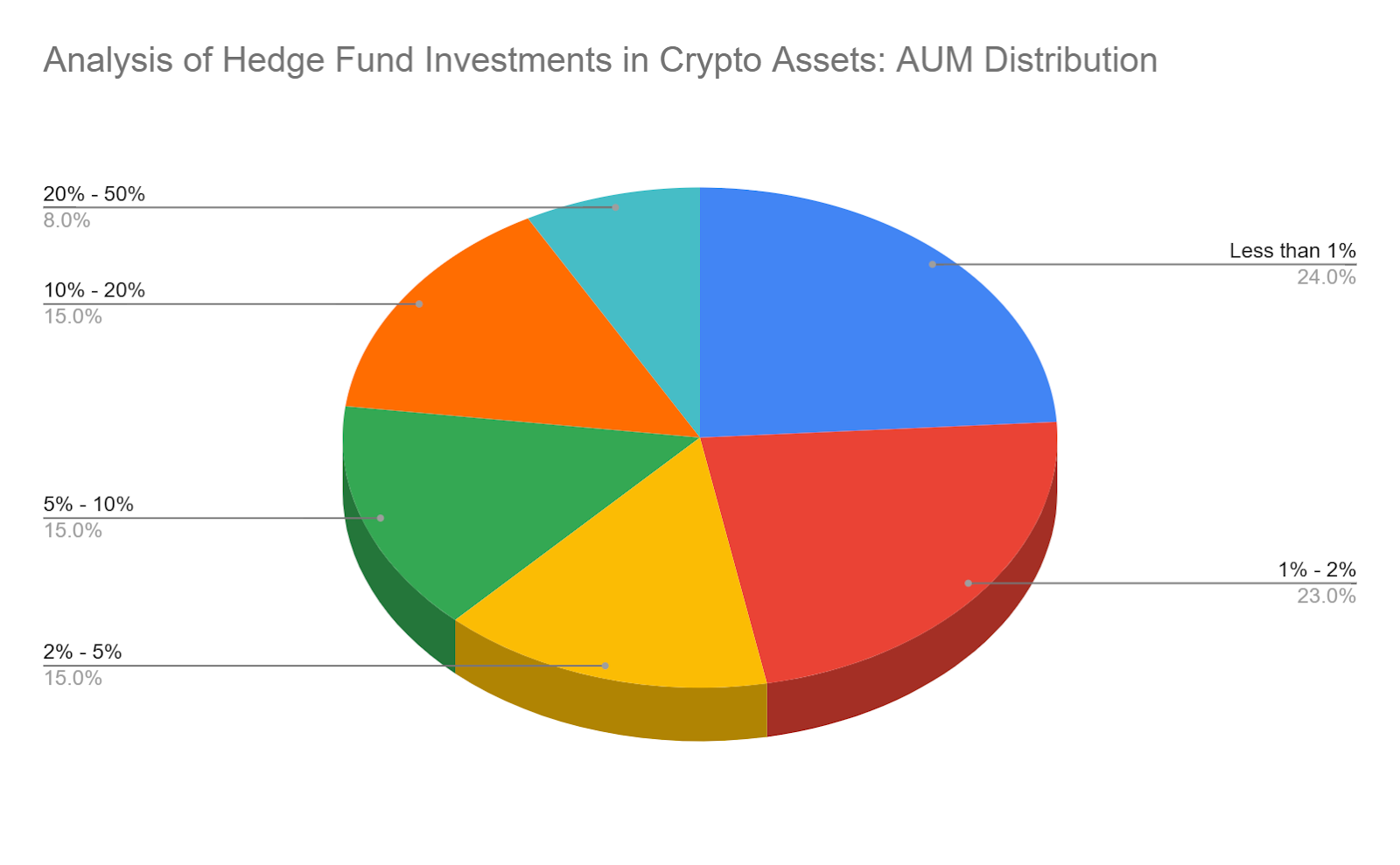
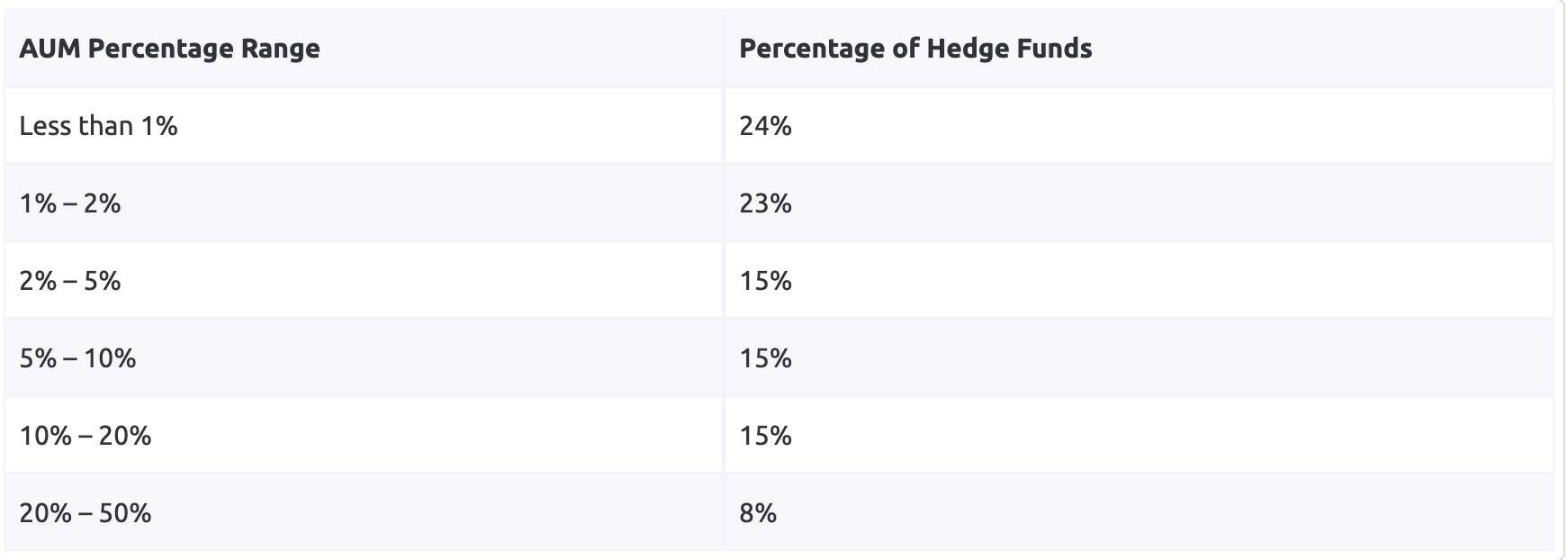
The chart above shows hedge funds’ allocations to crypto assets within their total assets under management (AUM). A significant portion of hedge funds (24%) take a conservative stance with less than 1% of their AUM invested in crypto. This cautious stance is consistent with the overall volatility and risk of the crypto market. Interestingly, about half of the hedge funds involved in crypto-asset investments adopt a “testing the waters” strategy, investing less than 2% of their total assets under management. 63% of these funds have more than $1 billion in assets under management, indicating that well-known funds are also cautiously testing the waters in the cryptocurrency field.
On the contrary, 38% of hedge funds actively involved in crypto-assets show a high risk appetite, with crypto-asset management accounting for more than 5%. This is a significant increase from last year’s 20%, indicating a growing confidence or willingness to take larger positions in the crypto market.
Top reasons why hedge funds invest in crypto
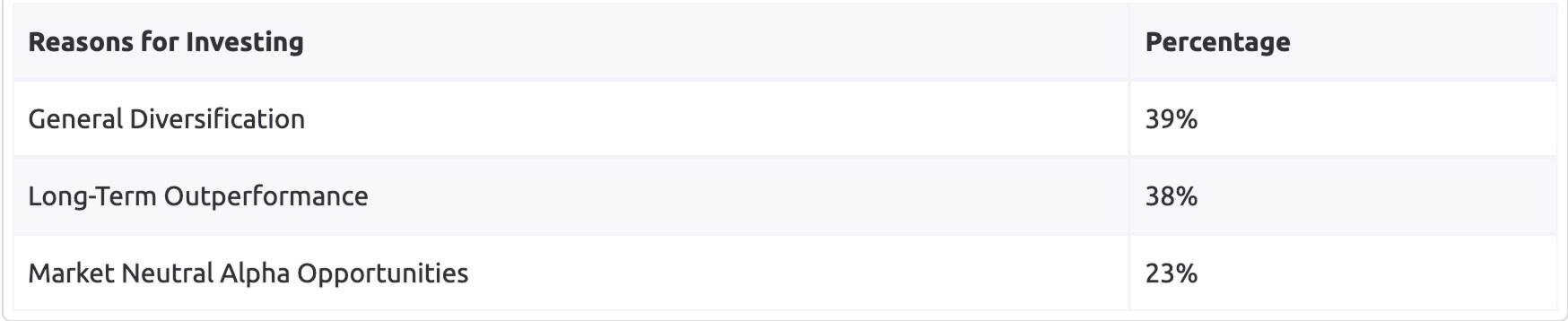
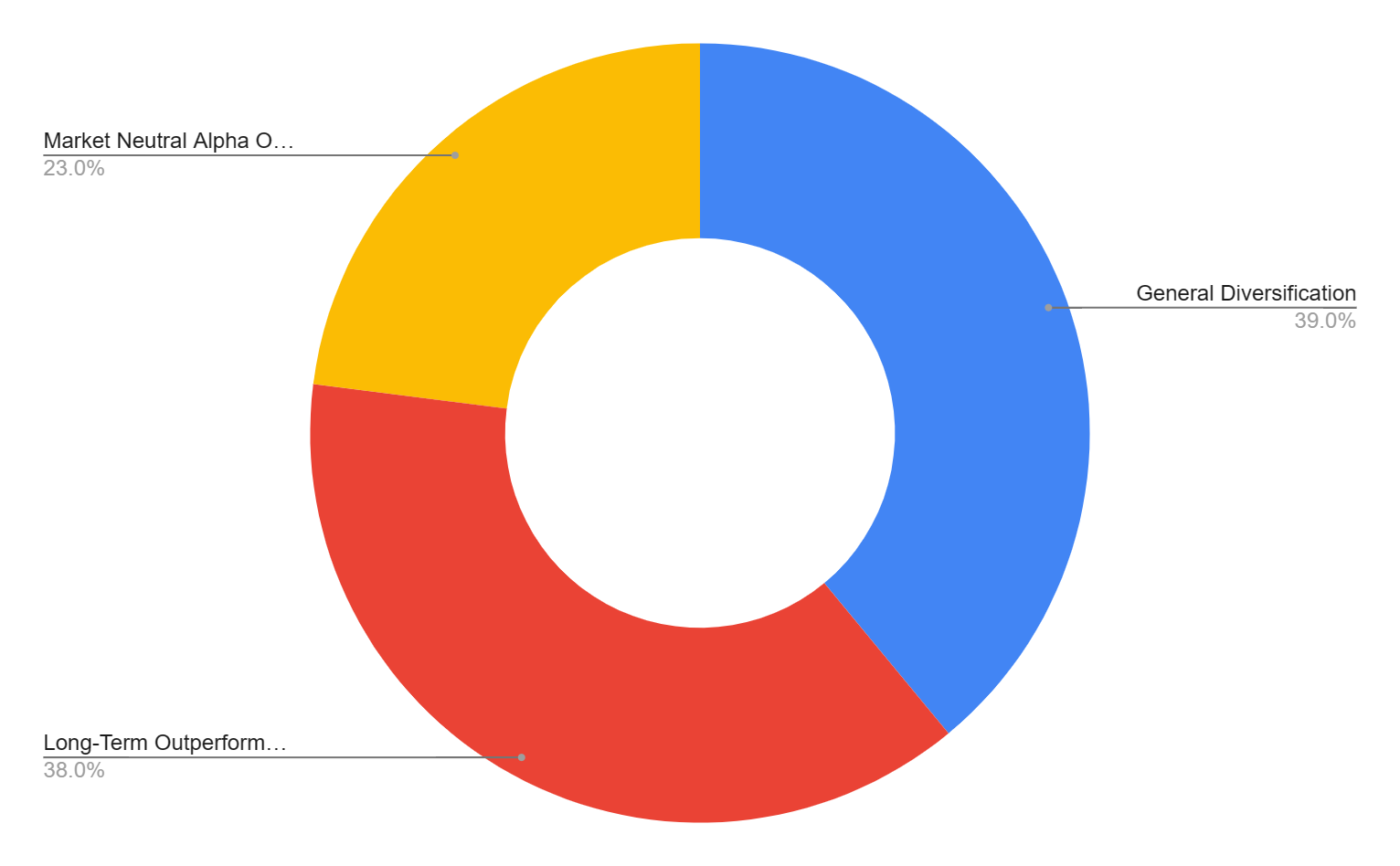
The majority of hedge funds (39%) prioritize overall diversification, using cryptocurrencies to diversify portfolio risk. Another important factor is the pursuit of long-term excess returns, with 38% of hedge funds hoping for continued growth from cryptocurrency investments. Additionally, 23% were attracted to market-neutral alpha investment opportunities, indicating their interest in taking advantage of potential returns when overall market trends are unclear. Together, these motivations highlight the multifaceted role cryptoassets can play in enhancing hedge fund portfolio strategies.
Motivation insights based on AUM

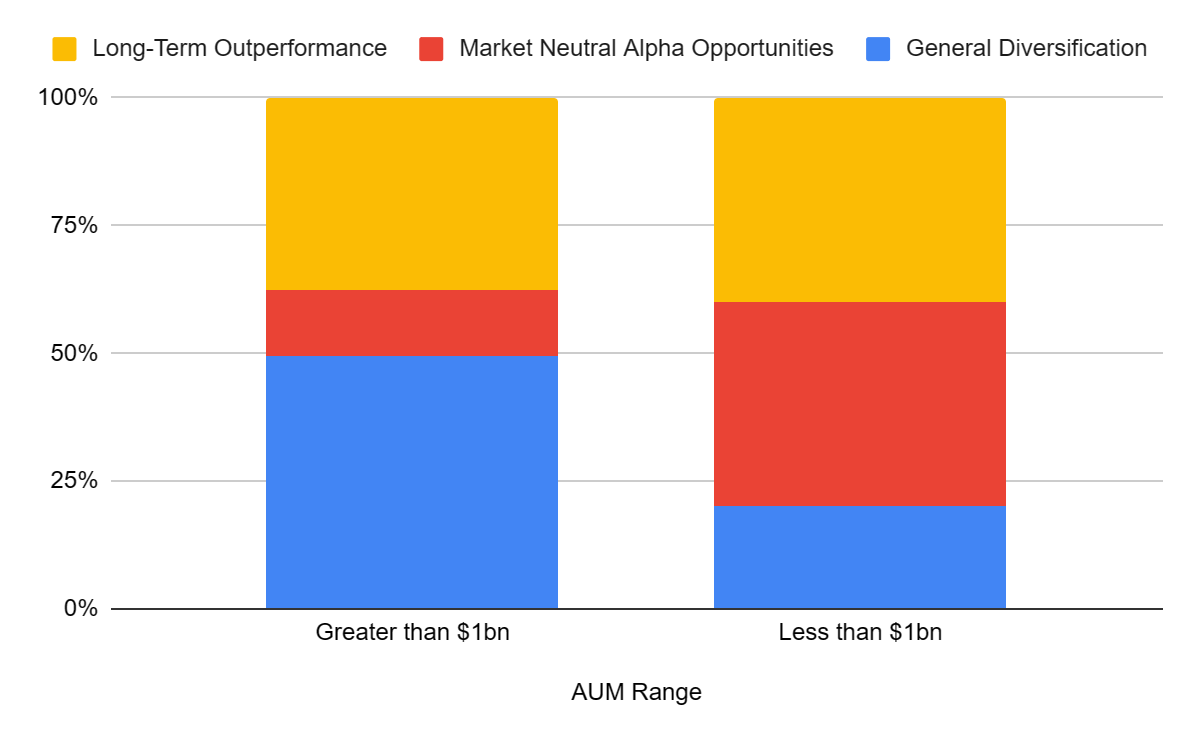
Hedge funds show different preferences in investing in crypto assets based on their assets under management (AUM). Hedge funds with more than $1 billion in assets under management generally favor diversification (50%) and long-term excess returns (38%). In contrast, funds under $1 billion emphasize market-neutral alpha opportunities (40%) and long-term excess returns (40%).
Hedge funds’ preference for crypto assets
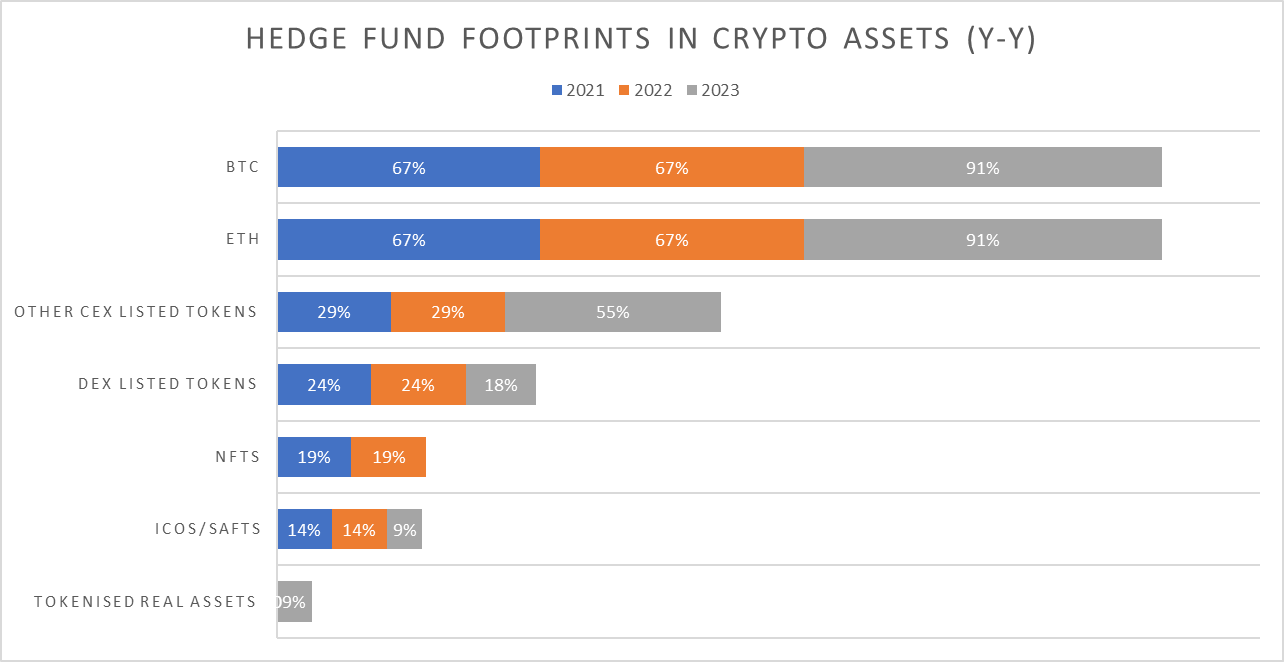
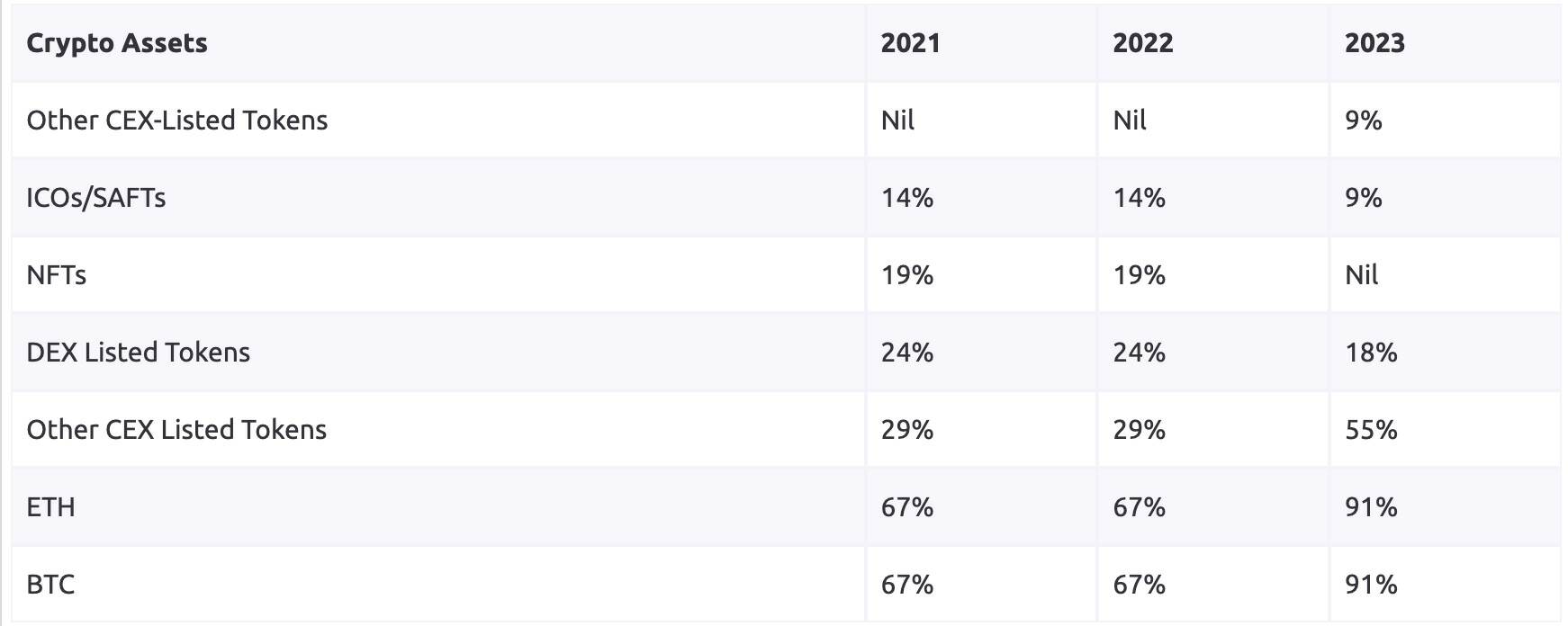
The data shows interesting changes in hedge fund investments in various crypto assets from 2021 to 2023. Notably, allocations to Ethereum (ETH) and Bitcoin (BTC) have increased significantly, from 67% in 2021 to 91% in 2023, likely driven by their market dominance and use as store-of-value assets Driven by recognition. In contrast, allocations to NFTs have plummeted, while investments in other CEX-listed tokens have surged significantly, from 29% in 2022 to 55% in 2023.
Blockchain Financing Trends in 2023
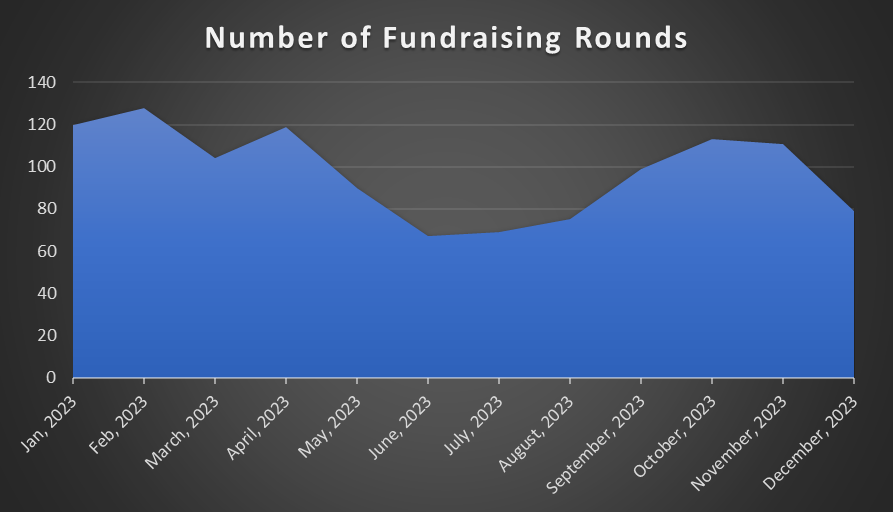
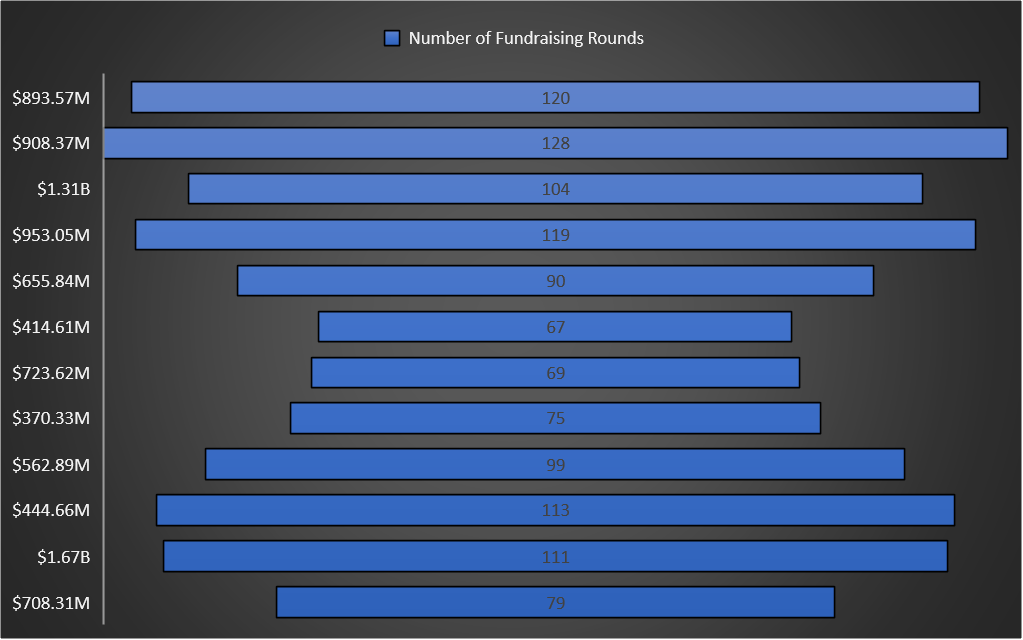
In 2023, the blockchain fundraising trend will show a dynamic trajectory, with both “total financing” and “financing quantity” fluctuating, specifically as follows:
Off to a strong start: The year started off on a high note, culminating in a minor peak in March, when 104 funding rounds raised a total of $1.31 billion.
Mid-Year Slump: June saw the lowest funding at $414.61 million, marking a mid-year dip for the industry.
Year-End Surge: November saw a dramatic surge, with 111 funding rounds that took place during the month raising a total of $1.67 billion.
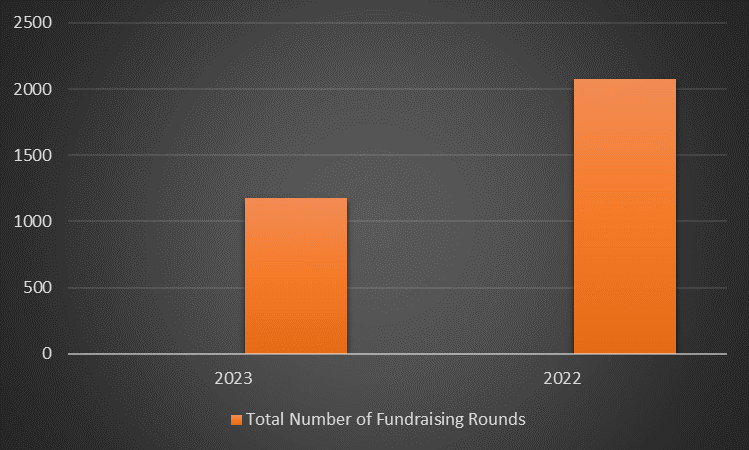
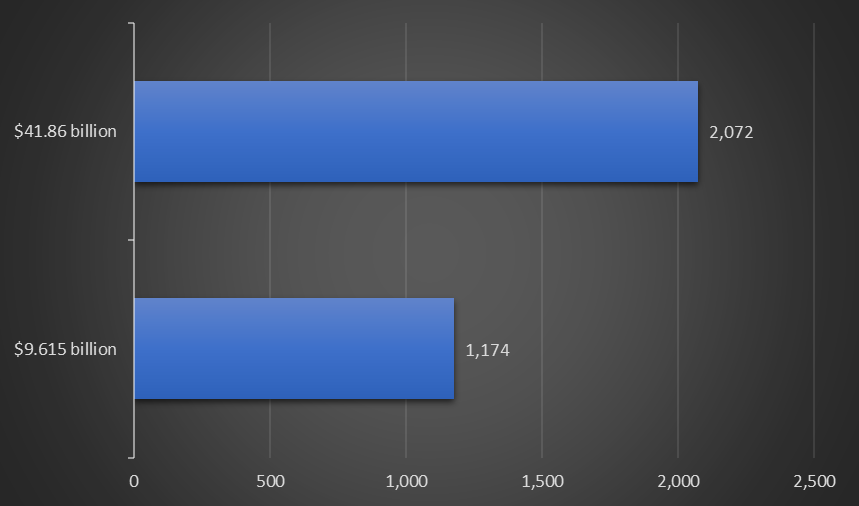
Total crypto financing in 2023 reached $9.615 billion, with 1,174 financings. In comparison, the total in 2022 is higher, reaching $41.86 billion, with 2,072 financings. While total financing declined in 2023, the number of financings remained relatively stable. This suggests that the market is diversifying, with more financing activity and a shift towards relatively smaller projects.
Analyze different tracks
Blockchain infrastructure and services have always attracted much attention. In early January, they raised 6 and 39 rounds, respectively, and February saw significant increases of 8 and 48 rounds. This trend demonstrates growing interest in the underlying technology and related services and underscores the industry’s focus on enhancing blockchain capabilities.
Decentralized finance (DeFi) has become a prominent area, with 22 financings in January and 40 financings in October, maintaining a sustained competitive advantage. The DeFi space has experienced substantial growth, reflecting the industry’s commitment to working on decentralized financial solutions.
The GameFi project reached its peak with 22 financings completed in February, but it also experienced cyclical fluctuations, with only 8 and 10 financings in July and October respectively.
NFTs have received attention throughout the year, reaching peak levels in January and March, with 10 and 8 financings completed respectively. This shows that the unique appeal of digital assets persists across a variety of applications.
The Web3 social category has shown resilience, especially in April, August and November, when it received 14 rounds of financing. This demonstrates continued interest in platforms that integrate blockchain with social interaction.
Notably, stablecoins and traditional currencies did not see significant funding activity during the year. This could mean a shift in focus away from traditional fiat-backed digital assets, either due to regulatory concerns or due to increased demand for more innovative crypto solutions.
2023 VS 2022
Comparing trends in 2023 and 2022 can provide valuable insights into the markets changing landscape.
Financing in blockchain infrastructure increased significantly in 2023, rising from 62 to 72 deals, indicating growing industry interest and investment in the fundamental elements of blockchain technology. This means that industry practitioners will continue to focus on building strong infrastructure to support various blockchain projects. On the other hand, blockchain services decreased from 621 to 381, indicating a possible shift in focus from services to infrastructure development.
Decentralized finance (DeFi) still occupies an important position, with the number of transactions falling from 326 to 242, indicating that the decentralized finance field is consolidating or maturing. However, the number of GameFi financings dropped from 351 to 130, indicating that the industry is re-evaluating interest in gaming-related cryptocurrency projects.
Financing in both the centralized finance (CeFi) and public chain categories declined in 2023, with CeFi falling from 244 to 97 and public chain from 71 to 65. This may mean that interest in centralized financial services is declining. It’s worth noting that Meme’s momentum isn’t obvious. NFTs dropped sharply from 224 to 62 transactions.
The social category dropped from 148 to 119 deals, which may indicate that there are fewer socially oriented cryptocurrency projects, or that there is a more selective approach to investing in this category.
Overall, investment institutions appear to be diversifying their interests, emphasizing blockchain infrastructure, and adjusting their focus in specific categories such as DeFi and GameFi.
Divide financing by stages
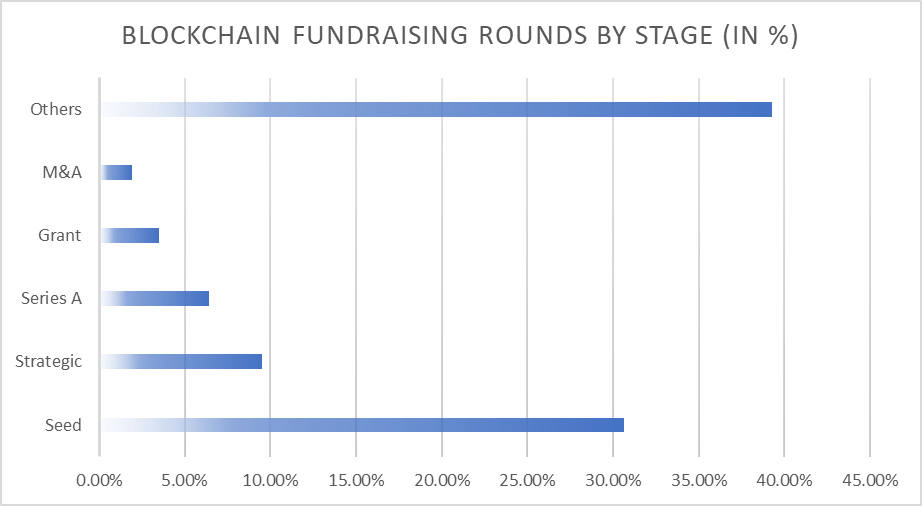
Seed funding emerged as the main driver, accounting for 30.62% share, demonstrating support for emerging businesses in their early stages. Strategic financing followed closely, accounting for 9.53%; pre-seed and Series A financing accounted for 8.68% and 6.43% respectively; Grant funding (appropriation funds) 3.49%; mergers and acquisitions (MA) accounted for 1.94%; others"category has the highest share at 39.3%. This demonstrates that the crypto industry has a financing ecosystem that values early-stage innovation, strategic partnerships, and flexible financing methods, with a large portion devoted to diverse and evolving financing models.
Regional trends in blockchain project financing
In 2023, the main centers for cryptocurrency funding include the United States, United Kingdom, Germany, Canada, Singapore, France, Switzerland, Italy, South Korea, and Hong Kong.
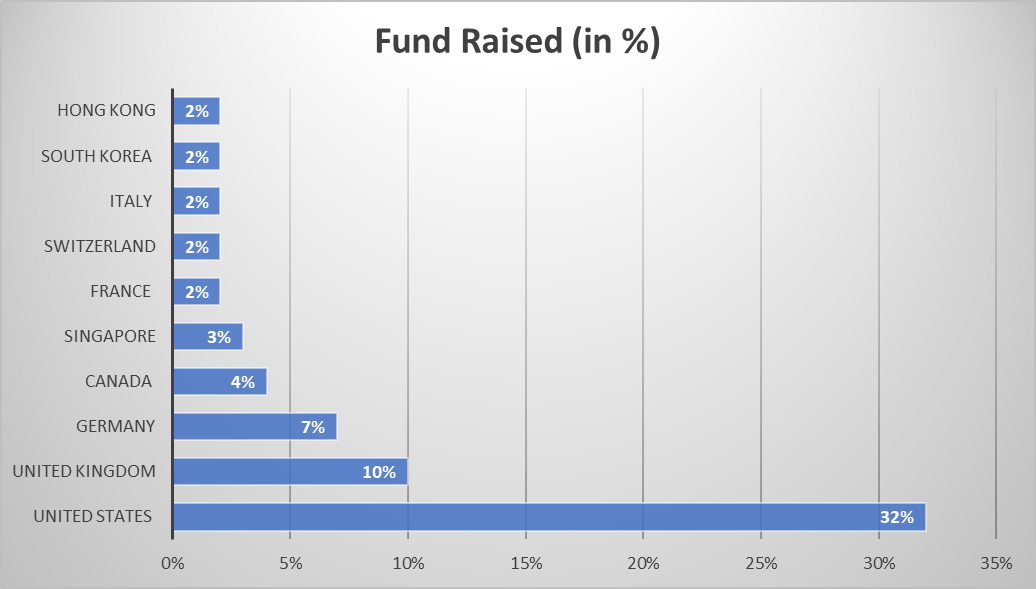
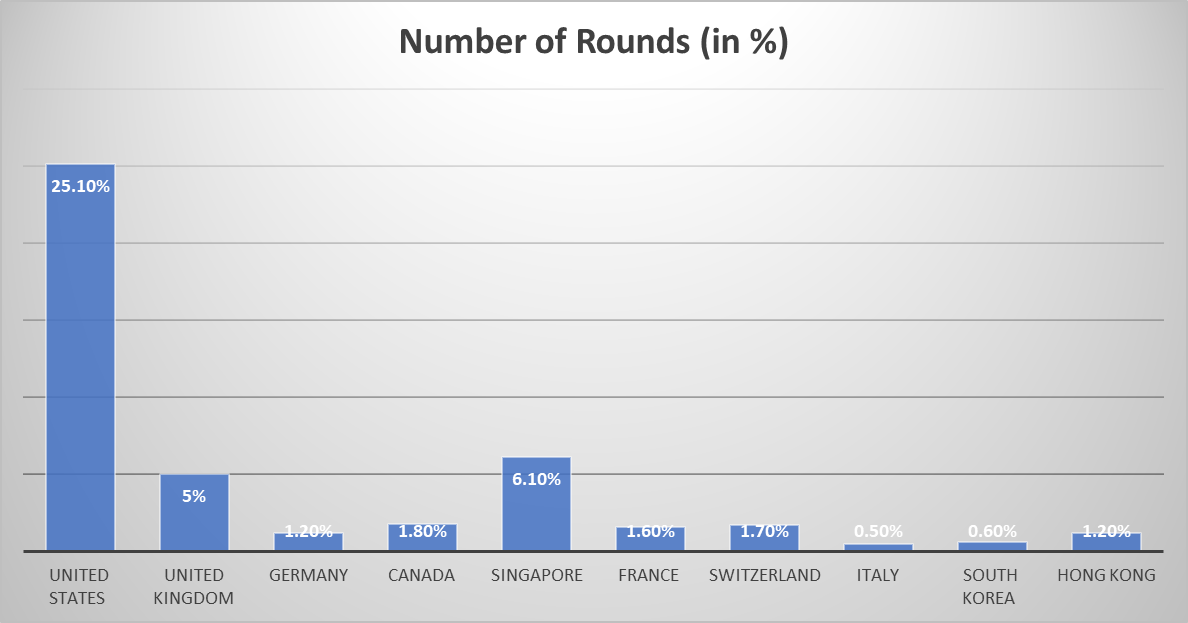
Comprehensive blockchain project financing data analysis reveals geographic trends across jurisdictions. The chart below analyzes and highlights the global nature of blockchain innovation, as well as the unique advantages and preferences that different regions have in project financing.
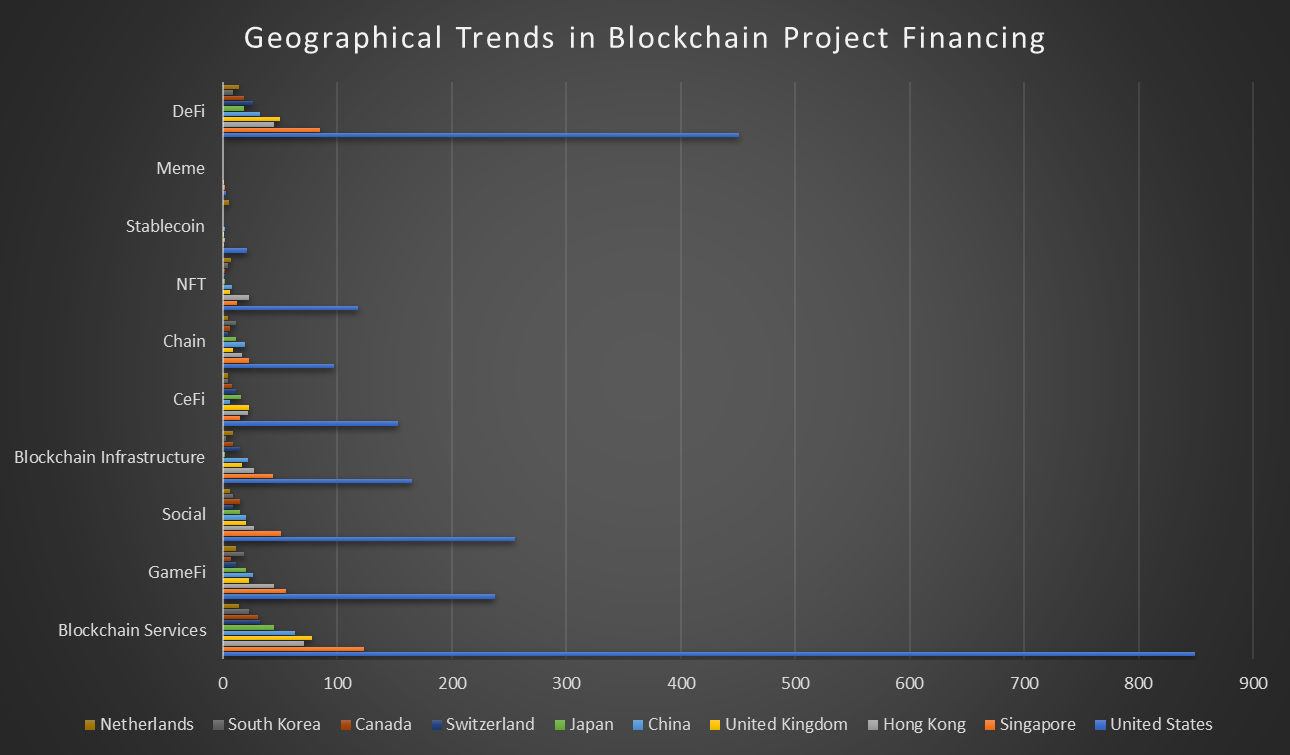
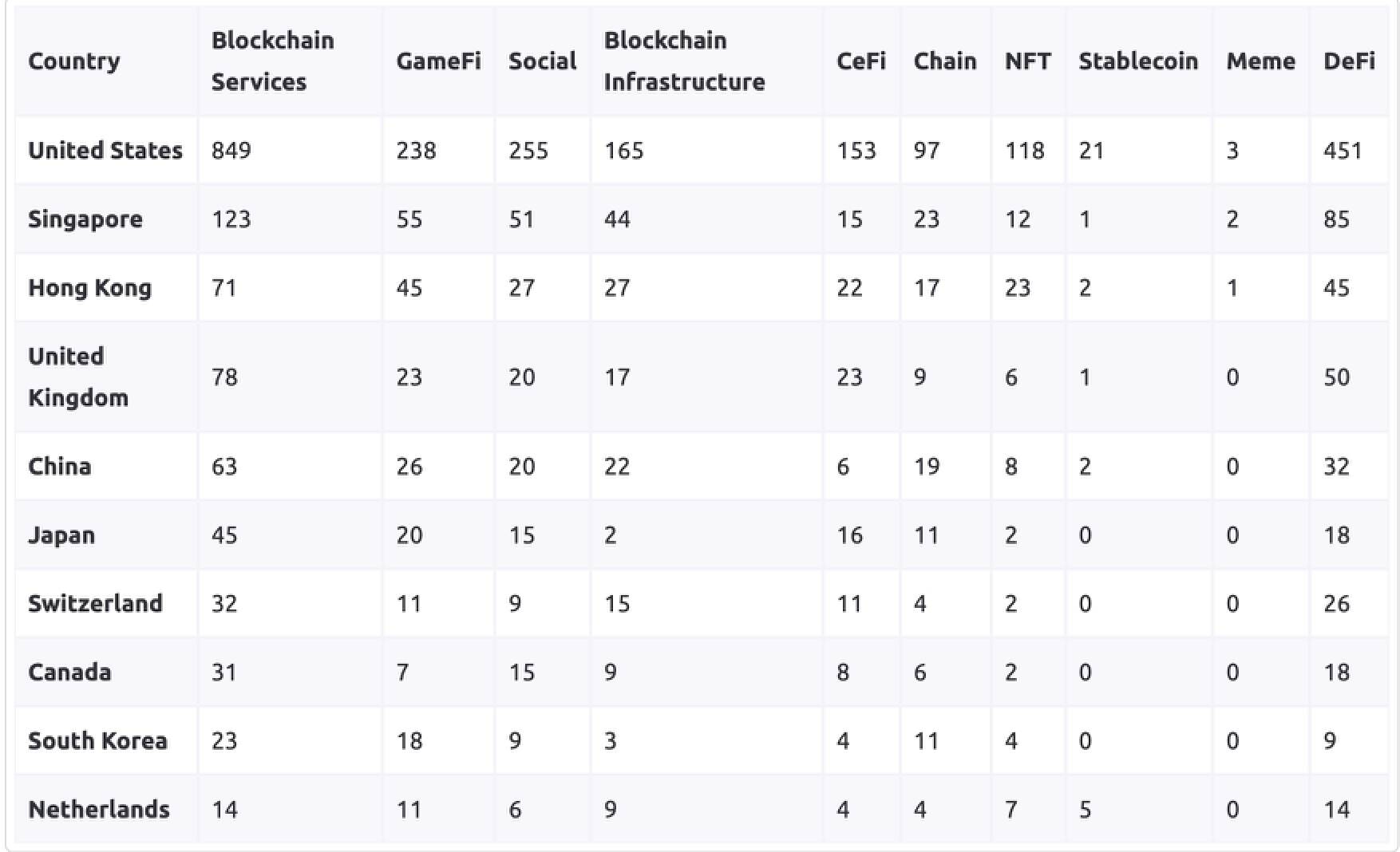
The United States has become a strong leader in the blockchain field with a wide range of projects covering blockchain services, GameFi, social, blockchain infrastructure, CeFi, public chains, NFTs, stablecoins, Meme and DeFi. Notably, blockchain services and DeFi have the highest concentration of projects, indicating the region’s primary emphasis on basic blockchain products and decentralized financial solutions.
Singapore follows closely behind, showing a well-balanced portfolio of projects. Blockchain services and DeFi are also dominant in Singapore, in line with global trends. Data shows that people are obviously interested in blockchain technology in financial and decentralized applications.
While Hong Kong keeps pace with global trends and growing interest in blockchain services and DeFi, it stands out in the GameFi, blockchain infrastructure, chain and NFT categories. This demonstrates the region’s preference for gaming, blockchain infrastructure, and NFTs, while the diversity of project focuses demonstrates Hong Kong’s goal to embrace different verticals of blockchain technology.
The UK performs well in blockchain services, CeFi and DeFi, showing strong interest in traditional blockchain services and the decentralized finance industry. Meanwhile, China, a major player in the global tech scene, maintains a solid position in multiple categories, with dominance in blockchain services, DeFi, GameFi, and blockchain infrastructure.
Japan has adopted a balanced approach and is prominent in blockchain services, GameFi, DeFi, CeFi and chain projects; Switzerland and Canada are known for their robust financial industries and focus on blockchain services, blockchain infrastructure and In the DeFi field, this is consistent with its strategy of financial innovation.
South Korea focuses on blockchain services, GameFi and public chains, showing a preference for practical application projects. Finally, the Dutch project portfolio is relatively balanced, with an even distribution of blockchain services, GameFi, blockchain infrastructure, NFT and DeFi projects.
Summarize
2023 is going to be a roller coaster ride for the Web3 and cryptocurrency space. Despite the sharp decline in financing amounts throughout the year, the data shows underlying resilience and a changing landscape. Blockchain infrastructure and services remain a top priority, while DeFi and GameFi continue to attract a lot of attention. The rise of early-stage financing and strategic partnerships highlights the emphasis on nurturing innovation and ensuring long-term success.
Looking forward, how these trends will shape the future of Web3 and cryptocurrency, whether established companies can regain their dominant position, and whether new pioneers can emerge to redefine the landscape, is worth looking forward to and paying attention to.





