The SEC issued a fine against the NFT industry for the first time. What kind of NFT is a security? The SEC imposes its first fine on the NFT industry, what kind of NFTs are considered securities?



Original Author: Will Awang
Original Source: Web3 Xiao Lu
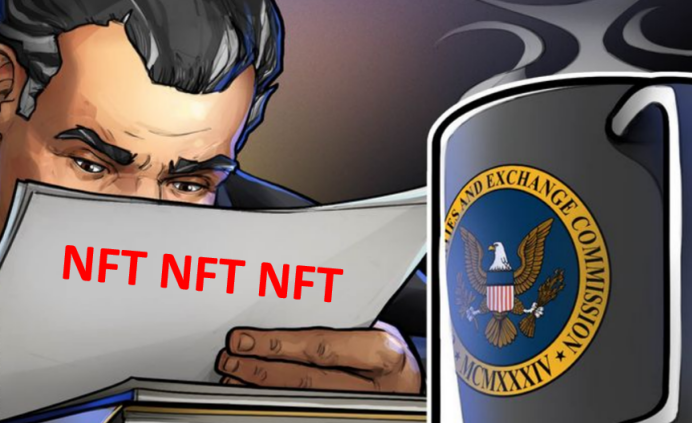
On August 28, 2023, the U.S. Securities and Exchange Commission (SEC) took regulatory enforcement actions against the NFT industry for the first time, accusing entertainment company Impact Theory, LLC, which is based in LA, of selling unregistered securities. The company ultimately reached a settlement with the SEC.
This is the SEC's first regulatory enforcement action against the NFT industry. Impact Theory promised investors to enhance the value of NFTs, the company, and shared wealth, which is crucial in determining NFTs as "securities." This article will examine the SEC's regulatory enforcement actions against Impact Theory and the opposing views of SEC commissioners to see what kind of NFTs will be considered "securities" by the SEC.
I. Background of the Impact Theory NFT Case
According to the SEC, Impact Theory provided and sold three different types of NFTs from October to November 2021 under the Founder's Keys series to investors. Prior to the NFT sale, Impact Theory conducted online events on Discord and promoted information on its website and social media channels.
The SEC alleges:
(1) Impact Theory represented to investors that purchasing NFTs is an investment in the business of Impact Theory and would bring profits to investors if Impact Theory succeeds;
(2) Impact Theory told potential investors that they were "attempting to build the next Disney," and that the value of NFTs would increase as a result;
(3) Impact Theory also states that the fate of NFT investors is closely related to the fate of Impact Theory and its founders.
(https://opensea.io/collection/impact-theory-founders-key)
Impact Theory sold 13,921 NFTs to investors and raised over $29 million worth of ETH in the process. In addition, Impact Theory also owns a 10% royalty on each resale of the NFTs, generating approximately $978,000 worth of ETH for Impact Theory.
Based on the above facts, the SEC concluded that "both potential and actual investors of Impact Theory NFTs consider them as investments that will appreciate in value." The SEC accuses Impact Theory of violating Sections 5(a) and (c) of the Securities Act, which prohibit the sale of unregistered securities.
Before accepting the SEC settlement, Impact Theory took some remedial measures, such as repurchasing NFTs worth approximately $7.7 million from investors. As part of the settlement with the SEC, Impact Theory agreed to (^1) destroy all NFTs it owns or controls within 10 days of the order being issued; (^2) publish notices of regulatory enforcement on its website and social media; (^3) modify the NFT contract to eliminate its royalties; and (^4) forfeit and pay fines totaling approximately $6.1 million.
II. What is a "Security"? - Howey Test
Following SEC v. Ripple, the U.S. regulators apply the Howey Test to determine whether something qualifies as a "security." Although the SEC does not explicitly explain in this regulatory enforcement document how the NFTs meet the Howey Test, we can still deduce the SEC's logic of classifying NFTs as "securities" from Impact Theory's issuance and sale of NFTs.
About the Hawei test, please refer to the previous article: Interpreting the SEC v. Ripple case, further clearing up regulatory haze, Not all NFTs can be considered securities, starting with SEC v.s. Yuga Labs.
In this case, we do see that the NFTs of Impact Theory appear to meet the criteria of the Hawei test on the surface: (1) Investors make monetary (ETH) investments; (2) The purchased NFTs are for a "common enterprise," linking the investors' wealth with Impact Theory's wealth; (3) Investors expect to profit from Impact Theory's efforts to create the "next Disney."
The key factor in determining these NFTs as "securities" is Impact Theory's promise to investors that the NFTs and the company will grow, becoming their shared wealth.
III. Dissenting statement of SEC commissioners
After the issuance of the regulatory enforcement order, SEC commissioners Hester Peirce and Mark Uyeda immediately issued a statement opposing it, stating that there are still many issues with this first regulatory enforcement on the NFT industry and they need to be clarified before the next regulatory enforcement case comes out.
First, they believe that Impact Theory's vague promises to NFT investors do not meet the Howey test standards. The full disclosure principle of the U.S. Securities Act requires issuers to have a relatively clear and detailed use plan and profit expectations for the funds raised from the sale of securities, just like the prospectus in an IPO or the white paper in an ICO. Peirce and Uyeda further pointed out, "The SEC does not take enforcement actions against people selling watches, paintings, or collectibles, even if they make some vague promises of value appreciation, such as gradually building brand recognition to increase the resale value of these tangible items."
In addition, due to Impact Theory's exaggerated promotion and ambiguous statements, investors have been misled. As Peirce and Uyeda pointed out, "In reality, this NFT has nothing to do with company equity or the value of the company. Could this illusion/misrepresentation also be considered a charge of fraud?"
Secondly, Peirce and Uyeda also stated that even if the requirements of the Howey test are met, it is questionable whether the SEC needs to take such regulatory enforcement action. Violations of unregistered securities offerings can usually be resolved through a rescission offer, and Impact Theory has already made such an offer through its buyback program.
Finally, Peirce and Uyeda raised several issues that they believe the SEC should consider before conducting regulatory enforcement on the NFT industry in the future. These mainly include:
Is the Securities Act suitable as the regulatory law for NFTs? Is there a feasible regulatory path for NFTs under the Securities Act?
In addition to the securities attributes of NFT assets themselves, do the methods of issuing NFTs and the royalty transactions in the secondary market also constitute "securities"?
For the compliance measures that need to be taken for the above-mentioned regulatory enforcement and resolution, such as destroying NFTs and modifying to a 0 royalty, have they become the standard for subsequent regulatory enforcement cases? Is it appropriate?
(https://metanews.com/sec-says-nfts-sold-by-impact-theory-are-securities-in-landmark-case/)
4. What kind of NFT will be considered a security?
First, let's try to answer the question about how NFTs should be regulated raised by Peirce and Uyeda. This is the foundation.
4.1 How should NFTs be regulated?
The essence of NFTs is a type of token, and the captured value depends on the value of the underlying assets it anchors to. The value can come from various sources, and the specific asset value attributes of NFTs are linked to the value attributes of their underlying assets.
Referring to the investor reminder about NFT risks issued by the Securities and Futures Commission (SFC) on June 6, 2022, if an NFT is the true digital representation of a collectible item (such as artwork, music, or film), and the associated activities are not within the regulatory scope of the SFC. However, some NFTs blur the line between collectibles and financial assets and may have attributes of "securities" regulated by the Securities and Futures Ordinance, and therefore will be subject to regulation.
Based on this, NFTs can be divided into three categories based on the attributes of their underlying assets:
(1) NFTs with securities as their underlying assets will be subject to regulation under securities-related laws and regulations;
(2) NFTs with commodities as their underlying assets will be subject to regulation under commodity/virtual asset-related laws and regulations;
(3)If the underlying assets are various equities, the attributes of equities should be considered on a case-by-case basis.
Similarly, how to disclose information about NFTs also needs to be determined based on the attributes of their underlying assets.
(https://cointelegraph.com/news/sec-investigating-nft-market-over-potential-securities-violations-reports)
4.2 Are the issuance and sale methods of NFTs (secondary market trading) also considered securities issuance?
According to the economic substance of the transaction, there are two ways in which NFTs fall under securities regulation:
(1) The underlying assets issued are securities themselves, such as turning company equities into NFTs;
(2) Regardless of whether the underlying assets are securities, the sale method of NFTs constitutes the sale of "securities".
Regarding (2), in the case of SEC v. Ripple, the court deemed that the underlying subject matter of most "investment contracts" is merely a standalone commodity and does not necessarily meet the definition of "securities", similar to the orchard in the case of SEC v. W.J. Howey Co., as well as other underlying subject matters of some "investment contracts", such as gold, crude oil, etc. To determine whether a transaction constitutes an "investment contract", it is necessary to examine the economic substance of the underlying subject matter to determine whether the different methods of sale constitute the sale of "securities".
In the case of SEC v. Ripple, the Ripple token XRP does not necessarily meet the definition of "securities", but the fact that it was promoted and sold to early investors constituted an "investment contract" and thus fell into the definition of "securities".
In this case, NFT itself does not have the attribute of "securities," but Impact Theory's marketing and promotion tell potential investors that it is "trying to build the next Disney," and the value of NFT will therefore increase. As a result, the release of NFT has the potential to become an "investment contract," thus falling within the definition of "securities."
In summary, "securities" refer to investors passively participating in the business of a third party solely through monetary investment, and expecting to benefit from the efforts of the third party. If the efforts of the third party fail or do not materialize, investors face the risk of losing their investment.
V. Conclusion
Although this regulatory enforcement by the SEC does not have the force of judicial decisions, the result is still significant because it is the first time that the sale of NFTs has been found to violate the provisions of the Securities Act regarding the sale of unregistered securities.
In an uncertain regulatory environment, regulatory agencies such as the SEC and CFTC continue to challenge the cryptocurrency industry and are delving deeper. After initiating lawsuits against cryptocurrency giants Binance and Coinbase, the SEC's regulatory enforcement in the NFT sector demonstrates that the SEC is not slowing down.
Previously, in the article "Legal Compliance Matters for Brand NFT Projects Operating Overseas," I covered some compliance points for NFT projects. However, clearly, with the increasing strengthening of regulations, companies in the cryptocurrency industry still need to continue discussions with experienced lawyers on how to handle litigation, regulation, and compliance.