The best time to invest in Web3 is coming, where are the killer DApps?


Original author: XIN, OFR partner
If you are a rational and objective investor, you should feel that we do not need more infrastructure projects, at least not at the moment.
The current infrastructure is sufficient for the next bull market or even the one after that (if there is one).
In terms of scalability, we have Solana; in terms of legitimacy, there are ETH L2 Rollups and several zkEVMs that will soon be launched; for those pursuing decentralization, Ethereum mainnet is available; for composability, Cosmos or Polkadot are good choices.
We have all the necessary prerequisites for creating DApps, as well as dozens of recently popular Raas or AppChain services. Whether you want to build applications or blockchains, it is not because the infrastructure is insufficient or lacking development tools.
But the question is: Where are the killer DApps?
In the previous cycle, DeFi saved the crypto space. The AMM Dex + asset pool lending + liquidity mining model, along with various projects based on these basic patterns, could be replicated and played on dozens of new chains.
Now that these DeFi suites are available on the new chains, what else can be done? Will we continue to play with the same three things in the new cycle?
Recently, some emerging applications have inspired me, and let's delve into them:
Meme coins
Meme coins like $Pepe or $Bitcoin (HarryPotterObamaSonic 10 Inu) are important innovations during the bear market.
They have spawned a subculture that, compared to VC-backed projects with valuations in the billions of dollars, has token mechanisms that are more favorable to retail investors. Expensive VC coins often mean that chips are being dumped on retail investors.
Of course, some infrastructure projects can also be considered Meme coins in a certain sense. If Meme coins like Pepe satisfy the emotional value of retail investors getting rich, then infrastructure "Memes" alleviate VCs' investment anxiety, especially when VCs feel they missed out on investing in major public chains (such as Solana, Near, etc.) in the previous cycle, and they need to make up for it by investing in infrastructure in this cycle.
People think that doing ZK is difficult because it requires strong mathematical skills, but doing memes is not that simple either. In order to create a viral cultural symbol, it is actually a very challenging task because there is no fixed template to reference or apply. To become a successful meme creator, one must have a thorough understanding of a certain community subculture, such as the degen community or the loser vibe, and have the ability to design compelling materials that capture the attention of the community.
In my opinion, Meme Coin is another form of crypto cultural symbol that has emerged after avatar-type NFT.
Friend. tech (hereinafter referred to as "FT")
In most industry analyses, FT is usually referred to as a social product. However, I believe it is a financial product based on the social user network of Twitter (or X). It does not create new social relationships or introduce any new communication patterns. Social products should be like QQ or WeChat, which change the form and mode of conversation and communication between people. Obviously, FT has not done this, nor does it intend to.
Based on first principles, this model can be used to design some new products. Essentially, it adds token incentives to Twitter's social network. In a sense, this is a community-based token incentive for Twitter's social network before it (possibly never) issues its own token. The recent "Tip Coin" project actually captures the essence of FT's product and is starting to gain prominence in the community.
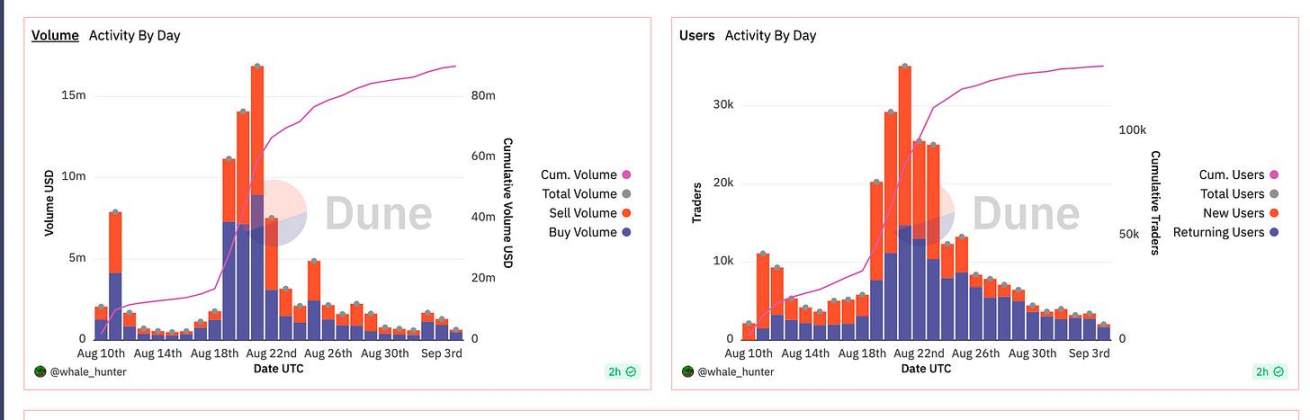
Telegram bot
The starting point of Unibot is quite simple, many teams such as Uniwhales and Whalesalert may have done similar products before. However, it has made improvements in two key aspects:
First, the features cater to the needs of meme traders in the cryptocurrency circle. Unibots has introduced some new features, including limit orders, copy trading, and privacy trade routing, among others. Although many teams have been talking about doing their own "Intents" recently, Unibots has quietly been providing Intents services with tens of thousands of requests every day.
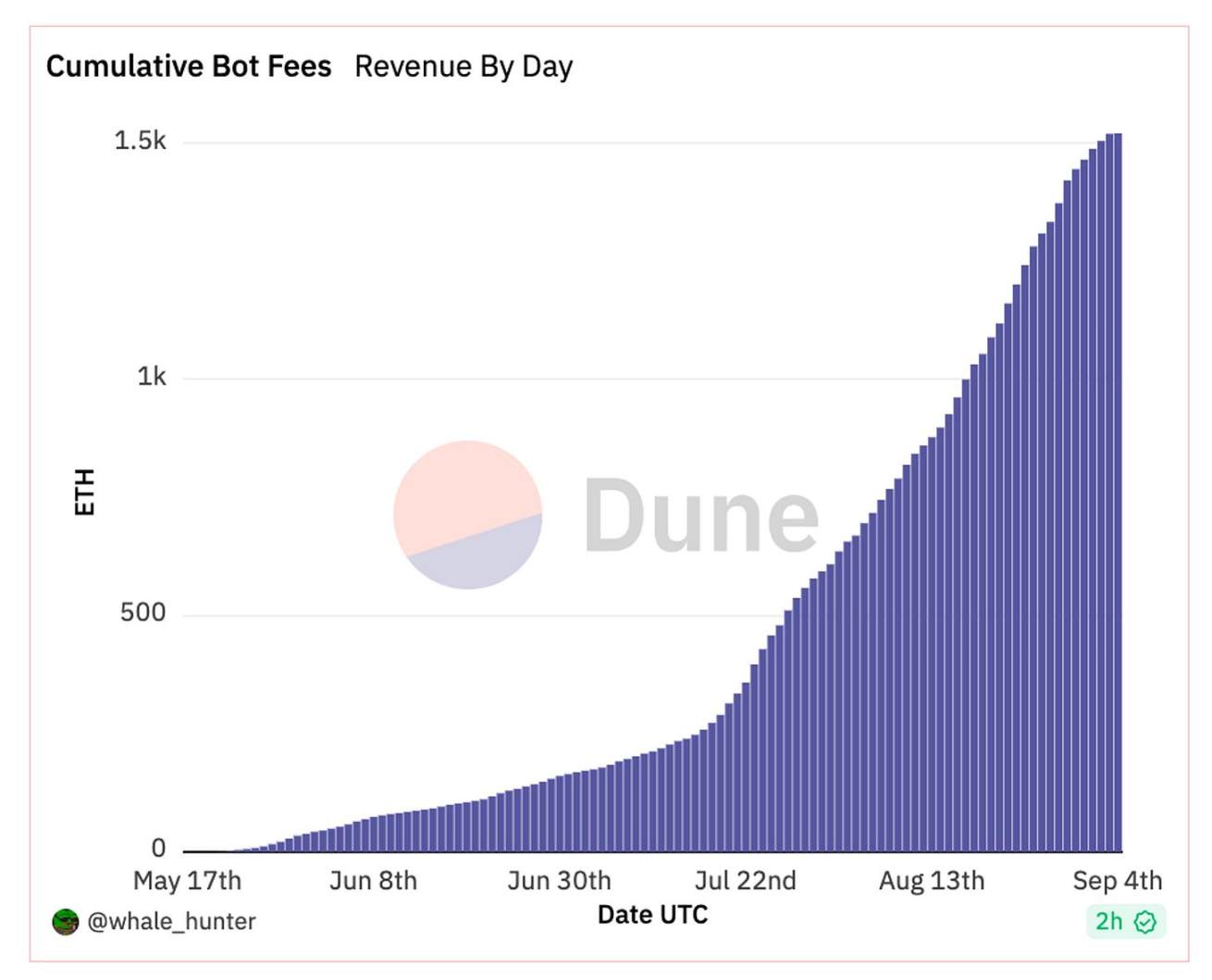
Secondly, Unibot's token design has some cleverness. The income is tied to the overall prosperity of the ecosystem and related to product features, and the token distribution is relatively reasonable.
Unibots also took advantage of the traffic on the necessary Telegram platform for cryptocurrency users and created a user-friendly product, channeling back the traffic from Telegram.
What conclusions can we draw from the above cases?
If we regard product power, subculture creativity, and a good token model as a triangle (you guys in the crypto world love all kinds of triangle metaphors), successful projects usually need to have at least two of these elements. A project needs to be able to attract users and have long-term viability, and having these three elements is necessary.
Let's use the previous examples to illustrate. Meme coins have sparked subcultural frenzy and have a carefully designed token mechanism, but currently lack a usable product.
FT's product launch was exceptionally successful, even though the product's UI/UX itself has issues, it can still be considered an overall success in terms of product strategy. The token model for the product's launch was also well done, but we have yet to see new solutions for sustaining momentum. In terms of subculture, FT has not explored that aspect yet.
Unibots has strong product power and features, and the token model is also reasonable. However, the users of the product itself have not formed a sense of cultural belonging to the product. They are more focused on the product and the token itself. How to make users like Unibot as a cultural symbol is definitely a topic worth studying for the Unibot team.
What kind of product and builder do I expect?
Product and growth strategy: From day 0, you need to plan how to acquire users, such as utilizing Twitter or Telegram traffic to drive user growth, how to prevent the product from being blocked by Twitter, and how to iterate quickly and lower user entry barriers. FT has some clever ideas in this regard, such as using PWA to avoid the hassle of launching on the Apple App Store, and so on. The form of the product does not necessarily mean creating a Twitter plugin or Telegram bot, but rather finding a suitable way to attract users from these two largest user groups of applications.
Token design: Design a well-balanced token distribution structure that benefits both sellers and buyers. The value of the product's token should be closely tied to the product's revenue and value, giving users who participate in different stages opportunities to make money.
Creativity and subculture shaping: The team itself needs to understand some of the subcultural language symbols and conscious representations of the community. Similar to Pepe and Doge, which are long-standing memes on Reddit, new meme creation and inclusion, including using AI for creation, can be factors used for growth.
Based on these criteria, I hope to see more DApp builders joining the DApp development community. I don't want to label it as just another buzzword or category. If we have to do that, I might use universal terms in the crypto industry such as "TwitterFi," "TelegramFi," or "MemeFi."
Some earlier fields, such as the recently discussed on-chain games or autonomous worlds, are still very promising, and I believe that very successful products will emerge from the community, but it takes time. Good signs have already appeared, and many young and creative developers are active in the Onchain Gaming community. The current problem is that the atmosphere within this small circle is a bit intense, and the learning curve for non-hardcore gamers, especially those unfamiliar with Crypto, is too steep.
I am willing to cooperate with the Builders of Onchain Gaming to explore more user-friendly and concise ways to acquire users. Another thing I feel lacking is Token design. There is very little discussion in the Onchain Gaming community about Token design, but I believe that an economic system is essential to successfully attract customers.
The best time to invest in Web3 is now!
The characteristics of the bear market's bottom in the primary and secondary markets are very obvious. For example:
Projects that started at the end of the last bull market either failed because they couldn't establish enough competitiveness or didn't have enough operating funds, or they have shifted to other fields, such as artificial intelligence.
Traditional VCs and investment institutions, who were hesitant and indecisive, Fomo-ed into the last market peak, but now they basically don't pay attention to Web3 and are competing to allocate funds to AI projects.
The market already has enough ZK and Infra narratives, and many application developers around me have transformed to develop Infra. I think this also indicates that Infra projects have reached saturation. So how are those large projects that raised billions of dollars in the last bull market going to release tokens? Relying solely on PUA token airdrops? The key is that it's not just one project doing this; there are still double-digit projects that haven't released tokens, and each one requires secondary bloodsucking from the crypto market. The current crypto market is already lying in the ICU, where is there so much blood to suck?
Only innovative applications can bring new narratives, new traffic, and new blood.