






LD Capital: Quick Overview of New POW Projects


Original author: Duoduo, LD Capital

Since Ethereum switched to POS mode, most of the attention in the market has been on POS-based public chains. However, POW mode is still in development. One typical representative is KAS, which proposes a new POW blockchain model. Due to the continuous rise of KAS, new POW projects have gradually attracted attention from funds and communities. This article introduces several recently performing POW projects.
I. Market Performance

Source: coingecko, LD Capital
Note: The data in this article is as of August 1, 2023.
From the table above, we can see that these projects have been launched less than a year ago and have a market value of less than $50 million, with decent price gains in the past two months.
In addition, the teams of Dynex and Neurai are anonymous and have not disclosed any information publicly. The co-founder of Microvision Chain (Twitter: @Jason_K 0001) is Chinese, but the official website has not disclosed specific resumes or experiences.
II. Narrative
The new POW
Projects, combined with the current market environment and hot topics, have proposed their own narrative focuses.
Dynex
Dynex is a neural morphology supercomputing blockchain based on the DynexSolve chip algorithm. It proposes a useful proof of useful work (PoUW) method to improve the speed and efficiency of decentralized networks.
DynexSolve can run "neural morphology chips", which outperform traditional computing methods in a range of computational tasks. Neural morphology computers are natural platforms for many artificial intelligence and machine learning applications. Dynex aims to provide computing power for artificial intelligence, machine learning, financial technology, and biomedicine based on this.
Dynex mainly uses GPU computing power. According to the statistical data of the hiveon.com computing power management platform, DNX currently accounts for 14% of the computing power, making it the largest pow token within the scope of the platform's statistics.
Microvision Chain
Microvision Chain is a decentralized storage network that aims to create a distributed ecosystem of secure and private data storage. It uses blockchain technology to ensure data integrity and protect user privacy.
-paragraph="">The goal of Microvision Chain is to establish a highly scalable pow public chain and become the second layer of Bitcoin to improve efficiency and reduce costs. The protocol mainly proposes three improvements: 1) Smart contracts based on UTXO accounts that can establish applications; 2) Built-in decentralized identity protocol for cross-chain support, where all chain data belongs to the same ID; 3) To attract new users to participate, there is no need to purchase or hold cryptocurrencies to use Web 3 applications.According to the official website, the core members of the project published a patent application in November 2021 for UTXO model expansion methods, titled "Method and system for hierarchically cutting data in blockchain transaction, and storage medium." The test network went live in May 2022 and, after verification by the High-Performance Computing Center of the University of Science and Technology of China, the execution speed of smart contracts exceeded 5 K TPS.
Neurai
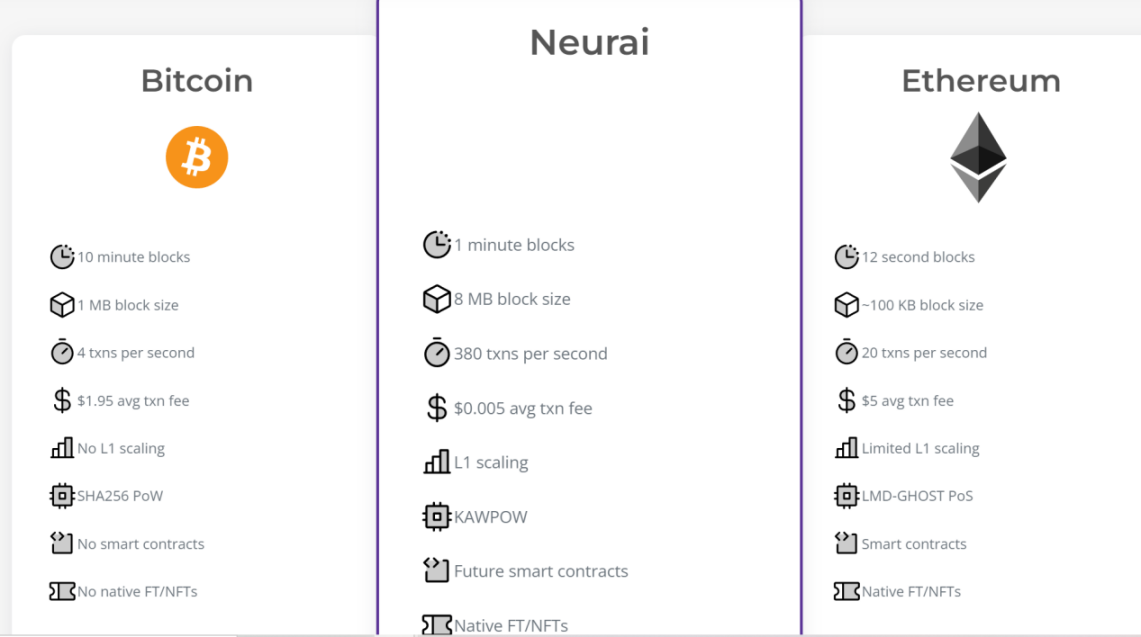
The goal of Neurai is a comprehensive platform that can utilize artificial intelligence algorithms to perform data analysis, predictive modeling, decision making, and connect blockchain assets to IoT devices. In comparison to Bitcoin and Ethereum, Neurai has the following main technical parameters:
Source: Neurai Official Website
It can be seen that Neurai aims to increase the number of transactions per second, reduce transaction fees, and support the implementation of smart contracts in the future.
II. Computing Power
According to the data from the mining pool, the computing power of various projects is as follows:

Source: Mining Pool, LD Capital
Note: The computing power unit H/s is the smallest unit, which refers to a computer randomly hashing collisions once per second, abbreviated as H/s.
1 KH/s = 1000 H/s, 1 MH/s = 1000 KH/s, 1 GH/s = 1000 MH/s, 1 TH/s = 1000 GH/s, 1 PH/s = 1000 TH/s, 1 EH/s = 1000 PH/s.
Comparing the computing power rankings of some well-known POW public chains with high market capitalization, BTC ranks first in computing power, BCH ranks 7th, BSV ranks 12th, KAS ranks 29th, and DASH ranks 31st.
LTC and DOGE are currently ranked 38th and 39th respectively. It can be seen that Microvision Chain has a relatively high mining power ranking. It should be noted that according to the statistics from the hiveon.com mining power management platform, the current mining power of DNX accounts for 14%, making it the largest POW token within the platform's GPU mining power range, surpassing the mining power of KAS token. There are significant differences between these statistics and those from Miningpool, which may be due to different calculation methods.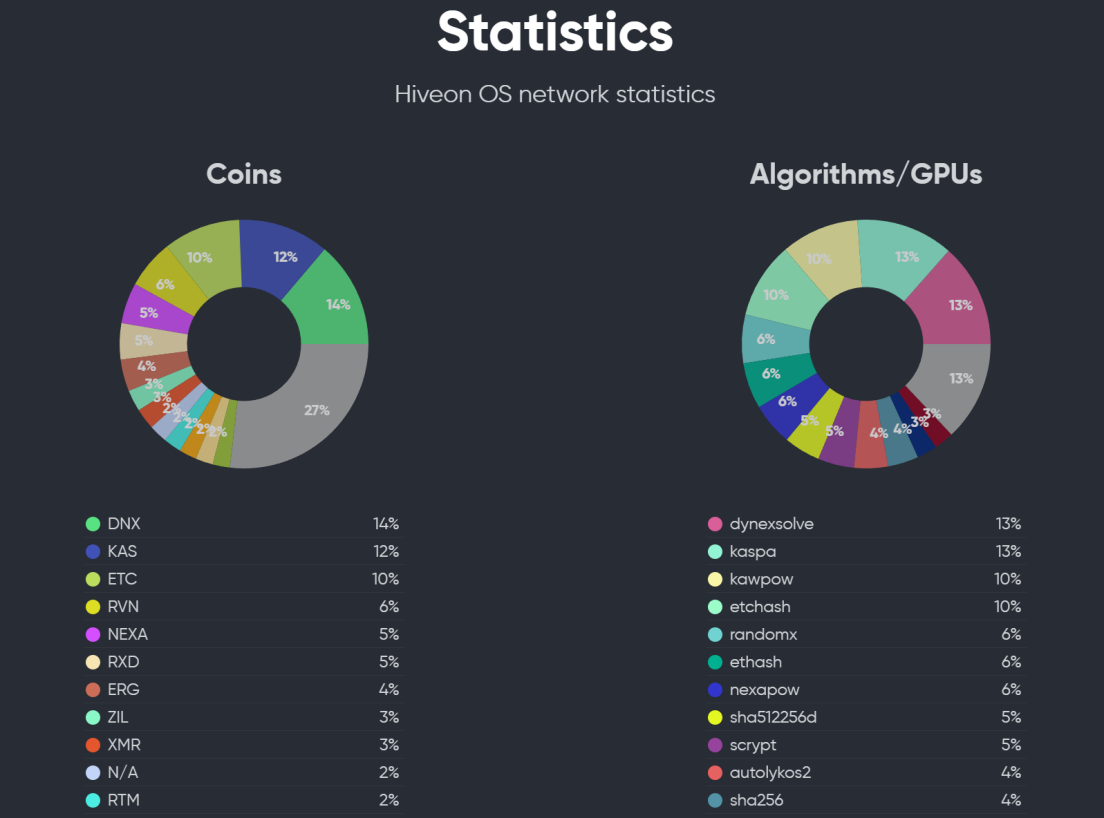
Source: Hiveon
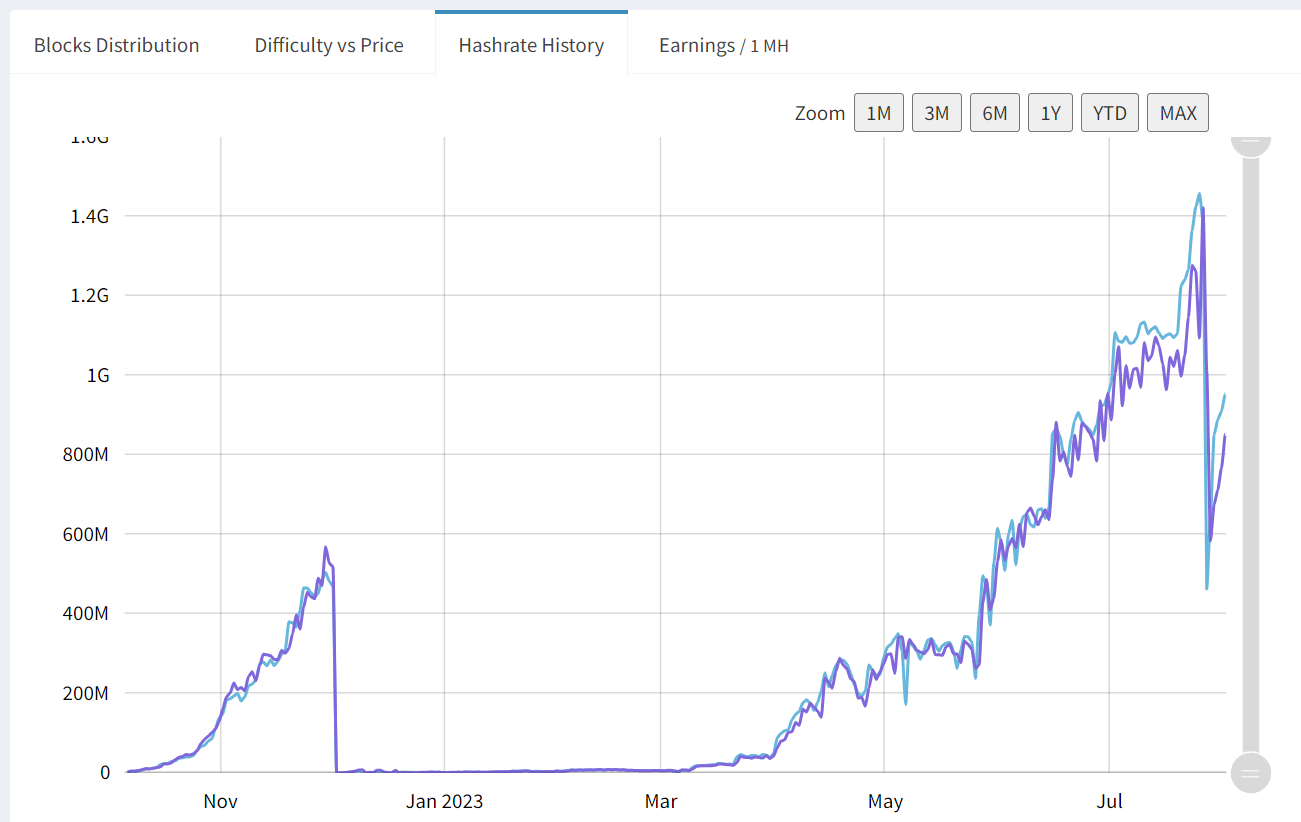
The following is the power change chart of various protocols displayed by Miningpool:
Dynex: overall in an upward trend. The recent algorithm upgrade has caused a decrease in computing power.
Microvision Chain: computing power is in a fluctuating state, with no significant growth or decrease.
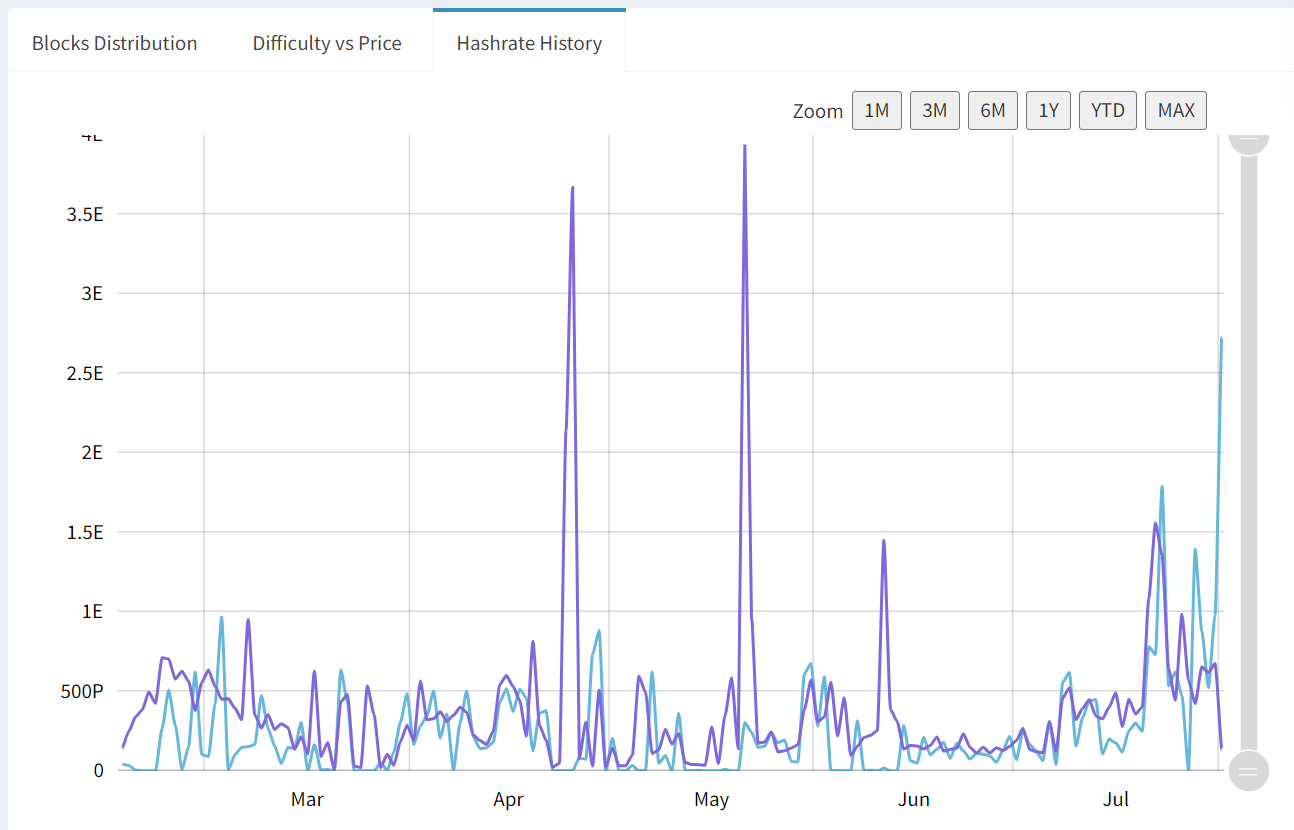
Neurai: The computing power has been growing recently, and the recent growth in computing power mainly comes from retail investors, while the computing power of known pools is declining.
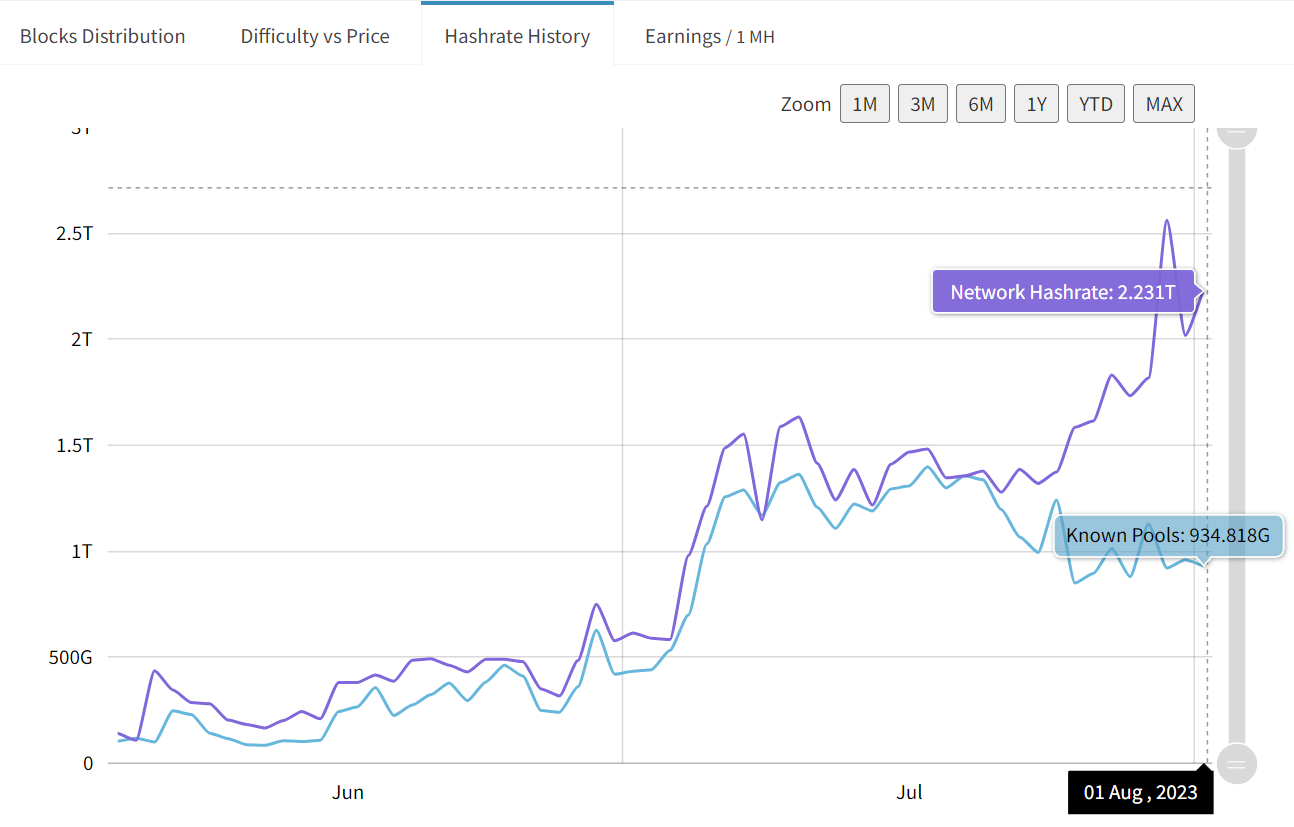
Overall, Dynex has an advantage in GPU computing power, and the computing power is generally increasing. However, due to algorithm upgrades, the computing power has slightly decreased recently and is expected to gradually recover in the future. In addition, KAS has now switched to using professional mining machines, and its previous GPU computing power is now participating in DNX mining, further enhancing DNX's computing power. Microvision Chain has a higher ranking in computing power, but it is highly centralized and its computing power is in a fluctuating trend. Neurai has more individual participants in mining, with a higher level of decentralization, and its computing power is in an increasing trend.
IV. Economic Model
Dynex
No ICO, no pre-mining, no team reserve. The total supply is 100 million tokens, of which 64.61 million tokens have been released and the circulating supply accounts for 64% of the total. The release speed is relatively fast, and after two years, the circulating supply is expected to account for approximately 80% of the total. The following chart shows the token release schedule and the token reward per blockchain block. The token rewards per block decrease continuously according to a specific formula, forming a smooth curve.
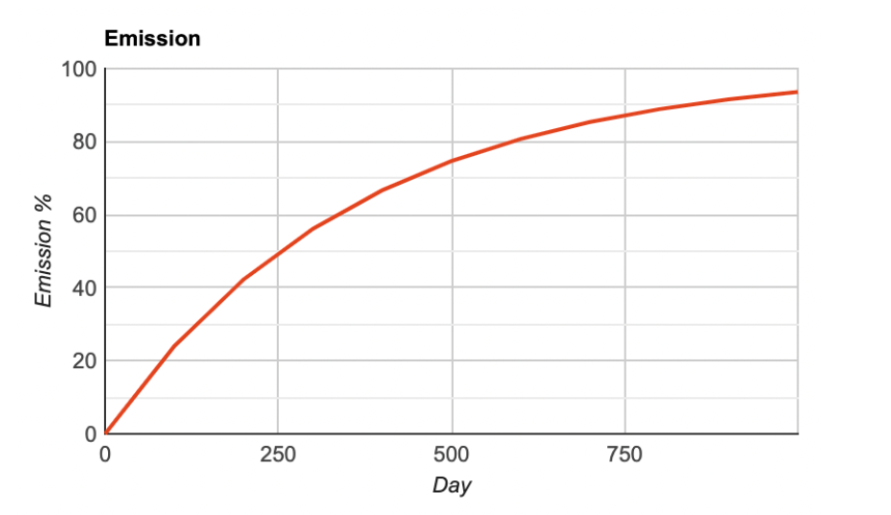
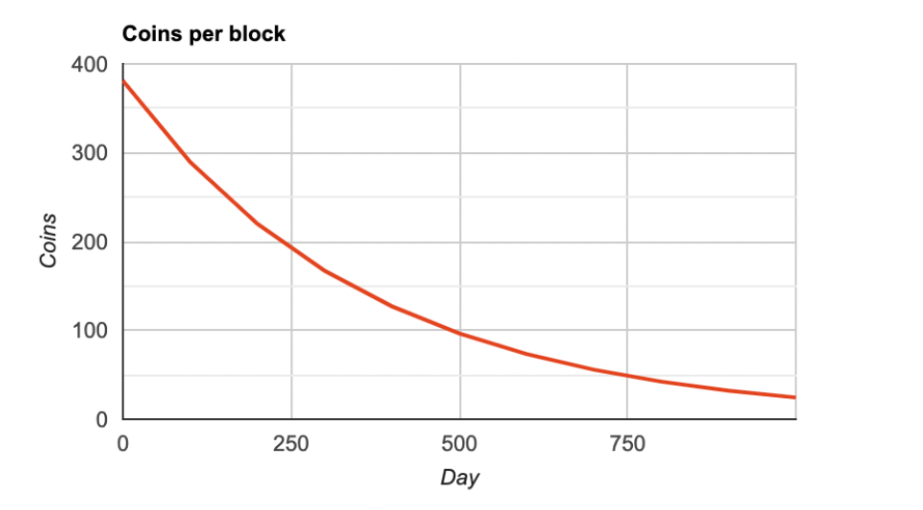
The current reward for each block is about 173 DNX, with approximately one block produced every 2 minutes. Based on this, the monthly emission of tokens is approximately 2.67 million, and at a unit price of $0.6, the monthly release is worth about $2.2 million.
Microvision Chain
The token release of Microvision Chain is not purely based on POW. It also includes content such as reserved tokens for the project team and DAO builders, making it more similar to a combination of POW and POS models.
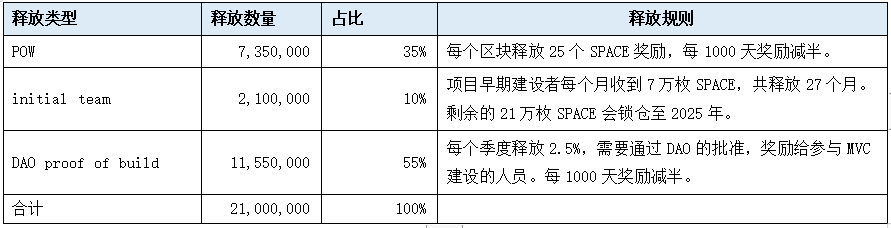
According to this release rule, the monthly token release for the first 1000 days is about 27.4 million tokens, with an annual release of about 3.28 million tokens. The total release after 3 years is 9.86 million tokens, with a circulation ratio of 47%. If calculated at a price of $12, the monthly release value is $3.28 million and the annual release value is $39 million.
Neurai
The total token supply is 21,000,000,000 tokens, with a current circulation of 5,873,595,098 tokens, accounting for 28% of the circulation.
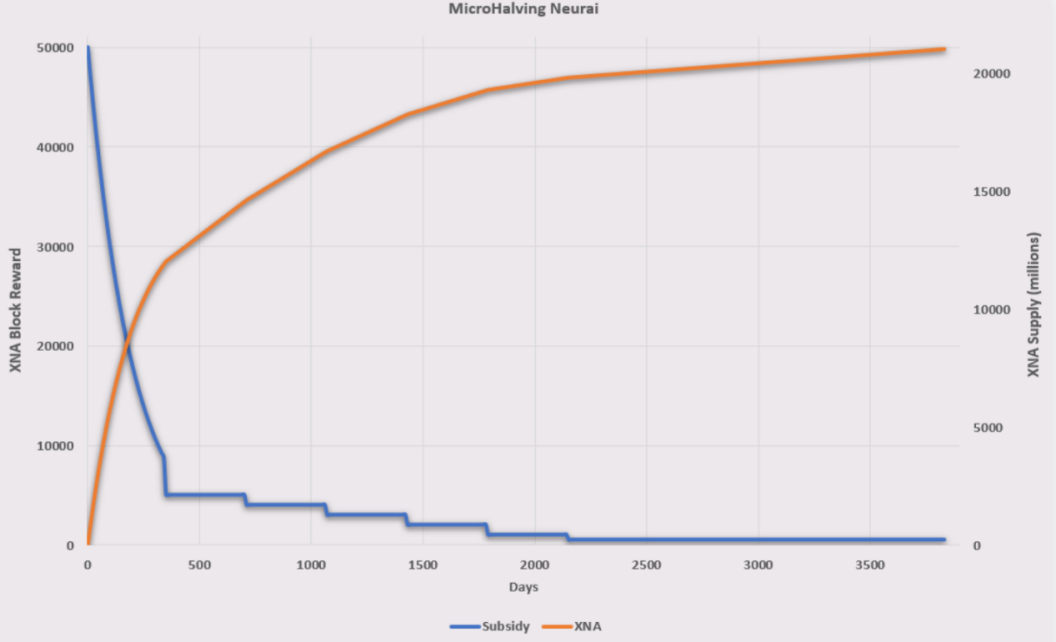
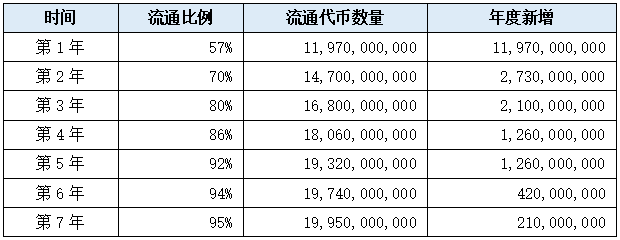
If calculated according to the unit price of 0.00081, the newly added value per month will be approximately 810,000 US dollars, about 17% of the current market value.
It can be seen that the token distribution for Dynex and Neurai is completely in the pow mode. Microvision Chain has 65% of its tokens distributed not in the pow mode, giving the project team a greater degree of control. The early release proportions of the three tokens are relatively high, with a large number of tokens held by early participants in mining. These tokens are both potential selling pressure and potential driving force for price increase.
V. Issues
Among the above-mentioned three projects, the most easily questioned are the team's capabilities and the technical feasibility. In the Dynex and Microvision Chain communities, there are occasional FUDs against the project team, mainly arguing that the team's papers are "stitches" of multiple papers and that the videos demonstrated by the project team do not represent new technologies, but are just some vague concepts.





