OKX Ventures: Embracing All Markets, How RWA Helps DeFi Conquer the World


first level title
Introduction Primer
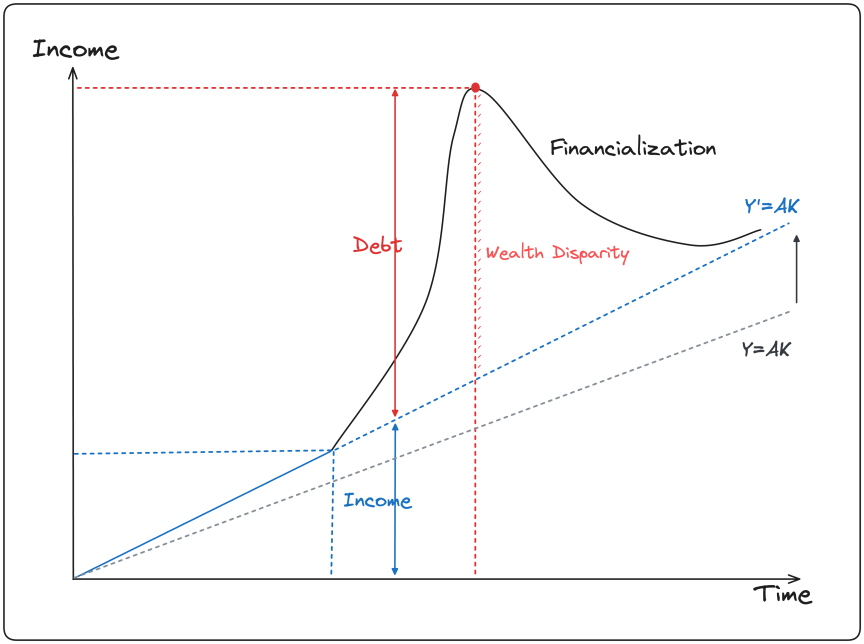
The impact of the pandemic combined with the successive interest rate cuts by the Federal Reserve since Powell took over from Yellen has led to the biggest financial asset bubble since World War II in a situation of high inflation and low real interest rates in the past few years. However, the trade war between China and the United States, the confrontation between Russia and Ukraine, and the rise of populist forces in Europe have fundamentally undermined the foundation of globalization over the past 40 years. The liquidity easing since 2018 and the financial wealth effect created by high leverage are gone. Under the trend of inflation at the bottom of the social wage scale and deflation at the top, the previous excess returns generated by valuation expansion due to declining interest rates seem to be irreversibly moving towards mean reversion.
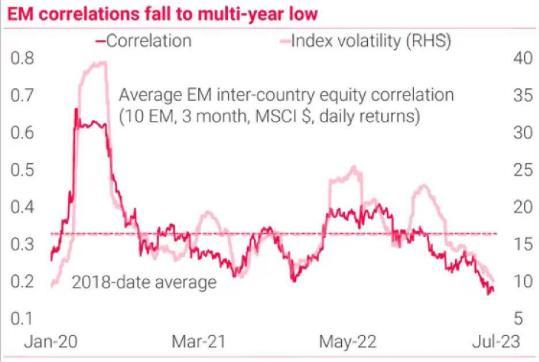
Source: TS Lombard
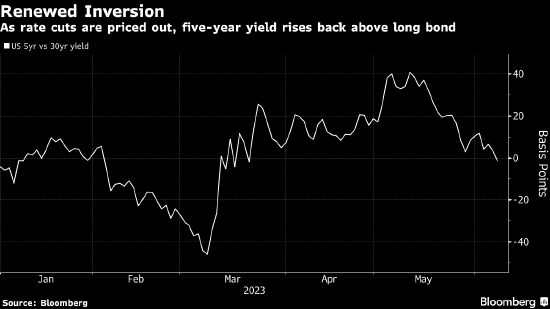
Source: Bloomberg
Therefore, in the prolonged interest rate hike cycle, with the deep inversion of the long and short ends of the US bond market exceeding 50 basis points, the current DeFi, or crypto economy, is shifting from virtual to real assets, embracing TradFi, which may be a way forward during the recession and deleveraging cycle.
In order to further explore the integration and evolution trend of DeFi and TradFi, we have conducted a simple analysis of the RWA track, which has received increasing attention and discussion.
TL; DR
• Logic:
○ TradFi Perspective: Reduce transactions, increase transaction transparency and capital circulation efficiency; increase the composability of financial primitives, provide more hedging capabilities; activate potential speculators and institutional funds.
○ DeFi Perspective: Support and amplify DeFi speculative loop; introduce massive liquidity, expand DeFi user base; stablecoin market has been validated.
○ Driving Forces for Track Development: Macro cycles promoting capital inflows, growing interest from traditional institutions and established money, need for customer acquisition in the crypto market.
○ Obstacles for Track Development: Uncertain regulatory environment, limited traction, limited high-quality underlying assets.
○ Evaluation Dimensions: Product fundamentals, risk management capabilities, protocol mechanisms, partners.
• Classification:
○ Defined by Asset Form: Standardized, non-standardized.
○ Defined by Asset Class: Fiat, fixed income (bonds, credit), equity, alternative assets (real estate, collectibles, commodities).
• Mention 46 Projects:Centrifuge, ONDO, Maple, OpenEden, BondbloX, FortunaFi, CredeFi, Goldfinch, TrueFi, Defactor, Credix, Clearpool, Bru Finance, Resource Finance, Backed Finance, Sologenic, Swam, AcquireFi, Horizon Protocol, Hamilton Lane, RealT, Parcl, LABS Group, Propy, Atlant, ELYSIA, Tangible, Blocksquare, Milo, Figure, LandShare, Lingo, HOME Coin, Theopetra, EktaChain, Robinland, Homebase, 4K, Arkive, mattereum, Codex Protocol, PAX Gold, Tether Gold, Cache Gold, Agrotoken, LandX
• Opinions:
• Most RWA products are hard to find PMF:In the short term, it is more about narrative FOMO rather than breakthrough innovation or strong growth drivers; closely monitor the dynamic of regulatory policies in the US, Hong Kong, and Singapore to minimize policy risks.
• Alternative assets and non-standard RWA protocols are emerging:Non-standard assets can be uploaded to the chain using erc 721/1155, and erc 20 may not be mainstream in the future; there is great imagination for bill NFTs, RETI NFTs, and collectibles NFTs.
• Government bonds RWA will continue to dominate, and equity RWA will be more focused:US Treasury bonds have gained consensus in the crypto community; there is a real demand for thicker equity RWA, but it faces obstacles in compliance.
• The recognition of the crypto community is crucial, and native community collaboration is harder to achieve:The difficulty of fixed-income RWA lies in bridging the lending side; DeFi DAO members have different understandings of offline assets, and complex offline assets are difficult for the community to understand.
• Worth discussing and further researching points: On-chain ponzi schemes such as RWA Fi, RWA options trading, etc.; Middleware for on-chain verification, SaaS companies, compliant issuers, intermediaries for matching loan borrowers; Segmentation and coexistence of RWA DeFi and native DeFi.
Basic Concepts
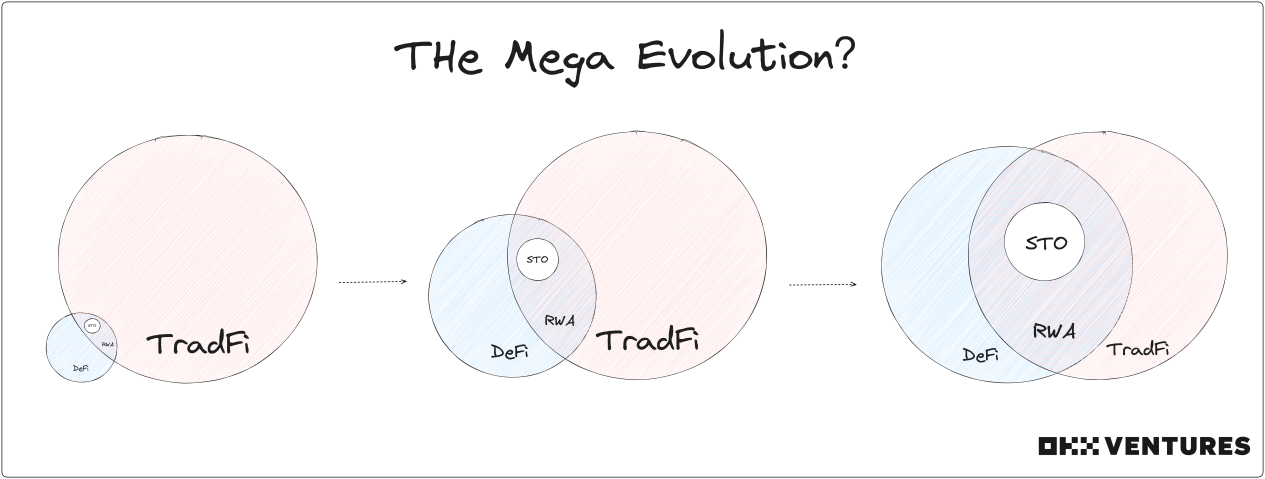
• RWA —— Tokenization of real-world assets on the blockchain
• STO —— Corporate bond financing
Difference: RWA asset product categories are more diverse, covering both primary and secondary, and the gradient of returns can be more extendable
Market Data
• Recent data shows that RWA has climbed to the top 10 in the DeFi TVL ranking, with a growth rate of 257% this year
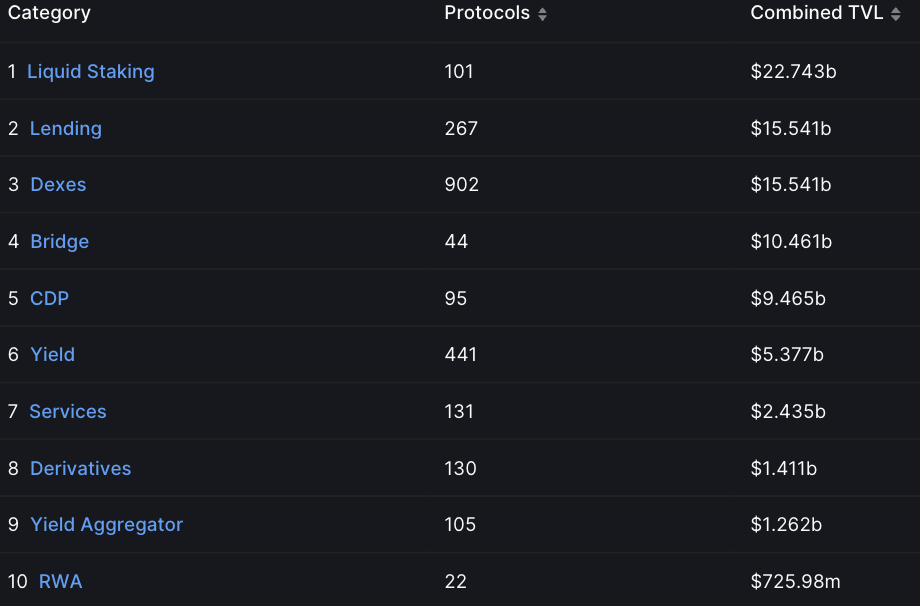
Source: Defillama
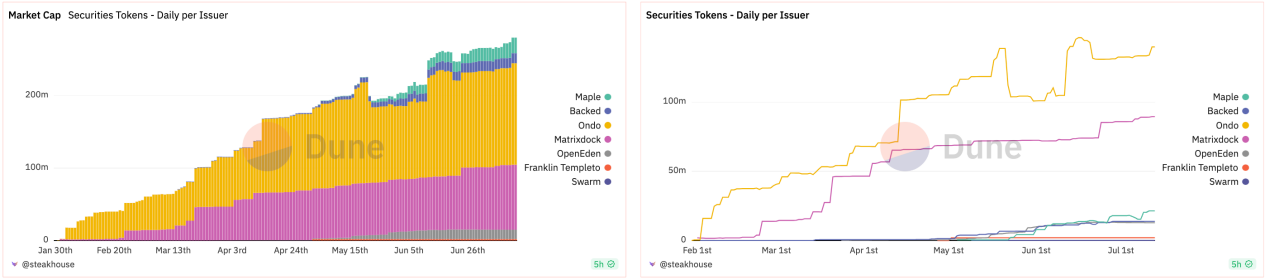
• Since January this year, the overall market value and daily issuance of RWA Tokens for government bonds have been steadily increasing. The total market value of the leading seven projects is now close to $300M
Source: Dune
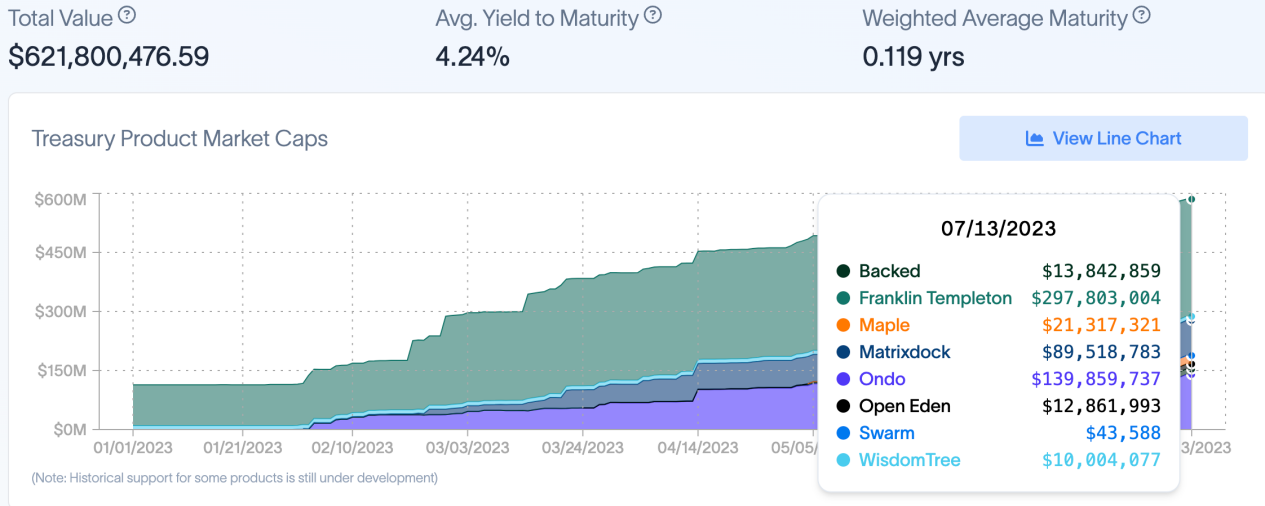
• US Treasury RWA token total value has exceeded $600M, and the number of RWA token holders has increased from 28k to 40k, a growth of nearly 43%. Among them, nearly 20k users have held the token for more than 12 months.
Source: rwa.xyz
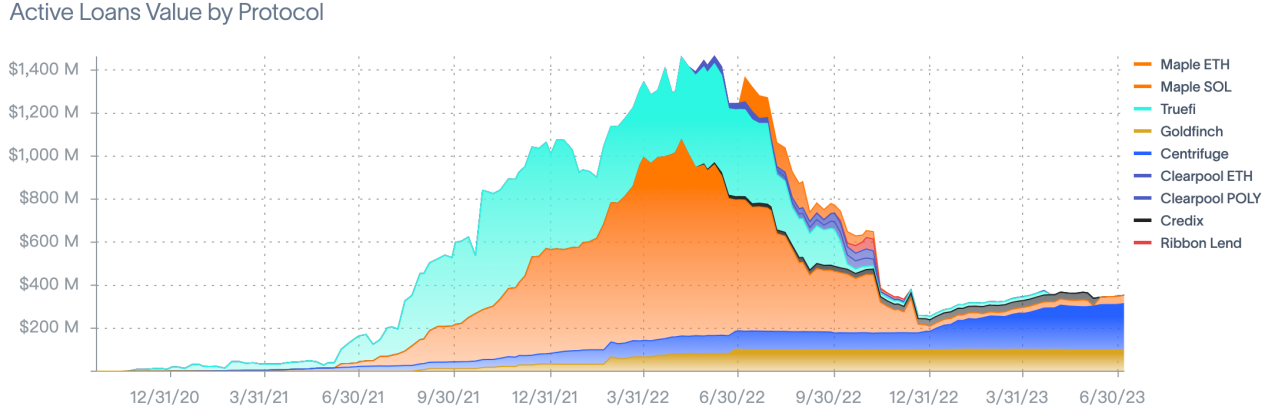
• The private credit RWA protocol currently has approximately 1553 loans, with a total active loan amount of $500M and a total locked amount of approximately $4B. This shows a significant growth potential compared to the loan total of $1500M during the peak period last year.
Source: rwa.xyz
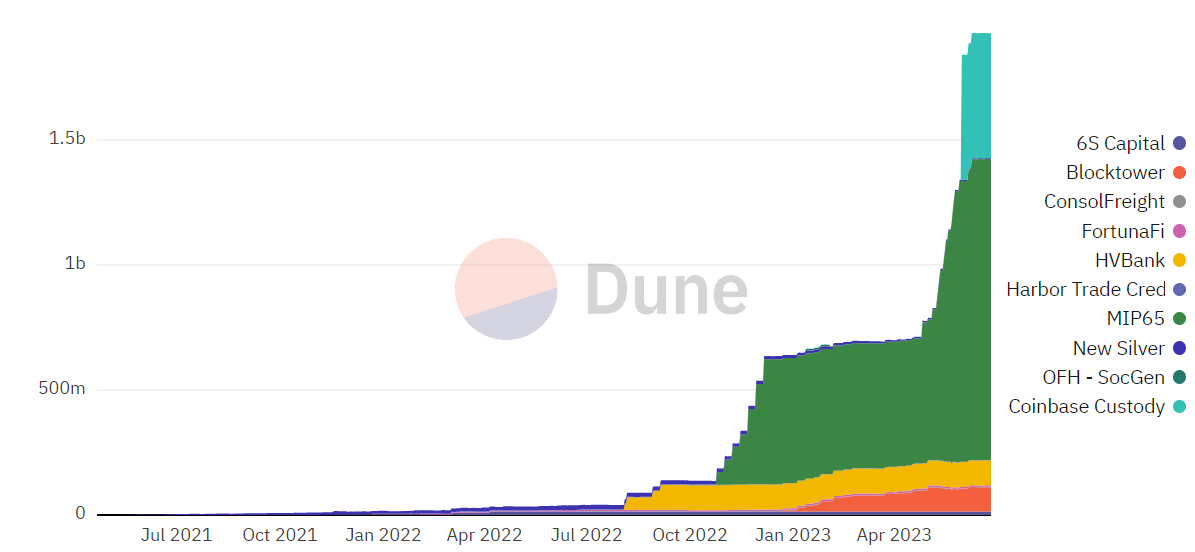
• According to the statistical results released by MarkerDAO in June, RWAs continue to account for the majority of its stability fees. In May, RWAs accounted for 79.7% of all stability fees generated by the protocol, an increase of 7% compared to April.
Source: MakerDAO
Race Logic
• TradFi-wise
○ Reduce transaction costs and intermediaries, improve transaction transparency and capital circulation efficiency
▪ Non-liquid assets such as real estate, art, etc. can be tokenized to achieve decentralized ownership and enable fast turnover, trading, mortgaging, and liquidity
▪ Heavy investments such as infrastructure, railways, electricity, can be quickly recovered by issuing tokens, and SMEs can globally crowdfund through tokens
○ On-chain synthetic asset architecture improves the composability of financial primitives, providing more available hedging tools
▪ Generate various combination paradigms, elongate the asset class spectrum vertically, diversify investment portfolio risk exposure
▪ Within a single mixed fund or structured product, on-chain assets can serve as hedges against traditional assets and jurisdictional currency fluctuations
○ Mobilize funds from restricted foreign speculators and institutions
▪ Inclusive financial narrative, a larger TAM means higher profit-taking potential
▪ Funds that flee from banks eventually flow back into tradfi in a different form
▪ Further activates the global liquidity of funds, benefiting some local institutional investors, with the potential result of exacerbating regional wealth disparities and liquidity issues, leading to more brutal social divisions
• DeFi-wise
○ Support and amplify DeFi speculative cycles
▪ DeFi creates a market for token speculation, and the value capture of tokens mainly comes from the protocol's ability to generate income from speculative activities.
▪ RWA can shorten this speculative loop of tokens and support the underlying assets with liquidity, debt, collateral, etc., effectively creating a foundational layer supported by traditional assets under DeFi.
○ Introduce a large amount of liquidity and expand the user base of DeFi
▪ In simple terms, the game rules of tradfi are more easily understood and accepted by the mainstream, to some extent lowering the learning and entry barriers of DeFi.
▪ The scale and intensity of institutional funds, the range of audiences, the exposure they can afford, the sales channel, the proportion of market participants, and the level of specialization in tradfi are much higher than in DeFi.
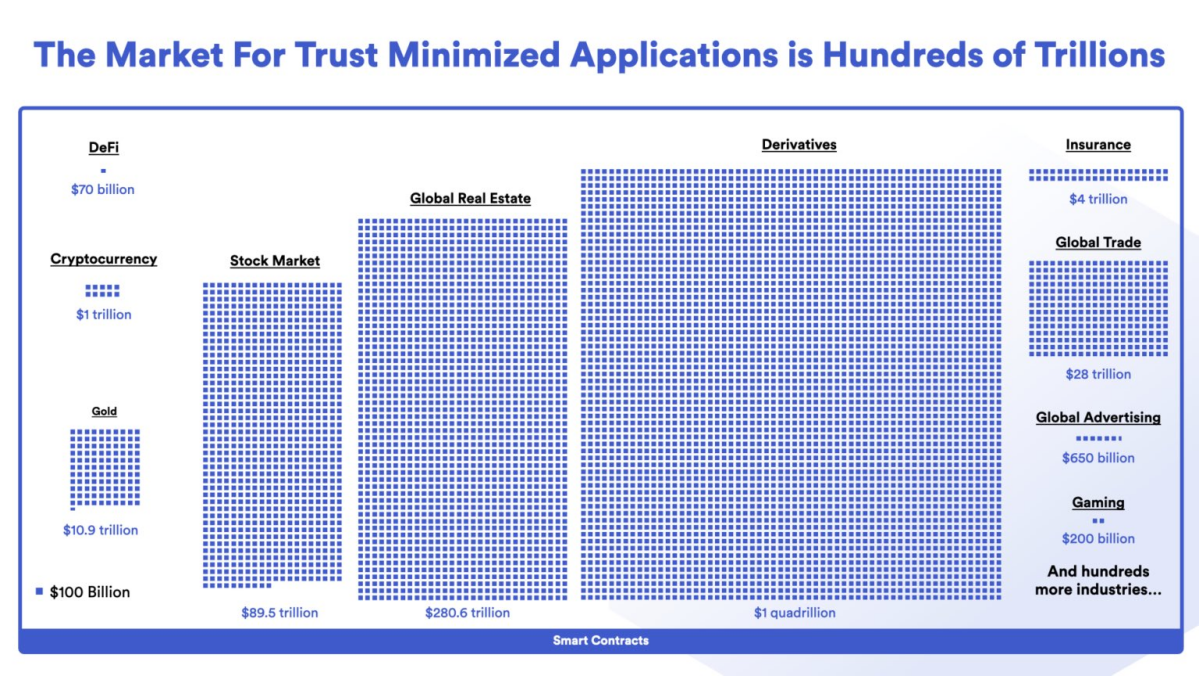
▪ According to BCG ADDX research, the tokenized market could reach a scale of 16 trillion in 2023 (including a 3 trillion real estate market, a 4 trillion listed/unlisted assets market, a 1 trillion bond and fund market, a 3 trillion alternative assets market, and a 5 trillion other tokenized markets).
▪ Citigroup calculates that by the most basic estimation, the scale of digital securities and blockchain trade finance can reach 5-6 trillion by around 2030.
Source: Chainlink
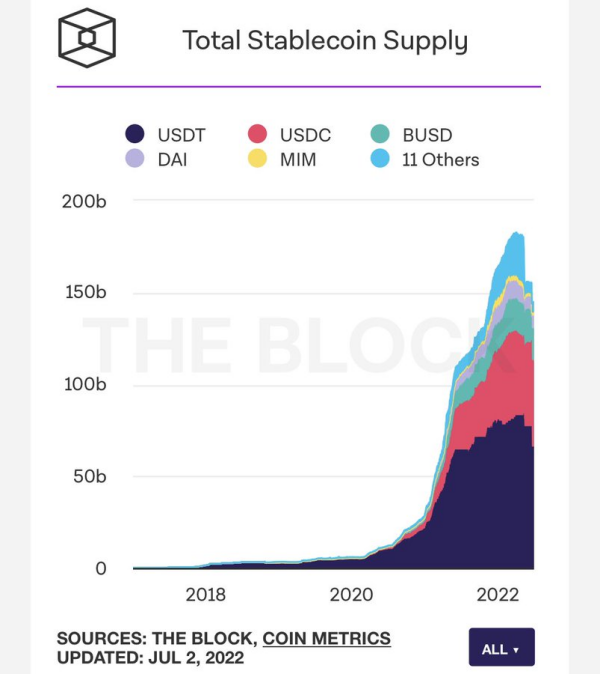
○ The stablecoin market has been proven
▪ USDC, USDT are essentially RWAs with fiat currencies as underlying assets.
▪ The market capitalization of the stablecoin market reached 180 billion in 2022.
Source: The Block
Momentum
• Macroeconomic cycles drive fund flows u Base currency
• Regulations tighten and compliance laws improve
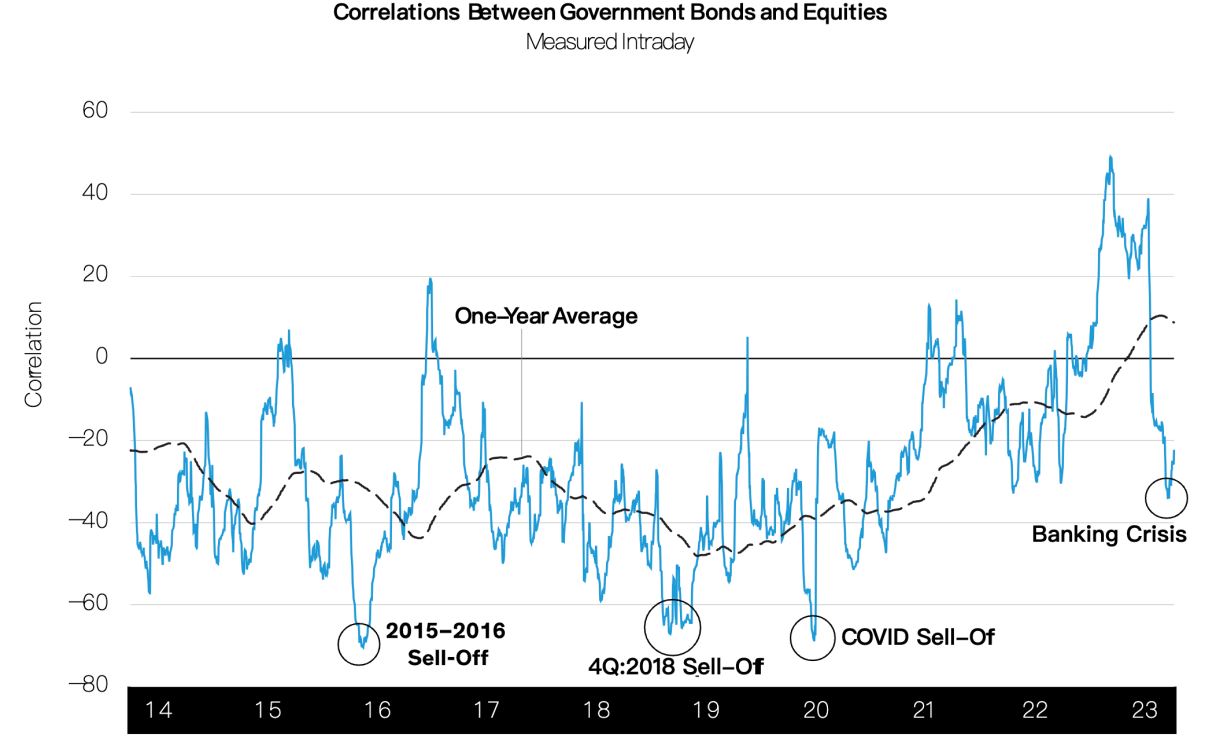
• Traditional u Base currency funds yield more, with continued interest rate hikes pushing short-term government bond rates up to 4% (latest 2-year rate is 4.64%, slightly narrowing but still high)
• Most idle cash avoids risks due to the SVB incident after 3 months, mainly accumulating in stable assets such as US bonds
Source: Alliance Bernstein
• Traditional institutions show increasing interest
• The issuance of BTC ETF also indicates that traditional market alpha opportunities are disappearing, with mainstream focusing on beta passive returns (not actively seeking to outperform the market, only seeking average market returns)
• Tradfi development itself is facing bottlenecks and seeking industry transformation, seen in past Internet + finance, embracing AI, fintech Aladdin
• Traditional players believe that crypto natives lack a complete understanding of tradfi, unable to fully grasp the depth of the market. RWA track is more suitable for exploration and layout by traditional players
• The crypto market needs to attract new users
• A series of thunderstorms (LUNA, FTX, etc.) severely eroded market confidence
• Chain liquidity depletion, NFT cliff plunge
• Native crypto infrastructure is inverted at the primary and secondary levels, with lackluster innovation in protocol Lego
Handicap Resistance
• Uncertain regulation climate
• Various system elements such as taxation, asset definition, license establishment, and recovery process depend on the local financial policy environment
• Digital asset regulations across different jurisdictions are fragmented, and unified classification standards do not yet exist
• The attitudes of central banks, banks, and securities regulators fundamentally determine the lifespan of protocols, with a high risk of thunderstorms
• Limited traction
• Contrary to native crypto beliefs, unable to find product-market fit (PMF)
▪ Early native crypto users strongly resist centralized regulation and banking systems, seeking independent development of on-chain DeFi ecosystem
▪ Majority of DeFi participants have aversion to KYC/AML (despite the privacy protection provided by zkp solutions) and prefer fully permissionless interactions
▪ DeFi users with high risk preferences are not interested in RWA returns, even if they have rights to RWAs, the return ratio may not be as good as creating a pool in UniSwap (especially with the introduction of v4, which further liberates playability and flexibility)
▪ DeFi users with low risk preferences themselves are not numerous and can choose to directly stake mainstream coins/buy ETFs to passively earn income
• Traditional institutions are not rushing to enter and are still considering
▪ Compared to traditional finance, on-chain liquidity is still small, and with the current market depth insufficient to create substantial wealth effects, it is more likely that hot money from off-chain traditional financial players will flow into DeFi, rather than the other way around.
▪ Based on this logic, traditional institutions are willing to invest how much effort and allocate what percentage on their balance sheet to explore the unknown mystical alpha arbitrage space. Currently, it is impossible for them to allocate more than 0.01% on the balance sheet in the short term, which is insignificant compared to other businesses.
▪ After communicating with traditional fund managers, most of them expressed that they do not consider trading on-chain assets or synthetic assets in the short term: first, there are sufficient alternatives and hedging measures in the traditional stock market; second, due to the background attributes and risk preferences of LPs, it is not possible to allocate too many encrypted assets to disrupt their existing investment system.
• Limited high-quality underlying assets
○ There are limited types of high-quality underlying assets, such as US Treasury bonds. Small-cap assets such as New Zealand stocks are not traded on a T+0 basis and have insufficient liquidity. Small-cap stocks and altcoins, like macroeconomic speculation strategies, are not closely related and are unlikely to be tokenized unnecessarily.
○ Tokenizing similar underlying assets means that the protocol competition barrier will not be high, making it prone to homogeneity trends.
○ In the later stages, the track will inevitably undergo a process of consolidation similar to LSD.
Evaluation Dimension Evaluation
1. Fundamental of Products
a. The range of RWA products offered and their returns in the market vary, and their service scope (what assets are currently being invested in and where are these services provided?) Do they have the qualifications to provide such services in the long term?)
b. TAM stickiness, user retention, depth and liquidity of asset pools, funding discount rate
c. Protocol income and net profit, token value and circulation efficiency
2. Risk Control Capability
a. Team: Do they have experience in traditional investment banks, commercial banks, and securities companies? Do they maintain good relationships with local legal systems? Do they have any records of illegal activities or bad reputations in the crypto industry?
b. Compliance: Does the company comply with local securities laws and regulations (local policy environment and tolerance for crypto)? Are regulatory documents clearly defining the asset attributes or prohibiting such assets?), KYC/AML, default settlement, compliance costs, credit assessment
3. Protocol Mechanism
a. Tokens representing real assets need to interact with multiple blockchain ecosystem backends, requiring interoperability of the protocol across different chains
b. Is the on-chain mechanism decentralized, following a trust minimization mechanism? Is there regular disclosure of off-chain cash flow and related collateral debt information? Which oracle network data operating mechanism is used and how are nodes selected?
c. Security mechanisms of the protocol, whether it can effectively prevent information leakage of interacting account addresses, oracle manipulation, hacker attacks, etc.
4. Partnerships
a. Whether to establish partnerships with mainstream DeFi crypto communities such as MakerDAO, Aave, or have stable on-chain loan support
b. Whether to select an experienced and trusted third-party institution for on-chain asset custody (e.g., off-chain collateral SPV control and disposal rights)
c. Whether to have long-term partnerships with reputable, large-scale, and wide-service-range intermediaries in traditional finance such as bank trusts
Underlying Asset Classification
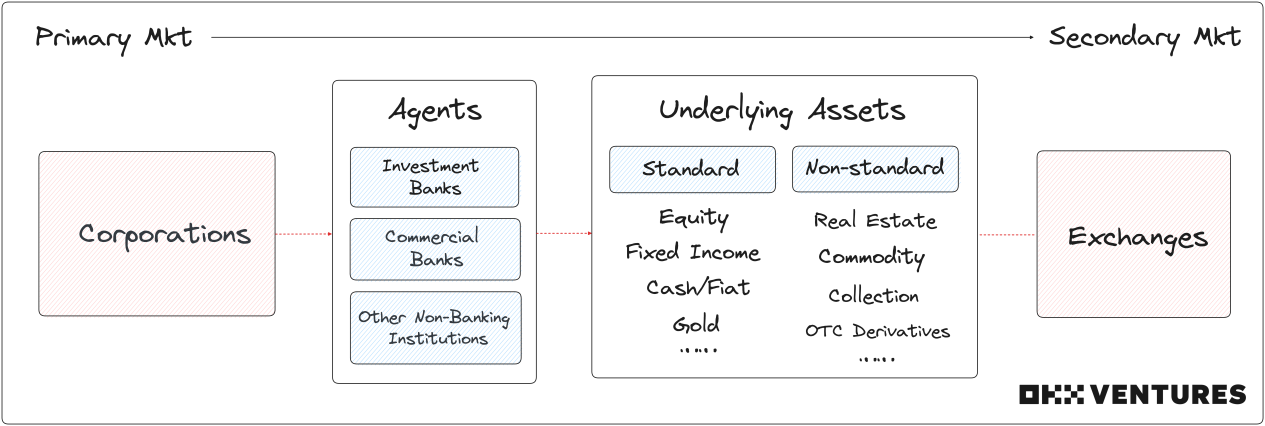
Defining by Standardized Asset Form
Standardized (S)
• semi-fungible/fungible, easily tradable, assets with financial and monetary value
• publicly traded + traded on exchanges
• generally regulated by the SEC
Non-standard (N)
• Non-liquid, non-homogeneous, difficult to value, difficult to trade assets
• Typically traded in private + over-the-counter markets
• More likely to be regulated by CFTC
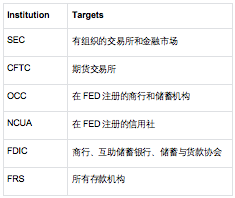
A brief overview of US regulatory agencies and their regulatory targets is as follows:
Defined by Asset Class
• The nature of the funds determines the behavior of traders, and the behavior of trading determines the different options within the asset classes
• The tolerance range for risk and uncertainty determines the allocation proportions of different asset classes for potential users
1. Fiat RWA
Common: USD, EUR, JPY, GBP, CNY, etc.
Focus Sequence: AUD, CAD, KRW, CHF, ZAR, MXN, etc.
Key Tools: Stablecoins collateralized by fiat
Projects: Circle, Tether, Frax, MakerDAO, etc.
• The original RWA was stablecoin projects backed by fiat currencies (mainly USD), such as Circle's USDC and Tether's USDT
• Transaction costs, channels, and available categories are currently more limited
• If more fiat currencies can be issued as on-chain assets in the future, fiat stablecoins with weak correlations to stocks and currencies of Russia, Malaysia, etc., and negative correlations to Canada, Australia, South Korea, etc., may become a good hedging tool (without discussing depth for now)
2. Fixed Income RWA
2.1 Bonds
Common: Government bonds (sovereign interest rate bonds: US, EU, JP, AU, CN), central bank bills, government debt, corporate debt, external debt, credit debt, convertible bonds, etc.
Key Tools: ETFs, bond derivatives
Projects: Centrifuge, ONDO, Maple, OpenEden, BondbloX, FortunaFi, CredeFi, etc.
• Government bonds/Government bond ETFs currently have the largest proportion of RWA, and are typically considered as safe-haven assets and the main investment varieties in the fixed income asset class due to their low risk
• Despite the disappointing yield, the leading DeFi community is still willing to balance its risk exposure through government and corporate bond RWA , such as 500 million DAI that has been invested by MakerDAO in the purchase of the first phase of US government bonds RWA at the beginning of the year.
• There is still potential for exploration in areas such as bills, corporate bonds, and credit bonds RWA , and project teams can seek differentiated routes based on their own team resources and background advantages.
2.2 Credit
Common types: personal loans, corporate loans, structured financing tools, personal housing mortgage loans, car mortgage loans, etc.
Projects: Centrifuge, Maple, Goldfinch, TrueFi, Defactor, Credix, Clearpool, Bru Finance, Resource Finance, etc.
• It can connect global credit and provide institutional investors and retail investors with more opportunities for stable returns.
• Corporate loans largely alleviate the financing pressure of SMEs and are more likely to receive social and government support.
3. Equity RWA
Main markets: US, Europe, Japan, China, Hong Kong, Macau
Focus on emerging markets in the BRICS countries
Main tools: ETFs, index derivatives, leading stocks in key industries
Common types: equity, primary shares (private placement), secondary shares (public market), etc.
Projects: Backed Finance, Sologenic, Swam, AcquireFi, Horizon Protocol, Hamilton Lane, etc.
• There is no need to pay too much attention to the macroeconomic cycle for individual stocks, but rather focus on the operation of individual listed companies.
• There is a real demand for trading such assets, but it is greatly limited by legal and other issues. Platforms like BackedFi that can achieve 24-hour trading of US stocks could potentially become a paradise for arbitrageurs.
• The combination of synthetic assets and cryptocurrencies seems to be more attractive.
4. Alternative RWA
4.1 Real Estate
Common types: residential, commercial, etc.
Main tool: REITs
Projects: RealT, Parcl, LABS Group, Propy, Atlant, ELYSIA, Tangible, Blocksquare, Milo, Figure, LandShare, Lingo, HOME Coin, Theopetra, EktaChain, Robinland, Homebase, etc.
• Tokenizing real estate and NFTs provide convenient forms of loans with real estate as collateral, and fractionalizing properties on the blockchain also benefits retail investors.
• The on-chain solution for packaging real estate REITs is already mature, but overall cost control (personnel transportation, property management and maintenance, property distribution, residential types) still depends on the project's capabilities.
• There is a tradeoff between diversification and global operation of underlying assets and project cost and scalability.
4.2 Collectibles
Common: Artworks, jewelry, coins, etc.
Projects: 4K, Arkive, mattereum, Codex Protocol, etc.
• Assets of high individual value but low standardization.
• There is potential in entering niche markets for trading luxury items, creating new trading positions for branded watches, cars, handbags, and so on.
• The imagination space for making dealers as traders is good.
4.3 Commodity
Common: Precious metals (gold, silver, platinum, palladium), base metals (copper, aluminum, cobalt, lithium, zinc), energy (crude oil BRENT, WTI)
Focus on: Iron ore, coal, dairy products, agricultural products, etc.
Projects: PAX Gold, Tether Gold, Cache Gold, Agrotoken, LandX, etc.
• There is a high degree of non-standardization, and the process of asset sourcing, packaging, and on-chain verification is usually complex, which may involve significant cost consumption and hinder rapid growth and expansion.
• There is a limited TAM, and niche assets need to consider depth. They are only suitable for professional commodity investors.
○ Agricultural products tend to have a pure commodity investment framework, and investors without traditional commodity investment experience may struggle to assess factors such as crop yield cycles, storage and transportation processes, regional market conditions, and the impact of climate temperature changes.
○ Crude oil is mainly observed as an interest rate impact, highly correlated with interest rates. Traditional investors can directly purchase mainstream interest rate products, so there is not much on-chain demand.
○ Gold purchase on the chain can achieve instant settle and redempt has certain advantages. However, gold can be considered based on bond logic (interest rate + inflation expectations), and investors with large positions can still prioritize mainstream US bonds and other RWA.
POV
• Long-term layout, take small steps and wait for the wind
○ RWA is likely to be a "necessary evil" for DeFi to expand to the scale of the next 100 million users, but in the short term, it is more of a sell-side slogan and narrative FOMO, rather than a truly breakthrough innovation or strong growth driver. For retail investors, asset allocation should still be based on their own needs.
○ It is recommended that institutions focus on long-term layout of 1-2 projects with innovative designs. In addition, closely monitor the dynamics of regulatory policies in the United States, Hong Kong, and Singapore. Only with the coordinated cooperation of traditional financial institutions can the policy risks of the overall track be minimized.
• The obvious trend is the emergence of alternative assets and non-standard RWA protocols
○ It is not necessary to standardize the underlying assets. Non-standard assets can be directly placed on the chain using non-standard protocols such as erc721/1155. Structured products can even be directly implemented using the latest 6551, and it is not necessary to use 20. In the long run, 20 is unlikely to become mainstream either.
○ Centrifuge, Fortunafi, and others have already provided mortgage loans that package future income notes as NFTs. Emerging protocols that do RETIs and bottom-level protocols that involve NFT RWA narratives, such as collectibles like 4K imagination space, have a chance to lead the next wave after gaining community trust in the early stages of operation.
• Government bonds/US bonds RWA will still maintain the mainstream ecological position, and equity RWA will receive higher attention
○ The on-chain mechanism for US government bonds is mature and the asset structure is robust. It has been recognized by the crypto community, but most of them have already issued tokens on platforms. There is fierce competition in the stock market, and although the market is large, there is no room for new tricks.
• Thicker products like RWA provide on-chain traders with opportunities to speculate on traditional individual stocks, with real demand. However, they face obstacles in terms of compliance, as the influx of funds on the chain, which is too dispersed and untraceable, is likely to disrupt the normal operation of the internal financial systems of various countries.
• Currently, most RWA equities are still only available to institutional users with high net worth and ultra-high net worth, and have not played a role in lowering the threshold for retail speculation. There is still a lot of room for development in this area.
• The recognition of the crypto community is crucial, and cooperation in the on-chain crypto-native community is more difficult to achieve than off-chain cooperation.
• In the case of fixed-income RWA, it is relatively easy to promote off-chain cooperation because it can bear less borrowing costs. The difficulty lies in bridging the loan side.
• DeFi DAO and other crypto treasuries have a large amount of lendable capital, but there is a significant discrepancy in the understanding of off-chain collateral among DAO members. Transparent solutions need to be provided by the project side in terms of specific auditing, underwriting, and off-chain asset tracing processes.
• There will be some friction between the off-chain tradfi lending compliance process and the DAO governance mechanism. The overly complex off-chain assets make it difficult for the crypto DAO community to understand, and if community members don't understand or don't want to understand, proposals will be long postponed or rejected, and cooperation cannot be achieved. Theoretically, pure tradfi projects are unlikely to gain trust from the community.
• Points worthy of discussion and further research:
• Ponzi schemes based on RWA assets are likely to be more suitable for exploration in the crypto-native space, such as RWA Fi, RWA options trading, etc.
• It is worth paying attention to middleware, SaaS companies, compliance issuers that verify assets on-chain, and intermediaries that match on-chain lending and borrowing parties, such as IX Swap, Stima, Castle, Curio, etc. There may be future dominant players in this space.
• How regulated RWA DeFi and unregulated native DeFi will be separated and coexist in the future, and what kind of competitive landscape will be presented with CeFi, remains unknown.
Conclusion
The enthusiasm of Western asset management institutions to enter emerging market bond markets through various means and private wealth management services has never waned. As the encryption infrastructure gradually improves and giant asset managers like Blackrock see BTC as the digital gold trend, it is not difficult to see that the traditionally fragmented financial markets are also actively seeking better funding utilization scenarios and liquidity efficiency improvement solutions. Tightening regulation actually means its serious scrutiny and governance of encryption is just beginning. As the vision of the world economy shifting from Keynes to Austria gradually becomes a reality, the tentacles of encryption in the traditional stock, bond, and foreign exchange markets will accelerate its extension.
Amidst the chorus of "models will eventually dominate the world," DeFi is quietly devouring all markets.
TradFi may embrace crypto faster than you expect :)