






In-depth analysis of DID: the first application testing ground of zero-knowledge proof


Original Author: Ishanee
first level title
Original source: IOSG Ventures
DID and zero-knowledge proofs in social networks
First explain the meaning of the words used in the text:
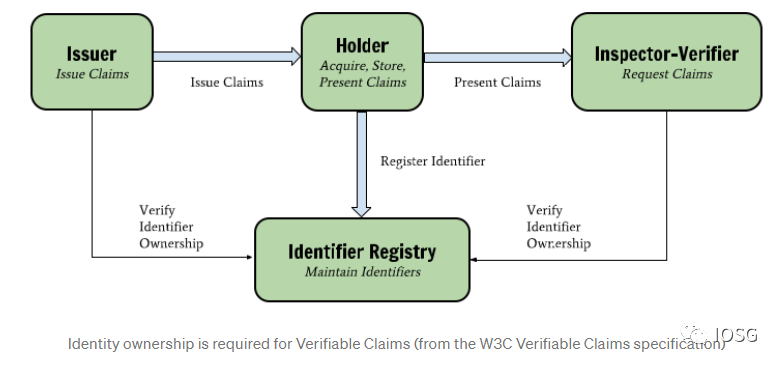
Decentralized Identity (DID) or Sovereign Individual Identity (SSI):is an open standards-based framework that enables trusted data exchange using personally owned, independent, verifiable credentials.
Credential / Attestation / Verifiable Credential (VC) / POAP / SBT:is a file in Web2 or blockchain that contains details pointing to qualifications. These can be published by an authority or self-published.
Issuer Issuers:An entity, agency or organization that issues a certificate, certification or qualification.
Verifiers:Is the end user who inquires about credentials and targets identity marketing or engagement activities.
Let me give a simple example so that everyone can understand the meaning of these words more clearly: Suppose XYZ studio wants to airdrop their NFT to all Uniswap V3 LPs.
The validators are XYZ studios and they will engage in targeted participation campaigns, i.e. airdrops
Credentials are Uniswap V3 NFTs held only by Uniswap LPs
The issuer is Uniswap Labs
DID is a digital wallet participating in the Uniswap protocol
When a validator queries all Uniswap V3 LP's NFTs on the blockchain, the public wallet address is known to them and is considered a "Verifiable Data Registry".
first level title
Identity, VC and Social Networking in Web2
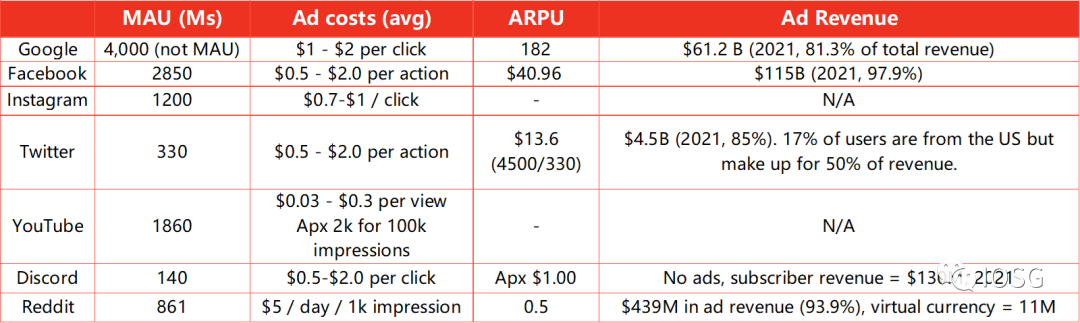
Meta, Twitter, Instagram, Reddit, Quora, Weibo, Douyin are all social media platforms. They couple user identity, published content, and social networking in a clean, easy-to-use pre-packaged platform, which in turn can collect user personal data such as their hobbies, activities, location, interests, and more.
The business model behind this is simple -- after these social media platforms sell anonymized user data to advertisers, advertisers can use this information to carry out more targeted campaigns. Meta and Google have even enabled an auction model that lets marketers bid on ad slots.
This business strategy can be hugely profitable for social platforms — the top social media companies in the US earned an estimated $181.1 billion from advertising. Google and Meta will derive 81% and 97.9% of their total 2021 revenue from this strategy, respectively.
first level title
Evolution of Web3 Social Infrastructure
first level title
The Current State of Social Infrastructure in Web3
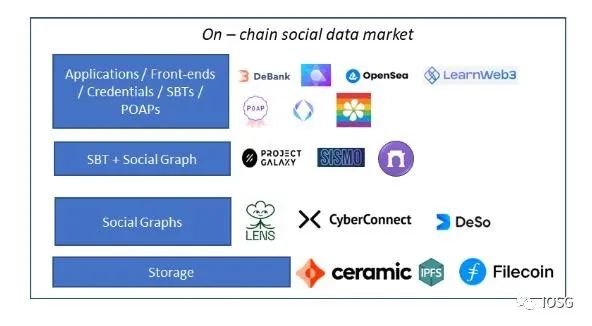
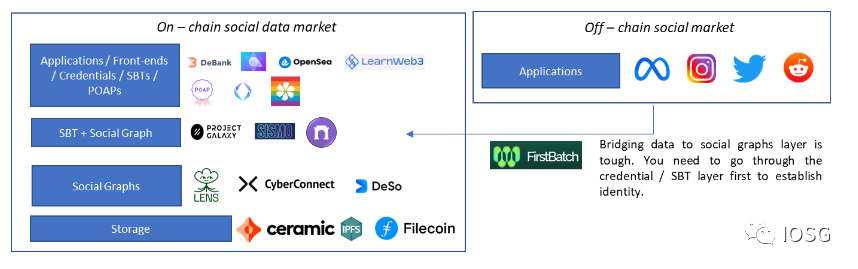
The current on-chain social data market is divided into dStorage solutions, social graphs, certificate issuers, and a combination of issuers and social graphs.
Key challenges facing the industry include:
1. Data on the chain lacks granularity
On-chain data such as wallet holdings (ERC20 & NFTs), transactions, dApp interactions, transaction frequency, etc. are the main data that can be collected.
Apart from analyzing the type of nft purchased by the wallet, no other types of personal data can be obtained.
2. Lack of privacy protection methods for bringing off-chain data to the blockchain:For example, Ceramic, which brings off-chain data to the chain will expose user data on the public chain and can be indexed.
3. Lack of user retention:Because of the lack of applications that can continue to spread social graphs, such asfirst level title
The role of ZKP in social infrastructure
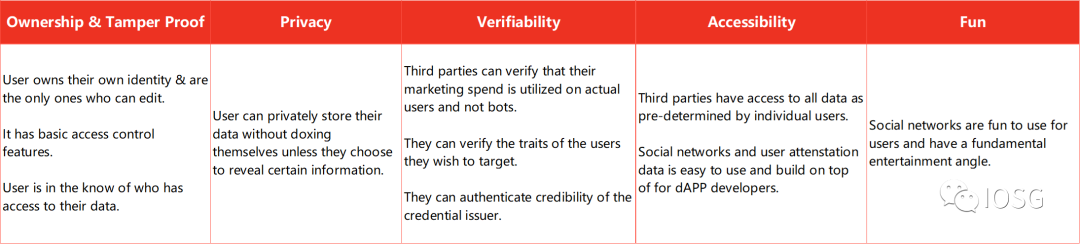
A key challenge in bringing user data from social media networks like Meta or Twitter to the blockchain is the lack of privacy. Even data stored encrypted on multiple anonymous nodes is risky, vulnerable to hacking or data leakage.
Zk-based applications support:
Trustless verification of user data
Protect the privacy of user data
secondary title
Sismo
Sismo's ZK proof is an interesting experiment in this direction. Based on user/wallet interaction, Sismo allows users to apply for ZK authentication. Using Sismo's SDK, developers can now use Sismo's authentication to target user groups.
secondary title
First Batch
First Batch brings off-chain social data from Discord, Twitter, Reddit, etc. to the chain. They use Twitter OAuth to index off-chain data of users running through their AI system. AI stamps user profiles like"and"and"sports fan"and"Nespresso "and"lakers fans"etc. tags.
image description
secondary title
Trinsic ID
Trinsic's star products include Credential API for issuers, Provider API for customers, and wallet API for users & consumers. To use Trinsic, end users must create a digital wallet and generate credentials designed in Trinsic Studio within the wallet. In addition to credentials, users must also generate authentication policies to display several data points, such as "User is over 21 years old".
secondary title
Notebook Labs
Notebook enables users to set up a "notebook" that contains data that identifies them as human, along with some other personal data such as name, address, social security number (optional), country of residence, etc. User notebooks in V1 are stored on AWS servers.
If a user wants to prove their personhood, Notebook verifies their wallet address and connects to their notebook. The client generates a proof that they have a leaf node in the Merkle tree, which is sent to the smart contract for verification.
secondary title
Humannode
Humannode is an anti-Sybil attack Layer1 blockchain, which uses proof of uniqueness and proof of existence as its basic consensus layer. The blockchain is an EVM-compatible underlying chain. Each node has equal voting rights, and evil will be blacklisted. The team says they have collected data on more than 10,000 people.
secondary title
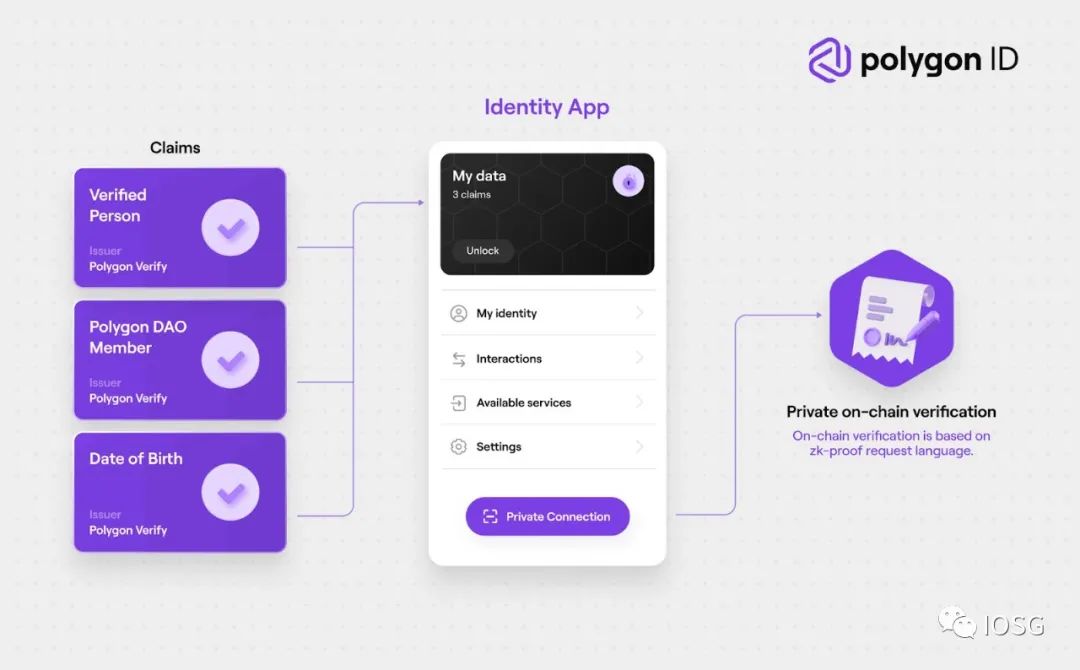
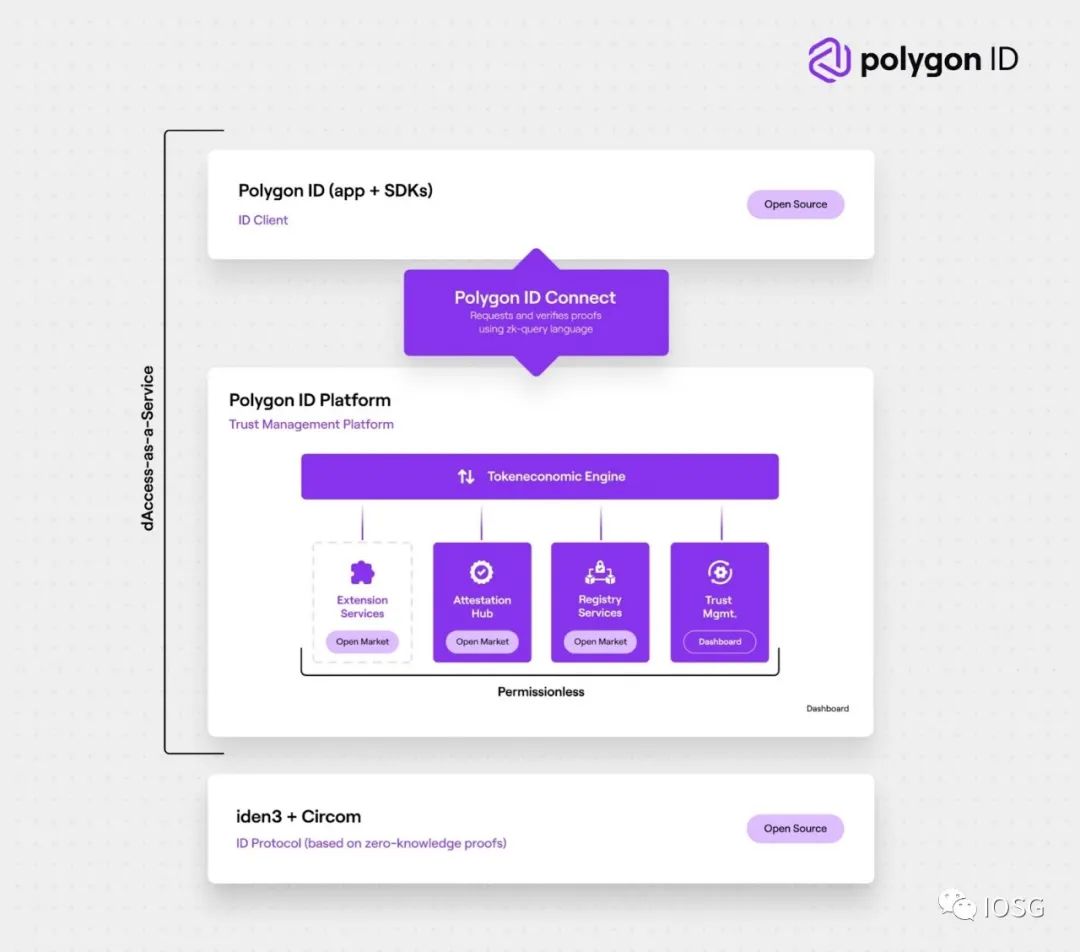
Polygon ID
secondary title
Worldcoin
And finally Worldcoin, developed by Open AI's CEO co-founder Sam Altman. Worldcoin is positioned to provide a privacy-preserving proof-of-personality protocol and is driven by Semaphores (a ZK implementation developed by AppliedZK). They have integrated with an Optimistic Rollup called Hubble to achieve their"airdrop to a billion people"Vision.
They created a"Orb "epilogue
epilogue
Social infrastructure is key to building any form of sustainable social network or Web3 application. Privacy, security and data ownership are key in the infrastructure space. At present, many companies are working hard to solve this problem, and almost all companies concerned with identity privacy use zero-knowledge proof as a source of verification.
As the industry evolves, the key challenge for these companies will be to capture the market - and this primarily involves user data, which can only be obtained by"register"social applications to scale up. Worldcoin is an exception to their entry into the market, but all but them are aggressively fighting for the attention of developers and DApps. For these infrastructure providers, creating a functional SDK to get developers on board is paramount. They may have some gamification on their front end, but this is limited because of the massive user migration that happens in cryptocurrency."entertainment"、"or"or"speculation"Conceptually.


