Krypital Group: dYdX "betrayed" Ethereum, will AppChain become the mainstream narrative of Dapp?



Original Author: Ans, Krypital Group
Original editor: Krypital Group
Original Author: Ans, Krypital GroupOriginal editor: Krypital Group,June 22,
dydx announced that it will break away from Starkware and will choose to develop a dydx chain based on the Cosmos SDK
Also, $DYDX is proposed to be the native token of dYdX v4 (will ultimately be up to the community).
1. Why did dydx "betray" Ethereum?
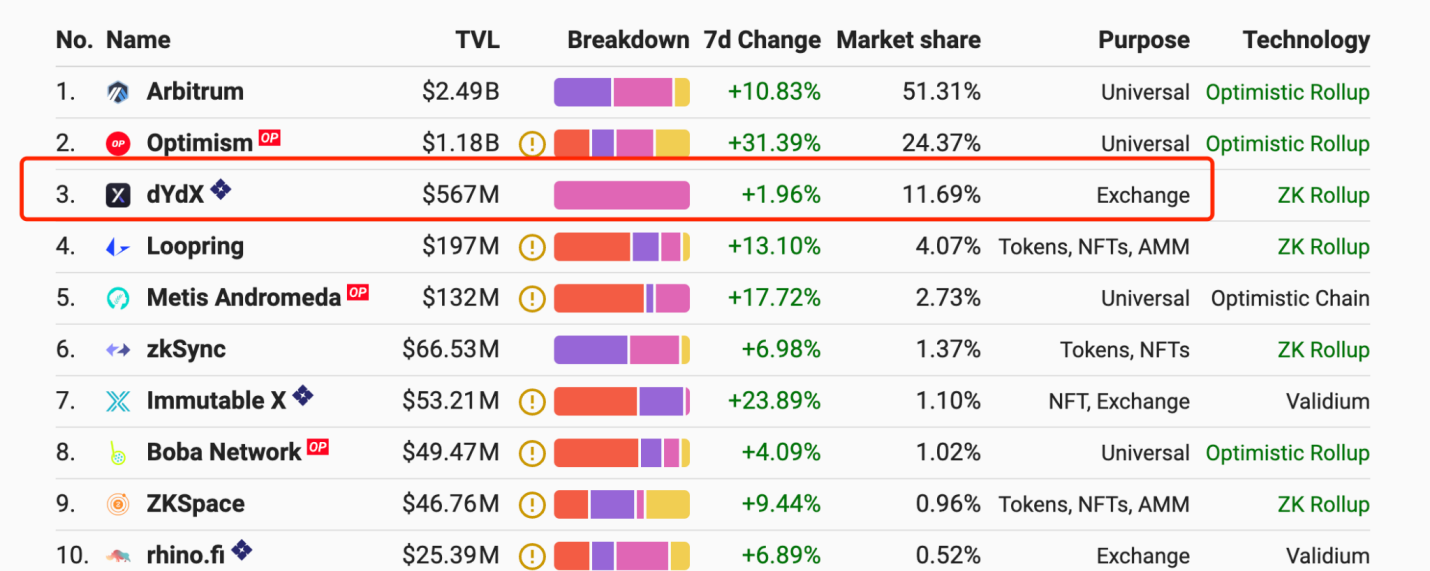
2. Can App Chain, or application chain, become the mainstream narrative of Dapp in the future?
(The above is L2Beat data)
first level title
1. Why did dydx abandon Ethereum?
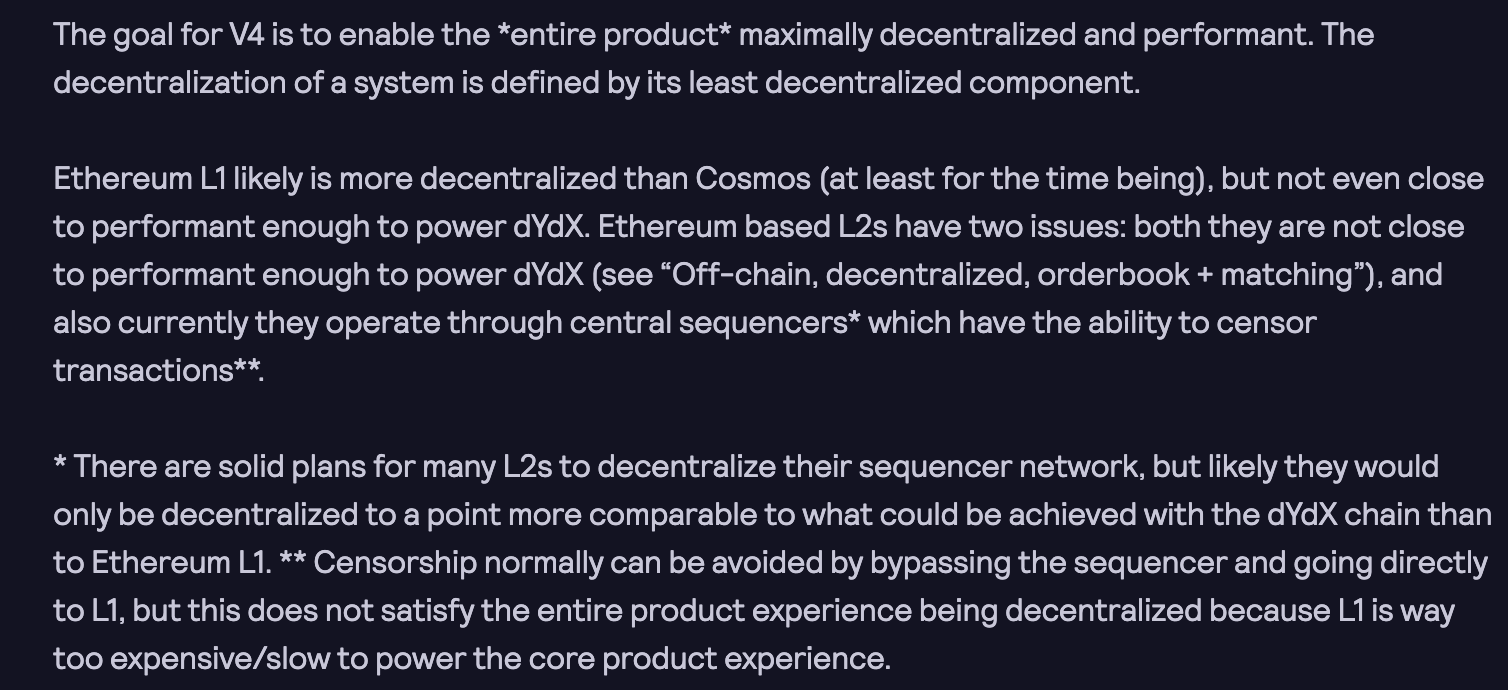
secondary title1. Centralization of L2 sequencer
L2 is a solution to the scalability problem of Ethereum, and it is generally accepted that Rollup is currently the best solution for L2.
We all know that the blocks of L2 are stored on Ethereum, and the entity responsible for sorting, batch processing and submitting transactions to L1 is the sequencer (sequencer).On the Ethereum mainnet we pay gas to the miners, while on L2 we pay gas to the sequencer. Since the sequencer completes the role of determining the order of transactions, it can earn money by extracting MEV. So it is very important that the sequencer is decentralized to resist censorship.
But currently, the sorters on rollup only operate on a single entity. For example: Offchain Labs and Optimism PBC are the only operators of Arbitrum and Optimism's sequencers respectively. And StarkNet is currently the same.
Although these L2s have plans to decentralize the sorter in the future, with the ecological growth, they will still face the problem that multiple applications will seize the same network resources after reaching an order of magnitude. In 2021, when gamefi and airdrops are popular in the market, Polygon also often soars dozens of times in gas to package transactions, and Solana crashes have become a daily operation. At that time, BSC had several popular gamefi and defi, which often blocked the network, and it was not a rare case, which was the case last year. It has become a daily routine for bsc mining and harvesting players.
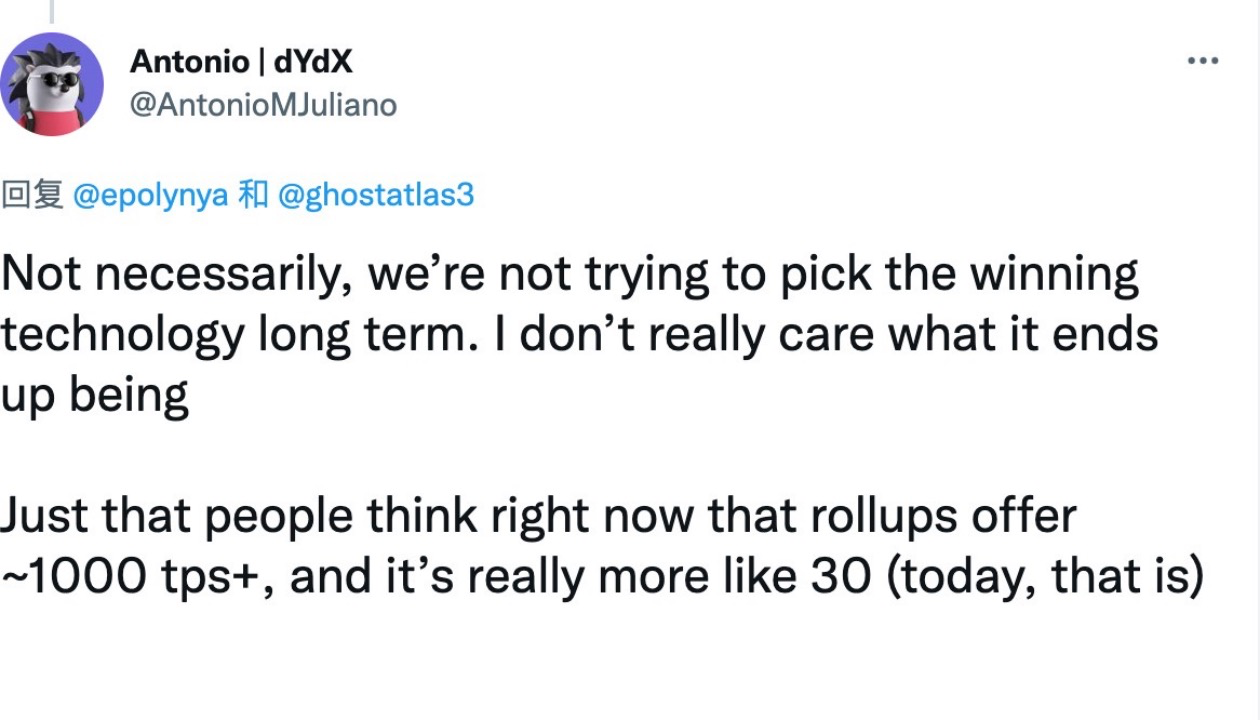
More than that, the market may have overestimated the scalability of L2 rollup.
image description
(The source of the above information: dydx founder Antonio twitter)
Antonio has expressed similar remarks many times before, saying that the slow technical iteration of Ethereum has limited the development of its dapp.
I personally agree with this, except that the decentralization of the L2 sequencer mentioned above takes a long time. After several years of delay, Ethereum finally set Merge at the end of the year, and Danksharding and ZK-Rollup are expected to be next year, while ZKEVM and DAMM (cross-L2 AMM solution) are still in the exploratory stage. .
secondary title
On Twitter, 0xTomoyo, a Solidity developer, made an in-depth analysis of the reasons for the migration from a technical perspective.
The current dYdX order book is run on a single server off-chain, and L2 is only used to settle matching transactions. In theory they could build an in-memory order book on L2, but currently no such tool exists. Therefore, dYdX chooses to build a new chain on Cosmos, with each validator running an in-memory order book. This further realizes the decentralization of the protocol.
secondary title
3. Consideration of chain sovereignty
Antonio responded that the migration does have chain sovereignty considerations, and dYdX monopolizing a chain will make it easier for the protocol to recover from protocol loopholes or hacker attacks (forkable). In terms of security, the initial stage of the new chain will control the number of nodes to ensure security.
For example, eco announced that the node freezes the wallet where the stolen funds of ddex are located. Once a transaction infection occurs in a similar situation, the rights and interests of users of their own dapp will often be implicated.
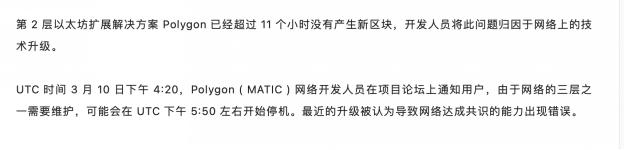
Another case is that the upgrade and maintenance of the polygon last year will not be postponed because of what activities your dapp is holding.
image description
(The above information comes from: Cointelegraph Chinese)
This is actually the reason why many people dare not use Solana to leverage or borrow products. When Solana crashes, if you have a position, you can’t operate it at all, and you can only watch it explode. For projects with higher tvl, they are less willing to put their products and users in such a passive situation. And once dydx has its own chain, it will have greater controllability in ensuring protocol upgrades, security and normal operation of products.
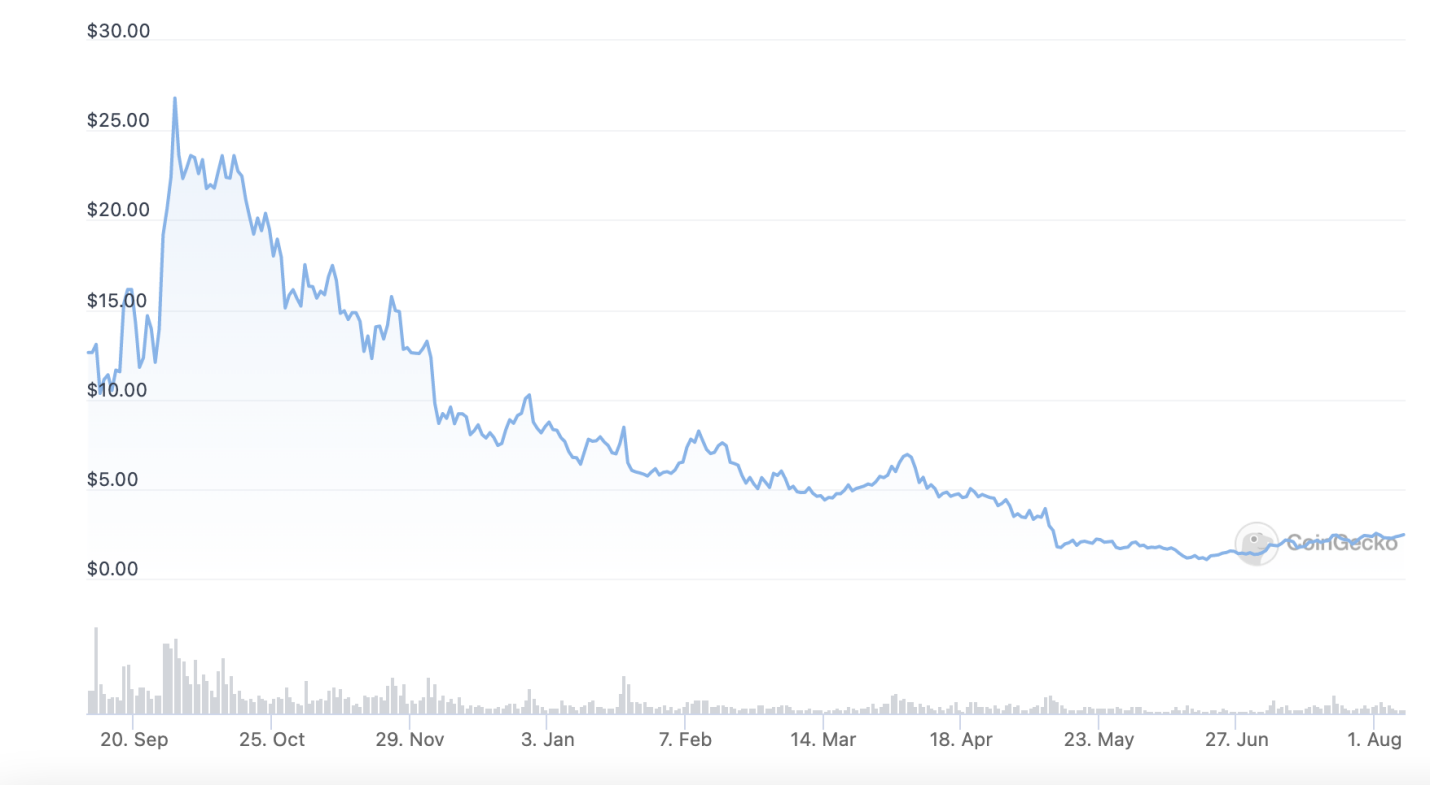
image description
(The above data comes from: Coingecko)
secondary title
4. Supervision
Previously, the currency mixing protocol Tornado stated under pressure that it would block wallet addresses sanctioned by (OFAC). Last year, Uniswap also received a regulatory request from the SEC to block certain securities token trading permissions from Americans. But it is impossible for DeFi to block US IP at the smart contract level. So at present, Uniswap.org only shields many token permissions from the US IP at the front-end UI layer, but Uniswap also has many community version UIs. Uniswap official itself also has a decentralized version of ui. Uniswap.eth.link also has no restrictions on Americans. Therefore, after dydx is further decentralized, we will definitely see more free and unlimited UI front-ends appear to meet the anti-censorship needs of the blockchain community.
After a large number of bsc chain projects ran away last year, some people in the community asked Binance to freeze assets. Binance also relied on 21 nodes to "decentralize" the statement to exempt itself from liability. Binance stated that Binance Smart Chain is a decentralized open source public chain. Chain, Binance cannot intercept or restrict cross-chain transfers, and cannot freeze any assets on the chain. So in the face of potential regulatory pressure. It is undoubtedly the safest and more in line with the blockchain concept to completely decentralize the running nodes and isolate them from the development company.
first level title2. The application chain or the new narrative and development direction of Dapp
The migration of dydx has also sparked discussions about Lisk.
We analyze it from two perspectives: technical level and user scale.
The first is the technical architecture level. Antonio has said many times that StarkWare developer support is insufficient, while Cosmos developer support is good. Indeed, Cosmos has made great progress in infrastructure in recent years, and several important modules have been launched to improve cross-chain interoperability.There are many articles on the market that deeply analyze the technical principles of the Cosmos IBC module.
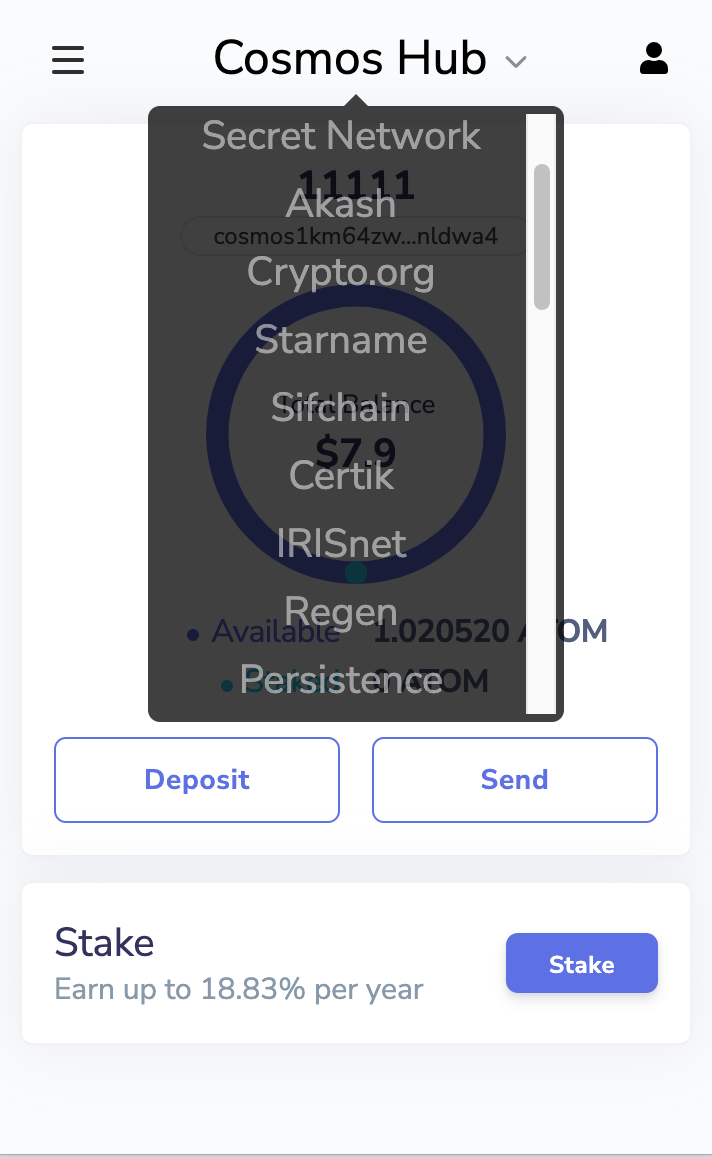
The conclusion is directly quoted here. Using the IBC protocol, chains can be freely connected, and the security of cross-chain tokens is close to that of native assets on native chains. The user experience has been greatly improved. When we use it, we can hardly feel that we are crossing chains.
image description(Keplr plug-in wallet, the largest wallet in the Cosmos ecosystem)
IBC cross-chain user experience
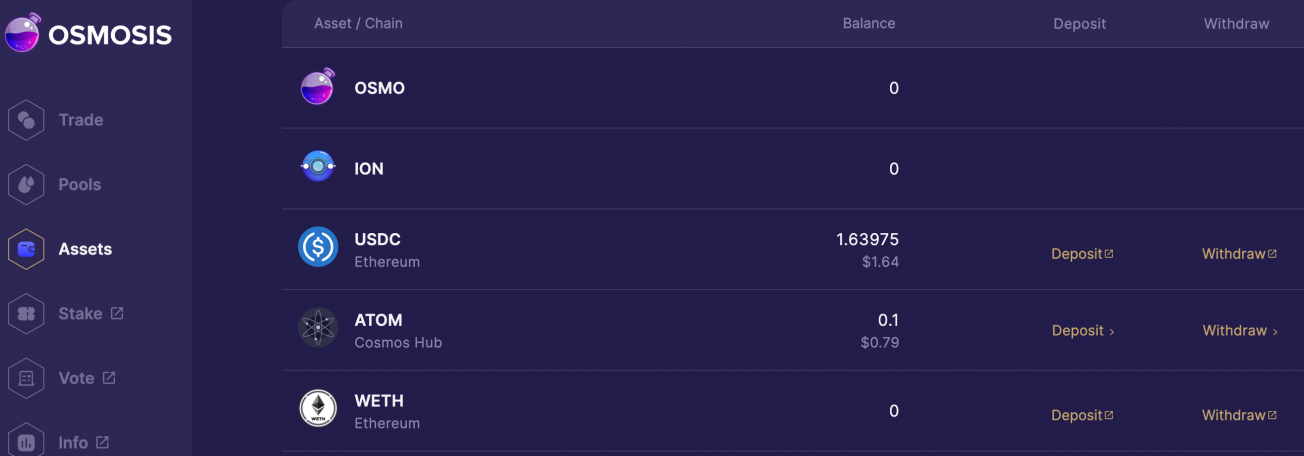
Osmosis is the largest dex chain in the Cosmos ecosystem. Because I chose to develop the underlying architecture myself. Compared with Uniswap, Osmosis can have more customization space. In addition to privacy transactions, anti-mev and gas-free functions, a Superfluid pledge mechanism has also been customized and developed, so that OSMO tokens in the trading pair fund pool can also pledge to protect the network at the same time when making a market, and enjoy PoS Staking income. At the same time, get triple incentives (transaction fees, liquidity mining rewards, PoS pledge rewards). The protocol also provides staking as a service to help other application chains (which need to be in the whitelist) gain security. Capture the value in Cosmos by turning yourself into the form of saas.
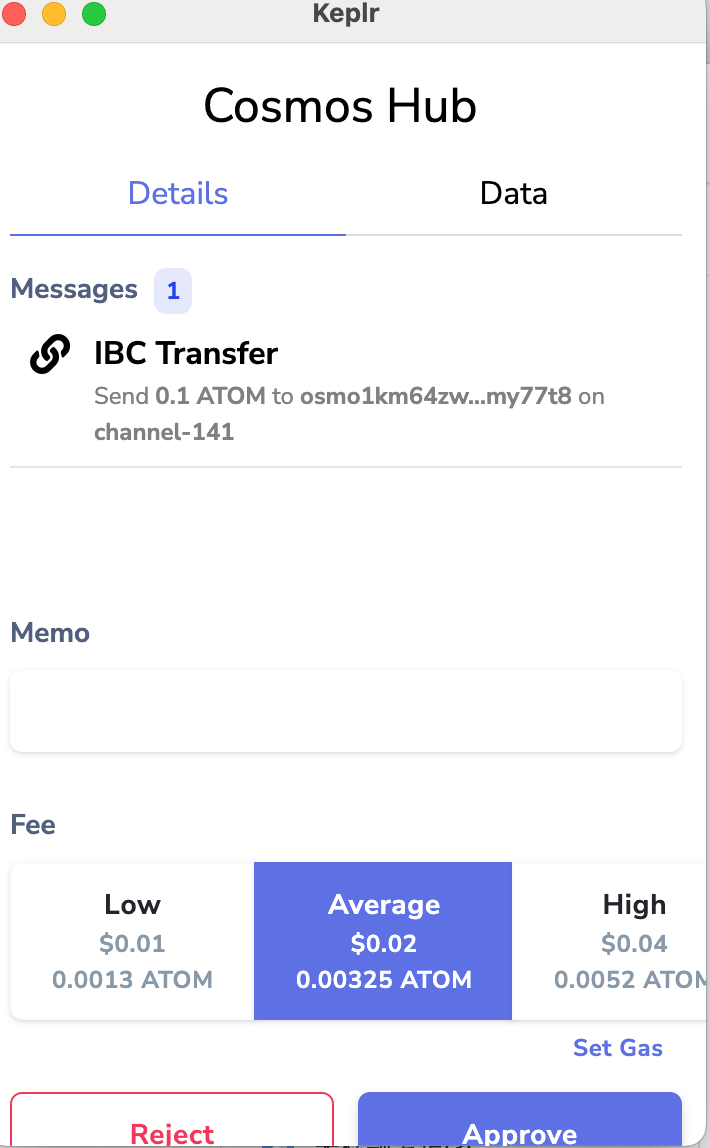
image description
(Osmosis has connected 38 chains with ibc, covering most of the active chains in the Cosmos ecosystem)
In Osmosis, cross-chaining assets from other appchain chains to Osmosis is called Deposit, and crossing back is called Withdraw. Its essence is the process of using ibc cross-chain transfer.Interchain Accounts
The Interchain Accounts module allows chains to call each other's applications on the other chain and perform operations on the other chain. This means that the blockchain with the interchain account module enabled,What can be done is no longer just a simple cross-chain token. Bringing cross-chain interoperability to a new level.
For example, the current smart contract of aave on Ethereum cannot operate the swap contract on the solana chain. In the chain ecology where the inter-chain account module is enabled, a chain dedicated to "loaning" can call the liquidity of another "transaction chain" (Osmosis) for selling and liquidation operations.
When different chains can be linked more deeply through IBC, the potential of DeFi composability can be further released.
Interchain Security (shared security service)This module will be launched this year, which I think is a particularly important part. We all know that in order to prevent 51% attacks, pos chains have relatively high requirements for market value (the cost of running servers for nodes) and token distribution.
Interchain Security is a shared security service that allows chains to effectively share their security, allowing new chains to start more securely, and verifiers on larger chains can provide verification node protection for new chains without Earn rewards. The essence is that the new chain can take out some tokens to the verification nodes on the mature chain, and rent them for security.
The security of another chain can be shared with card slot leases similar to Polkadot.The chain developed by the Cosmos team itself is called the Cosmos hub, and the token is atom. It should be noted that the process of using ibc communication between chains developed by other project parties using the Cosmos sdk does not need to pass through the Cosmos hub, nor does it need to consume atoms. At present, atom is mainly for developers to vote to determine the development direction, and ordinary investors hold coins, except for occasional spontaneous airdrops in the ecosystem, which have no practical effect.
And after Interchain Security goes online.
At the user level, we have also observed that Appchain is feeding back the Cosmos ecosystem.
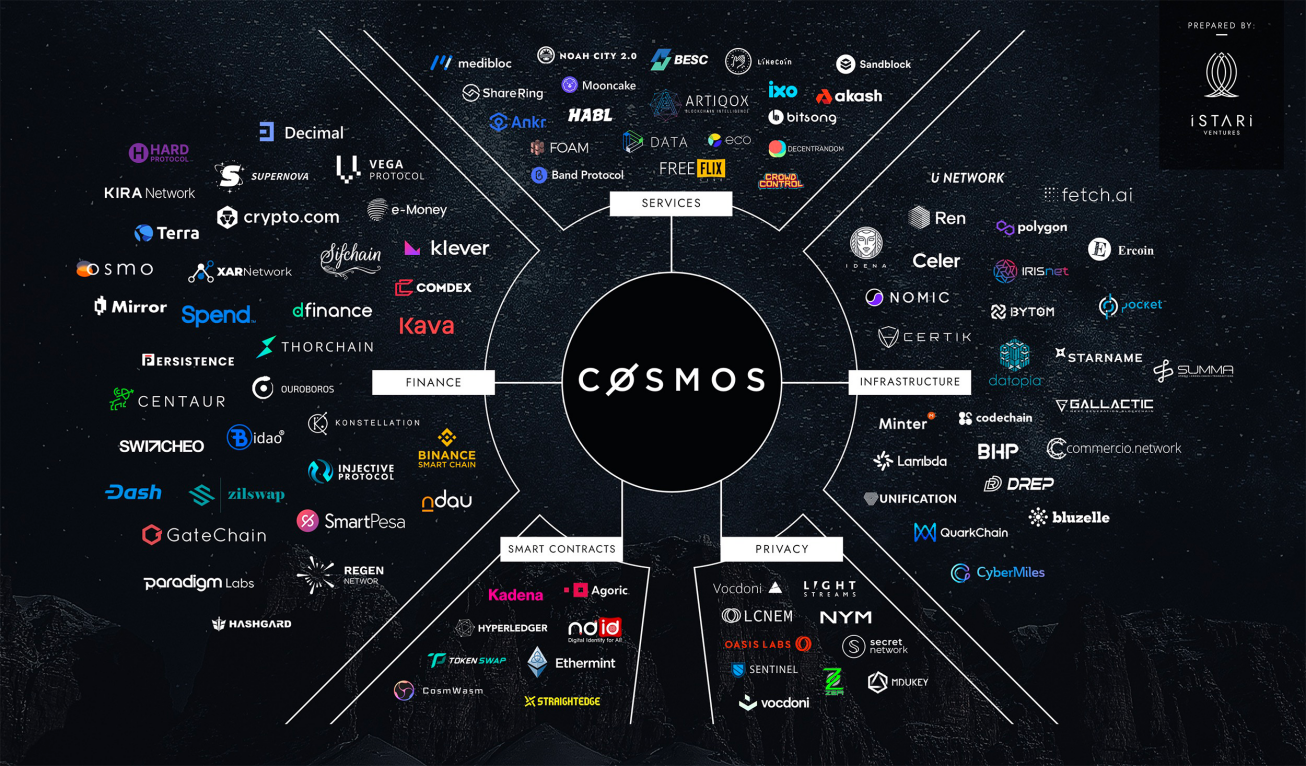
For many new projects, there are not so many users in the cold start stage. Choosing a platform depends on whether the platform already has large-scale user support. According to the current data on the Cosmos official website. Its ecology already has 266 apps and services, which is recognized as the second largest blockchain ecology. Second only to Ethereum.
image description(cosmos ecological map)In the DeFi summer of 2021, in addition to luna, there are many evm compatible chains in the Cosmos ecosystem, such as kava, crypto.org, etc. Through liquidity mining and other methods, these chains have attracted a large number of players into the Cosmos ecosystem,
And this will benefit all chains that integrate IBC and connect to the Cosmos ecosystem.
THORChain
For the new chain, this is the biggest attraction of choosing the Cosmos ecology.
Terrachain
In addition to Cosmos, there are also many successful application chains, cases, and application scenarios under development.
Secret Network
THORChain is different from ordinary cross-chain bridges in that it can exchange heterogeneous native assets in a decentralized manner, such as converting BTC into Doge... instead of various Wrap tokens. All this is due to THORChain's custom-developed THORNodes on its own bottom layer, so that public chains without smart contracts can also complete the exchange of native assets.
Although luna's stablecoin narrative failed, it is undoubtedly an excellent template in terms of its development strategy. It chooses its own underlying chain and allows all applications on the chain to serve the core function ust. Let the ust ecology once develop to a very high scale.
https://scrt.network/blog/shockwave-next-phase-secret-network-growth
Secret Network was previously a second-layer privacy solution built on Ethereum, formerly known as "Enigma" built in 2017. In order to solve the scalability, its technology stack was also migrated to the Cosmos SDK.
The Secret application layer currently has dozens of applications, and the top few applications, such as SiennaSwap and SecretSwap, have also received tens of millions of dollars in financing. At the beginning of the year, with the support of 25 institutions including DeFiance Capital, Alameda Research, huobi, and HashKey, an ecosystem fund of US$400 million was announced, aiming to incubate 100 projects this year.
Uniswap chain and Compound chain
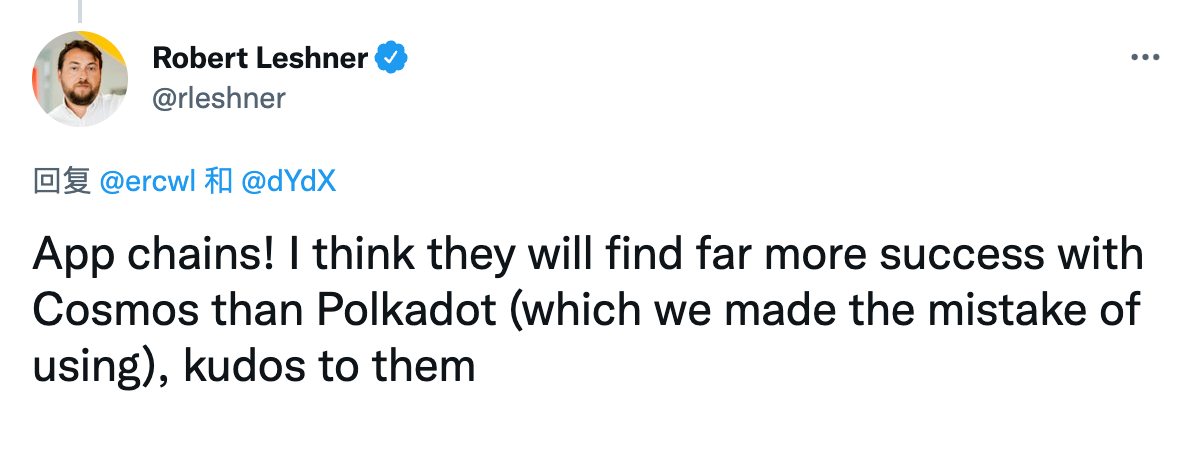
In fact, as one of the first-generation DeFi leaders, Compound is the first dapp to try to transform into a dedicated chain. Compound originally chose Polkadot's Substrate. After dydx announced its own development chain, the CEO of Compund also commented on it.
image description(Compund CEO twitter reply)
They claimed that choosing Substrate took a detour and caused their own chain to be delayed again and again, but they did not clearly state what problems Substrate had.
But it is indeed trying to make an application chain.
It is worth discussing that one of the hotly discussed topics in the DeFi leader Uniswap community is whether Uniswap will launch the Uniswap chain. Although Uniswap has not officially announced the plan for the time being, it is worth noting that Uniswap founder Hayden has participated in discussions on this topic quite a lot, and he seems to have a more open attitude towards this issue.If dydx can successfully migrate and achieve greater success on dydx than on Ethereum, it will have a great incentive for Uniswap and Comound or other applications that want to build their own application chains, and promote them to build their own application chains faster. direction forward.In fact, the logic behind it is not difficult to understand. In the past, Ethereum was the bottom layer with decentralization and the best security in the encryption field. It was also the bottom layer with the most complete infrastructure and the most developers and users. In the last bull market, a large number of applications such as DeFi, NFT and Gamefi were bred . But with the surge in transactions, the weakness of Ethereum's lack of scalability has been exposed. Although L2 is committed to solving this problem, due to technical and other reasons, the progress is slow. along with
Applications continue to mature, the security of other basic protocols has been improved, and cross-chain interoperability has been slowly resolved
In some cases, building your own application chain is a better choice.Once dydx's approach is verified, the application chain may become the main narrative of the next cycle. After all, compared with simple applications, AppChain can give people more room for imagination in terms of dependence on the underlying protocol, flexibility of narrative, and product development direction.Lisk does not mean "abandoning" Ethereum
. As the technology matures, we may be able to see the birth of more "Ethereum application chains".
3. Summary
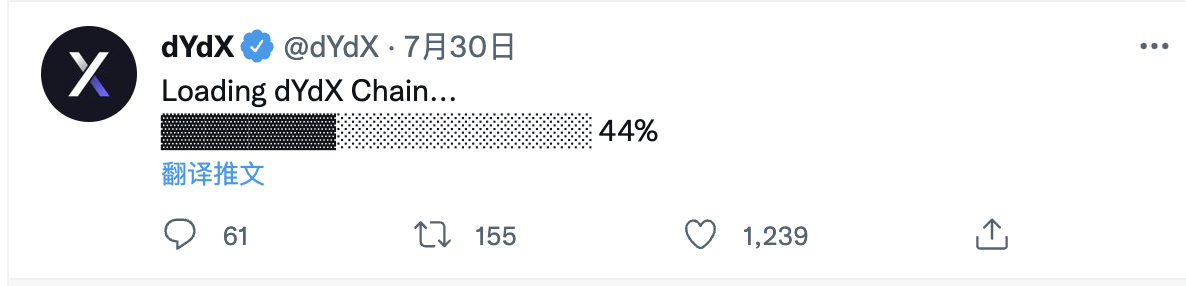
On July 30, dydx officially tweeted that 44% of the progress of the dydx chain has been completed. According to this progress, it is estimated that the dydx chain will be completed in October, and the dydx migration will begin. It is expected that there will be more heated discussions at that time. Can dydx migrate successfully? Can it bring a better trading experience after going online? How will the dydx token behave? We will wait and see.
image description
(Data source: dydx official twitter)