The growth history of Optimism: 3 people, 5 years, 9 billion US dollars valuation



Original author:0x137, Rhythm BlockBeats
Original author:
, Rhythm BlockBeats
The Plasma Dream
In early May, Messari conducted an in-depth analysis of Optimism in its own report and gave a valuation of $9 billion. After several rounds of huge financing, Optimism has become the consensus among top VCs such as a16z and Paradigm. With the release of the airdrop news, Optimism has once again become a hot topic in the market.
Undoubtedly, the arrival of OP is another landmark event in the history of encryption development, which symbolizes the opening of a new chapter in the expansion of Ethereum. Behind this historic moment, there are legendary stories written by several "Ethereum geeks".
In mid-2017, Vitalik and Joseph Poon co-authored a paper titled "Plasma: Scalable Autonomous Smart Contracts", in which they first proposed the Plasma architecture. This was the earliest solution to the scalability problem of Ethereum. At that time, the encrypted game Crypto Kitty was hot, and the transaction volume on the Ethereum chain surged. People had to wait for more than ten minutes to buy an encrypted kitty and pay Expensive Gas fees, the scalability of Ethereum has become a problem that must be solved.
Shortly after the Plasma proposal was proposed, it resonated strongly with the three Ethereum core developers and researchers. They got together and established a non-profit research group, the Plasma Group, to build and realize Vitalik's "Ethereum Final Vision."
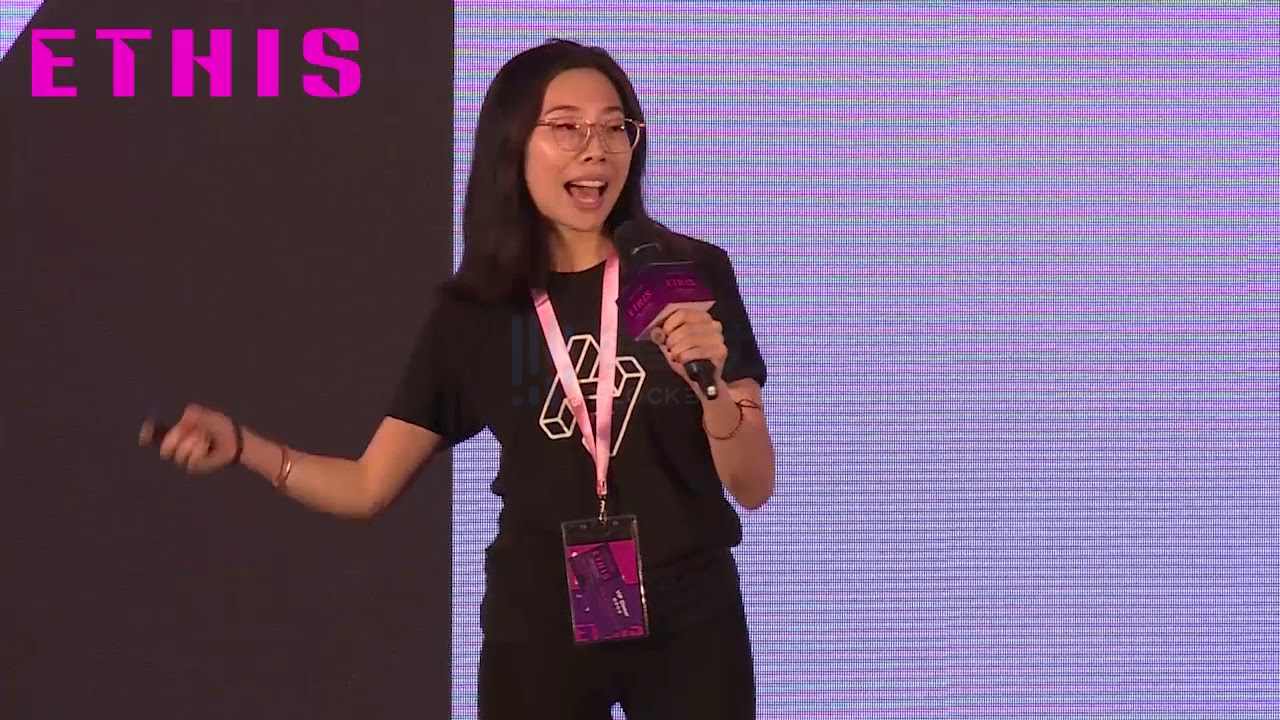
Among the three, Karl Floersch is the most "Optimistic" one. He is always smiling and speaks with passion. He is an out-and-out optimist. Karl is an OG developer of the Ethereum Foundation and has a close relationship with Vitalik. After seeing the paper, he was very excited and took action immediately.
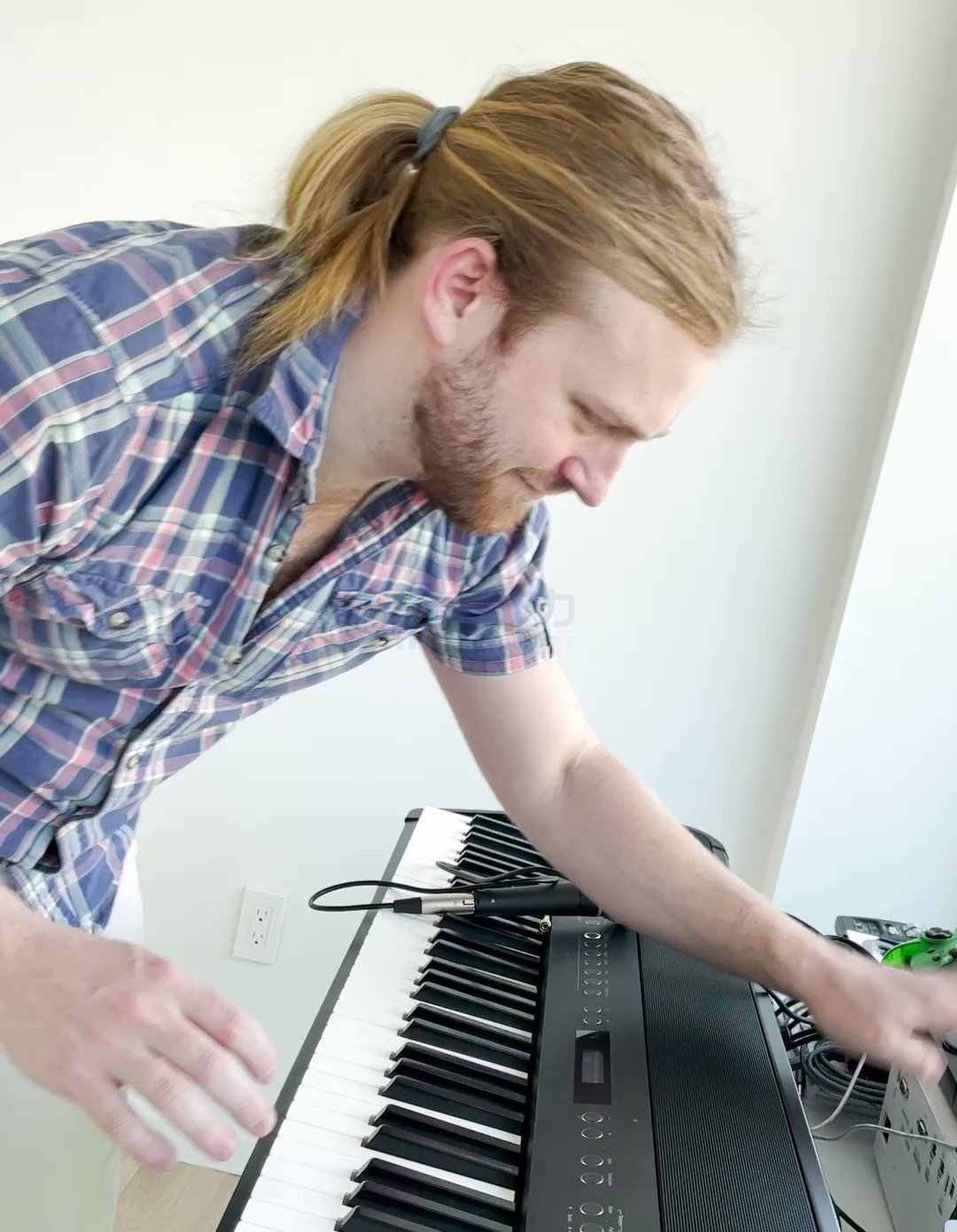
Ben Jones is also an early researcher and developer of Ethereum, but in his spare time he often makes some parody songs based on Ethereum under his stage name Weird ETH Yankovic, and is the artist among the three.
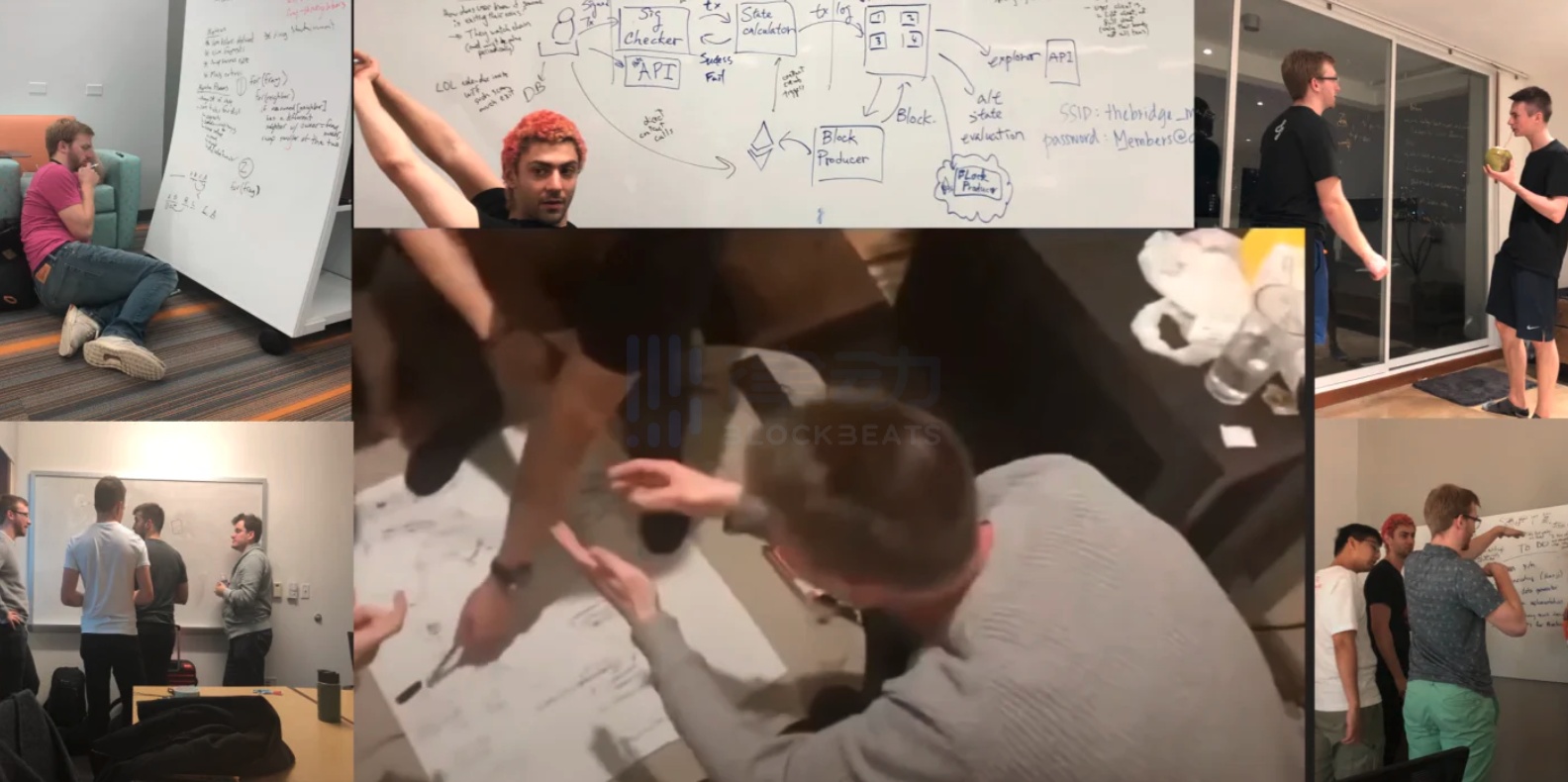
At that time, Rollup had not yet appeared, and plasma was all the rage, so this small group of "Ethereum fanatics" began to doodle wildly on the whiteboard every day, brainstorming new solutions, and held monthly conference calls to share new designs for implementation The adopter adopted it and spent a period of very pure Pentium years.
image description
「But can it run Uniswap?」
Plasma Group member communication design
Let's go back in time to 2017, a mechanical engineering graduate named Hayden Adams had just lost his first job. He contacted his good friend Karl Floersch who was developing Casper at the time, and the reply he got was: "Congratulations, this is the best thing you have ever encountered!" Karl told Hayden: "Ethereum is the future, your The mission is to write a smart contract".
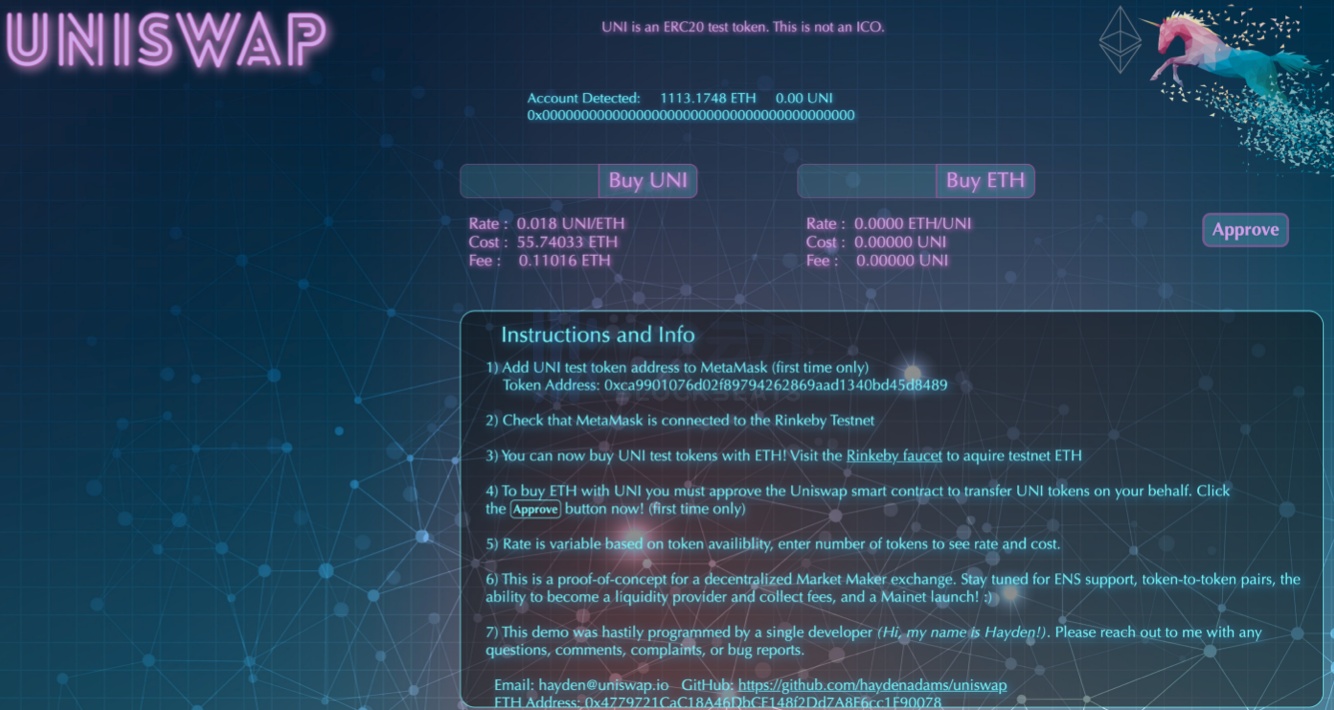
Hayden didn't even know how to program at this time, but he decided to give it a try. So Hayden spent two months learning the basics of Ethereum, Solidity and Javascript, and at the suggestion of Karl, made an AMM on Ethereum. Hayden named it Uniswap.
Initial version of Uniswap
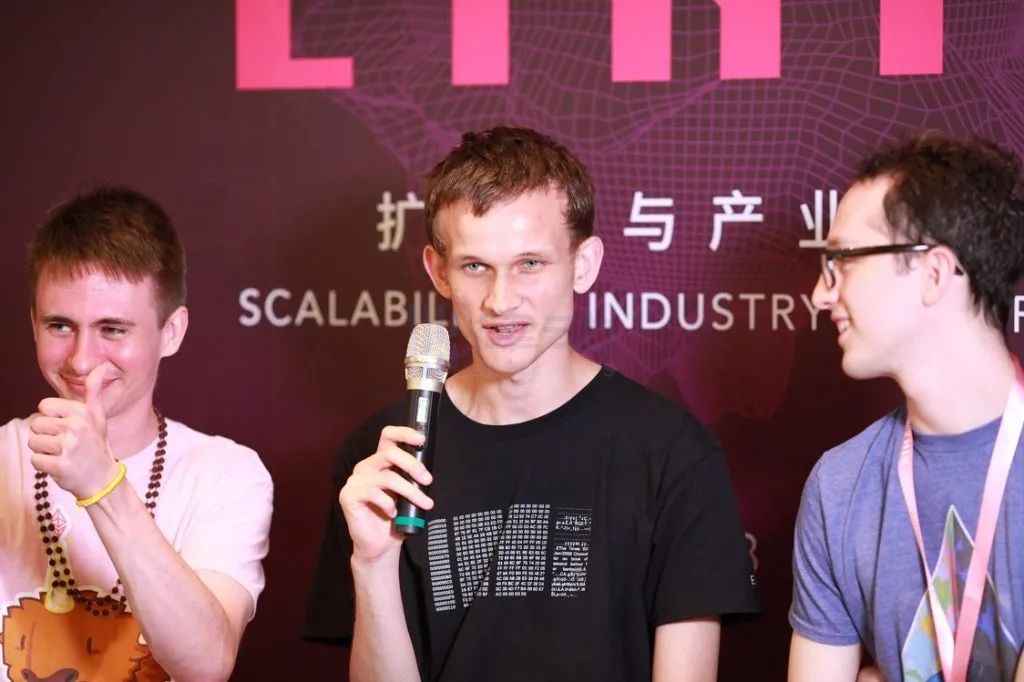
As a crypto-economic believer, Karl was excited again after seeing Uniswap, so he introduced Hayden and Uniswap to Vitalik at a developer conference. After browsing the contract code on the phone, Vitalik said directly to Hayden: "You should apply for funding from the Ethereum Foundation." Not long after, Jinglan also got to know Hayden through Karl and became an important consultant of Uniswap.
image description
Karl, Vitalik, and Hayden at the Ethereum Industry Development Summit
We all know what happened next. Uniswap has grown into a unicorn in the encryption field, leading DeFi Summer to a climax. Why is this story mentioned? Let's move on.
Back to Plasma Group, the team launched a test network in 2019. In the initial testing phase, Plasma did show excellent results. Because the Plasma architecture does not need to face the problem of Validity, it can theoretically achieve unlimited scalability.
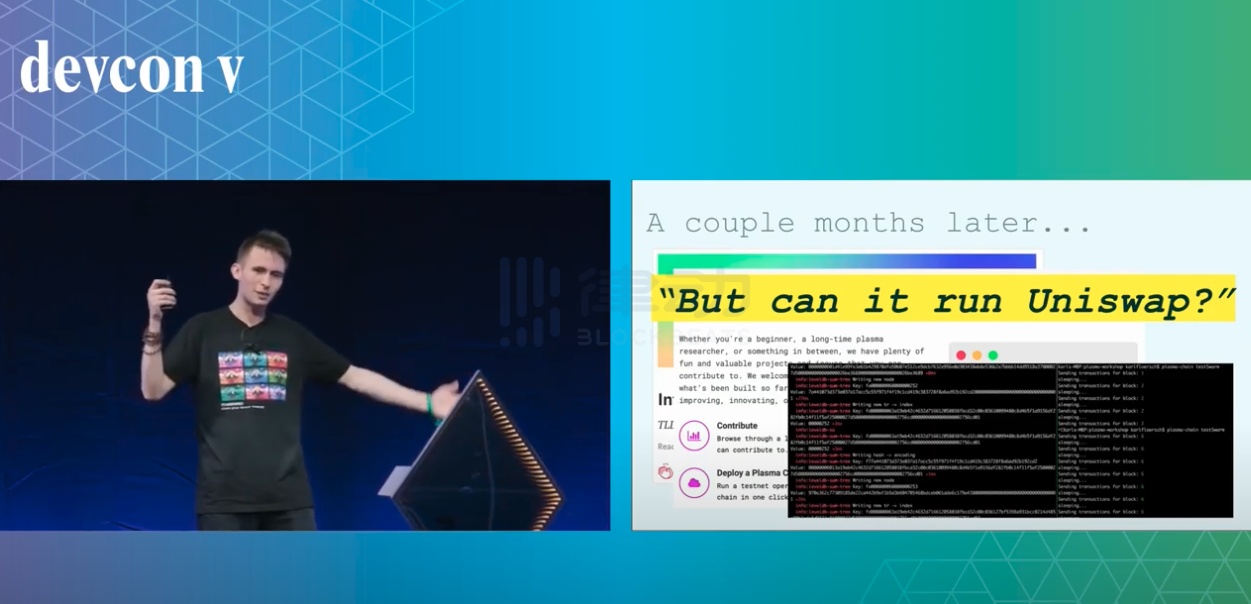
But it didn't take long for Plasma's fatal problem to arise. When the testnet was first launched, applications such as MakerDAO and Uniswap had not set off a frenzy, so people's concept of smart contract applications was not very strong. But after entering DeFi Summer, Uniswap had a huge impact on the encryption industry. Various applications began to appear on Ethereum, and Uniswap has also become an indispensable daily tool for many encryption players.
Therefore, when the Plasma Group "reported" to Vitalik, the first question asked was, "Can it run Uniswap?"
Eureka!
A major disadvantage of the Plasma child chain (Child Chain) architecture is that it takes a long time to transfer funds between the L2 and L1 layers, and sometimes users even have to wait for as long as a week. This also makes it impossible for general-purpose smart contracts like Uniswap to be used on Plasma. Although Ben led the technical team to make many attempts, the problem of "running Uniswap" has never been solved.
In this way, the Plasma Group was stumped by the unicorns he cultivated by himself. Plasma, which was once regarded as the "EndGame" solution for Ethereum expansion, seems to have entered a technical dead end. Now, the three "scalability pioneers" of the Plasma Group had to find a new solution.
Just when the team was at a loss, Karl stumbled across an article published by Vitalik in 2014, which mentioned a concept called Shadow Chain. As the name suggests, it is to create a shadow for Ethereum. The team immediately realized that Vitalik's design could be applied to the Optmistic pattern they were designing for Plasma.
Comparison of data validity and availability of each expansion plan
So with the help of the community, Optimistic Rollup was born. This new architecture is able to run any Ethereum smart contract while still significantly reducing Ethereum's Gas cost. There is no doubt that it opens a new chapter in the scaling of Ethereum.
This time, the team finally solved the ultimate problem faced by Plasma - OR can run Uniswap!
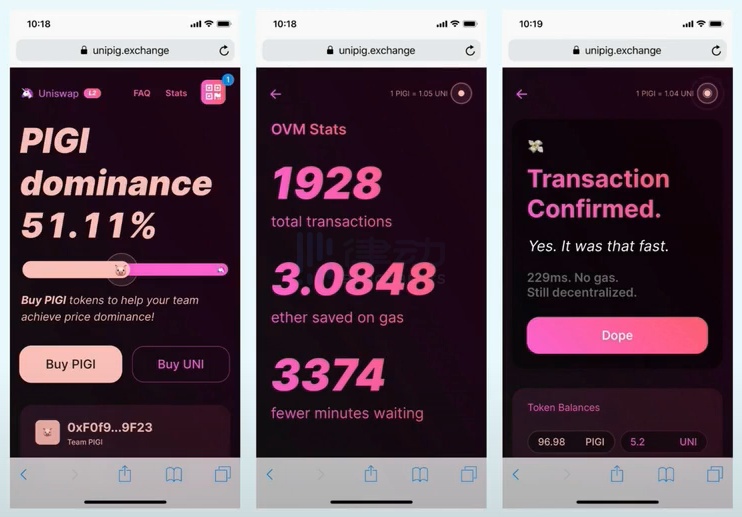
In order to show everyone the team's new solution, Karl found his old friend Hayden, and worked with Uniswap to create an OR-based decentralized trading application Unipig, and released a demo at the Ethereum Devcon conference.
image description
Optimistic Ethereum
Unipig Application Demo
After nearly 3 years, Plasma Group finally has its own "Eureka Moment".
The Demo at the Devcon conference not only excited the developers of Ethereum, but also made capital see potential huge opportunities. So shortly after the Unipig interview, Paradigm and other top VCs came to the door one after another.
In January 2020, with $3.5 million in backing from Paradigm and IDEO, the Plasma Group transitioned from a non-profit research organization to a for-profit startup, and Optimism was officially born.
One month later, Optimism launched the alpha testnet of OVM, and then completed the soft launch of the mainnet in early 2021, and immediately received in-depth support from leading projects such as Uniswap, Compound, and Synthetix. After the mainnet was officially launched in the summer of the same year, Optimism once again received the support of the "iron buddy" Uniswap, becoming the first ecology to launch the V3 version besides Ethereum.
The biggest feature of Optimism is that its development has a strong will of the upper layer of Ethereum. The ultimate goal of Optimism is not to be a new force, but to become Ethereum itself, which is why we often hear teams use the term Optimistic Ethereum.

It is also this concept that has contributed to the biggest upgrade of Optimism - EVM Equivalence (EVM Equivalence), which greatly reduces the footprint of Optimism and allows developers to obtain "one-click deployment" and "out-of-the-box" experience. In subsequent Bedrock upgrades, the team will also introduce Cannon failure proofs, further reducing the difference between Optimism and upstream geth to 300 lines of code.
Of course, in order to achieve these upgrades better and faster, the Optimism team has also made great efforts. At one point, a team member named Mark pitched a tent directly on the roof of Optimism's offices in order to keep the testnet running smoothly.
Team member Mark pitches a tent on the roof
The team's enthusiasm for the future of Ethereum expansion and hard work have also allowed Optimism to continue to win the favor of capital. In February last year, a16z led the A round of Optimism with a $25 million investment. In March this year, Optimism completed a $150 million B round of financing at a valuation of $1.65 billion.
Today, Optimism has nearly 40 members including EIP signees, product engineers and protocol wizards. At the end of 2021, the team removed the whitelist deployment and opened the Optimism ecosystem to everyone. From here, more than 50 applications were deployed on Optimism, over 60,000 ETH were bridged from the Ethereum mainnet, and the total value on the chain was over $900 million, while transaction fees were 40% cheaper than before.
In the Optimism official blog post:
“It’s hard to believe that in just over a year since Optimism mainnet launched, we’ve:
Saved more than US$1.1 billion in Gas fees for users Deployed more than 6,800 smart contracts Welcomed more than 300,000 unique addresses Obtained more than US$900 million in chain value Facilitated more than US$17.4 billion in transaction volume Generated more than US$24.5 million in revenue Public welfare foundation donated more than 1 million US dollars”