






A Glance at the DeFi Landscape of Terra Ecology: More Efficient "Money Lego"


Original author:0x137, Rhythm BlockBeats
Original author:
Previously, in the overall weak market environment, LUNA became one of the few projects with strong performance, and even set a new high in price. Unlike other public chains, Terra's DeFi ecosystem is fully supported by Anchor. As of now, Terra's TVL is about 17 billion US dollars, of which Anchor accounts for 13 billion.
first level title
Anchor
Lending platform: Anchor, Mars
secondary title
Anchor can be said to be the engine of the current Terra ecology and UST popularity. By providing a stable APY of 20%, Anchor has brought a more predictable source of income to stablecoin savings users, thus attracting a large number of UST deposits and borrowings.
Anchor utilizes the proof-of-stake network (PoS) verification rewards, as well as the interest of borrowing users to generate a fixed interest rate for saving users.
On the Anchor platform, borrowers need to mortgage PoS assets such as bLUNA or bETH to lend UST. bLUNA and bETH are liquid pledge derivatives, "b" stands for "Bonded", which is the holding certificate issued by the Lido platform for LUNA or ETH pledged in the verification node. It can be used for free trading or as collateral. If bLuna is in the user's wallet, it will also generate UST pledge rewards, which can be claimed under the "bAsset" page on Anchor.
After the user deposits bLUNA or bETH, Anchor will use these assets to pledge the node verification of the Terra network and the Ethereum 2.0 network, and obtain stable pledge rewards.
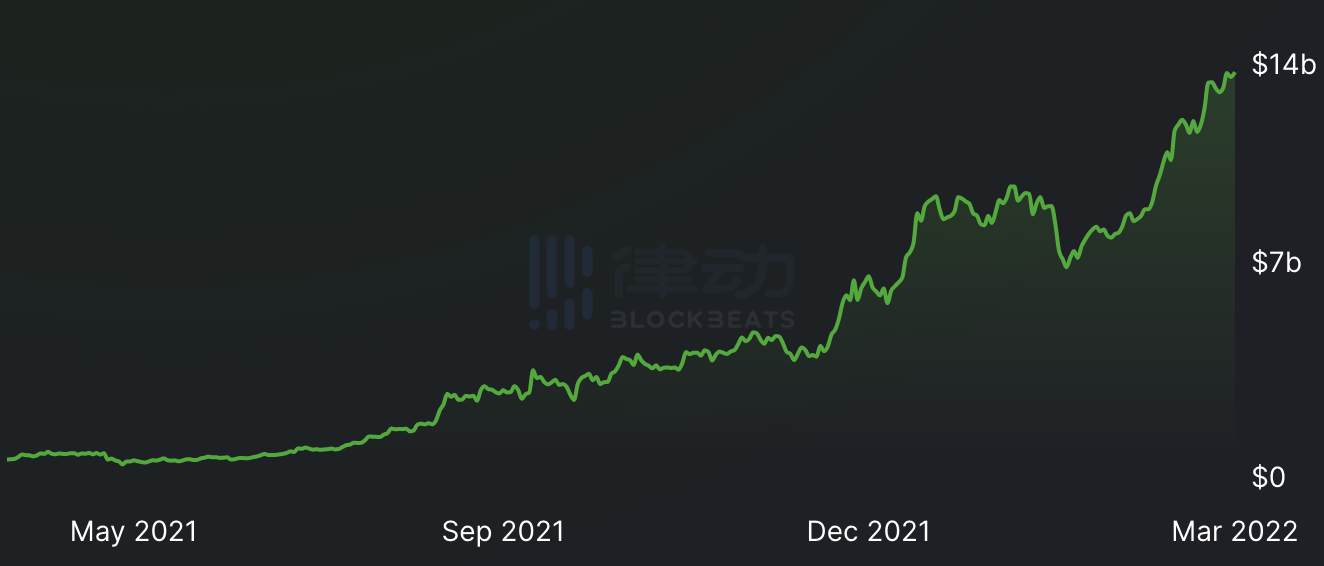
This model is called "risk-free interest rate" by Anchor, and for most stablecoin holders, it is very attractive to be able to create stable passive income in the encrypted world. In the past year, the TVL of the Anchor platform has also been rising steadily. Not long ago, it surpassed Aave to become the second largest lending platform in the encryption field, and will soon be connected to the Avalanche ecosystem.
Mars Protocol
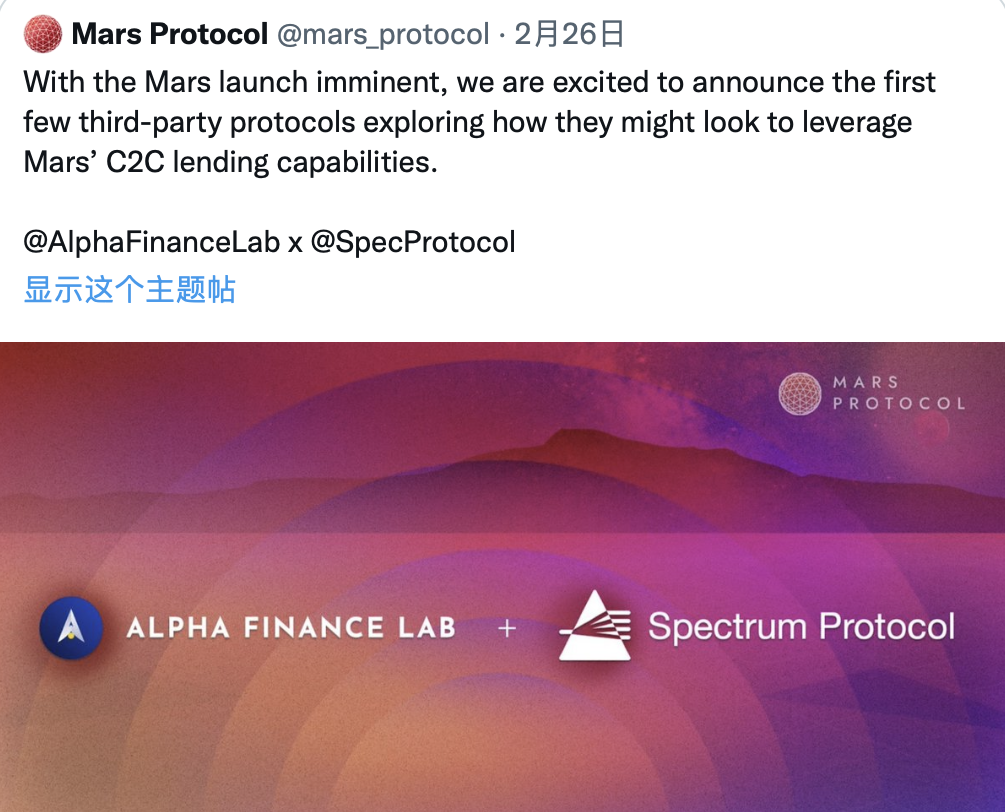
However, as more and more UST is deposited into the platform, Anchor is also beginning to face the problem of exhaustion of income savings. Anchor's governance vote also passed a plan not long ago to rely on modifying interest rates to ensure sustainability. But even if the interest rate is revised, Anchor still needs other protocols in the ecosystem to share the pressure. In this regard, agreements such as Mars Protocol play an important role.
secondary title
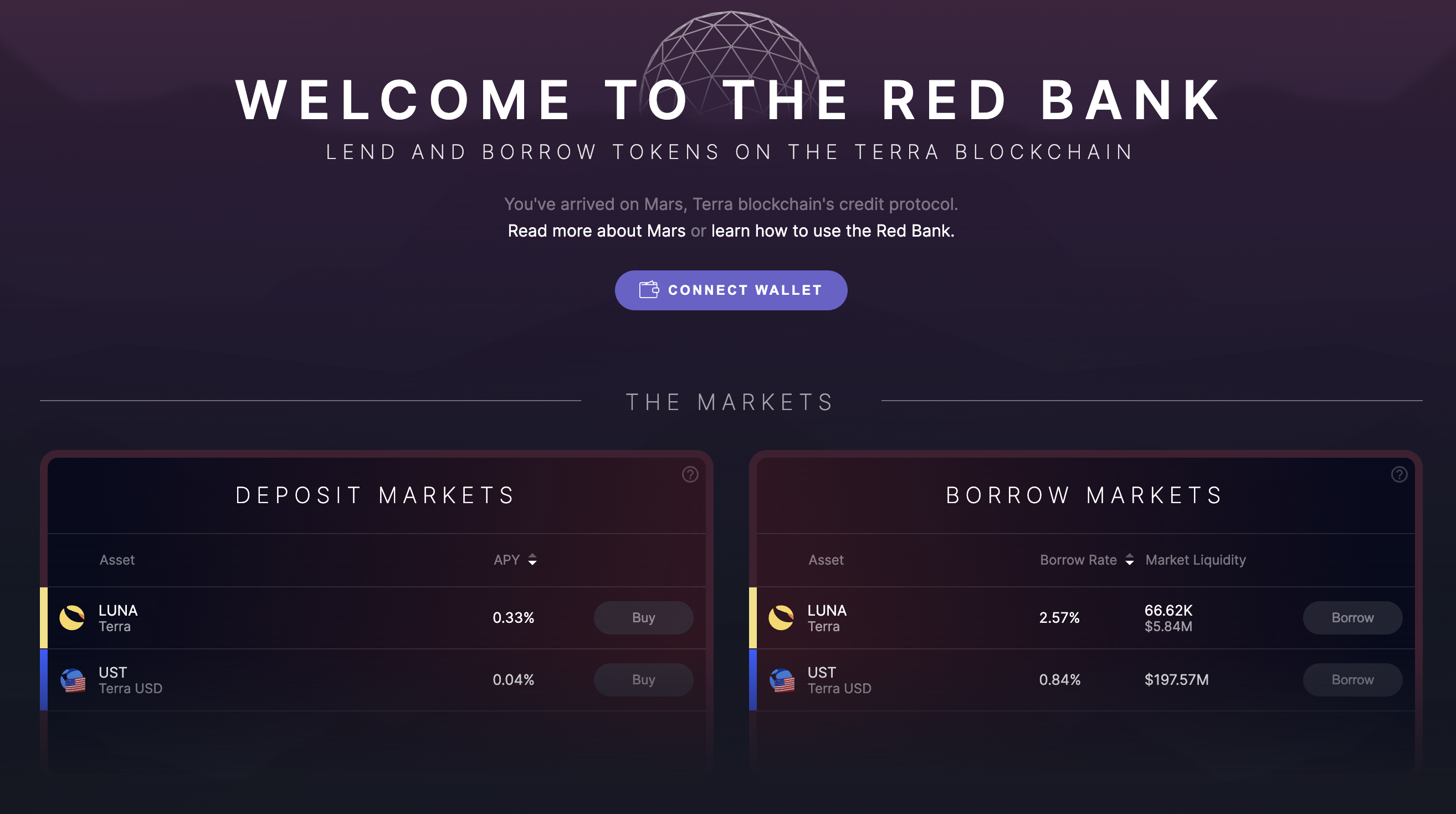
In fact, Anchor is more like a savings agreement, providing a fixed-rate savings service (Saving-as-a-Service) for individuals and agreements. Mars is different. Its interest rate is based on market demand, so the interest rate will fluctuate, which will bring different benefits.
Because many pledged assets do not generate PoS verification rewards, the rate income of saving users on the Mars platform all comes from the interest of the borrower. That is to say, the rate income of Mars is driven by borrowing demand. The more borrowing demand, The higher the borrowing rate on Mars.
first level title
Astroport
Trading hubs: Astroport, Loop Finance
secondary title
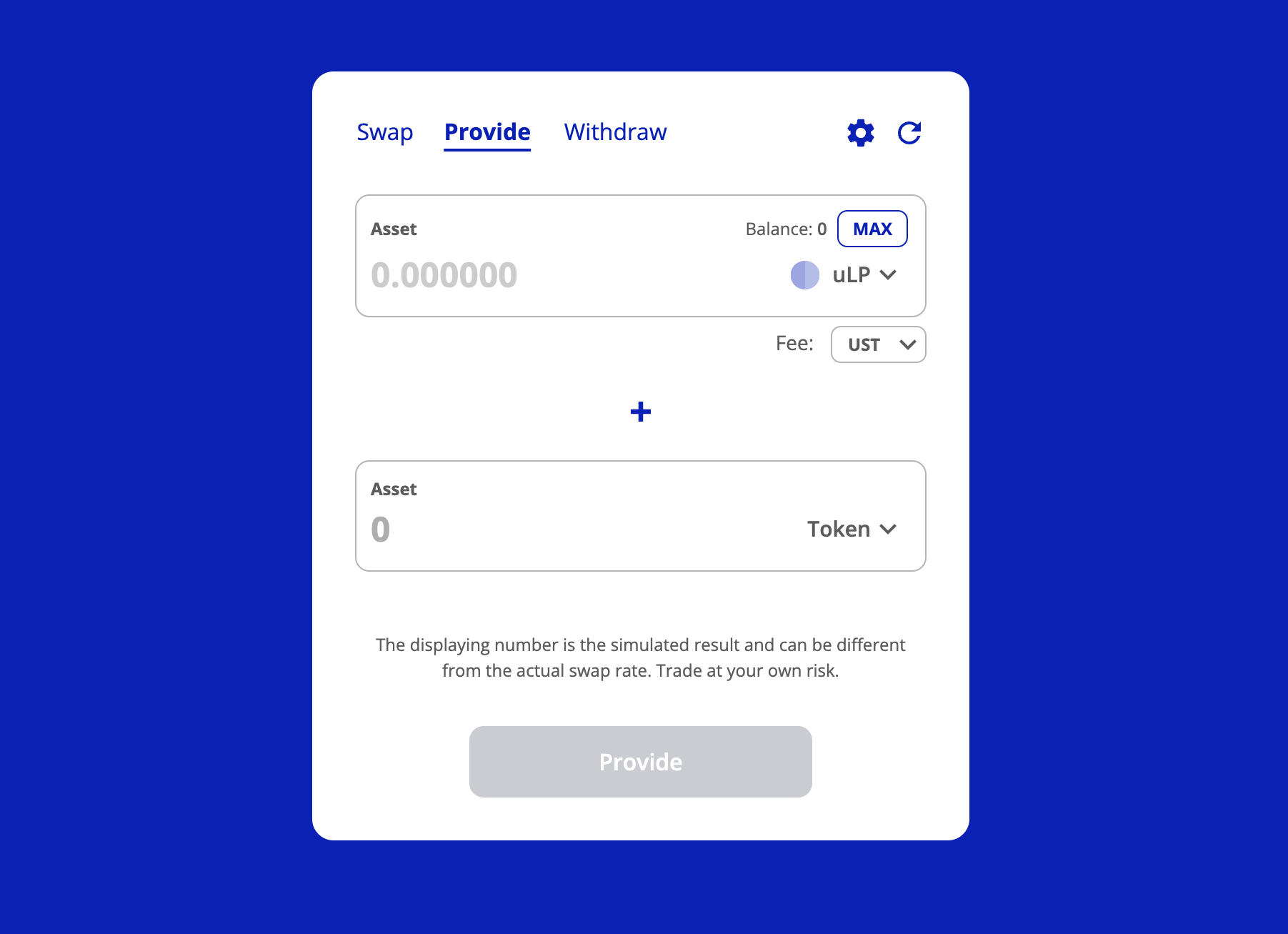
Before Astroport, the main trading venue of Terra ecology was Terraswap. However, the functions of the application are very primitive. Before the version update, Terraswap only had basic trading functions, and liquidity providers could not see their own specific benefits. Compared with other ecological DEXs, there is a big gap in user experience.
In addition, Astroport also intends to refer to the veToken model, giving xASTRO and vxASTRO different degrees of voting rights, and sharing platform revenue between LP and ASTRO stakers.
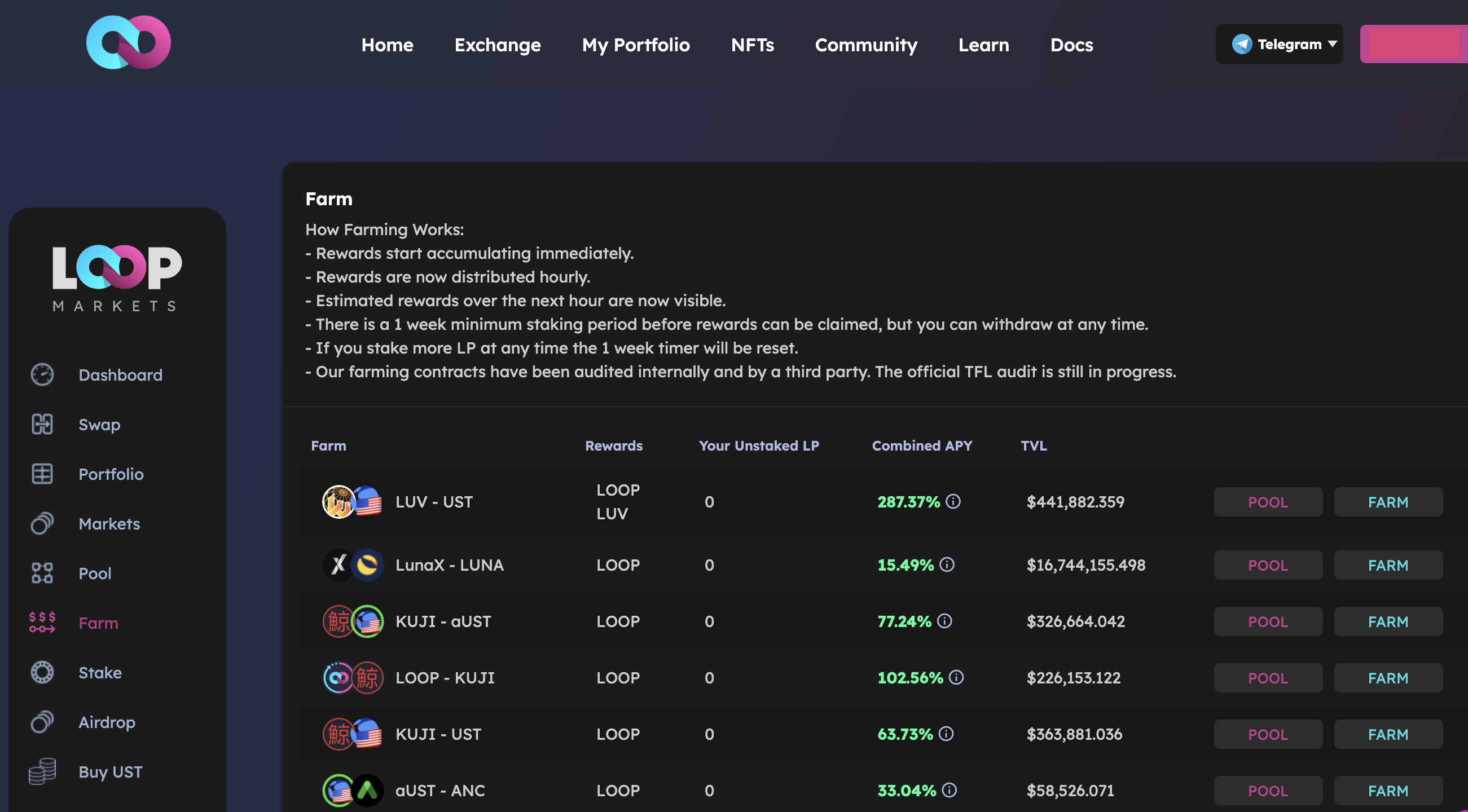
Loop Finance
Astroport's upgrades in these areas are critical to the Terra ecosystem, because better pricing and efficiency help other applications in the ecosystem integrate, generate economies of scale, and attract more liquidity.
secondary title
Creators can get LOOPR rewards by sharing valuable content in the Loop Community. Users can keep abreast of the latest DeFi project releases, and directly purchase or trade the Tokens of these projects on Loop. Of course, Loop Ventures also incubates its own projects and then helps them launch.
Loop's NFT market is the first market in the Terra ecosystem that focuses on the practicality of NFT. Pledge NFT through "NFT Bond", so that NFT can bring benefits to holders.
Highly combinable "Money Lego"
Nexus Protocol
One of the biggest advantages of the Terra ecology is that the agreements are not fighting alone, but a cooperative and competitive relationship. With the lending and trading framework in place, other DeFi applications in Terra can collaborate with each other on this basis to form a highly combinable "Money Lego", thereby enhancing the network effect of the entire ecology.
secondary title
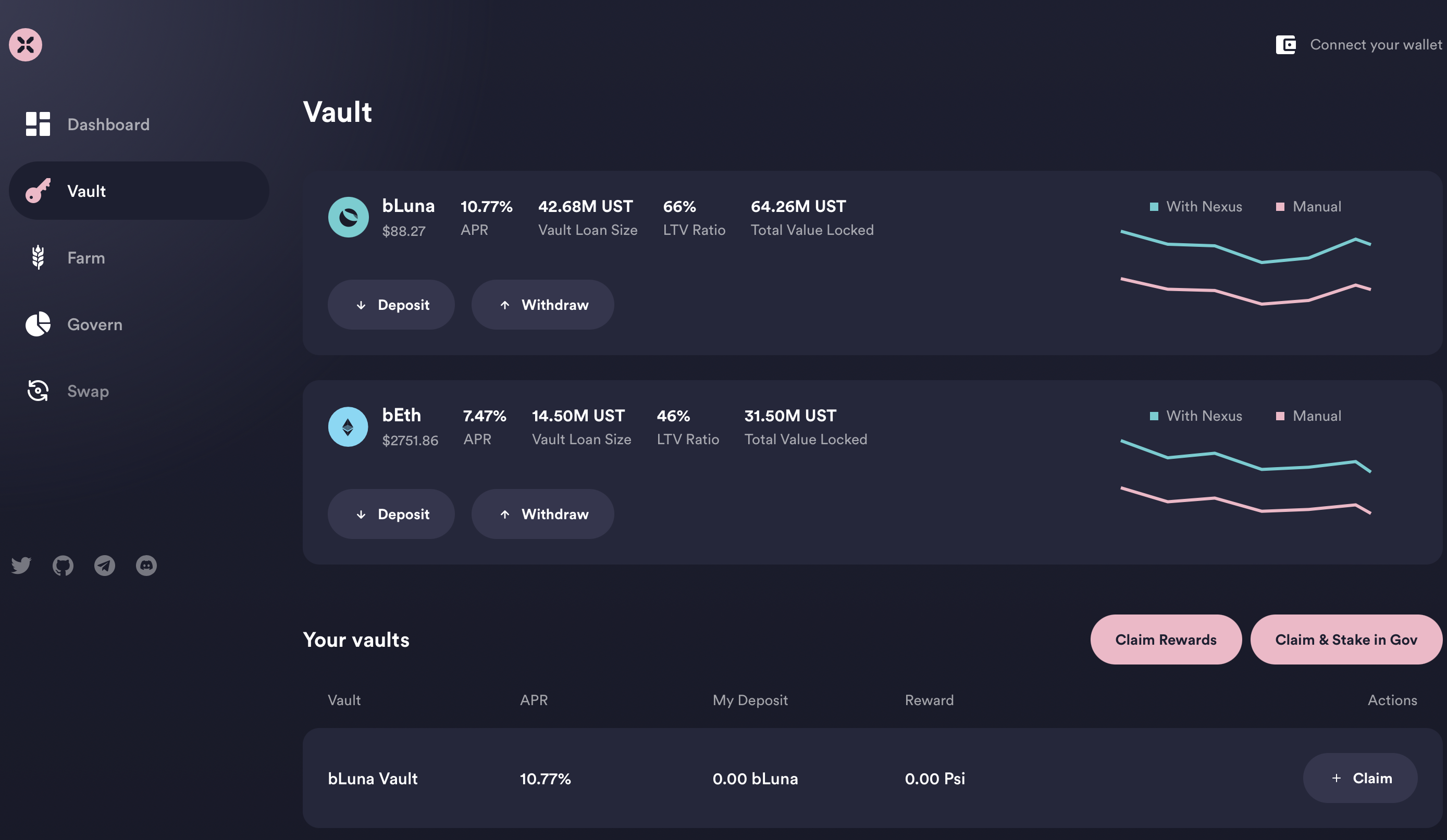
Currently Nexus only supports revenue optimization for Anchor. Users deposit bLUNA or bETH into the Vault and receive nLUNA and nETH as certificates. The deposited bLUNA and bETH will be deposited into the Anchor according to Nexus' previous income strategy and lent UST for savings operations, and the income generated will be paid in the form of Psi Token. Recently, the Nexus team announced a partnership with Prism on Twitter, which will support revenue optimization for Prism in the future.
Prism
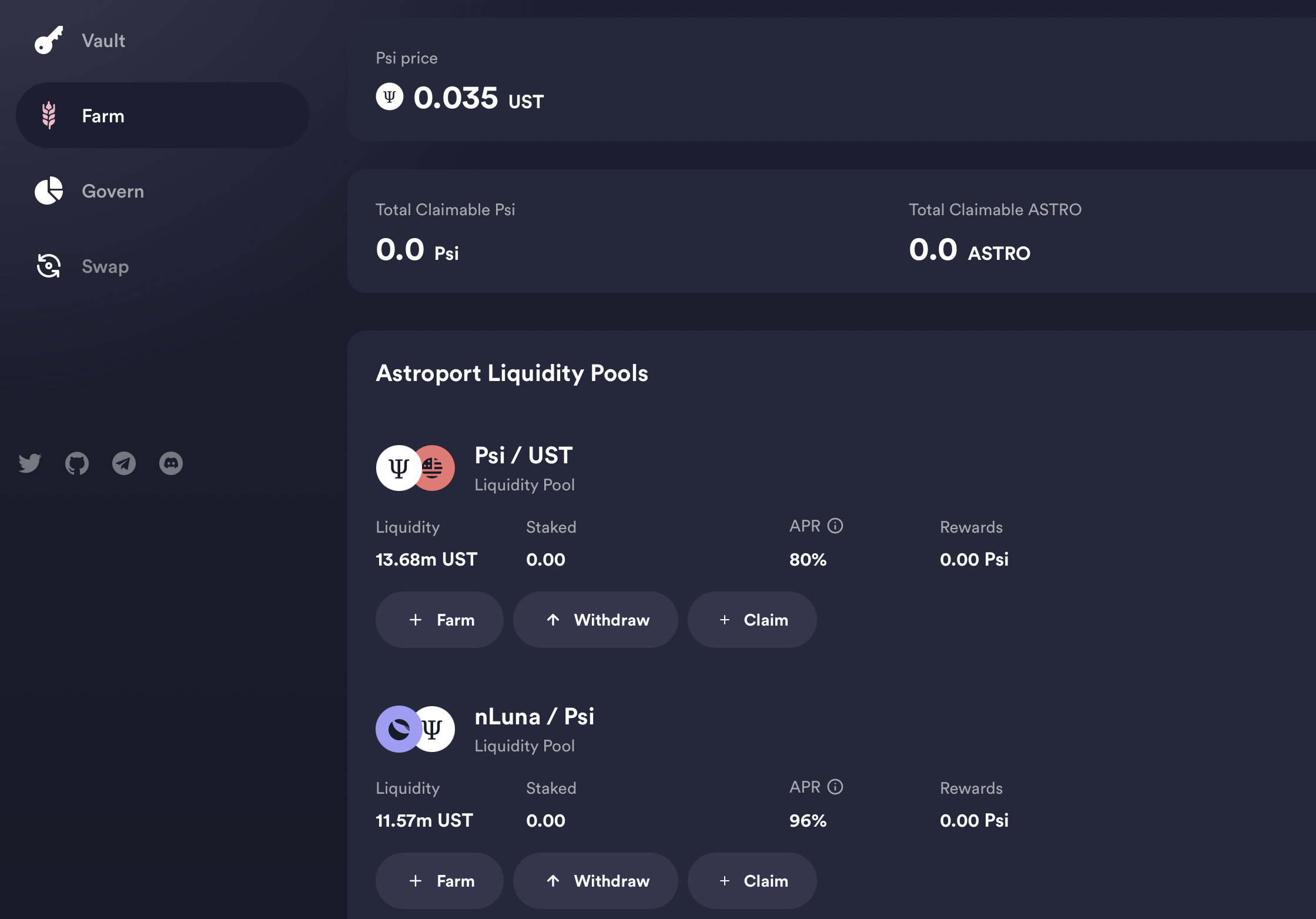
At the same time, users can also put their nLUNA into the liquidity pool on Nexus, and the agreement will automatically provide it to Astroport and earn Farming income, and finally pay rewards in the form of Psi.
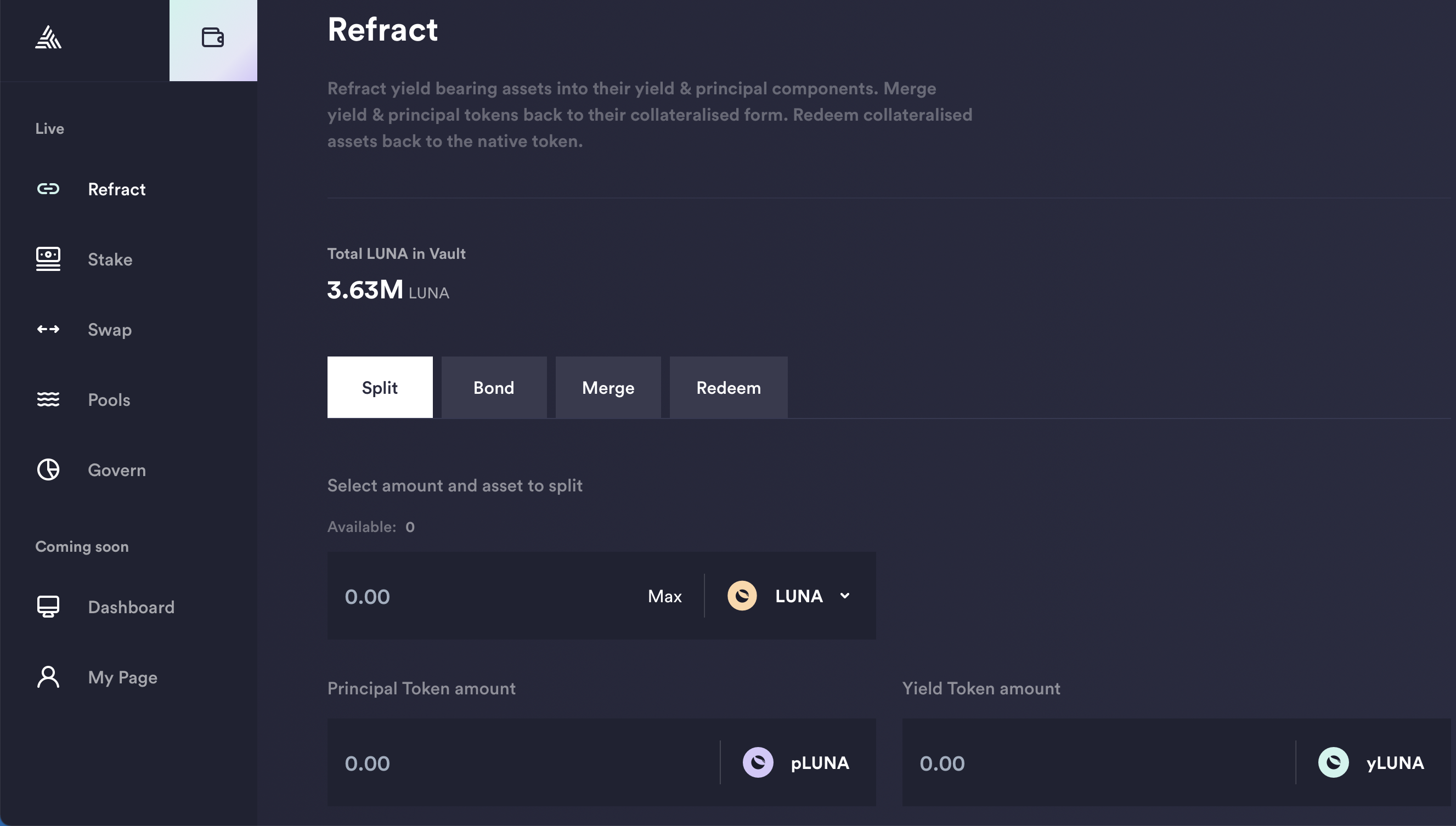
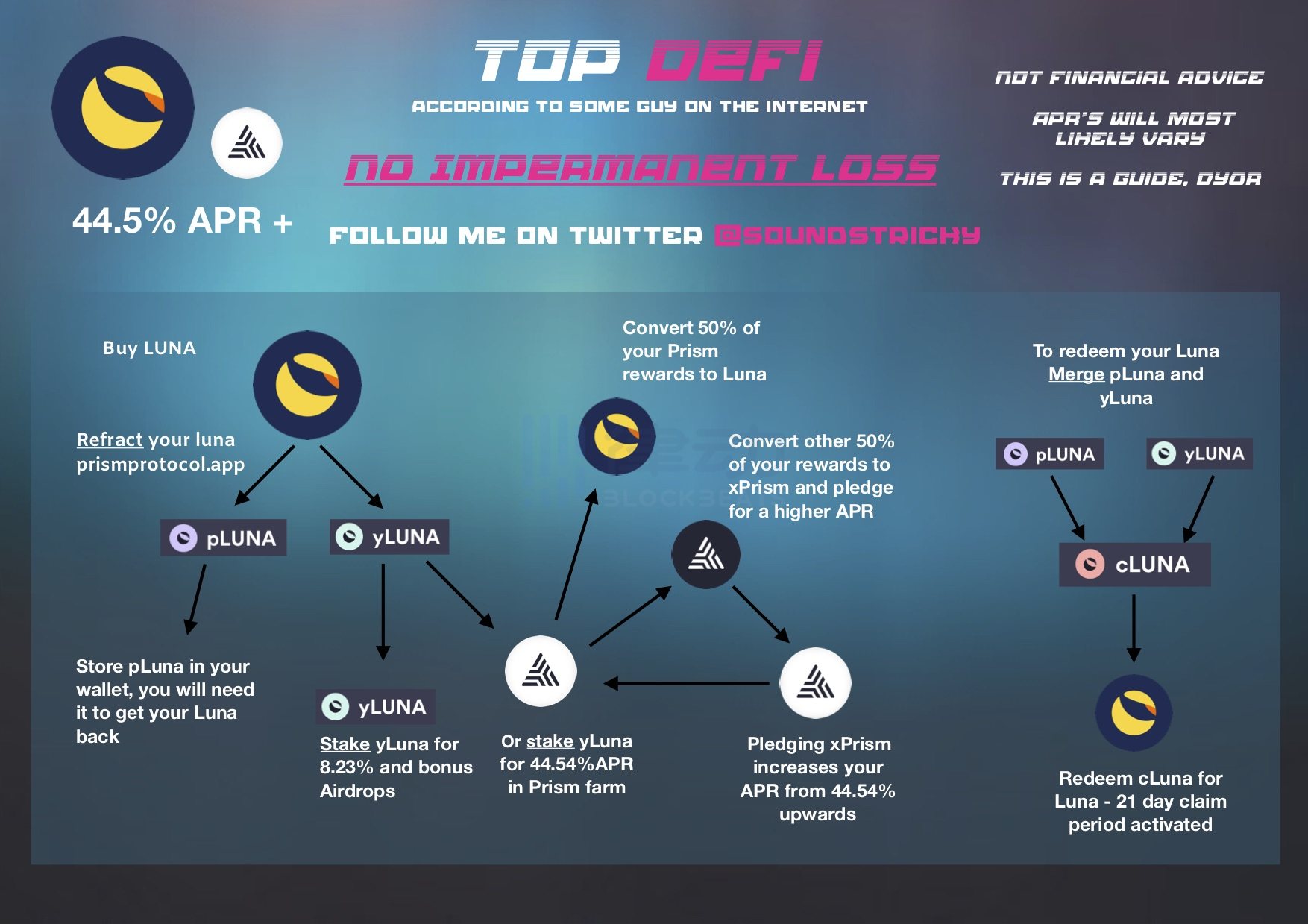
Prism is a derivatives protocol for LUNA. By decomposing digital assets into two different parts, the income component and the principal component, it helps users manage the risks of price fluctuations and unstable income in a simple and efficient way.
Edge Protocol
Users first need to stake their LUNA on Rrism and receive cLUNA as a certificate. The cLUNA can be decomposed into the main component pLuna (principal LUNA) and the income component yLuna (yield LUNA), where staking yLUNA can get staking rewards and airdrops, while holding pLUNA does not have many income options. Of course, there is a difference in the price of pLUNA and yLUNA after decomposition, so there is also room for arbitrage for traders.
Edge Protocol is currently in beta version. It is similar to Abracadabra in Terra Ecology, allowing users to use their interest-earning assets as collateral for lending operations, which further improves the application composability and capital utilization rate of Terra Ecology.
Stader
For example, users who have UST savings on the Anchor platform can use their aUST as collateral for loop operations on Edge to increase their fixed APY. Of course, users can also choose to lend other assets to participate in various DeFi activities, such as LunaX.
secondary title
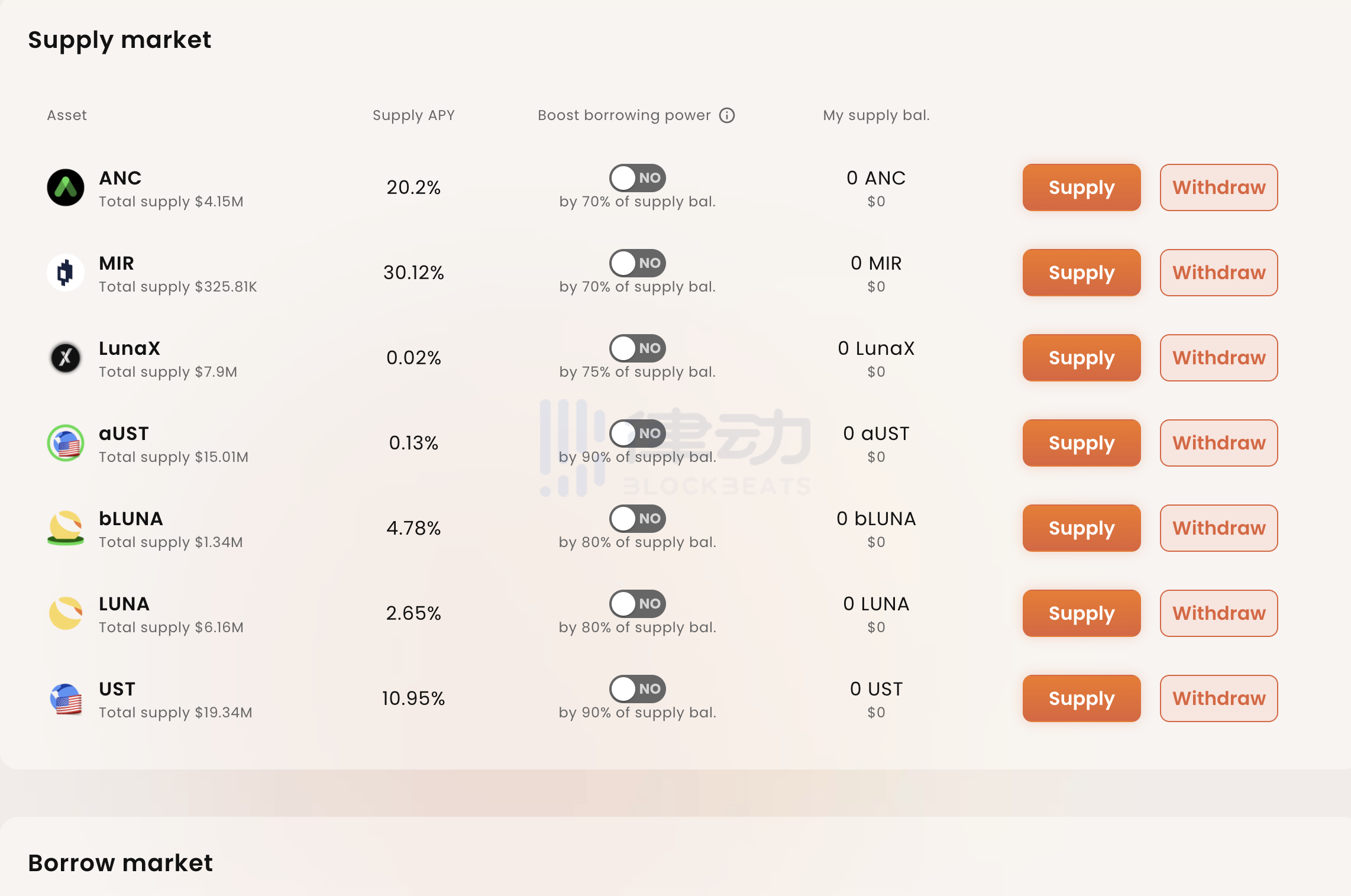
LunaX is a liquid pledge derivative of the Stader platform. It is similar to aUST and is an auto-compounding accrual token.
ORCA
Users can pledge LUNA on Stader and accept LunaX certificates, use LunaX as collateral to lend UST and LUNA on Edge, and deposit part of them in Anchor and LunaX-LUNA liquidity pool. Then use aUST to lend synthetic assets on Mirror to achieve compound interest.
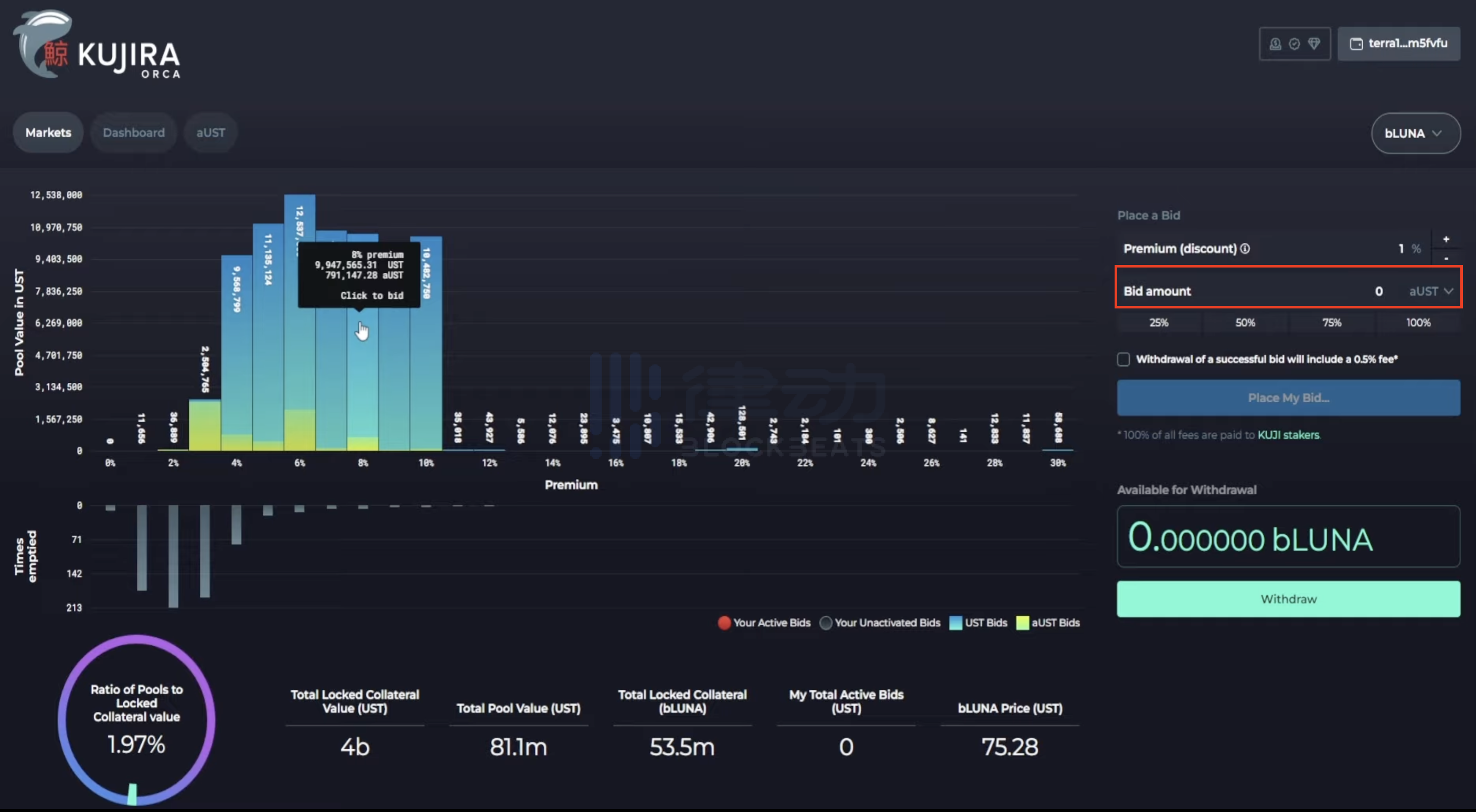
ORCA is the first product of the Kujira team. It allows more DeFi users to participate in the liquidation and arbitrage of the Anchor platform, because ORCA supports liquidation with aUST.
Apollo DAO
Users can first convert LUNA to bLUNA or LunaX, borrow UST at Anchor or Edge and deposit it in Anchor. Then use the aUST certificate to carry out liquidation and arbitrage on ORCA to increase your own pledge income.
secondary title
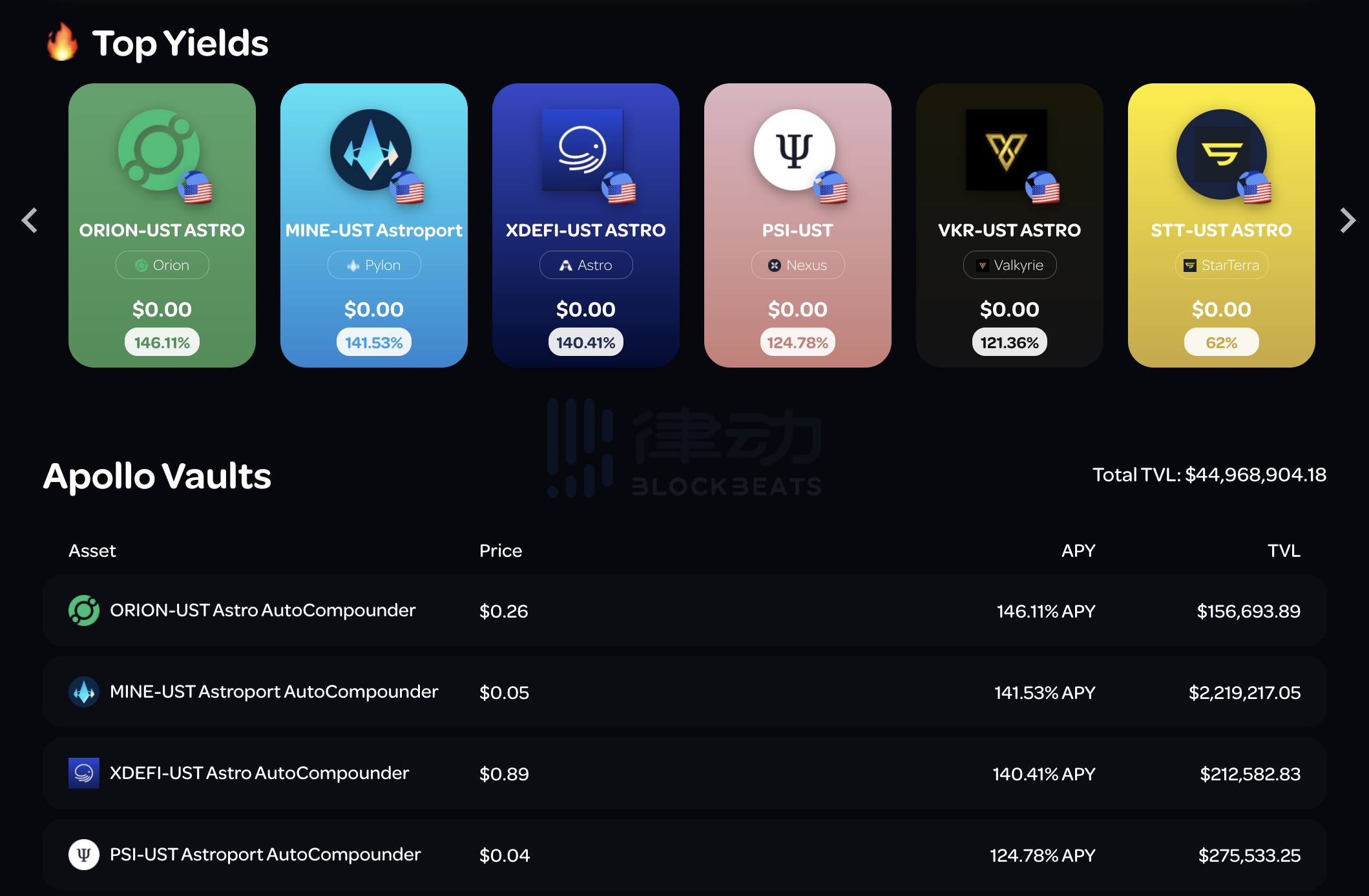
The unique feature of Apollo is that users can deposit UST directly, and the protocol will automatically convert it into the corresponding LP Token for you and start generating income.
Osmosis
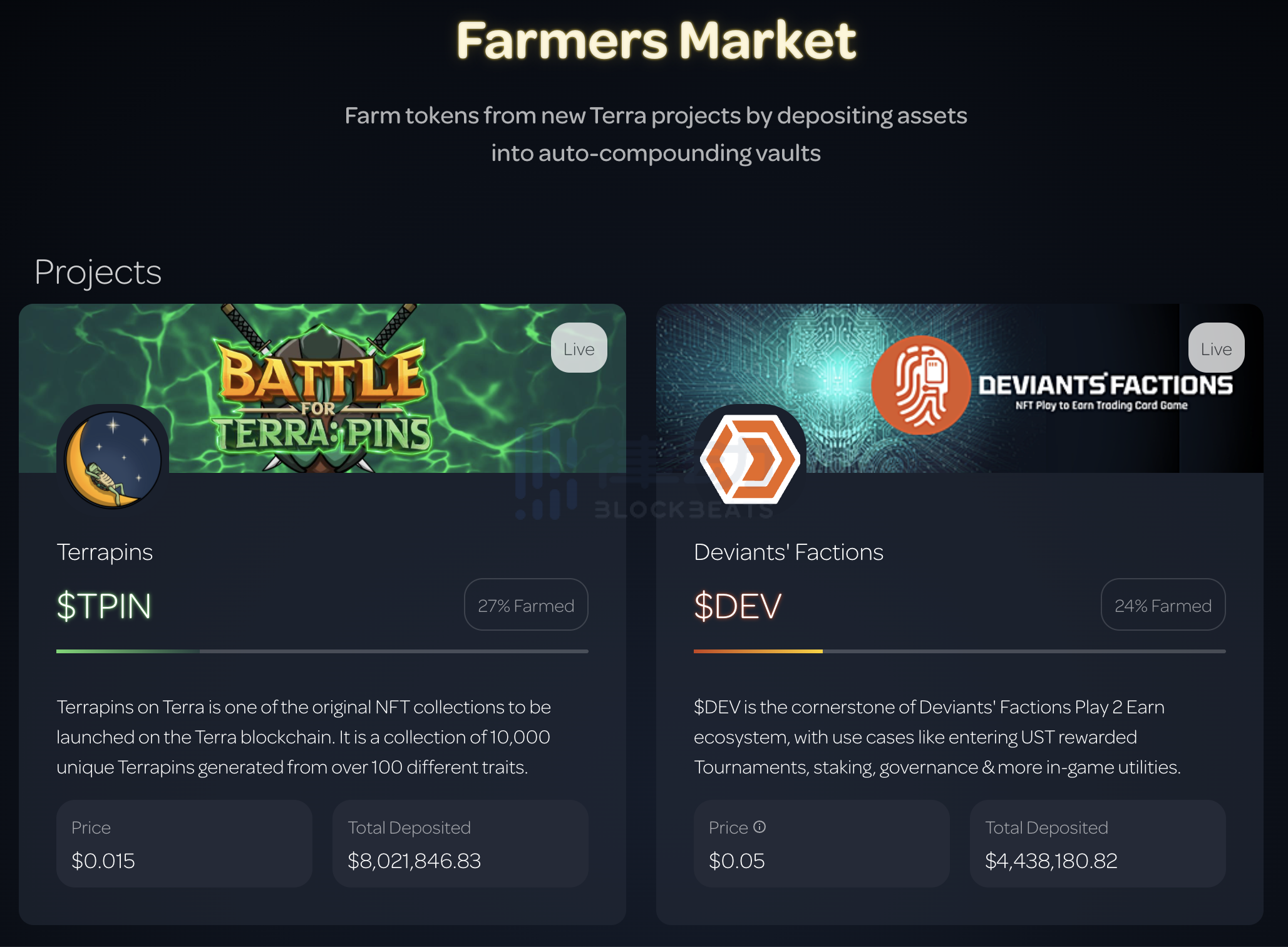
Apollo's "Farmers Market" is also very interesting. This is a Launchpad, but the difference is that it uses Farming to start new projects and provide them with liquidity. Users also only need to deposit UST.
secondary title


