






In-depth discussion of DAO collaboration methods: how to guide and motivate people to work for DAO?


Original Author: MIDDLE.X @ PAKA Labs
Original source: PAKA
Original Author: MIDDLE.X @ PAKA Labs
Original source: PAKA
This is the second article in the PAKA DAO series. In the previous article, we discussed DAO around Token and governance, and this article will focus on people and collaboration. We will answer the following questions:
1. What is the organizational structure of DAO?
2. How does DAO work and how do members coordinate
3. According to the degree of participation, who are the different contributors in the DAO
4. How DAO guides and motivates people to work for DAO
There are Venture DAO and NFT DAO that focus on investment and pursue financial returns, Grant DAO that distributes funds, Protocol DAO that manages agreements and pursues the provision of public services within a reasonable profit, and there are dedicated to serving members and creating Social DAO (or club-style DAO) for social opportunities.
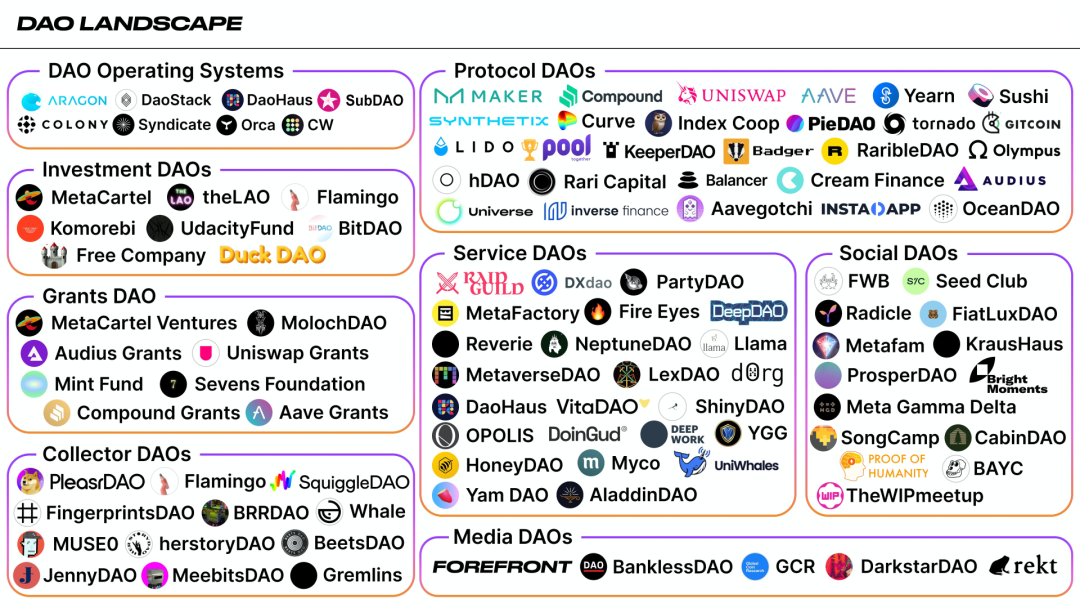
We can take a look at the DAO ecology through the following picture:
image description
*This picture is modified and updated based on DAO Landscape produced by @Cooopahtroopa
No matter what kind of DAO it is, in order to achieve any goal, it is not enough to have a democratic governance layer. It also needs a strong executive layer and someone to do things. In terms of the choice of execution layer, many DAOs choose to rely on a centralized team. This choice has its rationality and efficiency advantages, but it is far from the DAO we expected.
With the development of DAO, Community DAO with stronger community collaboration attributes, wider business scope and stronger creative ability has emerged. Community DAO also represents the future of DAO. The discussion of DAO collaboration methods in this article is basically based on Community DAO based on.
1. Organizational structure of DAO
To understand a type of organization, we should first start with its organizational structure. As a decentralized organization, what is the structure of DAO? What are the similarities and differences with corporate organizations?
The DAO organization will set up several skill groups, also known as Guilds, according to business needs. Each guild gathers people with specific skills who are willing to contribute to the organization. These guilds look like divisions in a corporate organization, but they are completely different. Everyone here can decide what to do, what not to do, what projects to participate in, and what projects not to participate in. We can understand these guilds as the DAO's talent pool.
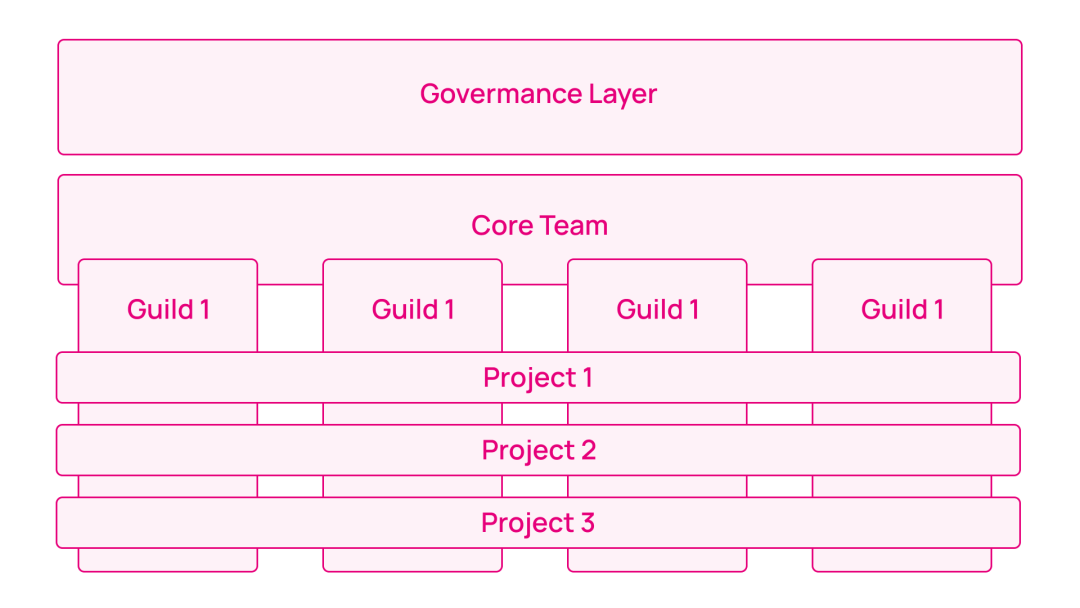
DAO can operate multiple projects at the same time, and each project team has multiple members, and these members come from various guilds. Projects and guilds form a vertical and horizontal structure, which is the organizational structure of DAO, which can be expressed in the following figure.
image description
The picture is quoted from "Wang Chao: The Productivity of DAO"
2. How DAO works
Under such a vertical and horizontal structure, there is no subordinate relationship between members, and the power is distributed in the hands of everyone, so how is the work carried out? In fact, in business management, there has long been such an exploration, that is Holacracy. The operation idea of DAO coincides with Holacracy. For example, each guild of DAO has a coordinator who assumes the responsibility of cross-group communication, but they are different from department managers and cannot decide everyone's work, which is very similar to holacracy.
Projects and tasks
The work of DAO is carried out more through the project system. Any member of DAO can initiate a project. If you have a plan to promote DAO to achieve its goals, then you can initiate it as a project in the community. Then, you need to promote it in the community to get enough support for your project . The community votes on whether to fund your project. If your project is successfully funded, you will be able to recruit members from the DAO's various guilds to complete it.
This is different from the working model in the company. In the company, if you want to initiate a project, what you need to win is the approval of the boss, and then he will allocate resources for you to complete the project. Of course, the difficulty of convincing a single person may be the same as persuading a group of people, and a group of people may not necessarily make the right decision better than one person. The DAO's approach embodies more democratic principles than efficiency principles.
The project will be decomposed into tasks. There are two types of tasks. One is a bounty task with a short cycle and clear delivery. Completing the bounty task can directly get the bounty and also get a part of the contribution value. There is also a project task with a high degree of collaboration. The threshold for receiving the project task will be relatively higher, and the reward cycle for completing the project task will be longer. Generally, the completion of the project task will not directly reward the bounty, but will get the project dividend.
Contribution value, rank, medal
In DAO, completion of tasks generally results in contribution points, which are called differently in different DAOs, some are called reputation, and some are called experience points. Contribution value is not negotiable, but your contribution value will indirectly determine your future Token income and privileges (eg: white list). The contribution value determines your level, increasing the level can unlock more access rights, and also give you the opportunity to receive more tasks.
Discord
If you are a project manager, you will have certain powers. You can set the contribution value and member level requirements of the work in the project. Project members will get contribution value by completing the work. Most of the final project budget will be allocated to the project in proportion to the contribution value. member. Contribution value is one of the core elements of DAO organization operation, and we will elaborate further when we talk about distribution and incentives later.
Contributors can get corresponding medals when completing specific tasks. Medals have no financial value and cannot be transferred, but they have social value in the community and are proof that you have completed a certain challenge. These badges may go beyond recognition within the organization to become a cross-organizational proof of competence and become part of your Web3 resume.
The operation of DAO requires many tools, but the most important of them must be Discord. Almost every DAO has its own Discord group. Discord is a very scalable community management tool that can easily manage communities of hundreds of thousands of people.
Various tools are also used in the operation of DAO, such as Gnosis Safe, a multi-signature wallet for managing funds, and Rabit Hole, a tool for creating bounty tasks. As the DAO develops, more tools will emerge. We believe that a platform that can integrate many practical tools and realize one-stop fund management, task management, and contribution value management—a more powerful Discord is what DAO needs most. DAO framework service providers such as Aragon, DAOstack, Moloch, and SubDAO are working hard for this.
3. Talent inventory of DAO
The way DAO works reminds us of the "gamification organization" proposed by Kevin Werbach and Dan Hunter in the book "Gamification Thinking". DAO makes work more interesting through instant feedback, quantified achievements, social honors, etc. DAO organizations are obviously closer to gamified organizations than other forms of organizations.
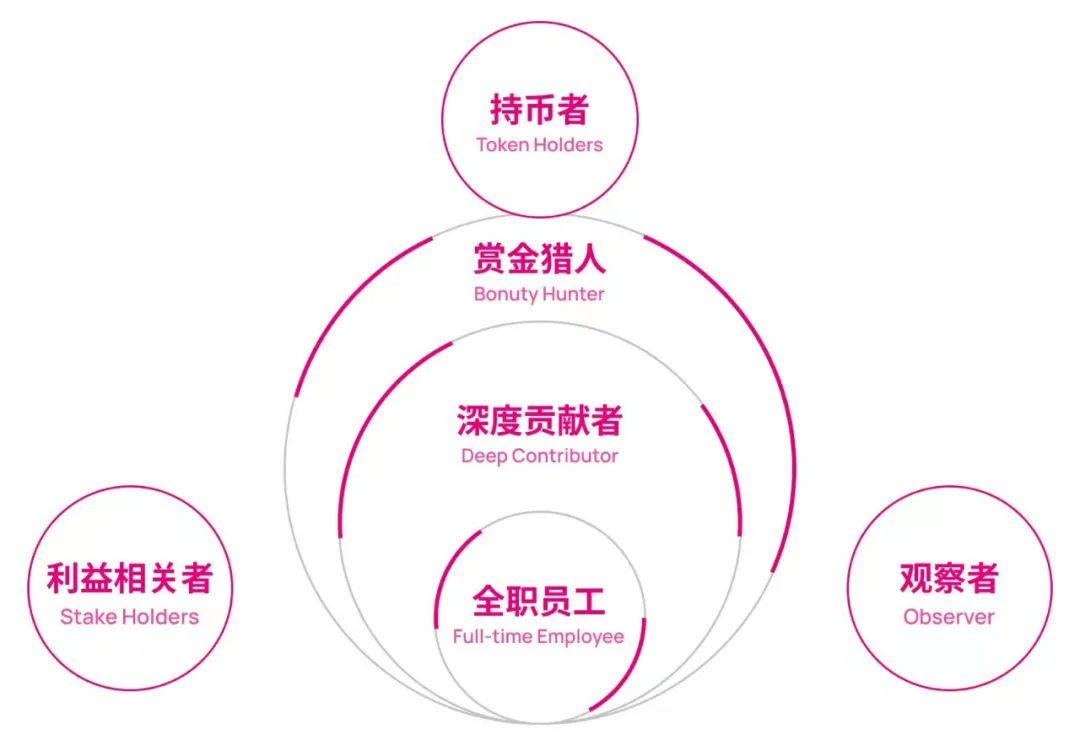
At the same time, we should note that DAO is an organization with blurred boundaries, and members are divided into different types according to their participation. Although members of DAO are distributed in various guilds and projects, their participation levels are not all the same, and some of them have not really participated, but are only potential participants. In order to understand the DAO organization more deeply, we need to make an inventory of the members of the DAO according to the degree of participation:
We divide them into explicit human resources and potential human resources. Explicit human resources include full-time employees, deep contributors, peripheral contributors (bounty hunters), and potential human resources include Token Holder, users and other stakeholders, and communities observer. As shown below:
explicit human resources
① Full-time employees
Full-time employees are DAO employees. They are usually appointed by the DAO organization or appointed by the chief community officer elected by the DAO. They undertake specific responsibilities, work for the DAO wholeheartedly, and receive remuneration or dividends from it. Concentration allows them to have a deeper understanding of DAO's contextual information, but in order to prevent full-time employees from dereliction of duty or arbitrage by relying on information advantages, other DAO organization members supervise and hold them accountable like public officials.
The internal coordination costs of a team of full-time employees should be as small as possible, so more is not always better. A healthy and efficient DAO organizational structure should be a capable full-time team + a large group of contributors. Friends With Benefits (FWB) provides us with a good demonstration: an excellent full-time community officer + 200 active contributors have created a miracle with a market value of over 100 million, becoming a successful example of a DAO organization.
② In-depth contributors
Although in-depth contributors do not necessarily work full-time for DAO, they also spend a lot of time extensively participating in DAO meetings, executing and completing various important affairs within DAO. In-depth contributors tend to highly agree with the goals and culture of DAO, and devote their main energy to DAO, and their time investment may even be greater than that of full-time employees. They have no employment relationship with the DAO, nor do they assume job responsibilities, but they have a strong sense of ownership and will take the initiative to assume job responsibilities. In-depth contributors who have made outstanding contributions and are irreplaceable can gain influence in the community no less than that of full-time employees.
The sense of responsibility of deep contributors may come from holding DAO Token, or from value recognition. In addition to actively completing the work of DAO, they may also think deeply about the future development of DAO, offer advice and suggestions, and even spontaneously initiate some projects and actions that are beneficial to the development of DAO.
③ Peripheral contributors (bounty hunters)
In order to fully mobilize the strength and wisdom of the community, DAO will tend to decompose part of the work into a large number of bounty tasks and complete them through crowdsourcing. Bounty tasks are tasks with clearly defined deliverables and short completion cycles, such as article writing, promotional material design, translation, social media promotion, etc. Bounty hunters usually look for bounty tasks in multiple DAOs to monetize their skills or resources. Not all jobs are suitable for crowdsourcing to bounty hunters, such as feature development and project management, which require close collaboration, are more suitable for deep contributors and full-time employees.
① Token Holder
Some bounty hunters like the freelance lifestyle and work as bounty hunters for a long time. But bounty hunters may also be some novices who want to deeply participate in the DAO organization. They are in a transitional stage of becoming deep contributors. They are accumulating contribution values by completing some peripheral work, trying to gradually get closer to the core.
potential human resources
Whether it is a full-time employee, a deep contributor, or a peripheral contributor, it is possible to hold DAO Token. People who hold Token are more willing to contribute to the organization and are more likely to become contributors. Conversely, active contributors can often Get more Token rewards and become a Token Holder. Although Token Holder will have a lot of overlap with other roles, in order to take a comprehensive inventory, we still need to consider it independently. Token Holder is an important force of the DAO organization. In addition to participating in governance voting, they can also passively provide key resources and make important contributions to the organization.
② observer
DAO organizations are often open (though not all), and anyone can enter the DAO organization's discord community or forum, see the organization's documents, browse chat records and meeting minutes. Observers have an initial interest in the DAO and thus enter the community, but they are not yet ready to become a contributor, just to hang out and have a look. If they are attracted to the organizational culture or a particular project or activity, they may become contributors.
③ Users, suppliers and other stakeholdersIn addition to its own internal members, DAO also has upstream and downstream roles (as stakeholders), such as users and consumers of products or services provided by DAO, suppliers and infrastructure developers who support the operation of DAO services. How to include them in the community and help and collaborate with each other is an important issue for DAO.After finishing the inventory,
We found that DAO has better human resource endowment than traditional corporate organizations, and has the ability to mobilize wider and more diverse human resources, which is also one of the sources of vitality for DAO organizations.
An excellent DAO organization can continuously turn DAO's potential human resources into explicit human resources, and turn peripheral contributors into deep contributors.
But to achieve this, DAO also needs to guide and train members to help them make better contributions, and at the same time, encourage members to make contributions through fair incentives.4. Guidance and trainingDAO is a kind of organization with blurred boundaries. The joining of members does not seem like crossing a boundary and entering the organization from outside the organization.
The journey of a DAO contributor is like getting into a game and going from rookie to master.
With the deepening of the journey, contributors not only get points, medals, grades and other obvious things, but also gain deep benefits such as sense of accomplishment and influence. A well-designed game will give players guidance and teaching on key steps, tell players what to do next, how to do it, and give timely feedback.
How an explicit HR DAO guides newcomers to their first steps
Onboarding newcomers to join is a critical step. When a newcomer enters Discord, facing a DAO with many channels and many members, he is very at a loss. DAO needs to carefully design the guidance process to allow new members to gradually participate.
Generally speaking, there will be an Onboarding Channel in the DAO discord, which contains some documents for newcomers to read. But this is not enough:
One: It is very important to open a novice task area so that newcomers can gain motivation and a sense of accomplishment by making some simple, low-threshold contributions. This may be a milestone for him to formally decide to enter the pit.
From the perspective of experience, new members should be allowed to gradually unlock more channels with the deepening of exploration and accumulation of contributions, instead of presenting all channels at the beginning, which may cause excessive cognition to new members burden. But from the perspective of openness, it is in line with the spirit of DAO to make all the content public from the beginning. Different DAO organizations may make different choices.
Second: In addition to using bots (robots) and documents to guide newcomers to join, DAO should not hesitate to invest a part of manpower as "real person guides", which will give newcomers a completely different feeling from bots. If the newcomer recognizes the values, feels the atmosphere of other people in the organization, and has initially completed some contribution tasks, then congratulations, your DAO has gained a new contributor.
How DAOs Cultivate Deep Contributors
When newcomers are familiar with the work, they can only do some bounty tasks at the beginning. These tasks are delivered clearly, with a shorter cycle, and can bring a sense of accomplishment faster. At the same time, this process can deepen contributors' understanding of DAO's business model and strategy. understanding of goals. Once the newcomer has completed the test at this stage and reached the corresponding level, the door of in-depth contributors will be opened. For contributors who are not content to be bounty hunters, they can now participate in more collaborative project tasks.
Unlike bounty tasks, project tasks have a long cycle and a high degree of collaboration, which means that if someone is not competent and does not complete the task, it will slow down the rhythm of the entire project. Of course, the DAO organization can downgrade or even eliminate such people through certain mechanisms, but we believe that an excellent DAO needs to be responsible for the growth of contributors just like an excellent company.
Contributors at different stages may need to learn different knowledge in order to be competent for the tasks of the next stage. Moreover, from the perspective of DAO organization, making learning materials and conducting training can also better develop the capabilities of contributors. In addition to the training content developed by DAO itself, with the development of DAO, professional Web3 educational institutions will appear. They will provide some general training content for different DAOs, and DAO can directly introduce these content without reinventing the wheel.
5. Contribution measurement and incentives
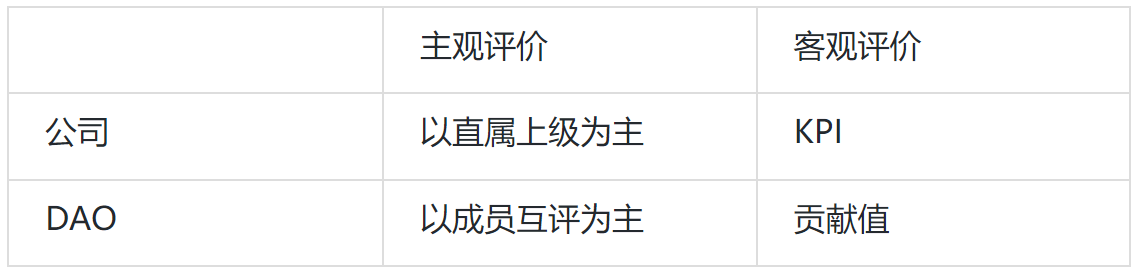
For the company, the goal is decomposed from top to bottom, from the head office to each department, and then from each department to each individual, and finally the company's strategy is transformed into everyone's KPI. There are two ways to evaluate KPIs, one is objective evaluation, which is measured by quantitative indicators formulated in advance, and the other is subjective evaluation, which is mainly conducted by directly subordinate leaders."The contribution measurement of DAO cannot jump out of the framework of subjective measurement and objective measurement, but the form will be different."action model
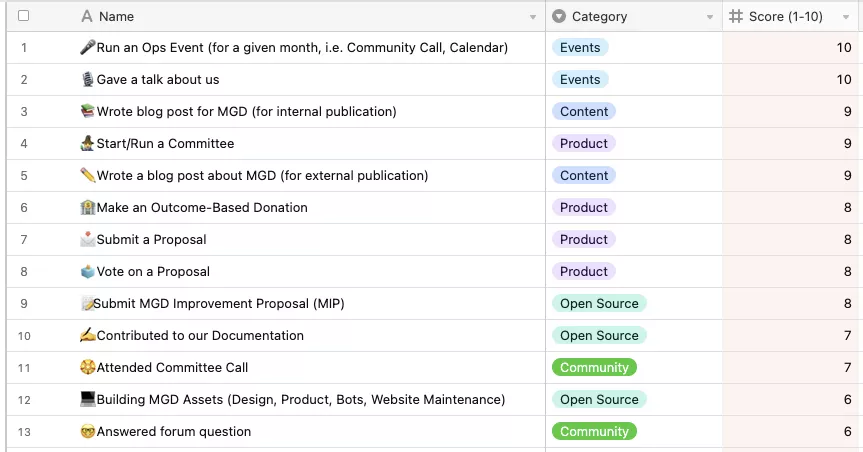
. Among them, the community can assign weights to different contribution types according to the set priorities. The community can vote to assign weights, but more often full-time staff are appointed to set them.
image description
Meta Gamma Delta Action Model on Govrn"Of course, this method is incomplete, and not all jobs can be weighted or scored, especially communication and operation jobs. This kind of work will fall on the shoulders of full-time employees, which is one of the reasons why DAOs must need full-time employees."Even if we have defined the weight of the work in advance, completed/not completed is not an absolute evaluation criterion. The quality of the completion and the smoothness of collaboration with others during the completion process are not included in the evaluation. Therefore, subjective evaluation is also indispensable. DAO does not have the bureaucratic structure of traditional companies, and contributors do not have a clear direct superior, so DAO tends to adopt similar
360 EIA"A method that allows contributors to evaluate each other. SourceCred, Coordinape, Grattitude, and Common Stack are all effective tools for mutual evaluation."Among them, Coordinape has proved its effectiveness in the practice of Bankless DAO. Coordinape will allocate a part of GIVE Token to each project member at the end of each working cycle. It is useless to keep GIVE in your own hands and must be distributed to other project members. The process of you assigning GIVE tokens is the process of scoring your collaborators, and the number of GIVE tokens you get in the end is yours
360 EIA
score.
Perhaps generating electricity for love does exist, but for most people, it is not feasible to work in vain. Therefore, on the basis of contribution measurement, DAO needs to design a mechanism to distribute rewards fairly.
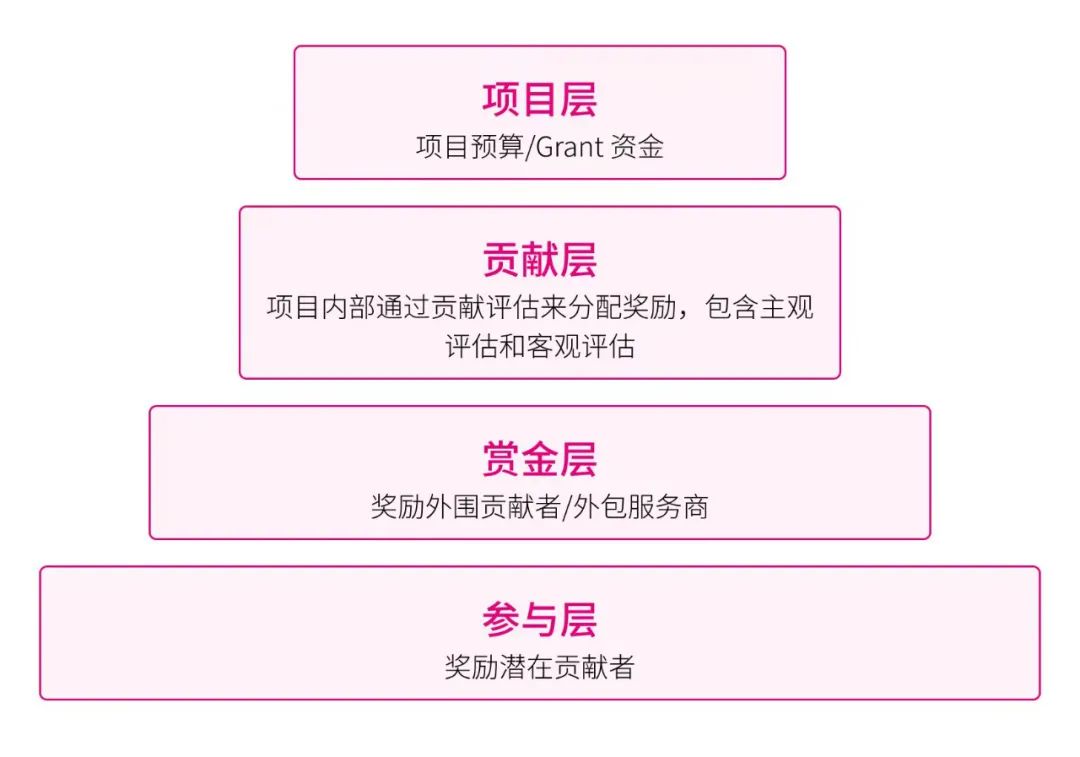
The main form of reward for full-time employees is salary, supplemented by performance bonuses and dividends. It is the same as the company, so I won’t go into details here. We mainly talk about how DAO rewards contributors. DAO's reward distribution for contributors can be summarized into four levels, namely project level, contribution level, bounty level, and participation level.
DAO will run multiple projects, and DAO will allocate budgets for these projects, or allocate funds in the form of Grant. These funds are directly allocated to projects, not individuals. This is the project layer. Within the project, rewards are distributed to project members through the contribution evaluation mentioned above, which is the contribution layer. The bounty layer uses bounties to reward external contributors or outsourced service providers. Bounties may come from projects or direct expenditures from DAO. Finally, DAO will also reserve some flexible funds to reward DAO participants. They may not complete bounty tasks or project tasks, but they actively participate in DAO meetings and online discussions, and have a certain degree of activity in the Discord group. They may also receive a portion of the rewards, which is not a large percentage but will incentivize these potential contributors to stay in the community.
6. Fractal and Expansibility of DAO
We know that due to the scale effect of the business, the scale of the company will continue to expand until the marginal benefit of the scale effect is less than the marginal cost brought about by the increase in internal coordination costs. The company improves scalability through bureaucracy, but too many layers also brings a series of management problems. So will DAO encounter scalability problems? How will the structure of the DAO evolve as the DAO scales?Practice shows that DAO will spontaneously evolve a fractal structure. Things will start from the uneven development of DAO's guilds and projects. In DAO, individual projects or guilds will gather more contributors and grow rapidly. For example, the development guild of Bankless DAO is particularly large, exceeding the number of other guilds The existing projects and tasks cannot meet their work needs, so some projects of their own have emerged within the development association; and the Indian branch of YGG DAO, indiGG, has developed much faster than other branches, so indiGG started It operates independently, issues its own Token, and forms an investment relationship with YGG DAO, becoming a structure similar to a "subsidiary".
This structure improves the scalability of DAO and keeps the project team lean. According to the "team theory", a closely cooperating project team should be less than 12 people, and there should not be too many projects in a DAO, otherwise it will lead to involution of resource competition.
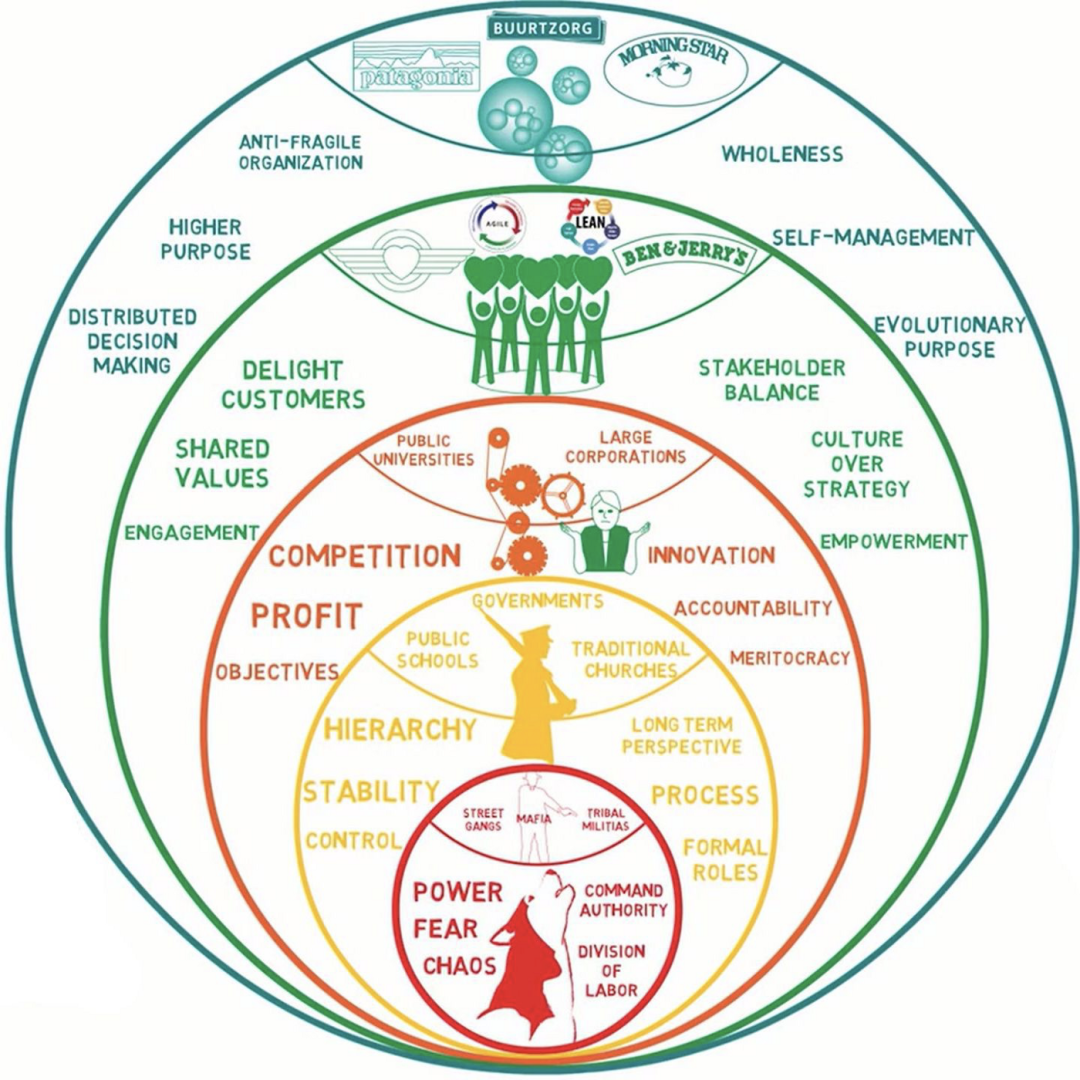
The structure adapts naturally, which is one of the most interesting aspects of DAOs. In Frederic Laloux's book "Reshaping Organizations", organizations are divided into several categories, including red organizations, amber organizations, orange organizations, and green organizations. Frederic believes that Teal Organization is the evolution direction of future organizations.
image description
Image quoted from Laloux Culture Model
In the cyan organization, members can self-manage, unite their body and mind, and become "super individuals". At the same time, the cyan organization can continue to evolve according to needs, so the cyan organization is also called an evolutionary organization. The DAO organization undoubtedly meets the meaning of the title of the cyan organization, and the widespread application of DAO is also a large-scale practice of the cyan organization.
7. DAO and the future
We are very happy to see that some cutting-edge management ideas, such as holacracy, gamified organization, and evolutionary organization, have been fully practiced in DAO. That's right, DAO is a pioneering coordination model, which is completely different from the organizational form in our inertial cognition.
We also need to realize that the practice time of DAO is still very short, and there are still many problems. Our previous descriptions of the DAO coordination model are all based on the experience of examining the existing DAO organizations. DAO will still develop and evolve in a way that is beyond our expectations, and it is still far from its end.
What excites us is that DAOs offer a possibility for people to work in a human way. Since human beings entered the industrial society from the agricultural society, although the material life has been greatly enriched, the living conditions may not be as good as before. We have become 996 social animals from farmers who work from sunrise to sunset, and are influenced by large companies. The exploitation has to be regarded as a blessing. The way of life in the industrial age is not as good as that of the agricultural age, just as the way of life in the agricultural age is not as good as that of the hunting age. With the development of society, our living conditions are decreasing all the way, and the emergence of DAO may stop this trend.
DAO gives us more opportunities to work remotely, away from crowded cities, and also gives us more choices. If you are a workaholic, you can actively contribute more energy. If you want to balance work and family, DAO organization also allows You only contribute part of the energy you can contribute, and you can even wander between different DAO organizations, and only contribute 1 hour to each organization, which is OK.


