






Gitcoin CEO explains why GitcoinDAO will become the kingdom of the encrypted world


Author: Kevin Owocki
Kevin Owock: Gitcoin's CEO and chief robot expert, systematically expounded his thinking on the past, current situation and future of GitcoinDAO.
groupthink
groupthink
Three major problems to optimize
ecosystem impact
decentralized
decentralized
governance
network effect
Activity
governance
vision
route map
vision
1. Groupthink
what is the most important Mission first.
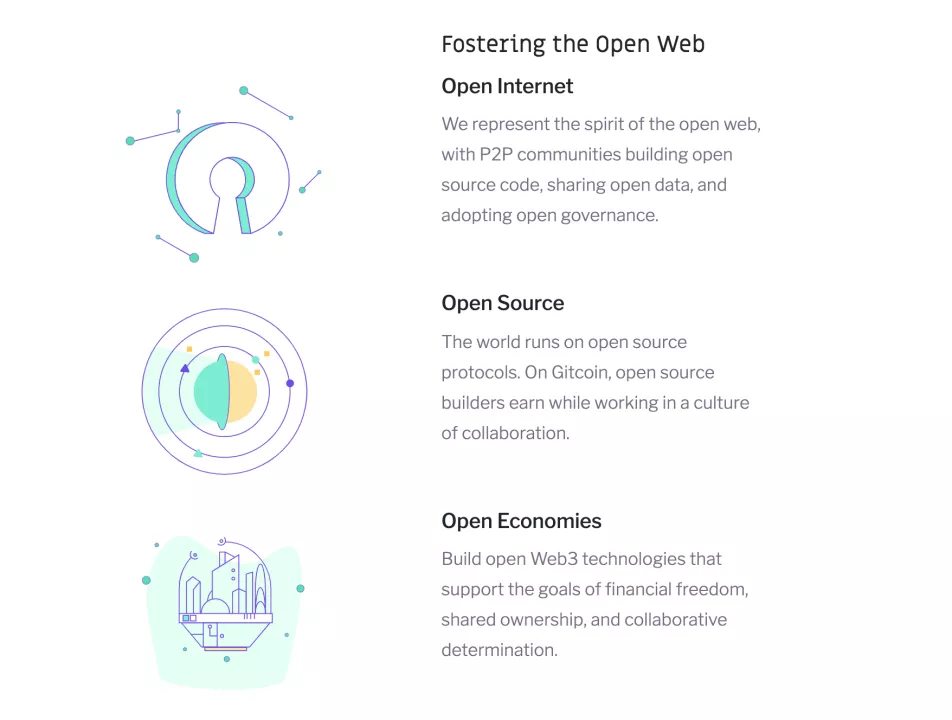
What really matters to the Gitcoin community? By doing less, doing what's important, and doing what's important to the extreme, we can create a bigger impact. As stated in Gitcoin's mission - to build and fund digital public goods; to support open source and the open economy.
This begs the question: what is truly essential if we want to expand our ability to achieve our mission? I'm happy to share my views. Please note these are just my opinions, and I'm just a node of the Gitcoin DAO network.
2. Three major problems that need to be optimized
As an engineer, I spend a lot of time on optimization problems. In computer science and economics, an optimization problem is how to find the best solution among all feasible solutions. This is a process of finding the global maximum by traversing the design space. I think that by optimizing the following three major issues, Gitcoin/GitcoinDAO can focus on achieving its mission.
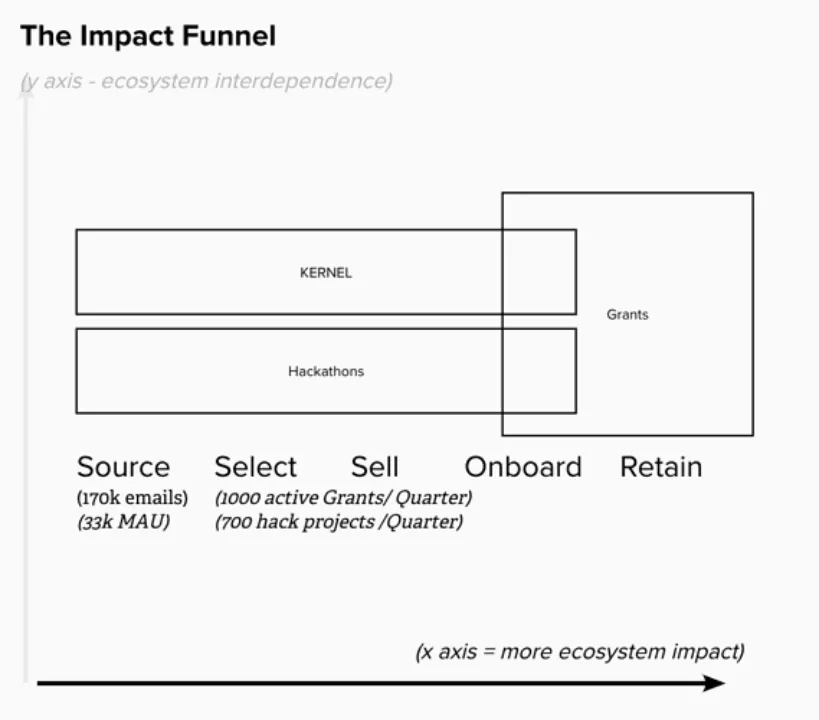
1>Ecosystem Impact How much positive impact do we have on the ecosystem?How many developers do we support? How many developers have we helped find new revenue, learning and connection opportunities in the open internet? How many developers quit their corporate jobs to pursue open source development? How many people stay in the ecosystem because of Gitcoin support? This influence acts like a funnel, as follows:
How many developers can we find new opportunities for?
How many developers can we help choose the right opportunity for them?
How do we help funders find developers? And how do we help developers find funders?
How can we bring developers into the ecosystem to have a positive impact?
How do we keep developers once they have made money in the ecosystem?
2>interconnection
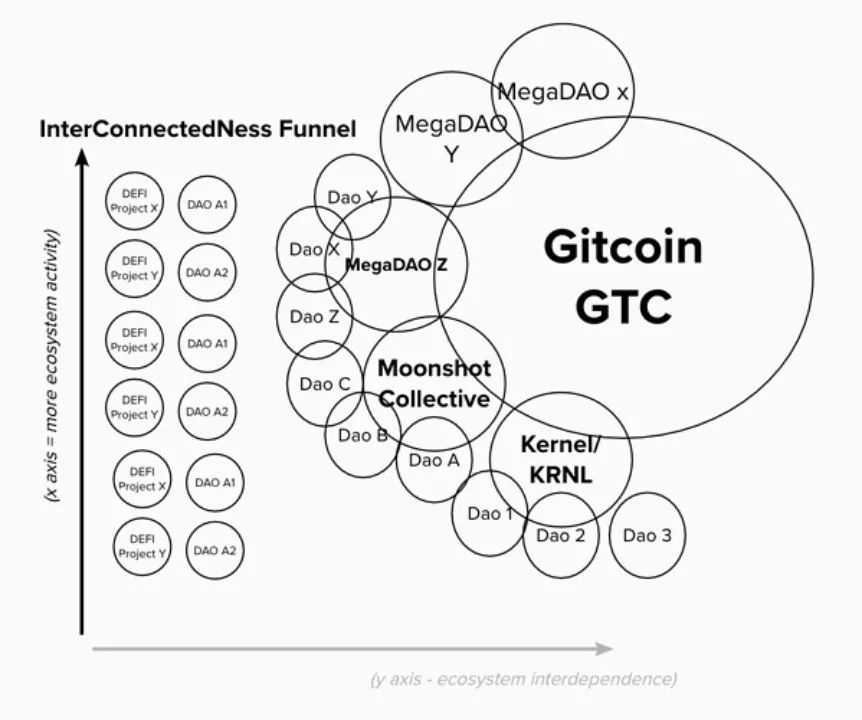
I firmly believe that everything is collaboration. As humans, we are interconnected and interdependent in order to survive. How can incentives be better aligned? How to deepen collaboration ability? I believe that as long as we solve this problem, we will be one step closer to realizing the mission of Gitcoin.
To align incentives and really deepen Gitcoin's impact on the ecosystem, I envision a DAO of many - a mesh network of interrelated projects. This DAO composed of DAOs will collaborate deeply in terms of software/culture, and may even exchange governance rights with each other.
decentralized
3>decentralized
Since the launch of Gitcoin in 2017, we have remained focused on our core mission. We didn’t just follow the crowd and waste energy writing lengthy white papers and doing ICOs. I am very proud of this. Because of its focus over the past few years, Gitcoin has had a massive positive impact on the world. At EthCC (Ethereum Community Conference), at least 20 geeks came up to shake my hand,"Hey, Gitcoin helped me, great". It feels great. Gitcoin is doing great, it helped provide $26 million in funding to OSS developers around the world. But during 2017-2020, Gitcoin We operate in a "centralized way", and we have not focused on decentralization. Given that Gitcoin has achieved phased results, we are now going to start thinking about governance. We hope to follow the best practices in the industry.
Antifragility - If I get hit by a bus myself, can Gitcoin's impact and mission still last?
Trusted Neutrality - Are Gitcoin's software and governance systems trustworthy and neutral, and are these mechanisms fair to all parties?
Right now the answer to these questions is no. So I believe it is time for decentralized governance to make Gitcoin more neutral and anti-fragile. This means finding practical, compliant ways to decentralize network governance, network computing, network development, and network economics.
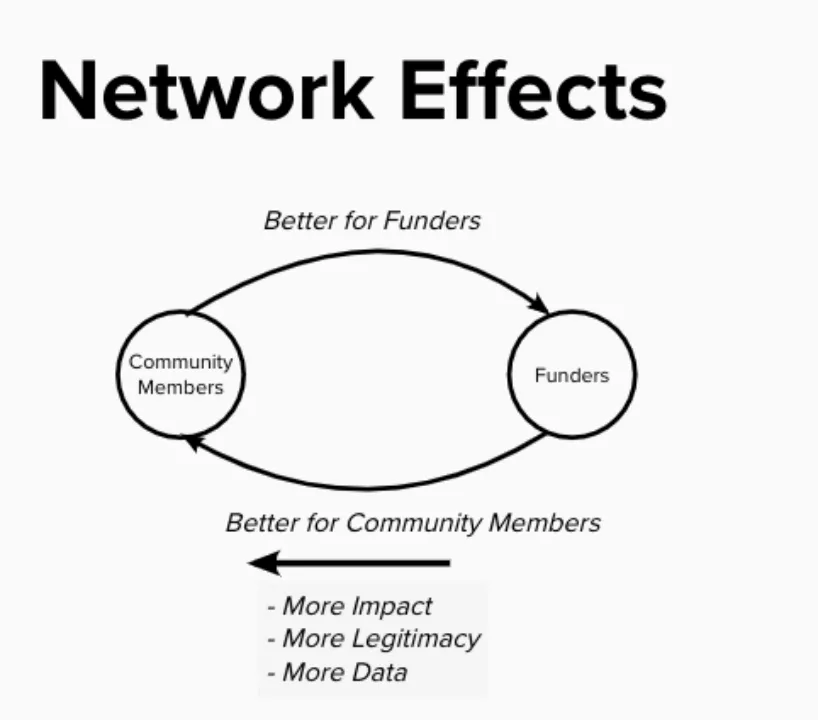
network effect
1>network effect
Activity
2>Activity
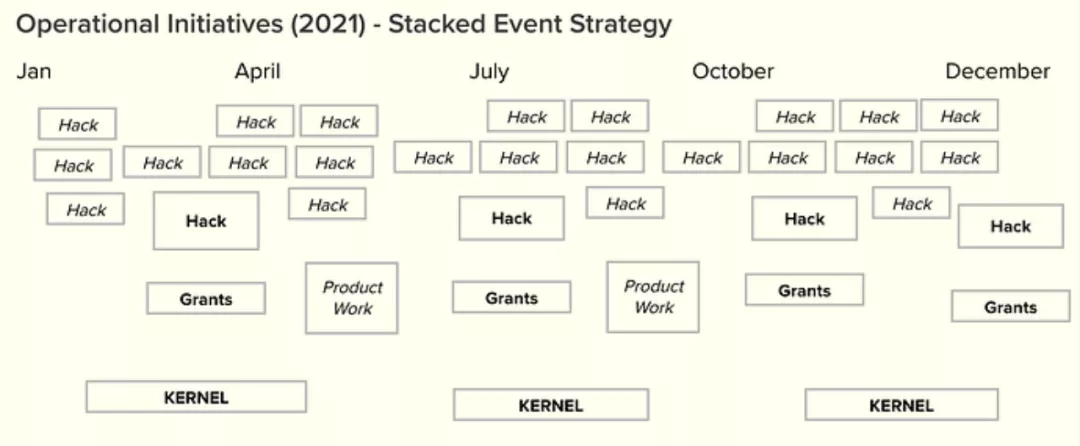
Through hackathons, incubators, and rounds of project donations, we have managed to get more people to use Gitcoin. each product
(1) Solve a problem for network participants,
governance
3>governance
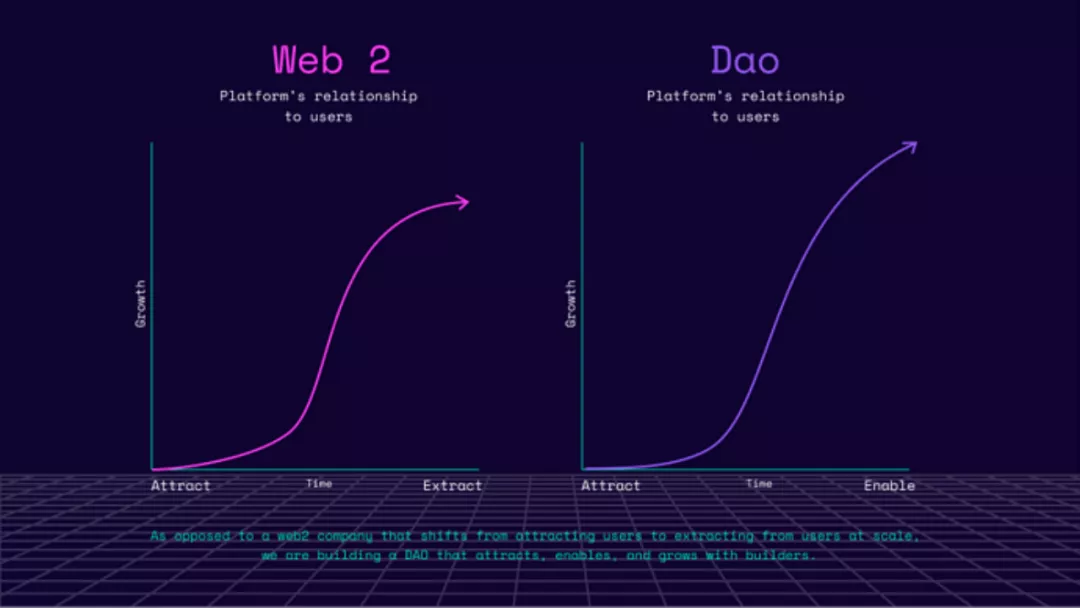
In the past 2-3 months, we launched the DAO, and a new group of leaders emerged in the DAO ecosystem. These leaders gain governance over the network and also lay the ethical foundation for how decisions are made in support of our shared mission. Gitcoin has chosen to delegate governance of the platform to a DAO, which will fully empower the community to govern itself. Our goal is to break away from the extractive web built in web2. Facebook, Uber, and Upwork all worked very hard to attract users in the early days, and once users couldn't leave due to network effects, they began to extract value from users. By building a DAO that is managed by users, we can break out of this extractive model. At GitcoinDAO, we want to attract members, empower them, and together become bigger, faster, and better for the benefit of the world.
4>DAO workflow
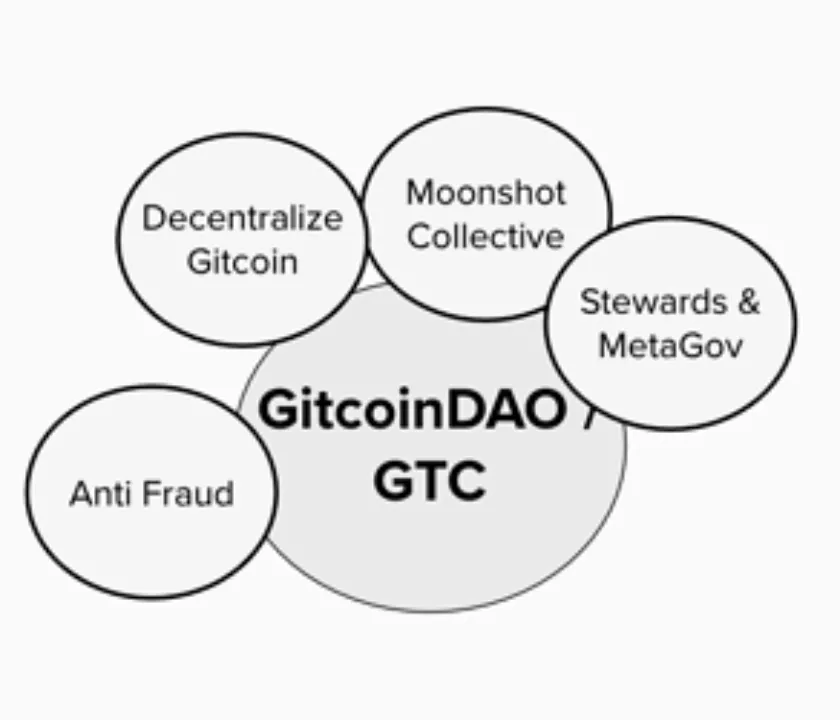
GitcoinDAO has launched several workflows, each spontaneously proposed by community members, each focused on its own goals.
Decentralized Gitcoin - A group of developers focused on the decentralized Gitcoin software stack. They applied for donations.
Moonshot Project - A group of developers focused on providing rapid prototyping software tools for DAOs and ecosystems.
Anti-Fraud - A group of community members focused on preventing fraud in quadratic financing.
Community Representatives - This group is focused on end-to-end governance of GitcoinDAO.
Public Goods Funding/Treasury Management - Workflow focused on future missions.
Decentralized meme, merch, and marketing workflows.
These workflows are structured as follows:
Over the past 3 months, through the operation of these workflows, we have begun to see a new way of software development emerge. The first (and most important) product GitcoinDAO built was dGrants - a decentralized version of Gitcoin donations (Grants).
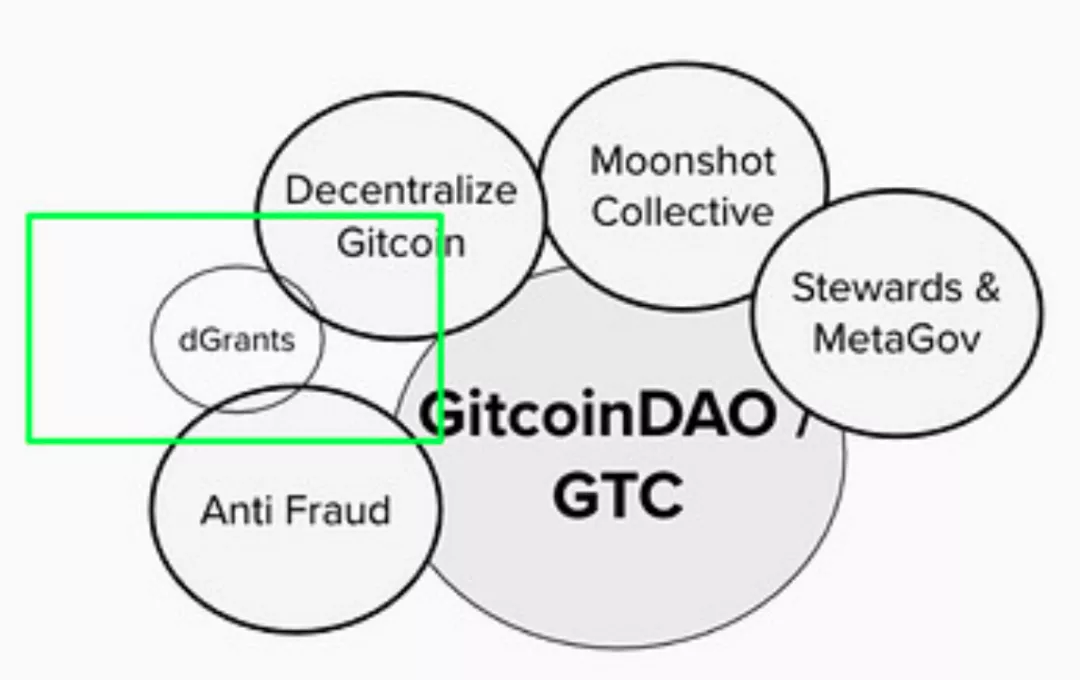
These products are all built through DAO, no longer based on centralized management. They were developed based on the following principles:
Simple - one product does one thing and does it well.
Anti-fragility - As long as decentralized products have good documentation, the community can operate by itself, without the need for a core team.
Modularity - easy unix-style interoperability between products.
"Decentralized way"products developed with"Centralized way"The products developed (Gitcoin during 2017-2021) vary widely. The latter has the following disadvantages:
Monolithic
unforkable
difficult to maintain
Management/maintenance costs are high
I realized in the second quarter of 2021 that with this"Centralized way"Gitcoin will not be able to continue to grow without developing software. Our progress is too slow and the overhead is too high. We need a new way of software development, a new collaboration mechanism. We need to build DAOs in a simple, modular, antifragile way. Moonshots and decentralized Gitcoin workflows were born. I think the cool thing about building software this way is scalability. After the moonshots, we saw the rise of 5 new projects, each with their own decentralized, modular approach to solving problems in GitcoinDAO.
dKudos, dQuests - Decentralized versions of Gitcoins Thank You Cards, Questions and Answers.
NFT Dance Off - A tokenized competition for financing public goods.
Quadratic Trust - A project utilizing quadratic funding, where the funds are social capital of users rather than financial capital.
dPopp - Decentralized sybil-proof aggregator.
Quadratic Diplomacy - A p2p tool for mutual donations between communities.
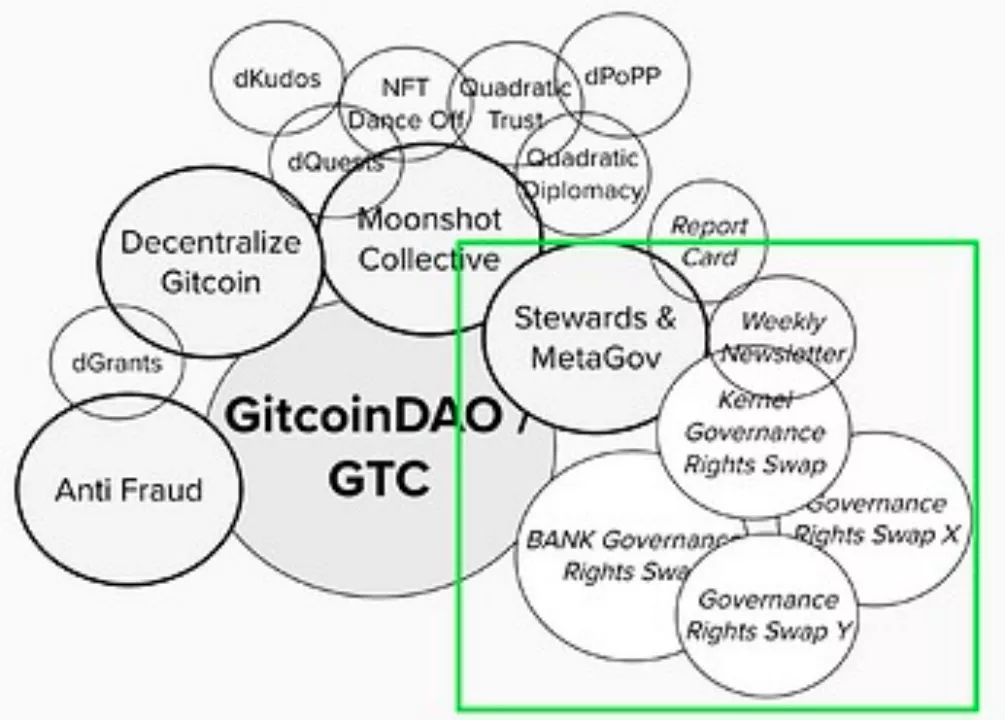
If Gitcoin exchanges governance rights with other projects in the ecosystem, I think the GitcoinDAO model (DAOs of DAOs) can be further expanded to enhance the interconnection between Gitcoin and the ecosystem.
4. Roadmap
"Rome was not built in a day". The same goes for decentralized Gitcoin. It will take time to realize it. There will be setbacks and there will be breakthroughs. There will be tears of sorrow and there will be tears of joy. In the end, we will prevail because our mission is worth all the effort.
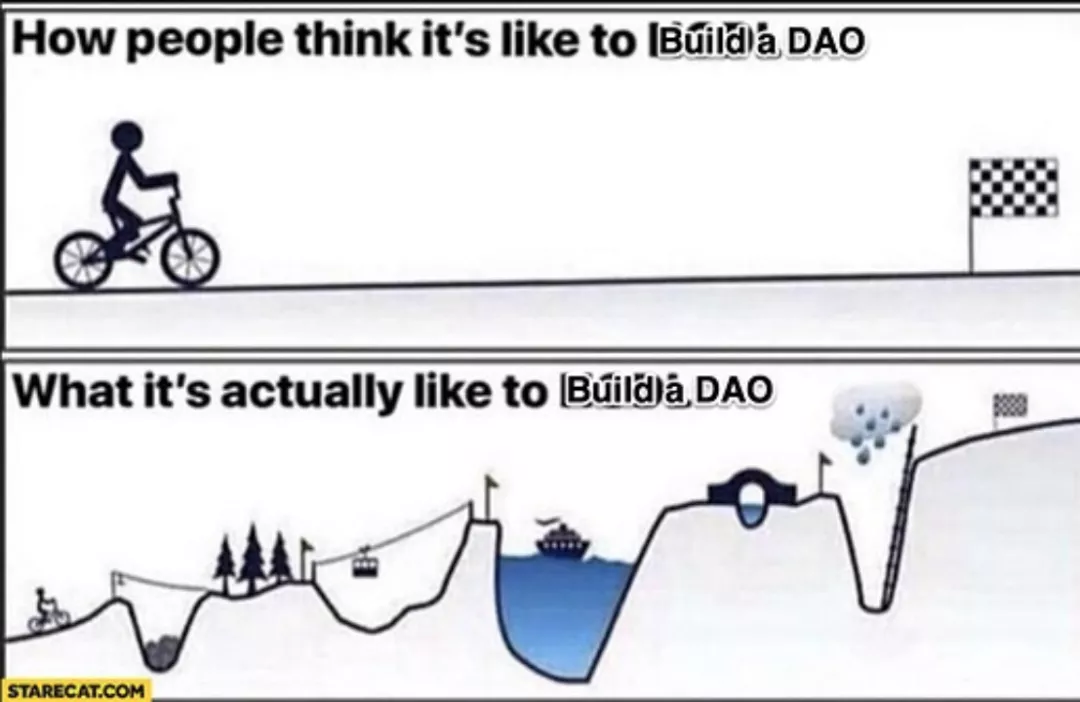
The growth I envisage can be roughly divided into the following stages:
Phase 1 - Stabilizing Governance
Phase 2 - Expand Impact & Scale Up
Phase 3 - Become fully antifragile & unaffected by scale
I will work with community representatives within the ecosystem to define the specifics of each phase.
5. Vision
1>A large experiment in quadratic financing
Quadratic financing is at the core of our mission. Gitcoin is one of the largest quadratic funding experiments in the world.
2>The developer funnel for the web3 ecosystem
Gitcoin will form a developer funnel for a huge web3 ecosystem, where developers gather.
3>Funding Open Source Software
Open source software projects often have no business model, and software engineers are reluctant to engage in open source software development. Gitcoin could empower tens of thousands of software engineers to work for the open internet.
4>"After DeFi, what's next for web3" story
Public goods financing is probably one of the biggest applications of Ethereum. After all we have programmable money and we value public goods, can't we build economies that finance public goods?
5>Gitcoin participates in enhancing the network effect of the web3 social circle
One of the reasons why web3 applications have not been able to hit web2 is the network effect of the latter. There are so many drivers on Uber, so many white-collar workers on LinkedIn, so many people watching on Facebook. What's the point of web3 solutions without a network of these people. However, this may change with the introduction of decentralized reputation tools such as Ceramic Network and SpruceID. For the first time in history, user identities can be transferred across networks. You can transfer your identity from one web3 dApp to another web3 dApp. Gitcoin needs a decentralized database anyway, so why don't we start a web3 social network? Of course, under the premise of complying with the privacy policy.
6>Resolve all collaboration failures
Collaboration failure is the most important unresolved problem
The reason why our web3 community members participate in the web3 space is the"The underlying reasons "are failures in collaboration (such as insufficient funding for open source software).
Web3 is very powerful
Web3 provides us with a new tool for establishing a collaborative mechanism.
Software is eating the world. We will ride the waves.
In the era of "software is eating the world", solving software-based collaboration problems is the starting point for us to start solving global collaboration problems. If we can address the failure of collaboration within software ecosystems, we can create a model for the rest of the world to reinvent public goods financing, creating momentum for solving a variety of collaboration problems.
we solve from"Web3 Collaboration Failed"start
Here is one possible vision for how to solve software-based collaboration problems:
I>GItcoinDAO is building a generator - a function capable of spawning other functions - for solving collaborative problems.
II>The development of GitcoinDAO benefited from the first two collaborative tools - "Contribution" and "Hackathon". The end result is a DAO of many DAOs, an interconnected structure of DAOs with aligned incentives and dozens of collaboration tools that enhance collaboration between different DAOs and within DAOs.
7>moon landing program
one"one"Collaboration mechanism, but build services for"all"What about a generic mechanism generator for collaboration! ! ! If GitcoinDAO can successfully become the go-to for developers of all types of collaborative tools"Schelling point"(Schelling point), then we can help solve some of the systemic collaboration problems plaguing the world.
8>A United Nations in the age of encryption
Of all the visions, this idea is the least explicit. I bring it up just to stimulate discussion. The term "UN in the age of encryption" seems far-fetched and a bit silly, but it's a completely analog way of thinking about the problem space. After all, we don't call cars "modern wagons" anymore. This all begs new questions: "What is diplomacy in 2021+?". After all, the United Nations was established in the early to mid-1900s, and diplomacy in the industrial age was very different from diplomacy in the information age. If we really believe that everything is collaboration, then we have reason to believe that there will be a "Schelling point" (Schelling point) - a common point where different ecosystem players can come together, engage in diplomacy and deeply collaborate with each other.
9>The Experimental Community of the Metaverse
Metaverse is the vision rooted in the hearts of all web3.0 enthusiasts. Web3 is at the forefront. Developers, capital, and creativity will all gather in Gitoin to create the future together. Looking forward to the next 20 years, Gitcoin hopes to become the open source accelerator of the metaverse, where the latest technology, the latest collaboration tools, and the latest art will be produced.


