






STRC not pegged, BTC won’t see a bull run


- Core Thesis: Strategy’s preferred stock, STRC, has remained "unpegged" by nearly 25%, rendering its most critical funding channel essentially ineffective. The company now faces an annual high cash dividend burden of over $1.2 billion. Its business model is shifting from a perpetual "raise capital to buy Bitcoin" cycle to relying on diluting common equity to maintain cash flow, posing a potential selling risk for the BTC market.
- Key Factors:
- STRC’s price has fallen below $80, representing a 25% de-pegging from its $100 par value. As a perpetual preferred stock, its low-cost financing function has been disabled by the secondary market discount, making it impossible to issue new preferred shares at par value.
- STRC’s annual cash dividend expenditure exceeds $1.2 billion. Strategy’s cash on hand is only about $1.4 billion, insufficient to cover nearly a year’s worth of dividends, creating heavy financial strain and default risk.
- Strategy is relying on common equity financing to supplement its cash flow. In the latest week, it raised $335.5 million, but only 10% was used to buy Bitcoin, with the rest replenishing reserves. This has caused the company's BTC holdings per share to decline from its peak, subjecting common shareholders to dilution.
- Within the current funding channels, issuing common equity dilutes shareholder interests, issuing debt carries high costs and increases rigid debt pressure, while selling BTC would impact market prices and weaken the company's core asset reserves.
- Since June, Strategy has relied on common equity ATM offerings for three consecutive weeks, but funds are primarily directed toward cash reserves rather than Bitcoin purchases. This indicates its role as the largest marginal buyer of BTC is weakening, and it may even transform into a source of selling pressure.
Original by Odaily Planet Daily (@OdailyChina)
Author: Azuma (@azuma_eth)
The "de-pegging" of Strategy's preferred stock STRC continues to worsen.
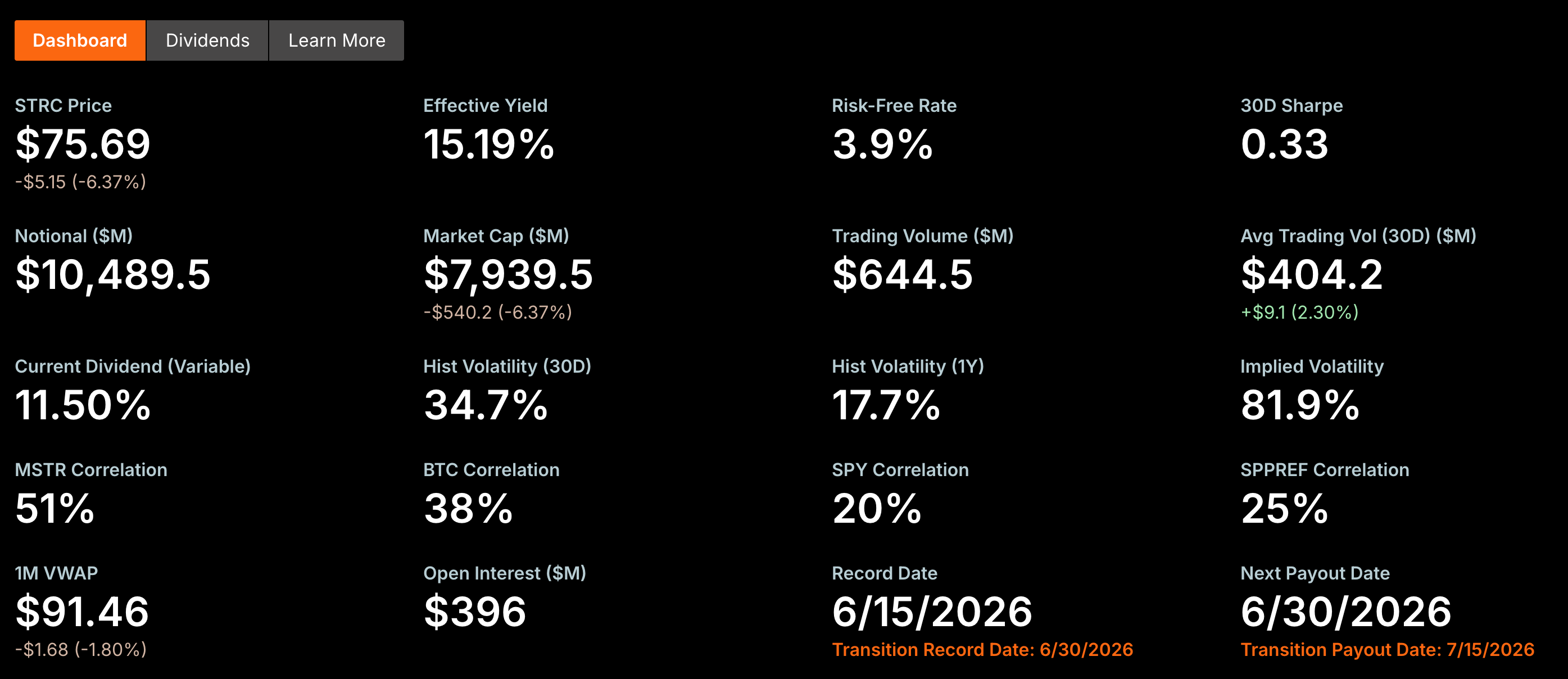
During US stock trading hours yesterday, STRC fell below the 80 mark for the first time, hitting a low of $73.62. Although it rebounded slightly by the close, the price was still only $75.69, representing a near 25% de-pegging from its $100 target par value.
Last week, we published an article about STRC's de-pegging situation, titled "STRC De-pegs by 11%: Can Strategy's Perpetual Motion Machine Keep Running?", which focused on the reasons for STRC's de-pegging and briefly outlined its potential future impacts.
However, based on community discussions, it seems many readers still don't fully grasp the severity of the consequences of STRC's continued de-pegging. So, I've decided to write another article to break down this issue.
Strategy's Most Important Funding Channel Has Failed
What exactly is STRC? In a nutshell, it is Strategy's cheapest and most efficient funding channel.
The essence of Strategy's business model is to continuously raise funds from the market to accumulate BTC, then raise more funds and accumulate more BTC. This is a cycle that must keep running. Strategy's high valuation largely stems from the market's belief in its ability to continuously raise funds and continuously buy BTC. As long as this funding capability exists, it can keep expanding its BTC holdings; and the ever-growing BTC holdings, in turn, further support market expectations of its future funding ability.
Over the past few years, Strategy has tried almost every funding method—issuing common stock, issuing convertible bonds, and issuing various types of preferred stock—before funneling the raised capital into BTC. Among all these financing tools, STRC was once considered by the market to be the closest to "perfect" and was Michael Saylor's proudest creation. Saylor once boasted that "STRC was designed by AI; humans couldn't have designed it."
As preferred stock, STRC has very clear advantages. Issuing common stock dilutes existing shareholders' equity; issuing convertible bonds burdens the company with future debt repayment obligations. However, STRC, as perpetual preferred stock, has no maturity date and does not dilute common shareholders, only requiring the payment of fixed dividends. For Strategy and Saylor, this is arguably the lowest-cost, most efficient method of funding.
From its inception, STRC was designed as a product anchored at $100. Strategy's idea was to dynamically adjust the dividend rate to keep STRC trading around $100 over the long term (does this feel like an algorithmic stablecoin?). As long as the secondary market could maintain this price, the company could continuously issue new STRC shares near par value, constantly raising new funds to buy more Bitcoin.
In other words, STRC's core value lies in its endless capacity to raise capital, but this capacity is predicated on its price maintaining stability near the target par value. When STRC is persistently de-pegged, this funding channel is effectively blocked. Because for any investor, if they can buy the same STRC for $75 on the secondary market, they won't participate in the company's new preferred stock issuance at nearly $100.
For Strategy, this means either constantly raising the dividend rate to attract capital (which has proven to have limited appeal) or accepting reduced funding efficiency from discounted issuance (which effectively breaks the original target par value). Either way, it means this fundraising machine is starting to experience increasing friction.
Fundraising Tool Has Become a Cash Flow Burden
If it were just a temporary failure of fundraising ability, it might be manageable. However, the bigger problem is that STRC requires Strategy to continuously pay substantial cash dividends.
According to Strategy's latest official disclosure, the total issuance of STRC has reached approximately $10.49 billion, with a current dividend rate of 11.5%. This means that STRC alone entails an annual cash dividend payment obligation exceeding $1.2 billion. If you add Strategy's other preferred stocks like STRD, STRK, and STRF, this figure climbs further to about $1.7 billion.
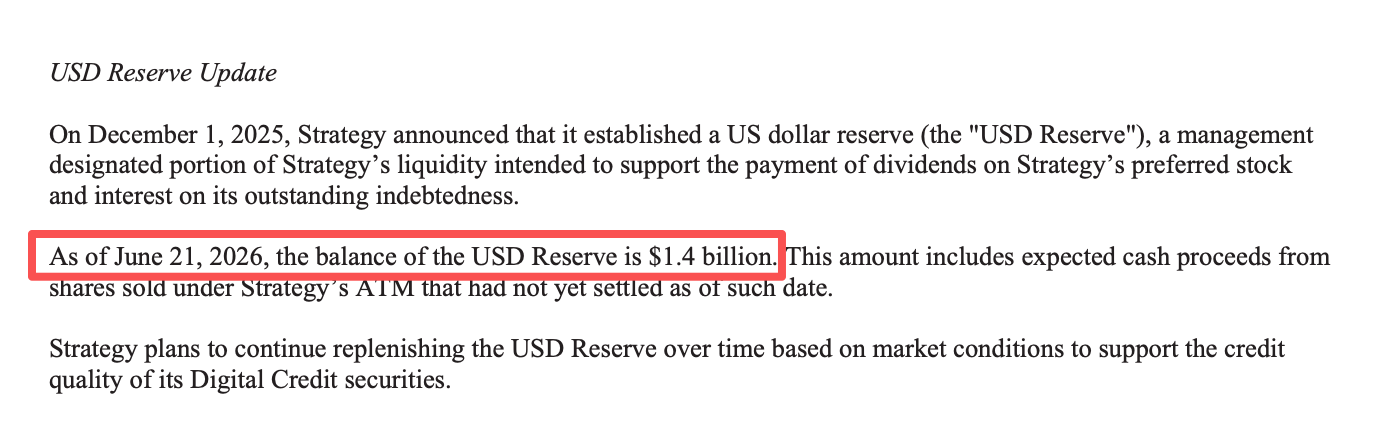
In the common stock issuance filing dated June 21 (note: common stock, details below), Strategy disclosed its cash reserves were approximately $1.4 billion. At this level of cash reserves, Strategy's book cash can cover less than one year's worth of preferred stock dividend payments.
Breaking the Deadlock Requires Money, But Where Does It Come From?
Whether it's sustaining its business model or escaping the current dire cash flow situation and avoiding a dividend payment default (the more pressing issue), Strategy needs more capital. Theoretically, there are only three viable paths left for Strategy to "raise money."
First: Issuing Common Stock.
This is currently the most direct and mature funding method. Through its ATM (At-the-Market Offering) program, Strategy can continuously sell MSTR common stock to the public to raise capital.
However, common stock financing is not without its costs. Continuous issuance means a growing number of outstanding shares. If the BTC purchased with the new funds cannot outpace the speed of share expansion, the BTC per share growth will slow down, and common shareholders will face constant dilution. Pay attention here, as this is crucial.
Second: Continuing to Issue Debt.
Over the past few years, Strategy has repeatedly raised capital through debt instruments like convertible bonds, which were a significant source of funding for its early aggressive BTC accumulation.
However, as the scale of preferred stock has expanded and fixed cash expenditures have increased, the market has become more focused on Strategy's liquidity and debt repayment capacity. In the current financing environment, if the company were to issue bonds again, investors would likely demand a higher risk premium, implying significantly higher financing costs than in the past.
More importantly, unlike preferred or common stock, debt carries rigid obligations for interest payments and principal repayment. Against a backdrop of declining cash reserves and rising dividend expenses, continuing to expand the debt burden would undoubtedly further strain the company's finances and compress its future financing capacity.
Third: Selling BTC.
From a financial perspective, this is the fastest way to replenish cash reserves. Strategy has certainly considered this path. The company once posted on its official X account regarding dividend payment pressure, stating: "If you factor in its massive Bitcoin reserves, it's enough to cover 32 years' worth of dividend payments."
However, for Strategy, this is also an extremely dangerous choice. Earlier this month, Strategy sold a portion of its Bitcoin holdings for the first time. Although the sale was only 32 BTC, and the company packaged it as a "proactive market desensitization test," mentioning it "will buy more back later," this move caused a sharp short-term market decline.
As the single largest holder of Bitcoin on the market, Strategy's actions can easily trigger market chain reactions. If it increases sales volumes in the future, it would undoubtedly have a massive impact on the already fragile BTC price. If BTC were to decline further, Strategy's so-called "reserves" would also shrink rapidly.
In summary, under the current circumstances, every viable funding channel available to Strategy comes at a higher cost than in the past.
Has Strategy Made Its Choice?
Looking at Strategy's latest moves, beyond the hint at possibly selling BTC, the company seems to have chosen its path.
Since June, Strategy has relied on the common stock ATM (At-the-Market Offering) program for three consecutive weeks. The most recent issuance (June 22) is particularly telling.
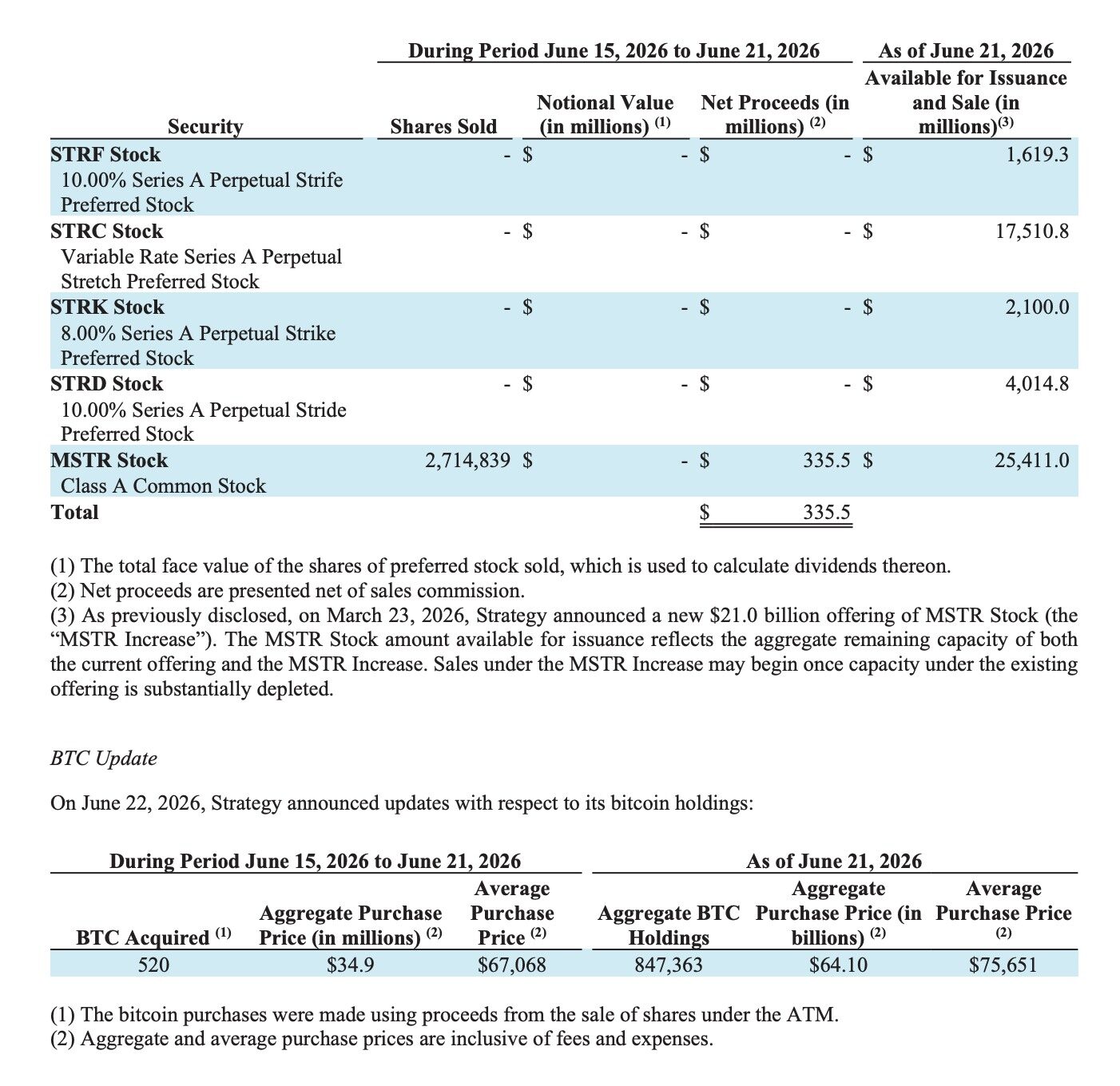
According to Strategy's latest 8-K filing, the company sold 2,714,839 shares of MSTR common stock in one week, raising a total of $335.5 million. However, during that same week, Strategy only purchased 520 BTC, spending a total of $34.9 million, at an average price of approximately $67,068. In other words, out of the $335.5 million raised, only about 10% was actually used to continue accumulating BTC. The remaining funds were primarily used to replenish the company's cash reserves, increasing cash from the previous ~$1.1 billion to the current ~$1.4 billion.
It might seem effective? But there's another trap here.
For MSTR common shareholders, the most critical information to watch is how much BTC each newly issued share of common stock can ultimately buy back, and whether that is sufficient to cover the BTC equity corresponding to that share. If the new funding can buy back more BTC than what that single share originally represented, then common shareholder equity is actually enhanced. Conversely, if the funds raised buy back less BTC than the equity represented by the new shares, common shareholders suffer dilution.
Clearly, Strategy's recent common stock issuance comes at the cost of diluting common equity. Strategy's official data also show that the BTC per MSTR share has dropped from a peak of 220,900 Sats to 218,046 Sats.
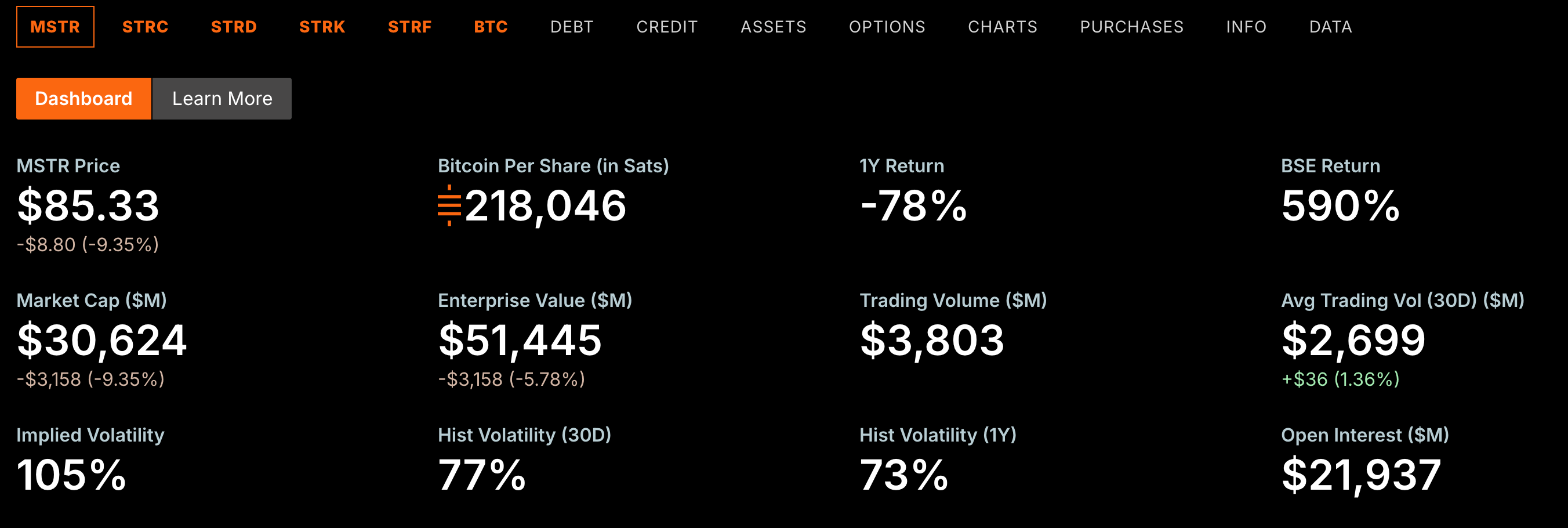
This highlights the biggest limitation of common stock financing. For most publicly listed companies, issuing common stock is just one of many financing methods, but for Strategy, common stock itself is part of its business model.
The reason Strategy has been able to grow continuously over the past few years is essentially dependent on the sustained operation of a flywheel: "Raise funds ➡️ Buy coins ➡️ Solidify market expectations ➡️ Raise more funds ➡️ Buy more coins…" The core market expectation for Strategy is its ability to continuously create more BTC equity for common shareholders, not dilute it.
However, when Strategy is forced to rely increasingly on common stock issuance to replenish cash reserves instead of continuing to accumulate BTC, the logic of this flywheel changes. While common stock financing can alleviate Strategy's cash pressure in the short term, it is difficult to replace STRC as a long-term solution.
Once common stock issuance persistently erodes BTC per share equity, the very foundation upon which MSTR's high premium relies could be challenged. And this premium is precisely the core competitive advantage of Strategy's entire business model.
What Happens to BTC?
Over the past few years, Strategy has become the most significant marginal buyer in the BTC market (arguably without exception). As of now, Strategy holds a total of 847,363 BTC, approximately 4% of BTC's current circulating supply, valued at over $50.7 billion. The market has long grown accustomed to Saylor's massive, weekly, predictable purchases.
But now, this situation is changing. Strategy can still raise funds through common stock, but most of the capital is no longer flowing into BTC; it is instead prioritized for replenishing cash reserves. This means that with the same scale of financing, the actual new buying pressure entering the BTC market is diminishing.
More concerning is that this situation may persist. If STRC cannot re-peg to its target value over the long term, and preferred stock financing remains blocked, Strategy will be forced to rely on common stock financing to maintain cash flow for the long haul, potentially further compressing the proportion of funds used for BTC accumulation. For the BTC market, this means the most stable and certain institutional buying pressure of the past will no longer grow consistently as it did in previous years.
But what is even more alarming is that if excessive common stock issuance dilutes MSTR shareholder equity too much, Strategy may be compelled to consider another funding channel: selling coins.
From the weakening of new buying pressure to the potential emergence of selling pressure, today's Strategy is no longer the largest marginal buyer of BTC. Instead, it has become a massive sword hanging over BTC.


