Bitcoin has once again fallen below $60,000; after 20 months, all we got was a new low


- Core View: Bitcoin recently broke below the key support level of $60,000, hitting a new low in nearly 20 months. This is primarily driven by a systemic shock to market confidence triggered by the longest-ever net outflow streak from spot ETFs and renewed expectations of a Fed interest rate hike.
- Key Elements:
- Bitcoin’s price once fell to $59,023, its lowest point since October 2024; the 7-day cumulative decline was approximately 9%, with the 24-hour decline narrowing to 3%.
- U.S. Bitcoin spot ETFs have seen net outflows for six consecutive weeks, with total withdrawals reaching approximately $5.94 billion over 30 days. Asset under management has dropped from $113 billion to $77.5 billion, eroding over a third of its value.
- BlackRock’s IBIT recorded a single-day net outflow of $528 million on May 28, the highest since its launch; institutional withdrawal momentum has yet to show a substantive reversal.
- U.S. macro pressures have surged: April job openings unexpectedly reached 7.62 million. The Cleveland Fed President adopted a hawkish stance, and the market has priced in over a 50% probability of a rate hike by year-end.
- Market views are divided: 21Shares maintains its expectation of a price recovery to $100,000 by year-end; Arthur Hayes predicts a bottom of $40,000 over the next 6 months; CryptoQuant forecasts the bear market could extend until the end of 2026.
Original by Odaily (@OdailyChina)
Author: jk
Bitcoin once again breached the critical psychological support level of $60,000 during today's trading session, dropping to a low of $59,023, marking its lowest point since October 2024, a near 20-month low. As of press time, BTC has slightly recovered from its lows, trading around $60,600, narrowing its 24-hour decline to approximately 3%, with a cumulative drop of about 9% over the past seven days.
This dip marks the third time Bitcoin has fallen below the $60,000 threshold this year. Unlike the previous two instances, this decline occurs against a backdrop of sustained institutional capital outflows and a sharp shift in macroeconomic policy expectations, systematically undermining market confidence.
What are the reasons?
Reason 1: Spot ETFs Face Longest Net Outflow Streak on Record
U.S. Bitcoin spot ETFs are the primary driver behind this decline. Since mid-May, ETFs have recorded net outflows for six consecutive weeks, with cumulative outflows of approximately $5.94 billion over the past 30 days—the largest wave of institutional capital withdrawal since their launch in January 2024.
Among them, BlackRock's IBIT saw a single-day net outflow of $528 million on May 28, setting a record for the highest single-day outflow since inception. The total asset under management of Bitcoin ETFs has fallen from roughly $113 billion at the start of the year to approximately $77.5 billion, evaporating over one-third of its value. Notably, according to The Block data, ETFs still recorded a net outflow of approximately $113.8 million on June 23, indicating that the institutional withdrawal momentum has not yet shown a substantial reversal. Whether institutional selling pressure will ease going forward will be a key observation point for the market.
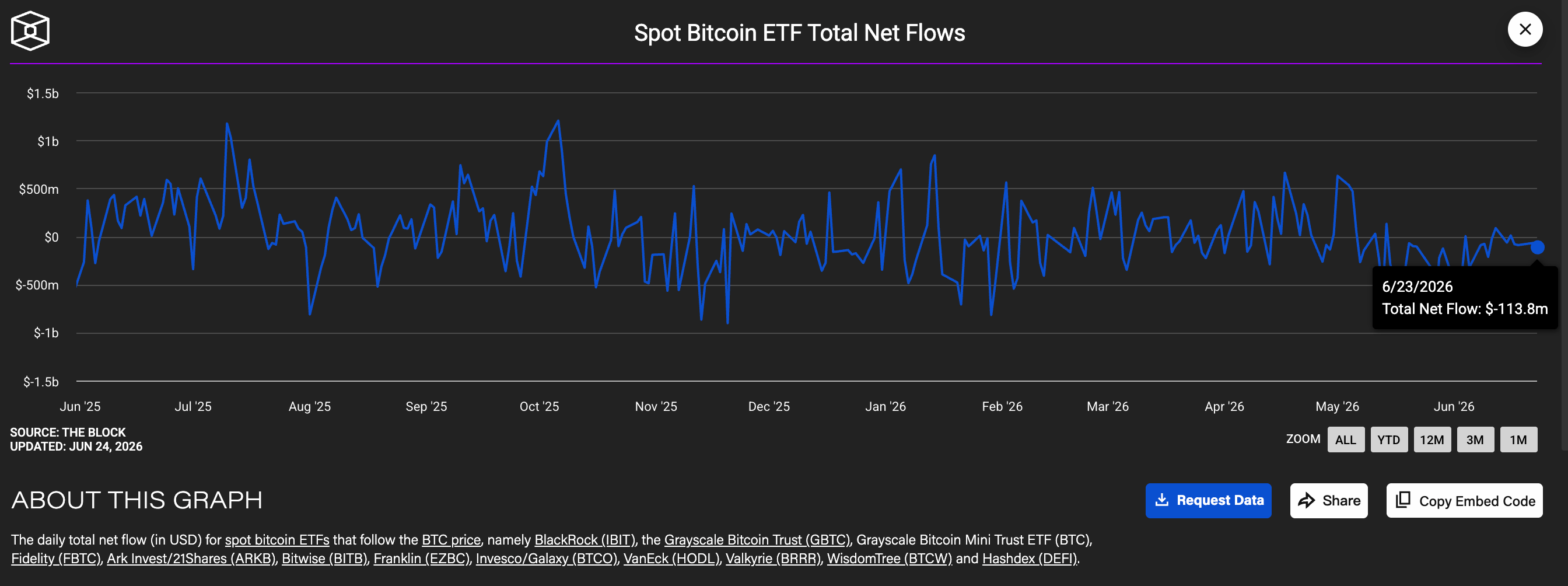
ETF Net Outflows, Source: The Block
The problem lies in the ETF cycle: when institutions redeem shares, authorized participants must sell corresponding Bitcoin directly on the secondary market, creating persistent spot selling pressure. CoinShares characterizes the current situation as an "emotional shock," arguing it is not a structural breakdown in the fundamental crypto market.
Reason 2: Renewed Rate Hike Expectations Intensify Macroeconomic Pressure
On the macro front, Bitcoin faces undeniable headwinds. The number of U.S. job openings in April rose to 7.62 million, far exceeding market expectations and hitting its highest level in nearly two years, directly pushing the 10-year Treasury yield back above 4.45%.
Cleveland Fed President Beth Hammack subsequently stated publicly that if inflation remains persistently high, the Fed may need to resume rate hikes. Data from CME FedWatch shows that the market's probability of a rate hike before year-end has risen to over 50%.
Conversely, the strong bull market of 2025 was built on the liquidity expectation of a "Fed rate cut." Once rate cut expectations reverse and real interest rates rise, institutional funds tend to shift towards low-risk assets like bonds and cash, making Bitcoin, as a high-risk asset, the first to be affected.
What Are Different Analysts Saying?
- 21Shares: In its latest "State of Crypto Market" report, 21Shares notes that the current decline closely mirrors historical post-halving correction cycles. Although the firm had initially expected the four-year Bitcoin cycle to end, the current price action suggests the cycle remains intact. The firm maintains its forecast for prices to recover to $100,000 by year-end, arguing that the massive base of approximately $53 billion in cumulative ETF net inflows will form an effective bottom support.
- Arthur Hayes: Holds a more bearish outlook, predicting Bitcoin will bottom out at $40,000 over the next six months. His core logic is that the Fed's hawkish stance will continue to suppress market liquidity. Hayes stated that while he maintains a long position, he has hedged downside risk through options.
- CryptoQuant: Citing on-chain data, CryptoQuant points out that the current average investor cost basis is approximately $53,000. Historically, bear market bottoms typically occur after the price falls below the "realized price." The firm believes this bear market could extend until the end of 2026 or even early 2027, with no clear signs of sustained demand recovery yet.
In the short term, market focus will center on the upcoming U.S. inflation data and the Fed's next policy signals. A CPI reading below expectations could offer Bitcoin a window for relief. Conversely, if it confirms inflation stickiness, further downside pressure will accumulate. Until extreme panic subsides and ETF flow direction provides a clear inflection point, whether Bitcoin can hold the critical defense line of $60,000 may determine the next direction of this bear market.