






Polkadot parachain slot auction will start, what ecological projects are worthy of attention?


With the second round of Kusama slot auction on the Polkadot canary network, a total of 2.464 million KSMs are locked in parachain slots and crowd loans (about 21.28% of the current total circulation). According to the previous plan, the Polkadot parachain slot auction will also be officially launched. A few days ago, the progress on Polkadot Github shows that the proposal to start the parachain auction has been voted by the Polkadot Council, and the Polkadot parachain slot auction is scheduled to start around noon on November 11 (UTC time).
At that time, users can use DOT to vote for supported projects to help them participate in the auction. In anticipation of slot auctions, Polkadot Token (DOT) has performed strongly recently. On October 21, 2021, Polkadot’s price peaked at $45.541. As of press time, DOT is currently at $52.55, with a total market value of It reached 55 billion U.S. dollars, an increase of more than 5 times compared with January.
image description
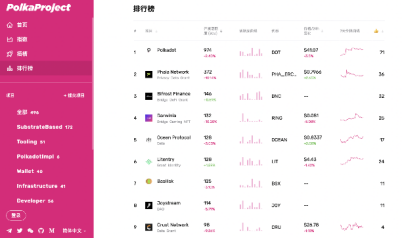
Source: polkaproject.com
first level title
1. Phala Network (PHA) - privacy computing
Phala Network is the private computing infrastructure on Polkadot. It implements confidential smart contracts through the TEE (Trusted Computing Technology)-blockchain fusion architecture. The goal is to establish trusted private communications based on Substrate and provide private computing services for the Polkadot ecosystem. Phala Network's native token is PHA, with a current circulation of about 143 million pieces and a total of 1 billion pieces. The specific allocation is as follows: 70% is dug out by TEE miners; airdrops (including Polkadot community building and parachain auctions) account for 9%, contribution of KSM, DOT and other ecological resources to obtain PHA testnet rewards accounts for 1%, and private equity financing accounts for 15%. 5% will be used for Phala development funds, operation and promotion. More token information can be found on the project official website.
first level title
Official website:https://phala.network/
white paper:https://files.phala.network/phala-paper.pdf
2. Acala Network (ACA) - DeFi center
Acala is a decentralized ecological financial center and stable currency platform, providing support for cross-blockchain open financial applications. Acala has launched core Layer 1 modules such as the cross-chain multi-asset mortgage stablecoin Honzon protocol, releasing Staking, asset liquidity Homa protocol, and decentralized exchanges, and has multiple businesses such as stablecoin generation, DEX, and liquidity solutions section. The total amount of native asset ACA on the Acala chain is 1 billion, which is mainly used to pay transaction fees, node incentives, on-chain governance, algorithm risk adjustment, and Pallet deployment. Among them, 49.76% is allocated to the community, the foundation team accounts for 20.25%, early supporters account for 18.33%, and supporters account for 11.66%.
first level title
Official website:https://acala.network/
white paper:https://github.com/AcalaNetwork/Acala-white-paper/blob/master/Acala_Token_Economy_Paper.pdf
3. Bifrost Finance——DeFi protocol
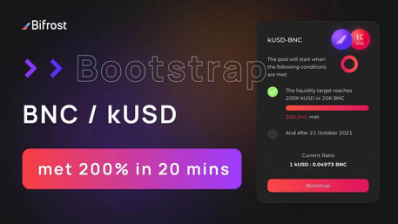
Bifrost (Rainbow Bridge) is a Polkadot-based DeFi protocol that allows users to deposit their Staking tokens and mint vTokens (Staking Derivatives Voucher Token) to obtain Staking liquidity. At the same time, tokens can be obtained when they are locked by smart contracts Staking rewards. Through Bifrost, you can convert PoS tokens to vTokens, such as converting DOTs to vDOTs.
first level title
Official website:https://bifrost.finance
white paper:https://whitepaper.bifrost.finance/en.pdf
4. Astar Network (ASTA) - DApp platform
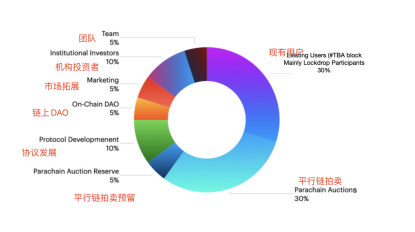
Astar Network (formerly known as Plasm Network) is a scalable DApp platform based on Substrate in the Polkadot ecosystem. Its purpose is to become a multi-chain DApp hub. Ideally, developers can build any application on the Astar Network regardless of its scalability. The ASTA token is a utility token of the Astar network, with a total of 500 million pieces. It mainly has five functions: DApp pledge, NPoS pledge, transaction, chain management, and creation of Layer 2 programs. The distribution ratio of ASTA tokens is as follows:
first level title
Official website:https://astar.network
white paper:https://github.com/PlasmNetwork/plasmdocs/blob/master/wp/en.pdf
5. Moonbeam (GLMR) - DApp platform
Moonbeam is a Polkadot-based smart contract blockchain dedicated to providing development tools and networks familiar to Ethereum developers for compatible functions. Moonbeam can achieve full EVM compatibility, Web3 API compatibility, and a bridge that connects Moonbeam to the existing Ethereum network. Developers can easily deploy existing Solidity smart contracts and DApp front-ends to Moonbeam with only minor modifications based on their own development results. Moonriver (Moonbeam Pioneering Network) is committed to building a smart contract platform compatible with Ethereum on Kusama. At present, Moonriver has realized Polkadot EVM full compatibility and transfer functions.
first level title
Official website:https://moonbeam.network
6. HydraDX (HDX) - liquidity protocol
image description
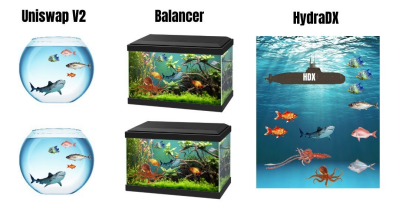
Source: hydradx.substack.com
first level title
7. Centrifuge (CFG) - asset financing agreement
Centrifuge is a decentralized asset financing protocol. The platform allows investors to connect with organizations in need of funds, connecting real-world assets into DeFi, thereby reducing unnecessary intermediaries such as banks, and reducing capital costs for small and medium-sized enterprises. And provide a stable source of income for DeFi investors. With Centrifuge, businesses can tokenize real-world assets and use them as collateral for financing through asset-backed lending Dapp Tinlake.
first level title
Official website:https://centrifuge.io
white paper:https://ctrf-tk-ppr.s3-us-west-1.amazonaws.com/Centrifuge+Token+Design+Spec+v0.5.pdf
8. Manta Network (MA) - privacy protection
Manta Network is the first privacy protection project based on zkSNARK technology on the Polkadot chain. It aims to provide DeFi users with the highest level of on-chain privacy protection and become the privacy protection infrastructure of the entire decentralized finance. Based on the Substrate framework, Manta can provide plug-and-play privacy protection services for the entire Polkadot ecosystem. The Manta Network network token MA is a deflationary functional privacy pass, with a total of 1 billion pieces. According to the actual usage of the privacy protection network in its protocol and the growth in DeFi, users can incentivize dividends and redeem and pass-through operations such as destruction.
first level title
Official website:https://manta.network
white paper:https://eprint.iacr.org/2021/743.pdf
9. KILT Protocol (KILT) - Digital Identity Marking
KILT is a decentralized digital identity project established by a German team to issue autonomous, anonymous and verifiable credentials for Web 3.0. KILT brings the traditional trust process of real-world verifiable credentials (banking credentials, driving licenses, food certificates, etc.) into the digital world, while keeping your data private and owned. Its goal is to become a standardized solution for decentralized identity (DID) and a verifiable certificate for many Polkadot ecological projects.
At present, the KILT blockchain has been launched, and the runtime has been upgraded, and governance (internal testing) and treasury have been introduced. KILT features such as decentralized identifiers (DID) and verifiable credentials will be added in the next 2-3 months. When the KILT functional testing and full system are over, the Sudo module will be removed and decentralization will be achieved.
first level title
Official website:https://www.kilt.io
white paper:https://www.kilt.io/wp-content/uploads/2020/01/KILT-White-Paper-v2020-Jan-15.pdf
10. Parallel Finance (PARA) - decentralized lending
Parallel Finance is a decentralized lending protocol built on the Polkadot ecosystem. It provides margin mortgages, auction loans, mortgage derivatives and AMM functions, aiming to bring higher returns to the Polkadot ecosystem and multi-chain assets. Through Liquid The innovative design of Staking, Margin Staking and Money Market protocols allows users to simultaneously mortgage and borrow in the Parallel Finance system, earning double interest rates while obtaining liquidity.
image description
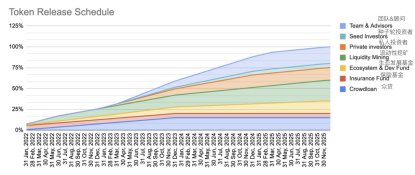
PARA Allocation Plan and Release Schedule
first level title
Official website:https://parallel.fi
white paper:https://docs.parallel.fi/white-paper
11. Interlay - cross-chain bridge
Interlay's vision is to unleash the potential of decentralized finance on various chains by providing various assets on-chain. Its current focus on creating a product is InterBTC, which will become a decentralized and trustless Bitcoin "bridge", first connecting to Polkadot and Kusama. InterBTC allows users to mint Bitcoin-backed assets PolkaBTC 1:1 onto the Polkadot blockchain and use these assets in a wide range of applications, including decentralized exchanges, stablecoins, and lending protocols.
Official website:
Official website:https://interlay.io
Of course, in addition to the projects introduced above, there are many excellent teams and ecological projects on Polkadot. According to Gavin Wood, Substrate-based parachains can obtain the four major characteristics of "uninterruptible, upgradable, unlimited and no handling fees", so parachains and slots have become popular. It can be predicted from the previous participation of Kusama that mainstream ecological projects are bound to strive to participate and win Polkadot’s slot auction.
Therefore, as the Polkadot parachain slot auction date is approaching, if you want to participate in Polkadot voting and avoid cumbersome operations on the chain, you can participate in the "Ouyi" early bird event - Polkadot slot auction For the special session, Ouyi has supported early bird voting for 6 projects including GLMR, ACA, ASTR, BNC, CLV, and MA, and the voting rewards are 30% higher than those on the chain.
Note that this event node not only means that Polkadot’s ecological development has entered the next stage of the fast track, but also some counterfeit Polkadot projects will inevitably appear, and investors need to keep their eyes open for screening. For example, some projects named "supported by Polkadot" or prefixed with "Polka" are not necessarily projects supported or sponsored by the Web3 Foundation, and may even be pure hype rather than projects on Polkadot. Therefore, when choosing a project that supports bidding for parachain slots, investors face many projects and how to screen competitive or potential projects. Here are several perspectives that can be used as a reference: 1) The nature and core business of the project itself, Whether it can solve the actual problem of cross-chain (just needed); 2) Whether the community scale and consensus are strong enough; 3) Based on Substrate; 4) Grant sponsorship by the Web3 Foundation and has been obtained several times; 5) Polkadot & Substrate friends project (refer to polkadot lightpaper).





