Facebook changed its name to Meta: an accelerated layout for "future people"



Today, Facebook's annual Connect conference proposed to change Facebook's name to Meta, making the concept of "Metaverse" really popular again. In this regard, we believe that Zuckerberg has really brought the concept of metaverse closer to the crowd and into social networking. Many netizens also ridiculed Zuckerberg's facial expressions during the live broadcast of the meeting, thinking that it really meant a "future man". So will this be a preliminary combination of the future and the present, virtual and reality guided by the "time traveler"? Maybe in the future "metaverse" we can meet old friends without time and space constraints?
● What is the Metaverse?
The term "metaverse" first originated in the novel "Avalanche" by American science fiction writer Neil Stephenson in 1992. In the book, Stephenson describes a virtual online world, which he named "Metaverse". All people in the real world have a network avatar in the Metaverse.
The English word "Metaverse" in the book is composed of two roots, Meta and Verse. Among them, Meta means "beyond" and "meta", and verse means "universe".
So Metaverse is the "Metaverse", and Facebook changed its name to Meta from this. In other words, the metaverse is equivalent to building a virtual world that is completely the same as the real world, and everyone can freely shuttle between the digital and the real.
In fact, people who pay attention to this concept may know that there were open platforms such as Roblox and Cryptovoxels earlier. There players can interact, play games together, learn, communicate, explore and connect, just like in the movie "Ready Player One".
"The first Roblox company in the metaverse" stated that a real metaverse product should have eight elements, namely identity, friends, immersion, low latency, diversity, anywhere, economic system and civilization.
With the development of human science and technology, the sci-fi imagination that once appeared in novels and movies now has the opportunity to become a reality. 2021 can be described as the "Yuan" year. The concept of the metaverse is very popular, and many companies are focusing on the business of the metaverse. And Facebook officially changed its name to enter the metaverse, which may start the "metaverse" wave of Internet companies.
● A new metaverse era officially kicked off
At the beginning of the meeting, Zuckerberg said, "Facebook was once a company born from a university campus to connect people with technology. But now, we can finally put people at the center of our technology and open a bigger The socio-economic shape of the Internet. I believe that the Metaverse will be the next big chapter of the Internet. To reflect who we are and what we want to build, we decided to rebrand our brand. Over time, I hope that in the future we will no longer It’s just a social platform, but it’s being treated as a metaverse company.”
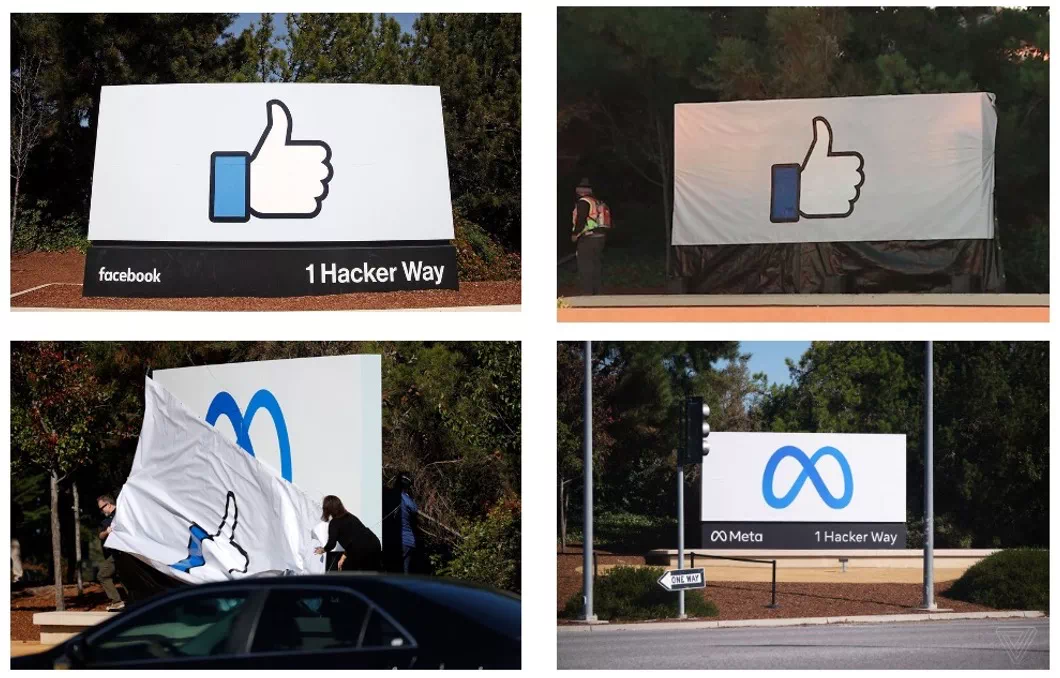
It was also on the day of the announcement that Facebook’s Silicon Valley headquarters replaced the company logo that had been used for seventeen years and eight months, and the signage was replaced by its new name and icon from the thumbs up.
Zuckerberg said that the new name "Meta" not only agrees with the metaverse he wants to build, but also hopes to be like the meaning of "meta" in Greek: beyond, to continue. Because it symbolizes that there is always a continuation of the story, and we always have more things to build.
Meta's new icon is quite similar to the mathematical symbol "∞", which may also mean that the depth and width of the universe are endless. If you want to uncover the mystery as soon as possible, you need to keep getting closer to the universe and the future. At the same time, if we three-dimensionally appreciate the two side views of the symbol space "∞", we can find that this is like Zuckerberg's allegory for the combination of virtual and real.
● What exactly does Zuckerberg want?
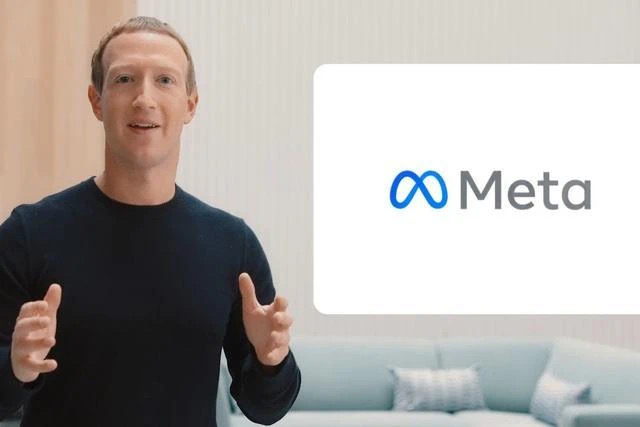
At the annual Connect conference, he explained in detail and completely Facebook's understanding of the Metaverse, the strategic planning of the Metaverse, and the current progress made in the field of the Metaverse.
1. Social: Customize space and avatar, use Messenger video calls in VR
At the beginning of the conference, Zuckerberg introduced the new VR function added to his Horizon platform - Horizon Home. He said that following VR, you can build your own secret base there, and you no longer need to consider the shackles of reality. For example, design the gathering space between you and your friends as a space capsule, and everyone’s avatar can also be freely defined and selected. There, there is an opportunity to choose rebirth, and design a cartoon character with a flamboyant personality according to your favorite appearance, or even a robot. image. Friends can gather together, watch movies, play games, or use the Horizon Venues function to participate in an immersive concert or virtual performance.
In addition, Facebook has further updated the Messenger function on Quest, further expanding the connection between virtual and real. Now you can make Messenger calls to friends directly in Horizon, and chat with them in the real world in the virtual world.
2. Games: "Grand Theft Auto" launched on Oculus, further expanding the boundaries of the game
Zuckerberg said that the realization of the various functions of the Metaverse is still in the early stages. But the audience of Roblox can be inspired: games are undoubtedly the entry point that can be most understood and accepted by ordinary consumers.
Previously, VR games such as Beat Saber and Population on Quest have won the love of many people, and now Meta will further expand the lineup of VR games on its platform. Following the launch of "Resident Evil 4" just last month, today, Zuckerberg announced that the famous big IP "Grand Theft Auto: San Andreas" will also be launched on Oculus Quest 2 in VR form for the first time. At that time, players will shuttle in the open world based on cities such as Los Angeles and Las Vegas, which will be more immersive and exciting.

In addition, Zuckerberg also showed more visions about playing games in the metaverse, not just limited to a certain game itself, but embedded in daily life. For example, play chess with friends through augmented reality, fencing with friends together, play basketball with friends through VR, and so on. These gaming-like fitness features will soon be available on Oculus, allowing users to exercise against AI or a friend.


Regarding more upcoming game features, Zuckerberg said that Oculus will hold a dedicated game showcase in 2022.
3. Work: Slack, Dropbox, etc. launched Horizon and launched the Workrooms enterprise model
Not long ago, Facebook launched the function of Horizon Workrooms. Although it has attracted a lot of attention, many people think that it is just a gimmick and lacks practical scenarios. However, this renaming also means that the concept of metaverse office has been further promoted.
In order to make users work more conveniently and efficiently in the VR world, Zuckerberg announced today that he will integrate more 2D applications that can be used for multitasking in Horizon Workrooms, including Slack, Dropbox, Mural, Pluto TV, etc. In the future, some Oculus applications will also blur the line between VR and 2D applications. For example, Horizon Workrooms will support Zoom calls in the near future.
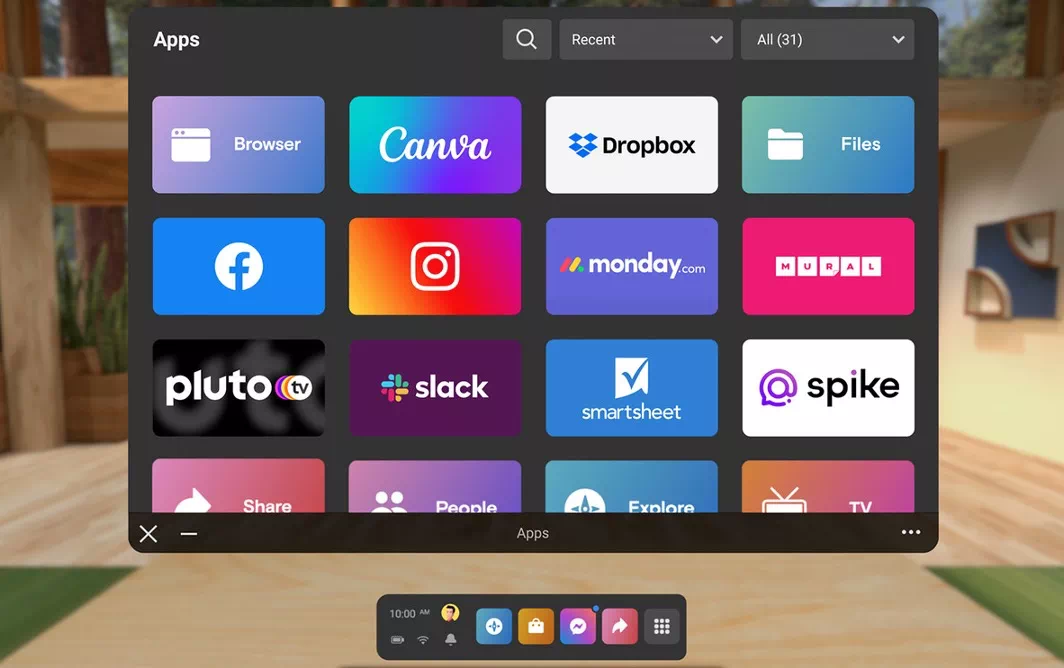
In addition, the new business product will bring Quest for Business work functionality to Quest devices, including logging into Quest 2 with a work account, and providing enterprise account management, IDP and SSO integration, mobile device management, and more. This feature will start testing this year, enter the public beta stage in 2022, and be generally available in 2023.
In the personal Horizon Home, Facebook also adds the function of personal office space in addition to the daily leisure and social functions. You can also customize your work space, and you can also use integrated functions such as Slack and Dropbox.
4. Education: Create an immersive learning experience and set up a US$150 million content development fund
In addition, Zuckerberg believes that the arrival of the Metaverse will also reshape the way of education in the future. VR and AR will become a powerful teaching tool.
Facebook hopes to build a robust learning ecosystem in the Metaverse, and has set up a $150 million dedicated fund for this purpose. First, it will create an immersive educational experience. For example, if you want to learn planetary knowledge, after wearing AR glasses, huge planets will appear in front of you, and you can zoom in and out to see their textures and characteristics clearly. If you want to learn ancient architectural knowledge, you can directly "travel" to that era, experience and witness how great buildings were built.
In addition, Facebook is currently working with Unity to focus on developing AR/VR content creators in the education field to teach people the skills, tools, etc. needed to create educational VR content. At the same time, Facebook has also reached cooperation with a number of universities, non-profit organizations and educational institutions.
● Who is the Metaverse Garden planted for?
Today, Zuckerberg imagined the beautiful back garden of the metaverse and the huge market space, but how to make people willing to accept and enter the metaverse is the first problem they need to solve in the next step.
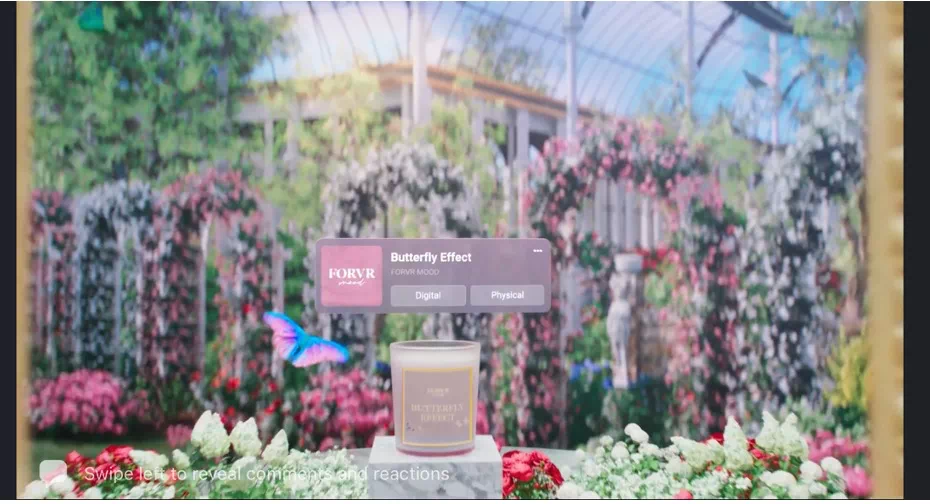
In this conference, Facebook also gave an example of an aromatherapy shop operating in the future metaverse. It can expand the store concept in the real world, such as making a big garden with butterflies dancing around, and then embed the products that need to be sold in it, which will further stimulate consumers' desire to buy.
If the Metaverse Garden wants to be colorful, it needs more people to enter this world first, so hardware equipment is the basis of all spirit and matter. Facebook also shared their latest progress on hardware devices.
First, Facebook announced a new high-end virtual and augmented reality headset called Project Cambria. It has thinner optics and smarter sensors and reconstruction algorithms that allow your avatar to maintain natural eye contact with other users in the metaverse, accurately reflect the wearer's facial expressions, and have full-color mixed reality capabilities, etc., thereby providing users with a more realistic experience when interacting in the virtual space.
Regarding the final pricing and release time of this headset, there is not much information revealed this time. Zuckerberg only said that it plans to release it next year, and the price will not be cheap.

Facebook also announced its first augmented reality smart glasses, code-named Project Nazare. In a brief mock concept, Zuckerberg described a typical scenario: You put on your glasses, the Whatsapp app floats in front of you, you send a message to a friend, invite them to your game, accept the invitation AR avatars of friends will soon appear in your room.
However, Zuckerberg also said that their goal is to make Nazare the same weight and size as everyday glasses, but Nazare has not yet reached the standard for official release, and it may take a few years to officially meet with everyone.
This nexus of dream and reality is also reflected in Facebook's stock price today (its ticker symbol will change from FB to MVRS on December 1): at one point it was up about 4%, before falling back to 1.5%. Maybe it was because people were surging in the center of one product vision after another released by Zuckerberg, but after calming down, they felt that the Metaverse was still so far away from them.
● The road to the metaverse is doomed to be long and difficult
Facebook’s plan to transform the Metaverse has already begun, and many people expected it to rebrand. After all, as a social product under Facebook, the name can no longer cover what Zuckerberg and his team are doing over the years. If the past few years were still in the exploration stage of Zuckerberg's preparations and trial and error, now, Zuckerberg has undoubtedly made up his mind and planned the company's future, and at the same time believes that now is the most suitable time to attack .
From the renaming of the company, we can see Zuckerberg’s determination to break his wrist: he personally shut down the glorious era of Facebook that he created for more than ten years, and started anew towards a new digital universe.
Saying goodbye to Facebook and embracing the metaverse is Zuckerberg's big bet for the company's next decade. And from Zuckerberg's narration at the Connect conference today, we also have a deeper understanding of the metaverse world he wants to build.
We look forward to the metaverse becoming a reality, looking forward to the dreamy opening of the connection between the future and reality.