Xiaobai learns the artifact of Ethereum: etherscan blockchain browser


Ethereum is currently the most well-known public chain besides Bitcoin. Its ecology is extremely rich, and it is called the representative of blockchain 2.0.
So, for such a public chain, besides reading its white paper and yellow paper, what other ways can we understand it?
Here, I will introduce the tool etherscan, which is a blockchain browser officially supported by Ethereum. Through it, we can not only query some data of Ethereum itself, but also view the transfer routes, holders, transaction volume and contracts of all tokens issued based on Ethereum.
Therefore, for Ethereum enthusiasts, etherscan is a necessary query tool, and it is also one of the entry ways for Xiaobai to understand Ethereum.
View the Ethereum networkhttps://cn.etherscan.com
View the Ethereum network
After entering etherscan, the home page shows an overview of our current Ethereum network. Through these data, we can understand the general operation of the current Ethereum network.
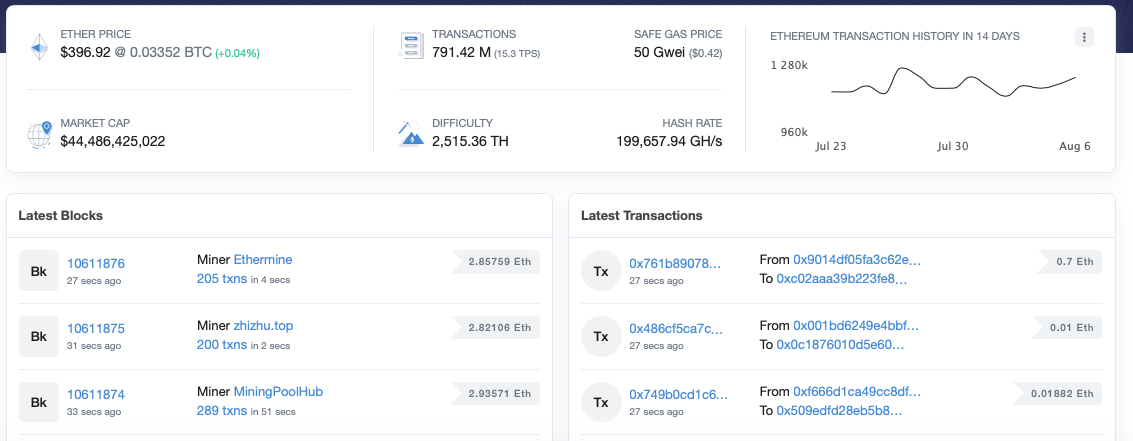
ETHER PRICE is the current price of Ethereum, which is currently $396.92, and the following 0.03352 BTC represents how much bitcoin can be converted into one ether.
TRANSACTIONS refers to the total number of transactions generated on the entire network, 15.3TPS means that the current Ethereum network can process 15.3 transactions per second, and SAFE GAS PRICE is the current transfer fee of the Ethereum network.
MARKET CAP refers to the current total market value of Ethereum, and DIFFICULTY refers to the current average mining difficulty. Of course, with the subsequent arrival of eth2.0, POW mining will change to POS mining, and then the difficulty of mining will no longer exist.
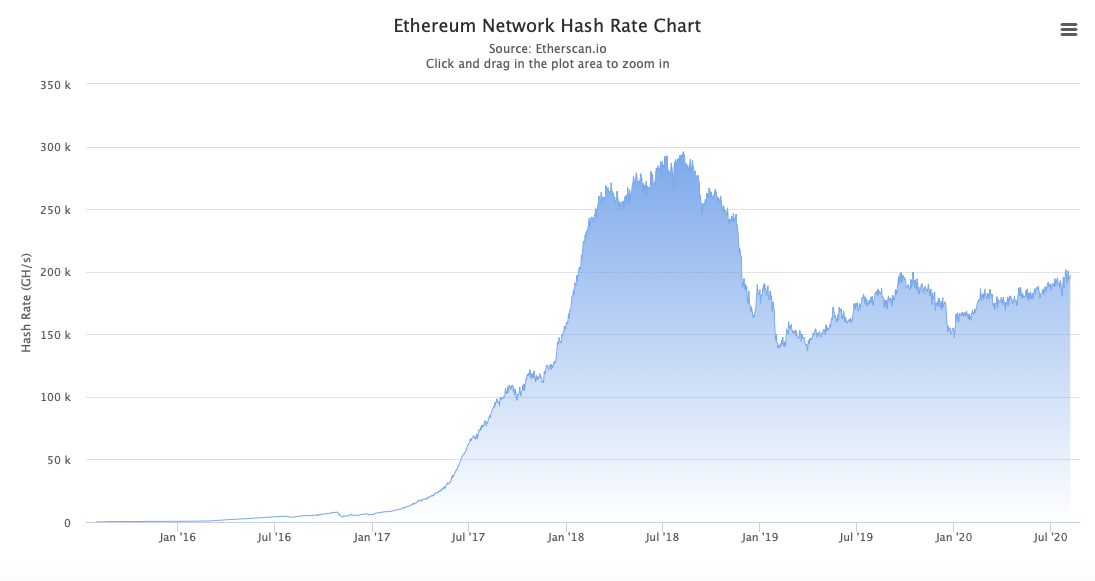
In addition, we can also click in to view the details of this block.
Blocks and Transactions query
The next two blocks, Latest Blocks and Lastes Transactions, are the recently generated blocks and transactions respectively.
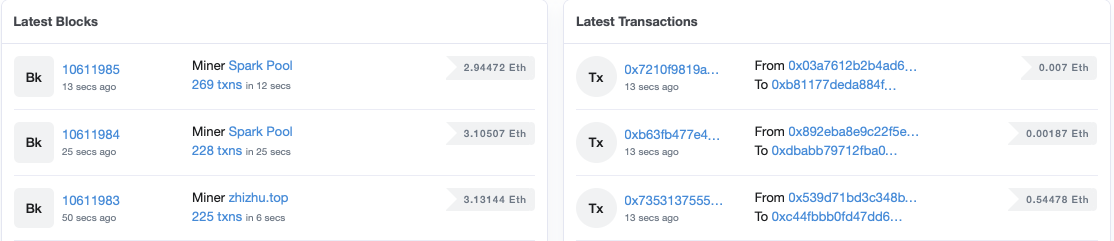
On the Blocks side, the numbers 10611985 represent the block height, and the number behind the Miner is the person who dug out the block.
Of course, the current mining pools are all mining pools, and it is difficult for anyone to dig out a new block. Here is the 10611985 block dug out by the Spark mining pool, and 2.94472eth represents the block obtained by mining this block. award.
In addition, we can also click in to view the details of this block.
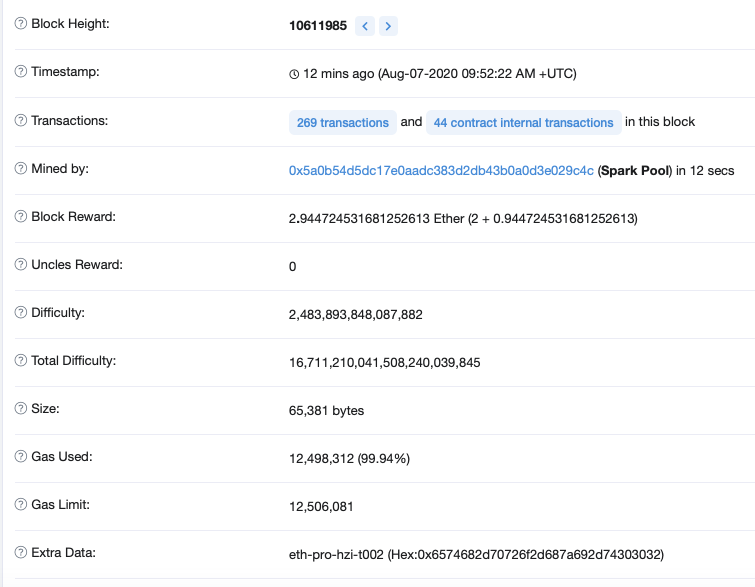
From the details, we can see additional data such as Timestamp, detailed blockchain reward data (Block Reward and Uncles Reward), Size, Gas Used, Gas Limit, etc.
The concepts in this are not difficult to understand. If you don’t understand, you can click the question mark on the left of the text. etherscan provides a detailed explanation.
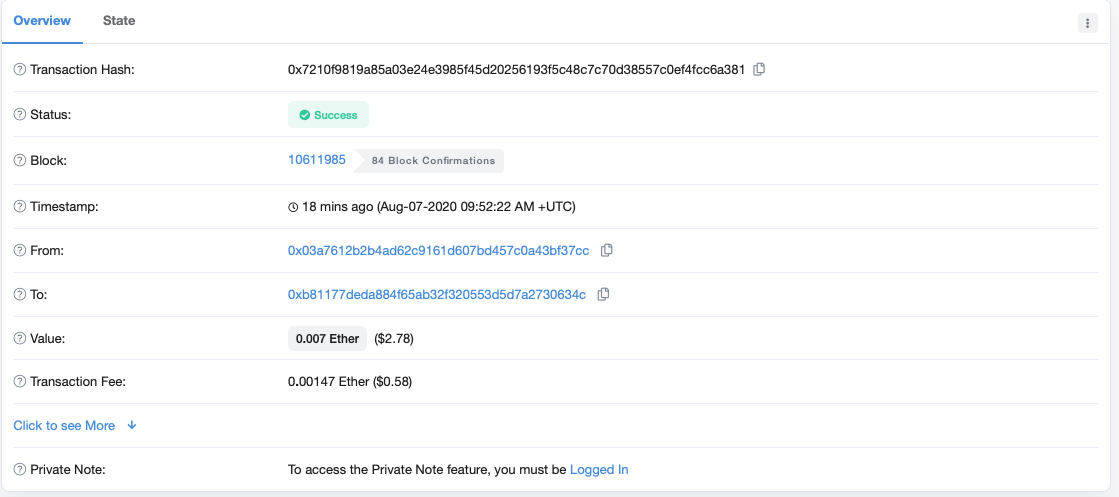
Similarly, for the Transaction side, we can also view the detailed data of each transaction.
For example, the transaction in the above picture shows information such as transaction hash, Status (Succes indicates that the transaction has been confirmed successfully), the Block it belongs to, transfer-in address and transfer-out address, and timestamp.
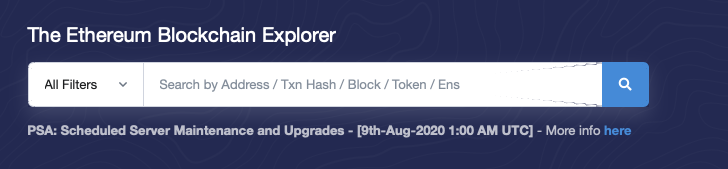
Next, let's use etherscan to see what ERC-20 Token and ERC-721 Token are currently on the Ethereum network.
TOKEN issued based on Ethereum
In addition to querying the current data of the Ethereum network through etherscan, querying information about tokens issued based on Ethereum is also a common function we use.
There are mainly two types of tokens issued on the Ethereum network, one is ERC-20 Tokens and the other is ERC-721 Tokens.
ERC-20 Token is a homogeneous token. It is the same as Bitcoin and Litecoin that we usually come into contact with. Every Token is the same without any difference.
ERC-721 Tokens are non-homogeneous tokens (NFTs), such as the previously popular CryptoKitties. Their characteristic is that each Token is unique.
Next, let's use etherscan to see what ERC-20 Token and ERC-721 Token are currently on the Ethereum network.
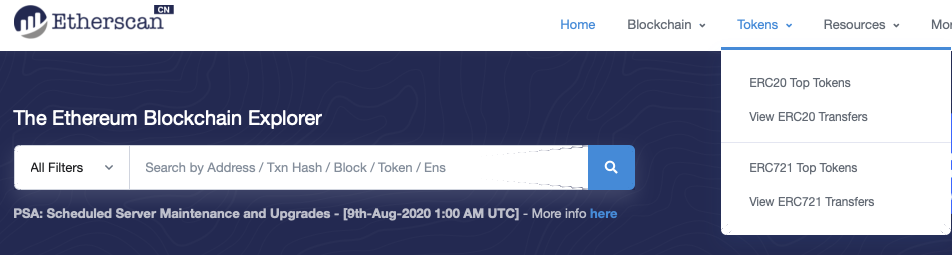
On the homepage, we click Tokens, and we can see ERC-20 and ERC-721. Let's take ERC20 Top Tokens as an example.
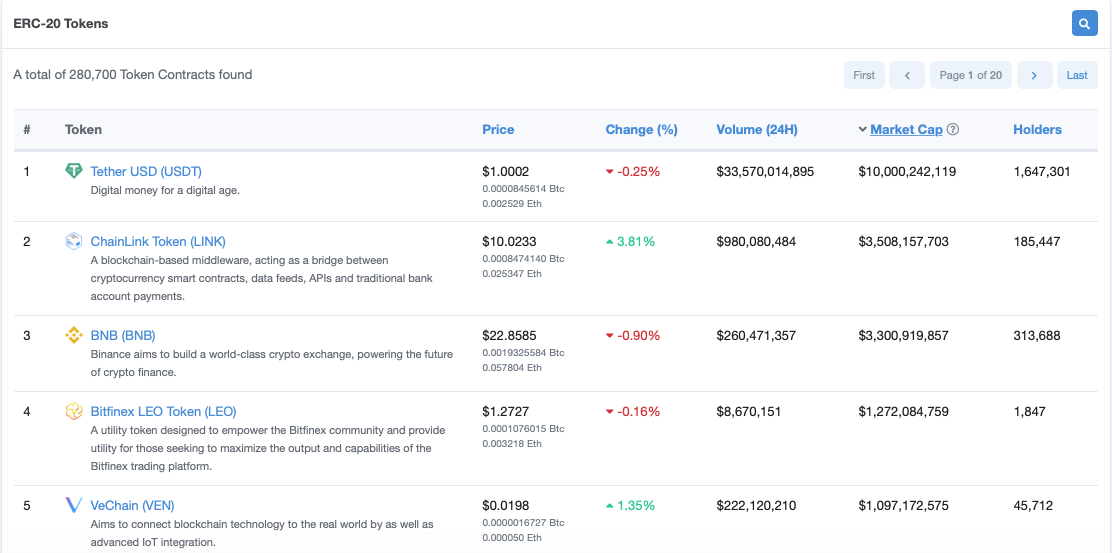
From the rankings, I believe you have seen many well-known tokens, such as LINK, which is particularly popular recently, USDT, which is commonly used by Chinese people, and BNB issued by Binance.
Then click on a Token to see the current details of the Token. Here we take USDT as an example.
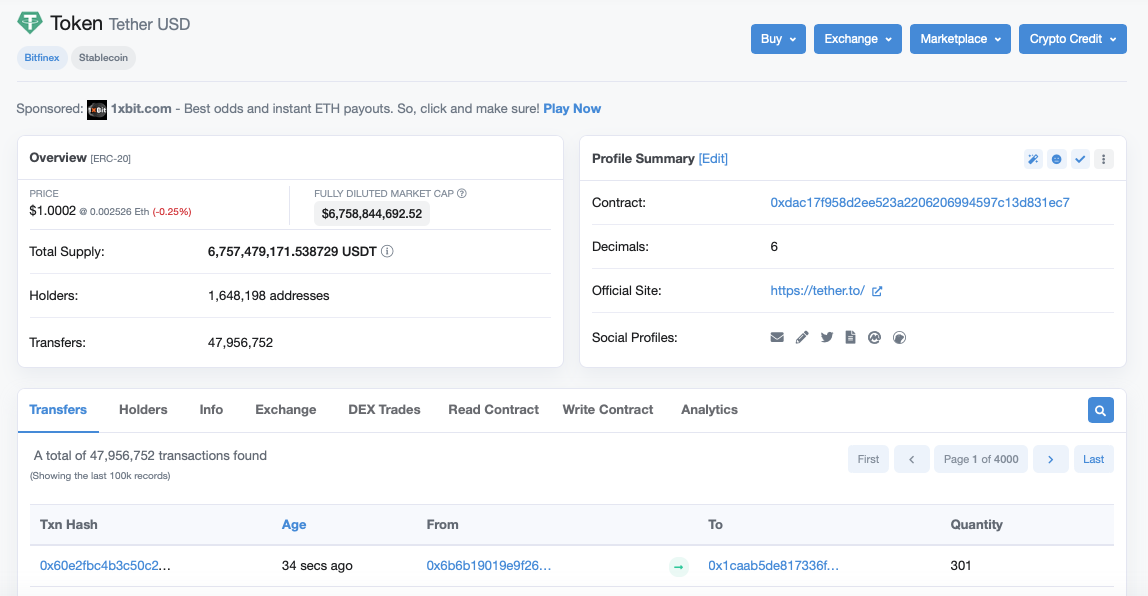
From the page, we can see the overview information of usdt issued based on Ethereum, such as current price, market value, total circulation, number of holders, deployed contract addresses, and its official website.
From the rankings, I believe you have seen many well-known tokens, such as LINK, which is particularly popular recently, USDT, which is commonly used by Chinese people, and BNB issued by Binance.
Generally speaking, through the tool etherscan, we can easily understand the basic situation of the Ethereum network and the tokens issued based on it. It is not only a powerful tool for users to query, but also the best way for beginners to get started with Ethereum. Know the way.