






Viewpoint Sharing: The Way of the Game


What is a game
When it comes to games, many people feel their hearts surge and their adrenaline accelerates. From the 3A masterpiece of video games to the smash hit "Flappy Bird", all of them have a wide user base. Players are willing to spend a lot of money to buy game hardware, immerse themselves in the game all night long, and never get tired of it.
Gaming has a long history. As early as the Tang Dynasty, "Zhixu Pavilion Zazu" recorded the scene of Tang Minghuang playing hide-and-seek with Yang Guifei: "Minghuang and Yu Zhenheng wrapped their eyes in brocade handkerchiefs under the moon, and played with each other among the abbots. Every time you go up, Yuzhen is light and quick. Every time you lose it, the palace people clap their hands and laugh. One night, Yuzhen has many tassels, sachets and Shangxi on his sleeves. If you provoke him, you will get countless sachets, that's all, he said with a smile: "I am better than the imperial concubine." It can be seen that hide-and-seek is not only the joy of the market, but also the joy of the nobles in the court.
The game is universal, regardless of poverty, high or low, anyone can voluntarily participate and quit, regardless of the result, victory or failure, players can feel the charm of the game and experience the fun of the game, everyone is equal in the game. A Hungarian-American psychologist once proposed the concept of "heart flow": a feeling of fully devoting one's mental energy to a certain activity; when heart flow occurs, there will be a high sense of excitement and fulfillment, etc. mood.
The game is tough. The goals of most games are not easy to achieve. "Difficult" means challenging. A job that is not challenging is destined to be boring. No one can continue to do boring work as a game. "Tough" also means that it takes energy or physical effort, but it's exhilarating and the player enjoys it.
So far, we can give a rough definition of the game: a kind of hard work that can keep people in a state of flow.
The evolution of the game
"The Compound" game
Those born before the millennium are lucky. Although they didn't have iPhones, iPads, or all kinds of electronic products when they were young, they experienced the most brilliant crystallization of human games-"compound" games. There are three most typical representatives of this kind of game: hide-and-seek, hopscotch, and sandbag throwing.
Let's recall a "compound" game - hide and seek, to regain childhood fun:
l Several children in the compound gathered to discuss and play a game of hide-and-seek in their leisure afternoon.
l Zhi Duo Xing Xiaoli proposed a set of rules: everyone guesses the game, the winner plays the hider, and the loser plays the searcher. The rule is: count down to 30 seconds with blindfolded eyes, and start searching after everyone hides.
l After hearing this, the children nodded in agreement. At this time, Xiaogang said: "I think the compound is so big, 30 seconds is too long, it's not fair to the searchers, 20 seconds is enough."
l After hearing this, the other children nodded one after another: "Well, maybe 20 seconds is enough. This way the search is not too difficult, and people who are hiding are more exciting." Everyone agreed and reached a consensus.
l Through finger-guessing, the clever ghost Xiaoliang finally played the role of the searcher. After the game started, in order to increase the probability of searching, Xiao Liang played a trick and started looking for people after the countdown of 15 seconds.
l This phenomenon was discovered by Xiao Ming and Xiao Hong who were hiding not far away. They stood up out of righteous indignation and loudly reprimanded Xiao Liang for cheating. After hearing this, other children also showed up early and joined in the discussion of Xiao Liang's behavior.
l After a brief communication, everyone agreed that Xiaoliang ruined the game experience, but hoped that Xiaoliang could correct it, and decided to start a new game, and Xiaoliang continued to play the role of the searcher.
l The game is finally running normally.
It is not difficult to find that there is no centralized third party to promote and supervise the entire hide-and-seek game from the rule-making to the end of the game. The fairness of the game comes from the game players' consensus on the rules and mutual supervision. The same goes for hopscotch and sandbag throwing.
This is a very interesting cognition, which tells us: the most primitive game itself is decentralized, it is jointly governed by players, and the fairness is supervised by players. This is the most natural, common and comfortable form of play.
sports game
Games are a kind of culture, which can spread among people of different countries, regions and ideologies. As time goes by, some games that are universal, easy to learn, and positive gradually develop into the mainstream. They not only bring fun to the participants, but also strengthen the body, which we call "sports".
Sports games are endowed with stronger social attributes, which also strengthens the participants' pursuit of fairness and victory. In order to enable people from different communities to play together, we must follow the unified rules of the game (today, it is the universal rules of sports such as basketball and football). These rules are usually defined by a central organization (usually the organizing committee), and then popularized and disseminated by promoters of this type of sports (such as physical education teachers and associations).
In "sports" games, the player's consensus on the rules is no longer in the game process, but is transferred to the stage of learning the game. This has greatly improved the efficiency of the game process, greatly reduced disputes, and the game is easy to achieve cross-cultural communication. But we will also find that such a game already has a relatively distinct centralization feature-players trust the rule makers and believe that the rules specified by them are fair. Although during the game, the supervision of fairness still retains the characteristics of decentralization (for example, on the field court, players who call fouls are usually compromised), but this undoubtedly puts forward higher requirements for players' consciousness.
From the first ancient Olympic Games in 776 BC to the present, competitive sports have been developing vigorously, and professionalization is also a trend that cannot be underestimated. The professionalized game shows a great centralization feature——
l The rules are specified by the event organizing committee, and athletes must abide by them, and have no right to modify the rules;
l There are referees with special committees to supervise and rule on fairness;
l The right of interpretation belongs to the organizing committee.
Sports have given birth to hundreds of billions of commercial value, and it has also made games truly a kind of work. But it seems that the game has been separated from the player group and has become a product with strong constraints.
Electronic games
The advent of computers gave games a new lease on life. Games in the past were invisible and intangible, and could only rely on some key props to indicate that you were playing. On a brand-new computer platform, the game has a screen and UI, and it becomes visible and tangible, and the game is presented in a new form.
image description
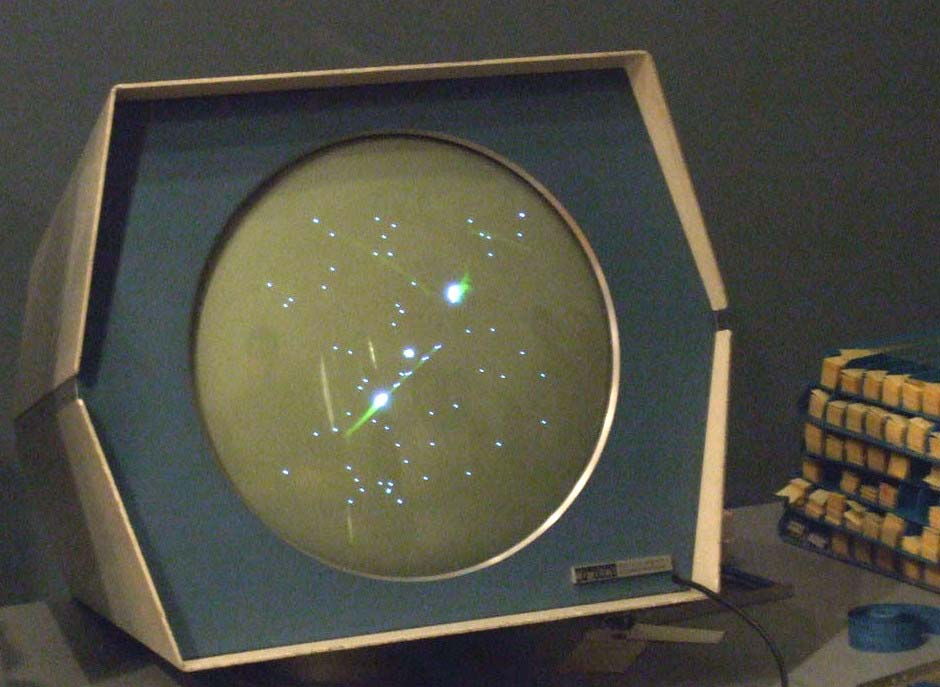
Space Wars running on the PDP-1
image description
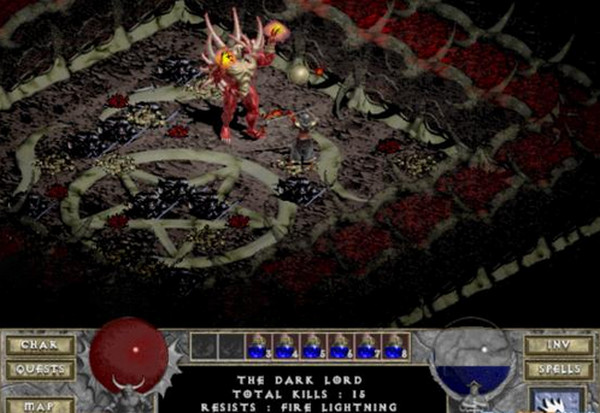
Diablo I
The era of video games is the golden age of games. People have seen the dazzling light of games on computer platforms. It was also at this time that the game completed its historic transformation—the rules were planned by a centralized team and developed into products, and players used preset operating devices to play the game. In video games, the concept of rules has been downplayed, and the game screen and gameplay have become the focus of players' attention. Even if players feel that the rules are unreasonable, they are powerless to modify them.
In this era, there are also some cases where a small number of manufacturers allow professional players to modify the rules, thus giving birth to new gameplay. The most famous thing is that in 2003, the UGC map community of "Warcraft" hatched Dota, which became the predecessor of such popular Moba games as "LOL", "Dota2", and "Glory of the King". In the era of video games, many producers still do not forget to retain the gene of common governance of the player community.
However, video games are already a product of centralization, but whatever, fun is over.
Online game
Electronic games developed to the end of the 20th century, and the Internet began to sweep the world. People found that after the game is connected to the Internet, players no longer have to play against the computer, and players can play together across regions. Around the turn of the millennium, Internet games are mainly based on LAN battles of stand-alone games, and public network games still need to be played through game halls such as Haofang and 11.
After 2000, the first batch of Internet games swept the world. They are the biggest contributors to the development of the Internet - Internet games such as [Miracle MU], [Legend], [World of Warcraft], [Fantasy Westward Journey], etc., have directly accelerated the pace of human beings entering the Internet era.
Returning to the essence of the game, it seems to be a very smooth logic to "go online" the game, but in fact it needs to answer the following three key questions:
1. How to reach a consensus on rules in an anonymous network environment?
2. Where are the rules and gameplay stored?
3. How to monitor players and ensure fairness?
For traditional offline games, whether it is a "compound" game or a "sports" game, these three questions can be answered very well. However, in the new Internet environment, due to the attenuation and asynchrony of information transmission, and the anonymity of identities, these three problems are very problematic.
The answer to the first question of online games is: the rules are designed and endorsed by centralized manufacturers. In short, if you want to play my game, you must believe in the rules I designed and play under my rules. Well, it seems okay, because that's how video games work.
The second problem is that traditional offline game data is stored locally on the player's computer, while online games take on a different form: they are stored on servers provided by centralized manufacturers. Players cannot know the detailed parameters of the rules, and it is difficult to verify whether the game follows the routine specified by the rules.
image description
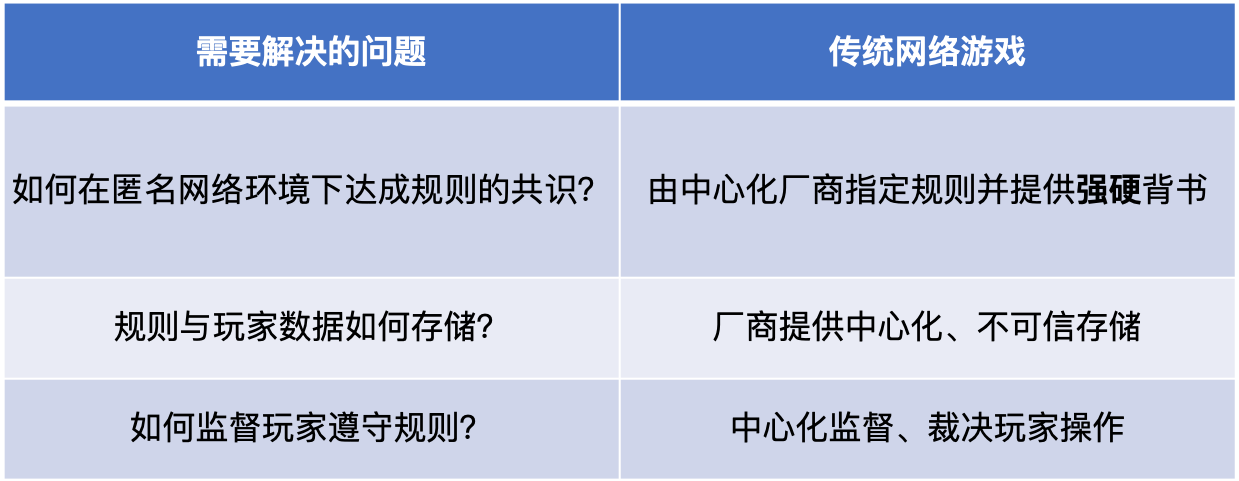
The answer to the online game of the three questions of the soul
Players' acceptance of online games is a very revolutionary change for the game industry-it means that players allow their "game achievements" to be controlled by third parties and accept this kind of gaming experience provided by "black boxes". It is also this kind of compromise that greatly expands the game design space of manufacturers, and designs such as MMORPG, MOBA, MMOFPS, props krypton gold, unboxing lottery, etc. were born.
We can say that online games = black box games, we can see its results, but we have no way of knowing how it works, yet most people still enjoy it.
spoiler
image description

On September 15, 2018, QQ Pet officially ceased operations
The essence of online games is still a commercial product, and survival of the fittest is commonplace. In the past 20 years, it is not uncommon for players to lose their energy and financial resources due to account deletion, data loss, and game stoppage. Players are miserable and helpless.
Why can't we be like the "compound" games and sports games in the past, my experience and cultivated skills are with me for life? Is the game achievement I obtained also remembered by everyone?
The author tried to log in to the [Onmyoji] account one week before writing this article. After only one year of not logging into the game, the account has been officially deleted without any notice.
Maybe it's time for a change in online gaming.
The world's first blockchain pet development game [Cryptokitties Obsessed with Cats]
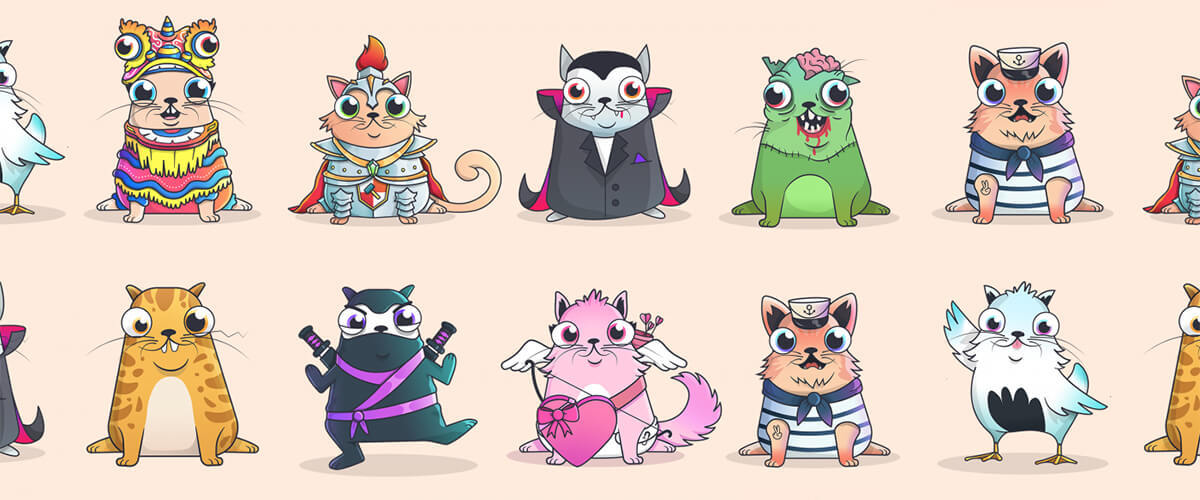
The world's first blockchain pet development game [Cryptokitties Obsessed with Cats]
From 2017 to 2019, although the blockchain industry was in a harsh winter, there were still many excellent pioneers in the industry——DapperLabs used [Cryptokitties] to tell us that digital pets can be preserved forever; [EOS Pixel Master] showed the world How the co-creation of global artists can be circulated forever; [Neo World] also used actual cases to verify the possibility of players participating in game governance and content iteration...
image description
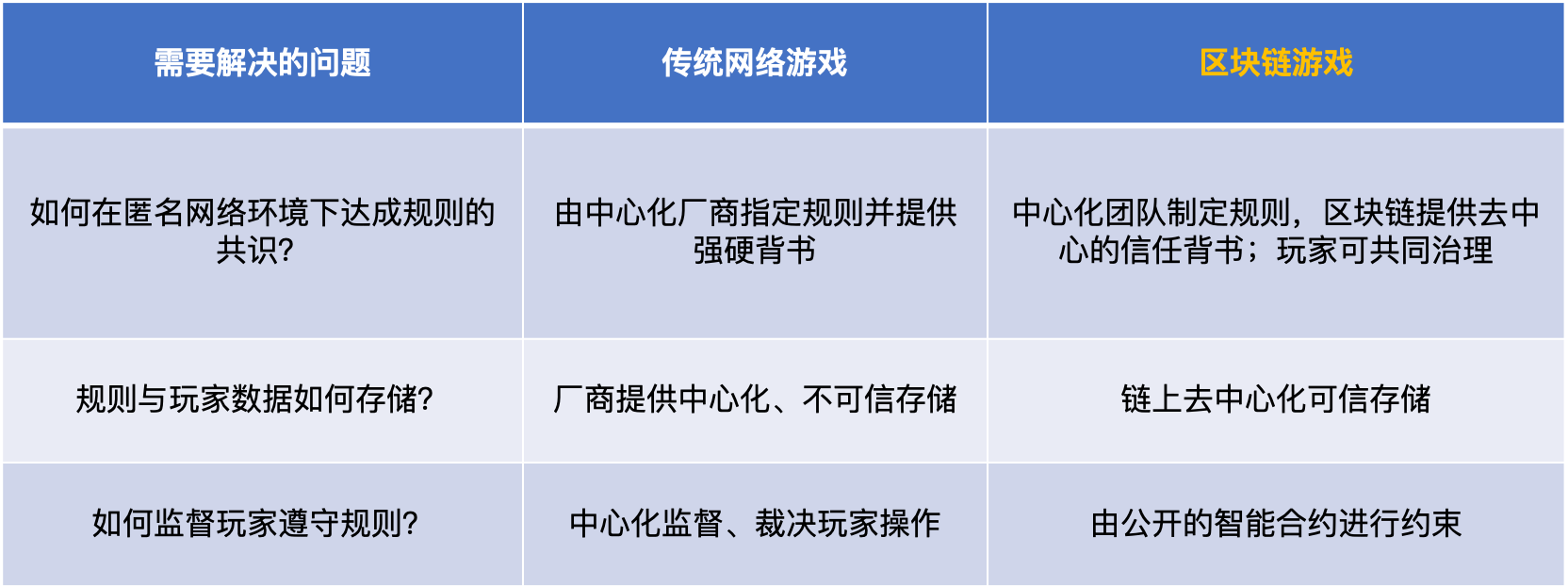
The answer to the blockchain game of the three questions of the soul
We found that it is true to apply the answers of blockchain games to any known game, which means that all known games can theoretically be transformed using blockchain.
At this time, many people will retort: the blockchain is too slow, and it is not suitable for carrying game modes that require high concurrency. In history, countless big Vs and KOLs have expressed pessimistic opinions on the development of technological trends. In 1943, IBM Chairman Thomas Watson said that "the world only needs 5 computers." In 1995, Bill Gates said in an interview When asked by the host, it was difficult to refute: "I have tape recorders, tapes, and magazine subscriptions. Why do I need something called the Internet to replace what I already have in my life?". In today's game industry, we can also ask the same question: I have so many fun online games, console games, and mobile games, why do I need a blockchain to empower games?
The answer is obvious: players want it. Data assetization has long been a recognized trend, and game data, as the second largest source of data for Internet users after social products, inevitably requires a set of infrastructure that can make game data truly become assets. Moore's Law is still in effect, and the development of hardware is still rapid. Who can assert that the efficiency of the future blockchain will not be able to carry the current common game applications?
The user is the creator of the answer, and time is the witness of the answer.
Finally, I would like to pay tribute to the game teams who burned the sparks in the cold winter.
DegameLabs chain game laboratoryDegameLabs chain game laboratory, [DegameLabs] is a blockchain game laboratory under Mobiusgame, focusing on researching new gameplays of blockchain games, including credible and verifiable gameplay, prop assetization, cross-game prop transfer, game content UGC, player On-chain governance, decentralized game communities and other fields.





