Technology Sharing: Cracking Three Misunderstandings About DAG


foreword
foreword
We are currently usingZohar and SompolinskyThe first proposed block DAG topology. Recently, however, we have noticed that every time a project is presented, the audience seems to have a lot of misunderstandings about what a DAG is or how it relates to blockchain technology.
first level title
Misconception 1: DAGs are different from blockchains
Simply put, DAG and blockchain are completely different concepts, so they cannot be compared together at all. Let's see what they are.
DAG (Directed Acyclic Graph) is a mathematical model applied to data structures. It consists of vertices connected by unidirectional edges, and no route starts from a vertex, follows these edges and returns to the same vertex—that is, it is acyclic.
In essence, a DAG is a low-level data structure that can be used to model many types of data (especially networks with dependencies), such as dependencies on spreadsheet cells, combinational logic for digital circuits, or Causal systems such as Bayesian networks. The DAG data structure has many interesting mathematical properties that help simplify problems associated with these types of data.
And for more information about the blockchain, you can read my previous article "what is blockchain? ’. However, a blockchain is essentially a networked system that enables entities to submit statements, agree on reality, and replicate records. While these capabilities are not unique on their own, they combine to create some Interesting properties that are unique to blockchain technology, such as immutability and guaranteed ordering.
This way, we can immediately see that the two don't match. DAG is a data structure while blockchain is a system. In other words, DAG is an abstract model, while blockchain is an application. Comparing the two side by side is like comparing a triangle to a skyscraper. The concept of triangles may be used in geometric calculations when designing skyscrapers, but the two are fundamentally different and cannot be compared.
So where does this misunderstanding come from? This is because in the design of blockchain, the topology based on DAG is completely different from the topology based on single chain. DAG is just an alternative way to organize the blockchain data structure.
white paperwhite paperimage description
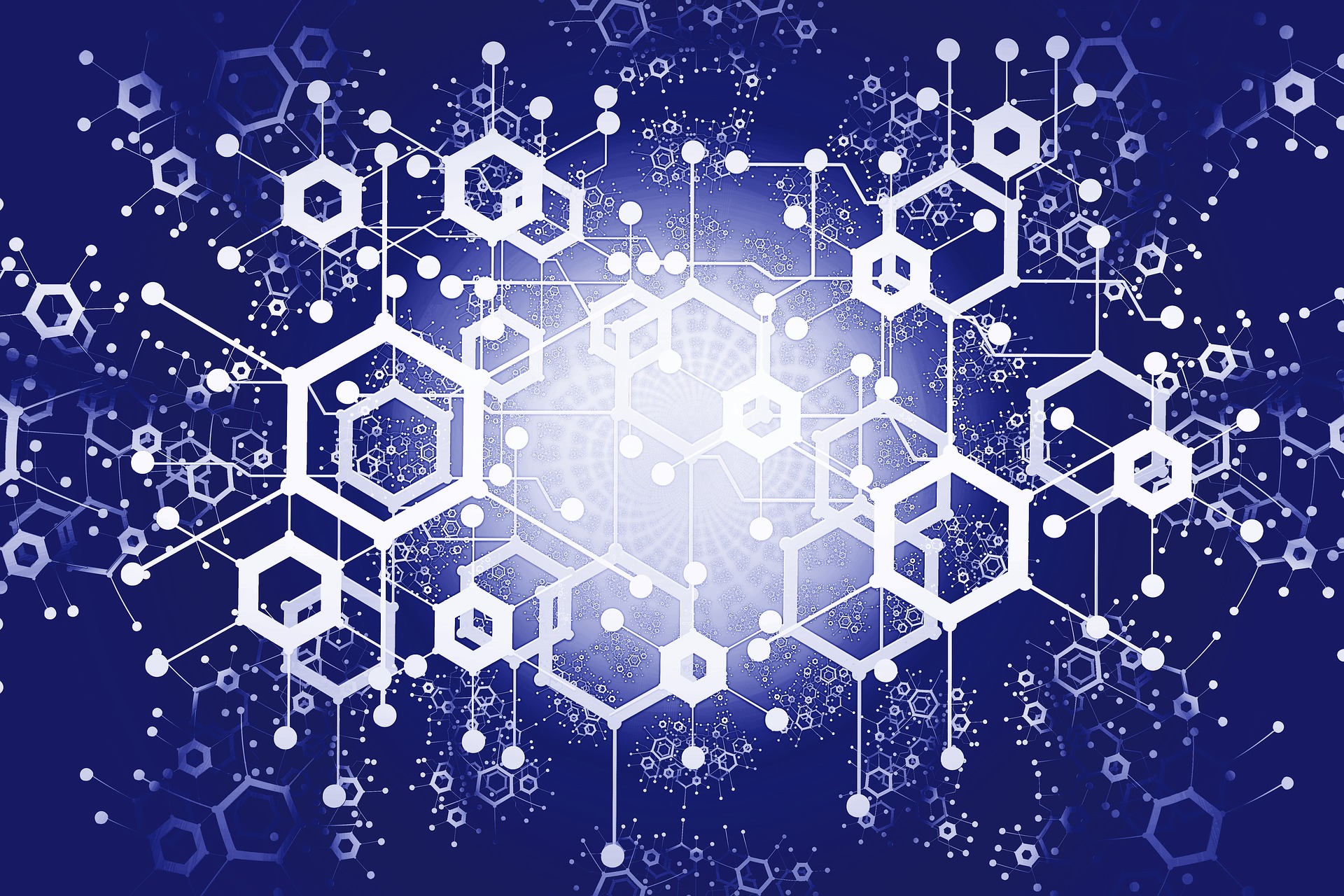
Single chain structure block vs block DAG topology in blockchain system
first level title
Myth 2: All DAG-based blockchain systems are the same
We often meet some community members who have some understanding of another blockchain system that also adopts the DAG topology, so they will superimpose all the characteristics of the other system on Taraxa, including some technical defects or challenges.
Here, we briefly introduce several other early blockchain projects that adopt the DAG topology, and their design differences from Taraxa.
IOTA may be the first project to show the market how blockchain technology can benefit IoT devices, while they also propose a very different consensus algorithm to utilize DAG. IOTA verifies transactions by randomly entering the DAG. This method ultimately makes the network rely on the central coordinator to maintain order and correctness, otherwise the network will not be able to correctly handle problems such as double spending. andTaraxa's sorting mechanismWell-defined and not dependent on centralized coordination.
Byteball (Byte Snowball) adopts a DAG topology without blocks. What makes this project different is its consensus function, which is to find the main chain within the DAG to determine the order, and to limit the computational complexity of the order through periodic snapshots (balls). However, it relies on 12 "trusted" witnesses, so it is considered highly centralized. Likewise, Taraxa'ssorting mechanismDecentralization has been well achieved.
Nano is not the same as IOTA or Byteball. In this project, each account has its own chain (block grid), the ordering of each chain is determined by the owner of the chain, and each transaction needs to be divided into two payments of receipt-payment and separated by the two parties. Record. In a sense, Nano is a "DAG" where you can draw directed edges between transactions on different chains, but it's structurally very different from IOTA or Byteball. However, Nano's block structure design is highly optimized for token transactions, not smart contracts. In contrast, Taraxa has a genericConcurrent Smart Contract System, which maximizes vertical concurrency during transaction processing.
first level title
Misconception 3: DAG blockchain is the best partner for IoT
The main goal of Taraxa is to make the IoT ecosystem more trustworthy, autonomous and valuable. However, this has little to do with its block DAG topology.
The block DAG topology was chosen for its ability to increase throughput without sacrificing security (more information in the previously written article ""and""and"Block DAG and PoS”). The structure of the block DAG is inclusive, it can accept all branches, so the overall throughput is improved. The security problem is solved by looking at the pointer (pointer) each block uses to point to multiple parent blocks. Solution - pointers as votes will be converted into a weight rating, called the GHOST rule. Through this rule, we can calculate an anchor chain in the block DAG, and then according to the launch time of each anchor block on the anchor chain to establish a definite sequence.
So, block DAG was chosen as the topology because of its high-throughput nature, but by no means it is "ideal" for IoT or any other use case - it does work for all use cases because there is no Regular sessions require low throughput. But at the same time, the anchoring of IoT data (a key use case in our IoT applications) does require high throughput, and the block DAG topology is very suitable for building a high-throughput blockchain system .
I hope this article can help you dispel some common misunderstandings about DAG and blockchain.
We will continue to update in the future, so stay tuned!