Binance Withdraws MiCA Application in Greece: The Regulatory Game Behind Europe's Licensing Battle


- Core Insight: Binance's decision to proactively withdraw its license application in Greece just one week before the EU's MiCA transitional deadline suggests its strategy of securing an EU passport through a smaller member state has hit a roadblock. This move aims to avoid an official rejection label while retaining the initiative to reapply in other member states like France, yet it exposes the trust deficit in Binance's global compliance rehabilitation process.
- Key Elements:
- On July 1, 2026, the EU's MiCA transitional period officially ends. Crypto service providers without authorization will be breaking the law if they continue to offer services to EU clients.
- Binance voluntarily withdrew its MiCA application submitted to Greece's HCMC on June 24, 2026, following a Reuters report indicating the Greek regulator was expected to reject the application.
- MiCA operates on a "single authorization" and "EU passport" mechanism, where authorization from one member state allows servicing the entire EU market. However, regulatory pressure on Greece from the ESMA and ECB has politicized its approval process.
- After retreating from Cyprus, Binance bet on Greece as its European licensing entry point. However, compliance blemishes from major U.S. cases and controversies surrounding the scale of large exchanges have hindered swift approval from a smaller country like Greece.
- Analysts predict Binance's next move may be toward France, which has a more mature regulatory framework and a DASP registration basis. However, France's approval process will be slower and stricter, demanding a higher level of trust rehabilitation from Binance.
On June 24, Binance withdrew its MiCA license application in Greece. According to Binance, after carefully evaluating the status and timeline of the Greek approval process, it decided to withdraw the MiCA application submitted to the Hellenic Capital Market Commission (HCMC) and will seek authorization in another EU member state going forward. It also emphasized that user assets are safe and remain accessible, and it will directly notify affected European users of the subsequent arrangements.
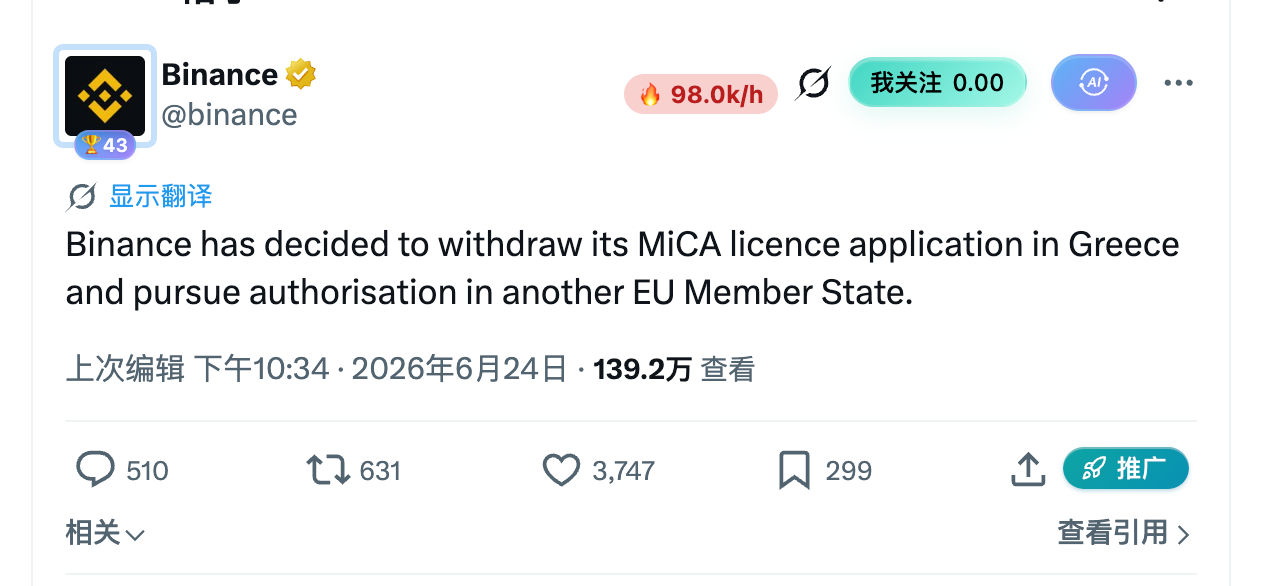
Original post: https://x.com/binance/status/2069791259812839895
Actually, there is a background to this that many people are unaware of: in just under a week, on July 1, 2026, the EU's MiCA transition period will officially end.
According to the European Securities and Markets Authority (ESMA), after July 1 this year, crypto asset service providers without MiCA authorization who continue to provide services to EU customers will be violating EU law. They must cease such services and execute an orderly exit or customer migration plan.
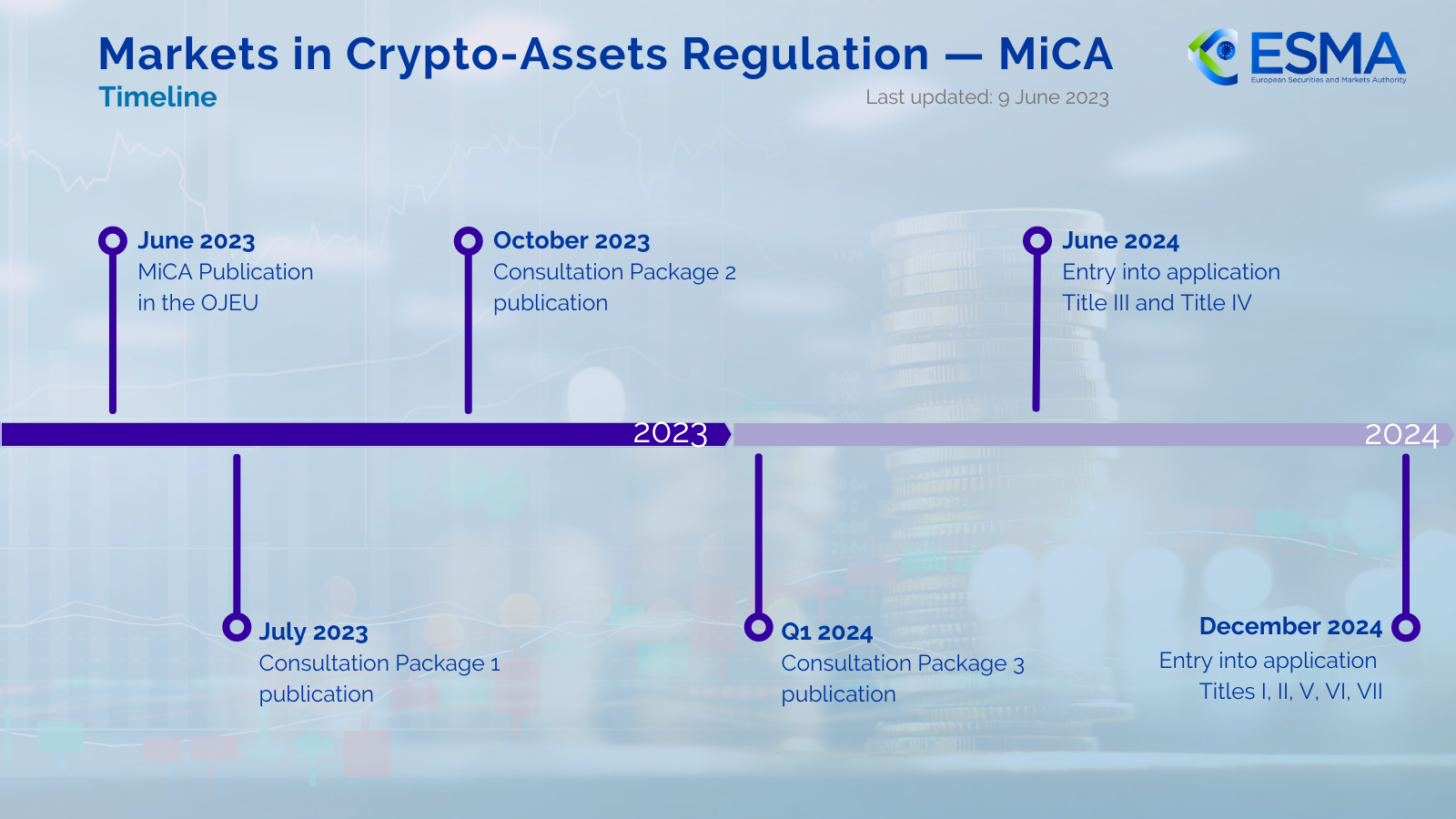
Image: ESMA Official MiCA Timeline, Source: gravityteam.co
Even if you hold local financial licenses in some European countries, without MiCA authorization after July 1, you cannot conduct crypto asset-related business in Europe. Essentially, you have until July 1 to prepare and make adjustments.
This is very unfavorable for Binance. For Binance, the July 1 deadline acts as a hard boundary. If the Greek application cannot yield a clear result before this deadline, its European business arrangements, user communications, institutional partnerships, and regulatory narrative will all come under pressure.
As for Binance, it submitted the MiCA application to the Greek HCMC in January 2026. I estimate they assumed approval would likely be completed before July 1. But as the deadline rapidly approaches, the Greek side remains ambiguous with no definitive conclusion.
Actually, earlier on June 16, Reuters reported, citing sources, that Greek regulators were expected to reject Binance's MiCA application. Binance subsequently responded, stating it had maintained constructive cooperation with regulators over the past 18 months and indicated its understanding was that the HCMC had completed its review, deeming the application compliant with MiCA requirements, and the application had even been reviewed at the ESMA level.
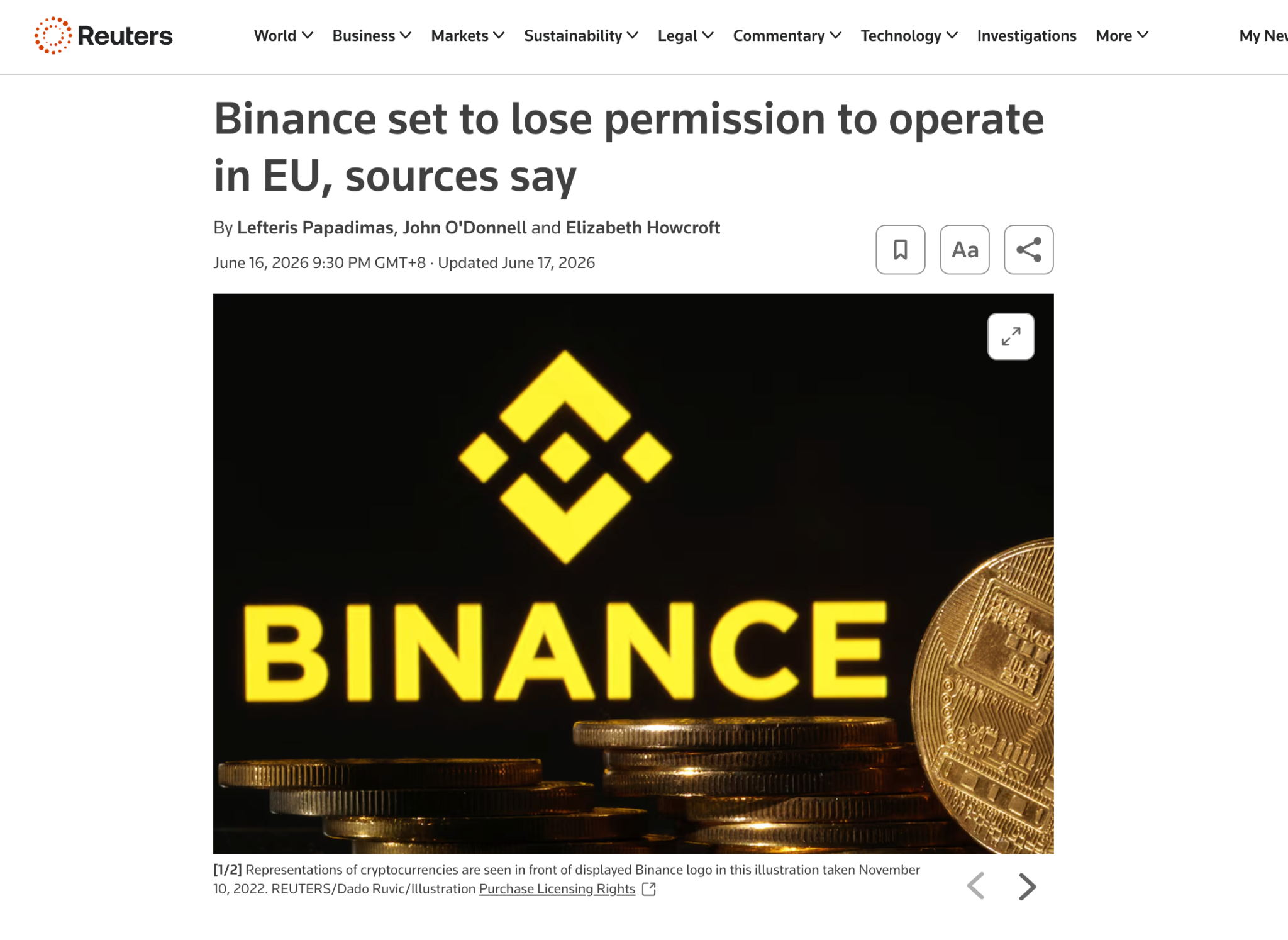
Image: Reuters article, Source: https://www.reuters.com/business/finance/binance-set-lose-eu-licence-bid-permission-offer-services-bloc-sources-say-2026-06-16/
This means Binance still believed it had the basis for compliance, but the Greek stance was ambiguous, with rejection being the more likely outcome.
So for Binance, Greece turned out to be an unreliable partner. Withdrawing the application on the 24th was essentially "cutting losses early," and it will now seek authorization in another EU member state.
In fact, Greece itself likely wanted Binance to succeed there. As a smaller country, attracting a major fintech project like Binance could potentially bring investment, tax revenue, and jobs.
So why did Greece act so hesitantly on this matter?
Let's delve deeper into the interest chains behind this.
What Did Binance Withdraw?
Focusing on Binance's announcement to European users, it confirmed the withdrawal of the MiCA application submitted in Greece, which we've already discussed.
The core information in the announcement has three layers:
First, Binance withdrew its MiCA application from the Greek HCMC.
Second, Binance will turn to another EU member state to continue seeking authorization.
Third, Binance emphasized that user assets remain safe and accessible, but some European users might be affected in service arrangements depending on their country of residence and account status. Binance will contact affected users directly through official channels to explain the next steps.
You see, these three points together indicate that Binance has not announced an exit from the European market, nor is it abandoning MiCA. It is abandoning the "Greece as the EU license gateway" route. This means Binance itself still desires and has confidence in obtaining MiCA approval.
Focusing on MiCA, it differs from local financial licenses in European countries. It is more like a universal "business license" valid across the EU.
For example, earlier, for an exchange to do business in Europe, the common path was to obtain different forms of registration or licenses in different countries, like DASP in France, OAM registration in Italy, local registration in Spain, CASP in Cyprus, etc. Different countries had different systems and regulatory intensities, allowing companies to disperse their layout across multiple points.
After MiCA is implemented, it introduces unified authorization and the EU passport system. As long as one Crypto Asset Service Provider (CASP) receives MiCA authorization in one EU member state, it can theoretically serve the entire EU market through the EU passport mechanism.
This means if Binance got the license in Greece, the effect wouldn't just be entering Greece, but obtaining a pass to all 27 member states.
Therefore, we cannot simply understand this withdrawal as just a local regulatory approval setback. It actually affects Binance's entire legal path of operation within the EU.
In fact, ESMA clearly reminded on April 17, 2026, that the MiCA transition period would end across the EU on July 1, 2026. After this date, CASPs without MiCA authorization continuing to serve EU clients would violate EU law. ESMA also required unlicensed institutions to prepare orderly exit plans in advance, including notifying customers, arranging asset transfers, migrating to authorized CASPs, or directing clients towards self-custodial wallets.
So, June 24 is just one week before July 1. Binance's withdrawal of the Greek application at this juncture carries a strong sense of urgency.
From public information, the wind direction in Greece seems to have turned negative since mid-June.
As mentioned earlier, on June 16, Reuters reported, citing sources, that Binance's MiCA application to Greek regulators was expected to be rejected. If this result materialized, Binance could no longer rely on the Greek path to serve EU clients after July 1. After the report, Binance quickly responded, stating it had cooperated constructively with regulators for 18 months, invested significant compliance resources, and according to its own understanding, the HCMC had completed its review, deeming the application compliant with MiCA, and the application had even gone through ESMA review.
So, while regulatory sources indicated Greece might reject it, Binance emphasized "we believe the application meets requirements and have received no formal contrary signal from the HCMC."
This shows Binance's application process had entered a state of ambiguity. The formal result wasn't public, but the market already felt negative expectations. The applicant was still maintaining its compliance narrative, but the time window no longer allowed for prolonged negotiation.
By June 23, Greek media eKathimerini reported that Binance had withdrawn both its applications submitted to the HCMC and the Bank of Greece, stating the entire process was considered "politicized" internally. The report also mentioned that while the Greek government was positive about Binance's investment, advisors from the Bank of Greece and the European Central Bank expressed negative opinions.
After Binance's announcement on June 24, it confirmed Binance proactively withdrew the Greek application to pursue MiCA authorization in another EU member state.
For Binance, if it continued waiting for a formal negative decision from Greece, it would be clearly labeled as "MiCA application rejected." This label would affect its applications in other EU member states and influence banks, institutional clients, and users' perceptions. By proactively withdrawing now, although it still exposes the failure of the Greek path, it at least retains the power to explain.
Externally, it can claim it still supports MiCA, still values Europe, and will find a clearer, more sustainable compliance path. Internally, it buys time to arrange EU users, mitigating panic withdrawals and service disruptions.
For other regulators, it can avoid entering the next round of negotiations carrying a formal rejection document.
Thus, Binance's withdrawal of the Greek MiCA application essentially means the path of Greece as Binance's European license gateway has reached a dead end, but it leaves room for future arrangements.
From Cyprus Retreat to Greece Retreat
Back in June 2023, Binance's Cyprus entity applied for deregistration from the local list of crypto asset service providers. At that time, Binance explained it was preparing for the EU's MiCA implementation by concentrating resources on fewer regulated entities. This marked the beginning of a strategic shift for Binance in Europe.
So, the retreat from Cyprus was essentially reorganizing the table for the MiCA era. It needed to reduce peripheral outposts and concentrate firepower on a few key markets.
However, the US settlement in November 2023 became a negative factor for Binance's compliance efforts. At that time, Binance reached settlements exceeding $4 billion with the US Department of Justice, Treasury, CFTC, etc. US DOJ documents showed Binance admitted to violations related to anti-money laundering, unlicensed money transmission, and sanctions. CZ also admitted to failing to maintain an effective anti-money laundering program, resigned as CEO, and served several months in prison.
This wasn't just about the fine. For an exchange, fines are a one-time cost, but reputational damage is a long-term liability.
Under CZ, Binance was the quintessential high-speed growth machine in the global crypto market – rapid product iteration, fast market entry, strong user growth, but often crossing regulatory boundaries. After Richard Teng took over, Binance's worldview shifted to compliance, regulatory cooperation, institutional governance, transparency, and long-termism.
In a regulatory system like Europe's, a company's historical compliance issues don't automatically disappear just because it changed the CEO or paid a fine. Regulators will consider all potential risk factors comprehensively. Were these issues caused by the founder's personal style or the company's governance structure? Has there been a fundamental change now?
After MiCA passport approval, is there a risk of future problems, potentially affecting the EU's financial system?
From this point on, Binance's European license pursuit became more of a trust restoration battle.
So, in January 2026, Binance bet on Greece.
Why Greece?
Greece's appeal to Binance lay in concentrated approval resources, strong political will to attract investment, and lower costs compared to traditional financial centers. Such a country offers the institutional value of the EU passport system and potentially more operational flexibility than countries with stronger traditional regulations and higher political visibility. Moreover, there were few local MiCA benchmark cases at the time. Binance hoped to become that benchmark.
Richard Teng also publicly stated at the time that Greece's labor and security conditions gave it an advantage in choosing a European regulatory headquarters. When a global exchange CEO publicly praises a country's advantages, it usually means the company has incorporated that location into its core strategic narrative.
For Greece itself, it also hoped to welcome a partner like Binance.
Greece is an EU member but not a traditional European financial regulatory powerhouse. It wants to attract investment and shape its fintech image.
After all, a large exchange establishing a European hub locally can bring jobs, tax revenue, legal and accounting service income, and package Greece as a new node for Southern European fintech and crypto industries. Projects like Binance naturally hold strong appeal for Greece.
But Where Did Greece's Pressure Come From?
MiCA's design purpose is to eliminate regulatory arbitrage in European crypto regulation.
Before MiCA's full implementation, European crypto regulation was fragmented. Each country had its own registration system, some with high thresholds, others low. Some focused more on AML registration, while others had already started building more complete regulatory frameworks for digital asset service providers. Large exchanges could get licenses in France, Italy, Spain, Cyprus, and expand into Poland, Sweden, and Lithuania.
The advantage of this approach was flexibility. If one country tightened regulations, another was fine. If getting a license in one country was difficult, another country could be tried. Many crypto platforms survived in Europe this way in earlier years.
But after MiCA was implemented, this logic was completely rewritten.
The biggest feature of MiCA is unified access. Once an exchange obtains authorization in one EU member state, it can theoretically serve the entire EU market through the EU passport mechanism. This means if Greece issued a license to Binance, the impact wouldn't be limited to Greek users but would affect market access across all 27 EU member states.
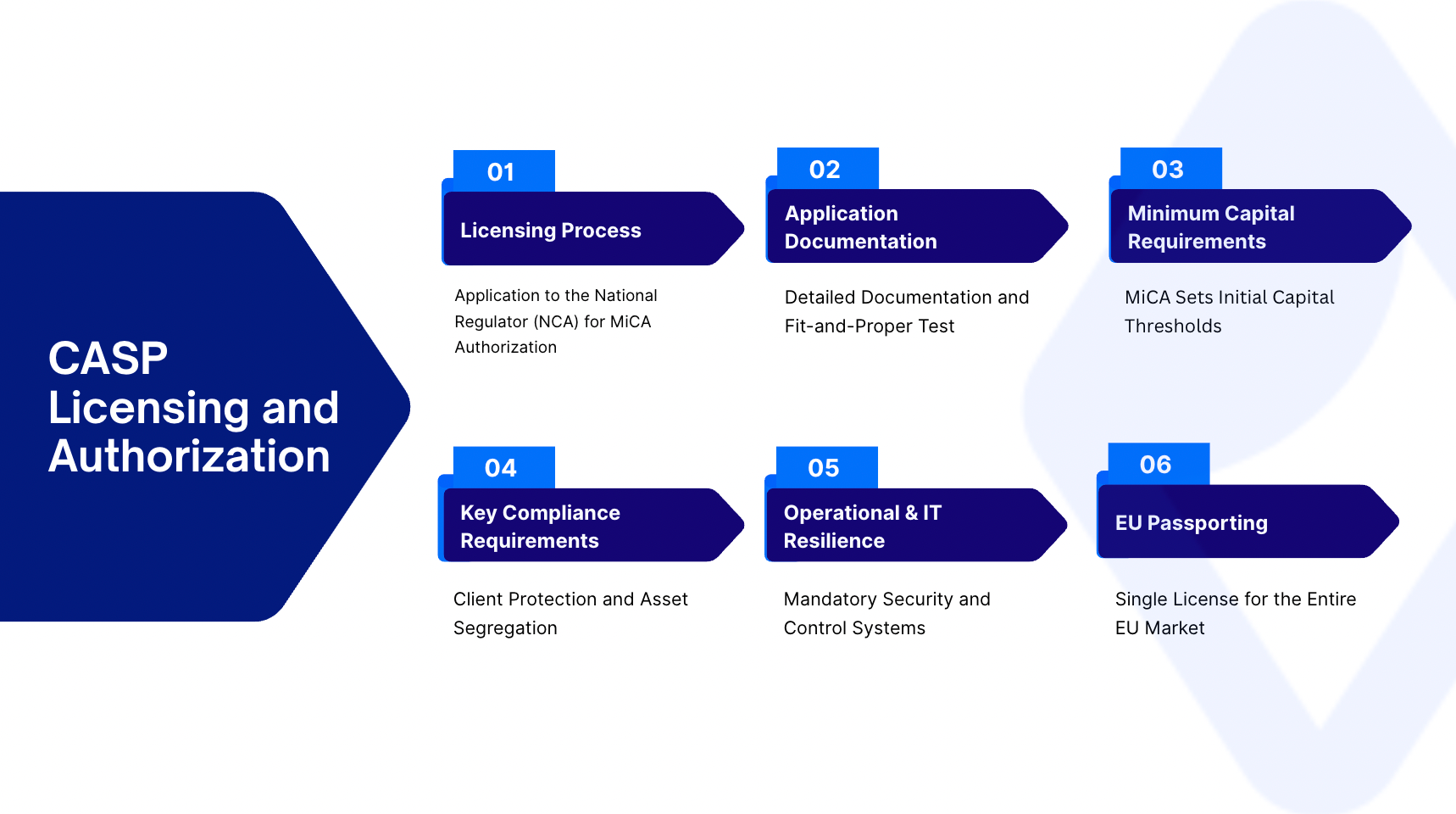
Image: MiCA Passport Mechanism + CASP Authorization Process Explanation, Source: blog.amlbot.com
So, if a highly controversial exchange with a heavy historical compliance burden and enormous global scale quickly obtained MiCA authorization through a relatively small member state with limited regulatory resources but stronger investment attraction intent, then countries like Germany, Netherlands, France, and Ireland – with stronger regulatory capabilities and more complex financial systems – would inevitably see their standards lowered.
Once this precedent was set, other large crypto platforms would follow suit. Everyone would stop seeking the most mature regulators and instead go to the easiest countries to negotiate with, those most willing to attract investment and needing industry success stories. Ultimately, MiCA, designed to solve regulatory arbitrage, could become a tool for a new round of it.
Therefore, while MiCA applications appear to be decided nationally (e.g., by Greece's HCMC), in practice, the opinions of ESMA and the European Central Bank (ECB) matter significantly.
Although ESMA doesn't directly license CASPs (that's done by national competent authorities), it oversees regulatory and standards coordination. It ensures different countries don't apply the same rules with vastly different strictness.
The ECB doesn't have direct veto power over crypto licenses either, but its influence is strong in contexts of financial stability, banking system risk, stablecoins, payment systems, and macro-prudential regulation. Especially when a large exchange enters the unified EU market, it involves not just a crypto platform but user assets, banking channels, payment clearing, stablecoin liquidity, and potential systemic risk spillovers.
So, what Greek media called "politicization" is more accurately the approval process being placed within the combined context of EU financial sovereignty, regulatory reputation, member state competitive interests, and the trust deficit of a major exchange.
Who Could Be the Other EU Member State Binance Mentioned?
Currently, Coinbase has announced obtaining MiCA permission through Luxembourg's CSSF, and Kraken has obtained MiCA authorization through Ireland's Central Bank.
Following such paths, once a platform completes MiCA authorization in one EU member state, it can serve the entire EU market via the EU passport mechanism. Their biggest advantage going forward is that after July 1, they can compete for institutional clients, compliance-sensitive users, and banking, payment, and fiat on/off ramp partners with regulatory certainty.
For Binance, short-term revenue loss in Europe might not be fatal. Binance still has global liquidity, emerging market coverage, and a complete product line. However, Europe is a showcase market for global regulatory credibility. Failing to obtain MiCA, I believe, could slow down Binance's legitimacy restoration process.
Beyond the exchange business, this could also affect banking partnerships, institutional capital, stablecoin and RWA strategies, and perceptions of Binance's compliance capabilities in other jurisdictions. For a platform transitioning from CZ's era of aggressive expansion, the time cost of restoring trust might be more important than short-term trading volume losses.
Long-term, this benefits platforms with higher compliance costs, more transparent governance structures, and lighter historical baggage. It also benefits TradFi institutions entering crypto custody, tokenization, and payment clearing. Under a unified regulatory framework, the market will increasingly value platforms accepted by banks, institutions, and regulators over the long term.
Conversely, some high-frequency trading, high-risk appetite, and non-compliance-sensitive demand might continue flowing to DEXs, non-custodial wallets, or non-EU platforms. The stratification – compliant platforms serving institutional capital, on-chain and offshore markets serving more native, aggressive crypto demand – will become increasingly pronounced.
For Binance, which is now hastily seeking new partners, I believe the next stop might be France.
In fact, Binance previously completed DASP registration with the French AMF. Binance France SAS has been on the AMF whitelist since May 2022, covering custody, fiat-to-crypto trading, crypto-to-crypto trading, and platform operation. France is one of the early EU countries to establish a digital asset service provider framework, with more mature regulatory experience, fintech policy narrative, and market influence compared to Greece.
Following the paths of Coinbase (Luxembourg) and Kraken (Ireland), Binance needs a member state with both regulatory capacity and the scale to support its European business volume.
Of course, the French path doesn't guarantee easier approval. France has stronger regulatory resources and likely stricter scrutiny. France values its fintech narrative and regulatory reputation more. Moreover, the old DASP registration does not equal MiCA authorization. Previous registration in France only proves Binance has some local foundation, not that the MiCA license is in hand.
Therefore, Binance's withdrawal from Greece is a retreat from