Hook Summer真的要来了吗?sato、Lo0p、FLOOD引爆Uniswap v4新叙事


- 核心观点:在以太坊生态中,基于Uniswap v4 Hook协议的Meme代幣(如sato、Lo0p、FLOOD)近期热度回升,通过智能化的流动性管理机制吸引了市场目光,但其对UNI币价的短期直接推动作用有限,更多的是作为长期生态发展的催化剂。
- 关键要素:
- Uniswap v4 Hook机制允许开发者在流动性池的关键节点(如Swap、增減流动性)前后注入自定義邏輯,實現可程式化的自動化做市商。
- sato代币通过曲线机制实现动态铸造与销毁,市值曾突破3800万美元,但存在买卖价差争议,目前市值稳定在2800万美元。
- Lo0p代币首创Uniswap v4 Hook上的借贷AMM协议,用户可抵押代币按40% LTV借出ETH,市值高点接近660万美元。
- FLOOD代币集成Aave v3,将买盘储备资产自动投入生息市场,交易手续费回流池子以推高代币价格。
- Uniswap v4 TVL暫報5.95億美元,低於v2和v3版本,顯示Hook生態仍需時間發展才能成為主流流動性協議。
Original|Odaily星球日报(@OdailyChina)
Author|Wenser(@wenser 2010 )
As the broader market slightly recovers, the heat around Ethereum ecosystem Meme coins has reignited. Following ASTEROID, ecosystem tokens like sato, sat1, Lo0p, and FLOOD, backed by the Uniswap v4 Hook protocol, have gradually become the market's focus, with market capitalizations ranging from millions to tens of millions of dollars. This brings a much-needed concentrated liquidity to a crypto market starved for narratives. Odaily will briefly review the information on these tokens in this article and discuss whether this wave of enthusiasm can drive a recovery in UNI's price.
Hook Summer is Here? 4 Major Ecosystem Tokens, Smart Liquidity Management
According to Uniswap official documentation, a Hook is a "plug-in smart contract" tailored for liquidity pools in Uniswap v4. Unlike the fixed constant product curve (x*y=k) of traditional Uniswap V2/V3, it allows developers to automatically inject custom logic before and after key lifecycle events of the pool (initialization, adding/removing liquidity, Swap, Donate, etc.), turning the entire AMM (Automated Market Maker) into programmable "Lego bricks." Aside from the previous uPEG, recent representative projects include the following:
sato: Peak Market Cap Over $38 Million
CA: 0x829f4b62eebe12af653b4dd4ffc480966f7d7f09
Current Market Cap: ~$28 million
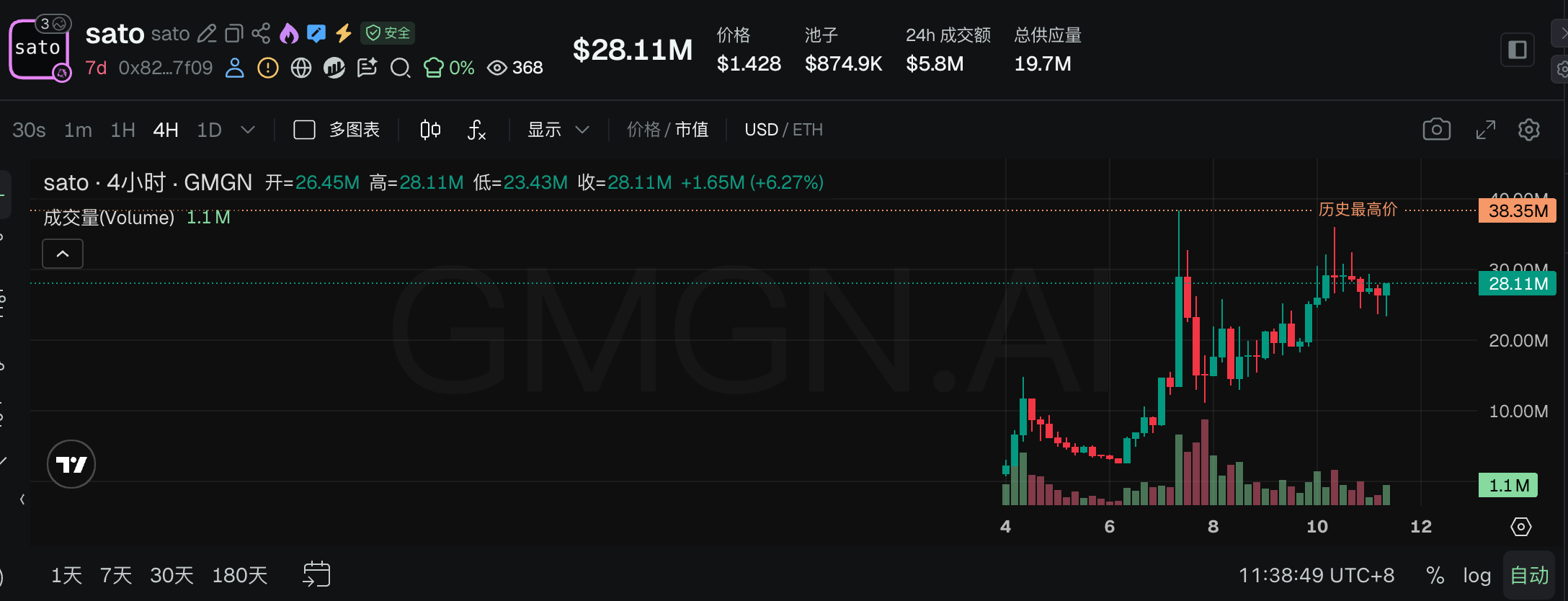
On May 4th, right after sato emerged, Odaily briefly introduced it, when its market cap was only $9 million. This token is minted and burned through the Uniswap v4 curve mechanism: buying generates new tokens and locks ETH as reserves, while selling redeems ETH from reserves and burns tokens. At that time, its cumulative buying volume had neared 1000 ETH. Later, sato's market cap briefly exceeded $30 million.
Although community users later discovered a bid-ask spread in its curve mechanism, causing its market cap to drop below $13 million at one point, its innovative mechanism and first-mover advantage have helped it maintain a market cap of around $28 million, with a 24-hour trading volume of nearly $6 million.
sat1: Peak Market Cap Over $10 Million
CA: 0x8f66337a0c2a02202fd91dd596c411cf977c6060
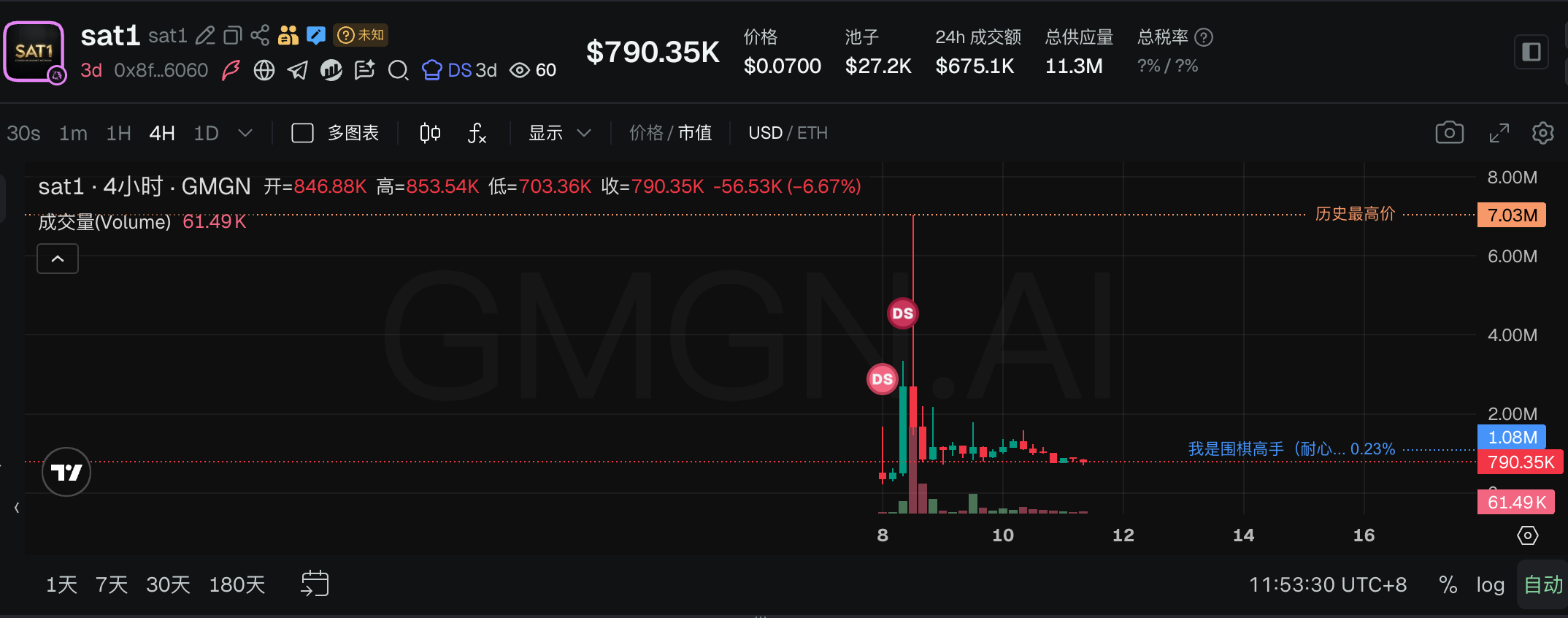
Current Market Cap: ~$800,000
On May 8th, sat1, positioned as an "optimized version of sato," hit its peak hype. Thanks to heavy promotion by crypto KOL @hanbawang in WeChat groups, the token's market cap briefly exceeded $10 million. However, following subsequent public backlash, the project gradually entered a death spiral, and its market cap has now dropped to a fraction of its peak.
Lo0p: Peak Market Cap Near $6.6 Million
CA: 0x20ea861b3acec90d3a15b4755d9a1cf1f161496e
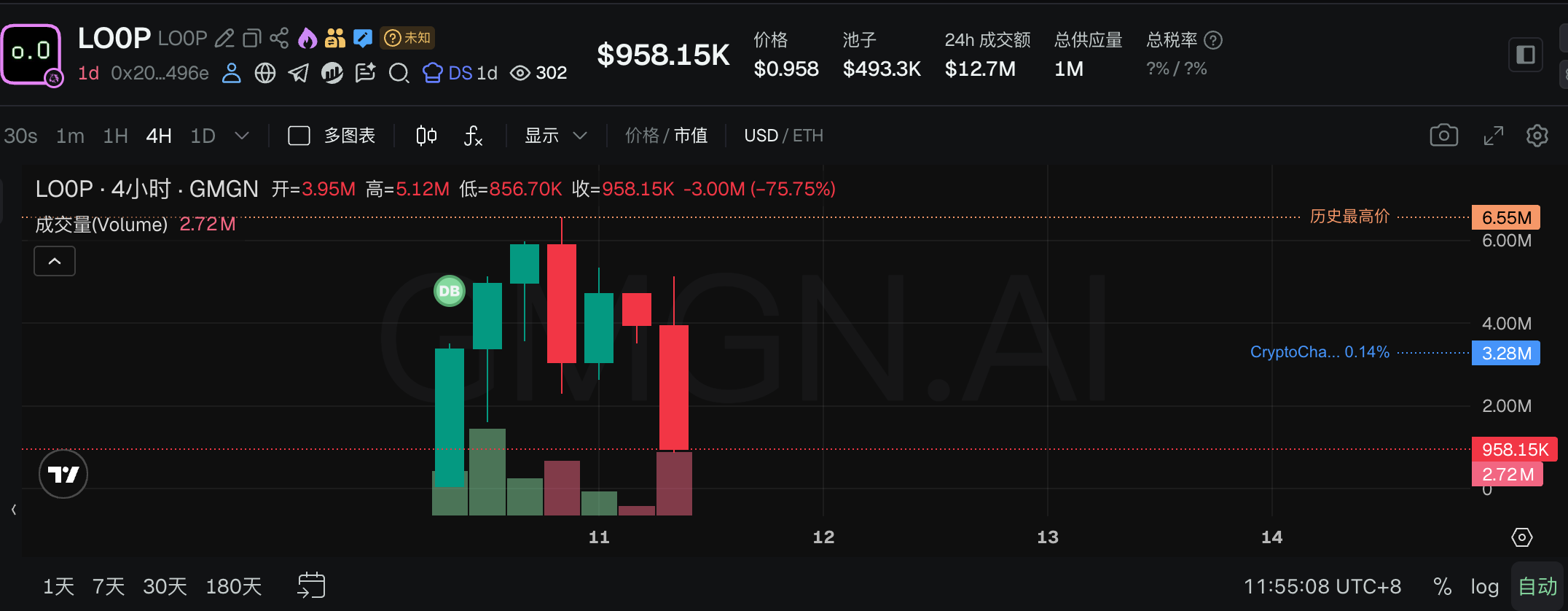
Current Market Cap: ~$960,000
Official Account: https://x.com/lo0pio
On May 10th, Lo0p's market cap briefly exceeded $6 million, a daily increase of over 110 times. Lo0p's core concept is a "lending AMM protocol based on Uniswap v4 Hook," aiming to solve the capital efficiency issue of idle ETH in LP pools. Users buy LO0P tokens via a bonding curve, locking them as collateral (without needing to sell), allowing them to borrow ETH directly from the pool reserves at a 40% LTV; borrowing does not directly impact the spot price, and a liquidation mechanism tries to refill the LP band. The Hook injects custom logic into the Swap/liquidity lifecycle, enabling a composite yield of "collateralized lending + LP returns + lending interest" while maintaining pool price stability. Its core mechanism is "built-in lending."
FLOOD: Peak Market Cap Near $6 Million
CA: 0xff003fbe8b8d5e7f271a9cb9f2780003daed2aa8
Current Market Cap: ~$1.4 million
Official Account: https://x.com/flood_markets
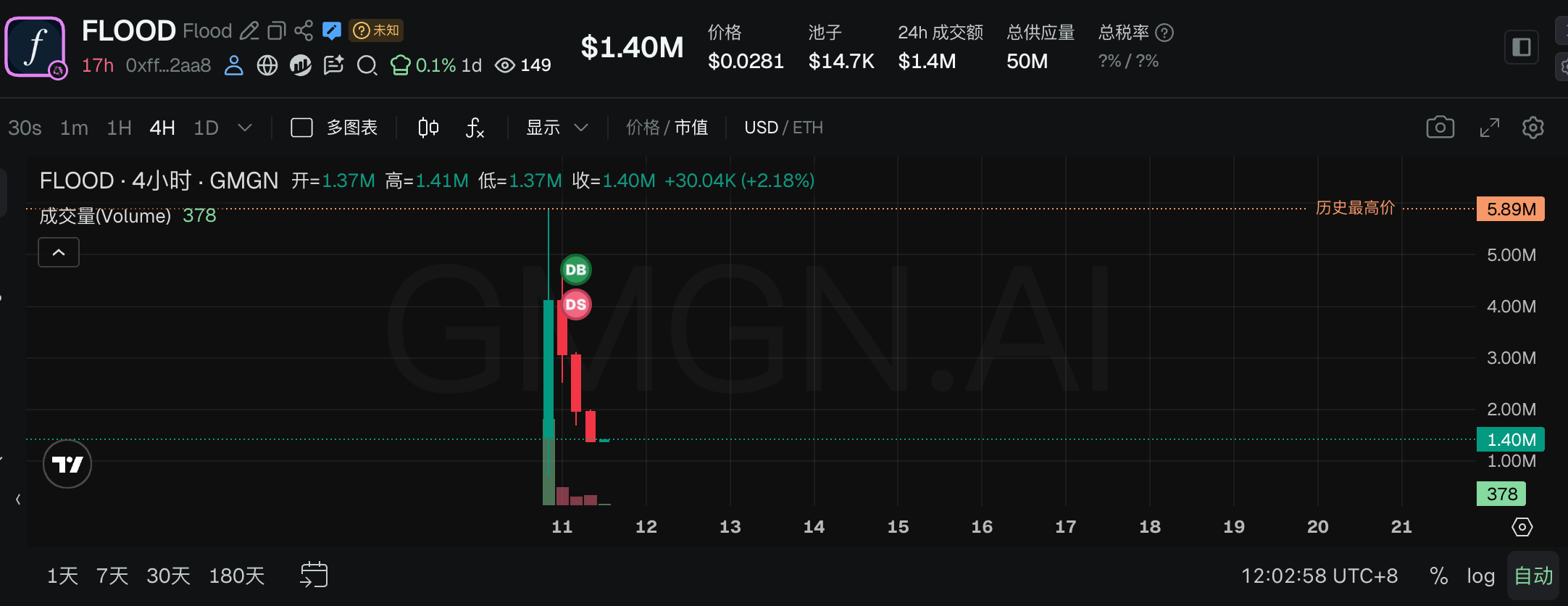
On May 10th, FLOOD's market cap briefly exceeded $5 million. As the hype receded, its current market cap stands around $1.4 million. Reports indicate FLOOD has a total supply of 50 million tokens. Its unique mechanism works as follows: asset reserves generated from user purchases are deposited into the corresponding Aave v3 market to earn yield, and trading fees are also retained in the pool to increase reserves and influence the token price. The core lies in Aave integration for automatic yield, with the Hook mechanism playing the role of "auto-rebalancing and yield redirection." No wonder some community members quipped: "Buy-side funds go into the pool → pool assets go to Aave to earn interest → interest stays in the pool → pushes price up long-term. So it's basically using my money to save and earn interest for me?"
Hook Mechanism Tokens Driving Uniswap Ecosystem Development: UNI Bullish Long-Term, But Limited Short-Term Gains
Thanks to the rapid development of the Uniswap v4 Hook mechanism, ecosystem tokens in this sector have become a subset of Meme coins and project ecosystem tokens. In the long term, this can further attract users and liquidity to participate in trading and building on Uniswap v4 liquidity pools.
Combined with the previous news that "Uniswap has turned on the fee switch, with a portion of protocol fees used to burn UNI tokens," UNI's long-term fundamentals are showing a steadily improving trend.
However, in the short term, the emergence of Hook mechanism tokens cannot directly drive an increase in UNI's price. There are intermediate influencing factors, including the lifecycle and sustainability of these tokens, the ratio of token price volatility to trading fees, and the impact of crypto regulatory policies and broader market trends on UNI.
Therefore, in summary, the Hook ecosystem is a "long-term nutrient" for UNI, but in the short term, it acts more like a "catalyst" than a "propellant."
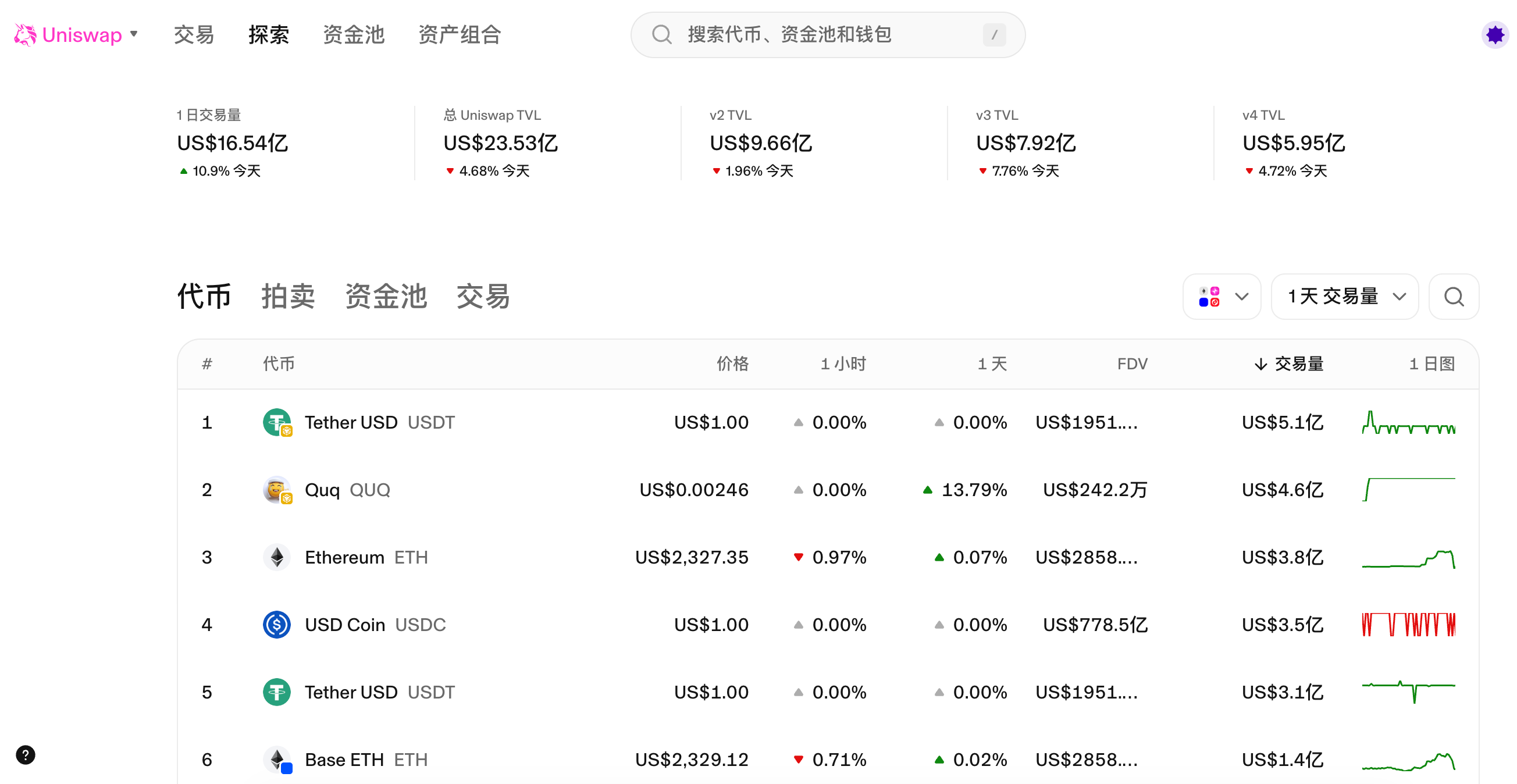
Furthermore, according to the Uniswap official website, the current v4 TVL is approximately $595 million, slightly lower than the v3 ($792 million) and v2 ($966 million) liquidity pools. Therefore, the adoption of v4 and the Hook ecosystem still requires time to build momentum and gradually grow into a mainstream liquidity management protocol.
Finally, Odaily reminds readers that the tokens mentioned above are all experiments of early technological innovation and may contain unknown bugs or other risks. Please be aware of the relevant risks when participating in trading. The above information does not constitute investment advice.