






Base sắp phát hành token? Mã nguồn B-20 và Beryl phát đi tín hiệu mạnh mẽ


- Quan điểm cốt lõi: Mạng lưới Base đang đẩy mạnh xây dựng cơ sở hạ tầng token gốc thông qua việc hợp nhất mã nguồn và cập nhật lộ trình chính thức, khiến kỳ vọng về việc phát hành token và airdrop trên thị trường tăng cao. Tuy nhiên, phía chính thức vẫn chưa công bố mô hình kinh tế token cụ thể hoặc lộ trình thời gian. Những tiến triển hiện tại chủ yếu hướng đến việc xây dựng khuôn khổ phát hành nhiều loại tài sản trên chuỗi (như stablecoin, RWA).
- Các yếu tố then chốt:
- Blog chính thức của Base đã đưa "thiết lập tiêu chuẩn token" vào kế hoạch nâng cấp tiếp theo, cho thấy họ đang đưa khả năng phát hành token vào lộ trình giao thức.
- Kho lưu trữ mã nguồn mở của Base đã hợp nhất các mô-đun thử nghiệm B20Factory, PolicyRegistry và Beryl trong vài ngày, cho thấy cơ sở hạ tầng token đã bước vào giai đoạn kỹ thuật rõ ràng.
- Mã nguồn B-20 xác định khuôn khổ cho ba loại tài sản: token thông thường, stablecoin và token chứng khoán, đồng thời cung cấp chức năng xác định địa chỉ dựa trên địa chỉ người tạo và tham số.
- Mô-đun PolicyRegistry hỗ trợ kiểm soát quyền allowlist và blocklist dựa trên các chiều như người gửi và người nhận chuyển tiền, đáp ứng nhu cầu tuân thủ của stablecoin và RWA.
- Phát biểu gần đây của người đứng đầu Base nhất quán với định hướng token hóa RWA và thanh toán stablecoin, ngụ ý rằng hệ thống tài sản gốc có thể tập trung vào thị trường tài chính trên chuỗi, thay vì chỉ phục vụ một token mạng đơn lẻ.
Original author: KarenZ, Foresight News
Speculation about the Base airdrop is heating up once again.
On one hand, the Base official blog has included a built-in token standard in its upcoming upgrade plans. On the other hand, the open-source repository has, within days, integrated the B20Factory, PolicyRegistry, and Beryl testing modules. Coupled with Base's mysterious teaser video released on May 25, captioned only with "...", the market naturally connects these pieces of information to a single question: Is Base preparing for a network token and an airdrop?
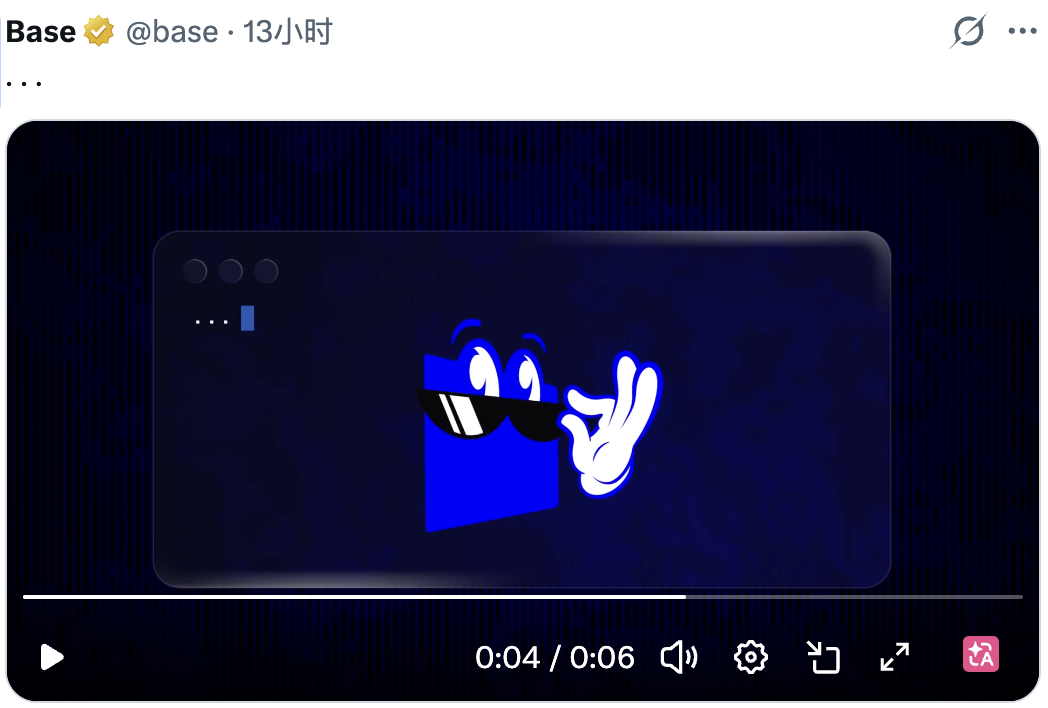
As of May 26, 2026, Base has not released a tokenomics model, snapshot rules, or an airdrop timeline. What is certain is that Base's token infrastructure is entering a more defined engineering phase, and market expectations for its token issuance are consequently rising.
Official Roadmap Reveals "Protocol Built-in Token Standard"
Base has already made public statements regarding a network token. In September 2025, Base Network Lead Jesse Pollak stated that they were exploring a network token.
Over a month later, during the Q&A session of the Q3 earnings call, Coinbase co-founder and CEO Brian Armstrong said, "We are currently in the early stages of exploring a Base network token. We won't be releasing any details about governance, distribution models, or timelines for now, and will continue discussions publicly."
New clues come from an official blog post introducing the Base Azul upgrade. In the 'future plans' section of the article, Base listed "Establishing a token standard" as part of the next performance upgrade expected to launch at the end of June.
"Establishing a token standard" can be interpreted as a protocol built-in token standard. While this statement is still a step away from "Base will issue its own token," it makes one thing clear: Base is incorporating token issuance capabilities into its protocol roadmap. For a network that has publicly discussed a network token, this is enough to make the market re-evaluate its token launch process.
B-20 Code Implementation, Native Token Framework Takes Shape
Beyond the official blog, the B-20 module in Base's repository provides a more detailed technical picture.
On May 19, Base merged the "Dynamic Native Token Addresses" commit. The current source code shows that B20Factory can derive deterministic token addresses based on the creator's address, token type variant, and a custom salt parameter.
In b20_factory/variant.rs, Base defines three types of B-20 assets: regular B20 tokens, stablecoins, and security-type tokens.
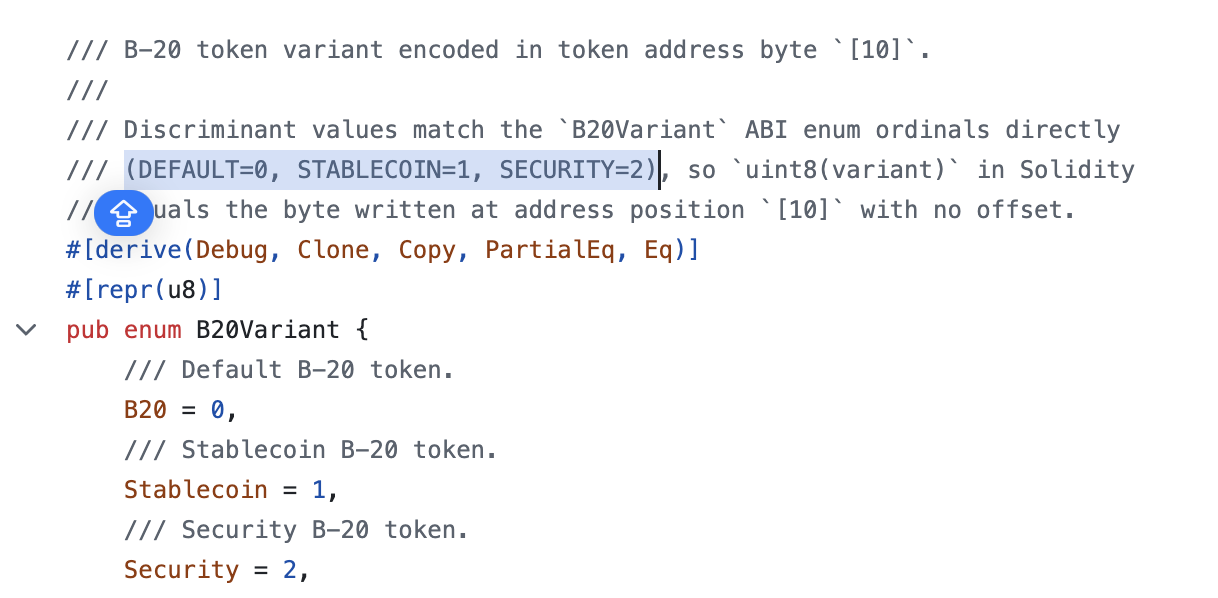
b20_factory/storage.rs implements createB20, supporting the writing of name, symbol, supply cap, and initial mint calls. This looks more like a comprehensive native issuance framework covering multiple types of on-chain assets, rather than just a single contract for a governance token.
The detail that drew the most community attention came from the benchmark file base_precompiles.rs. This file indeed named a test token "BaseToken" with the symbol "BASE". However, this detail should be interpreted cautiously and is not sufficient proof that a token launch is imminent.
Beryl Code Exposure: Base's Native Asset System Moves Towards Compliance Control
The significance of B-20 extends beyond just "being able to issue tokens."
In provider.rs, Base states that when the upgrade reaches Beryl and beyond, the network will install dynamic precompiles like B20Factory, PolicyRegistryPrecompile, and ActivationRegistry. Currently, no official upgrade page or mainnet activation time for Beryl can be found in the official documentation, but the code already indicates its functional direction.
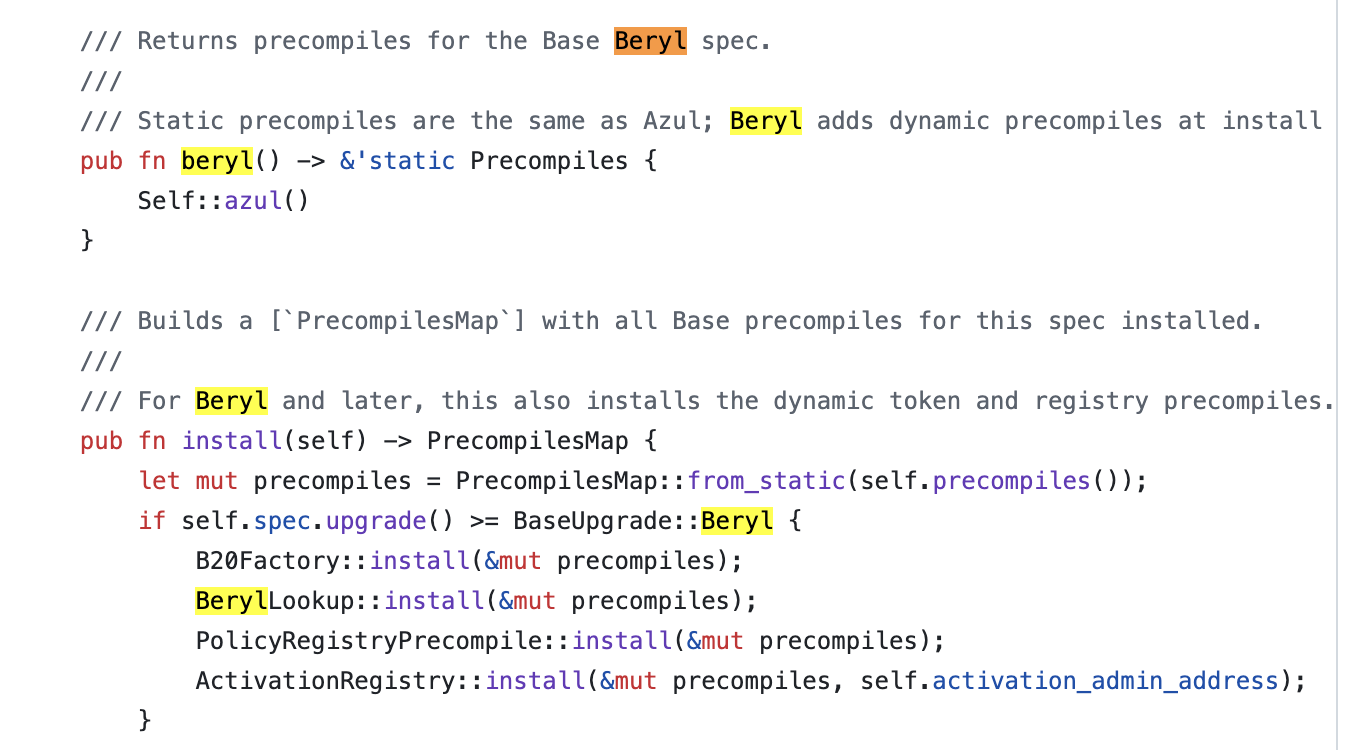
Among these, PolicyRegistry is particularly noteworthy. This module supports allowlists and blocklists, and allows B-20 tokens to bind policies to:
- Transfer sender;
- Transfer receiver;
- Withdrawal executor;
- Mint receiver.
In actions/harness/tests/beryl/policy_transfer.rs, the test code has already verified that a B-20 transfer will be rejected if the sender is not on the bound allowlist or is on the blocklist.
This design is highly suitable for assets with permission constraints, such as stablecoins, security tokens, and RWAs. It indicates that Base is building a system for native asset issuance and circulation, potentially targeting the on-chain financial market, rather than just serving a single potential BASE token.
Summary
A network that has explicitly discussed a network token is now building a native token factory, stablecoin module, security token module, and permission policy system at the execution layer. This indeed shows that Base is deepening its commitment to on-chain asset issuance.
This aligns with the team's recent public statements. On May 24, Base lead Jesse Pollak shared and endorsed Coinbase CEO Brian Armstrong's discussion on the direction of financial system upgrades, focusing on RWA tokenization, stablecoin payments, and agent payments. These statements are highly consistent with the design of B-20, which simultaneously supports regular tokens, stablecoins, and security tokens.
However, there is a distinction that is easy to overlook: native token infrastructure can serve ecosystem issuance, stablecoins, RWAs, compliant securities, and also Base's own network token. The code proves Base is expanding its asset issuance capabilities, but it cannot prove when its own token will be launched or if it will be distributed to users via an airdrop.
A safer assessment now is: Base has reached a stage where its token infrastructure is gradually taking shape. As for whether historical users will receive an airdrop, how eligibility will be calculated, and when the distribution will start, we still await official disclosure.


