






"单签"失守:StablR合规稳定币脱锚事件分析及被盗资金流向追踪


- Quan điểm cốt lõi: Nhà phát hành stablecoin StablR, do mất kiểm soát quyền hạn quản lý ví đa chữ ký, đã khiến các stablecoin tuân thủ EURR và USDR của họ bị đúc trái phép hàng loạt và mất neo, gây thiệt hại hơn 3 triệu USD, làm nổi bật rủi ro từ khiếm khuyết quản trị vận hành thay vì lỗ hổng mã nguồn.
- Các yếu tố chính:
- Cuộc tấn công bắt nguồn từ việc giao dịch từ ví đa chữ ký chỉ yêu cầu 1 chữ ký. Kẻ tấn công đã kiểm soát địa chỉ owner, sau đó thêm địa chỉ của chúng vào danh sách đúc đa chữ ký, giành được quyền đúc.
- Kẻ tấn công đã phát hành tổng cộng 8,35 triệu USDR và 4,5 triệu EURR thông qua đúc hàng loạt, khiến giá stablecoin mất neo nghiêm trọng tới 20%.
- Thiệt hại thực tế vượt quá 3 triệu USD. Số tiền đúc trái phép được phân tán và chuyển qua các sàn giao dịch như ChangeNOW, Kraken, Huobi và máy trộn Tornado Cash.
- Sự kiện đã phơi bày những khiếm khuyết bảo mật vận hành của nhà phát hành như thiếu cơ chế đa chữ ký ngưỡng cao, khóa thời gian và cơ chế phản ứng khẩn cấp nhanh chóng.
- Beosin đề xuất giám sát liên tục tổng lượng phát hành, hành vi đúc, giao dịch trên chuỗi và biến động giá thông qua hệ thống giám sát stablecoin để ứng phó với các rủi ro như vậy.
Original source: Beosin
On May 24th, the stablecoin protocol StablR was attacked. Its compliant euro stablecoin EURR and dollar stablecoin USDR experienced a severe depeg due to an illegal mass minting, dropping by 20%, resulting in actual losses exceeding $3 million. This attack originated from a loss of control over multi-signature permissions, once again sounding the alarm for security governance across the entire stablecoin sector.
Attack Flow Analysis
StablR is a stablecoin issuer headquartered in Malta. Previously, Tether announced a strategic investment in StablR, providing it with stablecoin issuance and risk management tools via its Hadron tokenization platform. Currently, StablR has launched two compliant stablecoin products: EURR and USDR.
By analyzing on-chain data, we can observe:
The multi-signature wallet controlling EURR minting is 0x8278D2881dBF8F6Fc01c98d196c4b16F1aade5Bc
The multi-signature wallet controlling USDR minting is 0xF45392bd2D6e6b8C5Dc26BA6c8a12889419B82F3
Since these multi-signature wallets required only 1 signature to initiate transactions, the attacker, by controlling the owner address 0xC73fD562de86d7860EE636C20813Bcb2cF4D550d, added the attacker's address 0xD4677B5A8B1b97EA213Fdb876b0FcBAB3f9F6CD1 to both multi-signature wallets:
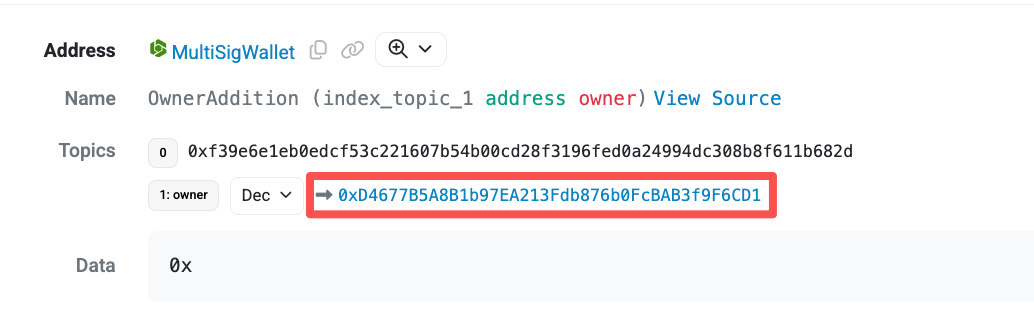
Related transaction hashes:
(1) 0x41c2504e208a3f260b2564393938b6e68f7348f5fcb8df00cde41f800f073c8a
(2) 0x5b5825ca36f4cdad02b1c777df63115e63010de77de71dba0ac60160c18100de
From the above process, we can see that this incident was not due to a code vulnerability, but rather an operational security issue on the part of the stablecoin issuer: failure to securely store the private key of privileged addresses, lack of high-threshold multi-signature for high-value/high-risk operations, absence of a timelock for large minting operations, and a lack of rapid emergency response mechanisms.
After the attacker's address 0xD4677B5A8B1b97EA213Fdb876b0FcBAB3f9F6CD1 obtained minting permission, the attacker began a large-scale minting operation and sent the minted stablecoins to multiple addresses:
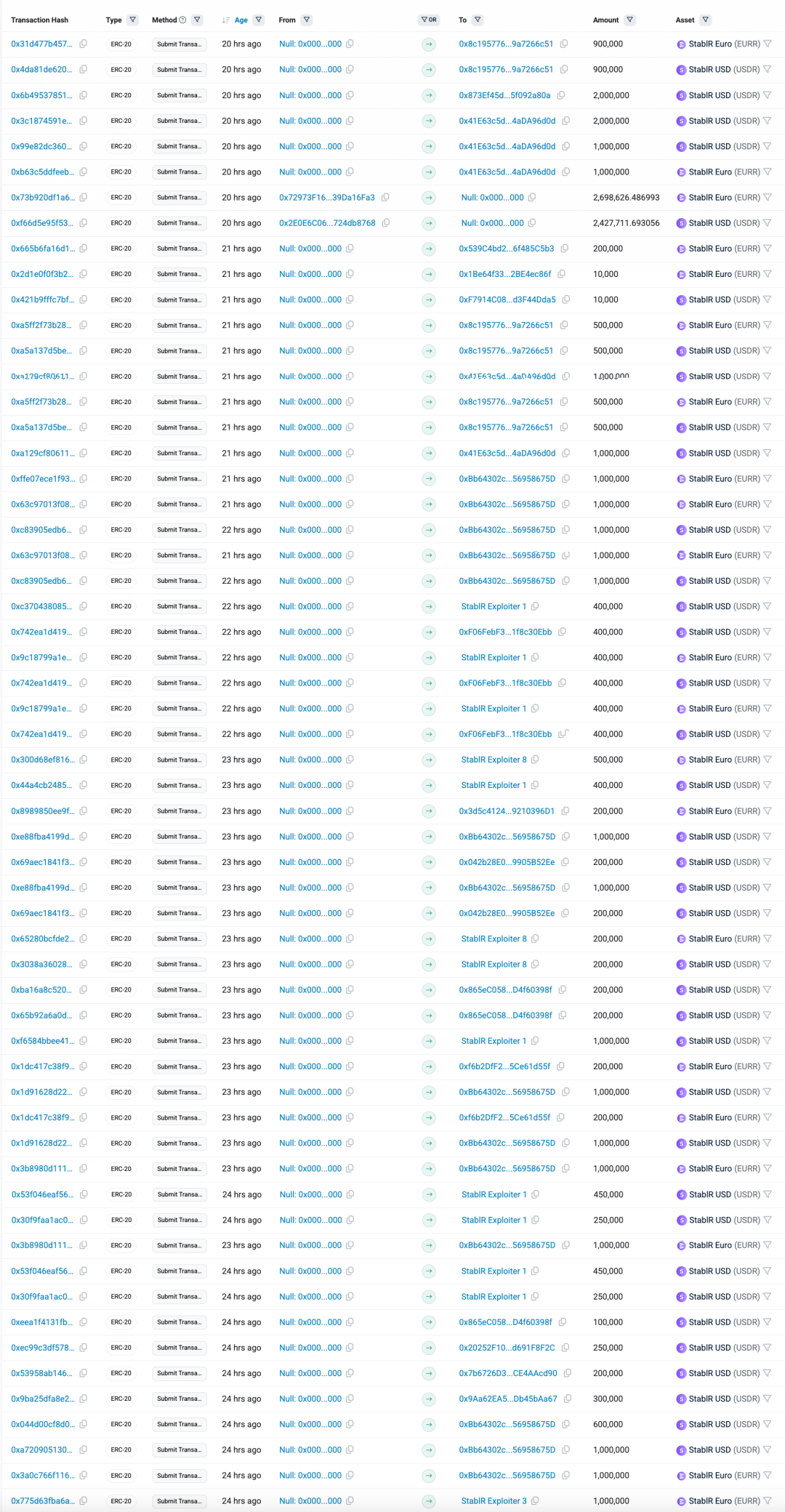
According to Beosin's statistics, a total of 8.35M USDR and 4.5M EURR were minted. Related minting query link: https://etherscan.io/advanced-filter?fadd=0x0000000000000000000000000000000000000000&tadd=0x0000000000000000000000000000000000000000&tkn=0x7b43e3875440b44613dc3bc08e7763e6da63c8f8%2c0x50753cfaf86c094925bf976f218d043f8791e408&ps=50
Analysis of Stolen Funds Flow
The actual losses from this incident exceeded $3 million. After minting, the main receiving addresses were:
1. 0xD4677B5A8B1b97EA213Fdb876b0FcBAB3f9F6CD1
(This address received a total of 1,000,000 EURR)
2. 0xBb64302c6F039D4aa800CAc93E6E54856958675D
(This address received a total of 4,000,535.33 EURR, 4,610,173.19 USDR; Current balance: 324,163.04 USDR, 1,204,098.63 EURR)
3. 0xeA480c23D7B29a515856AafE0dc86F7519965a04
(This address received a total of 412.67 ETH, 2,575,966.87 USDR, 650,000 EURR)
4. 0x5D2184d84b82B67c1818Bbec8ce81E7Df14F6bAb
(This address received a total of 235.92 ETH, 700,000 EURR, 200,000 USDR)
5. 0x41E63c5d2AE95802868D9ef3686cC974aDA96d0d
(This address received a total of 225.54 ETH, 4,000,000 USDR, 1,000,000 EURR)
6. 0x873Ef45d10b29EB251b1Eb5Fe057C325f092a80a
(This address received a total of 2,000,000 USDR; Current balance: 1,969,000 USDR)
7. 0x8c1957765721e2540c03A0D64435a469a7266c51
(This address received a total of 1,400,000 USDR, 1,400,000 EURR; Current balance: 900,000 EURR, 900,000 USDR)
8. 0x865eC0587CdF305877783C080d97DEdD4f60398f
(This address received a total of 504,000 USDR)
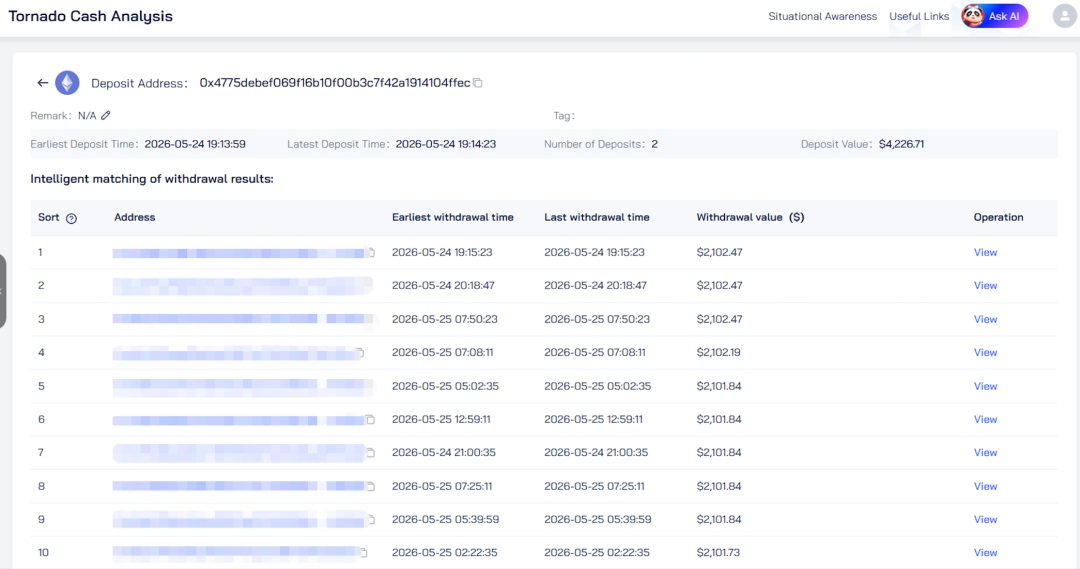
Through Beosin Trace analysis, part of the illegally minted EURR and USDR was transferred to various exchanges via fund dispersion, such as ChangeNOW, Kraken, Huobi, WhiteBIT, etc., with a small amount entering the Tornado Cash mixer.
Beosin Trace can penetrate mixers like Tornado Cash and flash-swap exchanges like ChangeNOW and Fixedflow. The relevant penetration results are as follows:
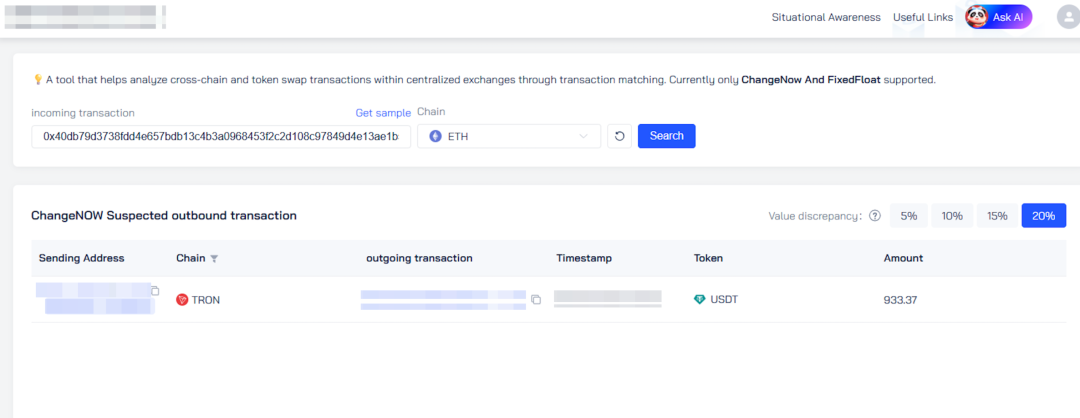
Apart from the funds transferred to centralized exchanges, the on-chain fund balances are as follows:
1. 0x09be1a36c2d7f9909eb3d6f9184c6e46a12b0aca
Balance: 1,488.08 ETH
2. 0x464545b1f001ec64f93a31a8e678bfbd3146ef3f
Balance: 510,673.98 USDR, 44,000 EURR
3. 0x9c25a3634fa04a8bac72e233c74469d5e15c5926
Balance: 85.21 ETH, 15,263.22 USDT, 101,241.95 EURR
4. 0x2e74a82f6dbdfbe8fe54bd081e215c0c368c7762
Balance: 8.91 ETH, 26,816.98 USDT, 250,570.03 EURR
5. 0xde7adbb368c2616df8c5c0e986933bee8f660add
Balance: 13.65 ETH, 165,162.05 USDT, 38,696.42 USDR, 258,117.67 EURR
6. 0x0bc0b7b24876ac97610346ea0194735ccc271edd
Balance: 100 ETH
7. 0xb8d90cffe9fdb398afec7046490d1efdb28a6386
Balance: 100,000 USDR
8. 0x7ec05d1d6b0cbf4e74bd5907d01aeeb4343c6376
Balance: 15 ETH
The overall fund flow is illustrated below:
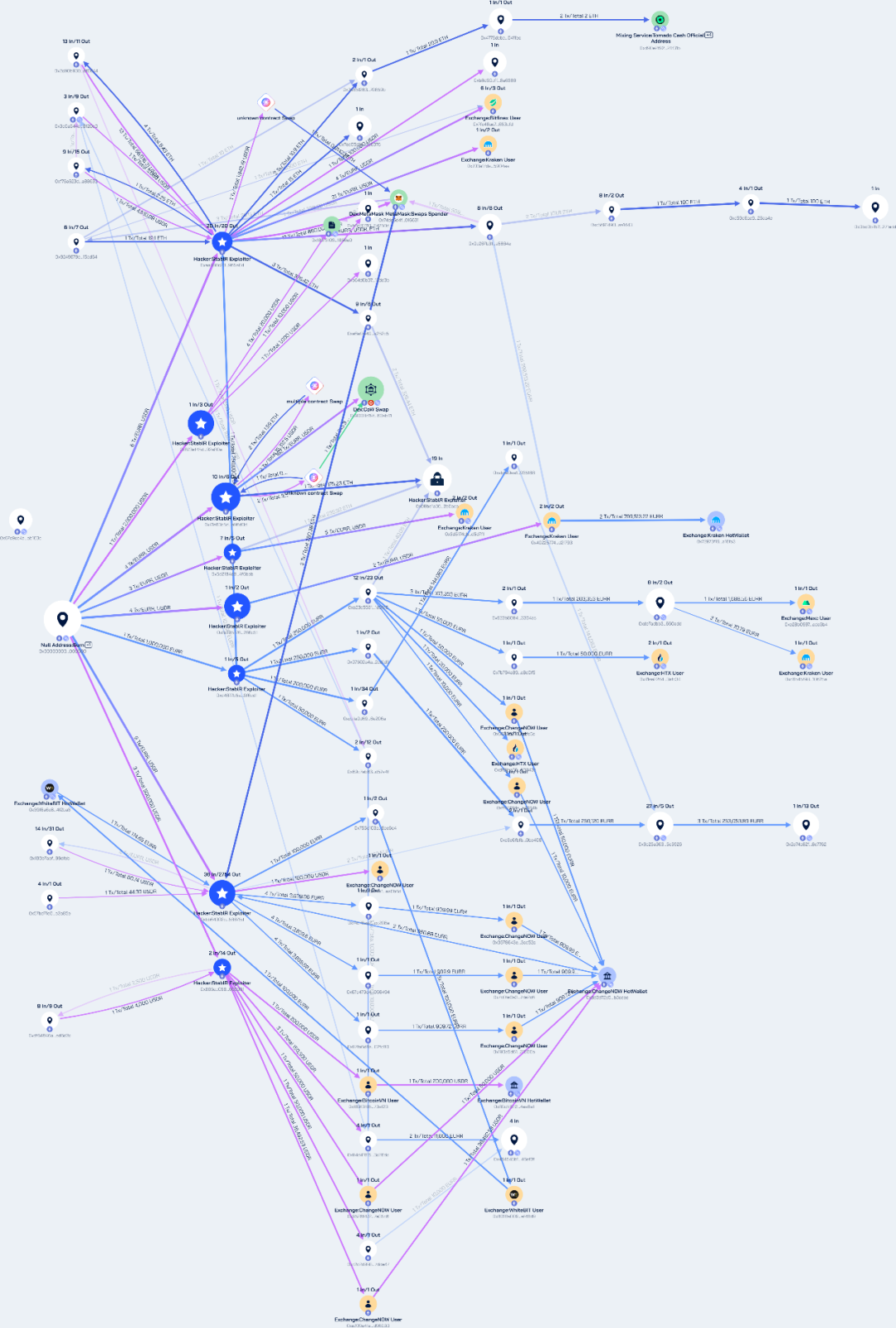
Stolen funds flow analysis chart by Beosin Trace
This security incident demonstrates that code audits cannot resolve operational/governance deficiencies. Stablecoin issuers and regulators should consider proactively monitoring the circulation and operation of stablecoins in secondary markets on a risk basis. Addressing this industry pain point, Beosin has launched a Stablecoin Monitoring system covering the full lifecycle of stablecoins: This system supports continuous monitoring of key operational indicators such as total issuance, minting and burning activities, holder distribution, and on-chain transaction flows:
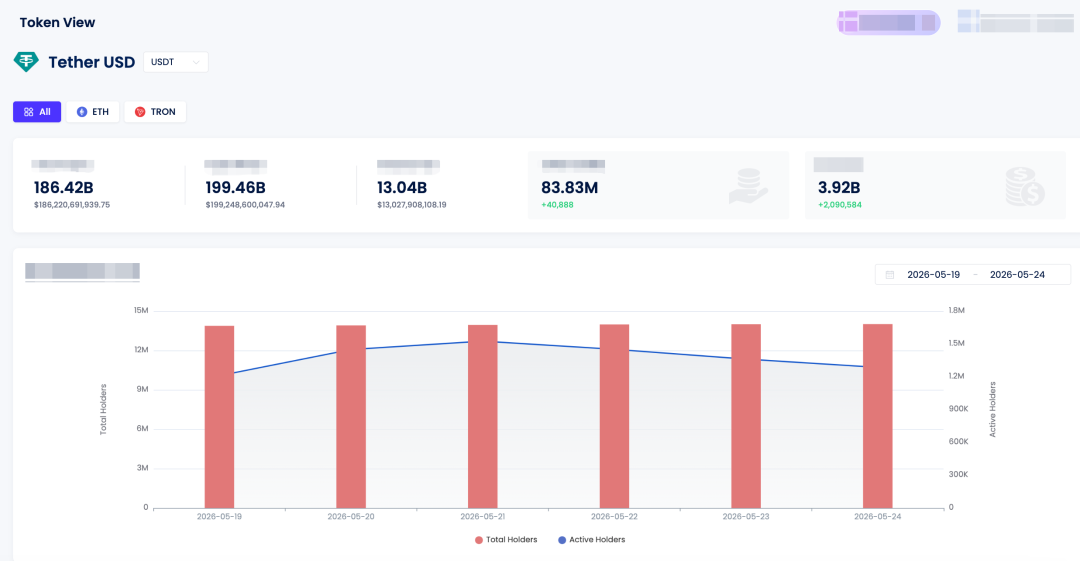
During the circulation phase, Stablecoin Monitoring integrates price fluctuation and peg analysis to promptly detect depeg risks caused by market manipulation or liquidity crises, addressing attack scenarios like the batch malicious minting of stablecoins following a private key leak in the StablR incident. It also possesses cross-chain activity tracking capabilities, allowing fund flow tracing across different blockchains. For counterfeit stablecoins issued on-chain, the system provides real-time monitoring and alerts, helping users identify related fraud risks.


