






Musk và Anthropic sắp lên vũ trụ tìm điện


- Quan điểm cốt lõi: Anthropic đã hợp tác về sức mạnh tính toán với SpaceX, sử dụng trung tâm dữ liệu Colossus của SpaceX để cung cấp hơn 300 MW sức mạnh tính toán, nhằm giảm bớt nút thắt về sức mạnh tính toán và vấn đề "giảm chỉ số thông minh" của mô hình Claude, đồng thời phản ánh sự chuyển đổi vai trò của Musk từ một đối thủ cạnh tranh mô hình thành một "nhà cung cấp vũ khí" cơ sở hạ tầng AI.
- Các yếu tố chính:
- Quy mô hợp tác: SpaceX cung cấp cho Anthropic hơn 300 MW sức mạnh tính toán mới (tương đương 220.000 GPU NVIDIA), sẽ đi vào hoạt động trong vòng một tháng, trực tiếp nâng cao trải nghiệm người dùng Claude Pro và Max.
- Bối cảnh chiến lược: Thỏa thuận này là lần hợp tác công khai quy mô lớn đầu tiên giữa Musk và Anthropic, diễn ra ngay sát thời điểm phiên tòa Musk kiện OpenAI, mang hàm ý cạnh tranh "kẻ thù của kẻ thù là bạn".
- Giải quyết vấn đề "giảm chỉ số thông minh": Anthropic trước đây đã bị suy giảm hiệu năng mô hình Claude do thiếu hụt sức mạnh tính toán và kiểm soát chi phí. Sự hợp tác này sẽ cải thiện các biện pháp hạn chế, tăng hạn mức sử dụng và giới hạn tốc độ API.
- Chuyển đổi vai trò: Bằng cách cung cấp sức mạnh tính toán dư thừa từ trung tâm dữ liệu Colossus, Musk đã chuyển đổi từ đối thủ cạnh tranh mô hình xAI thành nhà cung cấp cơ sở hạ tầng AI, phá vỡ ranh giới cạnh tranh truyền thống.
- Triển vọng tương lai: Hai bên có kế hoạch hợp tác phát triển sức mạnh tính toán AI quỹ đạo ở cấp độ gigawatt, đưa trung tâm dữ liệu lên vũ trụ, giải quyết các nút thắt về nguồn cung cấp điện, đất đai và khả năng tản nhiệt trên Trái Đất.
Original | Odaily Planet Daily (@OdailyChina)
Author | Azuma (@azuma_eth)

Musk and Anthropic have actually joined forces!
In the early morning of May 7, Beijing time, a joint announcement by Anthropic and SpaceX instantly shook the entire AI community. According to the announcement, the two parties have signed a cooperation agreement, where Anthropic will utilize the full compute capacity of SpaceX's Colossus1 data center. This will provide Anthropic with over 300 megawatts of new computing power (equivalent to over 220,000 NVIDIA GPUs) within a month, directly improving the user experience for Claude Pro and Claude Max subscribers.
This is the first time Musk's business empire has reached such a direct, formal, and large-scale cooperation with Anthropic. Over the past years, Anthropic's core partners have been Amazon and Google. Whether in cloud infrastructure, chip supply, or model training, Anthropic has been deeply tied to the AWS and Google TPU ecosystems for a long time. Not only has Musk never publicly invested in Anthropic, but he has also repeatedly publicly criticized its AI safety approach and political leanings. Prior to this, there were almost no records of public infrastructure cooperation, model collaboration, or business alliances between the two sides.
When the most capable large model company finally connects with the world's most talked-about richest man, such a partnership naturally comes with its own buzz.
Musk's Hidden Agenda
For Musk, the timing of this collaboration adds a layer of subtlety.
Just ten days ago (April 27), Musk's lawsuit against OpenAI formally entered the trial stage at the U.S. District Court for the Northern District of California. In recent court sessions, both sides have been trading barbs, creating an intensely charged atmosphere. This lawsuit, regarded by outsiders as the "first major case of the AI era," has almost become a full public unveiling of Musk's long-standing feud with OpenAI.
Anthropic, coincidentally, is currently one of OpenAI's most core and direct competitors. Thus, this cooperation naturally carries an extra layer of intriguing implication — the enemy of my enemy is my friend; as long as it makes OpenAI uncomfortable, Musk will do anything.
Looking deeper from the perspective of the AI competitive landscape, this collaboration also signals an evolution in Musk's strategic thinking in the AI era.
Superficially, this is just a standard compute transaction — SpaceX provides the GPU cluster, Anthropic gains more inference resources, and both sides get what they need. But this matter is clearly not that simple.
Because what Musk is doing around AI today is no longer just "building models himself." Over the past two years, since Musk personally launched xAI (now renamed SpaceXAI), the outside world has largely viewed large model companies like OpenAI and Anthropic as Musk's potential competitors. However, with the construction and commissioning of the supercomputing cluster Colossus, data center capacity has begun to spill over, silently shifting Musk's role.
Today, Musk is increasingly resembling an "arms dealer" in the AI world — anyone lacking computing power can come to him, even if they were once a potential competitor.
Anthropic, Mired in the 'Dumbing Down' Controversy, Finally Gets Its Savior
For Anthropic, the importance of this cooperation might be even greater than the outside world imagines.
Over the past few months, Claude's reputation has been undergoing subtle changes. On one hand, Claude Opus 4.7 and the mysterious Mythos are still regarded as the best models on the market; but on the other hand, voices about Claude "getting dumber" have also started appearing more frequently in the community.
This sentiment is particularly pronounced among heavy developers. Some have noticed that when processing long code or complex engineering tasks, Claude's reasoning ability shows a "cliff-like decline." Research reports also indicate that the "thinking budget" or response length for some Claude models has been significantly cut. More retail users report that Claude's hallucinations are getting increasingly severe, making it more prone to "speaking with authoritative nonsense" when handling complex information.
After the "dumbing down" controversy erupted, Anthropic's official team released a technical post-mortem report, acknowledging that between March and April, due to product-level adjustments and bugs, Claude models experienced "performance degradation" on complex tasks.
However, this explanation failed to convince the market. Public opinion still widely believes that high inference costs and computing power shortages are the main reasons for the performance fluctuations of large model products like Claude in real-world applications.
The stronger the model, the higher the inference cost; the larger the user base, the more terrifying the GPU consumption. All AI companies face an unavoidable business contradiction — users want models to run at "full capacity" forever, but companies must control costs. Consequently, mechanisms like dynamic throttling, inference budget adjustments, response length control, and priority scheduling almost inevitably appear, and the end-user perception is that "the model has gotten dumber."
This is precisely why this compute cooperation with SpaceX is so critical for Anthropic.
In its announcement, Anthropic stated that with the partnership, the experience for core Claude users will be directly improved:
- First, Anthropic will double the five-hour usage limit for Claude Code in Pro, Max, Team, and per-seat Enterprise plans.
- Second, Anthropic will lift throttling measures on Claude Code for Pro and Max accounts during peak hours.
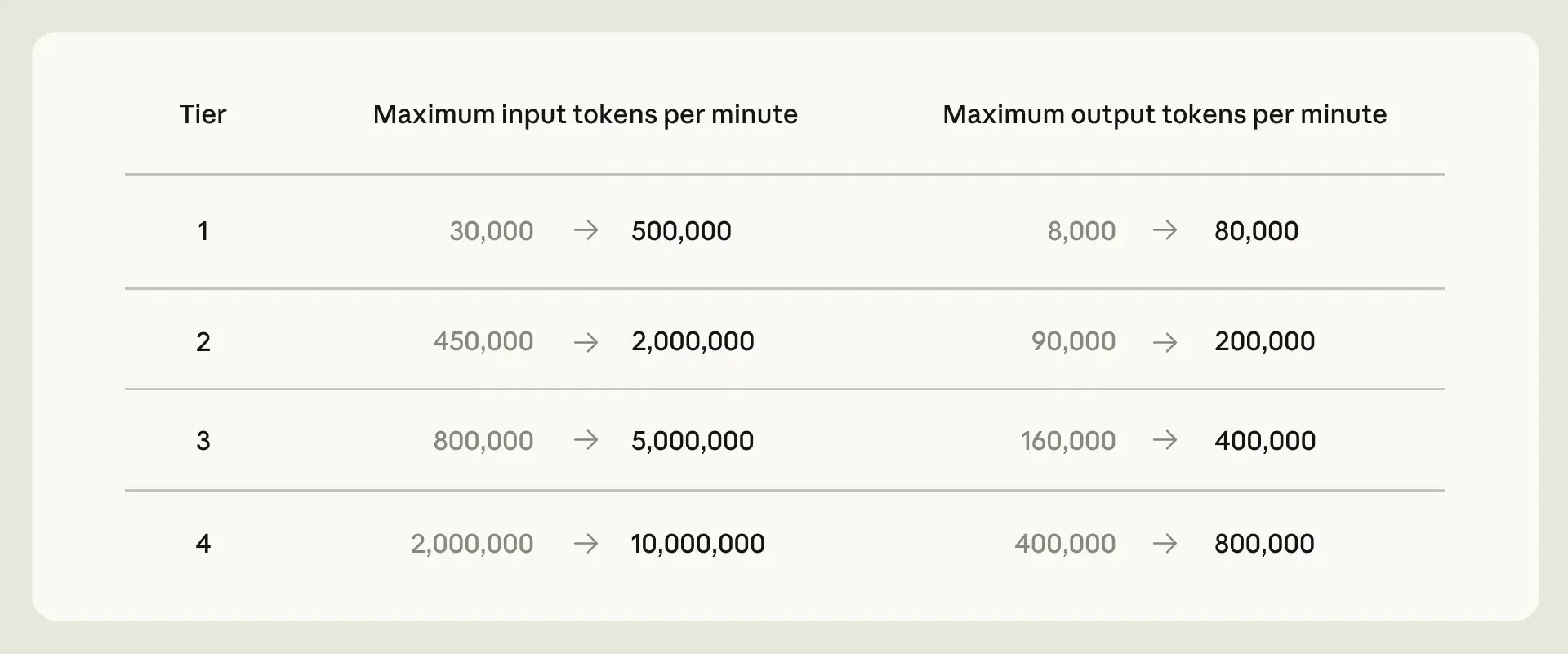
- Third, Anthropic will significantly increase the API rate limits for the Claude Opus model.
Alex Finn, a top AI model reviewer, commented on this collaboration: Anthropic had been somewhat stalled in the past few months, with reduced quotas and dumber models... and then Musk came to the rescue, giving Anthropic access to the world's largest supercomputing cluster. Anthropic's compute crisis has always been the company's Achilles' heel, causing user sentiment and market morale to decline. Musk solved this problem with just one deal.
Alex Finn used an analogy easier for American sports fans to understand: "Musk's help is like giving Anthropic the rights to Victor Wembanyama directly!"
The Final Frontier — Finding Power in Space
In the cooperation announcement, there was a small line that many overlooked — "The parties also have an interest in collaborating to develop multi-gigawatt-scale orbital AI computing power." In layman's terms, Musk and Anthropic want to move AI data centers into space. This sounds like science fiction, but the problem it reflects is very real.
Aakash Gupta, a highly influential analyst in the AI circle, explained: "Earth's power, land, and cooling capacity simply cannot meet demand fast enough."
Anthropic has already secured approximately 15 gigawatts of computing power, equivalent to the electricity consumption of 11 million households, but this is still not enough... NVIDIA can produce chips, and Anthropic has enough money, but what truly cannot be manufactured on time are electricity, land, and cooling capacity — and the growth rate of model demand has far outpaced the construction speed of these infrastructures.
The frontier of the compute race has now begun to leave Earth. And there is only one company in the world truly capable of launching gigawatt-scale solar arrays into orbit on a massive scale — SpaceX.
If this interstellar travel-like scenario becomes a reality, the only person who could make it happen is likely Musk.


