






孙宇晨WebX 2026主题演讲:波场TRON正迈向AI智能体金融底座


- 核心观点:波场TRON创始人孙宇晨在WebX 2026大会指出,AI智能体走向自主交易亟需区块链提供数字身份、支付与结算能力,波场TRON正依托其稳定币生态与网络规模,构建面向AI智能体的金融基础设施。
- 关键要素:
- 区块链为AI智能体提供可验证身份、独立资金管理、开放支付通道及可信结算机制,补齐其参与现实经济活动的关键能力。
- 波场TRON生态正推动B.AI与Bank of AI等基础设施建设,旨在连接AI智能体与金融系统、数字服务及算力资源。
- 波场TRON链上账户总数超3.9亿,总锁仓价值逾260亿美元,日均处理交易近1300万笔,日均转账规模超240亿美元。
- 2025年波场TRON协议收入超过34亿美元;链上USDT流通量约900亿美元,为全球稳定币网络提供核心驱动力。
- 2024年9月,波场TRON联合Tether、TRM Labs成立T3金融犯罪打击小组,已协助冻结价值约4.5亿美元的非法资产。
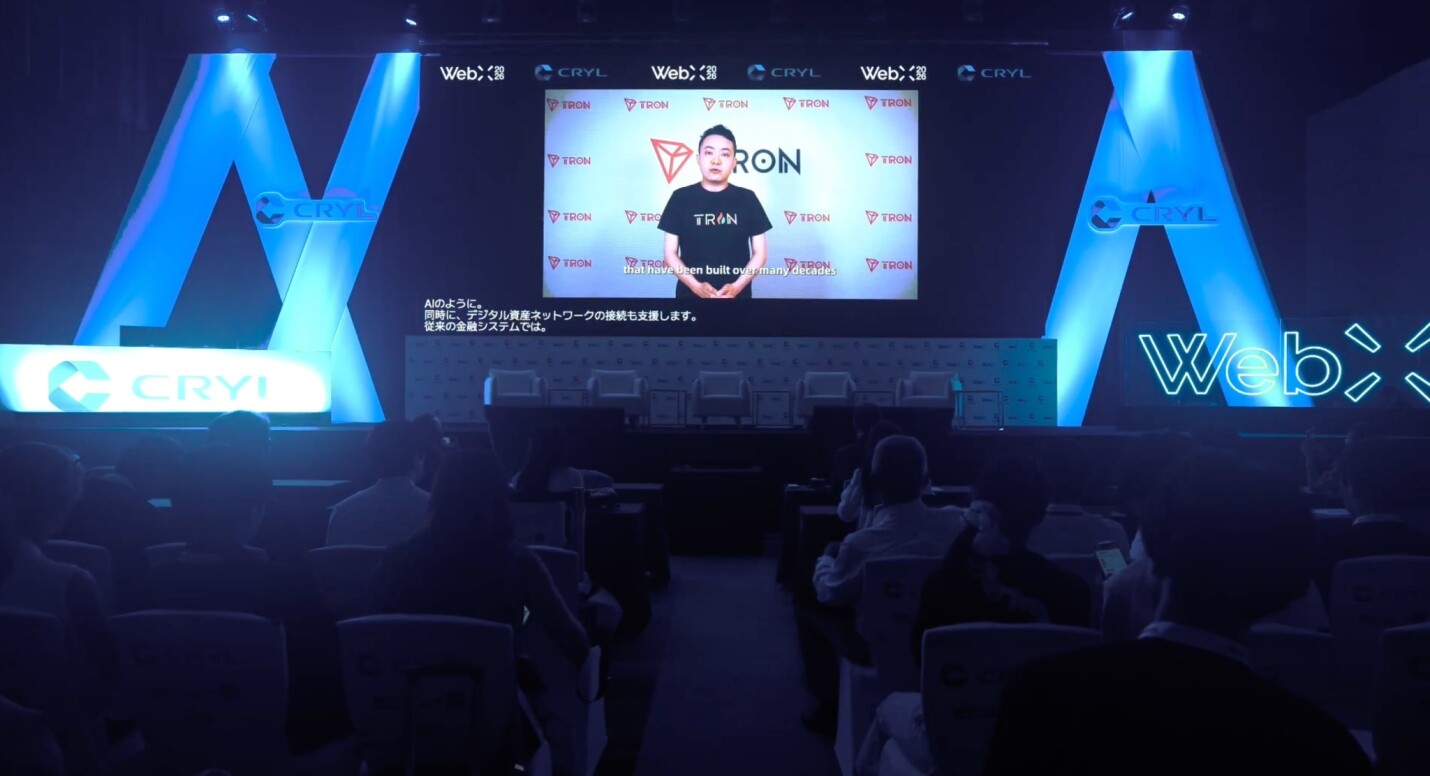
Recently, TRON founder Justin Sun delivered a keynote speech online at the Japan WebX 2026 conference, focusing on the convergence trend of crypto technology and artificial intelligence, and systematically elaborating on the foundational value of blockchain in the era of AI agents.
He stated that as AI agents accelerate towards autonomous decision-making and transactions, digital identity, on-chain payments, asset management, and trusted settlement will become core requirements. TRON, leveraging its stablecoin network and ecosystem infrastructure such as B.AI, is driving AI agents to connect with the global financial system more efficiently.
From Intelligent Decision-Making to Autonomous Transactions: Blockchain Complements AI Agents with Key Capabilities
Justin Sun pointed out that over the past many years, blockchain and artificial intelligence have primarily developed along two relatively independent paths: the former building open networks for value transfer, asset ownership, and settlement; the latter continuously enhancing capabilities in information processing, decision-making, and automation of complex tasks. Now, as AI agents begin to possess capabilities for search, reasoning, negotiation, and task coordination, these two fields are gradually converging.
To truly participate in real-world economic activities, it is insufficient for AI agents to possess only "intelligence." They also require verifiable digital identities, independent fund management capabilities, open payment channels, and trusted mechanisms for interacting with data, computing power, and financial services. The programmable settlement, transparent records, and permissionless access characteristics of blockchain can support agents in holding and transferring digital assets, executing on-chain transactions, and participating in the digital economy in a verifiable manner.
Under this trend, the TRON ecosystem is advancing the construction of foundational infrastructure like B.AI and Bank of AI. Specifically, B.AI leverages the TRON blockchain to build identity, fund management, and autonomous transaction capabilities for AI agents, aiming to connect agents with financial systems, digital services, and computing resources. Bank of AI focuses on financial infrastructure, providing support for AI agents' on-chain payments, identity verification, and DeFi interactions on TRON and BNB Chain.
Justin Sun stated that these explorations demonstrate the potential of open blockchain networks in hosting new forms of intelligent economic activity. As the demand from AI agents for identity, payments, and reliable transaction channels continues to grow, TRON is well-positioned to further leverage its infrastructure advantages in stablecoin circulation and on-chain settlement.
Optimizing Scale, Security, and Collaboration: TRON Strengthens the Global On-Chain Settlement Network
The speech revealed that the total number of accounts on the TRON blockchain has now exceeded 390 million, with a total value locked (TVL) exceeding $26 billion. The network processes an average of nearly 13 million transactions daily, with an average daily transfer volume exceeding $24 billion. In 2025, TRON's protocol revenue exceeded $3.4 billion.
Stablecoins are a key driver of activity on the TRON network. Currently, TRON has become a leading blockchain network in terms of cumulative USDT transaction volume and daily active users, with an on-chain USDT circulation of approximately $90 billion. The high-frequency, low-cost, and globally accessible demand for stablecoin transfers lays the foundation for TRON to further serve digital payments, cross-border settlements, and the AI agent economy.
Alongside expanding infrastructure scale, TRON is also continuously enhancing on-chain security and compliance collaboration. In September 2024, TRON, together with Tether and TRM Labs, established the T3 Financial Crime Unit (T3 FCU). Since its inception, the T3 FCU has analyzed millions of transactions globally, monitoring funds exceeding $3 billion, and has assisted in freezing illegal assets worth approximately $450 million across five continents.
Justin Sun stated that the unified financial system of the future will integrate the mature capabilities of traditional finance with the openness and efficiency of blockchain networks, supporting global payments, digital commerce, decentralized finance, and AI-driven new economic activities. This process cannot be completed by a single enterprise or network alone; it requires long-term collaboration among blockchain, artificial intelligence, financial institutions, and regulatory stakeholders to jointly build a more open, efficient, and trustworthy global financial infrastructure.


