เมื่อโลกฟุตบอลโคปปา อเมริกา พบกับ Agent: จาก Web2 สู่ Web3 กระเป๋าเงินจะพัฒนาไปสู่ Agentic Wallet ได้อย่างไร?


- มุมมองหลัก: AI Agent กำลังเข้าสู่สถานการณ์กระเป๋าเงิน Web3 โดยเปลี่ยนกระเป๋าเงินจาก "เมนูฟังก์ชัน" เป็น "ตัวตีความเจตนา" ผู้ใช้เพียงแค่แสดงเจตนาก็สามารถทำธุรกรรมบนเชนได้สำเร็จ ซึ่งถือเป็นจุดเริ่มต้นของยุค "Agentic Wallet" โดยความท้าทายหลักอยู่ที่การสร้างสมดุลระหว่างประสิทธิภาพของระบบอัตโนมัติกับอำนาจควบคุมของผู้ใช้และขอบเขตความปลอดภัยของสินทรัพย์
- องค์ประกอบสำคัญ:
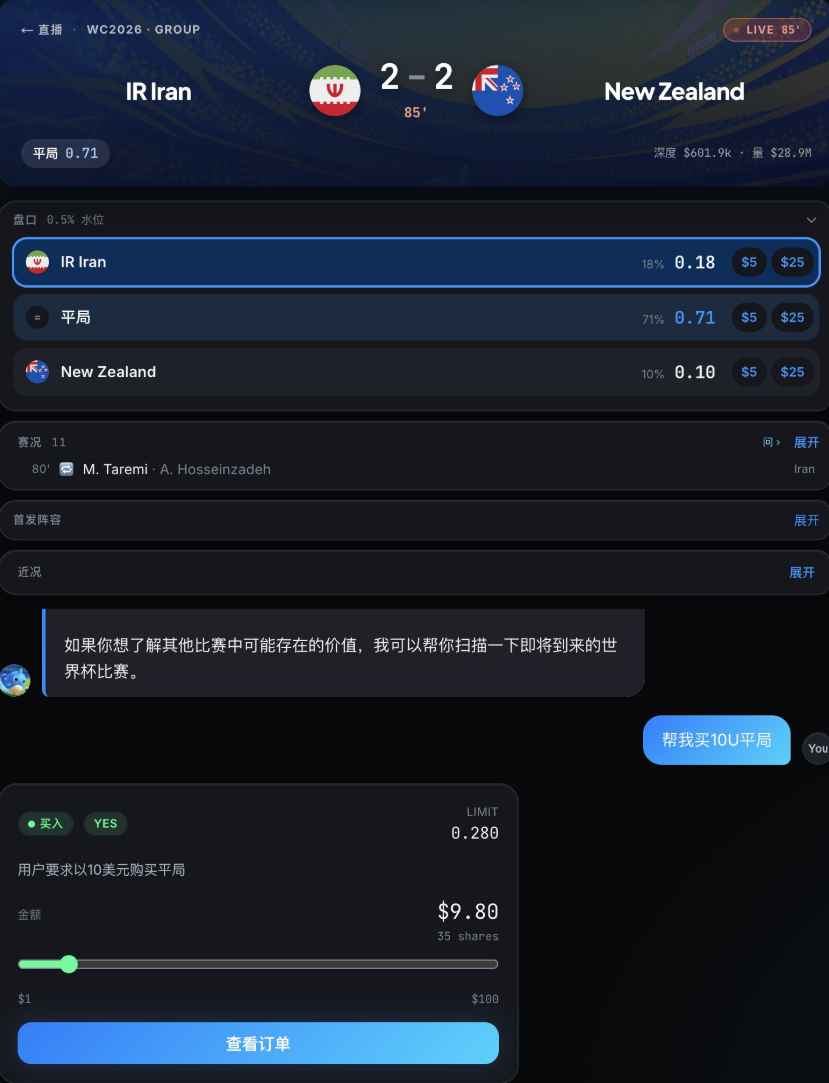
- ตลาดทำนายผลฟุตบอลโลก (เช่น Polymarket) เป็นช่องทางเบาๆ ที่พาผู้ใช้เข้าสู่การโต้ตอบบนเชน และการนำ AI Agent มาใช้ช่วยลดอุปสรรคในการเข้าร่วมได้อีก ผู้ใช้สามารถวางเดิมพันผ่านภาษาธรรมชาติบน Discord, เว็บเพจ ฯลฯ
- imToken ได้ทดลองใช้ Agent ในสถานการณ์ฟุตบอลโลก โดยอนุญาตให้ผู้ใช้แสดงเจตนาผ่าน Agent ในสภาพแวดล้อมที่ไม่ใช่แอป (เช่น บนเว็บ) ซึ่งแยกย่อยการดำเนินการบนเชนที่ซับซ้อนเป็นเส้นทางอัตโนมัติ ทำให้ขอบเขตของกระเป๋าเงินเลือนลางลง
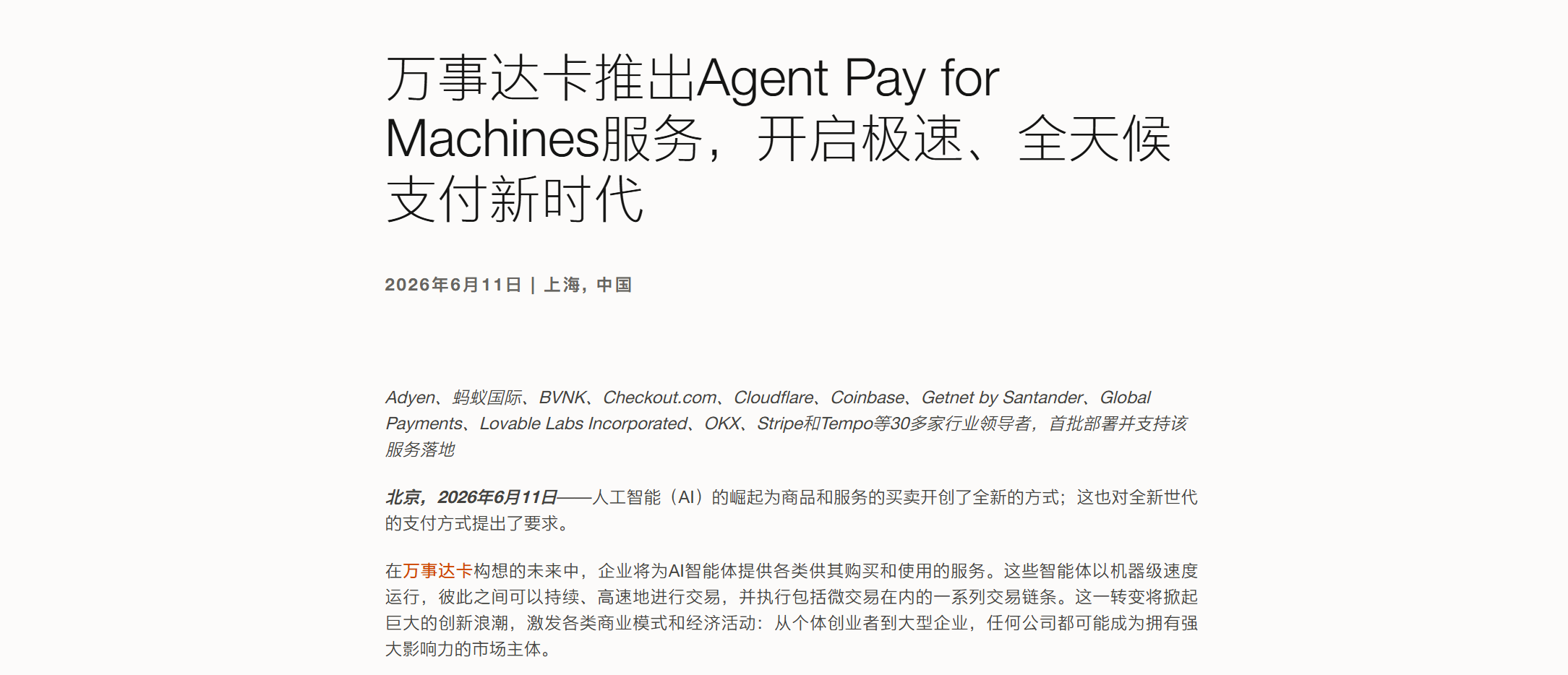
- Agent Pay for Machines ของ Mastercard และ "บัตรเฉพาะ AI" ของ WeChat Pay แสดงให้เห็นว่ายักษ์ใหญ่ด้านการชำระเงินแบบดั้งเดิมกำลังออกแบบกรอบการทำงานด้านตัวตน การอนุญาต และการบริหารความเสี่ยงสำหรับการชำระเงินของ AI Agent ซึ่งมีความคล้ายคลึงสูงกับความท้าทายด้านความปลอดภัยบนเชนที่กระเป๋าเงิน Web3 ต้องเผชิญ
- ปัญหาพื้นฐานของ Agentic Wallet ไม่ใช่ "AI สามารถทำอะไรได้บ้าง" แต่เป็น "ผู้ใช้จะรู้ได้อย่างไรและควบคุมสิ่งที่ AI กำลังทำอยู่" ซึ่งกำหนดให้กระเป๋าเงินต้องสามารถแสดงขอบเขต ระยะเวลา และความเสี่ยงของการอนุญาตให้ผู้ใช้เห็นได้อย่างชัดเจนในธุรกรรมที่ซับซ้อน
- หัวใจสำคัญของการโต้ตอบกับกระเป๋าเงินในอนาคตคือการแปลการดำเนินการบนเชนที่ซับซ้อนเป็นข้อความสั้นที่ผู้ใช้เข้าใจได้ รวมถึงสิทธิ์ของ Agent วงเงินสินทรัพย์ ขอบเขตการดำเนินการ และความสามารถในการเพิกถอน เพื่อให้แน่ใจถึงขอบเขตความปลอดภัยของผู้ใช้ภายใต้ประสิทธิภาพที่สูง
The World Cup is a perfect scenario for observing wallet behavior changes.
Topics fans discuss daily, such as which teams will advance or changes in championship odds, become tradeable actions in prediction markets like Polymarket. Therefore, the World Cup prediction activities integrated by mainstream Web3 wallets, when viewed on a longer timeline, indeed serve as a lightweight entry point and starting point for users to engage in on-chain interactions (Further reading: "World Cup Fever: Prediction Markets Join the Game. How Can Polymarket and Others Crack Mass Adoption?").
At the same time, another earlier but more imaginative change is also worth noting: when AI Agents begin to enter wallet scenarios, the way users interact with the on-chain world may also be about to change.
For example, in its World Cup-related explorations, imToken has started experimenting with placing AI Agents into actual usage scenarios. The agents launched on its web interface and Discord can help users complete betting transactions more naturally based on specific prediction needs. This allows users to not only operate within the wallet app but also easily participate in prediction markets across Discord, web pages, and other scenarios, being seamlessly guided back on-chain by the Agent.
This is arguably the early form of an Agentic Wallet – the future Web3 wallet may not be limited to wallet applications; it will inevitably be an "AI wallet form" that is as ubiquitous as possible.
1. The World Cup Experiment: When Agents Begin to Understand "Intent"
Returning to a common topic: over the past decade, the core problems solved by wallets have been clear – where assets are stored, who controls the private keys, and who signs the transactions.
For instance, users open imToken mainly to check balances, perform transfers/interactions, and manage multi-chain assets. Because of this, wallets at this stage function more as asset portals and signature portals. It's sufficient for users to know what they plan to do and then complete the final step through the wallet.
But the change in the Agentic era is that users may not initially know exactly what they want to click.
For example, in the World Cup scenario, an average user might not first think "I need to open Polymarket, find a specific market, assess the odds, and complete a trade." Instead, they are more likely to ask: "What's interesting about tonight's match?", "I think Portugal will advance, are there relevant markets?", "Are these odds already too low?", "If I just want to participate with a small amount, what's the process?"
Previously, these questions might have been scattered across WeChat groups, social platforms, or search engines. Users had to piece the information together and execute step by step. However, with the intervention of an Agent, the interaction method changes significantly: Users only need to express a general intent, and the Agent will proactively help break down the path. The wallet then takes responsibility for translating that path into a series of on-chain actions.
So this is certainly not just about simply adding a chat box to the wallet.
The real change is that wallets are beginning to transform from "function menus" into "intent interpreters". In the past, the main user decision was whether to transfer, swap, stake, or connect a DApp. Future wallets may be more direct, requiring only a natural language description of what the user wants to achieve.
This is why mass events like the World Cup are ideal entry points for Agentic Wallets. They inherently provide context, users naturally have the urge to express opinions, and they need to make judgments. An Agent doesn't need to start by managing complex asset portfolios for the user, especially as complex asset management carries higher risk. It can first help users find interaction paths within a specific scenario, then return the final control to the wallet and the user.
The agents mentioned earlier, integrated by imToken on its web interface and Discord for on-chain interaction, are typical examples. They bring wallet capabilities to a lighter entry point, meaning users don't necessarily have to open the app or enter the traditional DApp browser first. Instead, they can find interaction paths through the Agent on an activity page or in a World Cup scenario.
This implies that the boundaries of wallets are expanding outward.
Previously, wallet entry points were relatively clear: users opened the app, went to the assets page, clicked a function, and connected a DApp. In the future, wallet entry points could be scattered across more places, such as web pages, Discord, Telegram, AI chat boxes, activity pages, developer tools, or even a lightweight wallet interface generated by the user themselves.
From this perspective, this is why we feel that the World Cup prediction itself is not the main point; the main point is that it allows wallets to stand more naturally in front of "user intent" for the first time.
2. From Agent Pay: AI is Entering the Payment Layer
If we only look within the Crypto space, Agentic Wallet might easily be understood as a narrative concept – AI helping users check market conditions, find opportunities, and execute trades. This sounds like an extension of the previous AI Agent hype.
However, Mastercard's launch of Agent Pay for Machines on June 10th suddenly made this matter relevant beyond Web3.
Mastercard's definition of Agent Pay is very clear: enabling trusted AI Agents to participate in payments under user authorization. This includes how the Agent is identified, authorized, verified within the payment network, and how merchants, issuers, and users all know the transaction was facilitated by an Agent.
This actually parallels the challenges faced by Web3 wallets quite closely.
When AI only helps you write copy, the cost of errors is usually manageable. But once AI starts participating in asset interactions, the problem changes fundamentally. It becomes about permissions: Does it have the authority? Is its understanding of user intent accurate? Are the services it calls trustworthy? Does the transaction it initiates exceed its boundaries? If the outcome doesn't match user expectations, who bears the responsibility?
Mastercard's answer involves redesigning the identity, tokens, authorization, risk control, and dispute handling for "Trusted Agents" within its payment network.
This signal is significant. If the Agentic narrative in the Web3 sphere still carries a somewhat geeky, imaginative flavor, then a traditional financial giant starting to design payment infrastructure for Agentic Commerce indicates this is moving into a more realistic business context.
Looking closer, domestic payment giants are also moving in this direction. WeChat Pay is testing AI payment functions in collaboration with Tencent's AI agent product, WorkBuddy, for example, launching an "AI-specific card" in WeChat Wallet. From available information, the core of such products is not to let AI spend money freely, but to set boundaries for agent payments through methods like top-up limits, payment authorization scopes, and password confirmation.
This aligns with the same logic as Mastercard's Agent Pay: AI can participate in payments, but it must be identified, authorized, restricted, and audited.
Web3 wallets face the on-chain version of the same problem. The difference is that traditional payment systems emphasize networks, merchants, issuers, and compliance responsibilities; on-chain wallets emphasize private keys, signatures, authorization, contract calls, and user self-custody.
For this reason, the Agentic Wallet cannot simply copy the path of traditional payments. In traditional payments, users can rely on banks, card networks, merchants, dispute resolution, and risk control systems. However, in the on-chain world, once a transaction is on the blockchain, there is often no undo button.
The higher the efficiency brought by AI Agents, the more critical the final security boundary provided by the wallet becomes. Therefore, the future wallet must not only enable the Agent to "do things" but also ensure the Agent can "only do things within the scope permitted by the user."
This is also why Web3 might actually be a more suitable environment for discussing Agentic Wallets.
3. Agentic Era: How will Wallets Redefine On-chain Interaction?
When many people discuss AI Agents, they tend towards an extreme imagination: AI automatically trading for me, managing finances, finding airdrops, and arbitraging.
This direction is certainly appealing, but for wallets, the real challenge is not "automation," but "boundaries."
Because a wallet is not an ordinary application. In a regular app, if AI recommends a wrong song, writes a wrong sentence, or clicks a wrong page, it's at most a poor user experience. But in a wallet, if AI misunderstands an instruction, calls a wrong contract, or grants excessive authorization, it can lead to real asset risk (Further reading: "Sign is Not Just a Signature: When an AI Agent Signs for You, Who Holds the Control?").
Therefore, the primary issue for the Agentic Wallet isn't "how many things can AI do for the user," but "how does the user know what the AI is doing?"
This is also the reason imToken has consistently emphasized control over the past few years. From self-custody wallets to multi-chain asset management, and now to AI co-creation and Agent exploration, the truly continuous thread isn't the proliferation of features. It's that the user must always be able to understand, confirm, and control their digital world.
In the Agentic era, this thread becomes more specific.
The wallet needs to enable the user to understand: Who is this Agent? What capabilities can it invoke? How long does the authorization last? Can it operate across different DApps? When does it require my reconfirmation? Can I pause or revoke it with one click? These questions may sound somewhat tedious, but they are the very foundation upon which the viability of the Agentic Wallet rests.
Because the power of AI Agents lies precisely in their ability to simplify complex processes. A user says one sentence, and the Agent can break it down into a dozen execution steps. This is good for user experience but poses a challenge for security. The longer the path and the more intermediate steps involved, the more the wallet needs to bring critical junctures back into the user's view.
Good wallet interaction in the future might not involve showing the user more technical details, but rather translating complex transactions into language the user can understand:
- You are authorizing a specific Agent to call a specific contract within the next 24 hours;
- This operation can use a maximum of a certain amount of USDC;
- It can only access World Cup-related prediction markets, not touch your other assets;
- Any transaction exceeding a certain threshold requires re-confirmation;
- The authorization automatically expires upon expiry;
- You can pause this Agent at any time in your wallet;
This might sound like a distant future, but it has already begun in some very small scenarios. The World Cup prediction activity acts as an event entry point, while imToken's pilot web-based Agent and Discord Agent serve as community entry points.
Precisely at times like this, the wallet must not step backstage.