






世界杯来临,预测市场的入口战争已打响


- 核心观点:中心化交易所(CEX)如Gate正在通过简化交互体验,降低链上预测市场的参与门槛,推动该赛道从加密原生用户走向大众市场,并以世界杯为契机展示其应用潜力。
- 关键要素:
- 传统链上预测市场因钱包、Gas、授权等复杂操作,对普通用户形成极高的学习门槛,阻碍了大规模普及。
- Gate作为首家接入Polymarket的CEX,为用户提供USDT直接交易的账户体系,截至2026年6月16日累计交易量超2.51亿美元。
- 产品提供“预测模式”(简单三步操作)与“交易模式”(订单簿、K线图)两套方案,分别满足普通用户与高阶用户需求。
- 用户可进行“双向交易”,在事件结算前根据市场变化买卖份额,增加了交易的灵活性。
- Gate构建了“聪明钱排行榜”、“市场动态监控”、“AI洞察”等信息辅助体系,帮助用户发现机会、降低信息获取成本。
- 针对世界杯,Gate上线了整合赛程、积分榜、实时动态与预测市场的主题专区,将观赛与交易体验深度结合。
- 预测市场当前竞争重点正从产品有效性转向用户触达,CEG等渠道成为降低门槛、推动大众化普及的关键。

In the early hours of June 12, the 2026 FIFA World Cup (United States, Canada, Mexico) officially kicked off.
As the world's most-watched sporting event, the World Cup is far more than just a contest on the pitch. Who will lift the trophy? Which team will be the biggest dark horse? Who will claim the Golden Boot? From months before the tournament starts, hundreds of millions of fans have been actively discussing and predicting various outcomes on social media.
Unlike previous tournaments, fans this year have options beyond just debating online or participating in traditional betting (which is often subject to strict regional regulations). A novel on-chain probability perception tool originating from the crypto world – the Prediction Market – is becoming the biggest off-field highlight of this World Cup.
The appeal of prediction markets lies in transforming collective wisdom into betting odds backed by real money. Over the past few years, prediction markets like Kalshi and Polymarket have repeatedly gained mainstream attention during major global events, geopolitical conflicts, and financial market trends. Their high sensitivity to information feedback has even led many mainstream media outlets to view them as "more accurate barometers than traditional polls."
However, for a long time, prediction markets have felt like an exclusive domain for native crypto users. For an average fan drawn in by the World Cup, participating often requires overcoming a steep learning curve – wallets, seed phrases, on-chain transactions, Gas fees, smart contracts, approvals, trading... These concepts, second nature to crypto insiders, objectively create significant entry barriers for a vast number of new users, potentially turning away ninety percent of interested participants.
In other words, while prediction markets have proven their product and value, the last mile towards mass adoption has consistently been hindered by the cumbersome experience of the underlying infrastructure.
Analyzing the Significance of CEX Channels: The Gate Case Study
Addressing this industry pain point, major centralized exchanges (CEXs) like Gate are attempting to break down these complex entry barriers for new users by integrating (or building) prediction market products and redesigning the user interaction experience.
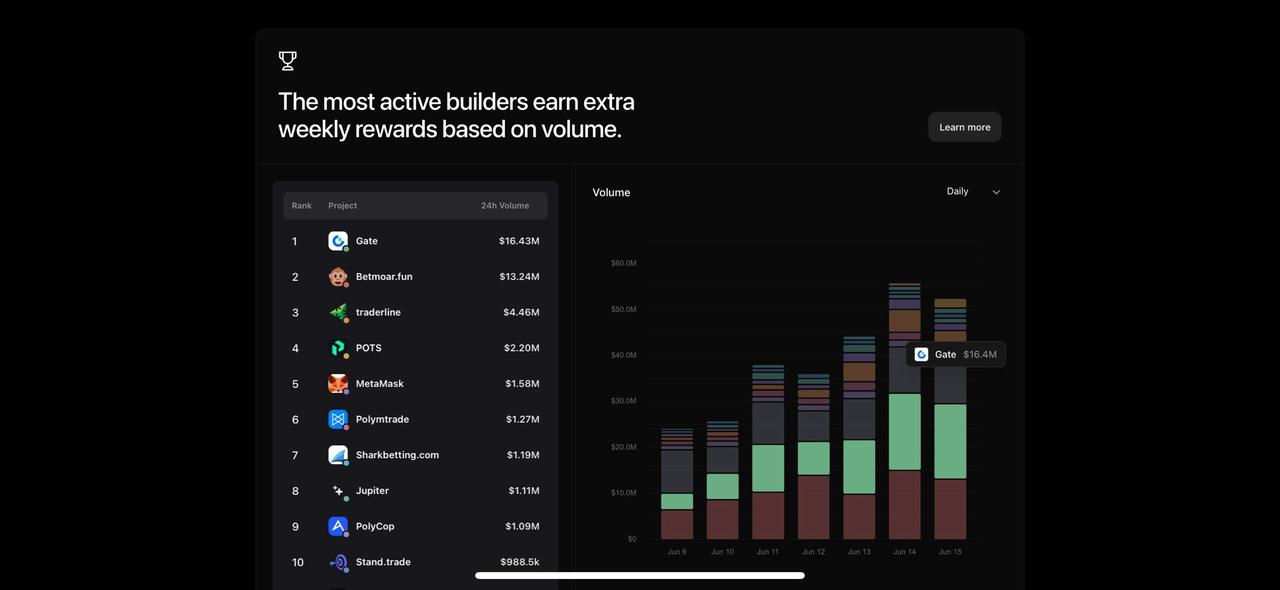
Gate is a prime example. As the first CEX to directly integrate with Polymarket, Gate established a classic collaboration model – Polymarket provides the underlying layer for available event markets, order matching, and settlement; Gate acts as the channel, offering the on-chain trading interface and account system. Users can directly use their Gate accounts and USDT for all trading operations. As of June 16, 2026, Gate's prediction market product has accumulated a total trading volume exceeding $251 million, with a single-day peak of nearly $69 million, ranking first in notional trading volume among Polymarket's 300+ partner channels.
For average users, the most direct benefit of this channel value is the lowered participation threshold and the optimized interaction experience.
Within Gate's product ecosystem, users no longer need to worry about creating wallets, cross-chain asset transfers, paying Gas fees, or on-chain approvals. They simply log into their account and use USDT to directly trade in prediction markets. The entire process feels essentially the same as trading spot or derivatives. Simultaneously, for experienced users accustomed to on-chain operations, Gate also retains a Web3 wallet connection option, offering greater flexibility between convenience and a native experience.
Specifically, in terms of trading experience, Gate offers two different interaction models: "Prediction Mode" and "Trading Mode."
- Prediction Mode is better suited for average users. In this mode, users only need to select "Yes" or "No," enter the participation amount, and confirm the transaction. The system simultaneously displays the corresponding probability and potential profit, compressing the entire operation into a streamlined three-step process.
- More experienced, advanced users can opt for Trading Mode. This mode provides more professional market tools, including an order book, candlestick charts, and depth data. Here, the prediction market is no longer just about betting on a final outcome; it becomes a market for real-time pricing and trading based on changing probabilities.
In terms of trading flexibility, Gate allows users to engage in "two-way trading" at any time. This means they can buy or sell their holdings before the final event settlement based on changing market expectations, without needing to hold until the result is announced. As match progress, macro events, or market sentiment shift, the prices of corresponding contracts fluctuate accordingly. This flexibility creates more dynamic trading opportunities for participating users.
Regarding the scope of trading, Gate's prediction market now covers multiple popular domains, including sports events, cryptocurrencies, macroeconomics, and traditional financial markets. Whether it's the World Cup winner, Bitcoin's price trajectory, or the direction of global hot topics, users can find corresponding prediction markets to participate in.
But if it were just this, it would still be insufficient to support the widespread adoption of prediction markets. From a product design perspective, Gate aims to transform the prediction market from a relatively niche on-chain tool into a comprehensive information discovery and trading system.
For most users, another practical challenge in participating in prediction markets remains – even if the operational barriers have been significantly lowered, it's still difficult to answer the core question: "What to buy?" After all, a prediction market is essentially a game centered around information and cognition. More than the trading operation itself, the ability to timely access information, understand shifts in market sentiment, and identify potential opportunities is often the decisive factor for the final outcome.
Addressing this need, Gate has further built a relatively complete information support system alongside its trading functions.
- Smart Money Leaderboard: Quickly identify "smart money" and active traders in the market, and review their historical profit performance, holdings, and trading trails. For inexperienced new users, this transparent on-chain behavior display mechanism somewhat lowers the cost of information acquisition and provides additional reference dimensions for market observation.
- Market Dynamics Monitor: Users can track specific wallet addresses or key accounts. When new trading activity occurs in these accounts, the system automatically pushes notifications. For users wanting to track whale movements or learn from experienced traders' strategies, this tool effectively enhances market observation efficiency.
- Live Zone & Real-time Updates: Aggregates real-time progress of popular events, market dynamics, and live trading data, helping users quickly grasp the most talked-about topics.
- AI Insights: Integrates various viewpoints, latest developments, etc., around hot market events to help users quickly understand the logic behind the events and improve trading decision efficiency, offering more reference angles for judgment.
From discovering hotspots and tracking market sentiment to observing smart money movements, combining AI and capital flow analysis, and executing trading decisions, Gate is attempting to build more than just a simple Polymarket channel. It aims to create a complete participation chain covering information acquisition, opinion formation, and trade execution.
The World Cup is Here: From Watching to Participating
If the value of prediction markets lies in translating collective judgment into market probabilities, then the World Cup is undoubtedly one of their most ideal applications.
Compared to macroeconomic events, football matches feature higher-frequency information changes, broader participation groups, and stronger emotional swings. From pre-match squad announcements and injury news to every goal, yellow/red card, or tactical adjustment during the game, these factors can rapidly alter market expectations for match results, directly reflected in the price changes of corresponding prediction markets.
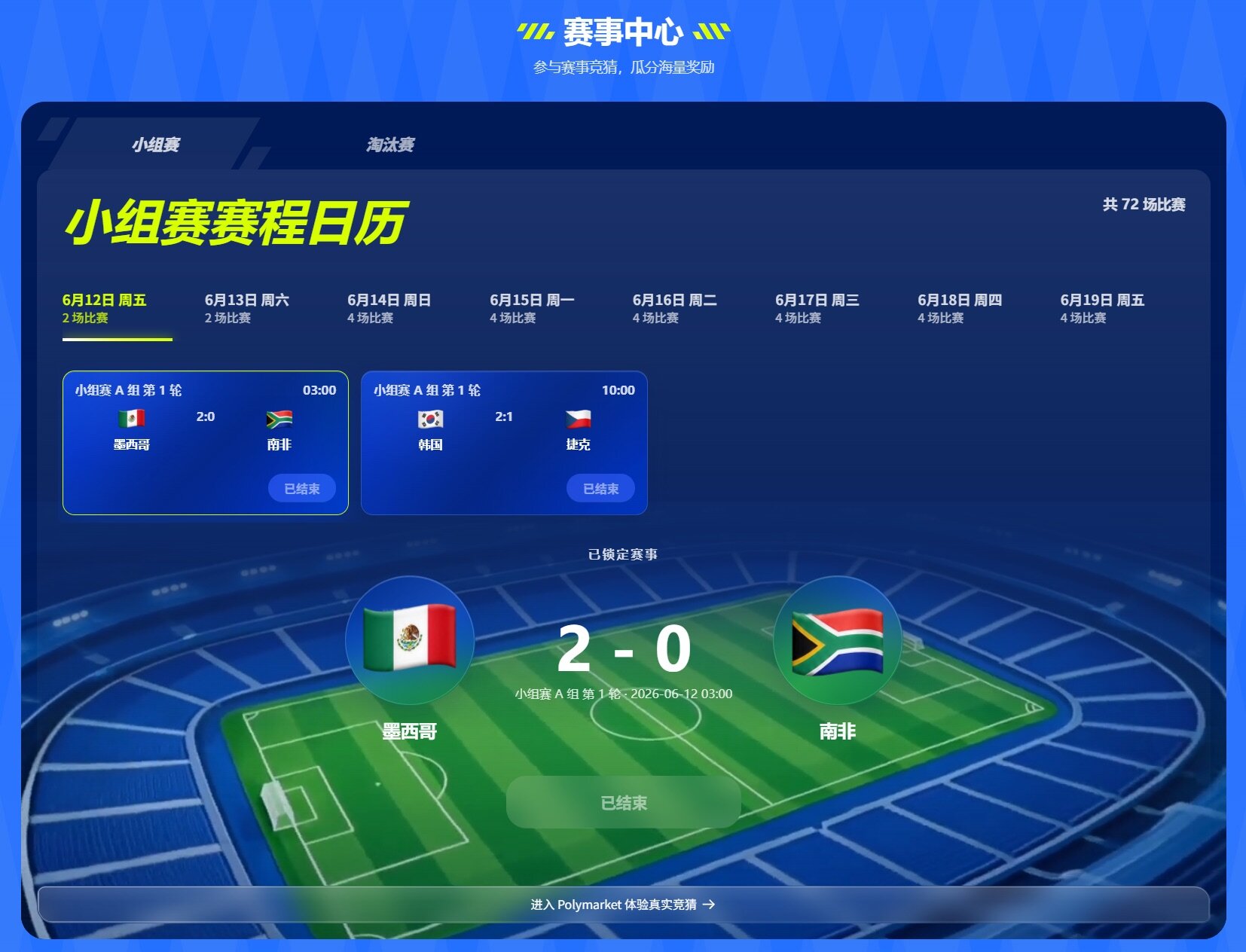
Targeting this global top-tier sports IP, Gate recently launched a dedicated World Cup theme zone, aggregating match schedules, standings, popular prediction markets, and event dynamics in one place.
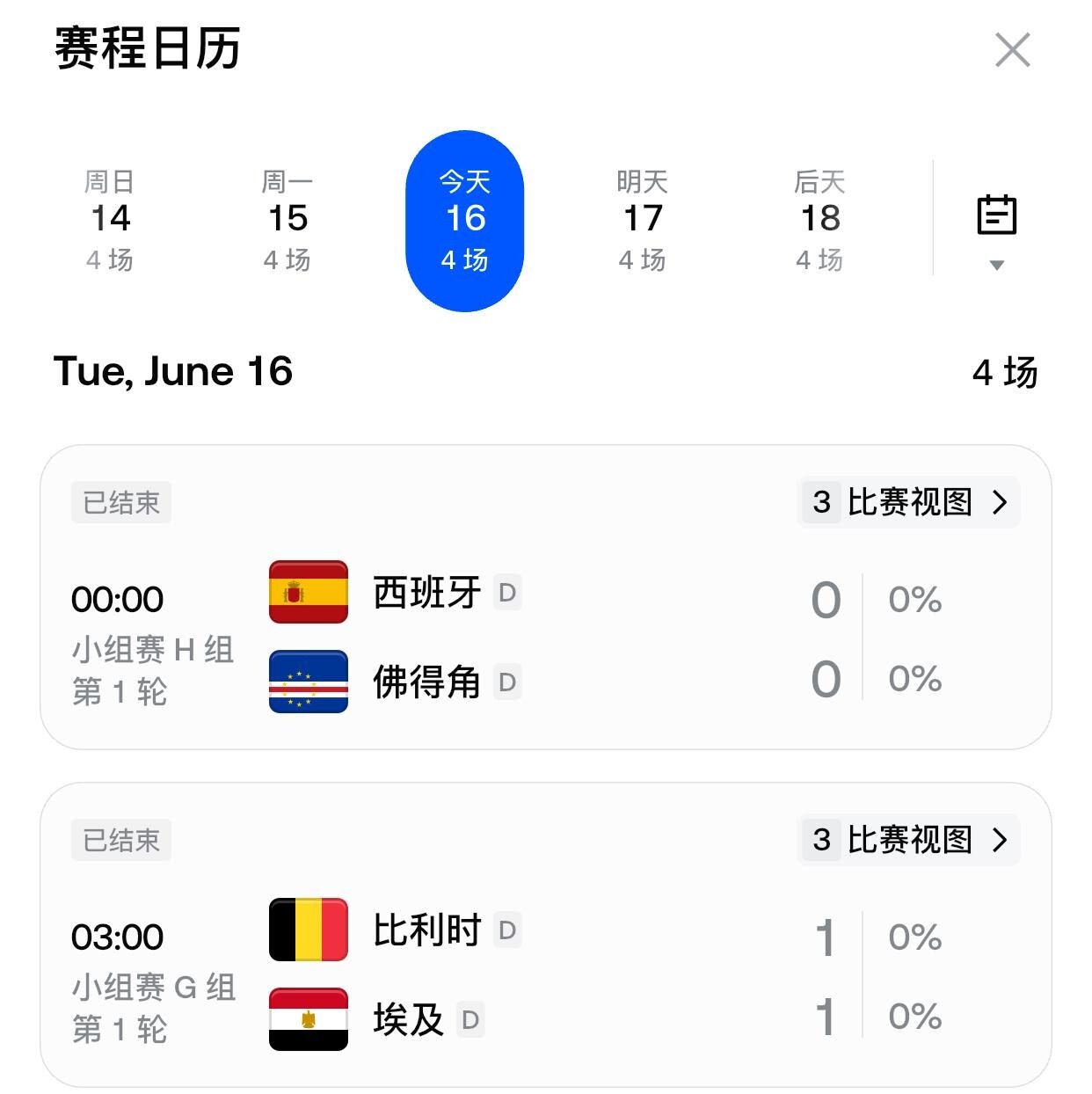
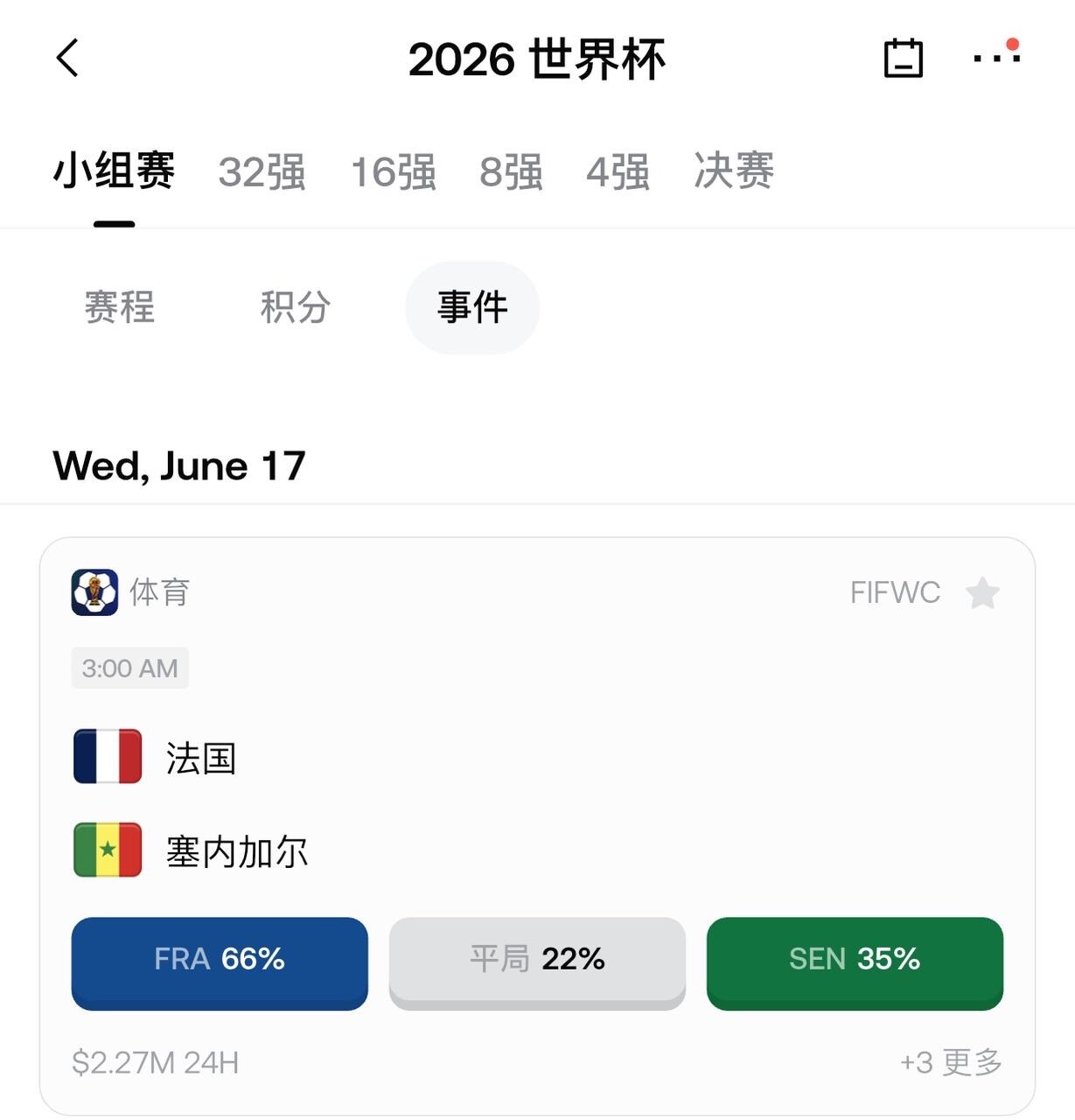
For fans, there's no need to switch between different pages constantly. They can quickly browse events, access information, and participate in predictions all within the Gate platform. The zone also features a match calendar and game-start reminders. Users can mark matches of interest in advance and receive notifications before the game starts, ensuring they don't miss key events and related prediction opportunities. During matches, the Live real-time updates function further strengthens the connection between the prediction market and the viewing experience. Match progress, hot events, and market trading dynamics are updated synchronously, allowing users to follow the on-field score changes while observing real-time market pricing of the game's trajectory.
From a practical operational standpoint, the entire World Cup participation process has been intentionally simplified by Gate. After entering the relevant event page, users simply choose to support or oppose an outcome, enter their participation amount, and confirm the transaction to place a position. As the match progresses, users can either hold their position waiting for the final result or execute early trades based on market price changes.
From this perspective, prediction markets are changing the World Cup viewing experience. For participants, they are not just trading the match result itself but are trading their own judgment of the game's flow and the process of market consensus constantly adjusting to new information.
The Next Step for Prediction Markets: From the Crypto Niche to the Mass Market
Looking back at the development over the past few years, prediction markets have actually completed the most difficult step – proving the product's effectiveness and market value.
Whether it's the US elections, macroeconomic events, or global sports events like the World Cup, a growing number of cases prove that when enough people put real money behind their opinions on the same event, the market can often reflect shifts in collective expectations faster than traditional polls, expert predictions, or even some media reports.
But on the other hand, prediction markets clearly still have a way to go before true mass adoption.
For a long time, crypto-native infrastructures like wallets, Gas fees, and on-chain interactions, while forming the foundational framework for prediction markets, have also inadvertently limited their user base. For the vast majority of ordinary people, they might be willing to express their judgment on a World Cup match, an interest rate decision, or a hot market topic, but they are not necessarily willing to learn an entire complex on-chain operational process.
This implies that the next phase of competition for prediction markets might no longer be about who can build a more effective product, but about who can bring more users into the market.
From this viewpoint, centralized exchanges, social platforms, and even more internet products could become crucial entry points for the future of prediction markets. Whoever can encapsulate the complex underlying mechanisms, reaching ordinary users with lower learning costs and smoother product experiences, will have a better chance of driving prediction markets from crypto-native applications to the mass market.
This is precisely the path Gate is exploring. By replacing wallet barriers with an account system, complex on-chain interactions with familiar trading experiences, and building a complete product ecosystem around information discovery, opinion exchange, and trading decisions, prediction markets are gradually evolving from specialized tools for a handful of on-chain players into a new type of market that more ordinary users can understand, participate in, and benefit from.
When prediction markets are no longer an on-chain experiment for the few, but an open market where anyone can participate to express opinions, discover consensus, and trade judgments, their real growth story may just be beginning.
Disclaimer: This content does not constitute any solicitation, invitation, or advice. You should always seek independent professional advice before making any investment decisions. Please note that Gate may restrict or prohibit all or part of its services from restricted regions. Please read the User Agreement for more information.





