






| Industry Observation: Examining the "Scenario-based" and "Frictionless" Trends of Crypto Derivatives Platforms Through the Latest Bitget CFD Version Update |


- Core Viewpoint: Competition among cryptocurrency trading platforms is shifting towards global multi-asset layouts, eliminating trading friction through user-friendly models. UEX Panoramic Exchange and Bitget are enhancing the trading experience through a zero-fee STP model, a dual-track account mechanism, and a social trading ecosystem overhaul, returning the choice to the market and enabling seamless cross-asset investment.
- Key Elements:
- The UEX architecture breaks the limitations of traditional brokerages, supporting global asset trading such as US Stocks 2.0, gold, and forex. It uses CFDs (Contracts for Difference) as its core vehicle to connect the crypto and traditional financial markets.
- Bitget has introduced a dual-track engine system featuring a zero-fee STP account and a standard ECN account, with no deposit threshold. This lowers the psychological friction for retail traders and optimizes the transparency of profit/loss calculation.
- Bitget CFD copy trading covers both Web and App endpoints, enabling account creation and withdrawal within 3 seconds. Data updates hourly, eliminating information lag and improving efficiency and accuracy.
- Bitget has raised the maximum profit-sharing ratio for lead traders to 30% or higher (up to 50% in the Premium Mode), employing a daily settlement mechanism. Data for spot, futures, and CFD experts is displayed in a unified manner to maximize traffic value.
- Bitget mandates the display of average profit statistics on the trader interface and strengthens risk warnings. Simultaneously, through its educational ecosystem (e.g., Help Center, analyst livestreams), it constructs a closed loop of learning, practice, and protection.
Author: Martin Talk

The boundaries of global financial markets are dissolving at an unprecedented pace. For leading cryptocurrency trading platforms, competition is no longer limited to the simple "speed of listing crypto assets." Instead, it has comprehensively shifted towards the layout of global multi-assets. Amid this grand transformation, eliminating barriers to cross-market trading and achieving a "frictionless" and "contextualized" product experience have become the new battlegrounds for major platforms.
Within this context, the "UEX Panoramic Exchange" – enabling investment in global assets from a single account – has become the core proposition for breaking through the status quo. Users are no longer satisfied with the fragmented experience of buying gold and US stocks from traditional brokerages and Bitcoin from crypto exchanges. What they truly need is a one-stop platform that transcends geographical boundaries and asset classes. Recently, especially as some traditional online brokerages face frequent service adjustments, account restrictions, and even blocked capital channels due to regional compliance policies, traders' desire for "absolute control over their assets" has reached its peak.
The advantage of the UEX architecture has become fully apparent at this juncture. It breaks the physical shackles of traditional brokerages, empowering users to freely navigate cycles across different major asset classes. By leveraging US stocks as a core advantage to break into the market, the UEX ecosystem not only supports listed real US stocks 2.0 (Reality), allowing users to directly capture the tech dividends of Wall Street; it also enables traders to quickly seize opportunities when macro commodity cycles emerge. Whether you want to hedge against inflation risks or are highly sensitive to global monetary policy, you can seamlessly transition to trade gold and forex at any time.
The most efficient trading vehicle for achieving this seamless cross-border movement and capturing macro cycles is precisely the CFD (Contract for Difference) business. As the core driver for realizing the UEX vision, CFDs allow users to directly use crypto assets as margin, eliminating the cumbersome process of opening traditional forex or futures accounts. Through flexible long/short mechanisms and leverage tools, CFDs have logically become the sharpest blade connecting the Crypto space with traditional financial assets, and a must-win territory for all platforms expanding into full-asset trading.
1. The "Frictionless" Nature of the 0% Fee Model: No More Trade-offs, Returning "Choice of Trading" to the Market
In traditional CFD brokers, the vast majority of retail traders typically use the STP (Straight Through Processing) model. The core advantage of this model lies in "0 commission" – the platform incorporates all trading costs into the spread. When users open or close positions, they don't need to pay an additional fixed commission, making profit and loss calculations extremely intuitive. However, when cryptocurrency trading platforms venture into the derivatives赛道, they often carry their native Crypto DNA and tend to promote the ECN model (featuring ultra-low raw spreads + fixed commissions based on trading volume) to users.
As competition intensifies, leading platforms have begun to recognize the habits of traditional CFD players. They have started introducing the 0-fee STP model for their CFD business, thereby gaining a certain market share.
But why has this feature gained widespread user approval?
The reason strikes at human nature: For the average retail traders and swing traders who constitute the majority of the market, upfront commissions charged based on volume often create significant "psychological friction." Opening a position immediately reduces the account balance due to the fee deduction, easily disrupting trading psychology. Furthermore, incorporating costs into the spread significantly lowers the barrier for users to calculate their "breakeven point," making the trading experience purer and more transparent.
Bitget, a platform that has always prioritized "user experience," did not merely follow the trend. Instead, it delved deep into listening to user needs on the front lines before acting. Through multiple in-depth face-to-face exchanges with traders employing different strategies and at different stages, the team confirmed the users' strong desire for "what you see is what you get," and executed with remarkable efficiency.
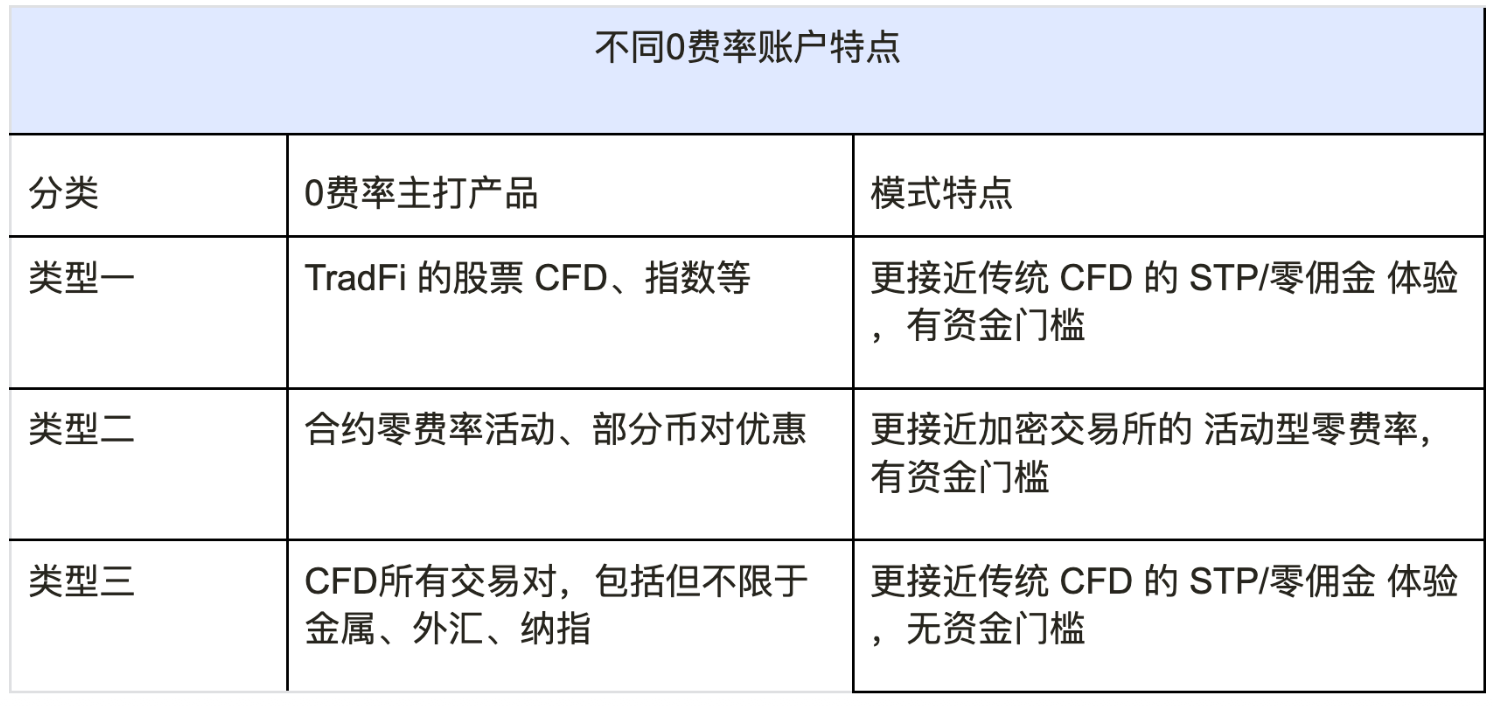
Against this industry trend, Bitget's response strategy offers a valuable case study for product observation.
Observing Bitget's version update at the end of May, it's clear that they didn't just superficially "follow the trend" by launching 0 fees. Instead, based on intensive communication with traders at different stages, they provided a more mature underlying solution. Research indicated that while retail traders prefer STP, professional institutions and high-frequency traders still have a rigid demand for the raw spreads of ECN.
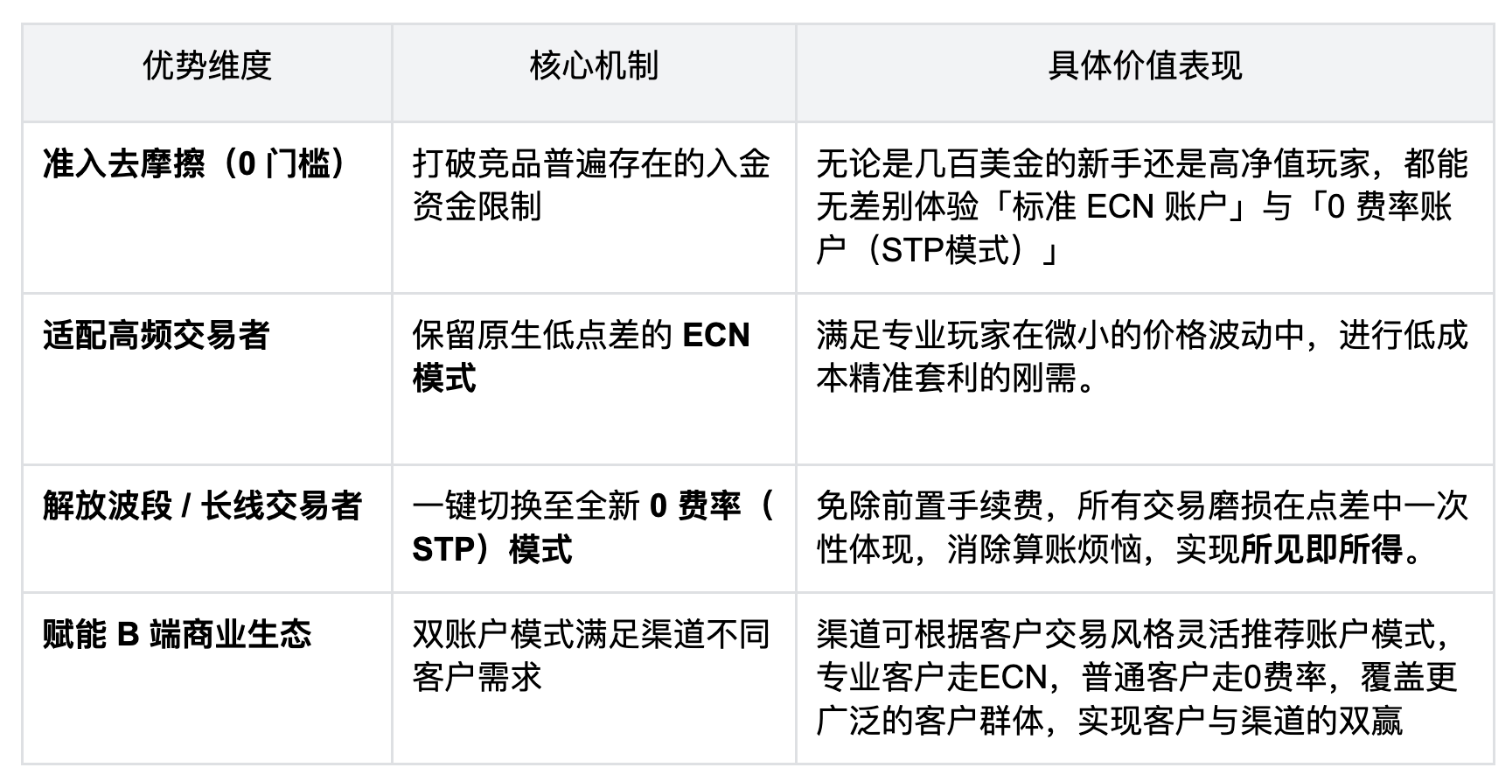
In this update, they officially launched a dual-track engine featuring the "Standard ECN Account" and the "0 Fee Account (STP Model)."
Notably, while most cross-border platforms offer new account models, they often accompany them with "high-friction" capital barriers – typically, competitors impose strict minimum initial deposit requirements for special accounts (like those with extreme spreads or 0 fees), treating them as "VIP privileges" for large clients.
Addressing this pain point, Bitget CFD announced a highly impactful rule: zero minimum deposit requirements for all accounts.
The platform no longer makes a binary choice for its users or segments them based on capital size. Instead, it returns the true choice to the market. The advantages of this design are specifically reflected in the following four dimensions:
2. The Ecosystem Reconstruction of Social Trading: From "Modular Copy Trading" to Full-End "Contextual" Integration
Social trading (Copy Trading) has long become a "standard feature" for leading trading platforms.


