






MGBX Team Competition · Trading Strategy Breakdown: From Tactics to Review


- Core Viewpoint: The Pizza Festival Team Competition has entered its sprint phase. The consensus among traders is that the final ranking depends on the ability for systematic and stable output under high-pressure environments, rather than short-term aggressive trading or a single explosive performance.
- Key Elements:
- Guest Kime pointed out that the deciding factor for climbing the leaderboard is trading stability, not frequency. The result is built by the stable execution of every single trade, emphasizing that "less is more" is superior to "more is chaos."
- Shuke believes the essence of the team competition is a "rhythm system." Efficiency is improved by unifying the overall rhythm and managing it in layers (low volatility covers the majority, high volatility focuses on execution).
- Zane. Zizi emphasized that in unexpected events, one should avoid impulsiveness and wait for opportunities after the emotions have cooled down. The core strategy remains unchanged, only moderately increasing frequency to optimize the rhythm.
- Zizi's review pointed out that what determines the result is not a single trade, but the quality of consecutive decisions. Basic actions like position diversification, rhythm control, and setting take-profit and stop-loss levels are key to widening the gap.
- The current phase has shifted from strategy design to systemic confrontation. The focus is on risk control and rhythmic patience, as well as the ability to execute the system under event-driven market conditions.
The Pizza Festival series of events has entered its final sprint phase. As multiple tracks close out, the competition between teams has visibly intensified. Whether it's the individual volume leaderboard, the PnL ranking, or the tug-of-war between teams, the overall pace has become tighter and more aggressive. Many participants are also readjusting their strategies at this stage – some are increasing trading frequency to climb the ranks, others are returning to a more stable approach to control drawdowns, and some are more meticulously managing their team's rhythm to achieve a ranking leap in the final stretch.
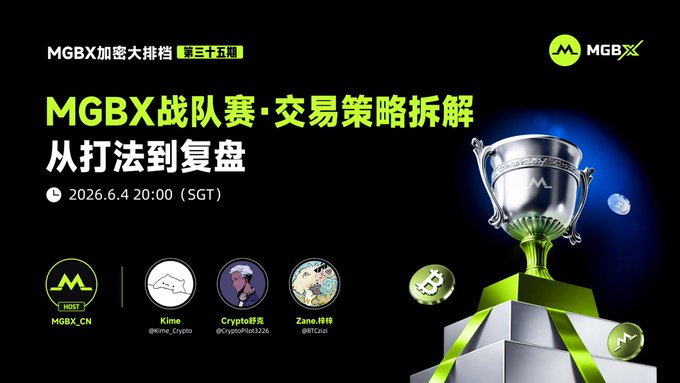
In tonight's Space session, several participating guests shared a consistent sentiment: the closer to the end, the less you can focus on short-term volatility; instead, you must look at the overall structure. Kime mentioned in the discussion that many people fall into "volume anxiety" during the sprint, but what truly creates a gap is often not frequency, but stability. His point was blunt: "The leaderboard shows the result, but the result is built from the steady execution of every single trade. You can do less, but you can't do it chaotically." In his view, climbing the ranks isn't about simply amplifying trades, but about continuously outputting effective trades under controlled risk.
Discussing team synergy, Shuke's perspective leaned more towards "systemization." He believes the biggest change after leading a team isn't technical, but rhythm management. "A team isn't just a group of people trading; it's a rhythmic system. If everyone's rhythm is inconsistent, even the best strategy will be scattered." During this competition, he made a notable adjustment: covering more team members with low-volatility strategies while concentrating high-volatility positions at core execution points. The result was a significant improvement in both the team's overall stability and ranking efficiency. His conclusion was that the team competition is not about who is more aggressive, but who can make the overall rhythm more unified.
In the discussion on sudden market volatility, zane.梓梓 offered a more rational and restrained view. He mentioned that when a geopolitical event, for example, triggers rapid oil price fluctuations, the first reaction should not be opportunity, but risk. "Many people see volatility and want to jump in, but the real opportunity usually comes after the emotions have cooled." He recalled his early phase of chasing news-driven trades, experiencing both profits and drawdowns. Ultimately, the principle that helped him form his system was: "The market won't reward your impulsiveness; it will only reward your patience." In this competition, he didn't change his core strategy, only moderately increased trading frequency within acceptable risk limits to optimize his rhythm with volatility, rather than being led by it.
Zane also mentioned an easily overlooked point when reviewing the entire team competition: many people focus entirely on the leaderboard, neglecting the steady accumulation throughout the process. He believes what truly determines the outcome is not a single trade, but the quality of a continuous series of decisions. "Trading isn't something that bursts out; it's the result of long-term, correct accumulation." In his view, basic actions like position diversification, rhythm control, and stop-loss/take-profit are actually the factors that create the biggest differences during the sprint phase.
Looking at the overall discussion, the team competition in this round of the Pizza Festival has moved from the early strategic exploration phase into a typical "system confrontation stage." The early stage was about strategy design, the middle stage about execution consistency, and now, this stage is more about risk control and patience with rhythm. Especially in an environment frequented by event-driven and high-volatility markets, opportunities and risks amplify almost simultaneously. Whether a trader can hold steady doesn't depend on being right about the direction, but on whether they can still execute according to their system.
Several guests ultimately formed a relatively unified conclusion: what truly determines the ranking is never the quality of a single trade, but the system's ability to output steadily under high pressure. Strategy determines the ceiling, execution determines the floor, and discipline determines whether you can make it to the end.
Currently, the Pizza Festival related activities are still ongoing, but they have entered the final phase. Whether it's the team competition or other tracks, the ranking window is continuously tightening, and the final changes often happen in the shortest time. For users still participating, this is no longer a trial-and-error phase, but an execution phase – the direction isn't important; what matters is whether you can complete the strategy in full.
The event continues, but the time left to sprint is running out.
👉 Go to the official website to download MGBX: https://mgbx.com/
Company: MGBX
Email: business@mgbx.com
Official Business Contact: @MGBXVIP
Risk Warning: Digital assets and leveraged trading carry high risk. Market volatility may lead to the loss of principal. Please exercise rational judgment and make prudent decisions.


