






Nvidia (NVDA) หุ้นคาดการณ์: การวิเคราะห์ของนักวิเคราะห์เบื้องหลังมูลค่า 5 ล้านล้านดอลลาร์ของ Nvidia


- มุมมองหลัก: ด้วยระบบนิเวศซอฟต์แวร์ CUDA และสถาปัตยกรรม GPU Blackwell Nvidia ได้กลายเป็นผู้จัดหาโครงสร้างพื้นฐาน AI หลักของโลก การคาดการณ์ราคาหุ้นของบริษัทขึ้นอยู่กับอัตราการเติบโตและความต่อเนื่องของรายจ่ายด้านทุน AI ในอนาคตเป็นอย่างมาก และยังมีผลกระทบอย่างมีนัยสำคัญต่อความรู้สึกของตลาดสกุลเงินดิจิทัล
- ปัจจัยสำคัญ:
- รายได้ไตรมาสแรกของปีงบประมาณ 2027 ของ Nvidia อยู่ที่ 81,600 ล้านดอลลาร์สหรัฐ เพิ่มขึ้น 85% เมื่อเทียบเป็นรายปี รายได้จากศูนย์ข้อมูลคิดเป็นมากกว่า 92% และแนวโน้มรายได้ในไตรมาสถัดไปอยู่ที่ประมาณ 91,000 ล้านดอลลาร์สหรัฐ ซึ่งบ่งชี้ว่ากระแสการสร้าง AI ยังคงเร่งตัวขึ้น
- ราคาหุ้น NVDA อยู่ที่ประมาณ 212 ดอลลาร์สหรัฐ ราคาเป้าหมายเฉลี่ย 12 เดือนของนักวิเคราะห์อยู่ในช่วง 296-305 ดอลลาร์สหรัฐ แต่การคาดการณ์ระยะยาวมีความแตกต่างกันอย่างมาก โดยราคาเป้าหมายปี 2030 อยู่ระหว่าง 350-500 ดอลลาร์สหรัฐ (อนุรักษ์นิยม) ถึง 800-1,000 ดอลลาร์สหรัฐ (เชิงบวก)
- ข้อจำกัดการส่งออกไปยังจีนทำให้รายได้จากศูนย์ข้อมูลของ Nvidia สูญเสียไปประมาณ 4,600 ล้านดอลลาร์สหรัฐต่อไตรมาส บริษัทได้ระบุไว้อย่างชัดเจนในแนวโน้มในอนาคตว่าไม่รวมรายได้จากศูนย์ข้อมูลที่มาจากจีน
- แพลตฟอร์ม CUDA สร้างการพึ่งพาของนักพัฒนาอย่างลึกซึ้ง ทำให้การ迁移ไปยังแพลตฟอร์มฮาร์ดแวร์อื่นมีต้นทุนสูงและใช้เวลานาน ซึ่งเป็นอุปสรรคในการแข่งขันที่ยั่งยืนที่สุดของ Nvidia
- ความสัมพันธ์ของ Nvidia กับระบบนิเวศสกุลเงินดิจิทัลได้พัฒนาไปจากความต้องการขุดด้วย GPU สู่การเป็นตัวชี้วัดความรู้สึกของตลาด โดยผลประกอบการทางการเงินของบริษัทมักแสดงความสัมพันธ์กับราคาโทเคนคริปโตที่เกี่ยวข้องกับ AI
Nvidia was once known worldwide for building graphics cards for gamers.
Then the AI wave swept in, with every data center, research institution, and cloud service provider urgently needing its GPUs.
Today, Nvidia's market cap is nearly $5.1 trillion, its annual revenue has surpassed $215.9 billion, and NVDA stock price predictions have become one of the most searched questions in global markets.
This article explores the drivers behind this valuation, various forecasts, and what it means for digital asset investors.
Key Takeaways
- According to Nvidia's filing with the U.S. Securities and Exchange Commission (SEC), Nvidia's full fiscal year 2026 revenue reached $215.9 billion, up 65% year-over-year, with data center infrastructure accounting for over 90% of quarterly revenue.
- In the first quarter of fiscal 2027 (announced on May 20, 2026), Nvidia posted a record single-quarter revenue of $81.6 billion and issued a revenue guidance of approximately $91 billion for the second quarter of fiscal 2027, indicating that the AI buildout boom is still fully accelerating.
- As of June 2026, NVDA stock is trading around $212, with a market cap of approximately $5.1 trillion, and hit an all-time high of around $236 in mid-May 2026.
- China export restrictions have cost Nvidia an estimated $4.6 billion in quarterly data center revenue, which Nvidia has now explicitly excluded from its forward guidance.
- Long-term NVDA stock price prediction scenarios vary widely, from moderate growth to multiples of today's price, with the final trajectory depending almost entirely on the development of AI infrastructure investment over the next several years.
- MEXC now offers real trading of NVDA US stocks, allowing digital asset investors to track Nvidia's performance directly on the same platform.
Nvidia Stock Fundamentals: AI, GPU Dominance & The NVDA Advantage
Nvidia's position at the core of the AI trade is no accident; it's the result of a two-decade effort to build a software moat.
The company's CUDA platform (launched in 2006) trained an entire generation of AI researchers to write code that runs exclusively on Nvidia hardware.
When large language models went mainstream, moving away from Nvidia was not just a hardware decision but a multi-year engineering migration that most institutions chose not to attempt.
This software lock-in effect, combined with the Blackwell GPU architecture, has made Nvidia the default infrastructure layer for global AI training and inference.
According to Nvidia's fiscal year 2026 Q4 earnings press release filed with the SEC, Nvidia's full-year revenue reached $215.9 billion, up 65% year-over-year, with data center revenue accounting for over 90% of total quarterly revenue by the year's end.
In the first quarter of fiscal 2027 (announced on May 20, 2026), Nvidia's total revenue hit $81.6 billion, up 85% year-over-year, and data center revenue reached $75.2 billion, accounting for over 92% of total revenue for the quarter.
In the Q1 fiscal 2027 earnings press release, Nvidia founder and CEO Jensen Huang described the current investment cycle as "the largest infrastructure buildout in human history."
This positioning explains why NVDA stock price predictions are the subject of such intense focus.
Nvidia Stock Price Prediction: Analyst Forecasts and Where They Diverge
As Nvidia's fundamentals compound at a rate rarely seen among large-cap stocks, discussions of NVDA stock price predictions have split into two main threads: the trajectory over the next twelve months and the long-term outlook around 2030.
Short-Term NVDA Stock Price Prediction
As of June 2026, NVDA stock is trading around $212, having hit an all-time high of approximately $236 in mid-May 2026.
Wall Street's coverage of the stock is generally bullish. As of June 2026, the consensus from over 60 covering analysts shows a 12-month average price target in the $296 to $305 range, implying roughly 40% upside from NVDA's current price of around $212.
Among recent individual institution price targets, Bank of America has set a price target of $320 (raised in May 2026, based on a 2030 AI data center total addressable market estimate of about $1.7 trillion); Wedbush Securities holds a $300 price target, citing an inflection point in the AI buildout boom.
The most critical data point for any short-term NVDA stock price prediction will be Nvidia's next earnings report in August 2026, where the Q2 fiscal 2027 results will be compared against the company's own revenue guidance of approximately $91 billion. Achieving this would mean Nvidia is still accelerating from its current massive base.
Expect short-term volatility, especially around earnings reports. Historically, the gap between high market expectations and actual results has triggered significant bi-directional swings in NVDA stock on single trading days.
Long-Term Nvidia Stock Price Prediction
Long-term Nvidia stock price prediction models show significant divergence, rooted in genuine uncertainty about how the AI market will evolve over the next few years.
The conservative scenario assumes AI capital expenditure growth slows from current levels, hyperscale cloud providers develop more custom chips, and Nvidia's valuation multiple gradually converges with that of more mature technology companies.
The optimistic scenario, advocated by analysts who believe AI infrastructure investment is still in its early stages, argues that Nvidia's hardware and software lock-in will sustain pricing power. If AI spending maintains its current trajectory, optimistic long-term forecasts set NVDA's 2030 price target at $800 to $1,000.
The divergence in long-term NVDA price targets is substantial: Conservative models assuming slower AI capex growth and multiple compression towards mature tech companies predict a 2030 price of $350 to $500, while bullish forecasts based on sustained hyperscale demand and unabated AI infrastructure buildout target the $800 to $1,000 range over the same timeframe.
The longer the prediction horizon, the wider the range becomes – an honest starting point for any Nvidia stock price prediction beyond twelve months.
Bullish vs. Bearish: Two Scenarios for NVDA Stock Price Prediction
The bullish scenario is built on sustained compounding structural advantages.
The CUDA software ecosystem has created deep developer dependency that rival hardware, even if improving, cannot easily dislodge.
Blackwell remains the architectural benchmark for large-scale AI training, and emerging revenue vectors – including autonomous driving, enterprise AI software, and sovereign infrastructure deployment – represent additional growth areas analysts expect to contribute materially to Nvidia's long-term revenue.
The bearish scenario focuses on valuation discipline: at a market cap exceeding $5 trillion, Nvidia's stock price already reflects "continued perfection pricing," and any credible sign of spending slowdown or mass custom chip adoption could trigger a significant re-rating.
The most honest reading of Nvidia stock price predictions is to consider both scenarios as possible outcomes, rather than dismissing them as extremes.
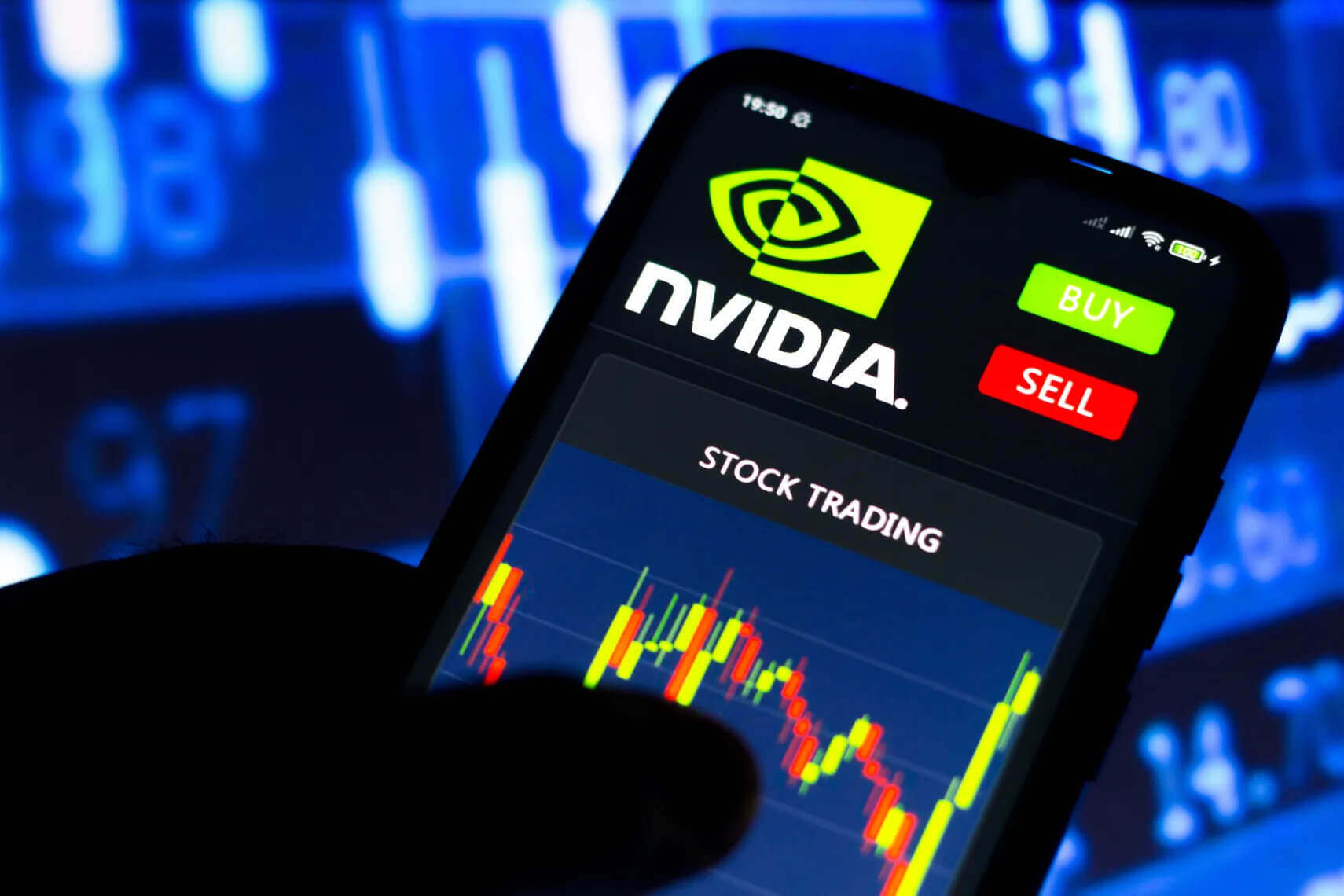
Key Catalysts and Risks That Could Shape NVDA Stock Price Prediction
Every NVDA stock price prediction is essentially a bet on which of these forces – tailwinds or headwinds – will prove more durable over the coming years.
Factors That Could Drive Nvidia Stock Higher
Several structural drivers support the bullish side of Nvidia stock price predictions.
Nvidia's Q3 fiscal 2026 earnings press release, filed with the SEC, quoted CEO Jensen Huang saying "Blackwell shipments are going through the roof" and "cloud GPUs are fully sold out." This demand-supply imbalance strengthens Nvidia's ability to maintain premium pricing across its product line.
AI inference demand is accelerating. As trained models move from research environments into large-scale production deployment, inference workloads increasingly run on the same Nvidia hardware architecture as training, extending the revenue opportunity far beyond the initial training cycle.
Sovereign AI (governments building their own dedicated AI infrastructure) was explicitly named as a contributor to data center revenue diversification in Nvidia's Q1 fiscal 2027 CFO commentary, helping reduce reliance on a few major hyperscalers.
The CUDA software moat is perhaps the most enduring tailwind: it has locked an entire developer community and engineering workflow into Nvidia's architecture in a way that is slow and costly to reverse, even if competing hardware improves.
Risks That Could Weigh on Nvidia Stock Prediction
The risks facing any Nvidia stock price prediction are concrete, quantifiable, and worth taking seriously.
China export restrictions are the most measurable headwind: in Q1 fiscal 2026, Nvidia generated $4.6 billion in Hopper data center product revenue from Chinese customers; by Q1 fiscal 2027, this figure went to zero, as directly confirmed in Nvidia's CFO commentary filed with the SEC.
Nvidia has now explicitly stated in its forward guidance that it assumes no further data center computing revenue from China, reflecting the current scope of export restrictions.
Custom chip development by major cloud providers introduces a long-term risk that no SEC filing can fully quantify: if hyperscalers successfully reduce their reliance on Nvidia GPUs for inference workloads, the demand growth underpinning most long-term NVDA stock price predictions becomes more uncertain.
At a market cap exceeding $5 trillion, valuation concentration risk is ever-present. Any quarter with guidance below expectations could trigger disproportionate downside volatility in a stock already priced for continuous compounding growth.

 ลิงก์ต้นฉบับ


