






Another Bitcoin Treasury Company Exits: 11 Months, From High-Profile Entry to Liquidation and Massive Losses


- Core Thesis: The corporate Bitcoin reserve plan launched by French semiconductor company Sequans in June 2025 has ended in failure within less than a year. Forced to sell Bitcoin to repay debt and planning a full liquidation, the company incurred massive losses, with its stock price plummeting over 80%.
- Key Elements:
- Sequans has sold its Bitcoin holdings to fully repay its convertible bonds and plans to gradually liquidate the remaining 658 BTC. Its peak holdings reached 3,234 BTC.
- The plan was launched on June 23, 2025, when the stock price was $23.40. Just 18 days prior, the company had received a delisting warning from the NYSE (market cap and shareholder equity below $50 million).
- The company raised $384 million through private financing, including $189 million in secured convertible bonds collateralized by Bitcoin, meaning the Bitcoin reserve was effectively pledged from the very start.
- As of October 3, 2025, the company's average cost basis for its holdings was approximately $116,600, while the Bitcoin price had fallen to $73,000, resulting in a classic "buy high, sell low" scenario.
- Just one month after launching the plan, the company had already sold 970 BTC to repay debt, violating the core "never sell" principle of the corporate Bitcoin HODLer school.
- The company reported a full-year net loss of $109.3 million for 2025, including an unrealized impairment loss of $67.4 million on its Bitcoin assets, bringing its cumulative loss to $145.1 million.
- The current stock price (approximately $3.98) is down over 80% from the launch date and 92% from its one-year high. The company has officially announced the termination of its Bitcoin reserve strategy.
Original Author: Protos
Original Compilation: Chopper, Foresight News
11 months ago, French semiconductor company Sequans Communications launched a corporate bitcoin reserve plan to address the risk of delisting from the New York Stock Exchange. Now, this experiment has come to a quiet end.
The chip company confirmed that it has fully repaid its convertible bonds by selling its bitcoin holdings. It also plans to gradually liquidate the remaining 658 bitcoin. The company's bitcoin holdings once peaked at 3,234 bitcoin.
Sequans had previously stated publicly that it intended to accumulate over 3,000 bitcoin as a long-term reserve asset. However, this so-called "long term" ultimately lasted less than a year.
The company's stock (ticker: SQNS) has fallen 77% year-to-date and has plummeted 97% over the past five years.
Sequans' bitcoin reserve plan was launched on June 23, 2025, with Swan Bitcoin and its CEO Cory Klippsten heavily promoting the project at the time (Note: Swan Bitcoin was the exclusive operator and advisor for Sequans' bitcoin reserve strategy). Just 18 days before the plan's implementation, the NYSE issued a delisting warning to Sequans: the company's market capitalization and shareholders' equity had both fallen below the exchange's minimum threshold of $50 million.

Sequans' latest announcement confirms full repayment of its convertible bonds
Klippsten stated at the time, "Sequans is poised to become a leader in the corporate bitcoin reserve space." At that time, SQNS shares were trading at $23.40; today, the stock opened at just $3.98.
Bitcoin Reserve Strategy Fails Shortly After Launch
Following the market bubble burst in early summer 2025, a large number of publicly traded companies with digital asset reserves saw their stock prices weaken collectively. The promising vision Sequans once painted has now evaporated.
Sequans CEO Georges Karam had previously made bold statements, expressing firm belief that bitcoin is a high-quality asset with significant long-term investment value.
The company selected Swan Bitcoin as its execution partner and Coinbase Prime as its asset custodian. Simultaneously, Northland Capital Markets and B. Riley Securities acted as joint lead bookrunners to help the company complete a total private placement of $384 million.
Of this capital, only $195 million came from the sale of American Depositary Shares at $1.40 per share; the remaining $189 million consisted of secured convertible bonds backed by bitcoin as collateral. In other words, from the very first day of the plan's implementation, the bitcoin Sequans intended for its reserve was effectively already pledged to its creditors.
As of October 3, 2025, Sequans held a total of 3,234 bitcoin, with an average purchase cost of approximately $116,643 per coin. As of the time of this writing, the price of bitcoin has fallen to $73,000.
Just one month later, the publicly listed company gained "notoriety" for a negative headline: to repay a portion of its debt, the company sold 970 bitcoin.
This action completely violated the core tenet of the corporate bitcoin accumulation school. The pioneer of this model, Michael Saylor, famously said, "Even if you're left with no way out, never sell your bitcoin." Yet, Sequans ultimately chose to sell its coins to pay off debt.
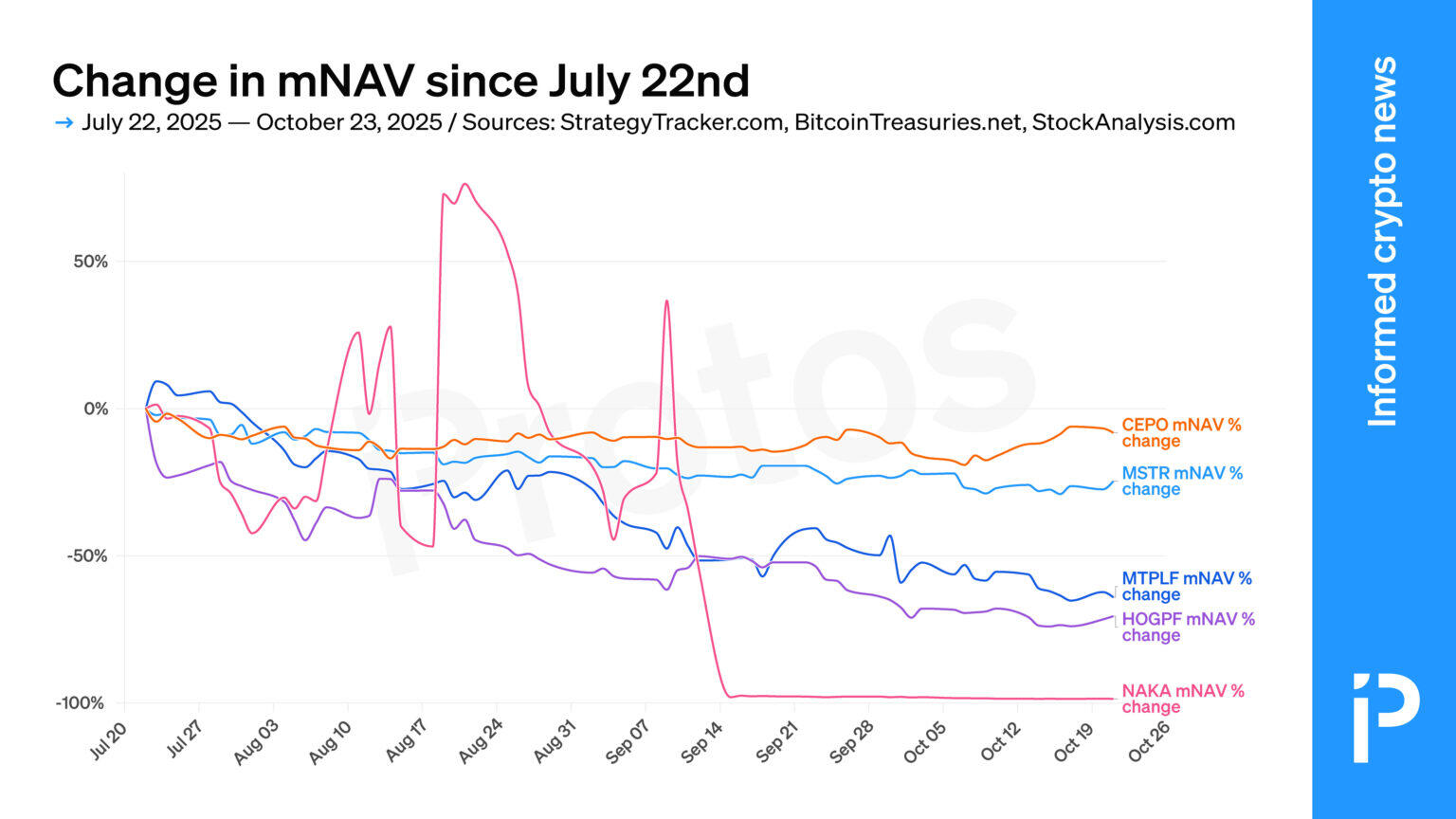
Percentage change in adjusted market net asset value (mNAV) per share for multiple bitcoin treasury companies since July 22, 2025
"Bitcoin Reserve Strategy Formally Terminated"
Another five months later, Sequans completely halted the plan. The company stated briefly in its announcement: "The bitcoin reserve strategy has been terminated."
CEO Karam, who was once extremely bullish on bitcoin, now stated that this debt repayment is an important turning point for the company's development. Going forward, Sequans will fully focus on its core IoT semiconductor business and drive business expansion.
The previous praise for bitcoin's value and the promise of creating long-term returns for shareholders through crypto asset reserves have all been abandoned. The company's current plan is simply liquidation and cashing out.
In fact, the company had already signaled its exit in its first-quarter 2026 financial report released three weeks prior. In the risk warning section of the report, the company explicitly mentioned that it would terminate its bitcoin reserve-related operations. Sequans reported revenue of only $6.1 million and an operating loss of $50.5 million for that quarter.
According to annual report data, Sequans recorded a net loss of $109.3 million for the full year 2025, including an unrealized impairment loss of $67.4 million on its bitcoin assets alone. The company's total accumulated losses have reached $145.1 million.
In summary, Sequans bought bitcoin high and sold it low, ultimately incurring losses amounting to tens of millions of dollars.
The company had hoped that the bitcoin reserve would enhance its financial resilience and create long-term value for shareholders, but both goals were completely missed. Currently, the SQNS stock price is down over 80% from the day the bitcoin plan was launched and down 92% from its 52-week high.


