CZ and Cathie Wood’s First Live Chat: CEOs Who Don’t Understand Blockchain Will Be Eliminated; 2026 Could Break Bitcoin’s Four-Year Cycle


- Core Thesis: Binance founder Changpeng Zhao (CZ) predicted on the ARK Invest podcast that the next phase of cryptocurrency will feature accelerated integration with traditional finance, innovation driven by AI and stablecoins, and the rise of asset tokenization. He remains optimistic about Bitcoin’s long-term outlook.
- Key Takeaways:
- Crypto payments have developed slower than expected, but institutional participation in the US, the rise of stablecoins, and the emergence of AI Agents have exceeded expectations. AI will boost trading volumes and development efficiency.
- The motivation for traditional finance to embrace crypto stems from its massive market potential. Lower costs will stimulate trading volume growth, while failure to adopt will result in lost market share.
- Binance maintains its leadership due to a “user-first” principle, a global compliance framework, low costs and fees, and the trust built through high liquidity and security.
- The future of exchanges is trending towards “all-in-one” platforms. Asset tokenization (e.g., gold, oil) will meet user demand for high-quality assets, with CEXs and DEXs coexisting over the long term.
- In the short term, the stablecoin industry will see a proliferation of options, attracting users by offering yields and low fees. In the long term, a winner-takes-all scenario is possible, but dollar-pegged stablecoins currently dominate.
- The threat of quantum computing to crypto is not imminent. Bitcoin can adapt through community-coordinated upgrades, with blockchain upgrades potentially starting from other, more centralized chains first.
- The theory of Bitcoin’s four-year cycle may accelerate due to the Trump administration’s stock market-boosting policies. Institutional investors entering the market via ETFs will stabilize prices, and CZ remains bullish.
Original Link: ARK INVEST: From Binance To Beyond: CZ Predicts Crypto’s Next Phase
Translation & Compilation: CryptoLeo (@LeoAndCrypto)

CZ and Cathie Wood don’t have many intersections, but whenever they do, it sends shockwaves through the industry. Their limited connection is rooted in the crypto sector: Cathie Wood has long been bullish on Bitcoin, and her firm Ark Invest has repeatedly published reports assessing Bitcoin's future prospects; CZ, the founder of the industry's leading exchange, is also a long-term optimist regarding Bitcoin.
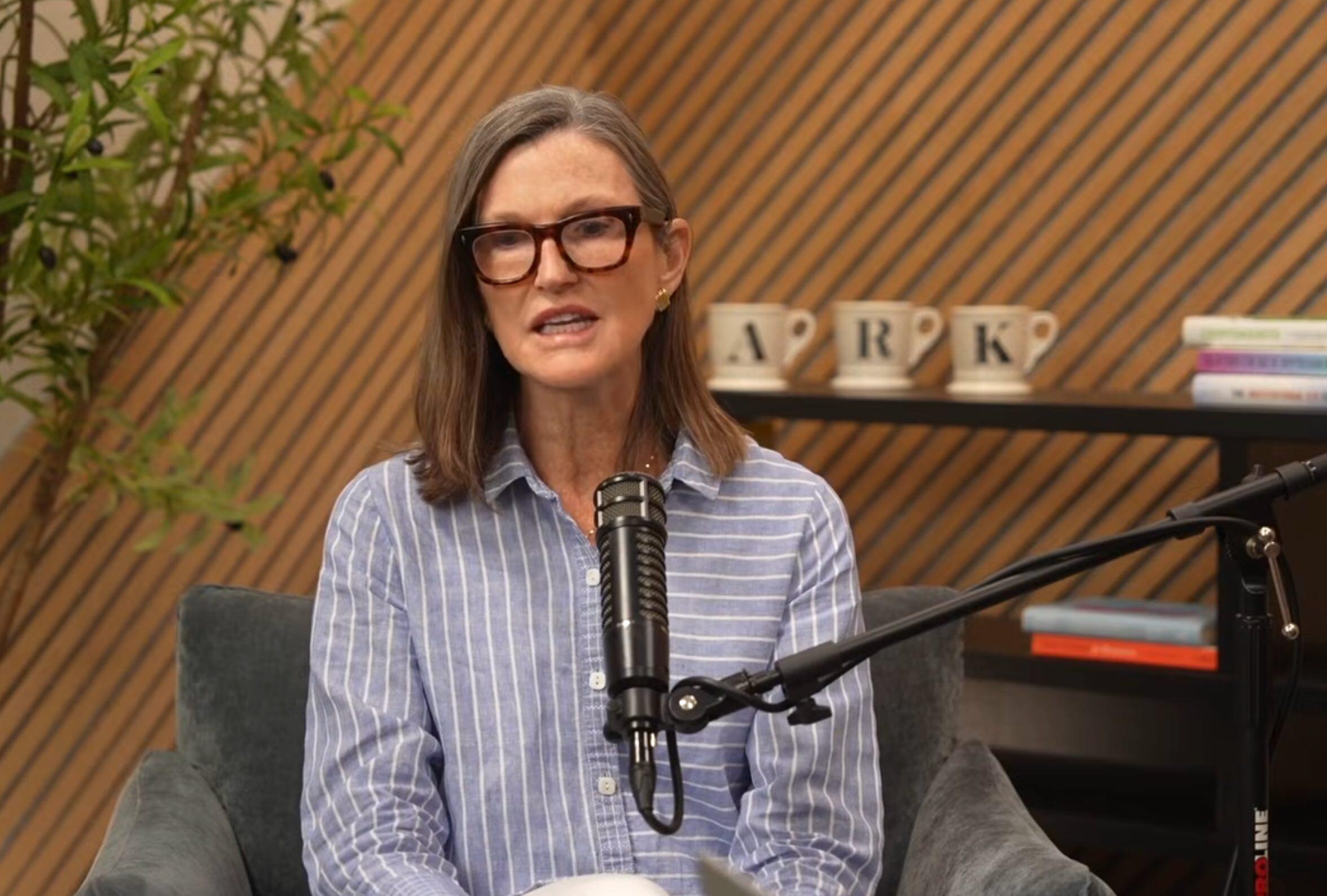
Recently, CZ appeared for the first time on Ark Invest’s FYI podcast (click to watch). CZ shared his story about Binance and his views on the crypto industry; Cathie Wood also recommended CZ’s new book, "The Binance Life," to the audience, stating that CZ's story is truly inspiring. Additionally, towards the end of the podcast, Cathie Wood mentioned the "1011" market event, clarifying that Binance did not trigger the crash; it was caused by tariff-related panic. Below is a concise summary by Odaily Planet Daily.
Traditional Finance Boosts Bitcoin, AI, Stablecoins, and Tokenization
Cathie Wood: Which areas have developed slower or faster than you expected?
CZ: First, I thought crypto payments would have taken off by now. In reality, they haven't. Most people aren't using cryptocurrency for payments, and many merchants are unaware of the convenience of crypto payments, which can be as easy as Visa or Mastercard.
Over the past year, the pace of US institutional involvement in cryptocurrency has been very fast. The Biden administration hindered crypto innovation, and many builders of large-scale crypto projects were sued by the SEC. People moved towards Meme coins, while truly practical applications were rarely developed. However, I don't think crypto development is in a vacuum; it's just much slower than I anticipated. I hope the US will quickly pass pro-crypto regulations so we can see more of this development and innovation.
A lot of things haven't turned out as I expected. Over time, we will still fill the gaps and continue to develop.
Secondly, it's the rise of stablecoins and the popularity of AI Agents. I believe AI will help in several ways. First, AI Agents can generate much higher trading volumes than humans. Also, AI will use cryptocurrency. They won't use traditional financial systems for payments; crypto is more convenient. Furthermore, I think AI will accelerate development speed. AI Coding can drastically speed up writing code. It's not fully automated yet (though it might be soon). AI can also help people build applications faster, like more user-friendly wallets, more secure wallets, and faster chains.
The development of stablecoins has also exceeded my expectations. Back in 2014 when Tether was just starting, or even until 2017 when Binance listed USDT, I thought stablecoins were just a temporary measure, a way to hold a fiat-pegged value during market downturns. Another interesting thing is that I didn't expect gold trading to become so active in the crypto industry. Binance only listed a gold token about two months ago, and now it has become one of the largest gold trading venues outside traditional markets, with gold accounting for up to 10% of contract trading volume. Crazy! And Binance recently launched oil trading. We are witnessing the convergence of traditional assets and crypto, a trend initially stemming from the tokenization of assets like stocks.
Cathie Wood: Larry Fink foresaw asset tokenization about two or three years ago. This also gave traditional finance ideas (even during the Biden administration). Why have these traditional assets gained such massive volume in the crypto industry in such a short time?
CZ: I think Larry certainly has his own network, especially in traditional financial markets. Larry's message is regarded as a primary signal by world leaders, other financial institutions, and traditional institutional investors. He has established connections globally. Moreover, he is forward-thinking, believing that everything will be tokenized and that there is sufficient trading volume. Frankly, even though I worked in traditional finance before, my understanding of the money market isn't as deep as Larry's. I was originally a technical person. His understanding of the industry and his support have significantly boosted asset tokenization. What I didn't expect is that Binance now has over 300 million users who actually have this demand. As I mentioned earlier, the crypto space currently lacks quality assets. In the past four years, there haven't been many great projects; people can only trade Meme coins, which is just one category. Now, as tokenized assets like gold and oil become available for global crypto investors to trade, and given the high volatility due to geopolitical tensions, the trading volume of quality assets like gold and oil will increase. It's only a matter of time.
Cathie Wood: Do you think traditional finance is adopting cryptocurrency because they believe it will reduce costs and eliminate friction? Or is it because they see the technology stimulating more financial activity?
CZ: A very good question. I think they see the potential of cryptocurrency. The trading volume on Binance or other crypto exchanges/chains is evident. The potential is huge, so they must seize the trend. On the other hand, this new technology also reduces fees and costs. So, short-term profits might decrease, but trading volume will increase. Ideally, if you reduce fees by 50%, your trading volume could double, quintuple, or even increase tenfold. As the technology evolves, fees will become lower. If you don't lower fees, you will lose market share. Traditional finance has realized this, and it's another factor driving their rush to adopt crypto: charging clients less to attract more clients.
Cathie Wood: Yes, when we enter a period of technology-driven disruption, the traditional world typically fights against it. But now they seem to be embracing the new technology. Perhaps, as you said, not doing so would mean losing significant market share. But in comparison, native crypto participants are more likely to be winners because they aren't as constrained. What are your thoughts?
CZ: I think there is a very delicate balance. Some CEOs of large traditional finance companies might think, "I won't be at this company for much longer; I'll just maintain the status quo." They just want to do their job. But the next CEO might think, "I'm going to be here for five or ten years; I want the company to take a long-term perspective." Furthermore, public companies usually have short time frames; they need to report earnings every quarter. So, there's always a balance between short-term thinking and long-term thinking. However, companies that focus solely on short-term thinking without a long-term strategy will suffer.
As you said, native crypto companies don't have that burden. They are startups. They will adopt innovative strategies. Private companies typically have a longer-term vision than public companies. So, adopting crypto might be disadvantageous for public companies in the short term, but in the long term, the trend of crypto adoption will continue. Those who adopt better technology that saves costs and improves efficiency will win; those who don't will be negatively impacted. So, even if a CEO of a large traditional finance company doesn't change in the next two years, they will eventually lose a lot of business and be forced to change.
Blockchain technology and AI are merging rapidly, and AI is developing faster than any other technology we've seen before, providing faster feedback. A CEO might think that if they don't embrace AI and blockchain, they could be fired within a year. In the internet era, if a CIO of a financial company didn't consider cloud computing, they were fired. If a CTO doesn't consider AI, they might get fired soon. If a CEO doesn't consider blockchain, they might also be phased out. Perhaps we'll reach that stage soon.
Everything Exchange: Stay Open, Embrace All Integrations
Cathie Wood: Regarding Binance, there are so many competitors out there with vast resources. I wonder how you managed to stay number one in the industry for so many years?
CZ: There are several different reasons. First, we always prioritize protecting users above our profits. So, whenever an unexpected situation arises, we protect the users first. Users know this too. Second, we were lucky; our business had a wider coverage. Over the past decade, regulatory uncertainty has been quite severe. Some exchanges are somewhat constrained by their host country. If the country supports crypto, they do well; if it opposes crypto, they don't do as well.
Binance goes where it's supported. Binance attracted a small portion of users from each country or those that support crypto. Combined, these users form a huge number, and a large number means the best liquidity. And when you have the best liquidity, users choose you, creating a network effect. So far, we've kept the company's costs very low. Binance has several offices, all small, so we don't waste much money. Working from home also keeps our costs low. And I really want Binance to maintain that startup feel, even though it's now a massive team.
Furthermore, the crypto industry still has trust issues, especially for CEXs. We've been number one for a long time. We have high trading volume, and we have been very secure, which builds trust. Some similar companies in the US have very high costs and fees, but US users have no choice but to use those platforms, almost creating a monopoly in their own market. I think the US should open up to global competition; prices would come down. Consumers would have more choices, which would also increase crypto penetration in the US, benefiting current US companies.
Cathie Wood: How do you see the future of crypto exchanges like Binance and Coinbase? We discussed other asset classes coming on-chain. Do you think the "everything exchange" we often hear about, like Coinbase, will truly trade all asset classes? For instance, prediction markets like Kalshi and Polymarket are emerging. How do you see the future development of these exchanges?
CZ: The industry might evolve in several ways. Everyone wants to be the everything exchange trading everything. This will largely happen. Binance now trades oil and gold, something I wouldn't have dared to imagine a year ago. Coinbase will likely do the same, and other exchanges will follow. Binance has also recently integrated with prediction markets. I believe other exchanges will do similar things. Some exchanges might even launch their own prediction markets if they obtain the necessary licenses.
With the advent of new technology, a single platform can't exclude middle players. You don't need that many different platforms. We don't like the term "centralization," but that's what it is – centralization, a network effect. At the same time, there are geographical differences and user differences. For example, non-technical users entering the crypto space might prefer using a CEX over a DEX. However, once the technology becomes more advanced and tools for self-custodial wallets become easier and safer for ordinary people (non-technical users), they might switch to DEXs. So, it depends on which side develops faster. If 10% or 20% of the global population suddenly turns to crypto, CEXs will scale up rapidly, while DEXs will remain stable for a while. But if people gradually and increasingly move to DEXs, we might see DEXs grow faster than CEXs. Currently, using a DEX still requires dealing with wallets, addresses, etc., which might be a bit complex for some people. Most non-technical users don't want to deal with that. So, it's hard to say which direction it will go.
I think with the SEC announcing a positive and encouraging regulatory stance towards DEXs, the US might loosen up on policy and asset classes. The CFTC also seems very supportive of the derivatives market.
Exchanges need to think about how to integrate with this, or simply launch their own derivatives market. I think all of this might happen. The US currently has a regulatory policy advantage. We might see exchanges in one region grow faster than the rest of the world under favorable regulation. It's hard to say, but for Binance, I encourage staying open-minded and being open to all places that are open.
Coinbase has a great opportunity. You invested in Coinbase. They've done an excellent job over the past 14 or 15 years, and they've weathered all the regulatory issues in the US. I think we'll continue to see multiple exchanges coexisting for a long time.
Stablecoin Sector May See a Blooming Landscape
Cathie Wood: Regarding regulation and the US, we're still waiting for more clarity, especially concerning stablecoin yields. How do you see this issue? I know you and Tether, or Binance and Tether, have had a very close relationship for many years. We know Tether is unlikely to generate interest anytime soon. How do you see this situation?
CZ: A small correction here: actually, Binance and Tether have no relationship. Binance simply listed USDT early on, which helped Tether grow. We have no business relationship, no equity, no revenue sharing, not even a commercial contract.
Personally, I believe stablecoins should generate yields for users, but Tether won't do that in the short term. Because they are the early stablecoin giant, they have a dominant position even without doing so. However, they are also leaving room for competition, as other emerging stablecoins are offering yields.
Regarding stablecoin yields, there are different ways to do this. I think it's pointless to say you cannot benefit users now. Regulations might state stablecoins can't offer yields, but people will find other ways. There have been discussions, like what about activity-based rewards? You can set up different types of accounts, different activities, different staking methods. There are always many different ways to pay yields to people. If you are a business that wants to reward users, there are many different ways to do it.
I don't know how to completely restrict yields in this regard. A business wanting to offer zero-fee trading is, in a way, providing benefits to users. At the same time, I also realize we want to integrate with traditional finance, but we don't want to completely destroy or disrupt them. So we need to give them time to react and decide on regulations.
But soon, in the US or elsewhere, stablecoins that offer good yields to users while being convenient for transactions will win. Currently, Tether is dominant, but USDC is also significant, and USD1 is growing quite fast. We also see other stablecoins outside the US growing very quickly. So, I think the stablecoin sector is a crucial part of crypto. Whether it's low fees, user rewards, or any business that offers better returns to users, they have a significant advantage. Competition will be fierce. If the US doesn't allow stablecoin yields, international stablecoins might stand out in the short term.
Cathie Wood: Very interesting. I've discussed this issue before, like concerns about traditional bank deposits flowing into stablecoins. Do you think this worry is reasonable, or is it more like banks spreading fear?
CZ: I think this concern has some validity. On one hand, we are just placing assets in a relatively safe place, but it generates interest – that's one way. However, once you go down the rate route, people will demand higher rates. The way to increase rates is to invest assets into riskier investments. Compared to banks, banks operate on a fractional reserve system. Banks invest a large portion of funds elsewhere; they might not be able to recover the funds in time, so bank runs are very scary for them.
So far, crypto exchanges and even stablecoin issuers mostly maintain a 1:1 reserve of customer funds, and some top exchanges are undergoing audits. So, my personal view is that we should not break this tradition in crypto. This tradition is worth preserving, and it's not present in the traditional finance industry. Crypto exchanges and stablecoin issuers should maintain a 1:1 peg and 100% reserves. Of course, they could generate yield in other ways. For the yields we generate, if legally permitted, I actually encourage companies to pass them on to users. Globally, more and more people are likely to use these stablecoins unless they are prohibited from holding them. Fundamentally, users will consider the stablecoin's rewards, economic benefits, ease of use, and security.
Cathie Wood: When it comes to the stablecoin and crypto ecosystem, is there a conflict where only a few large stablecoin issuers will win? You also mentioned earlier that we will see many stablecoins in the early stages. What do you think the final outcome will be? Winner-takes-all or the opposite?
CZ: It could be a winner-takes-all scenario. But in the short term, we will see more competition rather than consolidation. Historically, issuing stablecoins was quite difficult. Before the Trump administration, governments worldwide were quite hostile to crypto. Over the years, whenever Tether disclosed its bank account, that bank account would be shut down. So, the fact that Tether managed to maintain a bank account with massive assets while the US government was trying to shut them down is like a very difficult skill to master. I still don't know how they did it. Maybe that's why they are so large. Now, I think that barrier no longer exists. Anyone can issue a stablecoin. You can open a bank account, get a bank to support you, undergo audits, get a