






a16z: Understanding the Future Direction of Stablecoins Through 9 Charts


- Key Insight: Stablecoins are evolving from early-stage trading tools and savings vehicles into core global financial infrastructure, with their applications showing a significant trend toward localization, rather than the traditionally perceived dominance of cross-border payments.
- Key Elements:
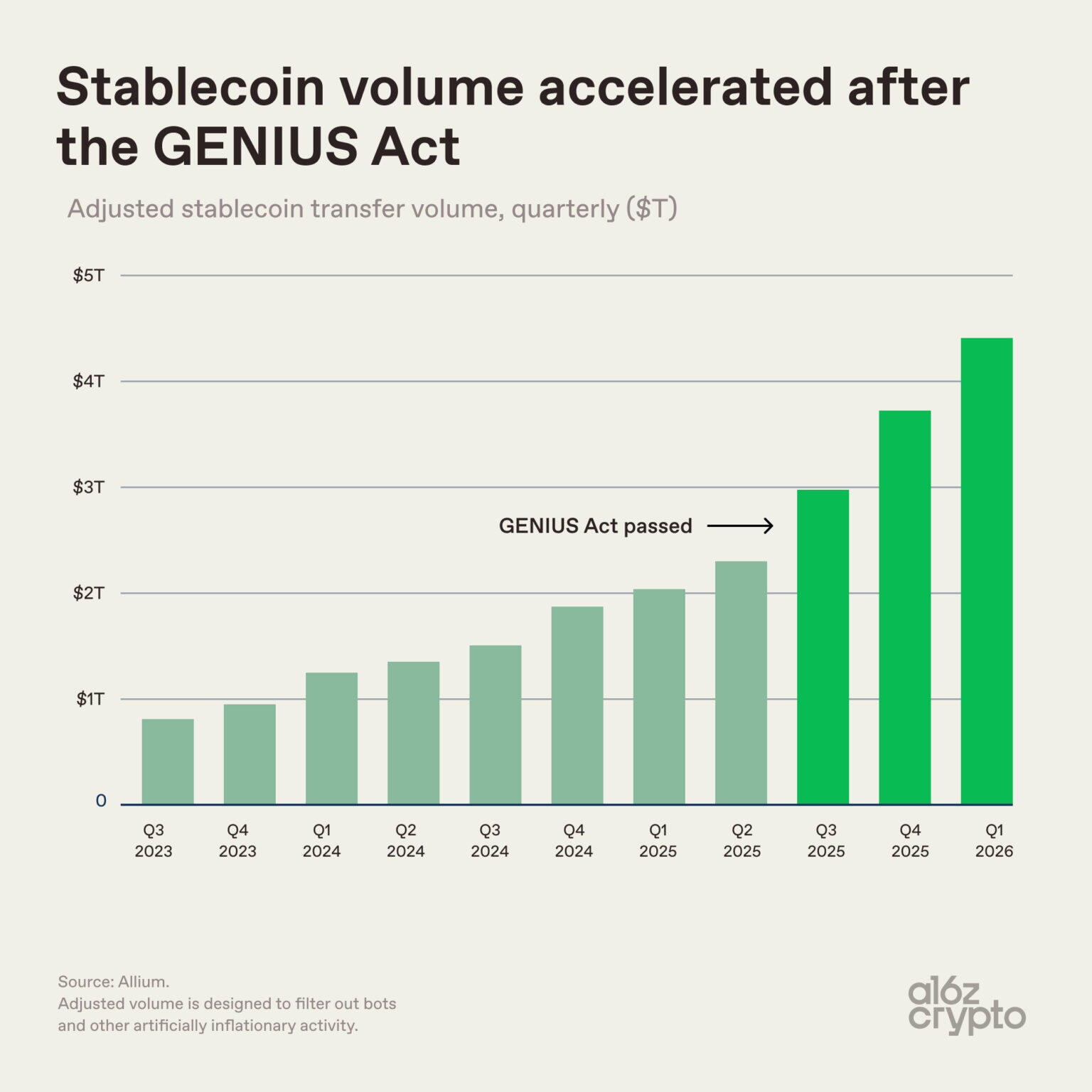
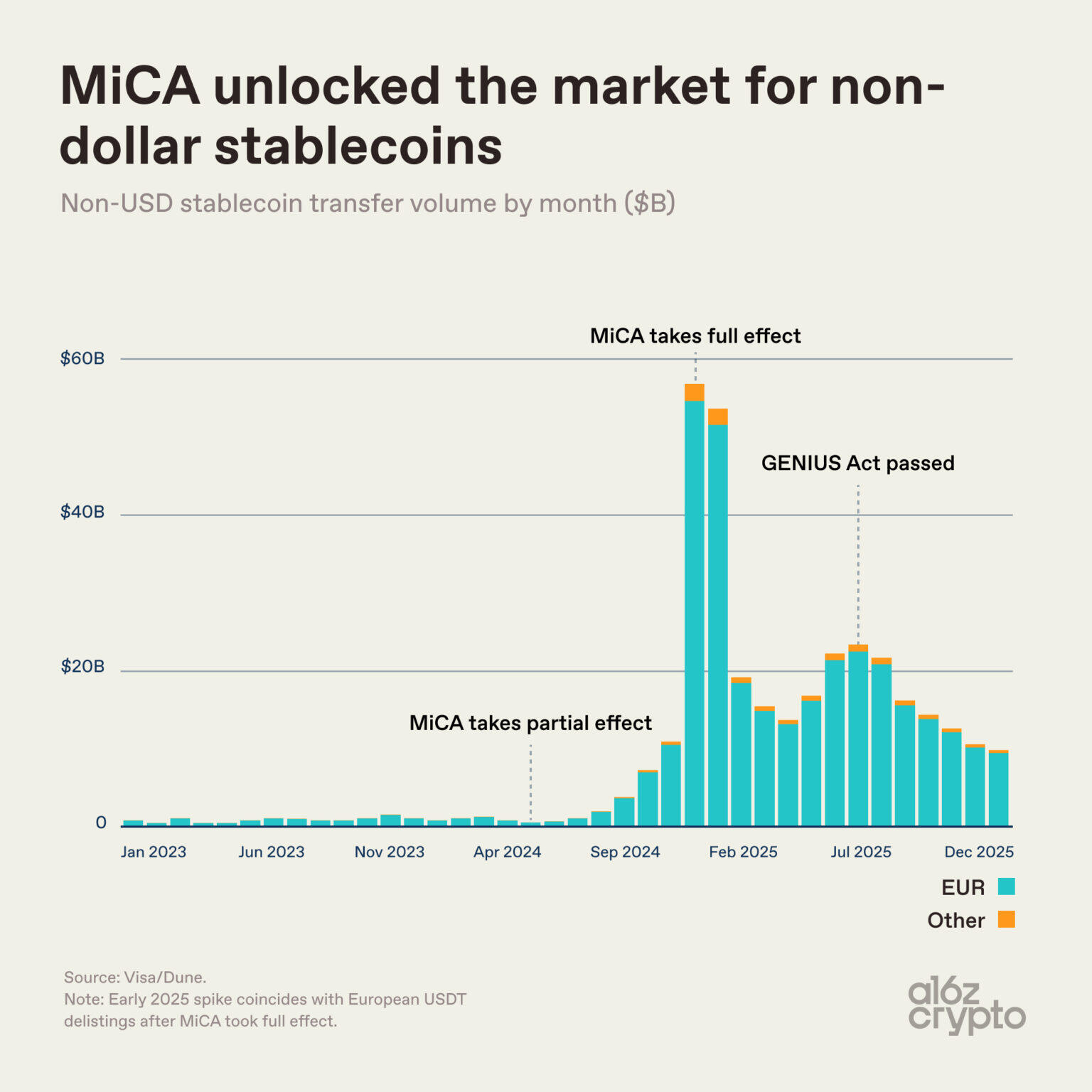
- Regulatory-Driven Growth: The U.S. GENIUS Act and the EU's MiCA regulation have spurred a surge in stablecoin transaction volumes. The former contributed to Q1 2026 transaction volumes reaching $4.5 trillion, while the latter has created a market with rigid demand for non-USD stablecoins (e.g., Euro).
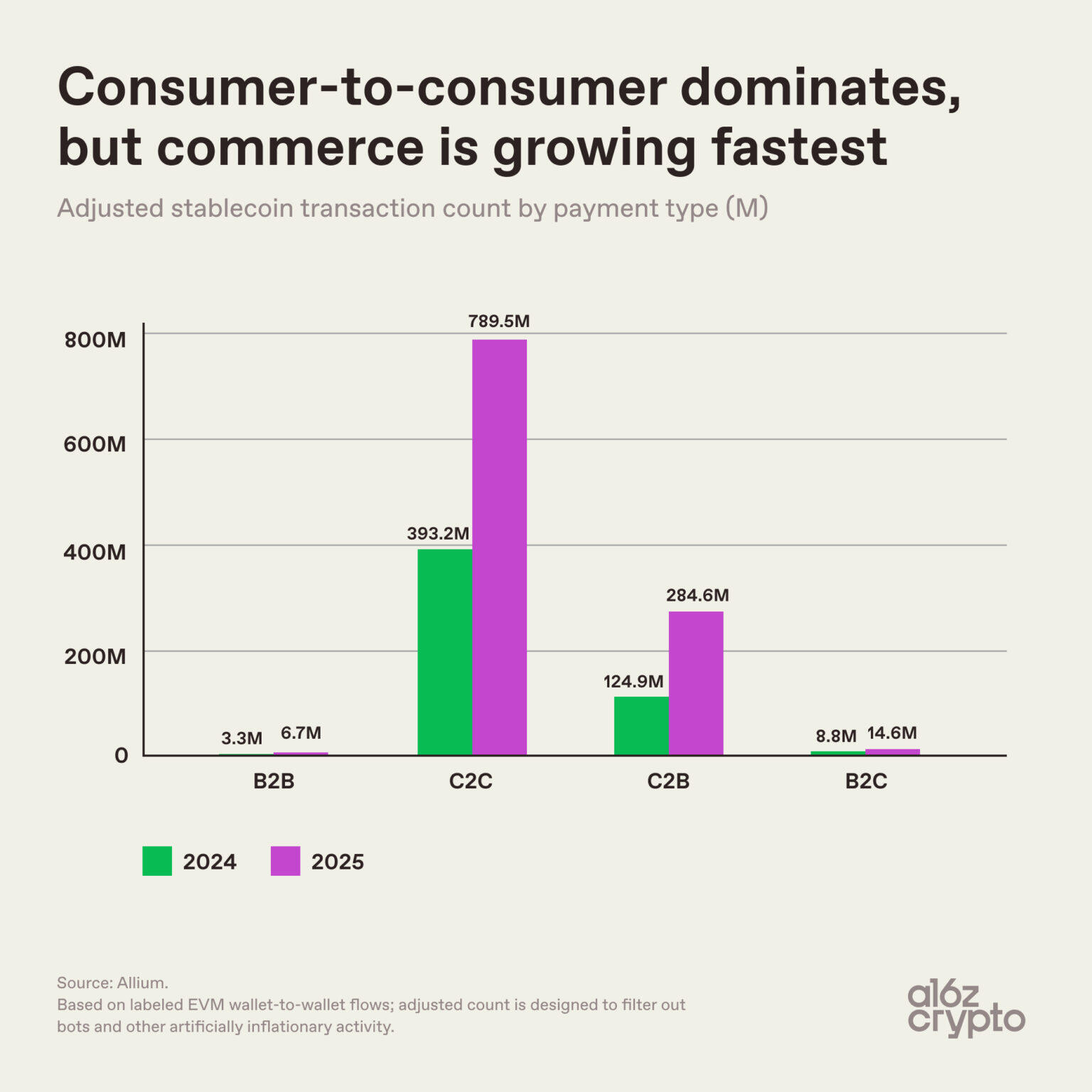
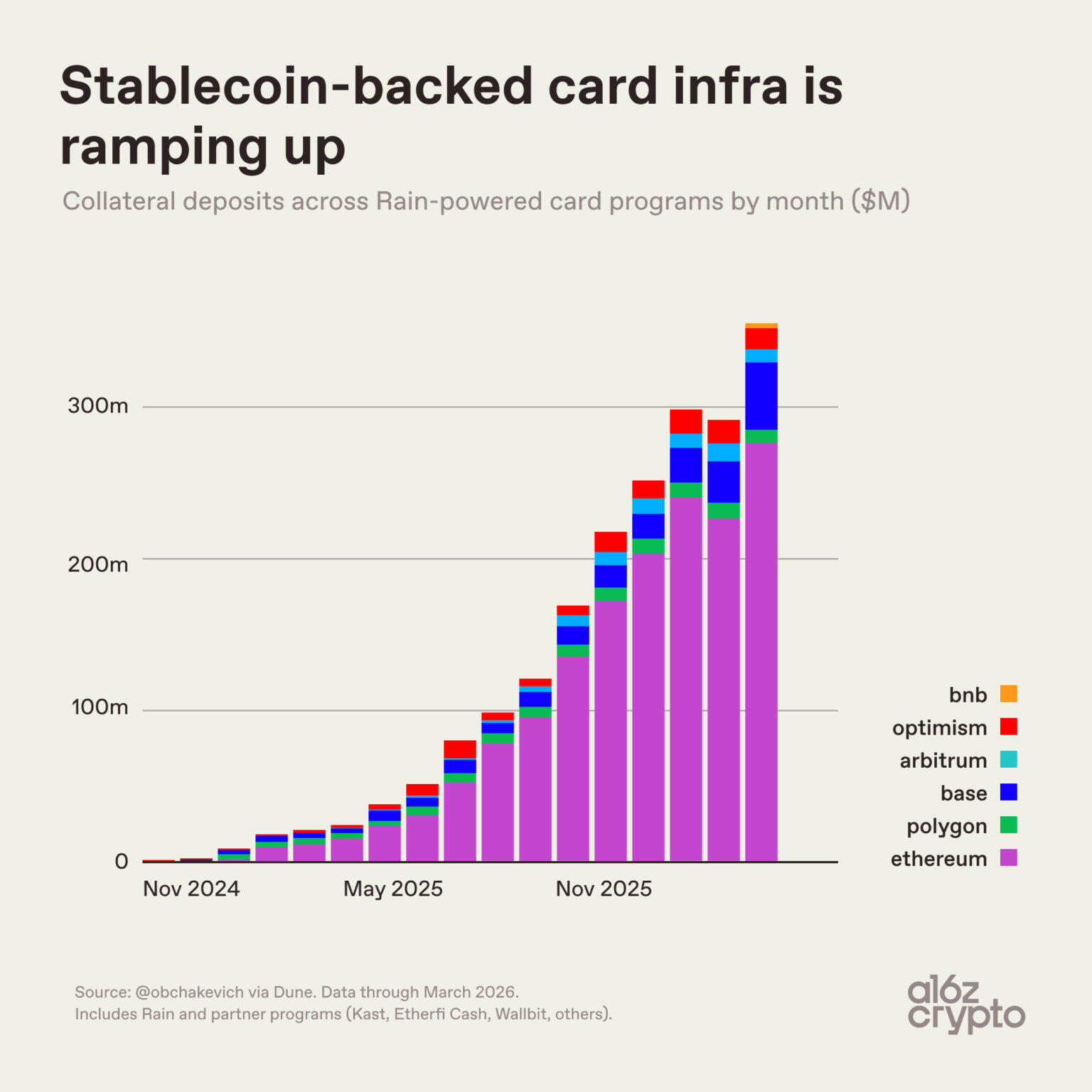
- Rise of Business Payment Scenarios: Consumer-to-Business (C2B) transaction counts grew 128% year-over-year in 2025. Collateral deposits for stablecoin payment cards surged from zero to over $300 million per month, indicating enhanced utility for everyday payments.
- Doubling of Circulation Velocity: Since the beginning of 2024, the circulation velocity of stablecoins has increased from 2.6x to 6x, indicating a substantial improvement in the efficiency of existing capital usage, characteristic of high-frequency usage in mature payment networks.
- B2B-Dominated Payment Structure: Excluding trading and exchange activities, stablecoin payment volumes reached $350-550 billion in 2025. Business-to-Business (B2B) payments form the core of this, while consumer and merchant payment scenarios are expanding rapidly.
- High Concentration in Asia: Nearly two-thirds (approximately 65%) of stablecoin payment volumes originate from Asia, primarily concentrated in Singapore, Hong Kong SAR, and Japan, with smaller shares in North America and Europe.
- Significant Localization Trend: Non-USD stablecoins (e.g., BRLA backed by the Brazilian Real) are growing due to integration with local payment networks (e.g., PIX). The proportion of domestic transactions has risen from 50% to 70%, diminishing their cross-border characteristics.
- Localized Everyday Tool: Stablecoins are transforming into localized payment tools based on the global underlying network. Peer-to-peer transfers remain the largest use case, but the share of everyday business payments is steadily increasing.
Original Author: Robert Hackett, Jeremy Zhang, a16z crypto
Original Compilation: Chopper, Foresight News
For years, stablecoins have been searching for their core identity.
Initially, they served as a trading tool for moving dollar assets between exchanges. Subsequently, stablecoins evolved into a savings instrument, an asset held long-term rather than spent daily. Now, all data points to a new direction: stablecoins are becoming core global financial infrastructure.
The following nine charts illustrate the underlying trends driving this transformation.
Regulatory Clarity Accelerates Market Growth
For most of stablecoins' development, regulatory uncertainty long restricted institutional capital entry. With the passage of the GENIUS Act, the regulatory framework has become clearer. This legislation did not create the industry trend but rather accelerated it.
Stablecoin Transaction Volume Before and After the GENIUS Act
The passage of the GENIUS Act in the US established the first federal regulatory framework for stablecoin issuance. The data clearly reflects the policy impact: adjusted stablecoin transaction volume was already rising in the quarters before the Act's passage; after it took effect, growth accelerated further, reaching approximately $4.5 trillion in Q1 2026.
MiCA Boosted the Non-USD Stablecoin Market
The implementation of Europe's Markets in Crypto-Assets Regulation (MiCA) presents a more complex picture. After MiCA came into full effect in late 2024, several major exchanges delisted USDT for compliance reasons, directly causing a temporary surge in non-USD stablecoin trading volume, peaking over $40 billion.
Market volume has since stabilized at a significantly higher baseline compared to the pre-MiCA era, with monthly volume consistently between $15 billion and $25 billion. The new regulations created a demand for non-USD stablecoins in a market that was previously nearly non-existent.
Stablecoin Commercial Payment Use Cases Continue to Expand
The most important structural shift in the market may be how people are actually using stablecoins.
Stablecoin Commercial Payments Concentrated in C2C
By transaction count, person-to-person (C2C) transactions are the clear leader, reaching 789.5 million in 2025. Meanwhile, consumer-to-business (C2B) transactions saw the fastest growth, rising from 124.9 million in 2024 to 284.6 million in 2025, a year-over-year increase of 128%.
Growth Trend of Stablecoin Payment Card Infrastructure
The data on stablecoin payment cards also confirms this trend.
Stablecoin payment card projects leveraging Rain technology (including Etherfi Cash, Kast, Wallbit, etc.) saw monthly collateral deposits surge from near zero in November 2024 to over $300 million per month by early 2026. While this represents collateral for payment consumption, not direct stablecoin spending, its growth trajectory is highly indicative: stablecoin commercial payment scenarios are experiencing a comprehensive rise.
Stablecoin Velocity Has Increased Significantly
The circulation and turnover frequency of each stablecoin dollar is accelerating.
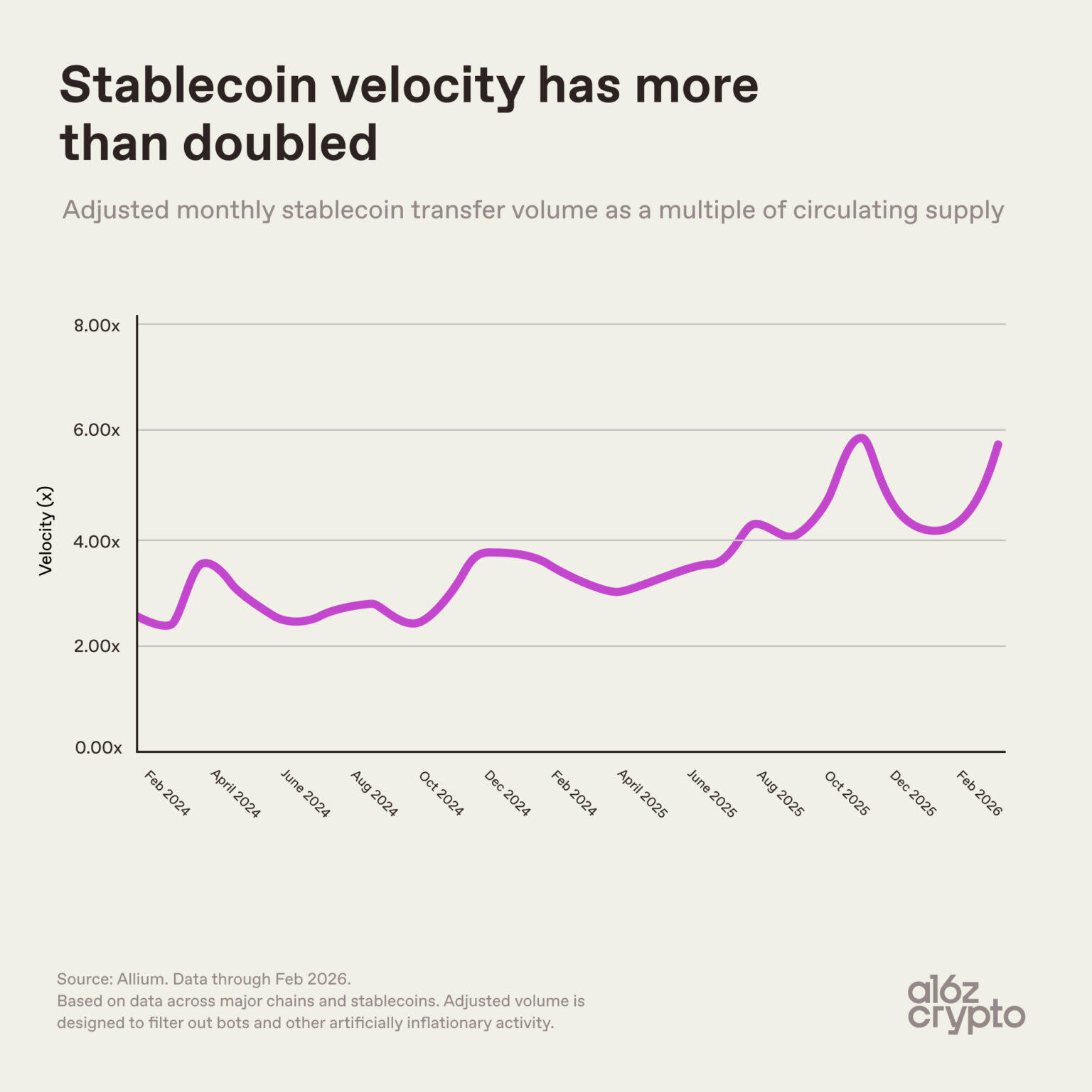
Stablecoin Velocity Trend
Since the beginning of 2024, stablecoin velocity (adjusted monthly transfer volume / circulating market cap) has nearly doubled, climbing from 2.6x to 6x. This increase means the demand for stablecoin transactions is outpacing the rate of new issuance, significantly improving the utilization efficiency of existing capital.
This is a core characteristic of a mature payment network: the underlying currency is used frequently, not merely held passively.
Changing Transaction Structure Highlights Payment Function
If we exclude activities like trading, fund flows, and exchange mechanisms (which constitute the majority of stablecoin transactions), the estimated payment volume between different parties last year was between $350 billion and $550 billion.
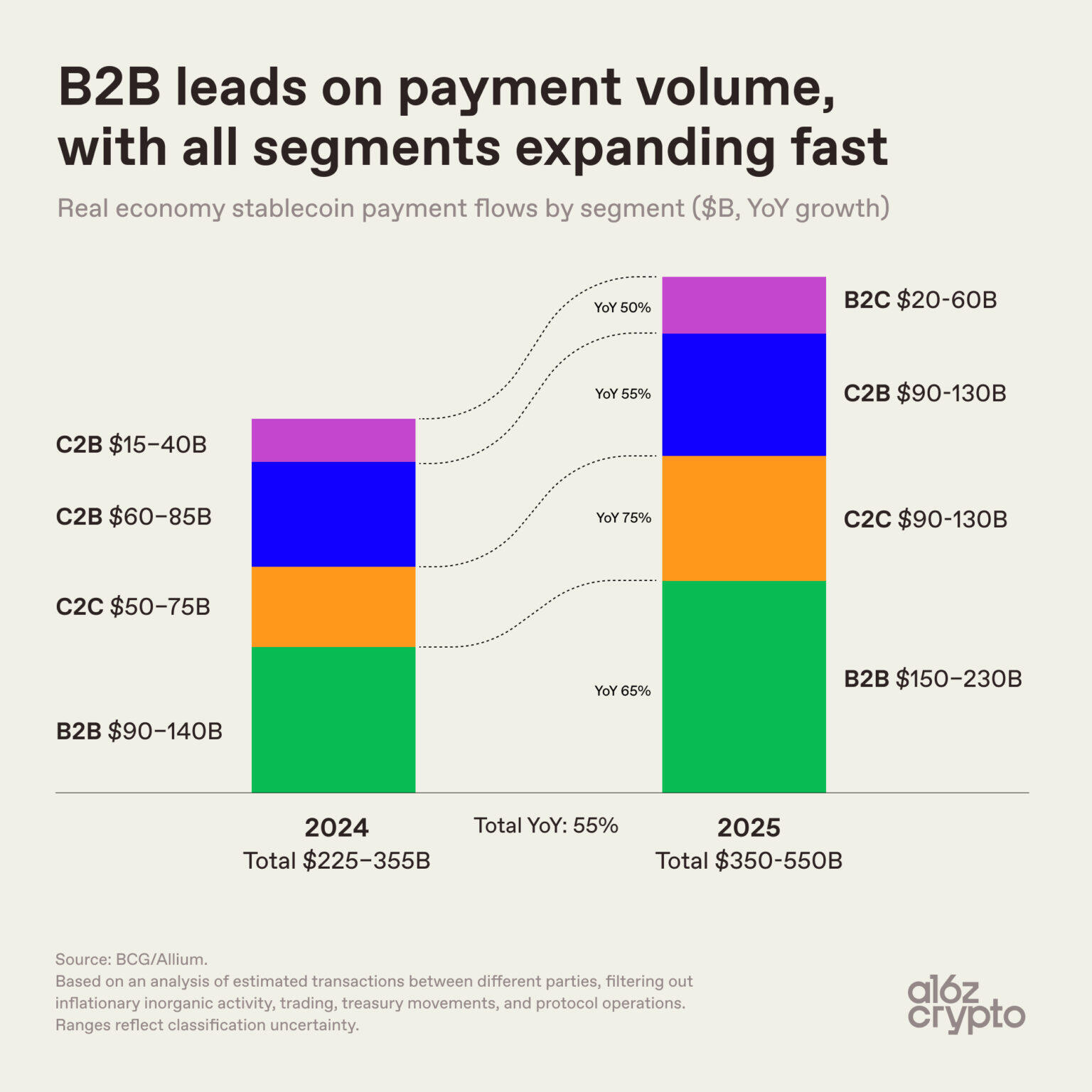
B2B Stablecoin Payments Dominate
Business-to-business (B2B) remains the core driver of stablecoin payments, holding the leading position. At the same time, specific scenarios like person-to-person transfers and merchant payments are rapidly expanding.
Geographic Concentration of Stablecoin Payments Remains High
From a geographic perspective, stablecoin payment activity is not evenly distributed.
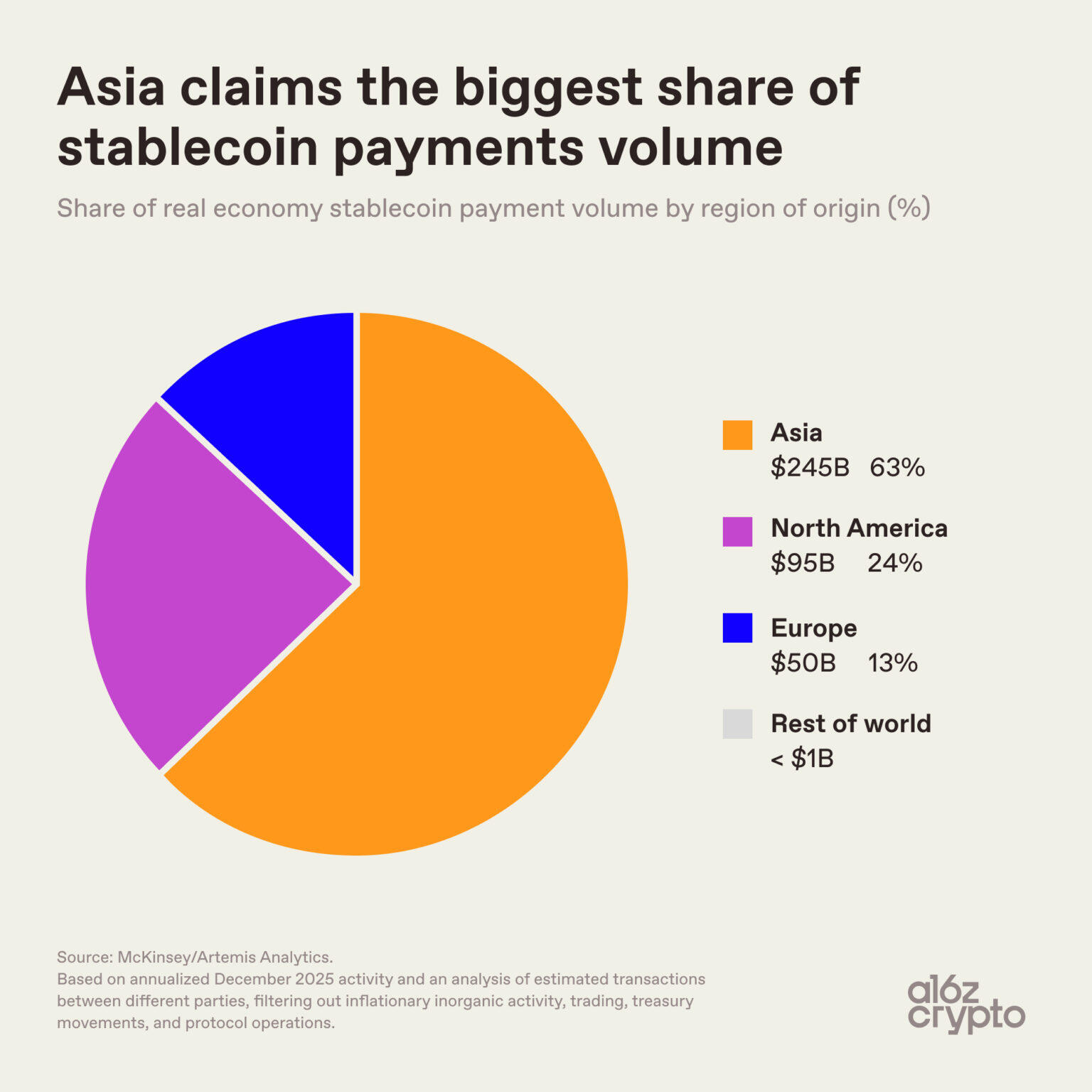
Asia is the Primary Region for Stablecoin Payments
Nearly two-thirds of transaction volume comes from Asia, primarily Singapore, Hong Kong SAR, and Japan.
North America accounts for about a quarter, and Europe approximately 13%. Latin America and Africa together account for a minimal total, less than $1 billion.
Local Stablecoins Operate on Global Underlying Networks
The rise of non-USD stablecoins is not unique to Europe; they are also gaining traction in emerging markets, driven by different logics.
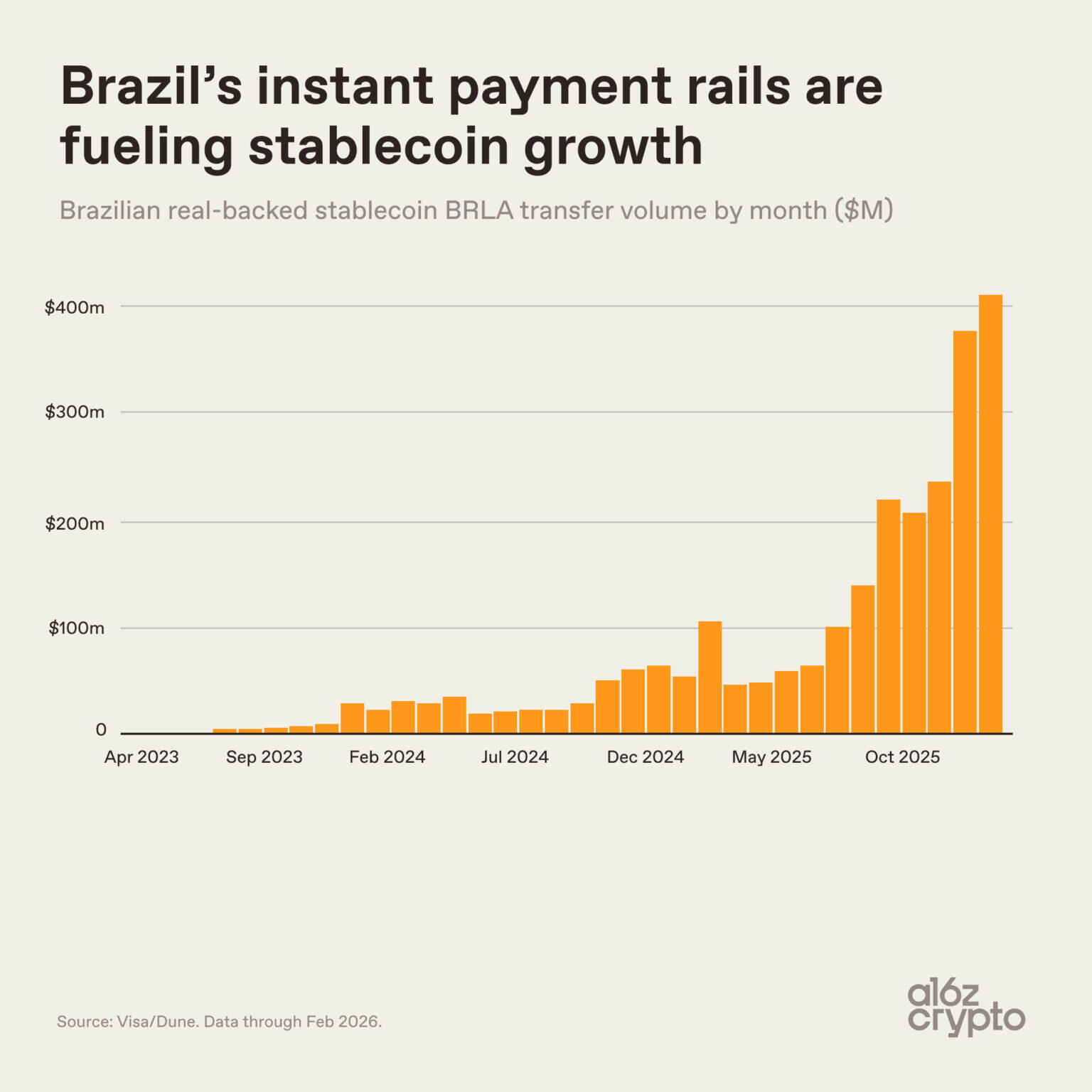
Monthly Transfer Volume of BRLA, the Brazilian Real-Pegged Stablecoin
Brazil is a prime example. The monthly transaction volume of BRLA, a stablecoin backed by the Brazilian Real, grew from nearly zero in early 2023 to approximately $400 million in early 2026. Integration with Brazil's instant payment network, PIX, has significantly boosted BRLA's adoption.
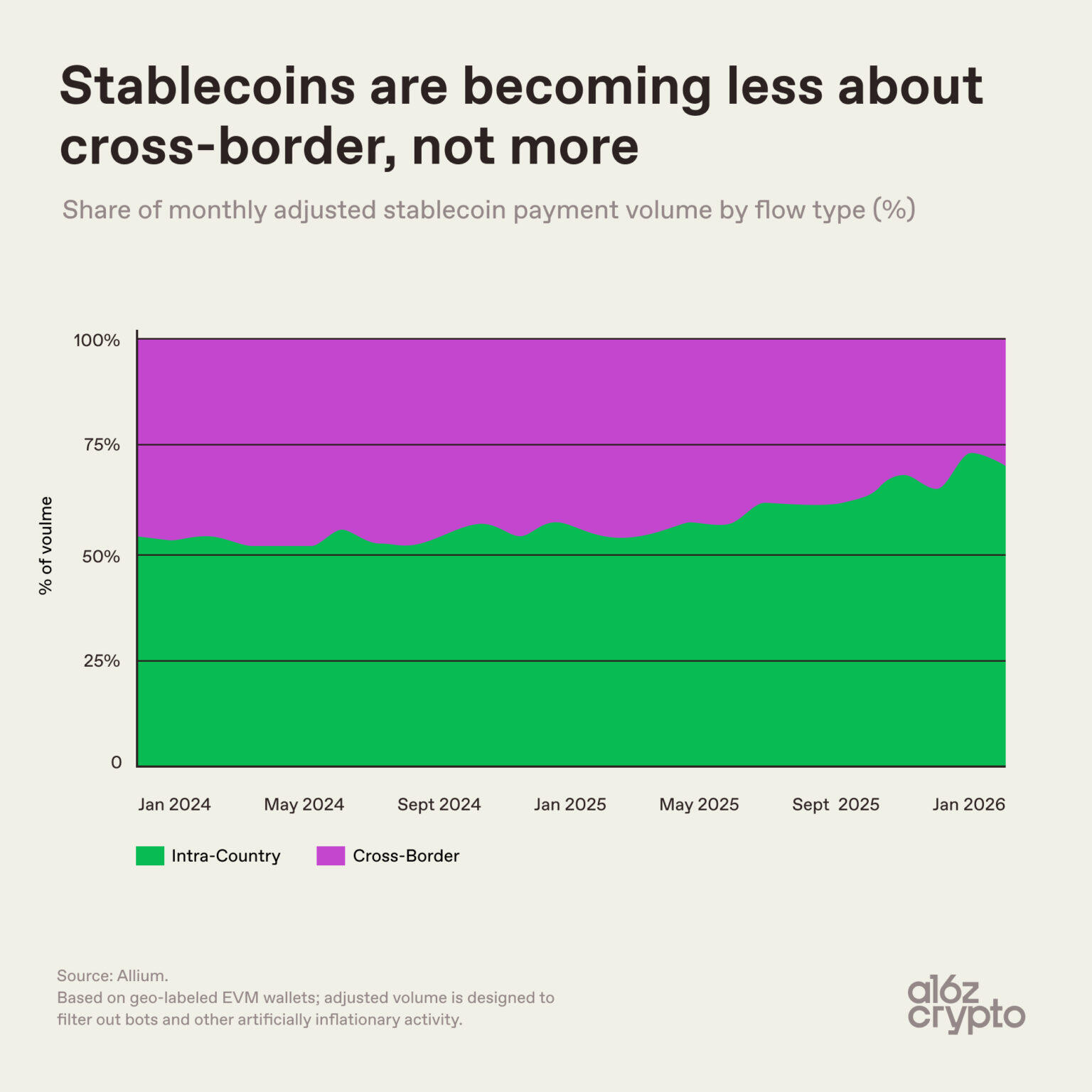
The Cross-Border Payment Attribute of Stablecoins is Diminishing
For a long time, stablecoins were commonly defined as a cross-border tool, but the actual share of cross-border transactions is steadily declining.
The share of domestic, local transactions has risen from about 50% in early 2024 to nearly 70% in early 2026. This shift sends a clear signal: the core value of stablecoins is no longer limited to cross-border remittances and foreign exchange conversion. They are gradually transitioning into localized daily payment instruments, leveraging global underlying networks.
Conclusion
Taking all the data together, a clear industry picture emerges, one quite different from previous public expectations: many believed the core value of stablecoins was concentrated in cross-border transfers. The reality is the opposite; stablecoins are becoming deeply localized. While USD-pegged stablecoins remain dominant, stablecoins are not merely tools for dollar distribution. The market share of non-USD stablecoins backed by local fiat currencies like the Euro and Brazilian Real is steadily rising.
Although peer-to-peer transfers remain the primary use case, the share of daily commercial payments is steadily increasing.
Data from each successive quarter continues to confirm this: stablecoins are progressively evolving into a universal public payment infrastructure. They are born global but are becoming increasingly local in their application.
The industry is still in its early stages, but the final form and development landscape of stablecoins are becoming increasingly clear.


