






Iran World Cup Draw with Belgium, US-Iran Relations Easing?| MEXC Prediction Market Observation


- Core Viewpoint: The 2026 World Cup, US-Iran geopolitics, crude oil, gold, and the prediction market collectively reveal how the market prices uncertainty. Iran's solid performance in the World Cup could emotionally influence market perceptions of US-Iran negotiations, but the more critical factors are the comprehensive game involving risks in the Strait of Hormuz and macro interest rate expectations.
- Key Elements:
- Iran secured consecutive draws against New Zealand and Belgium in their first two World Cup matches, building a narrative of resilience and generating domestic positive sentiment. Group G's advancement悬念 remains until the final match against Egypt, becoming a popular market narrative explaining the shift in negotiation stance.
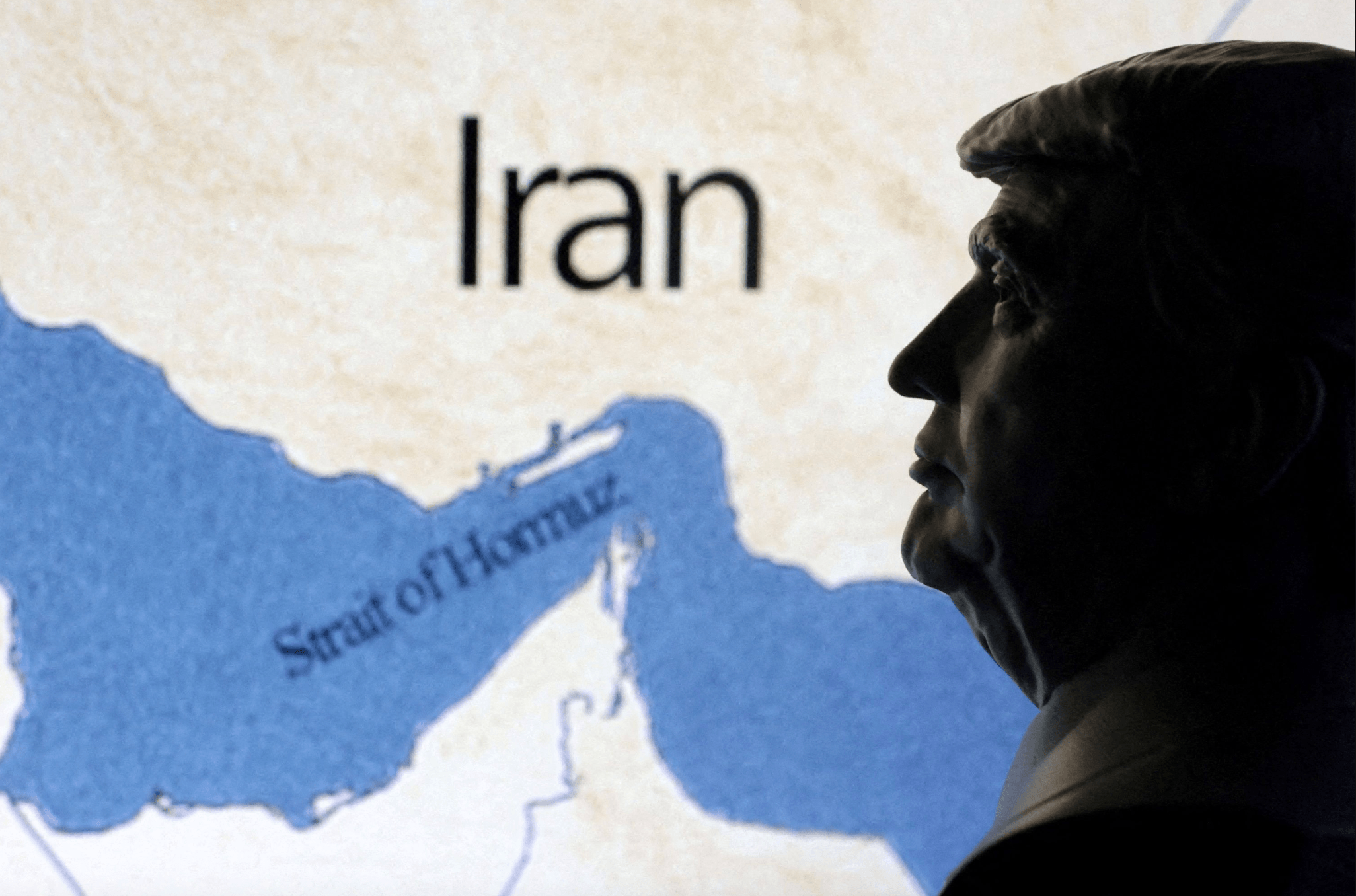
- The Strait of Hormuz transports approximately 15-20 million barrels of crude oil daily, accounting for 20%-34% of global trade, serving as its "on-off switch." Markets reacted positively in the short term to progress in US-Iran negotiations, with Brent crude falling back to $79, indicating funds believe the situation won't spiral out of control immediately.
- Gold's trajectory is complex, pulled between the forces of geopolitical tension (supportive) and the Fed's hawkish rate expectations (suppressive). Its price no longer follows the simple "safe-haven rally" logic but is a result of combined risk, dollar, and inflation factors.
- The crypto market, being a 24/7 trading asset, acts as a "leading sentiment market" during weekends when traditional markets are closed, reflecting investors' assessment of Middle East risks and risk appetite more quickly.
- Prediction markets like MEXC transform real-world events like the World Cup into probability-based trading scenarios. Their prices fluctuate in real-time with information (e.g., starting lineups, red cards, match results), serving as tools for the market to continuously price uncertainty.
This weekend, global markets were once again "startled" by the Strait of Hormuz.
On one side, there were tough statements ahead of talks between the US and Iran; on the other, crude oil prices kept testing market nerves. Investors worried about further escalation in the Middle East, while on the World Cup pitch, the Iranian team just held Belgium to a 0-0 draw in Los Angeles, keeping the suspense alive in Group G.
Adding to the drama, by Monday's US stock market open, mediators Qatar and Pakistan signaled progress in US-Iran talks, causing market sentiment to cool rapidly. Crude oil prices fell, Asian stock markets rebounded, and gold continued to oscillate between safe-haven demand and expectations for Federal Reserve interest rates.
Thus, a compelling question emerged:
Could Iran's sudden shift in negotiating stance be related to the Iranian national team's impressive World Cup performance boosting domestic morale?
This notion is, of course, more of a market narrative than a serious diplomatic conclusion. But its intriguing aspect lies in how the 2026 World Cup, US-Iran tensions, crude oil and gold prices, and the MEXC prediction market are all being linked by a common thread: how markets price uncertainty.
Iran's World Cup Performance: Unbeaten in Two Games, Still a Chance to Advance from Group G
Let's start with football.
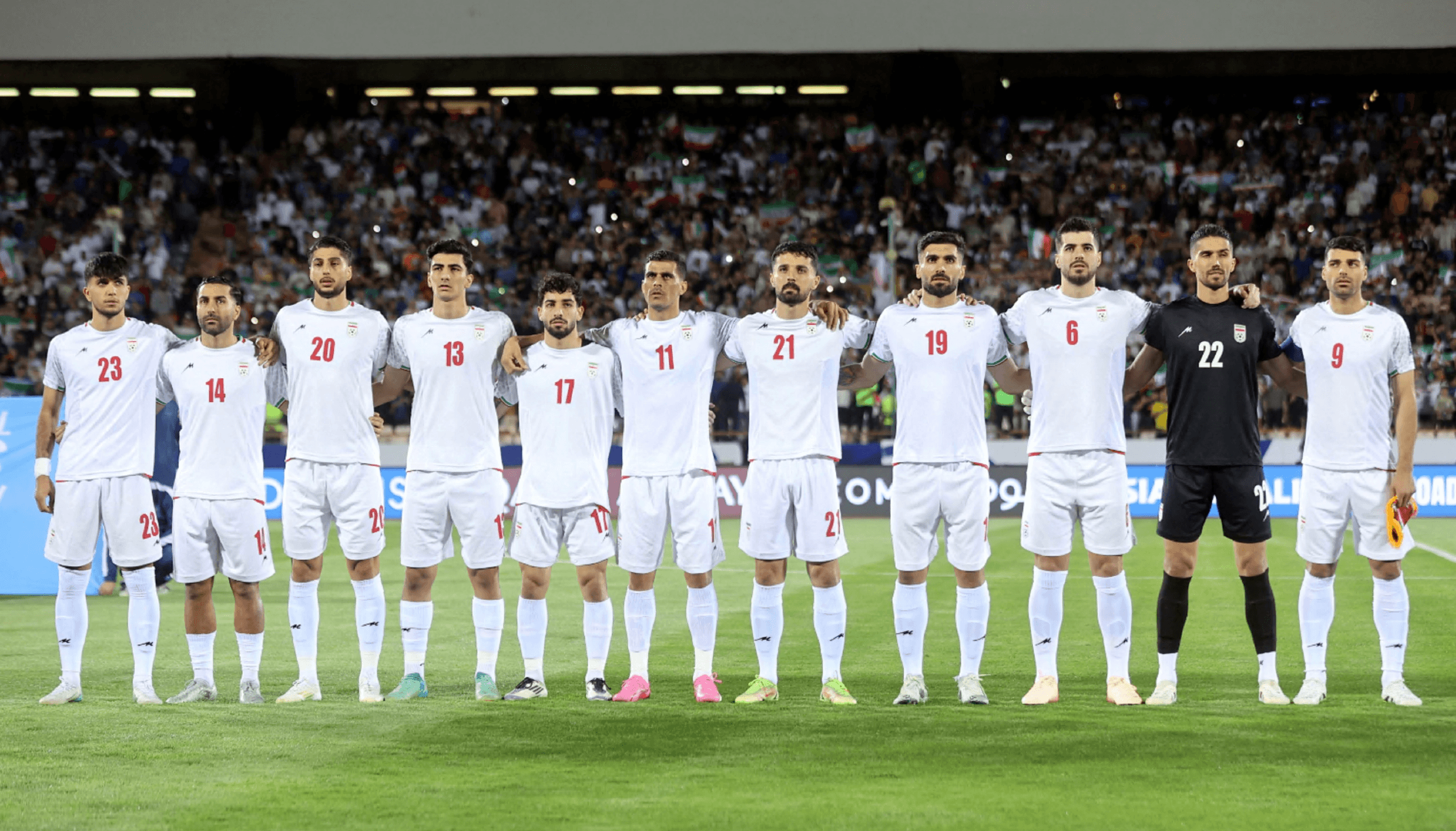
According to the official FIFA match report, Iran drew 2-2 with New Zealand in their first match. New Zealand took the lead twice, but Iran equalized both times, preventing a disastrous start to the group stage.
In their second match, Iran faced European powerhouse Belgium and managed another 0-0 draw. FIFA's official report on Belgium 0-0 Iran noted the goalkeeper's standout performance, leaving Belgium to settle for a draw.
After two matches, Iran hasn't won but hasn't lost either. For a team in a complex media environment, this display of resilience is easily amplified by domestic media and market sentiment.
Iran's current problem is clear: their defensive resilience has been proven, but to advance, they need more than defense in the final match against Egypt. Group G also includes Belgium, Egypt, and New Zealand, where points and goal difference will determine the outcome. To turn "good performances" into "successful advancement," Iran must show more proactive offense in the final round.
Why is Iran's Performance Drawing Market Attention?
Normally, a team drawing with Belgium is just sports news.
But Iran is different.
Iran's matches are happening against the backdrop of heightened US-Iran tensions. According to a Reuters report, the US and Iran held high-level talks in Switzerland with Qatar and Pakistan mediating, making progress on a final agreement within 60 days, maritime security, and de-escalation in Lebanon.
In other words, while the Iranian team was playing in the World Cup on US soil, Iranian diplomats were at the negotiating table dealing with the most sensitive national security and economic issues.
This makes football more than just football.
On the pitch, Iran's draw with Belgium proved they weren't buckling under pressure. At the negotiating table, Iran showed more positive signals, boosting market risk appetite. While there may not be a direct causal link, these events naturally converge in the same narrative: preserving dignity on the football field, securing leverage at the negotiating table, and repricing risk in the market.
This is why the story that "Iran's good performance made talks smoother" easily spreads, even if it sounds like a joke. Markets don't necessarily believe the story is true, but they love stories that explain price movements.
The Strait of Hormuz: The True "Heartbeat Switch" for Oil Prices
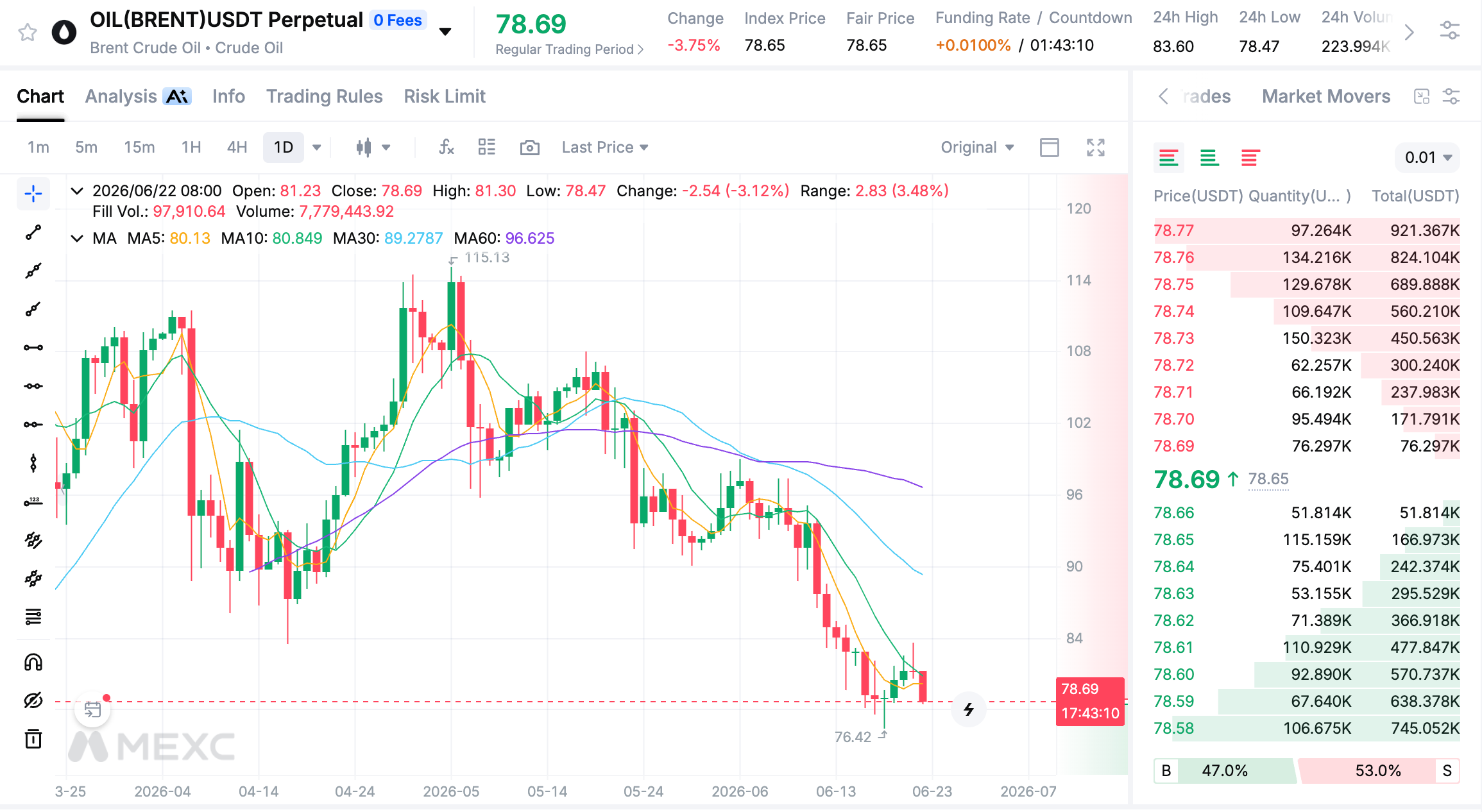
The core market variable in this round of US-Iran tensions remains the Strait of Hormuz.
The Strait of Hormuz is one of the most critical global energy transport chokepoints. According to IEA data on the Strait of Hormuz, approximately 15 million barrels of crude oil passed through the strait daily in 2025, accounting for about 34% of global crude oil trade. EIA data also shows that oil flow through the Strait of Hormuz was about 20 million barrels per day in 2024, representing roughly 20% of global petroleum liquid consumption.
Therefore, any closure, restrictions, increased insurance costs, vessel diversions, or military miscalculations in the Strait of Hormuz will immediately impact oil prices.
This is why the market's main concern this weekend wasn't simply "how fierce the US-Iran quarrel is," but rather:
Will the Strait of Hormuz actually run into trouble?
Will crude oil transport be disrupted?
Will oil prices surge again?
Will inflation expectations rise once more?
Will this make it harder for the Fed to cut rates, possibly maintaining a hawkish stance?
According to a Reuters market report, as progress emerged in US-Iran talks, Brent crude fell back to around $79, and Asian stock markets rallied. This reaction indicates the market doesn't believe the situation will immediately spiral out of control in the short term.
In other words, oil prices are voting: rhetoric is tense, but funds don't yet expect the worst-case scenario.
Gold Prices: Safe-Haven Sentiment Isn't Gone, But the Logic is More Complex
Gold's reaction is more complex than oil's.
Conventional wisdom says heightened US-Iran tensions should boost gold, the traditional safe-haven asset. But real markets aren't linear.
According to a Reuters report on gold prices, gold rebounded after hitting a one-week low, but hawkish Fed signals and expectations of higher interest rates limited the gains.
This shows gold is currently pulled by two forces:
On one side, geopolitical risk supports safe-haven demand for gold.
On the other side, a stronger dollar and rising interest rate expectations suppress gold's performance.
If oil prices surge, the market fears inflation's return, and gold won't simply benefit because the Fed might be forced to maintain higher rates.
If US-Iran tensions ease, oil prices fall, and inflation pressures subside, safe-haven demand for gold will cool, but interest rate pressures might also ease.
So, gold prices aren't simply "up when conflict breaks out, down when talks succeed." It trades on a composite result of geopolitical risk, the dollar, inflation, and interest rate expectations.
Why Did the Crypto Market Become a Weekend Sentiment Thermometer?
The reference article contained an interesting point: traditional crude oil futures have weekend closing windows, but the crypto market trades 24/7, so it reflects market sentiment earlier.
This logic holds.
When traditional markets are closed, investors wanting to express views on Middle East tensions, dollar liquidity, safe-haven sentiment, or risk appetite often turn to the 24/7 crypto market for price signals. Bitcoin, Ethereum, stablecoin liquidity, on-chain capital flows, and some derivatives prices can serve as leading indicators for weekend market sentiment.
Of course, the crypto market isn't directly equivalent to the oil market or a complete substitute for traditional futures markets like the CME. But it often acts as a "preliminary sentiment barometer."
This is also why the MEXC prediction market gains greater imaginative space during the World Cup cycle. It doesn't just handle a single asset price but probability judgments on real-world events.
Will the match be an upset?
Can Iran advance from the group stage?
Can a certain team make it to the knockout rounds?
Is the market overvaluing a favorite team?
Will breaking news change prediction prices?
These questions are closer to "event trading" than simply watching a candlestick chart.
MEXC Prediction Market: Turning the World Cup into a Probability Trading Scenario
According to MEXC's official beginner's guide, a prediction market is a market for trading on the outcomes of real-world events, where prices reflect the market's consensus on the probability of an outcome occurring.
For example, in a prediction market, if the YES price for an event is 0.65, the market perceives approximately a 65% probability of that event occurring. MEXC's Prediction Markets FAQ explains a similar mechanism: correct outcomes settle at $1, incorrect at $0.
This makes World Cup matches ideal for prediction markets.
World Cups naturally possess several characteristics:
High attention
High uncertainty
High emotional volatility
Frequent information updates
Clear match outcomes
Explicit settlement criteria
From Iran's perspective, prediction market users can form judgments around several questions:
Can Iran defeat Egypt?
Can Iran advance from Group G?
Is Belgium still the most stable team in Group G?
Will Egypt receive higher market pricing due to its offensive advantages?
After two unbeaten games, is the market reassessing Iran's true strength?
These aren't simple "bet on who wins" questions but comprehensive judgments involving information, probability, and price.
Users can view World Cup-related prediction events via the MEXC Sports Prediction Market, or enter the MEXC Prediction Market to observe more real-world event trading opportunities.
Iran vs. Egypt: The Next Match May Be the True Pricing Inflection Point
Iran has played steadily in its first two matches, but the final match against Egypt may truly determine the direction of the market narrative.
If Iran wins, the storyline becomes very complete: Strong World Cup performance, easing US-Iran talks, rising risk appetite, and Iran becoming one of the most watched Asian teams in the tournament.
If Iran draws, the advancement situation may depend on other match results, and the market will continue to trade uncertainty.
If Iran loses, the "resilience narrative" built over the first two matches will weaken, and the market's repricing of Iran could reverse rapidly.
This is the biggest difference between World Cup prediction markets and ordinary pre-match analysis. Ordinary analysis gives a conclusion before the match starts, while prediction markets continuously reprice as information changes.
Starting lineups affect prices.
First-half red cards affect prices.
Goals in another match affect prices.
A penalty in stoppage time can instantly change all pricing.
The World Cup isn't a static event but a series of real-time variables. The value of the MEXC Prediction Market lies in converting these variables into observable, tradable probability prices.
From the Iranian Football Team to Oil and Gold: What Markets Truly Trade is Uncertainty
Putting together Iran's World Cup performance, US-Iran relations, oil prices, gold prices, and the MEXC Prediction Market isn't incongruous.
Because they all correspond to the same underlying logic:
Whether Iran advances is football-related uncertainty.
Whether the US and Iran reach a final agreement is geopolitical uncertainty.
Whether the Strait of Hormuz affects transport is energy supply uncertainty.
Whether gold continues its rebound is uncertainty between safe-haven demand and interest rate expectations.
The price changes in the MEXC Prediction Market represent users' expression of probability for future outcomes.
Markets do the same thing every day: price uncertainty.
This is why this weekend's storyline had strong viral potential. One moment, the market feared risks in the Strait of Hormuz; the next, mediators released positive signals, oil prices fell, stocks rallied, and Iran had just drawn with Belgium in the World Cup, creating an easily spreadable emotional anchor.
Football, diplomacy, oil, gold, and the crypto market—seemingly five different things—are essentially answering the same question: Will future risks increase or decrease?
The World Cup is Becoming a Super Gateway for Prediction Markets
The 2026 World Cup is not just a sporting event but also a concentrated display of global attention, market sentiment, and prediction market products.
Iran's two unbeaten matches keep the suspense alive in Group G.
Progress in US-Iran talks lowers oil prices and repairs risk appetite.
Gold continues to oscillate between safe-haven demand and interest rate expectations, indicating the market hasn't fully let its guard down.
The MEXC Prediction Market transforms these real-world events into observable, tradable, and repriceable probability scenarios.
So, rather than debating whether Iran's World Cup performance genuinely facilitated smoother talks, it's worth focusing on another question:
When the World Cup, geopolitics, and financial markets simultaneously heat up, who can more quickly understand the market narrative and get closer to true price discovery?
For users interested in World Cup predictions, Iran's advancement, US-Iran relations, oil and gold, and opportunities in the crypto market, the MEXC Prediction Market offers a new observation window. Particularly within the MEXC Sports Prediction Market, the World Cup is no longer just something to watch but becomes a part of judging probabilities, tracking sentiment, and understanding the market.


