






Citi and Coinbase Connect Enterprise Accounts, Bringing Stablecoins into the Payment Backend


- Core Viewpoint: Citi and Coinbase have expanded their partnership to embed stablecoin wallets, on-chain transfers, and fiat settlement into the bank's payment backend, making stablecoins a reconcilable settlement rail within corporate treasury systems.
- Key Elements:
- The partnership includes two pathways: Coinbase customers gain access to Citi virtual accounts, where incoming fiat is automatically converted into stablecoins; Citi institutional clients can accept stablecoin payments through Spring by Citi, with Coinbase Payments handling the collection and conversion, and Citi settling in fiat.
- Virtual accounts enable automatic identification of payment sources and fund pooling, reducing manual reconciliation and making the correspondence between bank statements and on-chain funds more continuous, which facilitates audit and reconciliation.
- Citi states the solution can reach over 150 million stablecoin holders globally, but actual conversion depends on region, use case, and merchant coverage.
- Refunds, chargebacks, and error handling are key to implementation. On-chain transfers cannot be unilaterally reversed, so the original transaction, exchange rate, refund address, and fiat accounting must be linked together.
- Compliance responsibilities are clearly divided: Citi handles accounts, fiat, and enterprise relationships, while Coinbase handles wallets, on-chain operations, and conversions. Anti-money laundering measures must cover the entire pathway.
- The two parties are launching first in the United States and have not yet disclosed supported currencies, blockchains, fees, or rollout timelines. Cross-border expansion will require licensing and regulatory engagement on a jurisdiction-by-jurisdiction basis.
- Banks and crypto platforms are moving from interface-level cooperation toward co-delivery of products, and the competitive focus for stablecoin issuers is extending to enterprise payment coverage and compliance operations capabilities.
Stablecoins entering enterprise payments has often started with "a company opening a wallet." Finance teams need to manage on-chain addresses, conversion channels, accounting records, and fund sweeping, with bank accounts and digital asset accounts operating separately. The part that truly consumes time for large enterprises is often the operational distance between these two funding systems.
On September 28, 2026, Citi and Coinbase announced an expanded partnership aimed at compressing that distance into the payments back end. The collaboration involves two paths: Coinbase customers gain account capabilities backed by Citi Virtual Account Wallets, allowing received fiat to be automatically converted into stablecoins; Citi's institutional clients can accept stablecoin payments through Spring by Citi, with Coinbase Payments handling collection and conversion, and Citi settling fiat as the bookkeeping bank.
What merchants and enterprises see are accounts, payment buttons, and settlement records, while stablecoin wallets, on-chain transfers, and fiat clearing are placed in the back end. Once such products operate reliably, stablecoins will become a settlement rail embedded in existing corporate treasury systems on the enterprise side.
1. Two Paths Connect Bank Accounts with On-Chain Funds

Figure 1 | Enterprises can handle bank accounts and on-chain payments within the same working interface
The first path serves Coinbase's enterprise payment customers. Coinbase has chosen Citi Virtual Account Wallet to provide banking-as-a-service capabilities for Coinbase Virtual Accounts. Customers can receive, hold, and pay fiat through virtual accounts with account identification features, and incoming funds are automatically converted into stablecoins according to product settings.
The second path targets Citi's institutional merchants. Merchants accept stablecoins at checkout, Coinbase Payments identifies on-chain payments and completes digital currency processing, which is then automatically converted into fiat, with Citi completing settlement as the bookkeeping bank. Merchants ultimately receive familiar fiat funds and bank records without needing to maintain stablecoin inventory themselves.
The two paths respectively solve the problems of enterprise funds entering on-chain and on-chain payments returning to enterprise accounts. Together they use a single set of interfaces to connect account opening, payments, conversion, and settlement, allowing finance teams to continue using fiat as their primary ledger while invoking the round-the-clock transfer capabilities of stablecoins.
Enterprises can also start with a single use case when onboarding, for example by first enabling cross-border supplier payments or collections in specific regions, then gradually expanding to fund sweeping. Phased onboarding helps finance teams validate reconciliation, refunds, and permission controls.
The product scope can gradually expand along with real transaction volumes.
2. Enterprise Deposits Flow Directly from Fiat Accounts into Stablecoin Balances
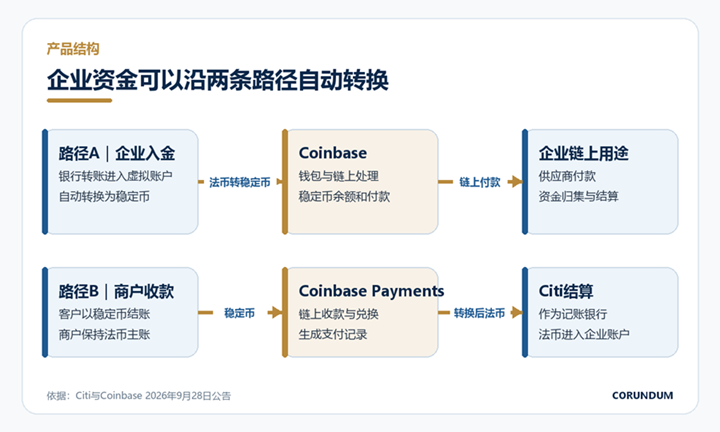
Figure 3 | The two fund conversion paths in the Citi-Coinbase partnership
Virtual accounts are identification accounts assigned by banks to enterprises. They can provide separate account numbers for different customers, business lines, or payers, with received funds then swept into the enterprise's main account or designated fund pool. Enterprises can therefore automatically identify payment sources and reduce manual verification. After Citi connects this mature cash management tool to Coinbase, fiat deposits can continue to trigger stablecoin conversion.
The "bank account-like experience" here mainly describes the operational interface. Enterprises receive account numbers, deposit notifications, and payment capabilities, while the underlying infrastructure is still jointly completed by Citi's banking infrastructure and Coinbase's digital asset systems. At what point funds move from bank ledgers into stablecoin balances, how exchange prices are determined, and how failed transactions are rolled back all require further clarification through product contracts and operational rules.
The value of automatic conversion for corporate treasury is very concrete. Cross-border platforms, payment companies, or internet enterprises can let customers first use local bank transfers, with funds entering a stablecoin pool upon arrival, then used for on-chain payments, supplier settlements, or cross-regional sweeping. Finance staff reduce manual transfers and repeated logins, and on-chain address management can also be centralized at the platform layer.
Enterprises can also allocate virtual accounts by business line internally. Deposits from different regions, merchants, or products are first identified by account, then enter a unified stablecoin balance. Treasury teams can set approval limits and payment purposes accordingly, business departments see their own income and expense details, and headquarters maintains overall liquidity. This structure continues the habits of corporate cash management and also gives on-chain payments a clearer source of funds.
This path also changes the entry point for stablecoin on- and off-ramps. Traditional approaches often require enterprises to first wire funds to a trading platform, then initiate a purchase or conversion. Virtual accounts place customer identification and conversion instructions at the deposit stage, making the correspondence between bank statements and on-chain funds easier to record continuously. For auditing and reconciliation, this is clearer than piecing together transaction records from multiple accounts on an ad hoc basis.
3. Merchants Accept Stablecoins, with Back-End Settlement in Fiat
The merchant side adopts a different design. Consumers or enterprise customers pay in stablecoins, Coinbase Payments handles on-chain addresses, transaction confirmations, and conversion, Spring by Citi connects payments to merchants' existing acquiring systems, and Citi ultimately settles fiat to enterprise accounts. Merchants can expand stablecoin payments while maintaining their existing cash management practices.
Citi stated in the announcement that this solution allows merchants to reach over 150 million stablecoin holders globally. This figure comes from the partners' market estimates, and actual conversion still depends on region, payment scenario, and merchant coverage. The more important change is in user experience: payers use on-chain funds, recipients only handle fiat, and both sides remain in their familiar asset forms.
Refunds, chargebacks, and error handling will become key focuses during implementation. On-chain transfers are generally difficult for a single institution to reverse once confirmed, yet merchant systems need to support order cancellations, partial refunds, and consumer complaints. Payment platforms need to link original transactions, conversion rates, refund addresses, and fiat accounting to bring stablecoin payments into regular after-sales processes.
Settlement speed will also show a two-tier rhythm. Stablecoin transfers can occur around the clock, while enterprise account crediting still depends on bank clearing arrangements, compliance checks, and fund processing times in the relevant region. Citi has in recent years advanced 24/7 USD clearing and tokenized cash services, and these capabilities provide the foundation for the new partnership, but specific crediting times still depend on product terms.
4. Back-End Division of Labor Determines How Compliance Responsibilities Are Assigned
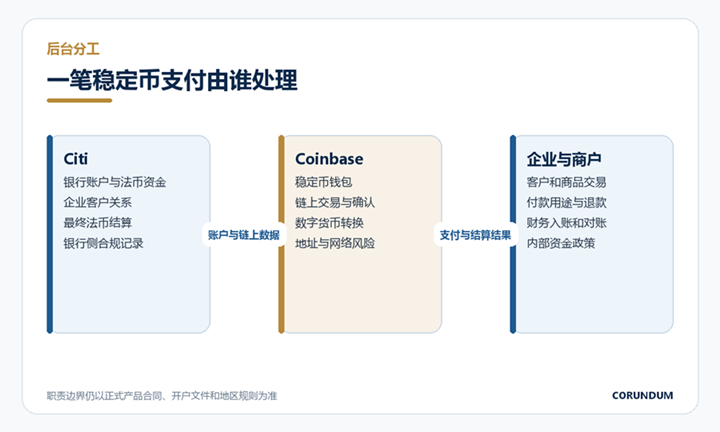
Figure 4 | Main division of responsibilities among banks, digital asset platforms, and enterprise clients
Banks and digital asset platforms each handle the areas they know best. Citi is responsible for bank accounts, fiat funds, enterprise client relationships, and final settlement; Coinbase is responsible for stablecoin collection, wallet technology, on-chain transactions, and digital currency conversion; enterprises are responsible for their own customers, merchandise transactions, payment purposes, and financial bookkeeping. Data connectivity among the three parties determines customer experience and also determines who first discovers anomalous transactions.
Anti-money laundering reviews need to cover the entire path. Banks hold enterprise identities, account funds, and fiat payer information, while platforms hold on-chain addresses, token types, and transaction histories. Data from either side alone can only show part of a transaction. An effective control process needs to match payers, recipients, on-chain addresses, conversion records, and bank deposits, and agree on the handling sequence for sanctions hits, address risks, or fund returns.
The compliance status of stablecoin issuers also enters the enterprise payment chain. Reserve assets, redemption rights, and freeze mechanisms affect payment product choices. Large enterprises typically require platforms to explain which stablecoins and blockchains are supported and what backup paths exist in the event of depegging or network disruption. Banks also focus on whether tokens can be converted into fiat in a timely manner and how the relevant funds are held legally.
Data governance then follows. On-chain transaction records are publicly verifiable, while enterprise identities, orders, and bank account information are subject to privacy and bank secrecy rules. Systems can establish correspondence through transaction numbers, and daily operations should control who can link public addresses to specific customers. Cross-border business also involves data storage locations, regulatory access, and record retention periods.
Accounting treatment requires stable time points. Enterprises need to determine when fiat is derecognized, when stablecoins enter the books, how conversion fees are recorded, and reconcile bank balances, platform balances, and on-chain assets at period end. Automated interfaces can reduce manual entry, but financial policies still need to clarify exchange rate sources, funds in transit, and the attribution of anomalous refunds. Only when these records are continuous will round-the-clock payments translate into auditable corporate accounting.
5. Banks and Crypto Platforms Begin to Share the Payments Back End
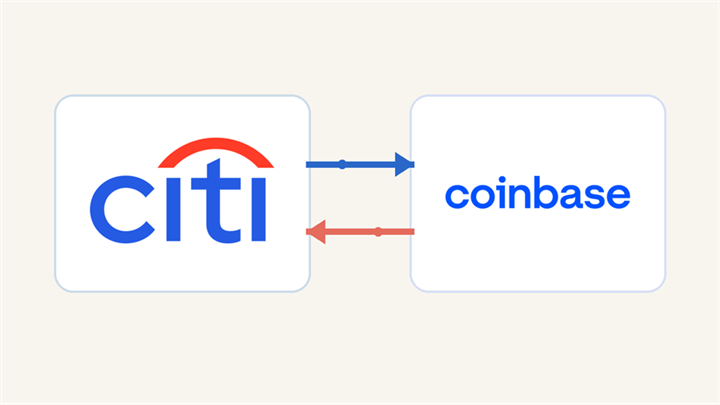
Figure 2 | Citi and Coinbase respectively connect bank accounts and on-chain asset infrastructure
Early stablecoin payment services were mostly built independently by crypto platforms, with banks serving as fiat on- and off-ramp channels. The new Citi-Coinbase partnership embeds bank products directly into a digital asset platform and also embeds digital asset payment capabilities into the bank's merchant services. The two sides are moving from interface cooperation to jointly delivered products.
Banks provide enterprise client trust, global account networks, and compliance frameworks, while platforms provide wallets, on-chain connectivity, and stablecoin conversion. This division of labor lowers the cost for enterprises to integrate multiple vendors on their own. It also brings banks closer to stablecoin transaction data, while digital asset platforms gain a more stable fiat entry point.
For stablecoin issuers, the competitive focus will extend from trading platform liquidity to enterprise payment coverage. Stablecoins that enter the support lists of large banks and acquiring platforms are more likely to be adopted by corporate treasury systems. Issuers need to provide continuous redemption, compliance freezes, transaction monitoring, and multi-chain operational capabilities; on-chain circulation scale alone will make it difficult to meet bank clients' procurement requirements.
For the payments industry, new competition is taking place in the back end. Consumers may not perceive which chain completes the transfer, while merchants care more about the settlement currency, fees, refunds, and reconciliation. For stablecoin service providers to enter large-scale commercial scenarios, they need to translate on-chain speed into predictable accounting and operational outcomes.
6. Formal Scaling Still Requires Answers to Several Product Questions
The two sides first launched the relevant capabilities in the United States, and the announcement has not yet disclosed the supported stablecoins, blockchain networks, fee structures, or specific rollout schedule. When selecting products, enterprises will further ask about per-transaction limits, settlement cut-off times, exchange rate formation, on-chain fees, and responsibility for anomalous transactions. These details directly determine whether the product can cover different scenarios such as payroll, supplier payments, cross-border e-commerce, or high-frequency retail.
Enterprises will also compare capital occupancy. After fiat is converted into stablecoins, who custodies the balance, whether it can be redeemed at any time, whether it generates yield, and how it is presented in accounting will all affect treasury policies. On the merchant collection side, it must be clarified which party bears the price risk between stablecoin confirmation and fiat crediting.
Cross-border expansion requires connecting local banks and regulatory regimes one by one. U.S. accounts can serve as a starting point, while other markets also involve local payment licenses, foreign exchange management, stablecoin rules, and consumer protection. Citi's global network provides an entry point for expansion, but the actual scope of availability will still advance in line with local laws and partnership arrangements.
The most noteworthy aspect of this partnership is that stablecoins are shifting from an additional set of tools managed by enterprises into a back end jointly maintained by banks and payment platforms. Enterprises still use familiar functions such as accounts, collections, and settlement, while on-chain funds flow automatically between systems. If stablecoins are to truly enter commercial payments, what will ultimately be tested is this ordinary, continuous, and reconcilable user experience.
This article is intended solely for legal, policy, and industry research and exchange, aiming to provide objective analysis of digital finance, stablecoins, digital assets, and related regulatory developments. It does not constitute any form of investment advice, legal opinion, tax opinion, or other professional advice, nor does it constitute any recommendation, promotion, or solicitation for any financial product, digital asset, or commercial project. The regulatory rules, market data, and institutional information mentioned in this article are mainly derived from public sources and may be adjusted due to changes in laws and regulations, regulatory policies, market conditions, and project progress. Readers should make independent judgments based on the latest public information and comply with the laws and regulations applicable in their country or region. The author and publishing platform are not responsible for any investment, trading, or other business decisions made in reliance on the content of this article.





