The future of finance is happening now: OKX advances its global fintech footprint


- Key Takeaways: The OKX NOW event showcased its strategic upgrade from a crypto trading platform to a global fintech platform, with the core focus on integrating crypto with traditional financial assets, payment networks, and AI technology to deliver round-the-clock trading and everyday money usage experiences through already-launched products.
- Key Highlights:
- OKX launched TradFi perpetual contracts, Pre-IPO perpetual contracts, and unified tokenized stock trading, bringing crypto and traditional financial assets into a unified trading experience with round-the-clock support.
- OKX Money is built on X Layer, connecting transfers, spending, and savings through self-custodial smart accounts. It is now available in over 30 countries and is advancing card products in partnership with Mastercard.
- Institutional discussions noted that round-the-clock trading requires solving challenges such as cross-regional risk handover, weekend margin management, and standardized handling of corporate actions. OKX stated it will continue investing in infrastructure development.
- Representatives from institutions including DBS Bank, JPMorgan, and Standard Chartered believe that expanding tokenized markets requires trust, liquidity, and settlement efficiency, and that exchanges' user bases and distribution channels provide the conditions for asset tokenization.
- Web3 and AI product lines are expanding in parallel: ExchangeOS will open shared trading infrastructure through XIP, and AI Bot supports natural language creation of personalized trading strategies.
As TOKEN2049 approaches, the eyes of the global finance and crypto industries are once again converging on Singapore. On October 6, the OKX NOW Global Product and Ecosystem Conference was held here. Guests from crypto, payments, banking, and global trading institutions gathered once again, bringing their respective products, practices, and perspectives into a single conversation about financial transformation.
To open the conference, OKX CEO and Founder Star Xu shared OKX's next step: starting from crypto trading and oriented toward the next generation of users, building a global fintech platform covering funds, payments, trading, and asset management.
In his remarks, when technologies like the internet, crypto, and AI converge, financial services also have the opportunity to keep pace with the digital lives people have long grown accustomed to: always connected, easy to use, and better able to understand each person's needs.
But beyond technology, much work remains to be done together. Star emphasized that building global financial services also requires trust, regulation, governance, and local responsibility. The integration of crypto and traditional finance brings together the technical capabilities, liquidity, institutional experience, and service networks of both sides, providing a foundation for a broader range of financial applications.
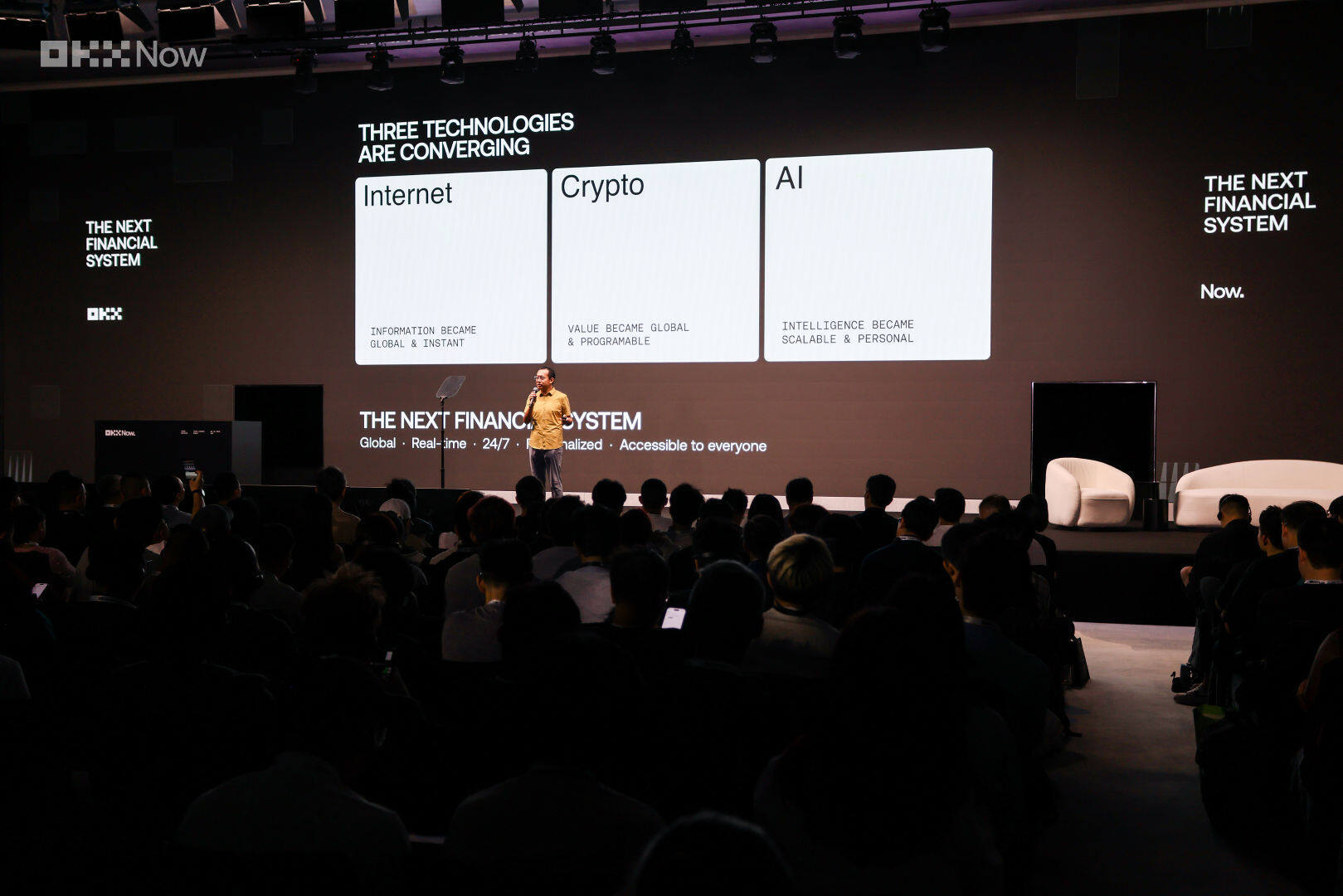
This is precisely why the conference is named "NOW."
For years, the globalization of markets, the migration of assets on-chain, round-the-clock capital flows, and AI's participation in financial services have often appeared in industry discussions in the future tense. What NOW focuses on is the moment these ideas become products and enter real-world use: what users can already do today, which capabilities are being connected, and which partnerships allow them to keep running.
At the conference, OKX showcased a series of products already in market, along with new capabilities being continuously expanded on that foundation. TradFi perpetual contracts, Pre-IPO perpetual contracts, and unified tokenized stock trading bring crypto and traditional financial assets into a unified trading experience, expanding round-the-clock trading options. On the Web3 side, OKX Wallet, the DEX trading terminal, and DeFi products connect on-chain asset discovery, trading, and management; ExchangeOS will open shared trading infrastructure and liquidity to developers through XIP, supporting the building of on-chain markets, with the relevant spot and perpetual markets soon to enter public beta. On the AI side, products such as Agent Trade Kit, OnchainOS, and OKX AI connect market analysis, trade execution, and agent services, and the upcoming AI Bot supports the creation of personalized trading strategies through natural language. OKX Money, meanwhile, extends the use of digital assets to everyday transfers, spending, and savings.
Moving from products to the ecosystem, the conference discussions deepened accordingly: the future of finance is already happening—what needs to be done well?
Bringing money into daily life and closing the last mile of payments
In the discussion about the future of money, a simple question was raised repeatedly: what kind of financial experience do ordinary people actually need?
OKX Global Managing Partner and CMO Haider Rafique noted that people are already used to using internet services around the clock, and naturally expect financial services to be available at any time. But for users outside the industry, wallet addresses, seed phrases, gas fees, and different blockchain networks remain a complex language. What users want more directly is to use their money conveniently, send it to a friend, or complete a purchase.
OKX Money, a standalone app, is built around exactly these needs. Built on X Layer, it uses self-custodial smart accounts to connect transfers, spending, savings, and asset management scenarios, and is currently available in more than 30 countries. Serving the broader everyday needs beyond trading has also become an important direction in discussions between OKX and its payment partners.
Raj Dhamodharan, Executive Vice President of Blockchain and Digital Assets at Mastercard, added to this picture from the perspective of a payment network: when consumers tap their card to ride the subway or shop online, they do not need to understand the banking networks, foreign exchange conversion, and fund clearing behind it. In the future, even if the payment rails used in the background change, a simple experience and reliable trust will remain important.
How a cross-border payment actually gets completed thus became a concrete example in the discussion. For a remittance from Dubai to the Philippines, the speed of the on-chain transfer is only one part of it. If the recipient needs "pesos," it also requires local round-the-clock liquidity, competitive exchange rates, and compliance support at both the sending and receiving ends. Only when these links are connected does the money truly reach the user's life.

Haider said that the current focus of OKX's partnership with Mastercard is on card products. Raj said that as OKX expands from a trading account to a general-purpose money account, the two sides are also exploring opportunities in payments, collections, and agentic commerce, including how agents can pay for services and receive income.
Ideas about programmable money and global payments are finding their footing in these concrete links. For users, the more complete the collaboration behind the scenes, the simpler it becomes to use their money.
The market never sleeps, and liquidity must keep up
Once money can flow around the clock, how assets can be traded around the clock became the focus of another panel discussion.
Extended trading hours bring a series of practical issues. For market makers and trading institutions, a round-the-clock market means cross-regional risk handovers, weekend margin management, and upgrades and maintenance while trading systems continue to run.
Tom of QRT pointed out that after traditional markets close, trading teams still have to contend with newly emerging macro or geopolitical information. Lacking familiar real-time price references, institutions need to rethink their risk models and quoting methods. At the same time, being able to efficiently move funds between wallets, sub-accounts, and different trading venues also creates an operational advantage that ultimately shows up in capital efficiency and quote quality.
These issues are especially prominent in products related to traditional assets such as stocks. When the underlying market is closed, new information does not stop appearing, and users' trading needs do not disappear in tandem. Round-the-clock trading venues are therefore beginning to take on more of the price discovery function.
Jeremy of Ludisia believes this change has already happened: some stock-related products remain active on digital asset trading venues while traditional markets are closed. As traders increase, information can enter prices more promptly, and the market has an opportunity to form richer liquidity.
To handle such demand, exchanges need to continuously improve their foundational capabilities. Beyond order book depth and stable trading latency, corporate actions such as stock splits, reverse splits, and dividends also require more standardized, programmatic handling. For institutions holding larger positions, these details directly affect risk management and the trading experience.
Jeremy acknowledged OKX's technical infrastructure performance in the discussion. OKX also responded that it will continue to invest in engineering and infrastructure to support the growth of relevant markets, and will treat corporate action processing as an important direction for product optimization.
The TradFi trading capabilities, on-chain trading tools, and open infrastructure that OKX had previously showcased gained a more complete explanation here: products provide the entry point to the market, while professional participants and continuously built trading mechanisms keep the market running over the long term.
"Always On" thus takes on a more concrete meaning. It is both the experience of users participating in the market across time zones and the work that trading platforms and liquidity partners complete together every day.
Banks and exchanges draw closer around shared user needs
The collaboration between "banks" and "exchanges" extends further into money services.
Evy Theunis, Managing Director and Head of Digital Assets at DBS Bank, noted that early asset tokenization often started from the supply side: putting a building or a bond on-chain one by one, without necessarily achieving scale. Today, large trading platforms like OKX have user bases and distribution channels that can aggregate diverse asset demand, creating the conditions for more asset classes to enter the tokenized market.
In the view of Amy Tan, Head of Technology and Innovation Economy for Asia Pacific at JPMorgan, trust, liquidity, and settlement efficiency remain key to broadening adoption. Banks are advancing blockchain technology applications, but they also need to understand the real needs of different clients: some enterprises already need round-the-clock money services, while others are still in the process of gradually adapting.
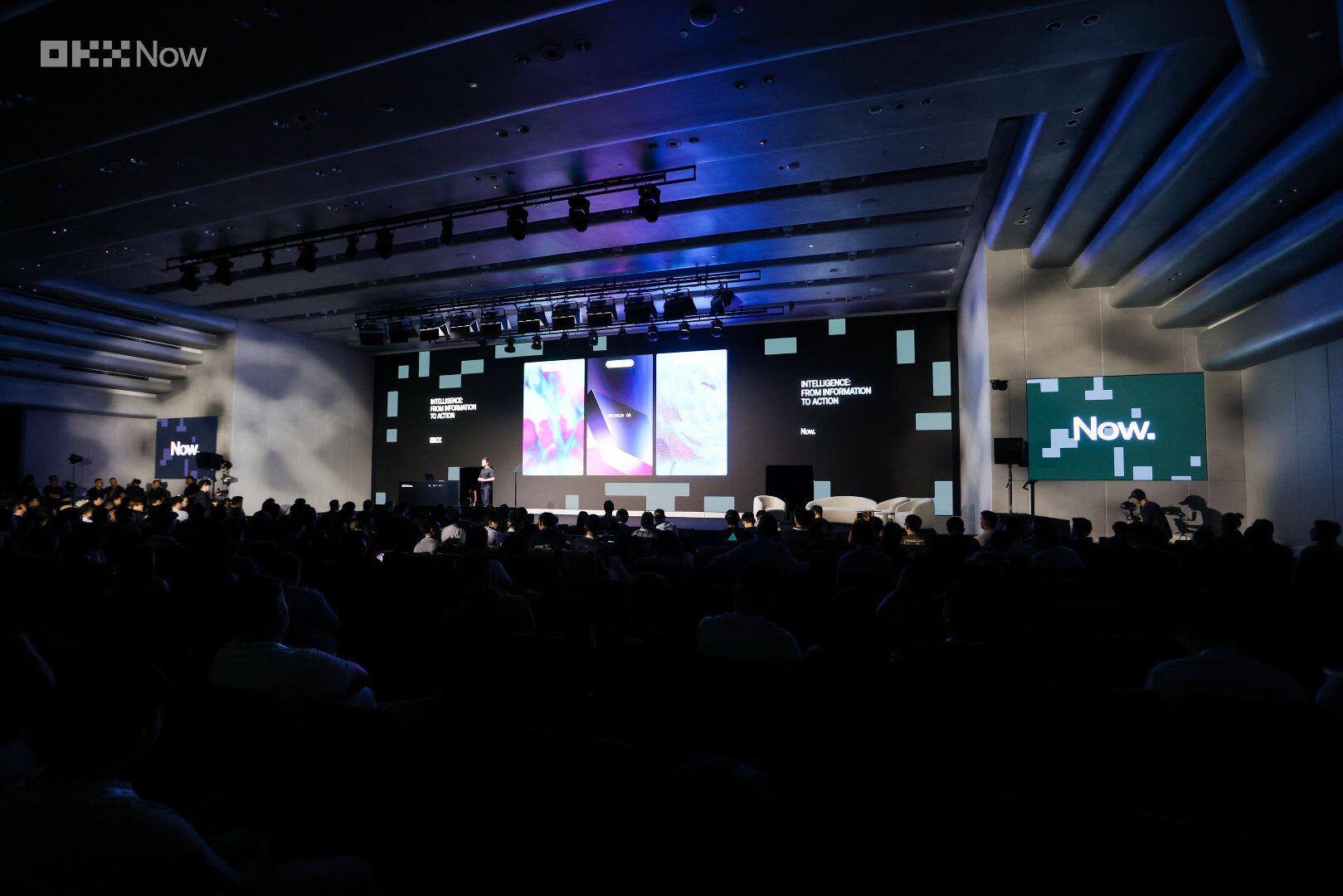
Luke Boland, Global Head of Fintech Client Coverage at Standard Chartered, focused his attention on the settlement foundation. How tokenized deposits, stablecoins, and other digital currencies interoperate will affect the progress of more real-world assets entering on-chain markets. Banks' accumulated strengths in cash management, liquidity, and trust can be connected with the technology and service capabilities of digital asset platforms.
This kind of cooperation has already gone beyond the scope of early services. Luke mentioned that by partnering with exchanges like OKX, banks can gain a deeper understanding of digital asset demand in different markets and explore directions such as custody, collateral, and institutional services. The users, institutions, liquidity providers, and stablecoin issuers connected by exchanges also bring broader room for ecosystem collaboration.
David Fragale, Senior Managing Director and Head of Blockchain and Digital Assets at Western Alliance Bank, spoke about the value of cooperation from the perspective of technical capabilities. He believes that digital asset platforms have accumulated expertise in key management, trading systems, and round-the-clock operations, and that banks can work with them to respond more quickly to the growing digital asset needs of corporate clients.
When the discussion returned to individual users, some expectations became particularly simple: when they want to participate in the market on a weekend, can they get usable funds in time; when holding different types of assets, can they view and use them in a familiar interface; and in the future, can AI agents help handle payments and banking services.
Around digital asset collateralized financing, the guests also discussed the possibility of starting with assets such as Bitcoin, including arrangements for custody, collateral haircuts, and loan-to-value ratios. These still need to be advanced step by step, but they show that banks and exchanges are extending cooperation into more specific client needs.
The integration Star spoke about in his opening remarks finds clear correspondence in these exchanges: banks, payment networks, and digital asset platforms each bring their long-accumulated strengths to find problems they can solve together. The next stage of financial services will also gradually take shape through such collaboration.
Making today's progress an everyday experience
From product demonstrations to ecosystem dialogue, OKX NOW presented the close relationship between product rollout and industry collaboration.
Trading connects a broader range of assets, Web3 lowers the barrier to on-chain use, AI further links analysis and execution, and Money brings digital assets into everyday money use. The participation of payment partners, liquidity institutions, and banks gives these products the potential to connect more scenarios and continue serving users.
The "NOW" conveyed by this conference also includes a long-term task: continuing to build on capabilities already in market, accumulating trust in different markets, and making products and services stand up to everyday use.
In the end, the changes people feel may be very small. A transfer that arrives smoothly on a weekend, a payment completed without needing to understand technical jargon, and the convenience of participating in the market at a time that suits them.
The conference discussions will eventually come to a close, but the advancement of products and partnerships will continue. For OKX, the future of finance moving from "beginning to happen" to "happening now" means starting from the products and experiences it can already deliver today, and working with more partners to bring these conveniences into more people's lives.