






Stablecoin Payment "Dark Horse" GasFree: Stablecoins Can Pay Gas Fees Directly, No-"Gas" Transfers Surpass $138.5 Billion Cumulatively


- Core Viewpoint: GasFree, the gas-free transfer solution launched by the TRON ecosystem, has processed nearly $138.5 billion in cumulative stablecoin transfers in its first year and a half online. By eliminating the native token barrier through "fee abstraction" technology, it is becoming mainstream infrastructure in the stablecoin payment sector.
- Key Elements:
- Cumulative transfer volume of nearly $138.5 billion, over 8.06 million transactions, more than 450,000 users served, and nearly $8.72 million in cumulative fee savings.
- In August alone, transfers reached $13.62 billion across over 818,000 transactions, with newly added USDD support achieving full coverage of both USDT and USDD stablecoins.
- On September 7, Binance Web3 Wallet launched a TRC20-USDT gas payment feature, with technical support provided by GasFree.
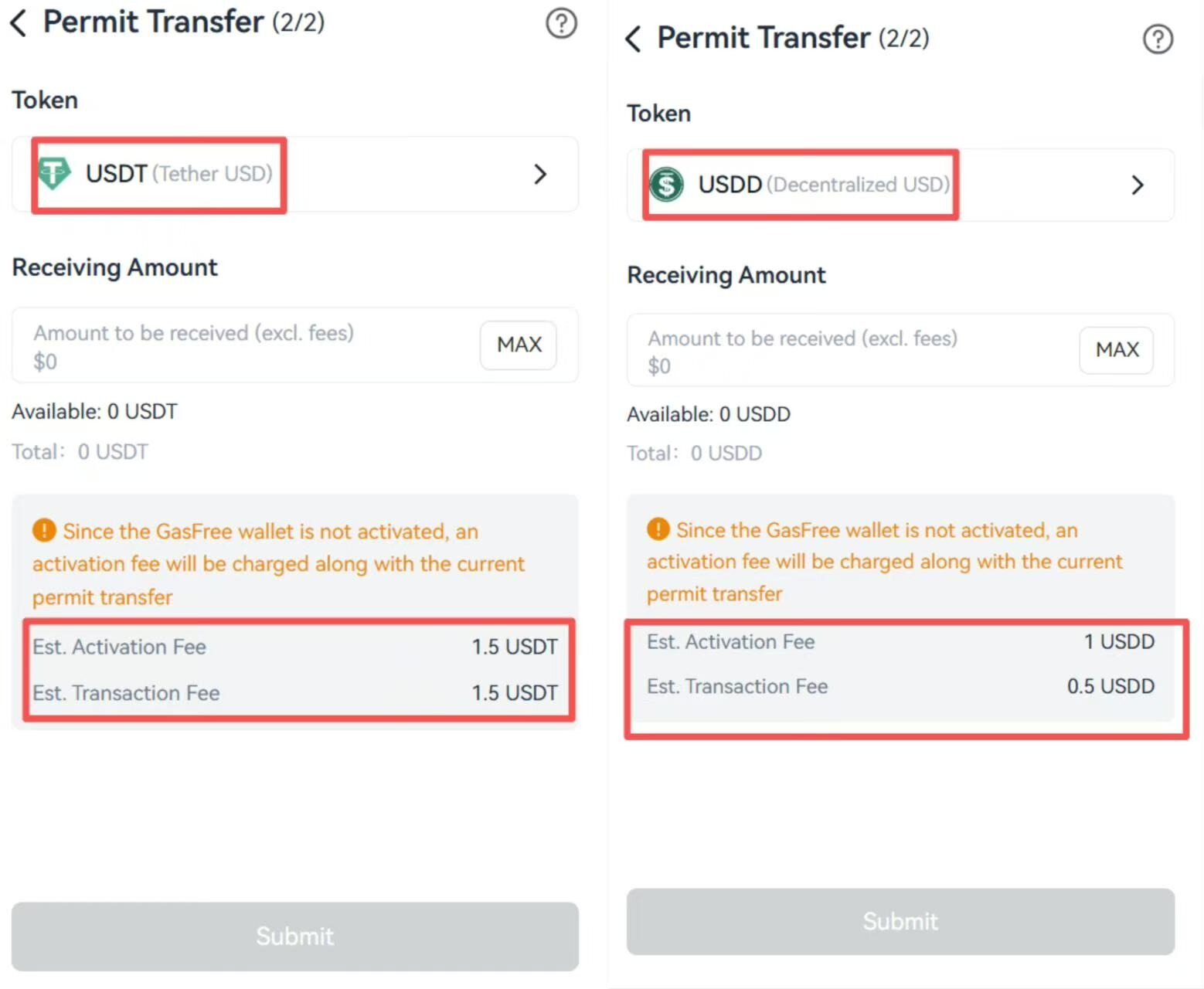
- Fixed pricing adopted: USDT activation fee and transfer fee are both 1.5 USDT per transaction; USDD activation fee is 1 USDD, with a transfer fee of 0.5 USDD per transaction.
- Backed by the TRON ecosystem: on-chain stablecoin total exceeds $95 billion, USDT supply surpasses $94.2 billion accounting for 51% of the entire network, and total accounts have exceeded 400 million.
- Has achieved asset interoperability with major CEXs including Binance and OKX, and integrated with dozens of wallets such as TronLink, building an omnichannel entry matrix.
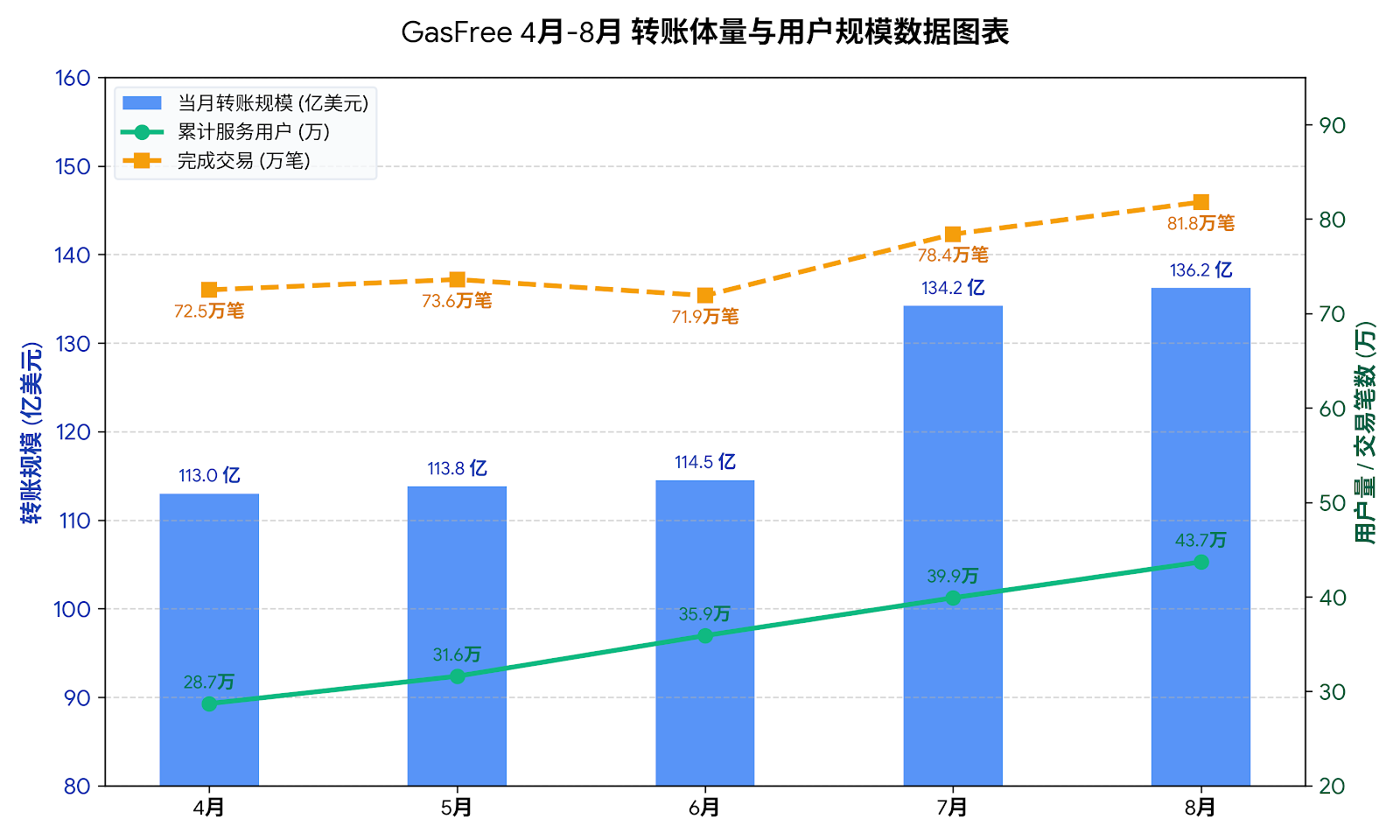
In the stablecoin payment arena, the gas-free transfer solution GasFree is becoming the industry's "dark horse" with astonishing growth. According to the latest data as of September 14, just a year and a half after launch, GasFree has processed a cumulative stablecoin transfer volume of nearly $138.5 billion, with over 8.06 million cumulative transactions and a total user base exceeding 450,000, saving users worldwide nearly $8.72 million in fees.
In the just-concluded August, GasFree's single-month transfer volume reached $13.62 billion, with over 818,000 transactions for the full month—equivalent to more than 1,100 gas-free stablecoin transfers worth nearly $20 million completed through GasFree every hour, with growth momentum continuing to accelerate.
GasFree was launched by the JUST ecosystem, the core DeFi infrastructure of the TRON ecosystem. So-called "gas-free" transfers mean users can complete transfers without holding any native tokens (such as TRX), with the required network gas fees deducted directly from the transferred tokens, truly delivering a seamless "transfer and pay gas in one" experience.
Alongside the rapid growth in transfer volume, GasFree's product capabilities have also been continuously upgraded. In August, GasFree officially added gas-free transfer support for the USDD stablecoin, and has now achieved full coverage of TRON's two major mainstream stablecoin assets, USDT and USDD.
Beyond the continuous refinement of its product capabilities, integration with leading platforms is also accelerating. On September 7, Binance Wallet, the Web3 wallet under the world's leading crypto asset trading platform Binance, officially launched a new feature for gas fee sponsorship on TRON stablecoins (TRC-20 USDT), and this feature is powered by GasFree's technology.
From zero to a cumulative transfer volume exceeding $138.5 billion, from single-asset support to full coverage of two mainstream stablecoins, and from in-ecosystem validation to integration with leading platforms, GasFree's growth is not a short-term traffic spike, but a structural transformation of the underlying crypto payment experience. As "hold stablecoins and transfer directly" becomes the industry's default experience, the user threshold for stablecoin payments will be further lowered, and GasFree is becoming a core driving force redefining the global stablecoin payment standard.
A Year and a Half After Launch: From Zero to $138.5 Billion, GasFree Reshapes the Stablecoin Payment Experience with Gas-Free Transfers
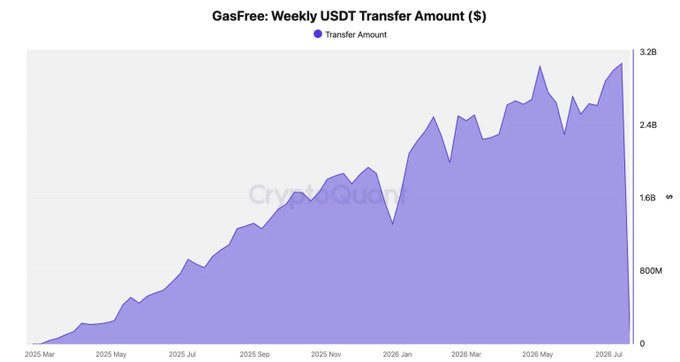
Since its official launch in late March 2025, the gas-free transfer solution GasFree has grown from zero to a phenomenon-level player in the stablecoin payment arena in just a year and a half. According to CryptoQuant's "TRON Q2 2026 Report," in the first week of May 2026, GasFree processed a record single-week high of $3 billion in USDT transfers.
In fact, as early as April 2026, both GasFree's user base and transfer volume entered an acceleration channel, with a clear and strong growth curve: monthly transfer volume steadily surpassed the $10 billion mark, monthly transaction count remained in the range of 700,000 to over 800,000, and user numbers maintained a net growth of about 30,000 to 40,000 per month.
Notably, during the sixth anniversary of the JUST ecosystem in May this year, the "JUST 6th Anniversary × GasFree Super Carnival Month" event (May 18 to June 18) was launched, offering users the chance to experience TRX-free transfers for free. After the event ended, both transfer volume and transaction count in July and August did not decline but continued to climb—this precisely shows that users were retained by the gas-free transfer experience, and the growth is not the result of short-term event stimulus, but structural growth driven by product experience.
As of September 14, GasFree has, in a year and a half, gone from zero to a stablecoin transfer volume exceeding $138.5 billion, processed over 8.06 million transactions, and a total user base surpassing 450,000—making it a star project in the stablecoin payment arena.

GasFree's rapid growth essentially strikes at the core pain point that crypto payments have long failed to solve—the native token threshold. Under the traditional on-chain transfer model, to complete a crypto asset transfer, users must simultaneously manage two types of assets: one is the asset being transferred, and the other is the native token of the corresponding public chain (such as TRON's TRX, Ethereum's ETH, BNB Chain's BNB, Solana's SOL), used to pay network gas fees. This effectively splits a complete payment action into two separate operations: "preparing native tokens + initiating the transfer."
As a result, new users often get stuck at the final step of a transfer because "there is no native token in the wallet," while experienced users also need extra operations to allocate gas fee assets. Taking the most mainstream TRC20-USDT as an example: no matter how much USDT a user has in their wallet, as long as they have no TRX, they cannot complete any on-chain transfer. Users not only have to understand unfamiliar technical concepts like "gas," but also learn to purchase native tokens and manage multi-currency balances; any hiccup in any step will cause the transfer to fail. The smoothness of on-chain transfers has always had a clear gap compared with the intuitive experience of traditional finance, where "money moves with one tap."
To address this industry pain point, GasFree provides an effective solution through "fee abstraction" technology, restructuring the interaction logic of on-chain payments from the ground up. Through the innovative mechanism of "paying gas fees directly with the transferred token," users can complete crypto asset on-chain transfers without holding any network native token, truly achieving "transfer and pay in one, completed with one click," redefining the crypto asset transfer experience.
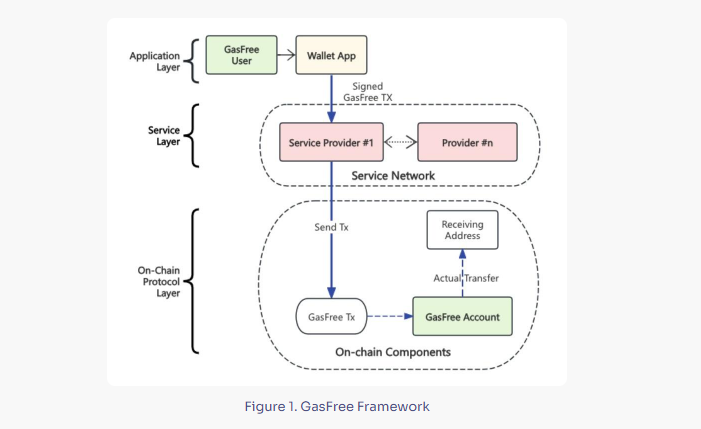
Simply put, GasFree has the service provider pay the network gas fee upfront, and after the transaction succeeds, the corresponding service fee is deducted directly from the transferred asset; throughout the process, the user does not need to hold native tokens such as TRX.
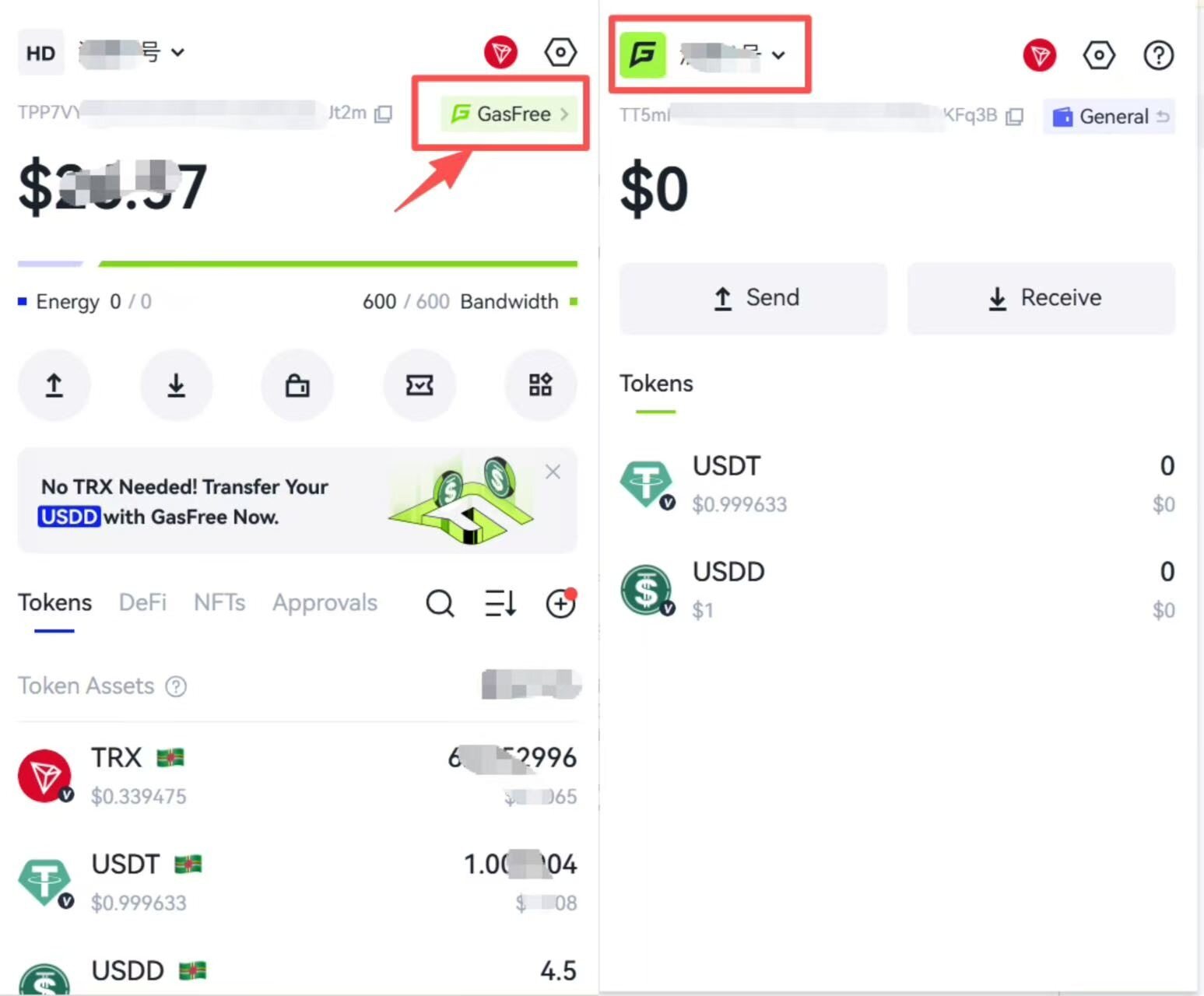
Currently, GasFree fully supports gas-free transfers for the two mainstream stablecoins USDT and USDD. This also means that whether users transfer USDT or USDD, the fee is automatically deducted from the corresponding transferred asset—send USDT and the gas is deducted from USDT; send USDD and the gas is deducted from USDD, with no need to prepare additional native tokens such as TRX throughout the process.
At present, users can quickly access GasFree through TRON's official wallet TronLink—simply open the TronLink App or browser extension, click the green "GasFree" icon, and enter the corresponding wallet interface with one click, with no additional download or installation required, making the operation simple and convenient.
In terms of usage mechanism, GasFree adopts an account model of "activate once, valid long-term, works with both coins": account activation is required before first use, and after activation, users can use gas-free transfer services for all supported assets over the long term. Currently, users only need to choose either USDT or USDD to complete activation, and can then unlock transfer functionality for both major stablecoins at the same time.
In terms of the fee system, GasFree adopts a fixed pricing mechanism, setting the account activation fee and transfer fee for USDT uniformly at 1.5 USDT per transaction; the USDD activation fee is 1 USDD, and the transfer fee is 0.5 USDD per transaction. Regardless of the transfer amount, each fee is a fixed value, allowing users to clearly estimate transaction costs without worrying about fee uncertainty caused by gas fluctuations.
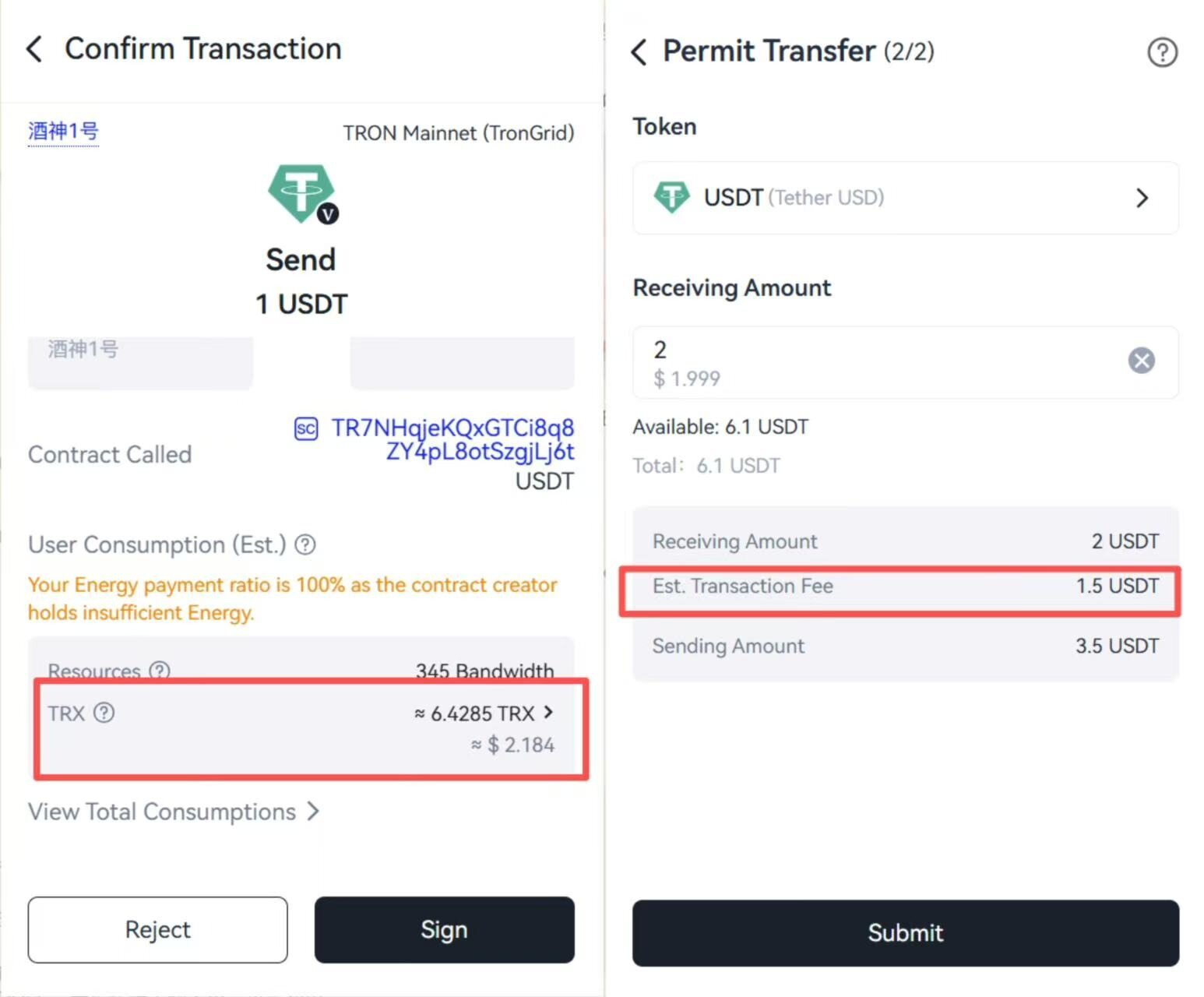
In terms of cost advantage, compared with the traditional on-chain transfer model, GasFree can greatly reduce transaction costs. According to on-chain data as of September 8, 2026, the single-transaction gas cost of a traditional on-chain TRC20-USDT transfer can reach $2.18, while a GasFree USDT transfer costs only 1.5 USDT per transaction regardless of the amount, demonstrating a very prominent cost advantage.
This GasFree model effectively breaks the industry's default rule that "users must hold a specific native token to pay gas fees," merging the originally fragmented multi-step operation of "preparing native tokens + initiating a transfer" into a single complete payment action. This experience logic is similar to the traditional financial payments that the public is already familiar with—just as mobile payment fees are deducted directly from the transaction amount, what users perceive is the "transaction cost," rather than unfamiliar technical terms such as "gas fees" or "energy fees."
Backed by TRON's Hundred-Billion-Dollar Stablecoin Ecosystem, GasFree Leads a New Era of Stablecoin Payments
Behind GasFree's rapid growth is the deep soil of TRON's hundred-billion-dollar stablecoin ecosystem. As the world's number one public chain for stablecoins, TRON's comprehensive advantages in asset scale, user base, and ecosystem scenarios provide an endless demand foundation and room for growth for GasFree's gas-free transfer service.
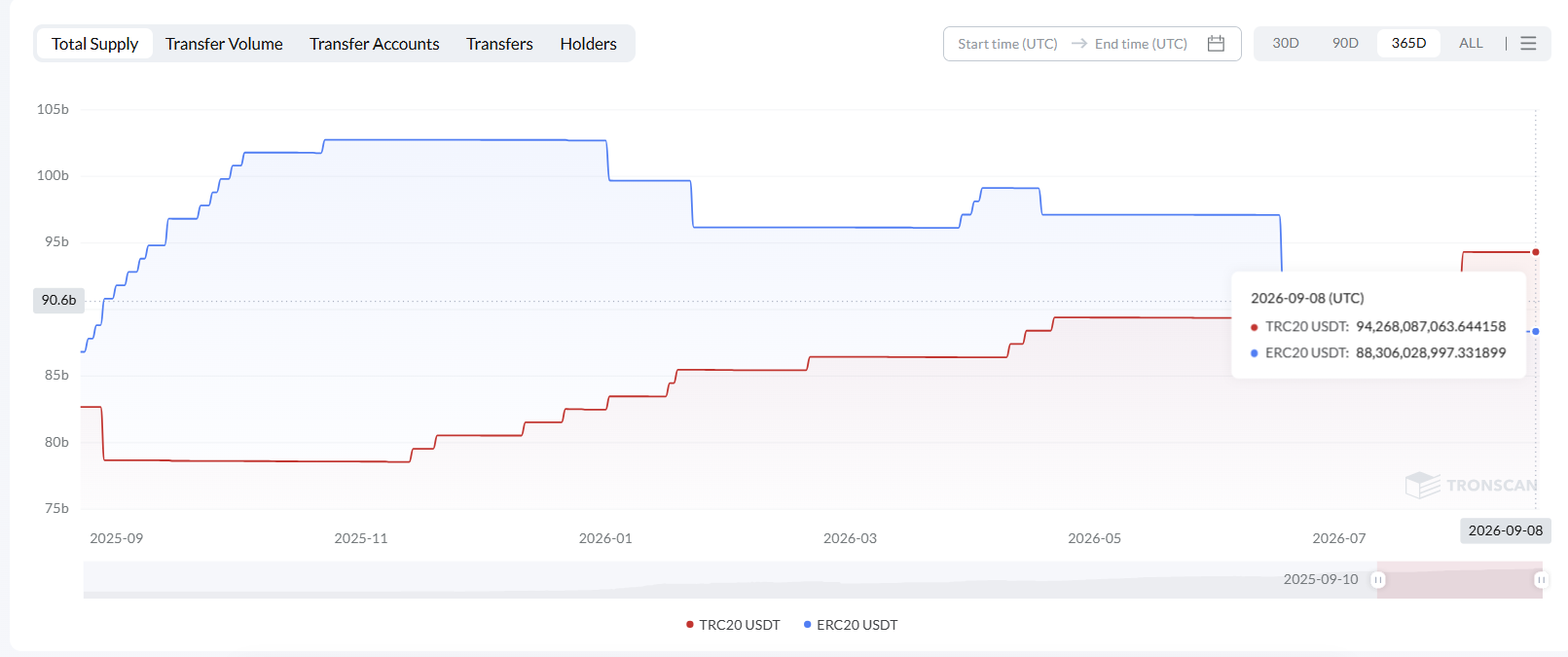
In terms of stablecoin asset scale, the total amount of stablecoins on TRON has exceeded $95 billion, accounting for more than 31% of the total global stablecoin market capitalization (about $305.1 billion). Among them, in USDT assets, which account for more than 60% of the global stablecoin market, TRON is far ahead: on-chain USDT supply has exceeded $94.2 billion, accounting for 51% of the total USDT supply across all networks, far exceeding Ethereum's $88.3 billion, and is accelerating toward the $100 billion mark. It is the public chain with the largest USDT supply in the world, processing more than $20 billion in transfers daily.
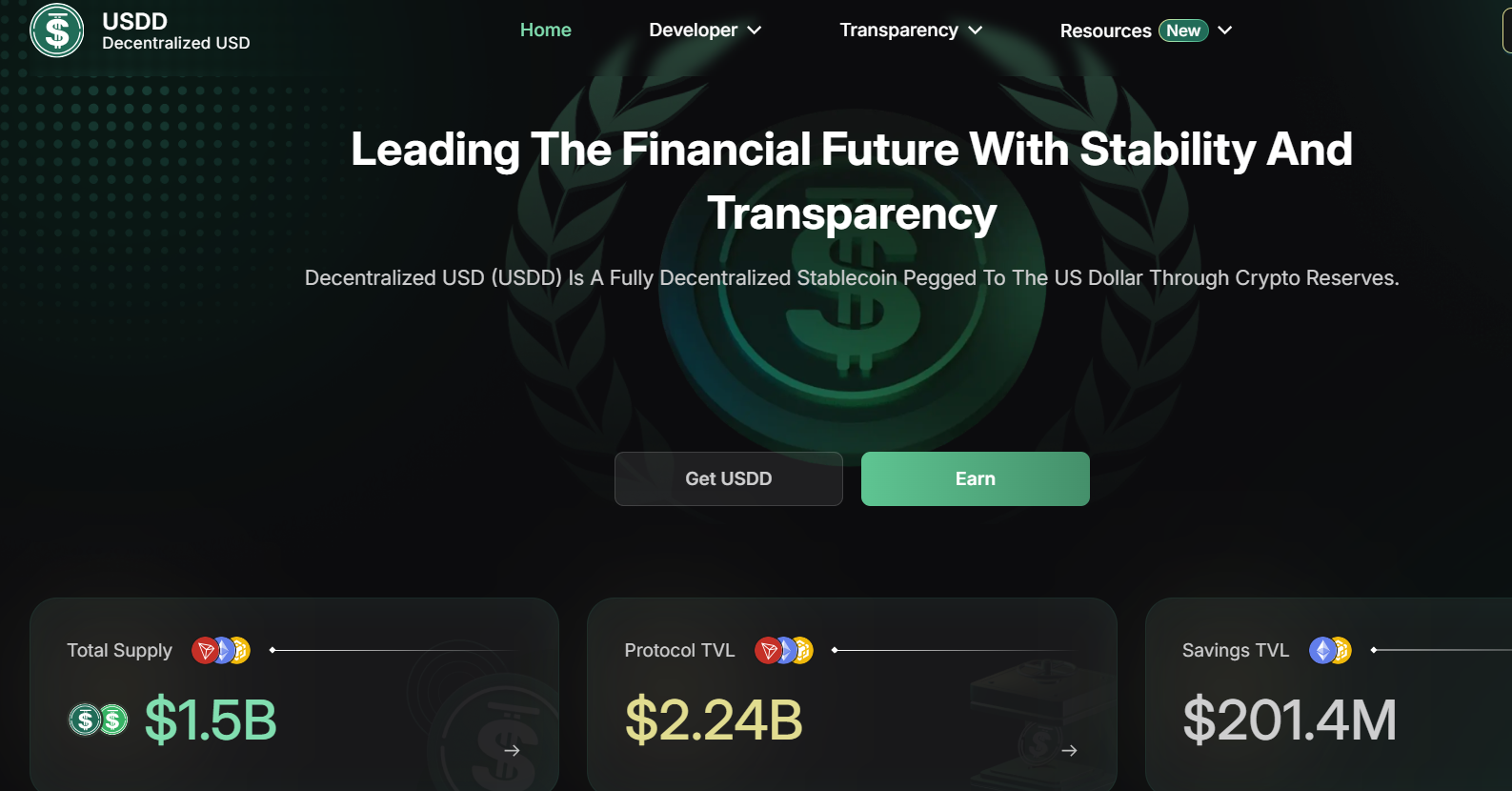
At the same time, USDD, the second-largest native stablecoin in the TRON ecosystem, is also growing rapidly, with total supply exceeding $1.5 billion and a market capitalization firmly among the world's top fifteen stablecoins.
At the user scale level, the TRON network's user base is also continuing to climb. On August 23, TRON's total global accounts officially surpassed the 400 million mark—after surpassing 300 million in April 2025, it completed another hundred-million-level leap in just over a year, and this massive user base provides GasFree with a vast potential user pool.

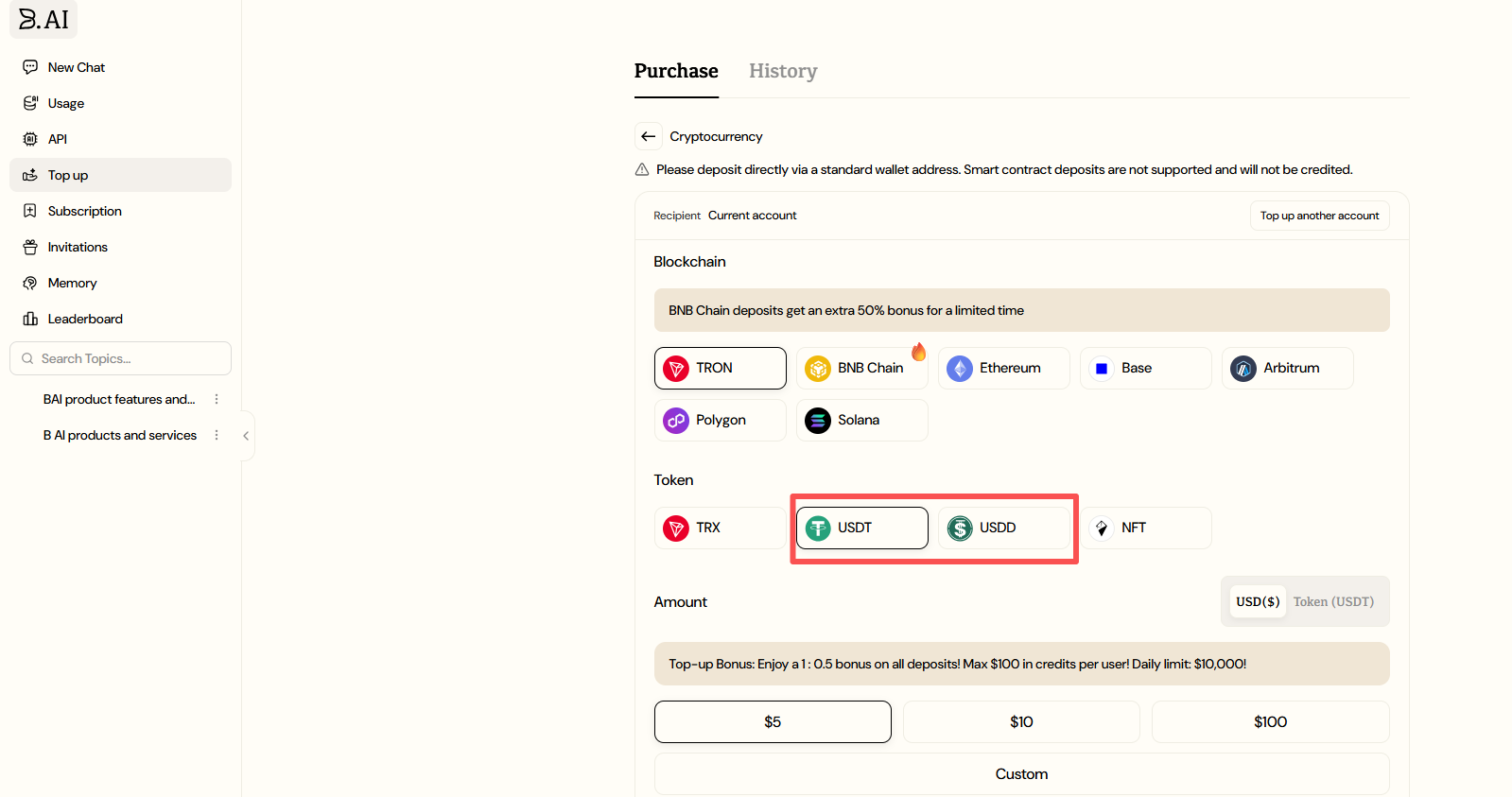
At the ecosystem scenario level, TRON has a complete DeFi and AI ecosystem, enabling stablecoins to no longer be merely a medium for payments and transfers, but also to be endowed with rich value-added and application scenarios: for example, in DeFi, SUN.io supports stablecoins in purchasing any asset and liquidity mining, JustLend DAO provides collateralized lending and yield-generating services, and so on; in AI, B.AI supports USDT and USDD for paying for conversations and API calls with top AI models at home and abroad such as ChatGPT, Claude, Gemini, DeepSeek, and Kimi, while Bank of AI further plans to support assets such as USDT for economic settlement between AI Agents in the future. These scenarios turn stablecoins into ecosystem assets with real utility, and also allow GasFree's gas-free transfer experience to run through the user's entire operational chain, further amplifying its value.
More importantly, GasFree's gas-free transfers bring not just an experience upgrade, but a paradigm shift in crypto payments. When gas fees disappear from users' awareness, the transfer process truly approaches the intuitive experience of traditional finance—stablecoin transfers become as simple and smooth as Web2 payments, which is exactly a key step in driving stablecoins from the crypto-native circle to the global financial stage.
This is by no means a niche feature optimization, but rather strikes at the core pain point of the entire crypto payment industry. CryptoQuant once clearly pointed out in a report: "GasFree transaction volume shows that fee abstraction is not a niche convenience feature, but a core driver of application activity on TRON, enabling projects to onboard users who hold only USDT at scale."
Looking at the entire industry, stablecoins are in a period of explosive growth, with application boundaries continuously expanding: from an initial medium for crypto trading, they are rapidly extending to broader financial scenarios such as payments, remittances, and cross-border settlement, and the stablecoin payment arena is also evolving from a proprietary tool of cryptocurrency into the underlying infrastructure of global mainstream finance and cross-border settlement.
The International Monetary Fund (IMF) has pointed out that stablecoins are reshaping the global payment system—making international payments faster and cheaper, and increasingly competing directly with traditional payment providers. It is reported that the total on-chain transaction volume of stablecoins in 2025 reached $33 trillion, while Visa and Mastercard processed $18 trillion and $12.5 trillion respectively during the same period; the annual transaction volume of the single stablecoin category has already exceeded the combined total of the two traditional payment giants; and as adoption of stablecoins accelerates in payments, remittances, and institutional settlement, this gap continued to widen in 2026.
Against this broader industry backdrop, the gas-free payment model represented by GasFree precisely hits the core demand of stablecoins moving toward the mainstream, and is becoming a key driving force in stablecoins' evolution from crypto assets into global mainstream payment infrastructure.
Backed by the deep soil of TRON's hundred-billion-dollar stablecoin ecosystem, combined with the collaborative support of diverse application scenarios such as DeFi and AI, as well as the continuous iterative refinement of its own products, GasFree's growth momentum will be released at an accelerating pace.
GasFree's Ecosystem Map Continues to Expand: From USDT to Dual Stablecoin Coverage with USDD, Integrating Binance Web3 Wallet to Open Up a Mainstream Gateway
Alongside the rapid growth in user scale and transfer volume, GasFree's product capabilities and ecosystem layout are also accelerating in tandem: on the product side, it has upgraded from single USDT support to full coverage of the two mainstream stablecoins USDT+USDD, with its asset map continuously improving; on the ecosystem side, it has built a full-channel entry matrix of "CEX exchanges + wallets"—on the one hand, the ecosystems of mainstream centralized exchanges (CEXs) such as Binance and OKX have achieved two-way asset interoperability, while on the other hand, it has partnered with dozens of mainstream industry wallets to broaden usage scenarios, and recently, through deep technical integration with Binance's Web3 wallet Binance Wallet, it has further opened up an entry point to tens of millions of mainstream crypto users.
In terms of asset service capabilities, GasFree was the first to launch USDT gas-free transfer services—that is, when users transfer USDT, all network gas fees can be automatically deducted directly from the transferred USDT, with no need to reserve any native tokens such as TRX in the wallet in advance, truly enabling stablecoin on-chain transactions with "zero native tokens."
As user demand continues to diversify, GasFree's asset map is also steadily expanding. On August 17, GasFree officially added support for the USDD stablecoin. Since then, when users transfer USDD, they can also use USDD itself to pay network gas fees, without needing to hold additional native tokens (TRX). This also marks that GasFree has completed full coverage of the two core stablecoins in the TRON ecosystem, bringing its product capabilities to a new level.
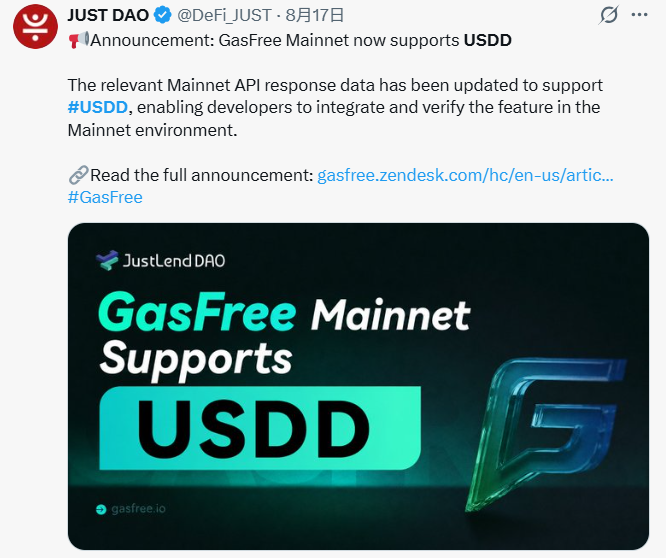
Currently on the TRON chain, whether users transfer USDT or USDD, they do not need to hold any TRX native tokens, and can complete the automatic deduction of on-chain gas fees solely through the stablecoin being transferred.
As of now, in the TRON network, whether users initiate an on-chain transfer of USDT or USDD, they do not need to hold any TRX native tokens in advance, and can directly pay on-chain gas fees with the stablecoin being transferred, greatly lowering the operational threshold throughout the process.





