The Fed is poised for its first rate hike in three years, but it likely won't be just one


- Key Takeaways: The Fed may deliver its first rate hike in three years next week, but the market widely believes a single 25-basis-point increase will be insufficient to curb inflation, expecting at least three cumulative hikes by June next year. Warsh's reluctance to provide forward guidance could exacerbate excessive market pricing.
- Key Factors:
- August core CPI came in above expectations, compounded by rising oil prices amid Persian Gulf tensions, breaking the conditions for holding rates steady.
- The market expects at least three cumulative rate hikes by June next year, up from the previous expectation of two.
- In Fed history, only 1997 saw a "one-and-done" rate hike, and officials generally believe that if action is taken, it must be followed through with sustained increases.
- Warsh is skeptical of "fine-tuning" and refused to participate in the June economic projections; his ambiguous stance could trigger excessive market interpretation.
- San Francisco Fed's Daly outlined two scenarios: if shocks subside, current policy is sufficient; if shocks compound, more aggressive adjustments are needed.
- St. Louis Fed's Musalem supports a July rate hike, arguing that raising rates earlier is less disruptive and less costly than raising them later.
Original article by Nick Timiraos, reporter for The Wall Street Journal
Compiled by | SuDiXia@Odaily
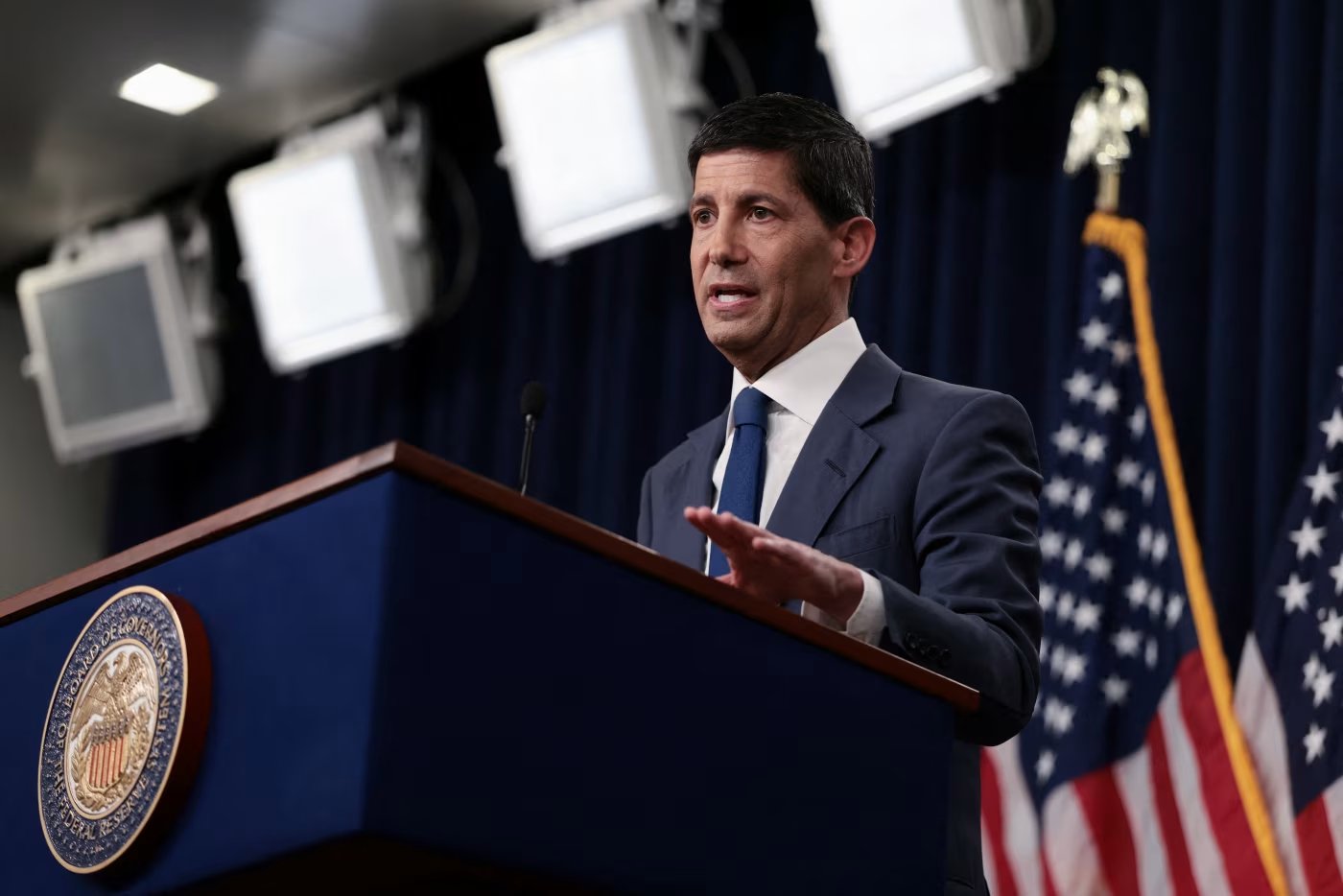
Editor's note: Nick Timiraos, the Wall Street Journal reporter known as the "Fed whisperer," argues in his latest piece that the Federal Reserve may raise rates next week for the first time in three years, and markets expect it won't be just one hike—at least three cumulative increases by June of next year. Kevin Warsh is unwilling to signal a path, which may make it hard to contain extrapolative expectations. August core inflation came in above expectations, and oil prices rose amid Persian Gulf tensions, making it harder to hold steady. Officials are now divided on whether a single 25 basis point hike is enough and whether a larger adjustment is needed, with quarterly economic projections potentially serving as a key signal.
————————
Investors have all but concluded that the Federal Reserve will raise interest rates next week for the first time in three years. The harder question is: what happens after that.
Because almost no one inside the central bank believes that a single 25 basis point hike alone can bring inflation down, a decision to raise rates next week would reflect a judgment that rates have been at the wrong level all along. If that's the case, one hike won't solve the problem.
The Fed rarely acts unless officials are confident that one move won't be enough. "If they hike next week, we will surely see more hikes," said Richard Clarida, former vice chair of the Federal Reserve.
Hiking seven weeks before the midterm elections is complicated enough. Putting the Fed on a path toward further rate increases would be even harder. Trump chose Kevin Warsh to serve as Fed chair partly because he expected their relationship would be smoother than with Jerome Powell. Trump has said he expects the new chair to deliver lower interest rates.
Other senior officials are also applying pressure. Vice President Vance said last week that the administration would welcome the Fed's help on rates; Treasury Secretary Scott Bessent has argued that recent inflation reflects supply shocks and that the Fed should not tighten policy at such a time.
Since the Fed in the 1990s established the federal funds rate as its primary tool for influencing borrowing costs, the U.S. central bank has had only one rate hike that was "one and done," in 1997. Clarida predicts that the action likely to be taken next week is "certainly not just one hike."
Warsh said in July that he is not very confident the Fed can guide the economy through small adjustments, giving investors reason to believe the same. "I don't think we're good at fine-tuning," he said. Analysts said Friday that a chair skeptical of fine-tuning is unlikely to hike 25 basis points and then declare the job done.
Federal Reserve Governor Christopher Waller expressed the same view last week when laying out scenarios in which the Fed could wait: raising rates by 25 basis points at one meeting rather than another will not bring inflation down to 2%.
"Once you decide to tighten, you tighten enough that you feel you've changed the level of restrictiveness in a meaningful way," said Kurt Lewis, a former senior Fed adviser and strategist at Piper Sandler.
The conditional case Waller laid out last week for holding rates steady—the same approach officials took in July—depends on the Fed's forecasts. Officials predicted in June that monthly inflation would slow in the second half of the year as the effects of tariffs faded, and the June and July data confirmed that forecast. However, Friday's report showed the opposite : a key measure of underlying consumer prices came in stronger than expected in August. That followed favorable employment conditions and another rise in oil prices due to Persian Gulf tensions.
Lewis said the decision to hike or hold steady "has been a hard call for a long time." Friday's report "was the straw that broke the camel's back."
As a result, investors this week no longer viewed the September rate question as merely a one-meeting issue. Markets expect at least three cumulative hikes by June of next year, up from two previously. Before this week, volatility in the rates market only affected the timing of a hike, not the eventual number of hikes.
In his speech at Jackson Hole, Wyoming, last month, Warsh laid the groundwork for the argument that "rates are at the wrong level." He said he sees little evidence that borrowing conditions are restraining the economy, and that the better inflation data in June and July did not convince him the underlying trend was improving.
Action taken on those grounds naturally raises an obvious follow-up question: just how big should the rate hike be? Fed chairs have long addressed this by explaining the purpose of a hike—for example, realigning rates, buying insurance, or making a risk-management adjustment—without necessarily committing to the next step. Warsh has been reluctant to explain the Fed's decision-making process and has argued for years that policy guidance ties the central bank's hands.
Without an explanation, a mere 25 basis point hike could snowball into something larger in the hands of the market. "If you don't explain your policy clearly, then your policy actions risk being overinterpreted, which can lead to policy overshooting," said Vincent Reinhart, chief economist at BNY Mellon Investment Management and former head of the Fed's Division of Monetary Affairs.
He said the market assumes the first move means more are coming and will price in too much. Without guidance, Reinhart said, "you can't talk it down."
The Fed has one tool that could help shape expectations next week. Officials submit forecasts four times a year for growth, unemployment, inflation, and the expected path of interest rates. These anonymous projections—which Warsh declined to participate in at his first meeting in June—could show how many hikes the committee is contemplating.
Dean Maki, chief economist at hedge fund Point72 Asset Management, said there will be "more signal than usual" in the forecasts.
Warsh could go further and personally cap expectations. Maki said, for example, that if he said the hike was partly unwinding some of last year's rate cuts, investors would read that as at most two or three hikes. "But that would go against his philosophy that the Fed's job is not to provide that kind of forward guidance," he said.
Reinhart said he worries the market is pushing the Fed into a hike that may not yet be needed. In his view, investors are overreacting to energy-driven inflation volatility, while the slow-moving components of inflation have been gradually declining, masked only by high-frequency swings in energy prices.
Ed Al-Hussainy, a portfolio manager at Columbia Threadneedle Investments, said a rate hike could help stabilize long-term yields, which have risen in recent weeks. If investors believe the Fed will tolerate higher inflation, holding rates steady could make that selloff more disorderly.
San Francisco Fed President Mary Daly described the Fed's choice as one between two economic scenarios. In one, the shocks of the past two years gradually fade and the Fed's current policy setting is enough to bring inflation down. In the other, shocks compound, inflation broadens, and the Fed needs a much larger adjustment than 25 basis points. She said that in early August, the first scenario was still her baseline, but since then the probabilities of the two have become closer.
Mary Daly said the second scenario could require more than a modest 25 basis point adjustment and would mark a departure from the gradualism the Fed traditionally uses to navigate an uncertain economy.
Officials eager to act start from the same premise but reach the opposite argument. St. Louis Fed President Alberto Musalem said in a speech last month: "Earlier, gradual, small rate hikes are preferable to, less disruptive than, and less costly than possibly later, more abrupt rate changes." He supported a July hike.
Their case is based less on the past three months than on the future: high diesel prices from the Iran war have yet to feed through to shipping networks, a new round of tariffs, AI buildout putting pressure on power and technology supply chains, and high stock prices supporting consumer spending.
Alberto Musalem said the probability that inflation will be noticeably above the Fed's target over the next 12 to 18 months is now higher than the probability that inflation will fall back to the central bank's 2% goal.