






三大借贷协议入局固定利率,各自有何创新之处?


- 核心观点:DeFi借贷赛道正从浮动利率主导转向固定利率、固定期限产品,以解决借款人无法提前知晓债务成本的痛点。Morpho、Jupiter、Kamino等老牌浮动利率协议近期纷纷入局,通过基于意图的撮合、可交易仓位及自动展期等机制,在解决流动性碎片化、提前退出和冷启动难题的同时,撬动现有网络效应,以满足机构及复杂策略用户对确定性融资条款的需求。
- 关键要素:
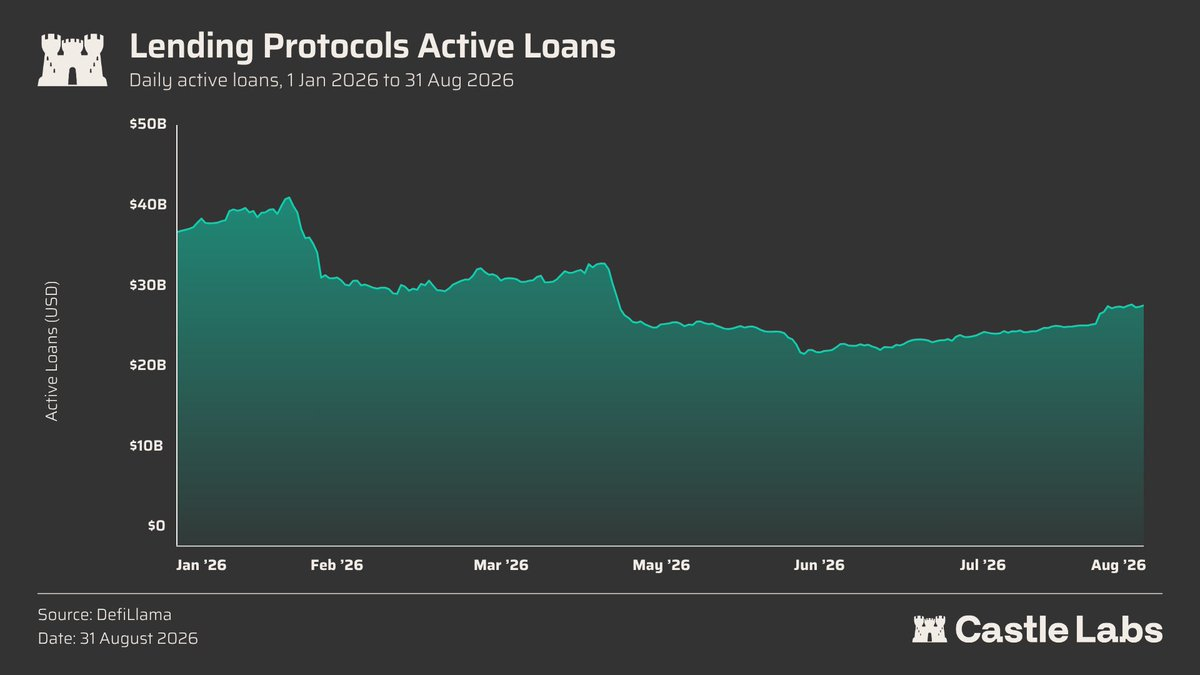
- 当前借贷赛道活跃贷款约285亿美元,几乎全部为浮动利率产品,市场压力期利率飙升导致借款人去杠杆,市场效率低下;固定利率产品的需求主要来自期限匹配型借款人、确定性需求借款人及出借人/策展人类机构用户。
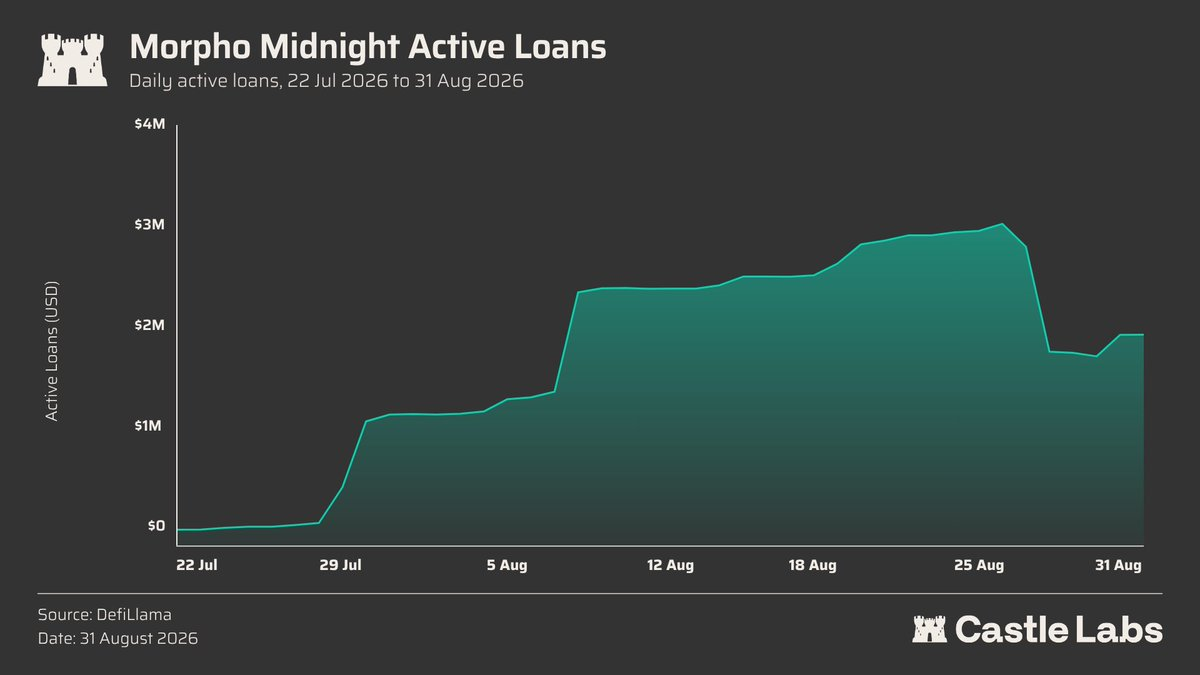
- Morpho Midnight作为基于意图的零息借贷协议,资金在撮合时才到位,支持用户跨多个市场挂单以聚合流动性,且仓位可交易解决提前退出问题;目前活跃贷款约300万美元,未来有望继承Morpho Vaults超40亿美元的资金池效应。
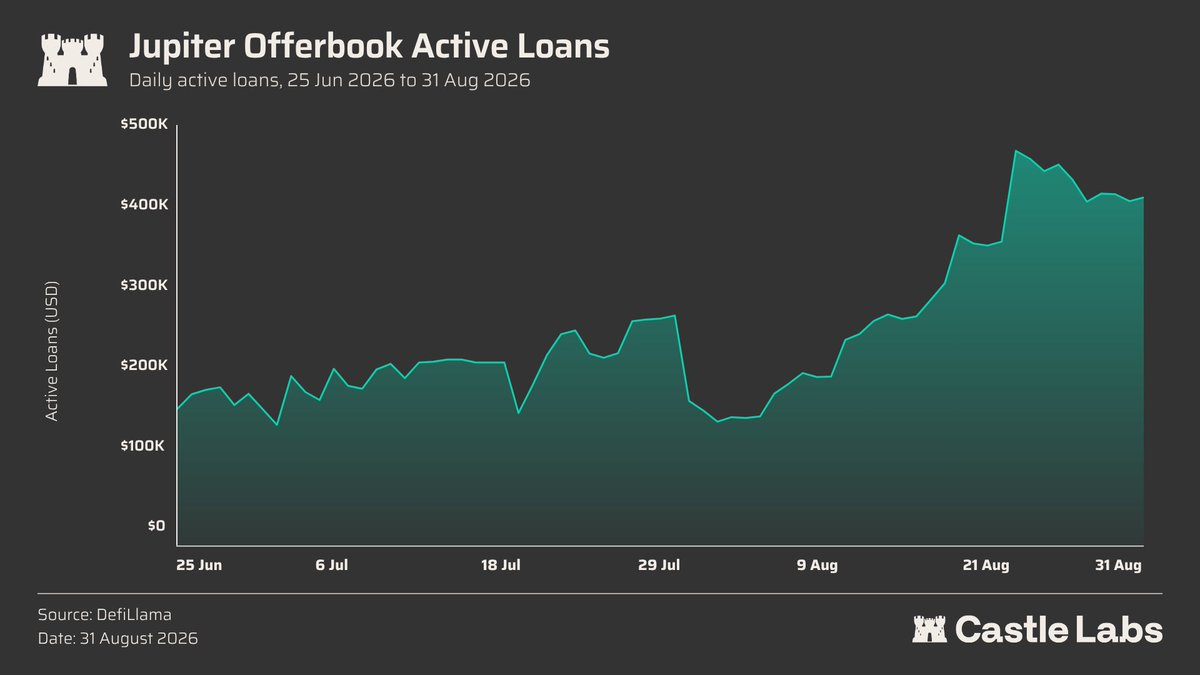
- Jupiter Offerbook采用无价格清算模式,通过到期后抵押品转移支持NFT、RWA等长尾资产,期限为1到30天,但可扩展性受限于出借人直接承销抵押品的意愿;上线至今活跃贷款约45万美元。
- Kamino在白皮书中提出在Kamino Lend内部增加固定利率储备,通过利率与期限组合形成的网格执行面让借款人直接提取或挂单等待匹配,同时支持自动滚入下一期限或回退至浮动利率池,以缓解到期管理负担。
- 三平台均允许资金在意图撮合阶段继续赚取浮动利率收益,消除等待机会成本以解决冷启动难题,且Tenor Finance等应用层正通过自动展期、链上OTC及机构账户功能,进一步降低固定期限产品的使用门槛。
Original author: @castle_labs
Original translation: AididiaoJP, Foresight News
Currently, the lending sector has approximately $28.5 billion in active loans, with nearly all demand coming from floating-rate products. When markets are stable, this model functions well; but once stress hits, utilization curves shift upward and borrowing rates spike sharply. Sudden rate increases often force some borrowers to exit or deleverage, making the entire credit market inefficient.
DeFi money markets solved something traditional credit could not: near-instant collateralized borrowing. But one problem remains unsolved—borrowers cannot know their debt costs in advance until the loan concludes.
This is precisely the direction many products are now tackling: shifting toward fixed-rate, fixed-term credit products. In such markets, lenders can lock in returns in advance, and borrowers also know exactly how much interest they will pay.
Demand in this market mainly comes from three types of participants:
- Term-matching borrowers: Funds, treasuries, RWA issuers, basis/arbitrage trading desks that need debt maturities aligned with asset maturities, redemption windows, or strategy cycles.
- Certainty-seeking borrowers: Revolving loan users, leveraged yield players, and traders who may not care about exact maturities but need stable borrowing costs to avoid spread compression.
- Lenders/curators: Treasuries, market makers, and allocators who want to independently choose tenors, collateral, and returns rather than passively accepting whatever the utilization curve dictates.
Early fixed-rate lending was mainly stuck on three issues:
Liquidity fragmentation. Fixed-rate markets split into multiple sub-markets by maturity, rate, collateral, and tenor, making matching far more difficult than a single floating-rate pool.
No early exit. Once a loan begins, lenders find it difficult to exit before maturity unless there is secondary liquidity, redemption channels, or a taker. Floating-rate markets do not have this problem.
Cold start challenge. Lenders are unwilling to lock up capital, let it sit idle before a counterparty is matched, and earn nothing.
As institutional capital increases and more complex strategies like revolving loans emerge, the user base has shifted, and demand for fixed-term markets is rising. One major pain point in on-chain lending is the uncertainty of floating rates; fixed-rate products allow users to lock in returns and costs in advance. It also forces protocols to directly price tenor, collateral quality, exit liquidity, and refinancing risk, resulting in a better user experience.
This article reviews the approaches of several established floating-rate protocols, including Morpho, Jupiter, and Kamino. These three collectively hold $6.83 billion in active loans and have recently entered the fixed-rate and fixed-term market with the above concerns in mind.
Morpho Midnight and Tenor Finance
Morpho, as an established floating-rate protocol, launched Morpho Midnight in July this year. This is an intent-based zero-coupon lending protocol: lenders and borrowers express intents, with positions reflected respectively as debt units (obligations to repay one loan token per unit before maturity) and credit units (claims on repaid loan tokens). Midnight provides tenor flexibility and more predictable underwriting for institutions by making loans tradable. Rates are determined by the prices of fixed-term credit units and debt units traded between borrowers and lenders.
In Midnight, lenders and borrowers post "quotes" without locking up capital—they are merely expressing intent to lend or borrow at a specific market, price, maturity, and collateral configuration. Funds only actually arrive at settlement (callback), thereby solving the cold start problem—lenders only deploy capital after a match is made, achieving greater capital efficiency. This also helps attract more liquidity. The Morpho team stated: "By allowing users to continue earning floating rates on protocols like Morpho Blue, we eliminate the opportunity cost of waiting for a match, which in turn incentivizes more quotes and improves overall available liquidity."
Another problem in fixed-rate markets is capital fragmentation: every maturity date, collateral type, and rate range can become an independent market. Midnight does not occupy capital during the intent phase, and users can also post quotes across multiple markets. "The same capital can quote multiple markets simultaneously, so the total liquidity a single market maker can provide equals available capital × number of markets."
Since launching in July 2026, Midnight markets have approximately $3 million in active loans. Though the number is small, the team believes it will change quickly because it can inherit Morpho's existing network effects and ecosystem. For example, Morpho Vaults currently manage over $4 billion in capital. Once vault adapters go live, these funds can begin quoting on Midnight, which will play an important role in deepening liquidity.
The most noteworthy aspect of Midnight is how it solves the early exit problem. In early or illiquid fixed-term markets, borrowers and lenders often lack exit channels before maturity. Midnight makes positions fungible: lenders can sell credit units, and borrowers can buy debt units to reduce outstanding obligations.
Midnight can be viewed as the underlying architecture for fixed-rate lending, with someone already building an access layer on top—Tenor Finance. Some call it Midnight's "HIP-3."
Tenor Finance inherits Midnight's underlying capabilities and adds new features:
Auto-renewal and fallback options. Tenor introduces automatic rollovers to avoid liquidation after maturity. It uses independent Keepers to roll loans into new fixed-rate terms before maturity. If no fixed-rate counterparty can be found, it can directly fall back to Morpho Blue's floating-rate pools.
On-chain OTC protocol. Users can request quotes and broadcast customized OTC quotes that can be shared with whitelisted counterparties, supporting direct negotiation.
Institutional tools and access control. Tenor offers institutional accounts with role-based permissions. Institutions can deploy customized, gated credit markets through these accounts, restricting who can borrow and lend based on compliance or KYC requirements.
Tenor reduces maturity friction through auto-renewal and fallback, allowing fixed-term positions to continue more smoothly when matching liquidity exists or fallback conditions are met. Combined with customizability, it is better suited for institutions. The team's long-term expectation is for the platform to serve asset managers on one side and enterprises on the other.
Jupiter Offerbook
Jupiter Exchange's Offerbook entered public beta in June 2026, around the same time as Morpho Midnight's whitepaper release. Jupiter Lend, the floating-rate product launched last year, was its first attempt into the lending赛道; it is now entering the fixed-term market through Offerbook.
Offerbook is an intent-based lending protocol featuring no price-based liquidations, thereby enabling fixed-term lending for long-tail assets.
Loans on the platform have relatively short tenors, typically 1 to 30 days. If a borrower fails to repay at maturity, the lender directly takes the collateral without any liquidation occurring. This design allows assets like NFTs, RWAs, or other assets lacking active price discovery to serve as collateral, provided lenders are willing to underwrite them. It replaces continuous price-based liquidation with collateral transfer at maturity, thereby enabling specialized markets that traditional models struggle to support.
Users can post lending or borrowing intents that appear in the application, with liquidity only arriving when a quote is accepted. Since users only confirm when a match occurs, capital can still be used for other purposes before execution, which also alleviates the cold start problem. Lenders and borrowers can continue earning yield on their capital until they find terms that fully match.
Since launch, Jupiter Offerbook has approximately $450,000 in active loans. The model is unique, but proving the market and scaling is not easy, as scalability is constrained by whether lenders are willing to directly underwrite these collateral types.
Kamino
Kamino recently published a whitepaper for its fixed-rate lending protocol. Rather than building a separate standalone fixed-rate market, it adds fixed-rate reserves within Kamino Lend. The benefit is distribution: borrowers can directly see the term structure, lenders can quote specific rates and tenors without having to completely exit the floating-rate system, and fixed-rate borrowing becomes incremental.
Each reserve on the platform is defined by rate and tenor—for example, USDC borrowing at different tenors and different rates. These various rate-tenor combinations form a grid.
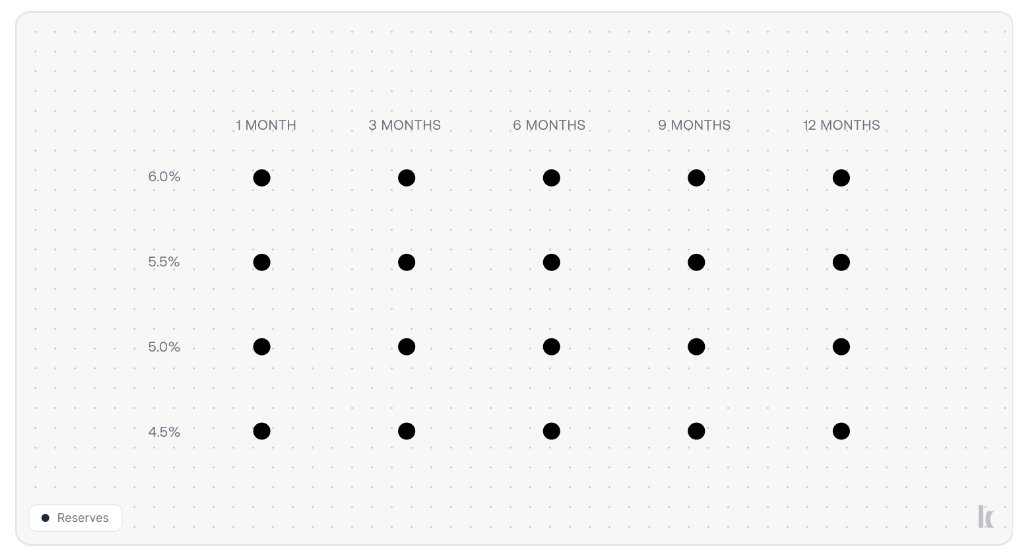
Using the grid, Kamino allows borrowers and lenders to express trading intent across both price and time dimensions simultaneously. Borrowers post borrowing intents specifying collateral, size, maximum rate, and tenor; lenders post conditional liquidity specifying the rate, tenor, and amount they are willing to provide. The grid becomes the execution surface: borrowers can draw from available fixed-rate liquidity within preset rate-tenor combinations.
Matching is not one-to-one direct pairing; rather, lenders quote on a structured grid—for example, 4.5% for 1 month, 5% for 3 months, and so on—thereby forming a visible term structure and yield curves across different assets. Leveraging Kamino's existing infrastructure, borrowers can either post intents and wait for matches or directly draw from existing fixed-rate liquidity on the grid. Additionally, Kamino can automatically roll loans into the next tenor when liquidity permits, similar to Tenor; if no fixed-rate liquidity exists, it falls back to floating rates. This alleviates maturity issues and reduces the burden of manually managing each maturity date.
Lender exits go through a withdrawal queue. If capital has been deployed and cannot be exited immediately, lenders enter a first-in-first-out queue and are gradually repaid as loans within that reserve mature. The design ensures lenders wait no longer than the maximum tenor of that reserve.
During the matching process, capital does not sit idle—it can still earn yield in floating-rate reserves, which also helps address the cold start problem.
Conclusion
Fixed rates will not eliminate the risks that floating-rate lending has exposed over the years, but they make debt costs explicit. And that is exactly what DeFi credit has been missing.
The power of floating-rate pools lies in their ability to provide instant borrowing, but they compress everything into a single utilization curve. Fixed-rate markets, by contrast, allow borrowers to price tenor, lenders to choose tenor and collateral risk, curators to allocate across maturities, and applications to package more predictable credit products. Aave already launched Stable Vaults in July, and early forms of predictable credit products are emerging.
This matters because DeFi lending is scaling. It now supports revolving loans, basis strategies, treasury management, RWA-linked assets, and applications aimed at everyday users. These users want not just liquidity, but clear and fixed financing terms.
Expect intensifying competition in this赛道, with more new solutions emerging to scale fixed-rate lending. Current penetration remains very low, and floating rates still dominate the market, but the goal is to grow the pie—these products can cover many scenarios that existing DeFi lending cannot.
They are also attempting to solve the pitfalls that earlier同类 protocols encountered, while enjoying stronger distribution: the floating-rate side is already mature. For example, capital in floating-rate markets can continue earning yield and maintaining efficiency while simultaneously quoting in fixed-rate markets.
As products mature, strategies that were previously impossible will emerge, and the lending赛道 may form a new flywheel.





