AI Computing Power Financialization: Open-Source Models Are Pushing Computing Power Toward Capital Markets (Part 1)


- Core thesis: AI computing power is shifting from an IT cost to a capital asset, entering a phase of leverage-driven expansion. The current market lacks standardized forward and derivatives instruments, forcing long-term contracts to simultaneously serve procurement and price management functions. The risk exposure that ultimately enters the derivatives market depends on the degree of computing power marketization.
- Key elements:
- In 2025, the Top 5 cloud providers' AI CapEx will account for nearly 94% of operating cash flow, with combined confirmed CapEx exceeding $700 billion in 2026, accelerating reliance on debt financing.
- Take-or-Pay long-term contracts (such as CoreWeave, which derives over 98% of its revenue from such agreements) convert uncertain GPU utilization into predictable contractual cash flows, reshaping the credit risk hierarchy of GPUs.
- GPUs possess dual attributes as both production equipment and technology products, making accounting depreciation difficult to align with economic depreciation. Risk is concentrated at contract renewal, refinancing, and default resolution points.
- The risk exposure that can truly enter the derivatives market must pass through multiple filters: only the portion that is market-traded, price-fluctuating, and not absorbed by bilateral contracts—which correlates more strongly with the share of merchant compute.
- Open-source models are increasing the proportion of market-based procurement: following the release of DeepSeek V4, H100 rental prices rose approximately 7.5% within two weeks, and rental prices strengthened around the launches of Kimi K3 and GLM 5.2.
- GPU-hours are non-storable and lack inventory arbitrage constraints, making forward prices sensitive to marginal information. The value of real order flow is highlighted, and the value of an index lies in compressing non-standard quotes to form a pricing anchor.
- GPU-hours are closer to basic commodities, while AI tokens are difficult to standardize due to technological deflation and performance differences. On the demand side, pricing is more likely to start with workload-based approaches such as model baskets and routers.
This article is an in-depth research report by OKX Ventures. Due to its length, it is published in two parts: the first part focuses on the assetization of compute power, risk exposure, and derivatives pricing logic; the second part will analyze compute financial infrastructure, inference assetization opportunities, and industry trends. This is the first part.
Introduction: The Assetization of Compute Power and Risk Exposure
AI infrastructure is entering a phase of capital-intensive expansion, which is transforming the economic characteristics of compute power. In the past, enterprises largely viewed compute as an IT cost to be procured on demand; now, GPUs, data center capacity, and multi-year procurement contracts are increasingly appearing on balance sheets, and compute power is beginning to exhibit the features of a capital asset: substantial upfront investment, a payback period spanning several years, and future revenue and equipment value subject to continuous impact from supply-demand dynamics and technological iteration.
GPU procurement and data center construction are also becoming increasingly reliant on debt financing. Today, GPU credit can be financed using equipment collateral and long-term customer contracts, yet the market still lacks public, standardized forward prices and hedging instruments for GPU-hours. Debt must be repaid on a fixed schedule, but the rental income this batch of GPUs can generate and their residual value several years from now will depend on market conditions at that time. The higher the leverage, the greater the impact of such price uncertainty on debt service and refinancing.
1. Background: The Capital Structure of the Compute Market
1.1 Compute Expansion Enters a Leverage Phase
Over the past few years, one of the most notable changes in AI infrastructure has been that capital expenditure has begun to outpace internal corporate cash flow generation. Between 2020 and 2023, the AI-related CapEx of the top 5 cloud providers remained roughly 20%–30% of their operating cash flow; by 2025, this figure had approached 94%. Entering 2026, the combined confirmed CapEx of the top 5 cloud providers exceeds $700 billion.
These companies still possess strong cash generation capabilities, but when infrastructure buildout expands on a scale of hundreds of billions of dollars over an extended period, debt capital naturally assumes a greater role. Compute assets are beginning to develop an independent financing logic.
GPUs, servers, and data centers require investment before revenue is generated, and compute operators such as Neoclouds typically do not possess the mature balance sheet creditworthiness of Hyperscalers. Lenders have therefore increasingly based their financing decisions on the project itself: whether future cash flows are sufficiently stable to cover debt principal and interest, and how much asset value can be recovered in the event of default.
Take or Pay long-term contracts are the linchpin that makes this structure viable. Even if customers do not fully utilize their reserved capacity, they are still contractually obligated to pay the agreed fees. For operators, this is equivalent to locking in a portion of future revenue in advance; for lenders, it converts highly uncertain GPU utilization rates into a more predictable contractual cash flow stream.
CoreWeave is the most typical example of this model (with over 98% of its revenue derived from Take or Pay contracts). As the share of multi-year contracts with investment-grade customers has increased, its financing has become increasingly dependent on offtaker creditworthiness and contract coverage. Operators with major long-term customer contracts, such as Nebius and IREN, have subsequently adopted similar structures.
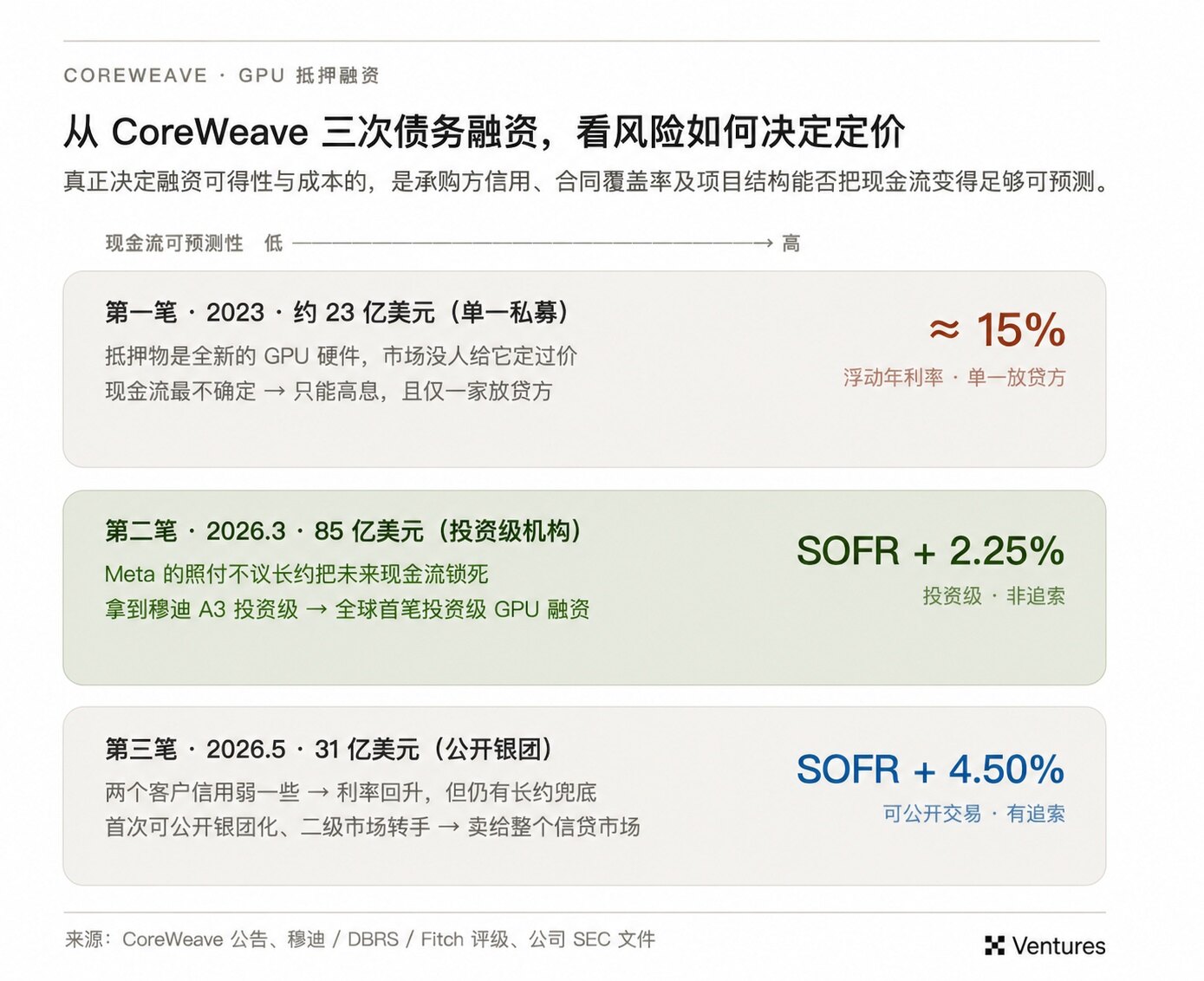
This has altered the risk hierarchy of GPU credit. Lenders first assess whether contractual cash flows can cover debt service, and only last evaluate how much value can be recovered from the GPUs in the event of default. The number of GPUs determines the scale of collateral, while long-term orders further determine the financing terms this asset base can secure.
1.2 After Cash Flow is Locked In, What Remains is Asset Price Risk
Take or Pay contracts enhance the visibility of debt-service cash flows, but the economic value of GPUs themselves will continue to fluctuate. Several years down the line, how much revenue this equipment can generate and what it is worth remain risks sitting on the balance sheet.
GPUs possess the dual attributes of both production equipment and technology products. They can generate rental income on an ongoing basis, yet they are also subject to an extremely rapid technology iteration cycle. When a new generation of chips is launched, the impact on the previous generation gradually manifests in rental rates, utilization, renewal pricing, and secondary market values.

Consequently, the accounting depreciation and economic depreciation of GPUs are unlikely to fully align. Accounting may amortize equipment costs over a fixed period, but the market reassesses every day how much competitive compute capacity a given GPU can still produce. For lenders, the core variables ultimately converge on cash flows over the remaining loan term and the value recoverable in the event of default. (Regarding the data center asset depreciation policies of major cloud providers, the market has already seenquestioning)
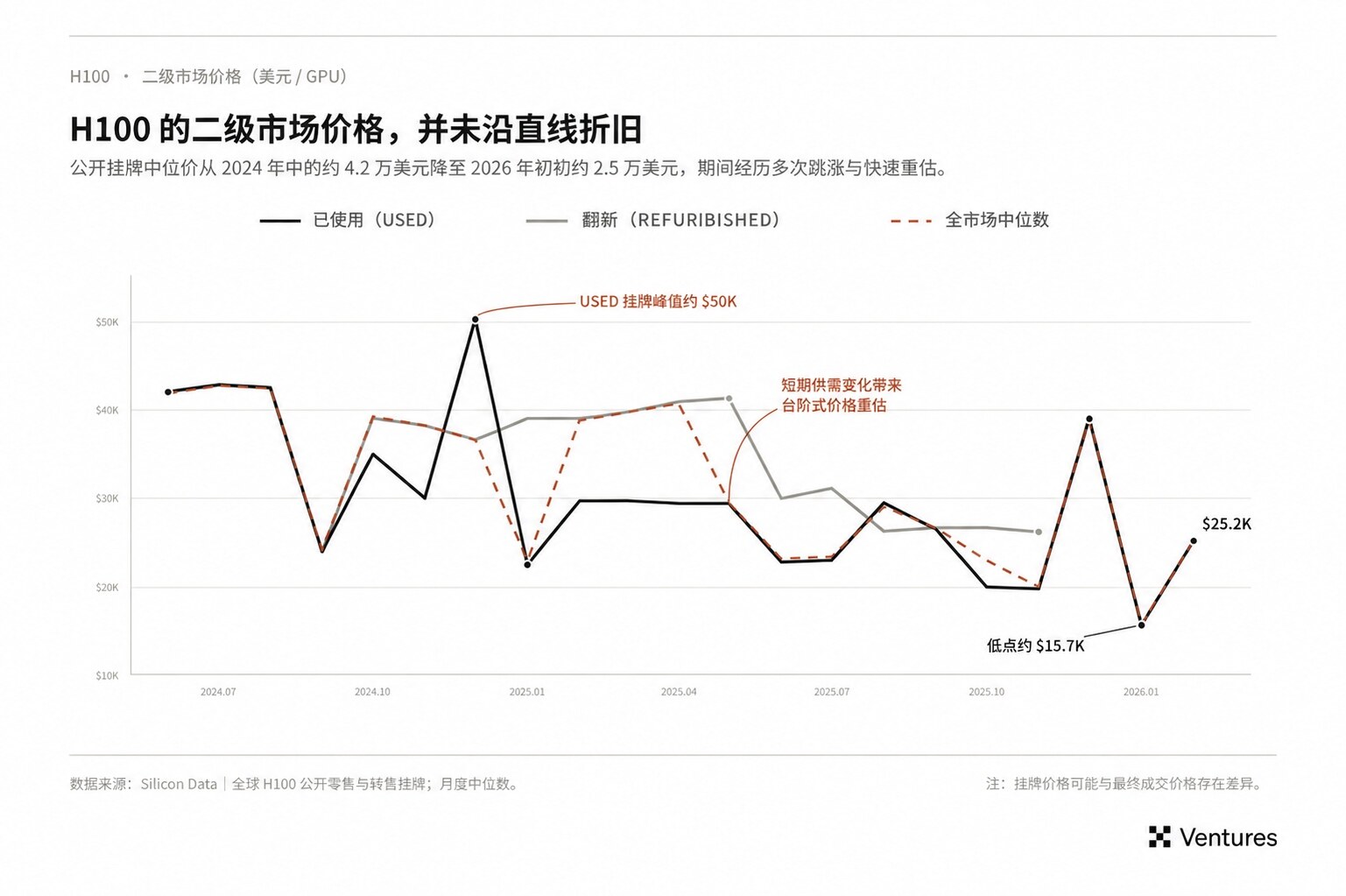
This also explains why current GPU credit can remain temporarily stable even as rental rates decline. As long as offtake customers continue to fulfill their contracts, spot price changes may not immediately impact current debt service; risk tends to concentrate at points such as contract renewals, refinancing, and default resolution. At these junctures, the market rental rates and residual values of GPUs will redefine the safety cushion for loans.
If rental values and equipment values decline faster than loan principal amortization, LTV will rise again, and the safety cushion for the loan narrows accordingly. Long-term contracts can defer risk, but they cannot lock in the economic value of the equipment over its entire lifecycle.
The gap in the current compute credit structure is therefore clear: contracts lock in a portion of customer payments, but the market price of GPUs remains floating.
The market currently relies primarily on multi-year capacity contracts to lock in prices in advance. Early one-year H100 contracts traded at a significant discount to spot prices, but as spot prices have declined and forward contract prices have recovered, the spread between the two has narrowed substantially. Improved supply and changes in contract terms have both contributed to this outcome, but it also reflects a more fundamental issue: in the absence of standardized forwards, futures, and swap instruments, industry participants can only rely on long-term physical contracts to serve both procurement and price management functions simultaneously.
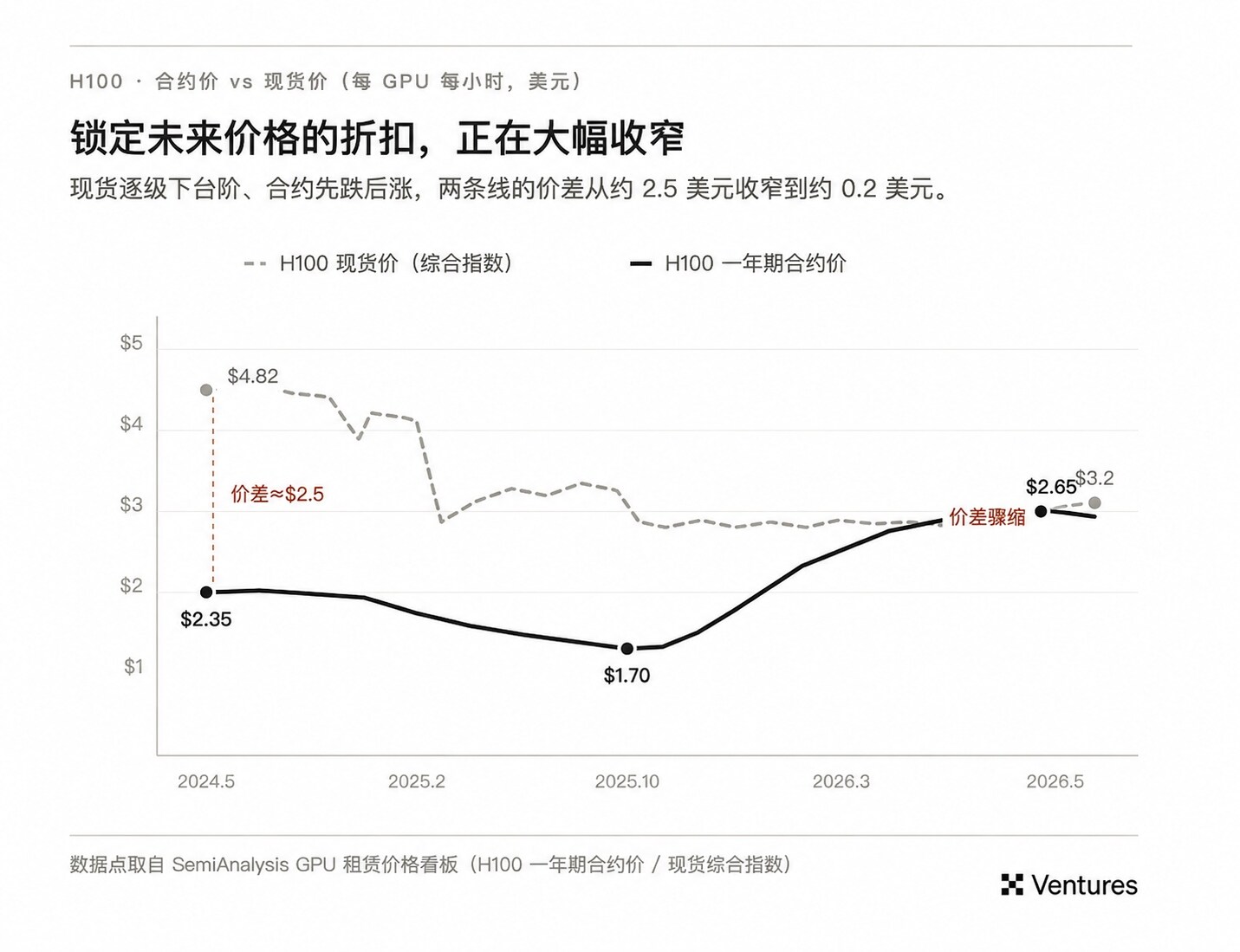
Long-term contracts can accomplish risk allocation between individual counterparties; when the market needs to continuously establish public prices and transfer risk across institutions, further standardized financial instruments become necessary. As an increasing amount of GPU assets are supported by debt capital, this demand will become increasingly pronounced.
2. What Does the Compute Market Actually Need to Trade?
Once compute power enters the capital structure, price fluctuations acquire clearly defined bearers. Neoclouds bear rental decline risk, AI companies bear procurement cost escalation risk, and creditors bear residual value and refinancing risk. Derivatives markets often begin to genuinely form around risks that balance sheets cannot absorb on their own.
2.1 Three Types of Participants and Risk Exposures
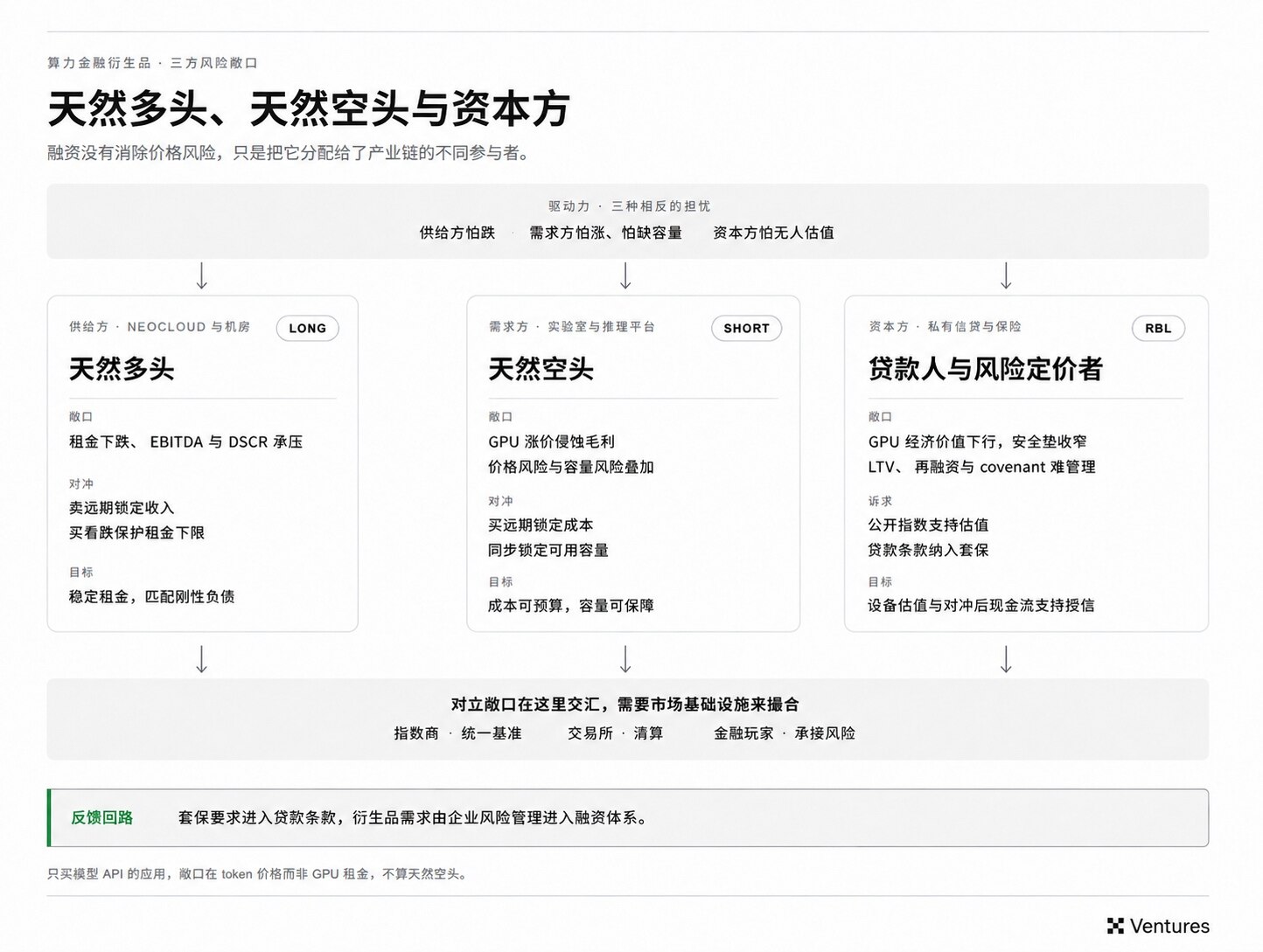
Compute price fluctuations ultimately land on three types of balance sheets. Neoclouds lock in GPU, data center, and financing costs upfront, but future rental rates will still be repriced; when long-term contract coverage is insufficient, declining rental rates can quickly compress EBITDA and DSCR, making them the most motivated to sell forwards and lock in revenue in advance. AI labs and inference platforms sit on the other side—GPU price increases directly erode gross margins, and in tight market conditions, price and capacity risks often emerge simultaneously, meaning they need to lock in both cost and available capacity. Lenders are more concerned with the safety cushion remaining between the outstanding loan balance and the economic value of the GPUs; without public indices and forward curves, LTV, refinancing, and covenant management become difficult to handle dynamically. As hedging requirements gradually enter loan terms, demand for compute derivatives will expand from proactive enterprise risk management into the broader financing system.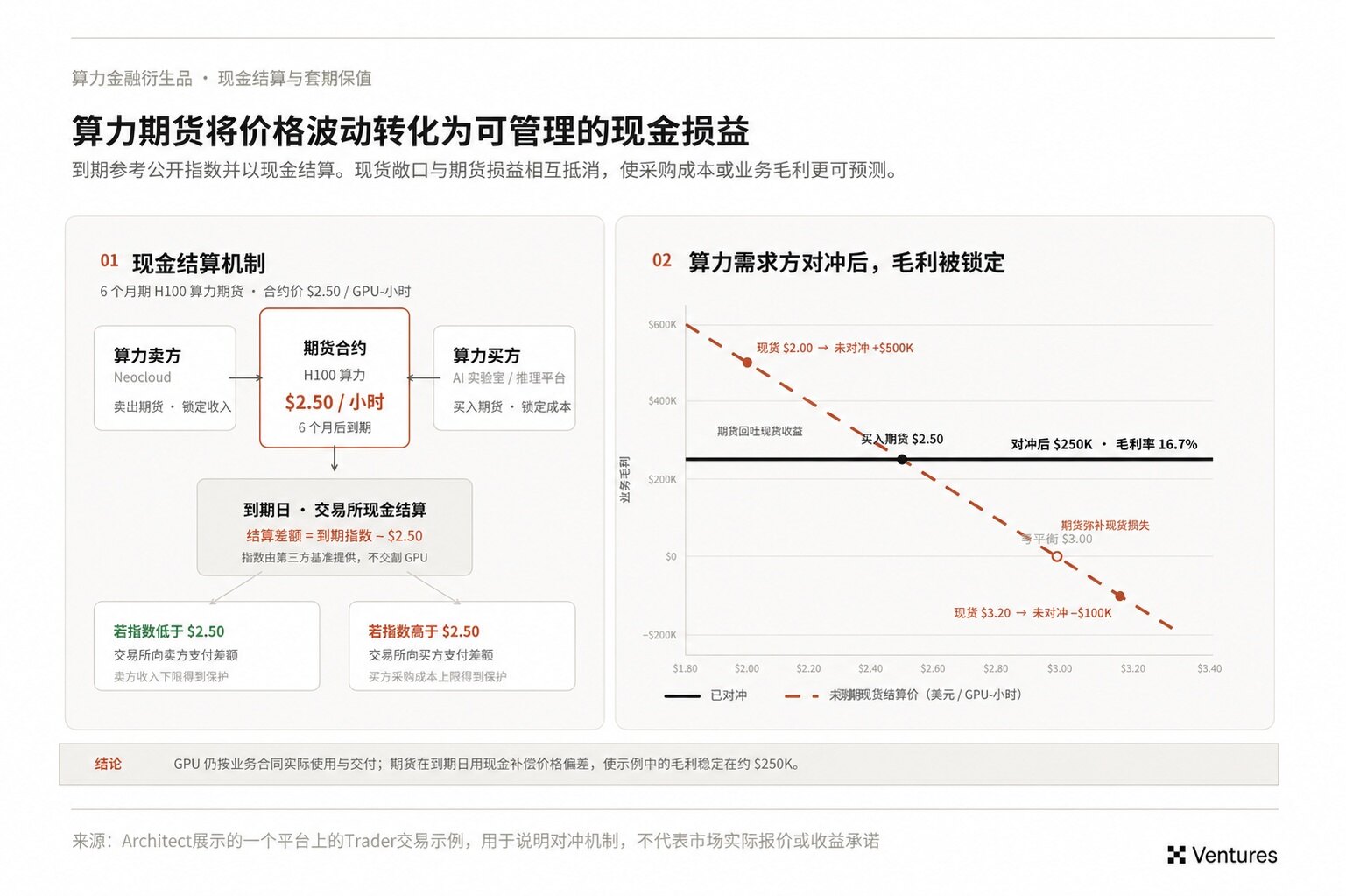
2.2 Potential Market Size: Which Risk Exposures Will Enter the Derivatives Market
If one were to estimate the compute derivatives TAM directly from global GPU shipments, data center CapEx, or AI infrastructure scale, the results would likely be overestimated by an order of magnitude.
What can genuinely enter the derivatives market is the portion of risk that remains exposed to market prices and has not been absorbed by other means.
A large portion of the risk associated with GPUs built and used internally by Hyperscalers remains on their own balance sheets; capacity already contracted under multi-year fixed-price agreements has also had its price risk allocated in advance through bilateral contracts. These all carry economic risk, but they do not necessarily need to be traded in the market on a daily basis.
Therefore, moving from global compute demand to the true derivatives TAM requires passing through at least several layers of filtering:
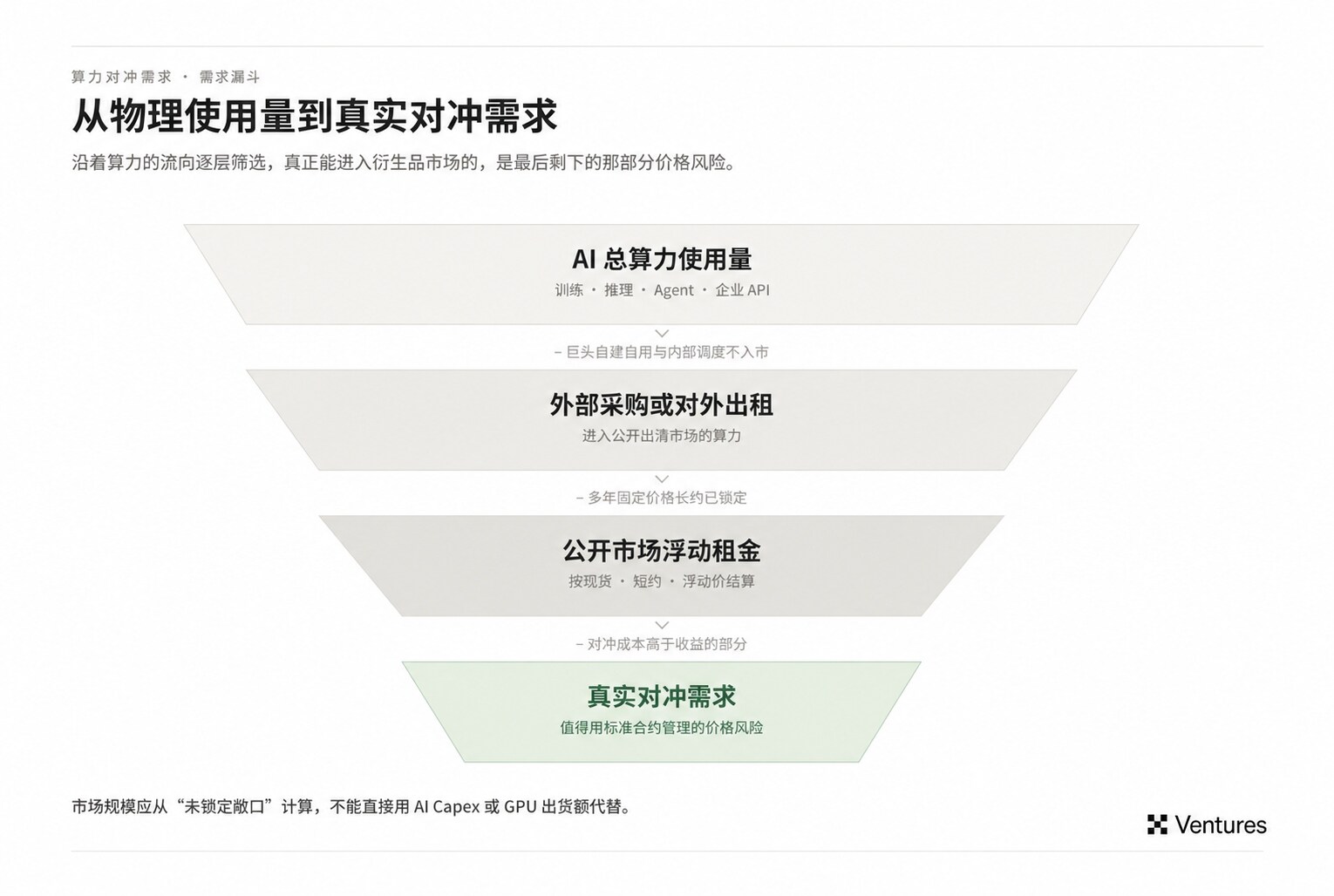
This is also why the future size of the compute derivatives market is likely to be more closely related to the proportion of merchant compute rather than simply growing linearly with global GPU installed base.
Historically, a significant portion of advanced model workloads ran within a small number of major labs and Hyperscalers, with compute procurement being highly internalized as well. As open-source model capabilities improve, an increasing number of enterprises can deploy models themselves or outsource workloads to third-party Neoclouds and inference platforms. Compute demand previously sealed within a few large balance sheets will gradually convert into procurement orders in the open market. This also explains why the development of open-source models deserves attention:
First, more compute begins to generate real transaction prices. Without sufficient external transactions, an index is difficult to establish, let alone a forward curve.
Second, demand shocks will transmit to the spot market more quickly. When a popular model is released and a large number of enterprises simultaneously increase deployments, the new demand will directly impact third-party GPU capacity, causing prices and availability rates to change rapidly. The more marginal demand the open market absorbs, the more likely rental fluctuations become a P&L risk that enterprises genuinely need to manage.
Therefore, what truly matters about open-source models for compute financialization is that they may increase the proportion of market-based procurement. Only after compute has passed through sufficient external transactions will a price emerge that is worthy of indexation, forwardization, and financialization. Ultimately, the variables determining the size of the compute derivatives market include: 1) how much compute enters the open market, 2) how much pricing remains floating, and 3) how much risk can no longer remain on existing balance sheets.
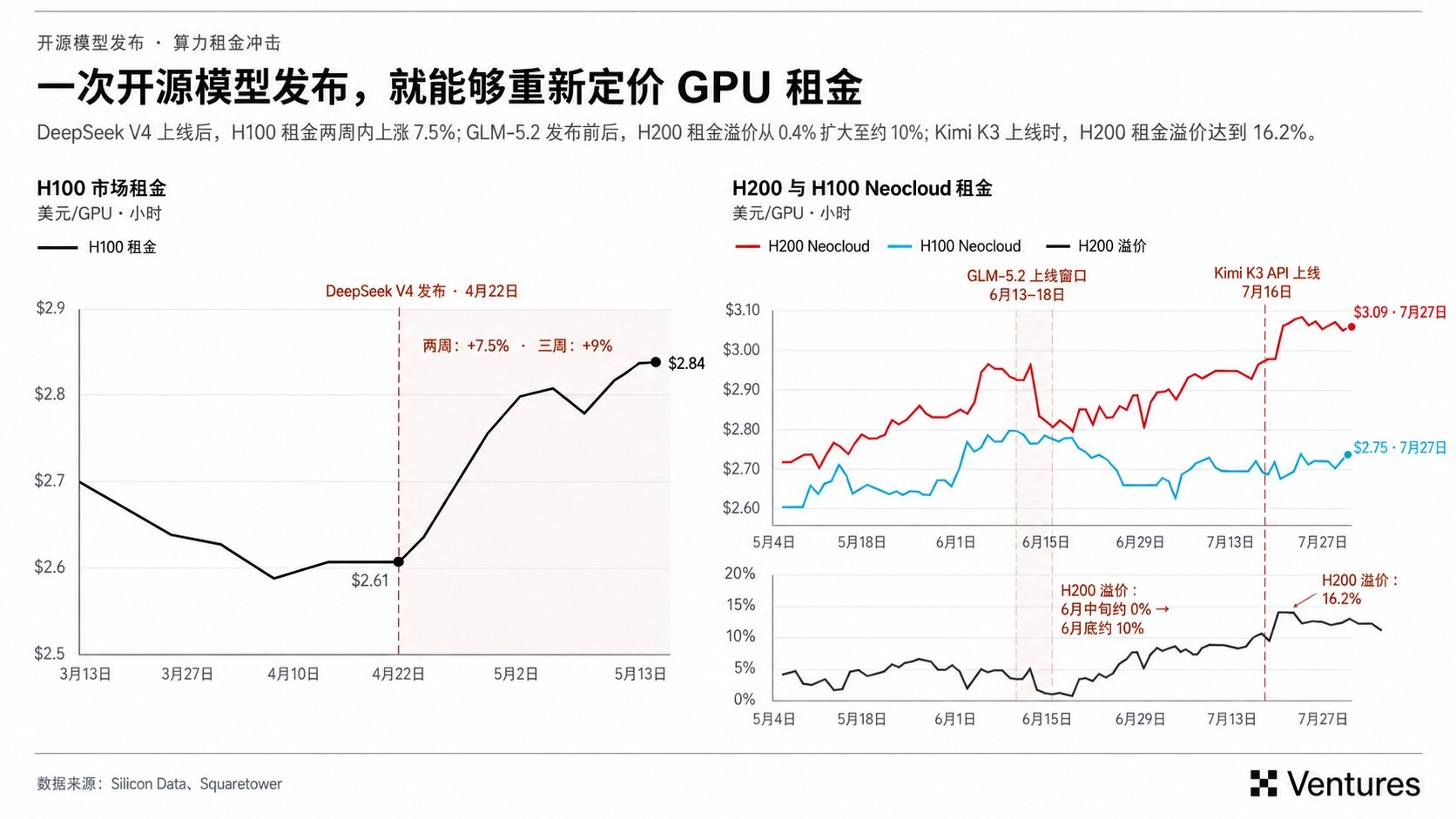
Following the release of DeepSeek V4, H100 rental prices rose approximately 7.5% within two weeks; around the launch of Kimi K3 and GLM 5.2,H100 and H200 rental prices also exhibited similar strengthening trends. Popular open-source models can generate substantial deployment and inference demand in a short period, and when these incremental workloads are primarily absorbed by Neoclouds and third-party inference platforms, the market often first experiences declining availability, queueing, and tightening quotas, which subsequently reflect in on-demand rental rates.
3. Product and Pricing: How to Price Future Compute?
The challenge with compute forwards lies in the fact that the market has yet to establish a sufficiently credible term price curve.
GPU-hours cannot be stored. An idle hour of H100 today is lost forever once that time window passes, and it cannot be purchased in advance when spot prices are low and held for delivery six months later. The spot-forward constraints that traditional commodities establish through inventory arbitrage are inherently much weaker in the compute market.
This means that the price at which a GPU should trade six months from now will depend more on chip deliveries, data center and power supply, model efficiency, and genuine order strength at that time. Hardware delays can rapidly tighten future capacity, while software optimizations can release significant effective compute without adding more GPUs. A compute forward curve simultaneously encapsulates the market's assessment of hardware supply, energy constraints, and algorithmic progress.
3.1 Without Inventory Arbitrage, Forward Prices Depend More on Expectations and Order Flow
The term structure of the crude oil market is supported by relatively stable storage arbitrage constraints. When forward prices are significantly higher than spot prices plus financing and storage costs, traders can buy spot, hold inventory, and sell forwards, making it difficult for the spread to deviate from carrying costs over extended periods.

Compute lacks this cash-and-carry arbitrage constraint, making the spot price's influence on the forward curve correspondingly weaker.
Future prices will therefore be highly sensitive to marginal information. Delays in Blackwell deliveries or data center power connections reduce expected supply; model distillation, inference optimization, or new-generation chips that improve per-unit computational efficiency increase the network's total effective compute. Many of these changes can rewrite forward supply-demand dynamics within a matter of months.
This also elevates the value of genuine order flow. Public spot quotes can only tell the market what happened today, while long-term capacity orders can reveal future supply-demand dynamics earlier. A broker or dealer who consistently intermediates between Neoclouds and AI labs can see which data centers are beginning to accumulate spare capacity and which buyers are willing to pay premiums for GPUs six months out. This type of information will ultimately flow directly into forward quotes.
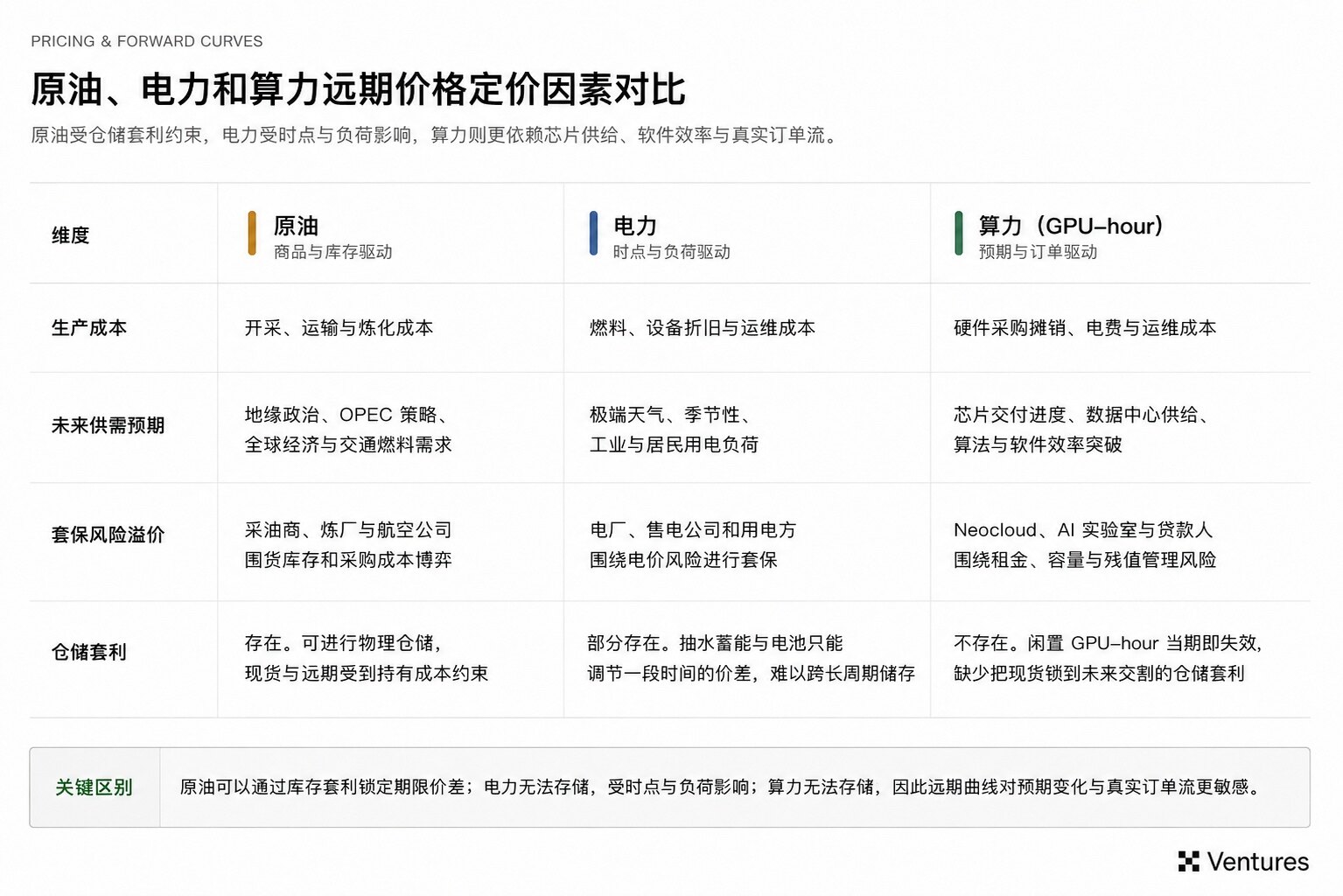
Therefore, the value of a compute index lies in compressing highly fragmented, non-standard quotes into a single pricing benchmark that can be jointly referenced by contracts, credit, and derivatives. If a particular index can consistently be used in long-term capacity contracts, loan valuations, OTC settlement, and futures delivery, it will gradually become the shared pricing anchor for the entire market. Whether index providers and dealers can subsequently build moats will depend significantly on how close they are to real transactions and future order flow.
3.2 The Financialization Timelines of GPU-Hours and AI Tokens Will Not Sync
There are actually two layers of pricing within the AI industry chain. Upstream, GPU capacity is sold; midstream, inference platforms convert GPU-hours into model calls and sell AI Tokens, APIs, or specific workloads downstream.
For inference platforms, operating profit depends on both ends simultaneously. Rising GPU rental rates increase input costs, while declining AI Token prices compress revenue. If both ends develop tradable prices, inference platforms could theoretically lock in a compute-to-intelligence spread, a logic closely resembling how refiners in the energy market manage crack spreads.

However, GPU-hours and AI Tokens currently differ significantly in their degree of standardization.
GPUs, despite variations in model, region, interconnect type, cluster size, and SLA, can at least gradually define standard specifications around a given chip generation, delivery timeframe, and region. An H100 or H200 still possesses relatively clear technical boundaries.
Tokens, by contrast, lack a stable economic unit. Settling purely by token count makes it difficult to fit different models and varying service quality into the same financial contract. One million tokens can come from models with entirely different capabilities, or correspond to radically different latency, throughput, and stability characteristics. Moreover, actual enterprise customer pricing often falls below public API quotes, making listed prices difficult to use directly