波场TRON行业周报:CPI登场BTC关注$65400阻力,详解构建AgentFi的身份与支付基础设施Sealcoin


- Core Insights: This week, the crypto market experienced a volatile recovery, with BTC rebounding to the $64,900-$65,100 range and ETH showing strong performance. Market attention is focused on Fed rate cut expectations and whether BTC can break through key resistance levels. The short-term outlook is neutral-to-bullish, with altcoin performance diverging as capital concentrates on high-conviction sectors such as AI, RWA, and DeFi infrastructure.
- Key Factors:
- On the macro front, US non-farm payroll data came in below expectations, reinforcing market expectations for Fed rate cuts. Treasury yields pulled back, improving sentiment for risk assets. Next week, CPI, PPI, and retail sales data will be closely watched, directly influencing the pace of rate cuts.
- BTC rose approximately 3% on the week, with notable resistance at $65,000-$66,000. A decisive breakout could lead to a test of $68,000-$70,000; failure to do so may see the $62,000-$63,000 support zone come into focus.
- ETH held near $1,900, emerging as a key destination for capital rotation. The focus is on whether it can surpass the $2,000 psychological level. SOL and BNB followed the rebound, but liquidity recovery among altcoins remains limited.
- AI+Crypto is entering the infrastructure competition phase, with the focus shifting from AI tokens to on-chain execution, secure authorization, and payment capabilities for AI Agents. DeFi is evolving toward institutional-grade yield management.
- Sealcoin secured $4 million in funding to build identity and payment infrastructure for the machine economy, leveraging hardware-based trusted identity and PKI systems to enable autonomous machine-to-machine transactions. STRATO raised $1.7 million, combining RWA hard assets with overcollateralized stablecoins to build an institutional-grade credit system.
- On the regulatory front, the US CLARITY Act market structure bill saw its vote postponed, leaving near-term regulatory clarity unresolved. India expanded its tax transparency oversight for digital assets, while the EU's MiCA framework entered its full implementation phase.
1. Market Outlook
1.1 Macro Overview and Future Projections
Macro environment summary for August 3-9, 2026: This week, global markets were primarily driven by expectations around monetary policy, inflation trends, and economic growth resilience. In the US, markets continued to focus on the Fed's policy trajectory, with the duration of elevated interest rates and the pace of future rate cuts remaining core factors influencing global asset pricing. Dollar liquidity and Treasury yield fluctuations continued to impact global risk appetite. Europe's economic recovery still faces growth pressures, with policy attention on fiscal stimulus and monetary policy coordination. Asian markets focused on regional economic repair, currency stability, and shifts in external demand. Overall, global capital remains in a waiting phase for clearer macro policy signals, with market volatility staying elevated.
Outlook for the coming week (August 10-16, 2026): Markets will focus on US economic data, major central bank policy signals, and global liquidity shifts. Should inflation continue to decline and reinforce easing expectations, global risk assets may find support. Conversely, if economic data surprises to the upside, prolonging the period of high rates, markets could face periodic pressure. Meanwhile, the global policy environment will continue to revolve around rate cut expectations, fiscal policy adjustments, financial regulatory changes, and investment directions in emerging tech sectors. Capital allocation will increasingly favor areas with long-term growth potential and policy certainty.
1.2 Crypto Market Movements and Risk Alerts
Between August 3-9, 2026, the crypto market showed a pattern of volatile recovery. BTC rebounded from a low of approximately $62,500 to the $64,900-$65,100 range, posting a weekly gain of about 3%. This was driven by weaker-than-expected US employment data, rising expectations for Fed rate cuts, and improved risk sentiment. However, resistance at the $65,000-$66,000 level remains significant. ETH outperformed BTC, holding near $1,900, with market attention remaining on the Ethereum ecosystem, ETF flows, and institutional allocation trends. SOL, BNB, and other major large-cap assets followed the rebound, but capital flows remain skewed toward core assets like BTC and ETH, with limited liquidity recovery in the altcoin market. In terms of sentiment, risk appetite improved this week, but institutional capital and trading volumes have yet to accelerate significantly, with BTC still in a key technical resistance zone.
For the coming week (August 10-16), markets are expected to continue trading on macro liquidity conditions and BTC's technical breakout attempts. If BTC can effectively break through the $65,000-$66,000 range, the market may test $68,000-$70,000. A failure to break through would shift focus to the $62,000-$63,000 support zone. If ETH maintains its relative strength, it could become a key destination for capital rotation, particularly around the psychological $2,000 level. Overall, the short-term bias is neutral-to-bullish, with core drivers stemming from Fed policy expectations, institutional inflows, and stablecoin liquidity changes. However, until BTC confirms a breakout, altcoin performance is likely to remain divergent, with capital favoring sectors with clear narratives and real use cases such as AI, RWA, and DeFi infrastructure.
1.3 Sector and Track Highlights
The AI+Crypto sector is entering a phase of infrastructure competition, with focus shifting from AI Tokens to on-chain execution, security authorization, and payment capabilities for AI Agents. Projects like Newton Protocol and AXON are building around AI agent trading permissions, PayFi payments, and verifiable execution. The DeFi sector continues to evolve toward institutional-grade yield management, with Gauntlet, Morpho, and Kamino launching more mature strategy products focused on risk management, yield optimization, and on-chain asset allocation.
2. Hot Sectors and Notable Projects of the Week
2.1 Potential Project Overview
2.1.1 Analysis: Sealcoin - Raising $4 Million Total, Led by Wisekey and Hashgraph - Building Identity and Payment Infrastructure for the Machine Economy
Introduction
SEALCOIN is an infrastructure protocol designed for the Machine Economy, aiming to enable machine entities such as IoT devices, robots, satellites, AI Agents, and edge computing nodes to:
- Discover services (Service Discovery)
- Establish identity (Identity)
- Negotiate prices (Negotiation)
- Settle automatically (Settlement)
The ultimate goal is to create a true Machine-to-Machine (M2M) economic network. Its core vision is to elevate machines from "connected devices" to "autonomous economic agents."
Protocol Mechanism Overview
SEALCOIN is not a mere DePIN project. Its core objective is to build an economic network that allows machines to autonomously discover services, negotiate prices, and complete value exchange. The protocol adopts a three-layer architecture comprising a Platform layer, an Agent (execution) layer, and a Messaging Protocol (communication) layer, working together to support commercial activities between machines.
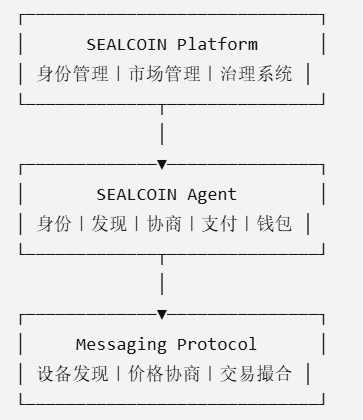
Unlike traditional IoT platforms that rely on centralized cloud systems, SEALCOIN aims to make every device an autonomous participant in economic activities.
Agent: The "Digital Persona" in the Machine Economy
Within the architecture, the Agent is the most critical component. It can be understood as the on-chain economic representative for each device.
Whether it's a satellite, car, sensor, or AI Agent, any device deploying a SEALCOIN Agent gains all the capabilities required to participate in the machine economy.
Core Responsibilities of the Agent
Functional Module
Purpose
Identity Management
Manages device certificates and private keys
Service Discovery
Finds tradable resources
Automatic Negotiation
Automated price negotiation with other devices
Transaction Signing
Verifies transaction authenticity
Wallet Management
Facilitates payments and settlements
Messaging Protocol: Off-Chain Negotiation, On-Chain Settlement
SEALCOIN does not put all interactions on the blockchain. The reason is simple:
If there were 1 million devices in the future, each initiating 10 price queries per second, the network would need to handle 10 million requests. No existing public chain could handle this scale.
Therefore, the protocol adopts:
Off-chain Negotiation
Handles:
- Service discovery
- Resource matching
- Price negotiation
On-chain Settlement
Handles:
- Transaction confirmation
- Fund settlement
- Transaction recording
This design balances transaction efficiency, low cost, and trusted on-chain settlement. Essentially, it is a hybrid architecture of "off-chain commercial negotiation + on-chain value settlement."
Hardware Root of Trust: Building Trust from the Hardware Up
Private keys in traditional devices are typically stored in software environments, posing risks of:
- Copying
- Theft
- Forgery
SEALCOIN requires private keys to be stored directly within secure hardware.
Supported security modules:
Security Module
Description
Secure Element
Secure chip
Secure MCU
Secure microcontroller
TEE
Trusted Execution Environment
ARM TrustZone
ARM security architecture
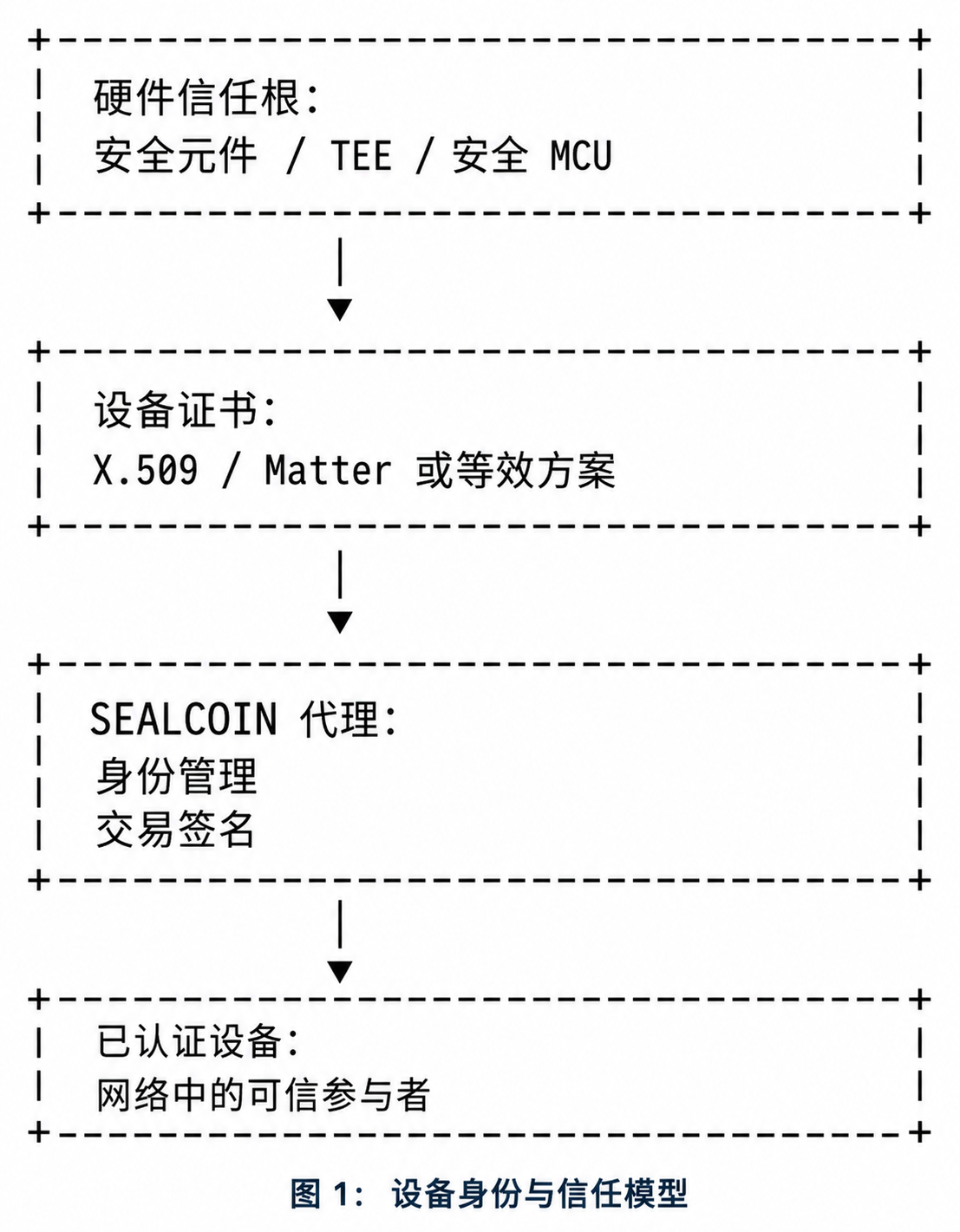
This model is similar to:
- Bank card chips
- Passport chips
- Ledger hardware wallets
As a result, device identities are nearly impossible to replicate.
PKI System: Issuing a "Digital Passport" to Every Machine
SEALCOIN leverages the PKI system that has been validated on the traditional internet for decades.
Each device receives:
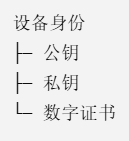
When a device initiates a transaction:
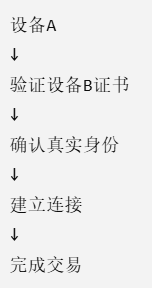
This is essentially similar to a browser verifying an HTTPS website. The difference is that here, it's the device being verified, not the website.
Post-Quantum Security Preparation
Compared to most Web3 projects, SEALCOIN has proactively considered the risks of quantum computing.
The project plans to progressively support post-quantum cryptographic schemes such as:
- CRYSTALS-Kyber
- Dilithium
This indicates its identity system is designed not just for the next 5 years, but aims to be adaptable for machine networks 10-20 years into the future.
Commercial Scenarios: Building Four Machine Marketplaces
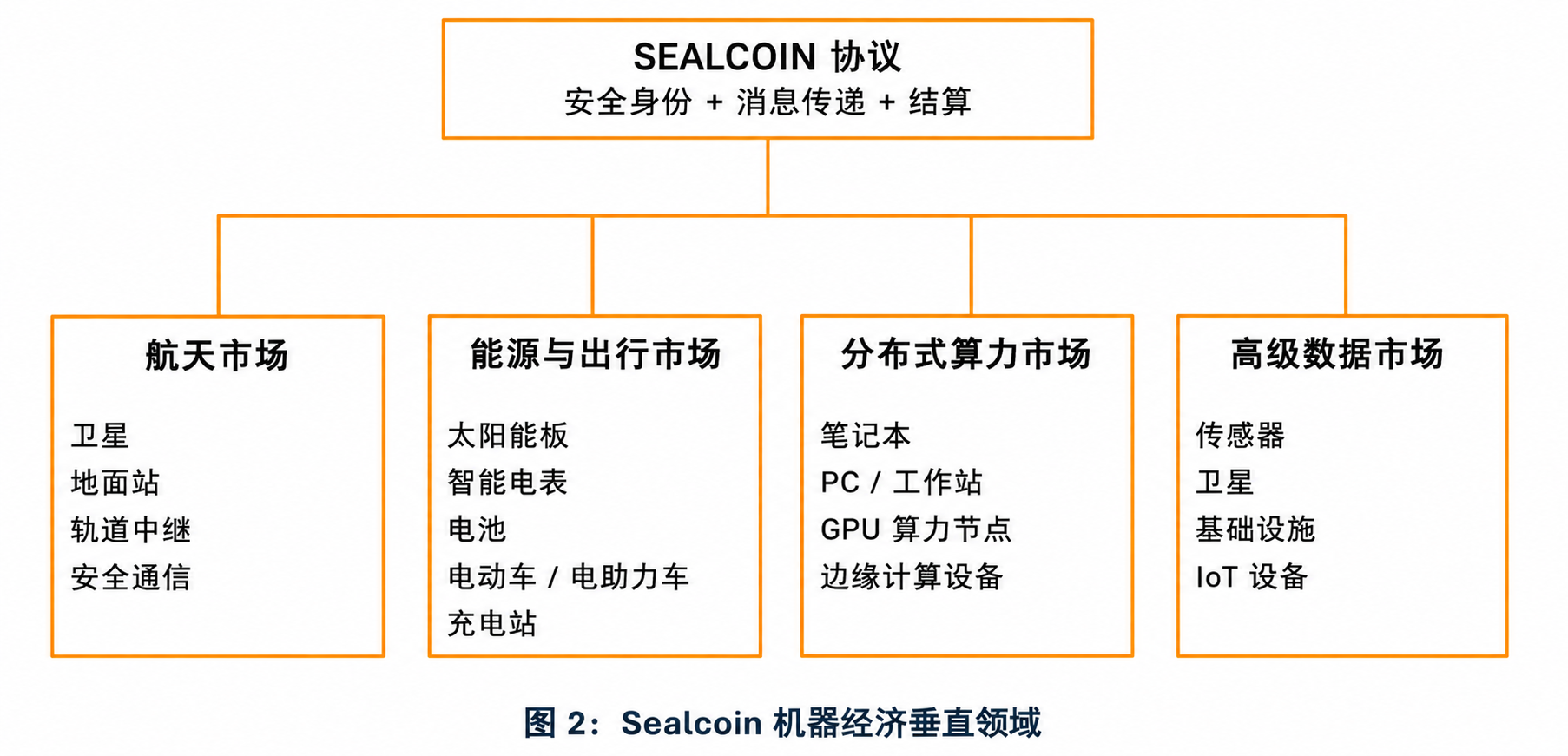
SEALCOIN's ultimate goal is not payments, but rather establishing resource trading markets between machines.
Therefore, the protocol builds Marketplaces around four types of commercially valuable resources.
① Space Marketplace: The Satellite Economy Network
This is currently the most mature use case.
Participants include:
Role
Sellable Resources
Satellites
Communication capabilities
Ground Stations
Data reception services
Relay Nodes
Transmission capabilities
Trading Process:
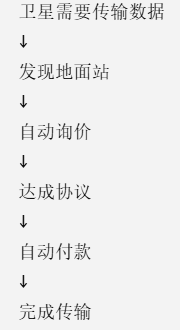
Traditionally manual contracting processes are compressed into automated transactions.
② Energy Marketplace: Energy Trading Market
This is one of the most imaginative scenarios for the Machine Economy.
Participants include:
- Electric Vehicles (EVs)
- Charging Stations
- Home Energy Storage
- Solar PV Systems
- Smart Meters
Typical Scenario:
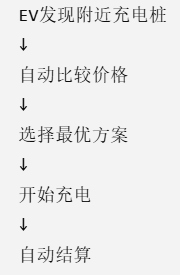
③ Distributed Compute Marketplace: Computing Power Market
SEALCOIN aims to activate idle devices globally.
Resource Sources:
- PCs
- Laptops
- GPU Servers
- Edge Devices
This is similar to Render + Akash + Golem, but with the added capabilities of identity authentication, verifiable resources, and automated settlement.
④ Premium Data Marketplace: The Data Market
In the AI era, the scarcest resource is not tokens, but real data.
SEALCOIN focuses on solving the data authenticity problem.
The process is as follows:
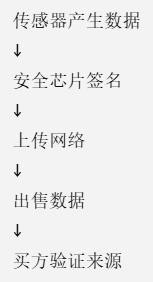
What it sells, therefore, is not ordinary data, but Verified Data—precisely the capability most needed by AI training and industrial data markets.
Device Onboarding and Identity Management
The SEALCOIN Platform is the unified entry point for the entire machine economy network, responsible for device registration, identity management, certificate management, PoSy binding, and Marketplace access. Enterprises can uniformly onboard devices such as satellites, EVs, sensors, GPU nodes, and AI Agents to the platform, assign them digital identities, manage certificates and permissions, and ultimately connect them to energy, satellite communication, computing, and data markets, enabling assetization and commercial operation of devices.
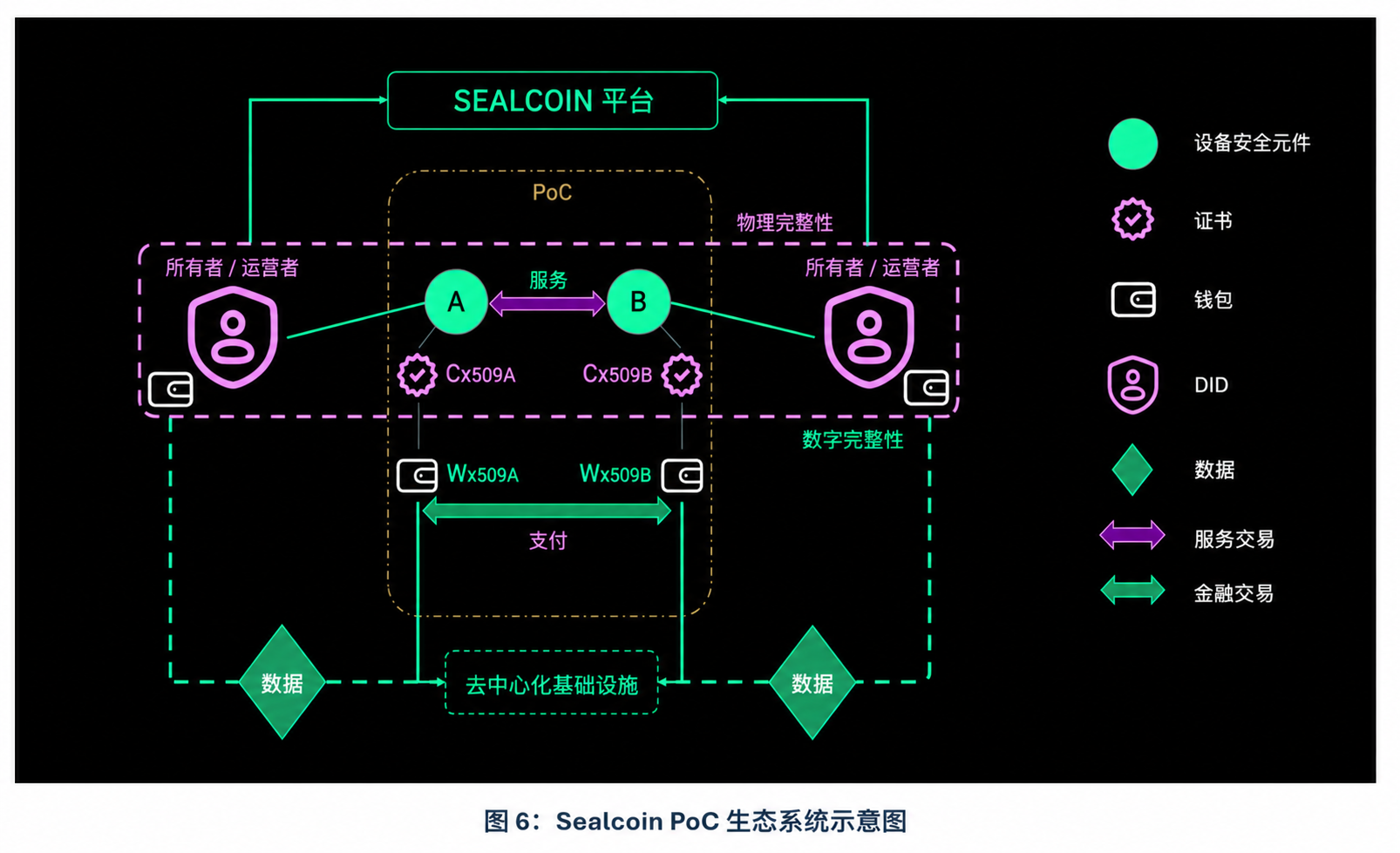
Machine Payments and Capital Flow
SEALCOIN adopts a capital management model of "Platform Wallet → Device Wallet → Automated Transactions." Operators first top up QAIT on the platform, then allocate allowances to different devices based on business needs. Devices, through their Agents, autonomously complete service discovery, price negotiation, and payment settlement, achieving true Machine-to-Machine Payment.
The core value of this mechanism lies in transforming traditionally human-controlled wallets into machine-controlled wallets, enabling scenarios like satellites paying for bandwidth, EVs paying for charging, and AI Agents purchasing compute power to complete automatically without human intervention.
Tron's Take
Sealcoin's biggest advantage lies in the fact that it is not a traditional DePIN or payment project. Instead, it attempts to build a complete infrastructure of "Machine Identity + Machine Marketplace + Machine Payment." Through hardware-level trusted identity (Hardware Root of Trust), PKI certificate systems, and an Agent framework, it enables devices like satellites, EVs, sensors, and AI Agents to autonomously discover services, negotiate prices, and complete settlements. Leveraging physical hardware and satellite resources from entities like WISeKey, SEALSQ, and WISeSat, it possesses a relatively strong foundation for industrial deployment.
Its disadvantage is that the Machine Economy is still in its very early stages, with long commercialization cycles and high dependence on hardware manufacturer adoption and device scale. Ecosystem expansion is significantly more difficult than for pure software protocols. Additionally, the project's choice of the Hedera ecosystem as the underlying issuance network means the developer and capital scale lags behind mainstream ecosystems like Ethereum and Solana. Whether it can form a large-scale machine trading network in the future remains dependent on real device adoption numbers and market demand validation.
2.2 Detailed Analysis of Key Project This Week
2.2.1 Analysis: STRATO - A Blockchain Operating System for Enterprises and RWA Scenarios, Raising $1.7 Million from Individual Investors
Introduction
STRATO is an institutional-grade Layer 1 application chain focused on building a credit system collateralized by Real World Assets (RWA). Its ecosystem comprises three core components: the STRATO Chain, the USDST stablecoin, and a system of hard collateral assets.
The underlying chain uses an EVM-compatible architecture developed in Haskell, with over a decade of continuous development history. The native stablecoin, USDST, is issued via an over-collateralized Debt Position (CDP) mechanism and can be redeemed for USDC and USDT. Collateral includes not only crypto assets like BTC, ETH, and LSTs, but also introduces GOLDST and SILVST backed 1:1 by physical gold and silver, as well as real-world assets like yield-bearing stablecoins and tokenized equities.
By combining traditional stores of value with an on-chain credit system, STRATO aims to create an institutional-grade stablecoin and credit infrastructure characterized by lower borrowing costs, more robust collateral, and reduced susceptibility to crypto market volatility.
Core System Architecture Analysis
STRATO's operational logic is built on three pillars: the CDP stablecoin mechanism + RWA hard asset collateral + a proprietary Layer 1 architecture. Users mint USDST by collateralizing gold, silver, crypto assets, or other RWAs. The system maintains stablecoin safety through over-collateralization and liquidation mechanisms, while leveraging its proprietary chain and SolidVM for enhanced security and transparency.
USDST Minting Mechanism: Generating Stablecoins via Over-Collateralization
USDST uses a CDP (Collateralized Debt Position) model similar to MakerDAO.
After depositing assets into a vault, users can mint USDST at a certain collateralization ratio.
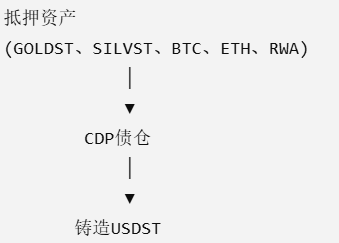
Each position corresponds to a collateralization ratio: Collateral Value ÷ Minted USDST Value.
Users must maintain a collateralization ratio above the system's minimum requirement to withstand asset price volatility.
When a user wishes to redeem their collateral:
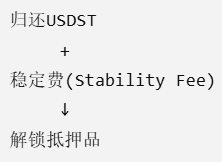
Therefore, USDST is essentially an asset-backed on-chain credit currency.
Liquidation Process
When collateral asset prices decline, causing a position to fall below the minimum collateralization ratio: